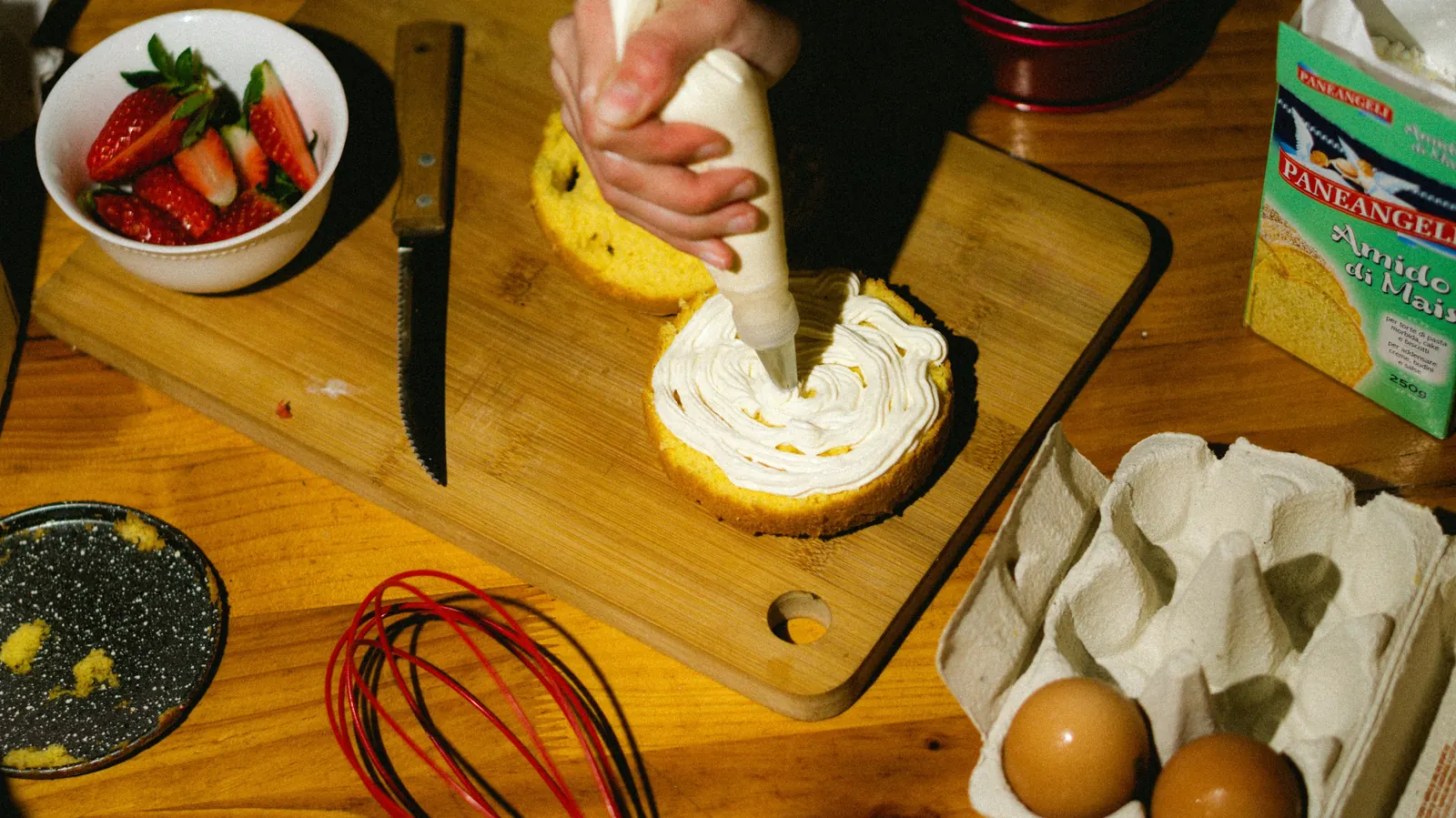
Baking is the part of the kitchen where a recipe does the most work. On a stove you can taste and adjust as you go. Once a cake is in the oven, every decision has already been made, so the book you learned from matters more here than almost anywhere else in cooking. A good one explains what the butter, the sugar and the oven are doing, and that stays with you long after the recipe.
This guide covers eight books by named authors and established publishers, from a first book for new bakers to a whole volume on cakes. Bread and pizza have books of their own, so we left those titles out to keep this page on cakes, cookies, pies and pastry. For each one we say what the named sources report and who it suits, and we say clearly where a pick rests on the listing and award record alone.
Julia’s earns a commission on purchases made through links on this page, at no cost to you. Recommendations are based on what a restaurant kitchen looks for in a cookbook, publisher and listing information, and published reviews, which we cite.
Quick verdict: the best baking cookbook for most kitchens
For most home bakers, start with Claire Saffitz’s Dessert Person: recipes grouped by type and ordered by difficulty, with notes that help novices. If you are brand new, choose Sally’s Baking 101, which is sorted by skill level. If you want to understand why recipes work, choose The King Arthur Baking School.
The other five are a James Beard winner on American classics, Dorie Greenspan’s wide-ranging collection, a deep reference on cakes, a professional baker’s favorite recipes and a history of Southern baking.
Five baking books side by side
Five of the eight, one for each kind of baker. All eight are described in full below.
| Book | Best for | Focus | Named source | Buy on Amazon |
|---|---|---|---|---|

Dessert Person, Claire SaffitzBest overall
|
Home bakers who want one reference | Sweet baking, with a savory chapter | Publishers Weekly | View on Amazon |

The King Arthur Baking School, King Arthur Baking CompanyBest for learning technique
|
Learning why recipes work | Technique, science, bread and dessert | Publishers Weekly | View on Amazon |
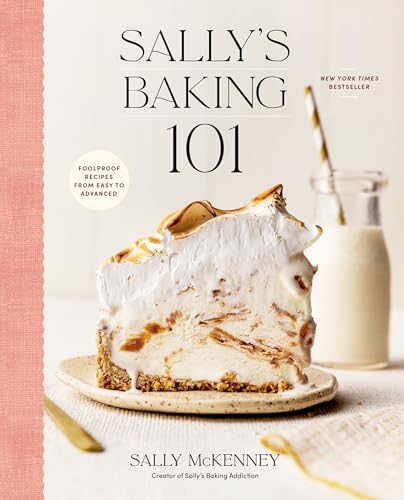
Sally’s Baking 101, Sally McKenneyBest for beginners
|
First-time bakers | Cookies, cakes, pies, brunch bakes | Publishers Weekly | View on Amazon |

BraveTart, Stella ParksBest American classics
|
American classics from scratch | Iconic American desserts | James Beard award; Publishers Weekly | View on Amazon |
| Serious cake bakers | Cakes, techniques and decorating | James Beard awards for the original; rests on the listing | View on Amazon |
Cover images from Amazon. Page counts and formats are for the editions linked; other editions differ.
Our picks for the best baking cookbook, book by book
These eight run from beginner books to specialist references. Seven have a named review from Publishers Weekly, and BraveTart also has a James Beard Foundation award. The Cake Bible rests on the listing and its award record, and we say so in its entry. We have not baked our way through these books; where we describe a strength, we say whose view it is.
1. Dessert Person, Claire Saffitz – Ordered From Easy to Hard
Dessert Person is the book to buy if you want one baking book to do most of the work. Claire Saffitz’s subtitle promises recipes and guidance for baking with confidence, and that is a fair summary of how Publishers Weekly read it: as a go-to reference for home bakers.
The structure is what sets it apart for a learner. According to Publishers Weekly, the recipes are grouped by type and put in order of difficulty, so you can see at a glance where a recipe sits before you commit an afternoon to it. The same review singles out the footnotes as a help to novices, which suits a cook who wants the reasoning without a separate textbook.
It is not only sweets. The review also picks out a savory chapter, so the book earns a little more shelf space than a pure dessert title. Nothing here is Mexican, but the habits it teaches carry over to anything you bake at home, from a pie crust to a custard.
Why we like it
- Recipes grouped by type and ordered by difficulty, per Publishers Weekly
- Footnotes that help novices, per the same review
- A savory chapter alongside the sweets
- Read by its reviewer as a go-to reference
Key specifications
| Author | Claire Saffitz |
|---|---|
| Publisher | Clarkson Potter |
| Year | 2020 |
| Pages | 368 (Amazon listing) |
| Format | Hardcover |
| Named source | Publishers Weekly review |
| Focus | Desserts, some savory baking |
| Best for | Bakers who want one main book |
Why we recommend it
If you are buying a single baking book for a shelf that has none, start here. The difficulty order gives a beginner a path and gives a confident baker a way to pick a project.
Skip it if you want quick bakes only. A book that climbs to its hardest recipes will include things you may never make.
Pros and cons
Pros
- Clear path from simple to demanding
- Useful notes for beginners
- Sweet and savory recipes
Cons
- Dessert-led, so little for bread lovers
- Harder recipes may go unused by casual bakers
2. The King Arthur Baking School, King Arthur Baking Company – A Course, Not a Collection
Most baking books are collections with some teaching attached. The King Arthur Baking School works the other way around. Publishers Weekly described it as a thorough guide to baking techniques and the science behind them, and called it a compendium for bakers who want to improve.
The review gives a good idea of the tone: practical advice such as weighing your ingredients, then recipes grouped into bread and dessert sections, each ending with a guest expert’s Master Class. If you take the weighing advice to heart, our guide to the best kitchen scale is a sensible companion.
Because bread gets a section of its own, this is the one pick here that can double as a bread book. It is still a general baking course rather than a bread title, and the subtitle says as much: lessons and recipes for every baker.
Why we like it
- Explains techniques and the science behind them, per Publishers Weekly
- Bread and dessert sections in one book
- Guest expert Master Classes close each section
- Practical advice such as weighing ingredients
Key specifications
| Author | King Arthur Baking Company |
|---|---|
| Publisher | Countryman Press |
| Year | 2022 |
| Pages | 416 (Amazon listing) |
| Format | Hardcover |
| Named source | Publishers Weekly review |
| Focus | Technique, science, bread and desserts |
| Best for | Bakers who want to understand the why |
Why we recommend it
Choose it if your results are inconsistent and you want to know the reason. A course-style book like this goes after the cause rather than handing you one more recipe to try.
Skip it if you just want a good cookie recipe tonight. Publishers Weekly pitches it at serious bakers who will come back to it often.
Pros and cons
Pros
- Teaches method as well as recipes
- Covers bread as well as sweets
- Expert sections add depth
Cons
- More reading than a simple recipe book
- A company author rather than one voice
3. Sally’s Baking 101, Sally McKenney – Sorted by Skill Level
If you came here looking for a baking book for beginners, this is the one to look at first. Publishers Weekly notes that Sally McKenney, of Sally’s Baking Addiction, groups the recipes by skill level, from beginner to advanced, which is exactly what a new baker needs from a book.
According to the same review, it opens with an introduction to ingredients, tools and techniques, then moves through cookies, bars, cakes, pies, brunch bakes, muffins and yeasted doughs. It mixes new recipes with what the review calls fan favorites, and it concludes that home bakers will likely return to it often.
The tools section is worth reading before you buy anything else. New bakers usually need less than they think: a good sheet pan, a rack and a mixer will carry you a long way. See our guides to the best baking sheets, the best cooling rack and the best hand mixer.
Why we like it
- Recipes grouped from beginner to advanced, per Publishers Weekly
- Opens with ingredients, tools and techniques
- Covers everyday baking from cookies to yeasted doughs
- New recipes alongside fan favorites
Key specifications
| Author | Sally McKenney |
|---|---|
| Publisher | Clarkson Potter |
| Year | 2025 |
| Pages | 288 (Amazon listing) |
| Format | Hardcover |
| Named source | Publishers Weekly review |
| Focus | Everyday home baking by skill level |
| Best for | New bakers |
Why we recommend it
Buy this for a first-time baker, or for a teenager learning to bake. The skill-level structure means nobody has to guess where to begin.
Skip it if you already bake well and follow Sally’s Baking Addiction closely. The book includes fan favorites, so regular readers may know some of them.
Pros and cons
Pros
- Friendly starting point
- Wide range of everyday bakes
- Teaches the basics first
Cons
- Experienced bakers may outgrow it
- Includes some familiar fan favorites
4. BraveTart, Stella Parks – Beloved Desserts, Rebuilt
BraveTart won the James Beard Foundation’s Baking and Dessert award, which already separates it from most of the shelf. Stella Parks’s subject is iconic American desserts, and the listing credits J. Kenji López-Alt with the foreword.
Publishers Weekly praised it as a book as interesting to read as it is to cook from, and called out her recreations of supermarket treats. If you have ever wanted to make a packaged snack from scratch, this is where to look. The review also highlights recipe modifications and gluten-free substitutions.
It is honest to say this is not the gentlest book here. Publishers Weekly says some techniques add complexity, while finding the instructions approachable for ambitious beginners. That is the right way to think of it: a second book, or a first book for someone who enjoys a challenge.
Why we like it
- James Beard Foundation Baking and Dessert winner
- Recreations of supermarket treats, per Publishers Weekly
- Recipe modifications and gluten-free substitutions
- As good to read as to bake from, per the review
Key specifications
| Author | Stella Parks; foreword by J. Kenji López-Alt |
|---|---|
| Publisher | W. W. Norton |
| Year | 2017 |
| Pages | 400 (Amazon listing) |
| Format | Hardcover |
| Named source | James Beard Foundation award; Publishers Weekly review |
| Focus | Iconic American desserts |
| Best for | Curious, ambitious bakers |
Why we recommend it
Choose it if the desserts you love most are the ones you grew up on. It suits a baker who wants a familiar treat made from scratch and enjoys the challenge.
Skip it if you want simple recipes only. The review is clear that some of the techniques here add complexity.
Pros and cons
Pros
- Award-winning
- Strong on American classics
- Includes substitutions and modifications
Cons
- Some techniques are involved
- Narrower in scope than a general book
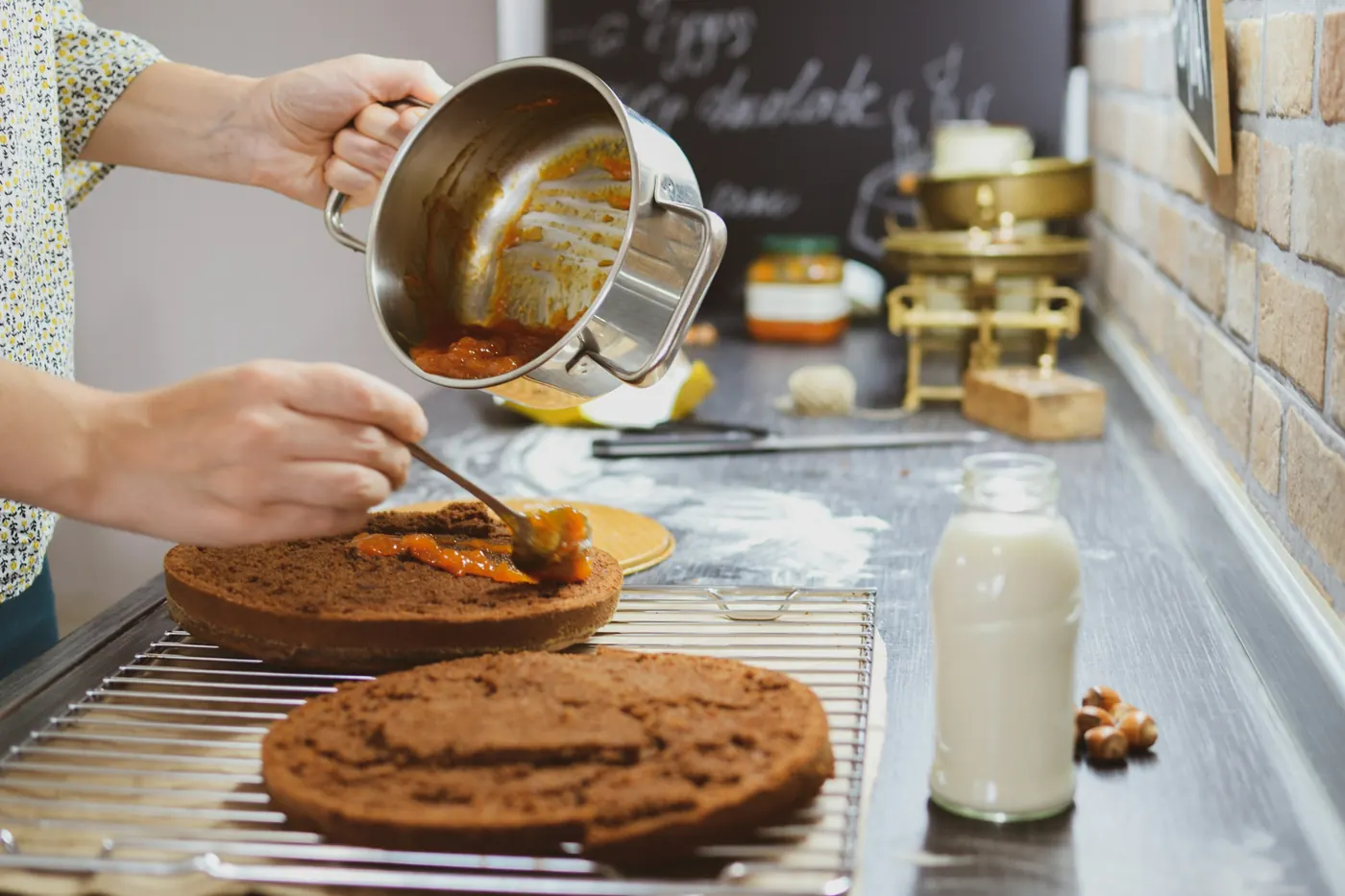
5. Baking With Dorie, Dorie Greenspan – Sweet, Salty and Simple

Dorie Greenspan’s Dorie’s Cookies won the James Beard Foundation’s Baking and Dessert award, so her name carries weight with bakers. Baking With Dorie is a wide-ranging collection, and the title sets out the plan: sweet, salty and simple.
Publishers Weekly praised the variety, from familiar favorites to inventive takes on classics, and her friendly, confident tone. The French influence shows in the brioche-based recipes and Paris-style peanut butter cookies the review mentions, and travel shows up in a Lisbon chocolate cake and a savory cheese swirl babka bun.
The chapter of basics is especially useful. According to the review it covers pie crusts, curds and pastry creams, the building blocks that let you put your own desserts together. A book that teaches these once saves you from hunting for them each time.
Why we like it
- Runs from familiar bakes to inventive ones, per Publishers Weekly
- Savory recipes along with the sweets
- A basics chapter on crusts, curds and creams
- Friendly, confident voice, per the review
Key specifications
| Author | Dorie Greenspan |
|---|---|
| Publisher | Harvest |
| Year | 2021 |
| Pages | 400 (Amazon listing) |
| Format | Hardcover |
| Named source | Publishers Weekly review |
| Focus | Sweet and savory home baking |
| Best for | Bakers who want range |
Why we recommend it
Buy this if you already bake a little and want new ideas more than a course. It is a good book to browse on a slow weekend.
Skip it if you need a step-by-step teaching book. Publishers Weekly reads it as a collection, so the skill ladder in Sally’s Baking 101 suits a beginner better.
Pros and cons
Pros
- Wide range of bakes
- Savory recipes included
- Useful basics chapter
Cons
- Not structured as a course
- Less depth on any one category
6. The Cake Bible, 35th Anniversary Edition, Rose Levy Beranbaum – A Whole Book on One Subject

This is the specialist on the list. The original The Cake Bible won two James Beard Foundation Awards, for Baking and Desserts and for Book of the Year. Those honors went to the first edition, not this one, but they explain why people still look for it.
We should be plain about how much we can say here. Publishers Weekly’s page for this edition shows no review, and we could not reach the publisher’s page, so this entry rests on the Amazon listing and the award record. The listing names Rose Levy Beranbaum and Woody Wolston as authors, with a foreword by Ron Ben-Israel, and describes classic and modern recipes, techniques and decorating methods.
At the length the listing gives, this is a reference and not a casual read. If cakes are what you bake, it pairs well with a solid pan, and our guide to 9×13 cake pans covers the shape most home sheet cakes need.
Why we like it
- Original edition won two James Beard Foundation Awards
- Listing covers classic and modern recipes
- Techniques and decorating in one volume
- Foreword by Ron Ben-Israel, per the listing
Key specifications
| Author | Rose Levy Beranbaum and Woody Wolston; foreword by Ron Ben-Israel |
|---|---|
| Publisher | William Morrow |
| Year | 2024 |
| Pages | 704 (Amazon listing) |
| Format | Hardcover |
| Named source | James Beard awards for the original edition; no review of this edition read |
| Focus | Cakes, technique and decoration |
| Best for | Dedicated cake bakers |
Why we recommend it
Choose it if you bake birthday cakes for everyone you know and want one deep reference. A single-subject book goes further than any general title here.
Skip it if you bake a cake twice a year. A general book covers that, and this one is built for someone who wants the whole subject.
Pros and cons
Pros
- Award-winning original
- Deep on one subject
- Includes decorating methods
Cons
- Cakes only
- Our details rest on the listing, not a review of this edition
7. Pastry Love, Joanne Chang – A Baker’s Favorite Recipes

Joanne Chang, the author behind Boston’s Flour Bakery + Cafe books, won the James Beard Foundation’s Outstanding Baker award. Pastry Love carries the subtitle a baker’s journal of favorite recipes, and that personal note is why it earns a place here.
Publishers Weekly found it a delight: mostly sweet, with a few savory recipes such as bacon-egg-and-cheese biscuits and garlic monkey bread. The inventive ideas include a hybrid of kouign-amann and sticky bun, and the international recipes reach as far as panettone and lamingtons. The review also liked her funny, chatty headnotes and clear instructions.
The review has one real complaint, which is useful to know. It says Chang sometimes stretches too far, naming a vegan Hostess cupcake and gluten-free versions of some recipes. Even so, it concludes that the book offers many reliable recipes that home bakers will go back to.
Why we like it
- Written by an award-winning professional baker
- Clear instructions and funny headnotes, per Publishers Weekly
- International recipes such as panettone and lamingtons
- A few savory bakes for variety
Key specifications
| Author | Joanne Chang |
|---|---|
| Publisher | Harvest |
| Year | 2019 |
| Pages | 464 (Amazon listing) |
| Format | Hardcover |
| Named source | Publishers Weekly review |
| Focus | Sweets and pastry, a few savory |
| Best for | Bakers ready for pastry |
Why we recommend it
Choose it if you like inventive pastry and a chatty voice, and want recipes from someone who bakes for a living.
Skip it if you bake mainly for vegan or gluten-free diets. Publishers Weekly found those recipes the weakest part of the book.
Pros and cons
Pros
- Professional perspective
- Warm, readable voice
- Inventive pastry ideas
Cons
- Some recipes overreach, per the review
- Less suited to a first-time baker
8. Baking in the American South, Anne Byrn – Recipes With Their History

Regional baking is a different pleasure from a general book, and this is the pick for it. Anne Byrn, a fifth-generation Tennessean and the author of American Cake, has written what Publishers Weekly described as a thorough reference to Southern baked goods, both sweet and savory.
The recipes are grouped by type, such as biscuits, cakes and pies, and each comes with historical background and practical advice. The review points to maple-sweetened biscuits, an Arkansas pie with a pecan crust, and a pound cake linked to fundraising during the 1955 Montgomery bus boycott. It also notes the photography and the sidebars on Southern pantry staples and lesser-known cooks.
The listing’s title promises 200 recipes and their untold stories, and Publishers Weekly called the book a treasure trove. It is the one pick here that you might read for the history as much as the baking.
Why we like it
- Sweet and savory Southern baking, per Publishers Weekly
- Historical background with each recipe
- Practical baking advice alongside the stories
- Sidebars on pantry staples and lesser-known cooks
Key specifications
| Author | Anne Byrn |
|---|---|
| Publisher | Harper Celebrate |
| Year | 2024 |
| Pages | 512 (Amazon listing) |
| Format | Hardcover |
| Named source | Publishers Weekly review |
| Focus | Southern baking and its history |
| Best for | Bakers who like the story too |
Why we recommend it
Buy this if biscuits, pound cake and pecan pie are your baking, or as a gift for someone who reads cookbooks for pleasure.
Skip it if you want a teaching book. It is arranged by type of bake rather than by skill.
Pros and cons
Pros
- Strong sense of place
- History and recipes together
- Sweet and savory range
Cons
- Regional by design
- Not organized for beginners
How to choose a baking book
Four questions sort these out quickly. Start with what you bake now, not what you hope to bake one day.
1. Your skill level
A beginner needs a book that shows where to start. Sally’s Baking 101 is sorted by skill and Dessert Person is ordered by difficulty, so both give you a path. BraveTart and Pastry Love reward some experience first. If you are buying for someone new to baking, a clear structure counts for more than a famous name.
2. Teaching or collecting
Some books teach you to bake and others give you things to bake. The King Arthur Baking School is the strongest teacher here. Baking With Dorie and Baking in the American South are collections you browse. A baker whose results are uneven gets more from teaching; a baker who is short on ideas gets more from a collection.
3. General or specialist
A general book covers cookies, cakes, pies and pastry in one volume, and most people only need that. A specialist such as The Cake Bible makes sense once you know that cakes are what you bake most. Regional books like Anne Byrn’s are a pleasure of their own, and work better as a second book than a first.
4. The equipment you own
Baking books assume some basics. Check that you have a scale, a good sheet pan and a mixer before you set out on a long recipe. Our guides to the best stand mixer and the best kitchen scale cover two of those, and a cookbook stand keeps a heavy book open and clear of the flour.
How we chose these eight baking books
We looked for books a working kitchen would respect: written by bakers with a track record, clear about method, and published by established trade houses. We searched Amazon’s book listings and kept only print editions in stock from Amazon itself when we checked, which ruled out several famous titles. Dorie Greenspan’s Baking: From My Home to Yours, Beranbaum’s The Baking Bible and Rose’s Baking Basics, and Martha Stewart’s Baking Handbook were unavailable, dated for later or low in stock when we checked.
Seven of the eight have a named review that we read: Publishers Weekly, for Dessert Person, The King Arthur Baking School, Sally’s Baking 101, BraveTart, Baking With Dorie, Pastry Love and Baking in the American South. BraveTart also carries a James Beard Foundation award. The Cake Bible, 35th Anniversary Edition rests on its Amazon listing and the James Beard awards won by the original, because Publishers Weekly’s page shows no review of this edition. That does not mean no review exists, only that we did not read one. We have not baked from these books ourselves. The strengths we describe belong to the reviewers and publishers, and we name them.
Baking book questions, answered
What is the best baking book for beginners?
Sally’s Baking 101, which Publishers Weekly says groups recipes from beginner to advanced and opens with ingredients, tools and techniques. Dessert Person is the next step, or a good first book for someone comfortable with a longer recipe.
Which baking cookbook explains the science?
The King Arthur Baking School. Publishers Weekly describes it as a thorough guide to techniques and the science behind them. Saffitz’s footnotes in Dessert Person also help, in a lighter way.
Do I need a separate bread book?
Not to start. The King Arthur Baking School has a bread section, and Sally’s Baking 101 includes yeasted doughs. If loaves become your main interest, a dedicated bread book will go further than a general title.
Is any of these useful for Mexican baking?
None is a Mexican baking book, though the basics carry over to custards and cakes. For the sweets themselves, read our guide to Mexican desserts and our comparison of flan and tres leches. Our list of the best Mexican cookbooks includes a book on Mexican sweets.
Should I buy a new edition of an older classic?
Often yes, when the updated edition is the one in print. Just check what the awards were given for. The James Beard Awards for The Cake Bible went to the original, not the anniversary edition linked here.
Our final pick for the baking shelf
Buy Dessert Person if you want one book that can take you from easy to ambitious. Choose Sally’s Baking 101 for a true beginner, The King Arthur Baking School to learn the method, and BraveTart for American classics from scratch. Before you start, make sure the basics are in place, beginning with a good pan from our guide to the best baking sheets.
Related guide: Best gluten free cookbook.
Related guide: Best dessert cookbook.
Related guide: Best chocolate cookbook.
Related guide: Best pastry cookbook.
Related guide: Best biscuit cookbook.
And if you would rather someone else made dessert tonight, see the menu or call to order.