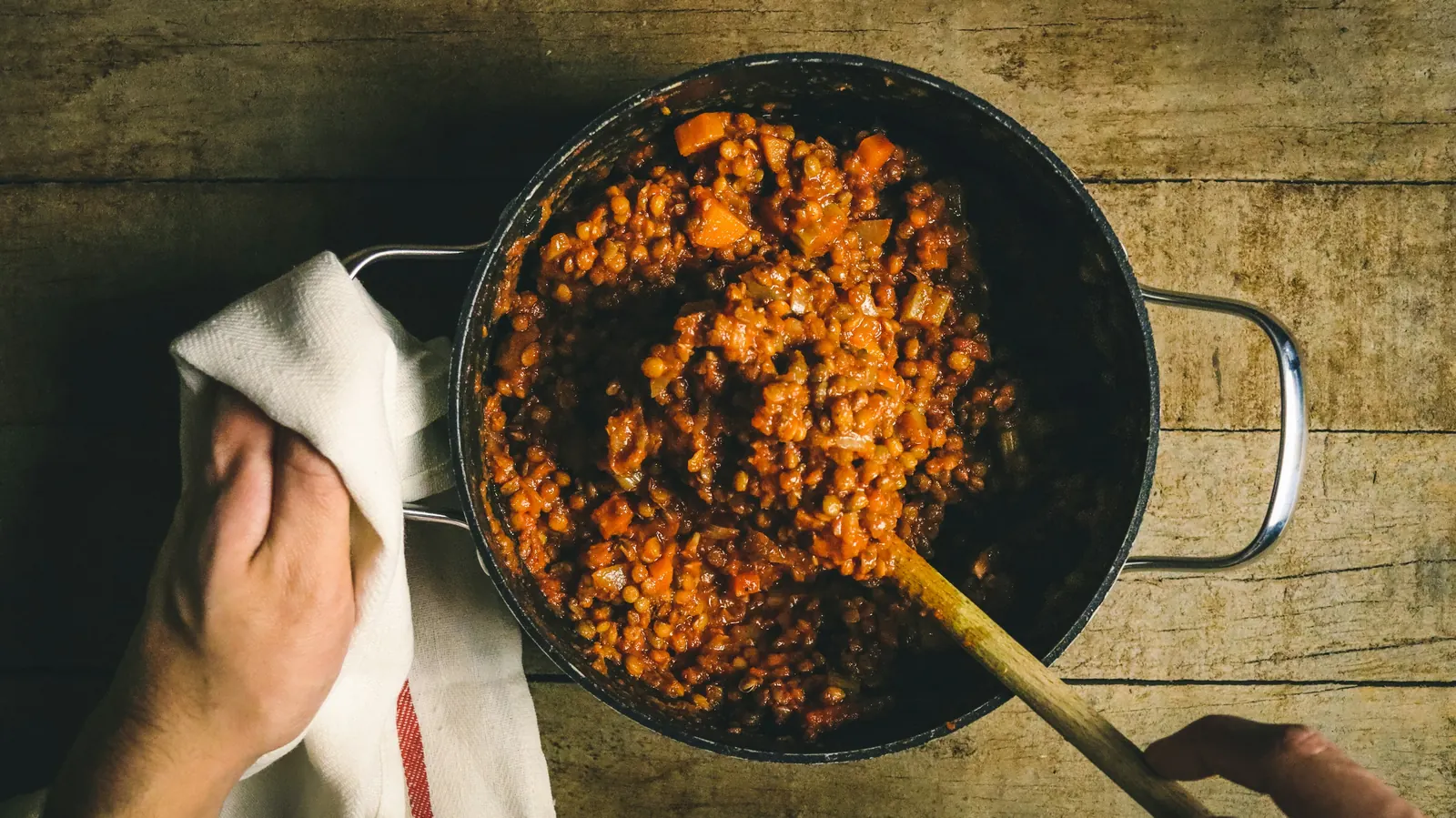
Refried beans start as a pot of soft-cooked pintos or black beans and end as something thick, creamy and spoonable. The step in between is mashing, usually right in the hot pan with a little fat and a splash of the cooking liquid, and the tool you use decides how smooth they get, how long it takes and whether your pan survives the job.
Most kitchens use a potato masher, and it works well. Mexican kitchens also use the machacador, a masher made for beans, either carved from solid wood or with a wooden handle and a metal head. This guide compares the main kinds, wire, plate, nylon and wood, names the bean mashers worth buying, and explains when an immersion blender is the better tool.
Julia’s earns a commission on purchases made through links on this page, at no cost to you. Recommendations are based on what a restaurant kitchen looks for, product specifications and verified buyer reports.
Quick verdict: which bean masher to buy
For most kitchens the best bean masher is the OXO Good Grips stainless steel wire masher: a sturdy stainless head, a soft non-slip handle that absorbs pressure, and it goes in the dishwasher. If you need more strength for a big pot, the KitchenAid Gourmet wire masher uses thick 4.5 mm stainless wire. If you make refried beans in a nonstick pan, choose the Cuisinart nylon masher, which Cuisinart says is safe for nonstick and heat resistant to 400°F.
The rest of this page explains why, and which of these suits your beans, your pan and your batch size.
Five bean mashers compared
Our five standout picks side by side, one for each kind of kitchen, with the details each maker or listing states. All nine mashers, including a wooden one and an immersion blender, are reviewed in full below.
| Bean masher | Best for | Head | Pan safety | Buy on Amazon |
|---|---|---|---|---|

OXO Good Grips Stainless Steel Wire MasherBest overall
|
Everyday refried beans | Stainless steel wire | Stainless, cast iron, clay; not nonstick | View on Amazon |
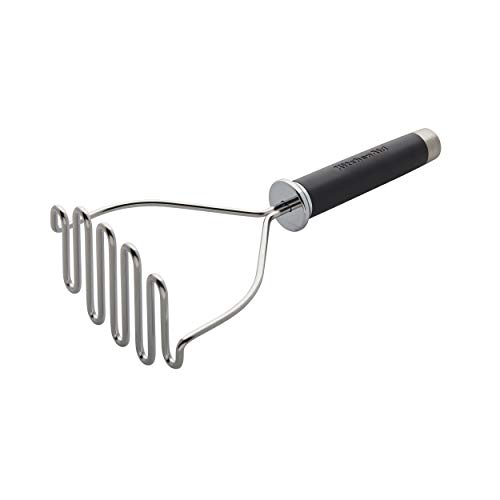
KitchenAid Gourmet Stainless Steel Wire MasherHeavy-duty pick
|
Big pots, firm beans | 4.5 mm stainless wire | Stainless, cast iron, clay; not nonstick | View on Amazon |
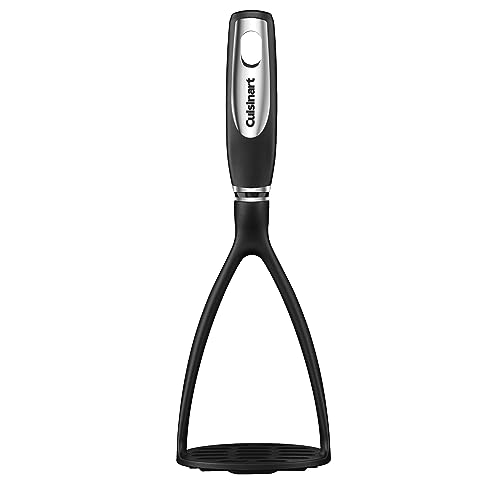
Cuisinart Nylon Potato MasherBest for nonstick
|
Refried beans in a nonstick pan | Nylon, heat resistant to 400°F | Safe for nonstick (Cuisinart) | View on Amazon |

Mexican Machacador Bean Masher, Wooden HandleTraditional Mexican
|
A traditional machacador for frijoles | Metal, wooden handle; made in Mexico | Stainless, cast iron, clay; not nonstick | View on Amazon |

Winco 24.5-inch Round Commercial MasherBest for big batches
|
Stockpots and party quantities | 5-inch nickel-plated round plate | Deep metal pots; not nonstick | View on Amazon |
Product images from Amazon. Pan safety for metal mashers is our guidance, not the maker’s: any metal head can scratch a nonstick coating.
Our picks for the best bean masher
These nine tools cover the ways home cooks mash beans: stainless wire for rustic refritos, a perforated plate for a smoother finish, nylon for nonstick pans, a Mexican machacador and an all-wood masher for tradition, a long commercial masher for big pots, a budget pick, and an immersion blender for the smoothest result. Each review says who it suits and one honest reason to skip it.
1. OXO Good Grips Stainless Steel Wire Masher – Comfortable Grip for a Big Pot
A wire masher is the most common tool for refried beans in home kitchens, and OXO’s is the one to start with. The listing describes a sturdy stainless steel head, which is a wavy wire loop, and the handle is OXO’s soft, non-slip Good Grips handle, which the listing says absorbs pressure. That matters with beans more than potatoes: you push down hard, many times, often over a hot pan.
A wire head leaves some beans whole and crushes the rest, which gives the rustic, slightly chunky texture of homestyle refritos. Add a ladle of the bean cooking liquid as you go, keep mashing until the beans hold together loosely, then let the pan cook off the excess until the beans are as thick as you like.
The OXO is dishwasher safe, according to the listing. Because the head is metal, use it in stainless steel, cast iron or clay; it will scratch a nonstick coating. OXO does not state the length on the listing, so if you mash in a deep pot, check that the handle clears the rim comfortably.
Why we like it
- Sturdy stainless steel wire head
- Soft, non-slip handle that absorbs pressure
- Dishwasher safe
- Rustic texture suits homestyle refried beans
Key specifications
| Model | 11282900 |
|---|---|
| Type | Wire masher |
| Head | Stainless steel wire |
| Length | Not stated |
| Handle | Soft, non-slip Good Grips handle |
| Nonstick safe | Not stated (metal head) |
| Dishwasher safe | Yes |
| Warranty | Not stated on this listing |
Why we recommend it
It does the one job well, the handle is comfortable for the long pressing that beans need, and it cleans in the dishwasher. For most people making refried beans at home, it is all the masher they need.
Skip it if you cook your refried beans in a nonstick skillet; choose the Cuisinart nylon masher instead.
Pros and cons
Pros
- Comfortable under heavy pressure
- Stainless steel, dishwasher safe
- Good rustic texture
Cons
- Not for nonstick pans
- Length not stated
- Leaves some whole beans
2. KitchenAid Gourmet Stainless Steel Wire Masher – Thick Wire for Heavy Use
If you mash beans by the potful, the strength of the wire matters. KitchenAid makes the head of this masher from thick 4.5 mm stainless steel wire, which the listing says is durable and will not rust, and the whole tool is 10.24 inches long.
The handle is designed for heavy use, according to KitchenAid: a well-balanced, ergonomic matte ABS handle with a chrome-plated bolster and a stainless steel end cap. KitchenAid lists it for mashing root vegetables, avocados, apples and nuts; beans are well within that range, especially when they are soft-cooked and still warm.
It is dishwasher safe, and KitchenAid backs it with a one-year hassle-free replacement and a lifetime limited warranty. Like any metal masher, keep it out of nonstick pans.
Why we like it
- Thick 4.5 mm stainless steel wire head
- Rust-resistant, per KitchenAid
- Ergonomic ABS handle built for heavy use
- Dishwasher safe
- One-year replacement plus lifetime limited warranty
Key specifications
| Model | KO008OHOBA |
|---|---|
| Type | Wire masher |
| Head | 4.5 mm stainless steel wire |
| Length | 10.24 inches |
| Handle | Matte ABS, chrome-plated bolster |
| Nonstick safe | Not stated (metal head) |
| Dishwasher safe | Yes |
| Warranty | 1-year replacement; lifetime limited |
Why we recommend it
Choose it if you make big batches of refried beans, or if a lighter masher has bent on you before. The thicker wire is the main reason to pay more than for a basic masher.
Skip it if you mash in a tall stockpot. At about ten inches, your hand will be close to the hot rim; the long Winco commercial masher is better for that.
Pros and cons
Pros
- Thick, rust-resistant wire
- Comfortable, balanced handle
- Long warranty
Cons
- Not for nonstick
- Short for deep pots
- Rustic, not smooth, result
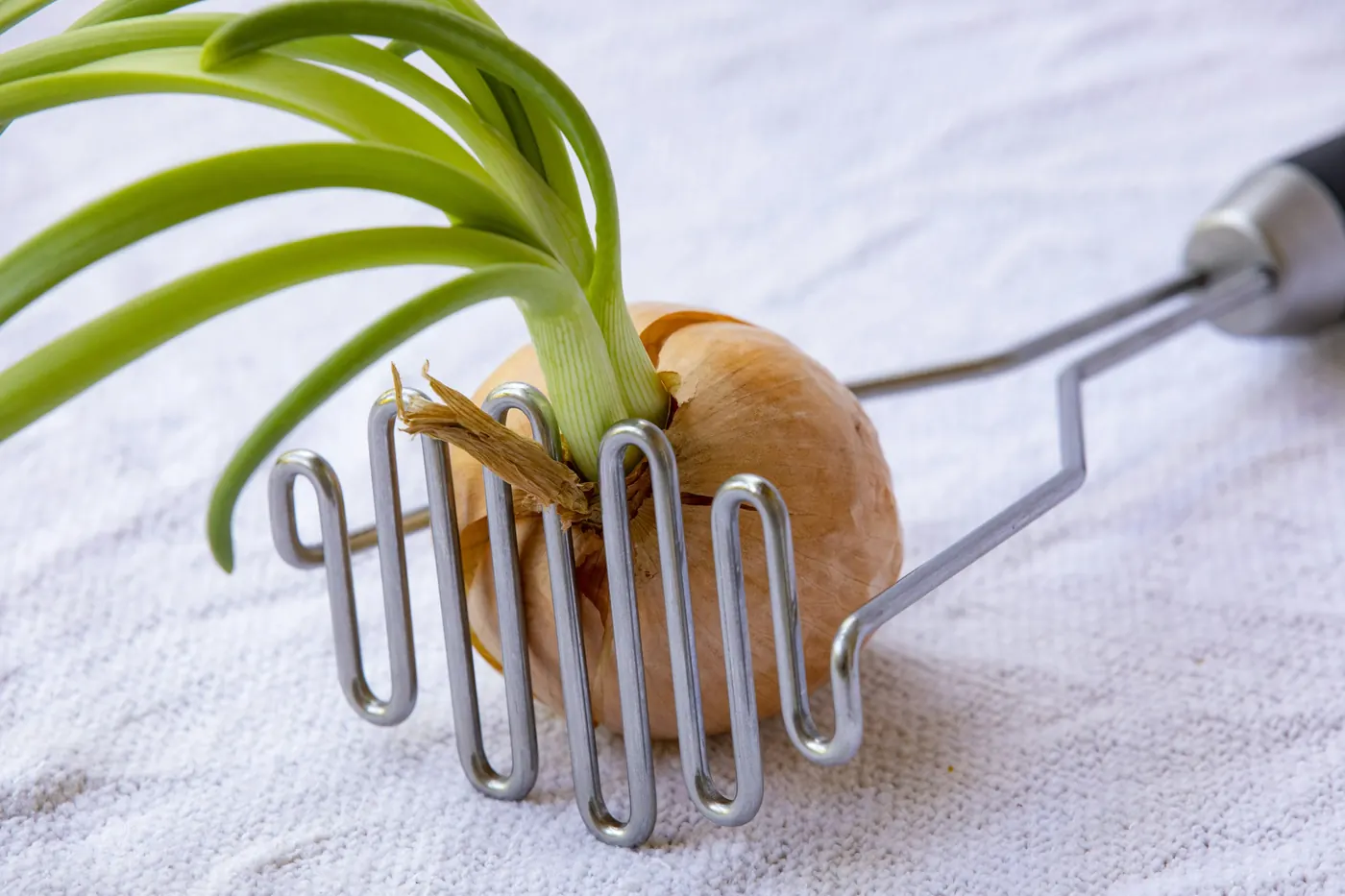
3. Zyliss Stainless Steel Potato Masher – A Smoother Mash and a Built-in Scraper

A plate masher, with a flat head punched with holes, pushes beans through the holes instead of between the wires, so it reaches a smoother texture in fewer strokes. Zyliss makes its plate from stainless steel and describes the head as strong for mashing and pressing; the listing gives the tool as 10 inches long.
The detail cooks tend to notice is the silicone scraper on the side of the head. Zyliss says it is there so no food is wasted: you can wipe beans off the edge of the pan as you mash instead of switching to a spatula. The handle is made from 50% wheat straw to reduce plastic, according to Zyliss, and is shaped for a non-slip grip.
It is dishwasher safe and carries a five-year Zyliss guarantee. Keep it to stainless steel, cast iron or clay pots, since the metal plate can mark nonstick.
Why we like it
- Stainless steel plate for a smoother mash
- Silicone scraper on the side of the head
- Handle made with 50% wheat straw
- Dishwasher safe
- Five-year Zyliss guarantee
Key specifications
| Model | E980270 |
|---|---|
| Type | Plate masher |
| Head | Stainless steel plate with silicone scraper |
| Length | 10 inches |
| Handle | 50% wheat straw, non-slip |
| Nonstick safe | Not stated (metal head) |
| Dishwasher safe | Yes |
| Warranty | 5-year Zyliss guarantee |
Why we recommend it
Choose it if you like your refried beans closer to smooth than chunky, or you want one masher that also does creamy mashed potatoes. The scraper saves a step every time.
Skip it if you want the coarse, rustic refritos a wire masher gives, or if you mash very firm beans: a plate takes more push than wire to get through them.
Pros and cons
Pros
- Smoother result in fewer strokes
- Built-in scraper
- Five-year guarantee
Cons
- Not for nonstick
- More effort on firm beans
- Holes need a rinse straight away
4. Cuisinart Nylon Potato Masher – Safe in a Nonstick Pan
Plenty of home cooks fry their refried beans in a nonstick skillet, and a metal masher will scratch it. Cuisinart’s nylon masher (model CTG-12-MH) solves that: the listing says the nylon head is safe for nonstick cookware and heat resistant up to 400°F, so it can sit in a pan of hot beans while you work.
The handle is large and comfortable, according to Cuisinart, and the whole tool is dishwasher safe. Cuisinart’s product page lists a lifetime warranty for the tool, which, per its use-and-care terms, excludes damage from misuse or overheating. That exclusion matters with nylon: keep it within its 400°F rating by not resting it on a burner or against a very hot pan edge.
Nylon is not as stiff as stainless steel, so expect to work a little harder on firm or cold beans. For warm, well-cooked beans with some of their liquid, it does the job and protects the pan.
Why we like it
- Nylon head safe for nonstick cookware
- Heat resistant up to 400°F
- Large, comfortable handle
- Dishwasher safe
Key specifications
| Model | CTG-12-MH |
|---|---|
| Type | Nylon masher |
| Head | Nylon, heat resistant to 400°F |
| Length | Not stated |
| Handle | Large comfort handle |
| Nonstick safe | Yes (Cuisinart) |
| Dishwasher safe | Yes |
| Warranty | Lifetime (Cuisinart product page) |
Why we recommend it
Choose it if your bean pan is nonstick. It is the simplest way to mash refried beans in the pan without damaging the coating, and it is just as useful for mashed potatoes in a nonstick pot.
Skip it if you mash firm beans or big batches in stainless steel or cast iron. A stainless masher is stiffer and will outlast nylon there.
Pros and cons
Pros
- Safe for nonstick
- Rated to 400°F
- Dishwasher safe
Cons
- Less rigid than steel
- Can soften if left on a hot rim
- Length not stated
5. Mexican Machacador Bean Masher, Wooden Handle – Made in Mexico for Frijoles
This is the Mexican style of bean masher: a machacador or apachurrador de frijol, with a metal mashing head on a turned wooden handle, painted red. The seller, Always Quality, lists it as made in Mexico and sells it for beans, potatoes and vegetables.
That is close to everything the listing says. It gives no dimensions, no head material beyond “metal”, and no care instructions, so judge it by the photos and treat it as you would any wood-handled tool: wash it by hand, dry it straight away, and keep the wooden handle out of the dishwasher and out of soaking water so it does not crack.
Use it the way it is meant to be used: in a cazuela or a heavy skillet of hot beans with a little lard or oil and some of the bean broth, pressing and turning until the frijoles are as smooth as you want. Because the head is metal, keep it out of nonstick pans. If you cook beans in clay, our guide to the best clay pot for cooking beans covers the olla that goes with it.
Why we like it
- Traditional machacador design for frijoles
- Made in Mexico, per the listing
- Wooden handle with a metal mashing head
- Sold for beans, potatoes and vegetables
Key specifications
| Model | Not stated |
|---|---|
| Type | Machacador (bean masher) |
| Head | Metal (type not stated) |
| Length | Not stated |
| Handle | Wood, painted red |
| Nonstick safe | Not stated (metal head) |
| Dishwasher safe | Not stated; hand wash the wooden handle |
| Warranty | Not stated |
Why we recommend it
Choose it if you want a traditional Mexican bean masher, made in Mexico, for a kitchen that cooks beans every week.
Skip it if you want full specifications before you buy. The listing is thin, with no size, metal type or care details.
Pros and cons
Pros
- Traditional Mexican design
- Made in Mexico
- Wooden handle stays comfortable
Cons
- Very few listed specs
- Hand wash only
- Not for nonstick
6. IBLAY Wooden Masher – All Wood, Kind to Every Pan

Traditional machacadores are carved from solid wood, and hand-carved ones are still made by artisans in Mexico. IBLAY’s masher is sold as a traditional Indian dal masher, but the form is the same: a long natural-wood handle with a wide, rounded head for pressing cooked lentils, beans and soft vegetables in the pot.
All-wood has two advantages for beans. It will not scratch any pan, nonstick included, and the long handle keeps your hand away from a deep, steaming pot. IBLAY says the extended handle gives a comfortable grip and reach into pots and deep bowls, and that the grain and shade vary from piece to piece.
The listing does not give dimensions, the type of wood or care instructions. Care is the same as for any wooden spoon: hand wash, dry it standing up, never leave it soaking, and rub on a little food-safe mineral oil now and then if it starts to look dry. A rounded wooden head gives a coarser mash than a perforated plate, which suits rustic frijoles.
Why we like it
- Solid natural wood: safe in any pan
- Long handle for deep pots, per IBLAY
- Wide rounded head for pressing soft beans
- No moving parts or joints
Key specifications
| Model | Wooden Masher |
|---|---|
| Type | Wooden masher (dal masher) |
| Head | Rounded natural wood |
| Length | Not stated (long handle) |
| Handle | Natural wood |
| Nonstick safe | Not stated (all wood, will not scratch) |
| Dishwasher safe | Not stated; hand wash wood |
| Warranty | Not stated |
Why we recommend it
Choose it if you want a traditional, all-wood tool that works in clay, cast iron and nonstick alike, and you like a coarse, homestyle texture.
Skip it if you want a smooth purée or a tool for the dishwasher. Wood takes more pressing than a metal plate and needs hand care.
Pros and cons
Pros
- Will not scratch any pan
- Long reach into deep pots
- Simple, one-piece wood
Cons
- Sizes and wood type not stated
- Coarser mash, more effort
- Hand wash and occasional oiling
7. Winco 24.5-inch Round Commercial Masher – Built for the Stockpot
When beans are cooked by the stockpot, for a party, a church supper or a week of meals, a ten-inch masher puts your knuckles over the steam. Winco’s commercial masher (model PTMP-24R) is 24-1/2 inches long with a 5-inch round head, the kind restaurant kitchens use to mash straight in a deep pot.
The listing describes nickel-plated construction for resistance to wear and corrosion, a chrome-plated handle, and a textured polypropylene sleeve that gives a comfortable, fatigue-reducing grip; that black sleeve is why the title calls it a plastic masher. One restaurant supplier, TigerChef, lists the weight at 1.9 pounds.
Winco sells a similar model, the PTM-24R, with a wooden handle instead of the polypropylene sleeve, so check the “P” in the model number if you have a preference. Neither listing gives care instructions; washing by hand and drying straight away is the safe approach for plated steel.
Why we like it
- 24-1/2-inch length for deep stockpots
- 5-inch round mashing head
- Nickel-plated for wear and corrosion resistance
- Textured polypropylene grip
Key specifications
| Model | PTMP-24R |
|---|---|
| Type | Commercial plate masher |
| Head | 5-inch round, nickel-plated |
| Length | 24-1/2 inches |
| Handle | Chrome-plated with polypropylene sleeve |
| Nonstick safe | Not stated (metal head) |
| Dishwasher safe | Not stated |
| Warranty | Not stated on the listing |
Why we recommend it
Choose it if you regularly cook beans in quantities a skillet cannot hold, and want to mash in the pot without leaning over it.
Skip it if you cook for two. At over two feet long it is awkward in a skillet and hard to store in a kitchen drawer.
Pros and cons
Pros
- Reaches the bottom of a stockpot
- Restaurant-supply build
- Comfortable textured grip
Cons
- Too long for a skillet
- Hard to store
- Care not stated
8. Chef Craft Select Sturdy Masher – A Simple Pick for Beans

Not every kitchen needs a premium masher. Chef Craft’s Select masher (model 12923) is a plain 10.25-inch stainless steel tool with an ergonomic plastic handle, and it is one of the few on this list whose listing names beans directly: Chef Craft calls it great for mashing beans and other smaller foods.
The listing also says it is great to use on stainless steel and cast iron pans, which is a useful, honest steer: it is a metal tool for metal pans. Stainless construction prevents rust, according to Chef Craft, and the masher is dishwasher safe.
The listing does not say whether the head is wire or plate or give a warranty, so look at the photos to check the head shape. For a second masher, a first apartment or a kitchen that makes refried beans once in a while, it covers the basics.
Why we like it
- Listed by Chef Craft as great for mashing beans
- Stainless steel that resists rust
- Comfort-grip ergonomic handle
- Dishwasher safe
Key specifications
| Model | 12923 |
|---|---|
| Type | Hand masher |
| Head | Stainless steel |
| Length | 10.25 inches |
| Handle | Ergonomic plastic comfort grip |
| Nonstick safe | Not stated; listed for stainless and cast iron pans |
| Dishwasher safe | Yes |
| Warranty | Not stated |
Why we recommend it
Choose it if you want an inexpensive stainless masher from an established housewares brand that names beans as a use.
Skip it if you mash large pots often; the KitchenAid’s thicker wire is the better buy for heavy use.
Pros and cons
Pros
- Made with beans in mind
- Stainless, dishwasher safe
- Budget-friendly
Cons
- Not for nonstick
- Head style not described
- No warranty stated
9. Cuisinart Smart Stick Variable Speed Hand Blender – The Smoothest Refried Beans

An immersion blender is not a masher, but it is the tool to use if you want refried beans as smooth as the ones in many restaurants, or a silky bean dip. Cuisinart’s Smart Stick (model CSB-179) is a 300-watt hand blender with variable speed control and an 8-inch stainless steel blending shaft, and Cuisinart says you can blend in a pot or saucepan as well as in the included cup.
Cuisinart’s manual adds a few rules that matter for hot beans. When blending hot liquids, use a tall container or work in small amounts to reduce splattering and the risk of burns. When blending right in a pot or pan, tilt it away from you to make a deeper area to blend in. Do not let the blender stand in a hot pot on the stove when it is not in use. And on a nonstick surface, be careful not to scratch the coating with the blade guard.
The box includes a 3-cup chopper/grinder, a whisk and a 2-cup mixing and measuring cup, so it earns its drawer space beyond beans: salsas, soups and sauces. The blending shaft is washed by hand, according to the manual, and Cuisinart backs the blender with a limited three-year warranty.
Why we like it
- Smoothest texture of anything here
- 300 watts with variable speed
- 8-inch stainless steel shaft reaches into pots
- Chopper, whisk and measuring cup included
- Limited three-year warranty
Key specifications
| Model | CSB-179 |
|---|---|
| Type | Immersion (hand) blender, 300 W |
| Head | Stainless steel blade under a guard |
| Length | 8-inch blending shaft |
| Handle | Comfort grip with variable speed slide |
| Nonstick safe | With care: avoid scratching the coating (manual) |
| Dishwasher safe | Blending shaft hand wash (manual) |
| Warranty | Limited 3-year |
Why we recommend it
Choose it if you like smooth, restaurant-style refried beans or bean dips, or you already want a hand blender for salsas and soups.
Skip it if you like rustic refritos with some texture. A blender takes beans past chunky very quickly, and it is a corded appliance to clean, not a tool you rinse and hang up.
Pros and cons
Pros
- Smooth texture fast
- Works right in the pot
- Useful for salsas and soups too
Cons
- Splatter risk with hot beans
- Can scratch nonstick
- Hand wash the shaft
How to choose a bean masher for refried beans
Five questions decide which masher suits you. Start with your pan; most of the other choices follow from it.
1. What pan you mash in
Refried beans are usually mashed in the pan they fry in. In stainless steel, cast iron or a clay cazuela, any masher works. In a nonstick skillet, use nylon, silicone or wood; metal heads scratch the coating. Cuisinart’s own hand blender manual warns users to take care not to scratch nonstick with the blender, too.
2. Wire, plate or wood
- Wire (OXO, KitchenAid) crushes beans between loops and leaves some whole: the rustic texture of homestyle refritos.
- Plate (Zyliss, Winco) pushes beans through holes for a smoother result in fewer strokes, but takes more force on firm beans.
- Wood (a machacador or IBLAY’s masher) is gentle on any pan and traditional; it gives a coarse mash and needs hand washing.
- An immersion blender gives the smoothest result of all, quickly, at the cost of more cleanup and splatter risk with hot beans.
3. Strength
Beans are firmer and denser than boiled potatoes, especially if they are not fully soft. Thin wire can bend after years of pressing. If you cook beans weekly, a heavier tool such as the KitchenAid, with its 4.5 mm stainless wire, is worth it.

4. Length
For a skillet, ten inches is plenty. For a stockpot, a short masher puts your hand in the steam; a commercial masher such as Winco’s 24-1/2-inch model, or a long wooden machacador, keeps it clear.
5. Cleaning
Stainless and nylon mashers from OXO, KitchenAid, Zyliss, Cuisinart and Chef Craft are dishwasher safe, according to their makers. Wooden tools and wooden handles should be washed by hand. Rinse any masher as soon as you finish: dried bean paste sets hard in wire loops and plate holes.
How we picked these nine bean mashers
We started from what refried beans ask of a masher: a head strong enough to crush soft-cooked beans quickly, a handle comfortable under repeated pressure, and a material that suits the pan. We looked only at mashers and blenders sold on Amazon in the United States and in stock when we checked, and took their specifications from the maker’s own listing or product page (Cuisinart’s product page and hand blender manual; Winco details also from restaurant-supply catalogs), as each review says. We chose nine to cover every head style, pan type and batch size, plus one electric alternative, rather than listing near-identical stainless mashers from unknown sellers. OXO’s nylon masher and smooth-plate masher were left out because one was low in stock and the other out of stock when we checked. We have not used these products ourselves; where we describe how a style behaves, it is from what the makers state and from how the head is built.
How to mash refried beans in the pan
A good masher only helps if the beans are ready for it. This is the method most Mexican home cooks follow, with any of the tools above:
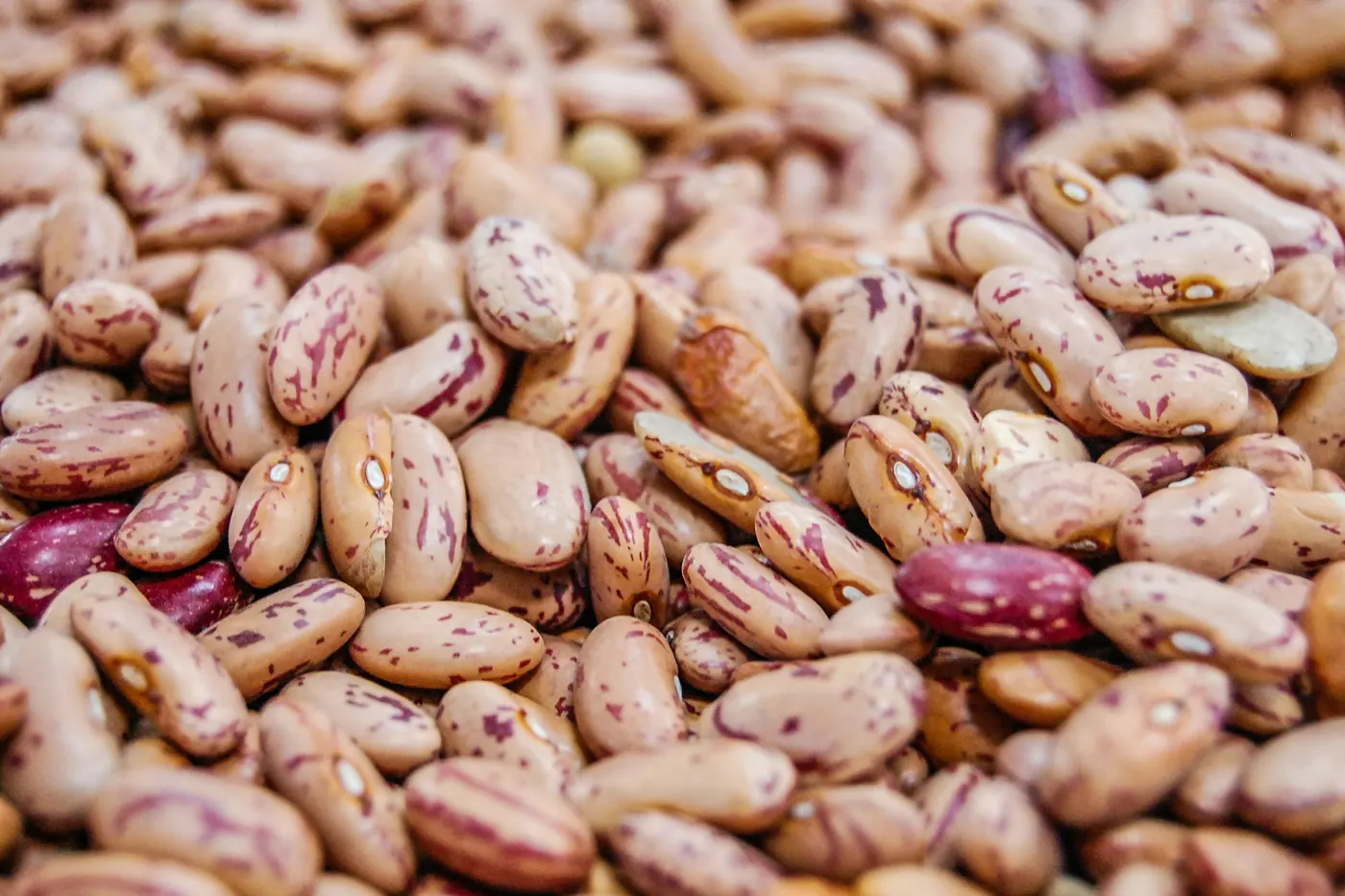
- Cook the beans until completely soft. Pintos or black beans should crush easily between two fingers. If you cook them from dry, an olla or a heavy pot on a gentle simmer does it; see our comparison of charro beans vs refried beans for how the same pot of beans becomes two different dishes.
- Heat the fat. Warm lard, bacon fat or oil in a wide, heavy skillet. Some cooks fry a little chopped onion first.
- Add the beans with some broth. Ladle in the beans and a splash of their cooking liquid; they should sizzle.
- Mash as they heat. Press down, lift, turn the pan and press again. Add more broth if they tighten up too fast.
- Cook them down. Keep stirring over medium-low heat until the beans are as thick as you like. They thicken further as they cool.
If you use an immersion blender, take the pan off the heat first, blend in short pulses with the pan tilted away from you, and return it to the heat to thicken.
Bean masher questions, answered
What is a bean masher called in Spanish?
Usually a machacador (from machacar, to crush); sellers also call it an apachurrador de frijol. Traditional ones are carved from solid wood; many sold today have a wooden handle and a metal head.
Can I use a potato masher for beans?
Yes. A potato masher and a bean masher do the same job, and most of the picks above are sold as potato mashers. Choose a sturdy one: beans are firmer than boiled potatoes.
Is a wire or plate masher better for refried beans?
Wire gives rustic, slightly chunky beans; a perforated plate gives a smoother mash in fewer strokes. If you want them completely smooth, an immersion blender is the tool.
Can I mash beans in a nonstick pan?
Yes, with a nylon, silicone or wooden masher. Cuisinart says its nylon masher is safe for nonstick and heat resistant to 400°F. Avoid metal mashers, which can scratch the coating.
Can I use a food processor instead?
You can purée cooked beans in a food processor or blender and then fry the purée, but you lose the rustic texture, and moving hot beans between pan and machine adds splatter risk. Mashing in the pan is simpler.
Our final pick for the best bean masher
Buy the OXO stainless wire masher for everyday refried beans in stainless, cast iron or clay; step up to the KitchenAid for heavy, frequent use; and choose the Cuisinart nylon masher if your bean pan is nonstick. For tradition, the Mexican machacador or a wooden masher does the job the old way, and for the smoothest result, reach for an immersion blender.
A bean masher is one small tool in a bigger kit. Our guide to Mexican cooking tools covers the comal, the molcajete and the rest, and if you are serving the beans with fajitas, see the best fajita skillet.
And if you would rather someone else made the beans tonight, see the menu or call to order.