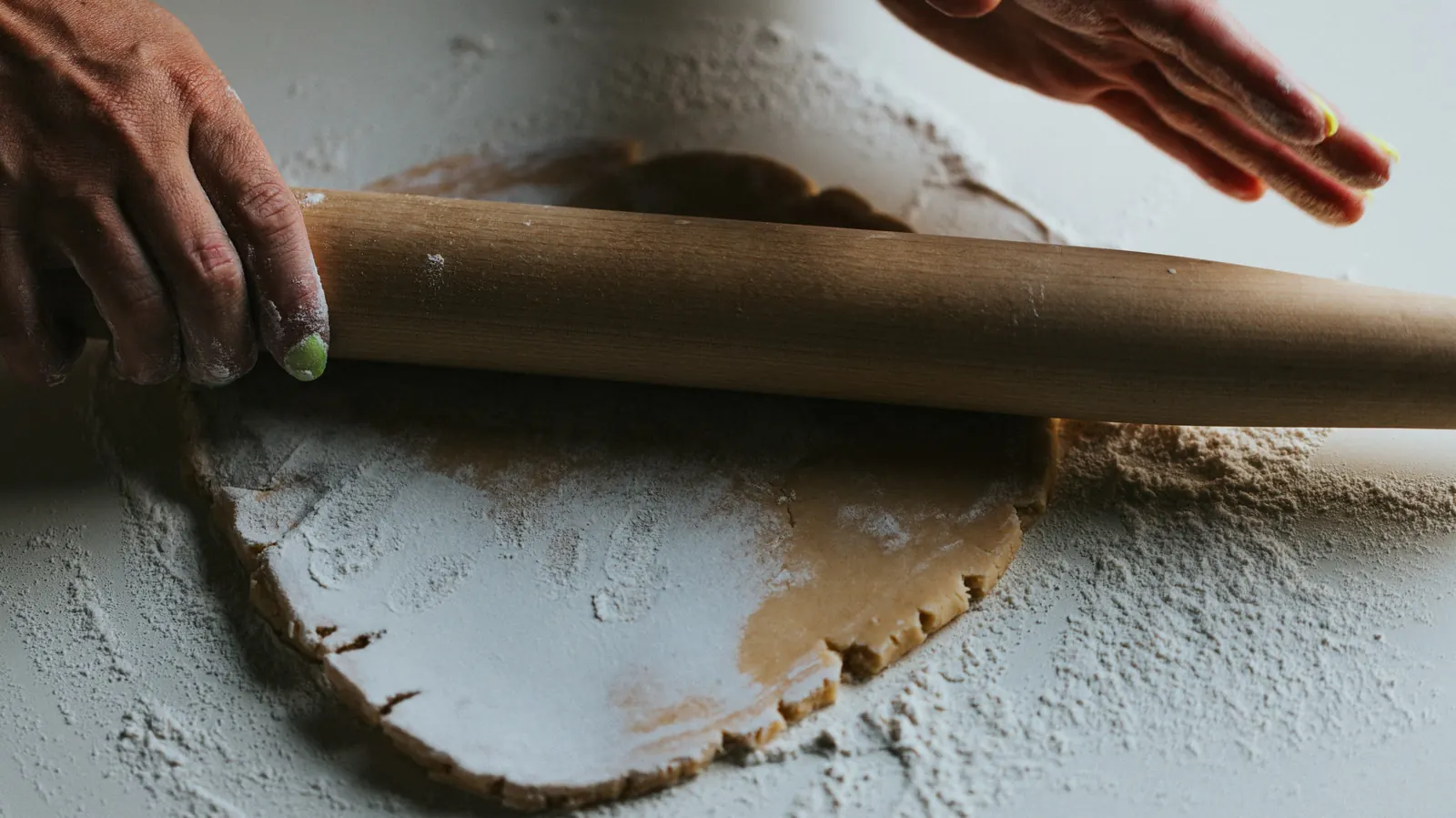
A tortilla press and a rolling pin both turn a ball of dough into a flat round, so it is fair to ask whether you need both. In a Mexican kitchen the answer depends almost entirely on the dough. Corn masa and wheat flour dough behave so differently under pressure that each one has its own natural tool, and the wrong one makes the job slower and the tortillas worse.
This guide sets the two side by side: what each does to corn masa and to flour dough, how much control you get over thickness, how fast each one is, and how long each takes to learn. At the end we name one press and one rolling pin worth buying, so you can choose by the tortillas you actually make.
Julia’s earns a commission on purchases made through links on this page, at no cost to you. Recommendations are based on what a working Mexican kitchen looks for in tortilla tools, the makers’ own specifications and published reviews and recipes, which we name.
Quick verdict: press for corn, rolling pin for flour
If you make corn tortillas, buy a tortilla press. Corn masa has no gluten to hold it together, and America’s Test Kitchen says corn tortillas need to be pressed, not rolled, to stay cohesive; a heavy press such as the Victoria 8-inch cast iron press flattens a ball evenly in one pull. If you make flour tortillas, buy a rolling pin. America’s Test Kitchen found flour dough too elastic for a press, and a slim, handle-free pin such as the GOBAM small wood rolling pin lets the dough relax as you roll it thin. If you make both kinds, own both.
Tortilla press vs rolling pin, side by side
The comparison below covers the two tools in general; where a figure applies to our two picks, the maker or the source is named in the sections that follow.
| Tortilla press | Rolling pin | |
|---|---|---|
| Best dough | Corn masa (fresh or from masa harina) | Wheat flour dough |
| How it flattens | Squeezes the whole ball at once between two plates | Stretches the dough a little at a time, stroke by stroke |
| With the other dough | Flour dough springs back toward a small, thick round | Corn masa can be rolled between plastic, but cracks and tears more easily |
| Thickness control | Even and repeatable; set by the ball size, the press weight and how hard you press | As thin as the dough allows; evenness depends on your hands |
| Size limit | A little smaller than the plates (8-inch press for most corn tortillas) | None, beyond your counter and the dough |
| Speed per tortilla | One press, a turn and a second press | Several strokes and quarter turns |
| Learning curve | Short: liners, portioning and peeling | Longer: keeping rounds round and even |
| Liners | Thin plastic for fresh masa | A light dusting of flour |
| Storage | A heavy object to keep somewhere; cast iron needs drying and oil | Fits in a drawer; hand wash and dry |
Corn masa: why the press wins
Corn masa is ground nixtamalized corn and water. It has no gluten, so it does not stretch; it holds together only as long as it is squeezed, not pulled. That is why a press suits it so well. The plates push the ball outward in every direction at once, and the masa never has to stretch over a rolling edge.
America’s Test Kitchen puts it plainly in its tortilla press review: corn tortillas need to be pressed, not rolled, to stay cohesive. The same review found that weight matters most, because a heavy press makes an evenly thin tortilla with little force, and that plates at least 8 inches wide keep the masa from squeezing out at the sides. Its best buy was a Victoria 8-inch cast iron press.
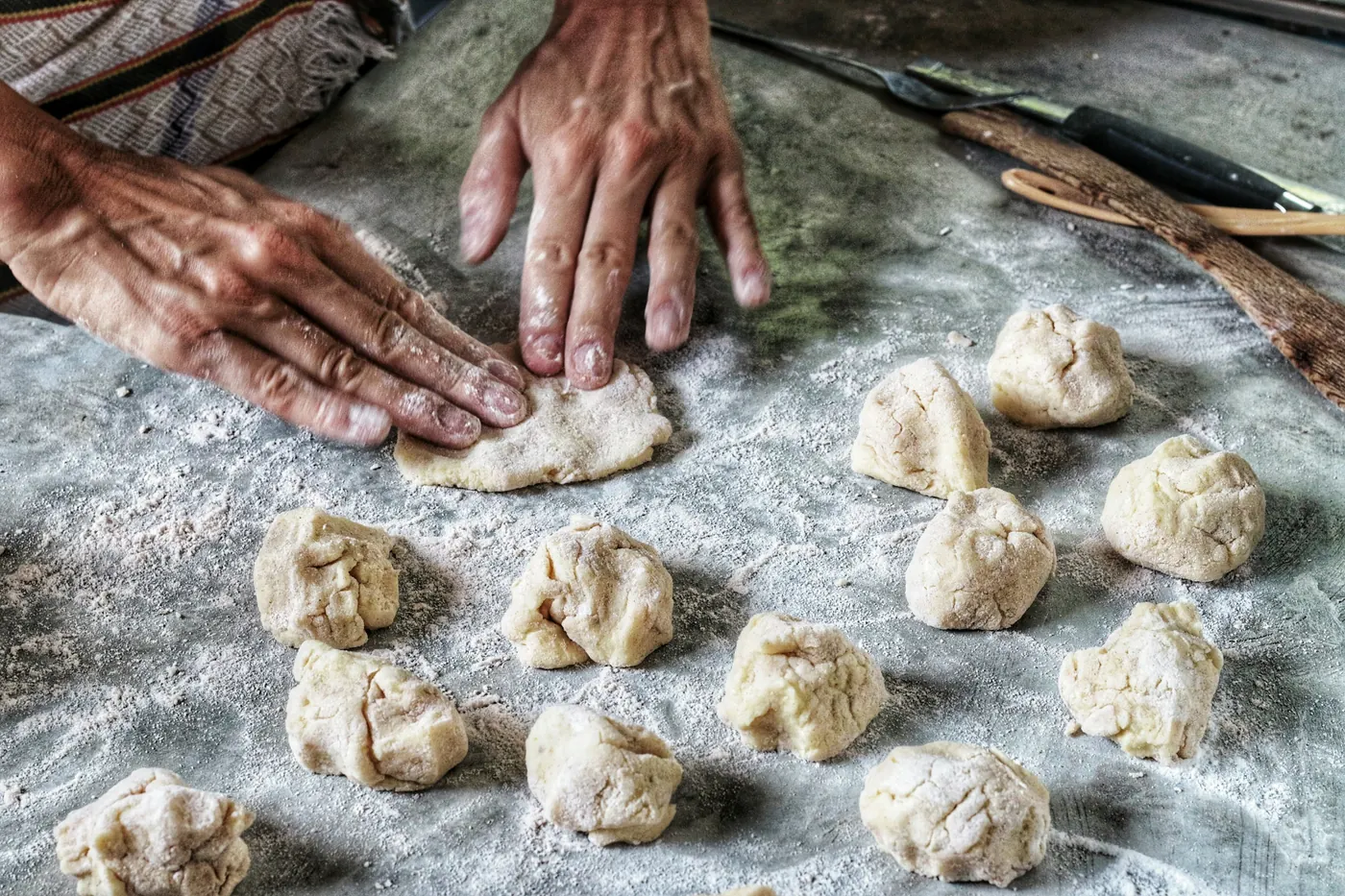
A rolling pin can flatten corn masa, but it is the harder road. Recipes that roll masa have you do it between two sheets of plastic, because bare masa sticks to the pin and tears as you lift it. Food Republic, describing ways to make tortillas without a press, suggests exactly that: dough between plastic wrap or wax paper, rolled thinly but not overstretched, with uneven edges trimmed afterwards. It works, but every stroke risks cracking the edge, and the tortillas are rarely as round or as even as a pressed one. If the reason you are considering a rolling pin is that you do not own a press, our guide to tortilla press alternatives compares the pin with a pie plate, a heavy skillet and an electric maker.
Flour dough: why the rolling pin wins
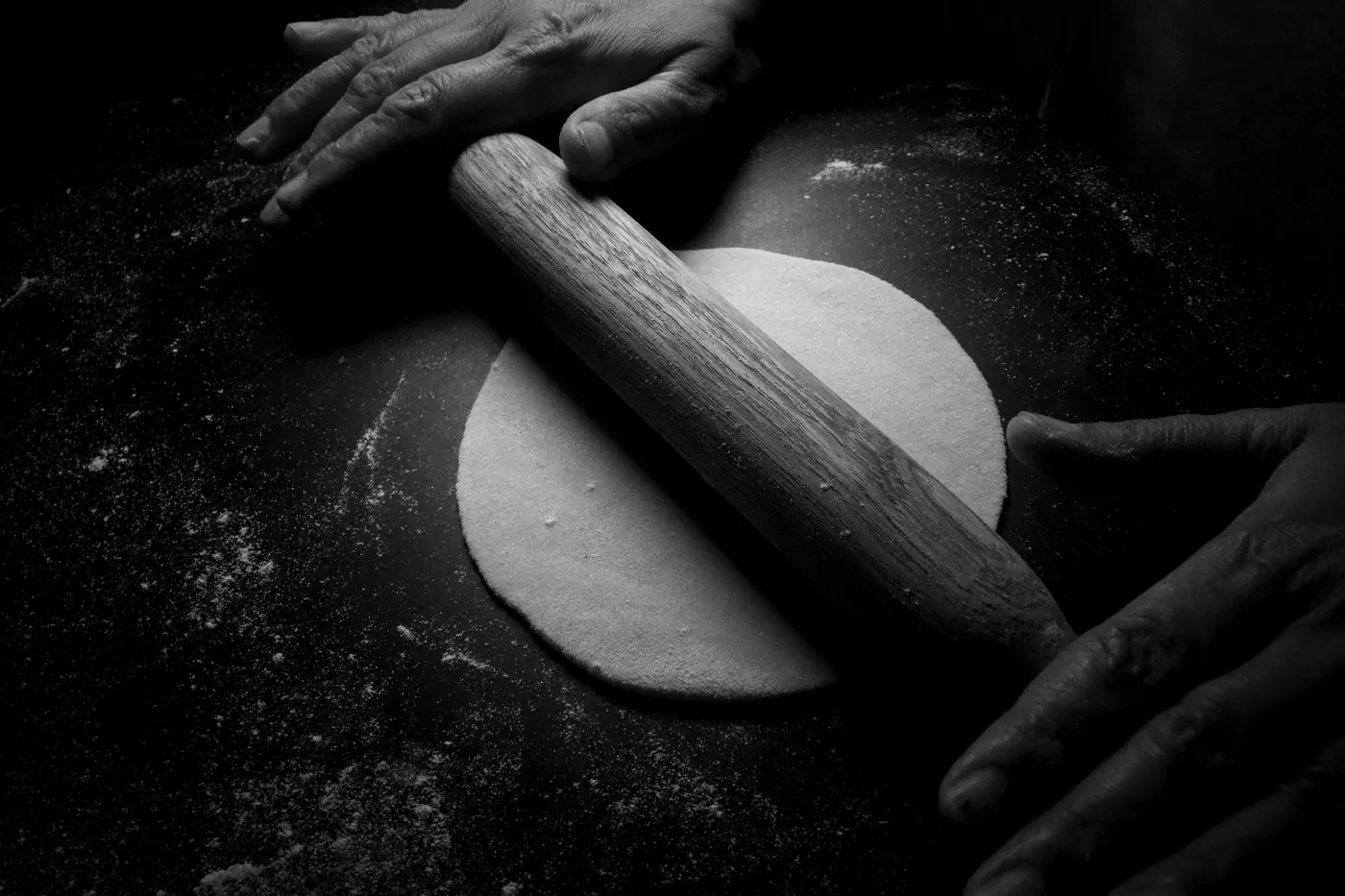
Wheat flour dough is the opposite material. Its gluten makes a flour tortilla soft and pliable, and it also makes the dough elastic. Squeeze a ball of it between two cold plates and much of the spread pulls back the moment the lid opens. America’s Test Kitchen’s review found flour tortilla dough too elastic for a press and recommends flattening it with a rolling pin.
A rolling pin stretches the dough a little with each stroke, which gives the gluten time to relax as you go. King Arthur Baking’s flour tortilla recipe shows the method: shape the dough into rounds, let them rest, covered, for 30 minutes, then roll each one into an 8-inch round on a lightly floured surface. America’s Test Kitchen’s own technique for tortillas without a press also rolls flour dough, to a 6-inch circle on a lightly floured counter, and chills the dough briefly first so the fat firms up and it is less sticky.
Not everyone agrees that a press is useless for flour. Some press makers sell their presses for flour tortillas too, and Masienda says its own steel press performs consistently with both corn and flour masa. Kundita’s listing for its aluminum press gives a practical routine: rest wheat dough about 10 minutes, press, rotate the round 180 degrees and press again. A heated press is a different tool again, because warmth lets flour dough spread rather than spring back; our guide to the best tortilla press for flour tortillas covers those. For an ordinary cold press, though, the realistic plan is to use it for a head start and finish each flour tortilla with a few strokes of the pin.
Thickness control: repeatable or adjustable
A press gives you repeatability. Once you have settled on the size of the masa ball and how hard you push, every tortilla in the batch comes out close to the same thickness, which means they all cook at the same pace on the comal. Masienda’s method is to press, open the press, turn the tortilla over between its liners and press again, which evens out any wedge left by a hinge that closes slightly unevenly. America’s Test Kitchen pressed corn masa to about a sixteenth of an inch in its no-press method; a good press does the same thing in one motion.
The limit is the plate. A press makes a tortilla a little smaller than its plates, and the thinness depends on its weight and your arm. A light press may never get a tortilla quite as thin as you want without the second press.
A rolling pin gives you range. You can roll a flour tortilla as thin and as wide as the dough allows, from a small taco round to a large burrito wrap, and stop the moment it looks right. The trade-off is that evenness depends entirely on your hands. Rolling from the center outward and giving the dough a quarter turn between strokes keeps it round and even; skipping that gives you thick middles and thin edges.
Speed at the stove
For corn tortillas, a press is far faster. Portion the masa, lay a ball between two liners, pull the lever, turn, pull again, peel and lay it on the comal. One cook can keep a comal full while pressing the next tortilla, which is how a family-size stack comes together quickly.
A rolling pin takes several strokes and turns per tortilla, and flour dough needs its rest first: 30 minutes in King Arthur Baking’s recipe. Once the dough is rested, though, rolling goes steadily, and many cooks roll one tortilla while the previous one cooks, which keeps the pace up. For flour tortillas, the press is not really faster, because the time saved pressing is lost to rerolling dough that has pulled back.
Learning curve and the mistakes beginners make
A press is quick to learn, but it has three habits worth knowing on day one. Use liners: Masienda says well-hydrated masa should never go directly on a press, and it finds parchment and zip-top bags too heavy to peel cleanly off fresh masa, so thin plastic works best. Peel the liner off the tortilla, not the tortilla off the liner. And read the first tortilla: if the edges crack, the masa needs more water. After a batch or two it becomes routine.
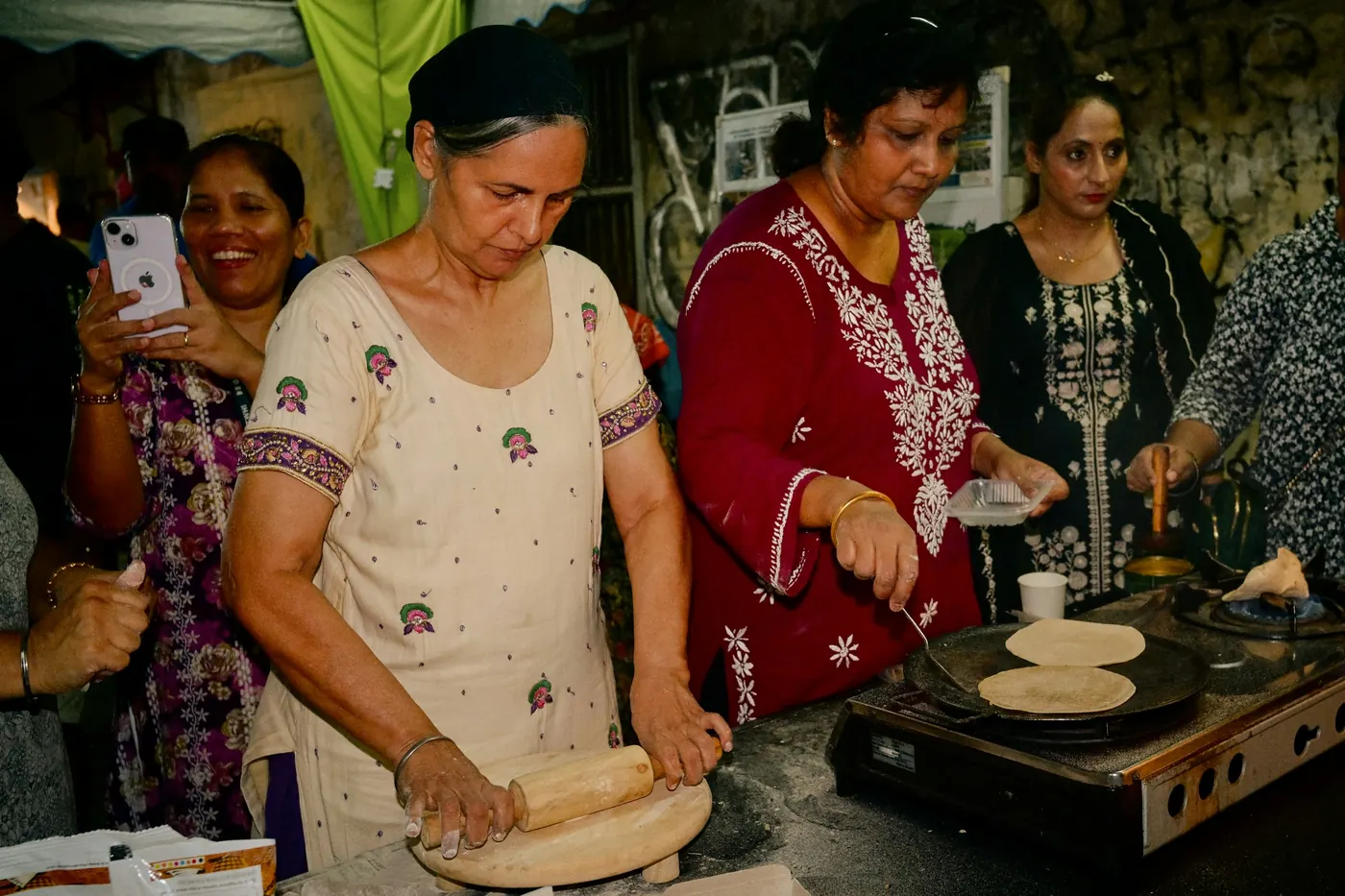
A rolling pin is easy to pick up and slower to master. The first few flour tortillas may come out oval, uneven or shrinking back. Resting the dough, flouring the counter lightly and turning the round between strokes fix most of that, and the method improves with every batch. There is nothing to assemble, season or store carefully, which is part of its appeal.
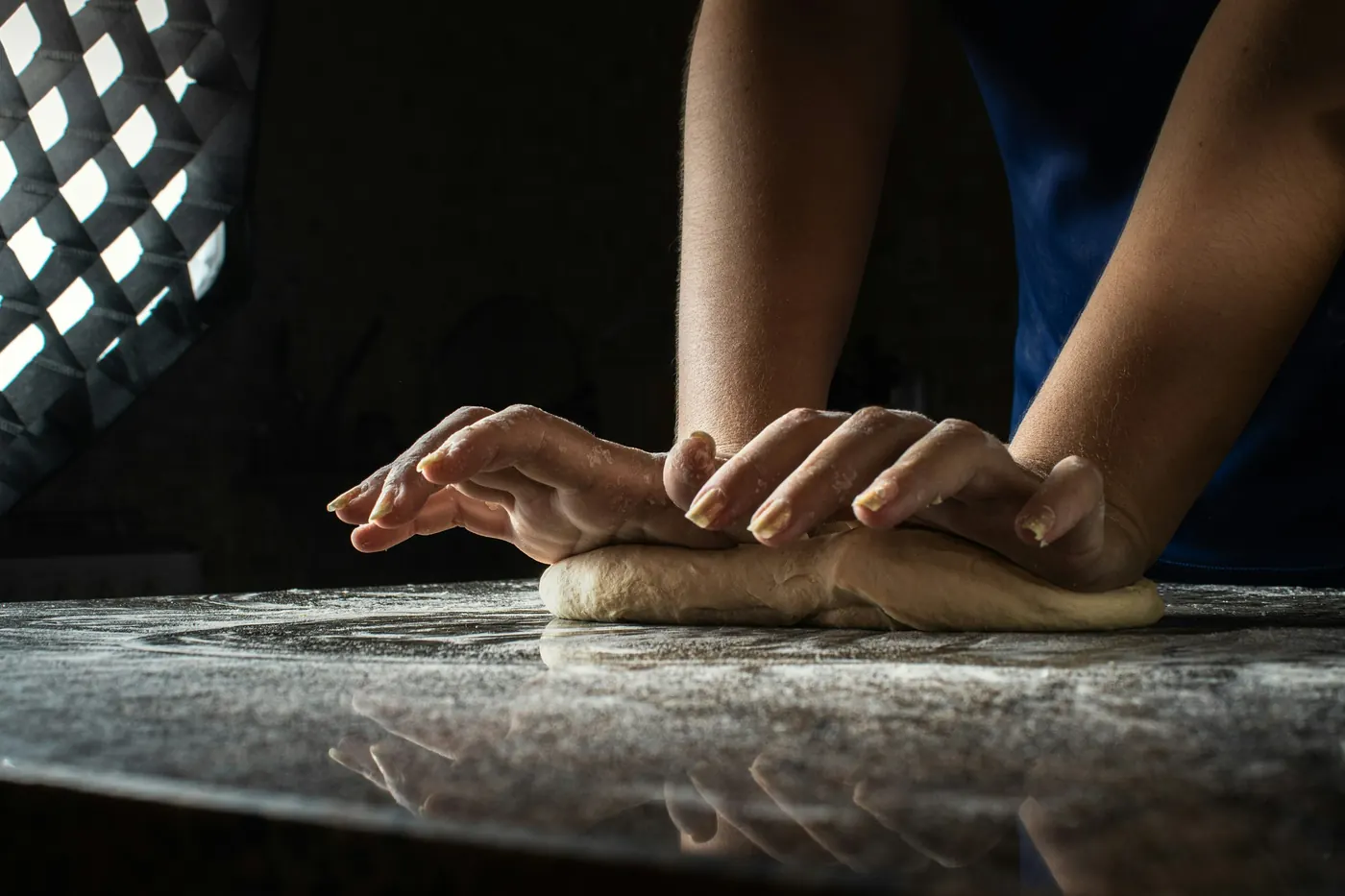
Choose a press if… / Choose a rolling pin if…
Choose a tortilla press if…
- You make corn tortillas, sopes, gorditas or other masa dishes.
- You want every tortilla in a batch the same thickness.
- You cook for a family and want a stack quickly.
- You have a cupboard or counter spot for a heavy tool.
Choose a rolling pin if…
- You make mostly flour tortillas.
- You want large tortillas for burritos, beyond what a press plate allows.
- You want a small tool that will also roll pie crust and pizza.
- You are happy to practise for a few batches.
If you make both kinds, own both. A press and a slim rolling pin, with a comal to cook on, cover almost every tortilla; our guide to tortilla making tools sets out the whole kit.
Our pick on each side
These are the two tools we recommend once you know which way you lean. The press is our top pick in the guide to the best tortilla press, and the rolling pin is the traditional-method pick in our flour tortilla guide.
1. Victoria 8-inch Traditional Cast Iron Tortilla Press – Even Corn Tortillas in One Pull

Victoria has made cast iron cookware in its own factories in Colombia since 1939, and this is its traditional 8-inch press: a round base, a matching top plate and a long lever. Breadtopia, a retailer that sells it, lists it at about eight pounds. That weight is the point. America’s Test Kitchen found weight the most important quality in a tortilla press, and named Victoria’s 8-inch press its best buy.
The 8-inch plates are the standard size for corn tortillas, with room at the edges so the masa does not reach the hinge. Victoria describes a reinforced design with engineered flat plates that prevent pinching and an ergonomic handle. America’s Test Kitchen’s one caution was that pressing very hard could leave a tortilla uneven, so press firmly rather than forcefully, and use the press-turn-press method.
It is seasoned with non-GMO, kosher-certified flaxseed oil and made without PTFE or PFAS, according to Victoria. Bare cast iron can rust, and the listing says it should never be air dried or put in a dishwasher: wipe it, dry it with a towel and keep a thin film of oil on it. Victoria’s listing also says it can be used for flour tortillas; for the reasons above, expect to finish flour rounds with a rolling pin.
Why we like it
- About 8 lb of cast iron, according to Breadtopia
- Victoria’s 8-inch press was America’s Test Kitchen’s best buy
- Engineered flat plates that prevent pinching, per Victoria
- Flaxseed-oil seasoning; no PTFE or PFAS
- Limited lifetime warranty, per the listing
Key specifications
| Model | TOR-003 |
|---|---|
| Type | Manual lever tortilla press |
| Material | Cast iron |
| Working size | 8-inch round plates |
| Weight | About 8 lb (Breadtopia) |
| Finish | Flaxseed-oil seasoning; no PTFE or PFAS |
| Made in | Colombia |
| Care | Towel dry, never air dry; no dishwasher; keep oiled |
Why we recommend it
Choose it if corn tortillas are the reason you are shopping. It is heavy enough to do most of the work, the right size for everyday tortillas and from a maker with a long cast iron history.
Skip it if you cannot comfortably lift eight pounds or know you will forget to dry it; a lighter aluminum press asks more of your arm but will not rust.
Pros and cons
Pros
- Weight does most of the pressing
- Even, repeatable corn tortillas
- No synthetic coating
Cons
- Heavy to lift and store
- Rusts if left wet
- Flour dough springs back in it
2. GOBAM Small Wood Rolling Pin – A Slim Pin for Flour Tortillas
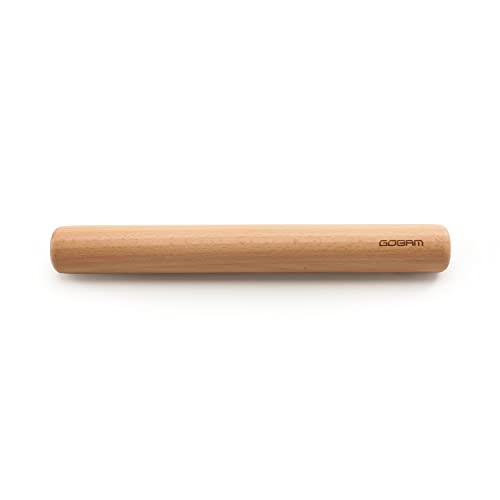
For flour tortillas you want a slim, handle-free pin rather than a big baker’s pin with handles. A thin dowel lets you feel the dough under your palms, roll from the center outward and turn the round between strokes, the way many cooks roll flour tortillas by hand. GOBAM’s small pin fits that description: the listing gives it as 11 inches long and 1.38 inches across, with no handles.
GOBAM says it is handcrafted from beech wood, hand-polished and finished with cooking oils for a smooth roll, and that the wood does not absorb fat, moisture or odors. At 11 inches it is long enough for a taco- or fajita-size flour tortilla and short enough to fit in a kitchen drawer. The listing names chapati among its uses, which is the same rolling job as a flour tortilla.
Care is simple: hand wash and pat dry, according to GOBAM. Keep it out of the dishwasher and do not leave it soaking, as with any wooden kitchen tool. The listing does not state the weight or where it is made. If you want a longer pin for burrito-size tortillas, GOBAM also sells a 13-inch version of the same design.
Why we like it
- Slim, handle-free dowel, 11 x 1.38 inches
- Solid beech wood, per GOBAM
- Hand-polished and finished with cooking oils
- Small enough for a kitchen drawer
Key specifications
| Model | BM1033 |
|---|---|
| Type | Handle-free rolling pin (dowel) |
| Material | Beech wood |
| Working size | 11 x 1.38-inch pin; tortilla size set by your rolling |
| Weight | Not stated |
| Finish | Hand-polished, finished with cooking oils |
| Made in | Not stated |
| Care | Hand wash and pat dry |
Why we recommend it
Choose it if flour tortillas are your main tortilla, or as the second tool beside a press. It is the simplest way to get thin, soft flour rounds, and it will roll pie crust and pizza as well.
Skip it if you want even corn tortillas fast; masa is easier and more reliable in a press.
Pros and cons
Pros
- Lets flour dough relax as you roll
- Any tortilla size
- Compact and easy to clean
Cons
- Even rounds take practice
- Weight and origin not stated
- Short for very large tortillas
How we compared the press and the pin
We compared the two tools on what a Mexican kitchen asks of them: how each handles corn masa and flour dough, how evenly and how thin it flattens, how fast it works at the stove and how long it takes to learn. For how each dough behaves, we relied on America’s Test Kitchen’s tortilla press review and its no-press tortilla technique, King Arthur Baking’s flour tortilla recipe, Masienda’s guidance on pressing masa, and Food Republic’s overview of making tortillas without a press. Product details come from Victoria’s and GOBAM’s Amazon listings, with one weight from the retailer Breadtopia, and stock was checked with Amazon’s product data on the day of writing. We have not used either product ourselves; where we describe how a tool behaves, we say whose findings those are.
Tortilla press vs rolling pin questions, answered
Can you use a rolling pin instead of a tortilla press for corn tortillas?
Yes, but roll the masa between two sheets of plastic, keep the dough well hydrated and expect rougher edges. America’s Test Kitchen says corn tortillas need to be pressed rather than rolled to stay cohesive, and its no-press method presses masa with a glass pie plate instead of rolling it.
Can you use a tortilla press for flour tortillas?
You can use it for a head start. Rest the dough first, press, turn and press again, then finish with a few strokes of a rolling pin, because flour dough springs back in a cold press. A heated press handles flour dough much better.
Is a rolling pin vs tortilla press faster?
For corn tortillas, the press is much faster: one press, a turn and a second press. For flour tortillas, a rolling pin is usually quicker overall, because a pressed flour round shrinks back and has to be rolled anyway.
What kind of rolling pin is best for tortillas?
A slim, handle-free wooden pin, roughly 11 to 13 inches long. It lets you feel the dough and turn it easily, and it is small enough to keep in a drawer.
Do I need liners with a rolling pin?
Not for flour dough: a light dusting of flour on the counter is enough. For corn masa, roll it between two sheets of thin plastic so it does not stick to the pin.
Our final word on pressing and rolling
Let the dough decide. Corn masa wants a press, and a heavy cast iron press like the Victoria 8-inch makes even tortillas with little effort. Flour dough wants a rolling pin, and a slim pin like the GOBAM lets it relax as you roll. If you make both, the pair covers almost every tortilla. For why the two doughs are so different in the first place, read our guide to corn versus flour tortillas, and for what to cook them on, the best comal for tortillas.
And if tonight is not a tortilla-making night, see the menu or call to order.