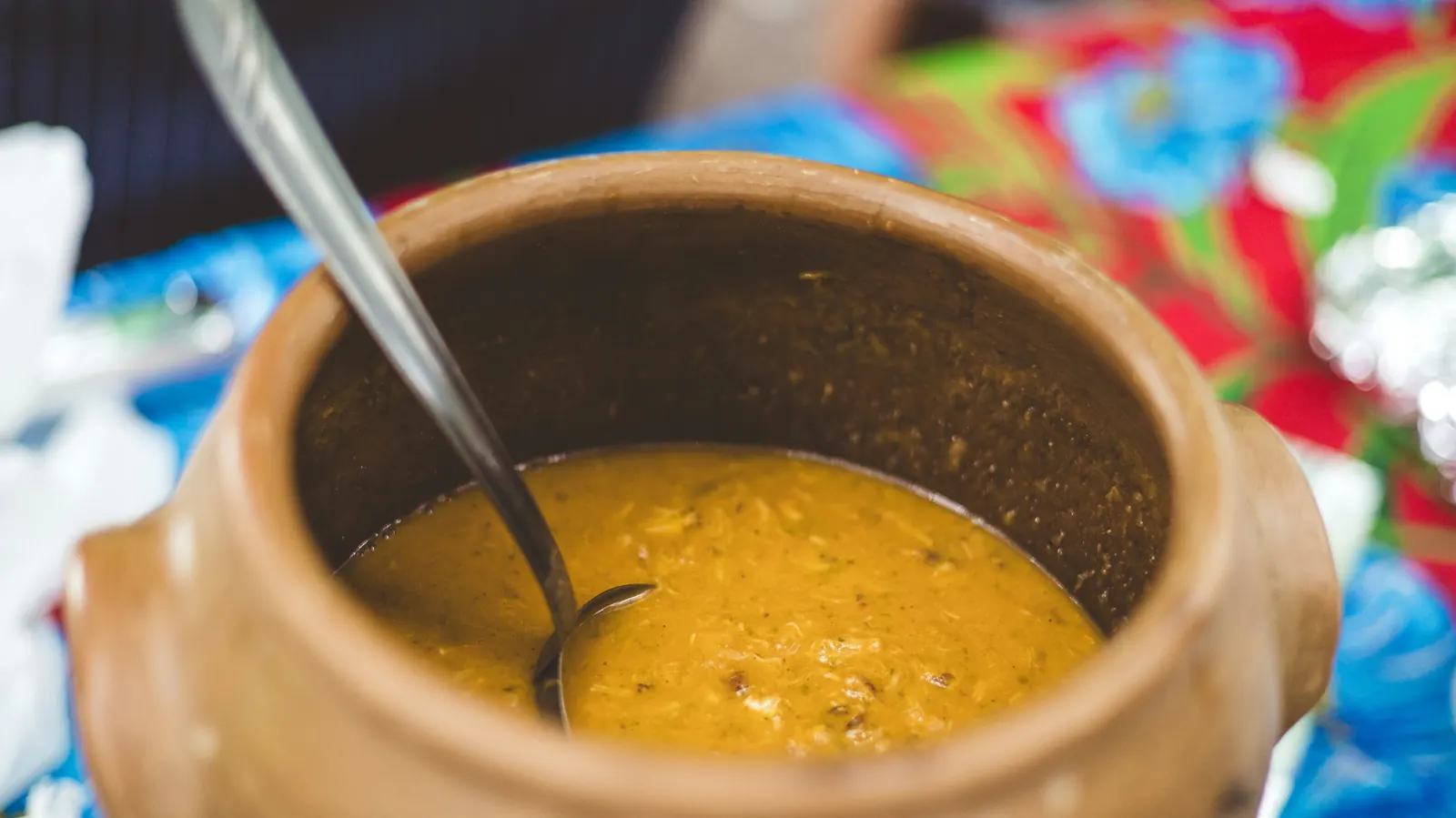
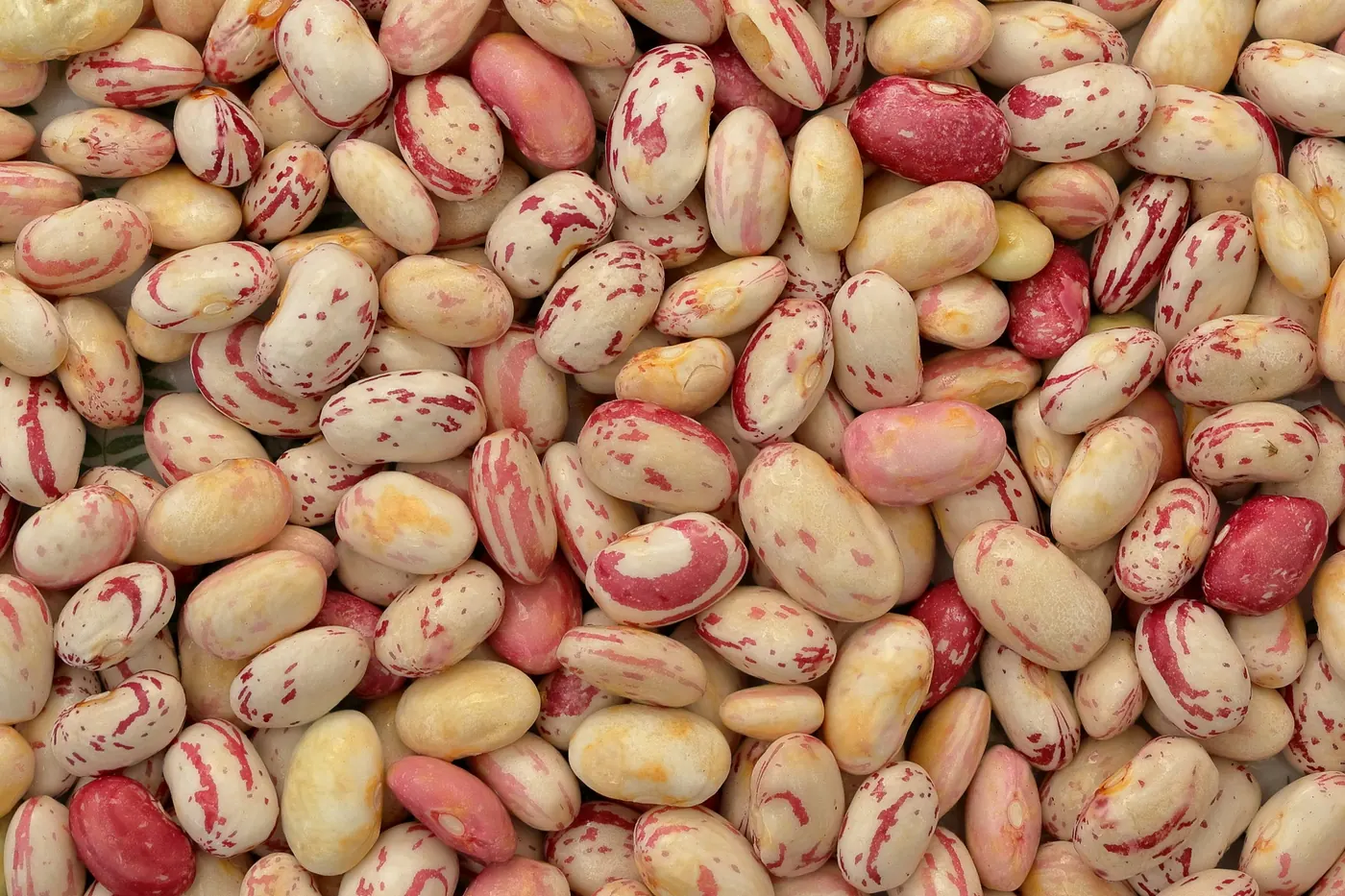
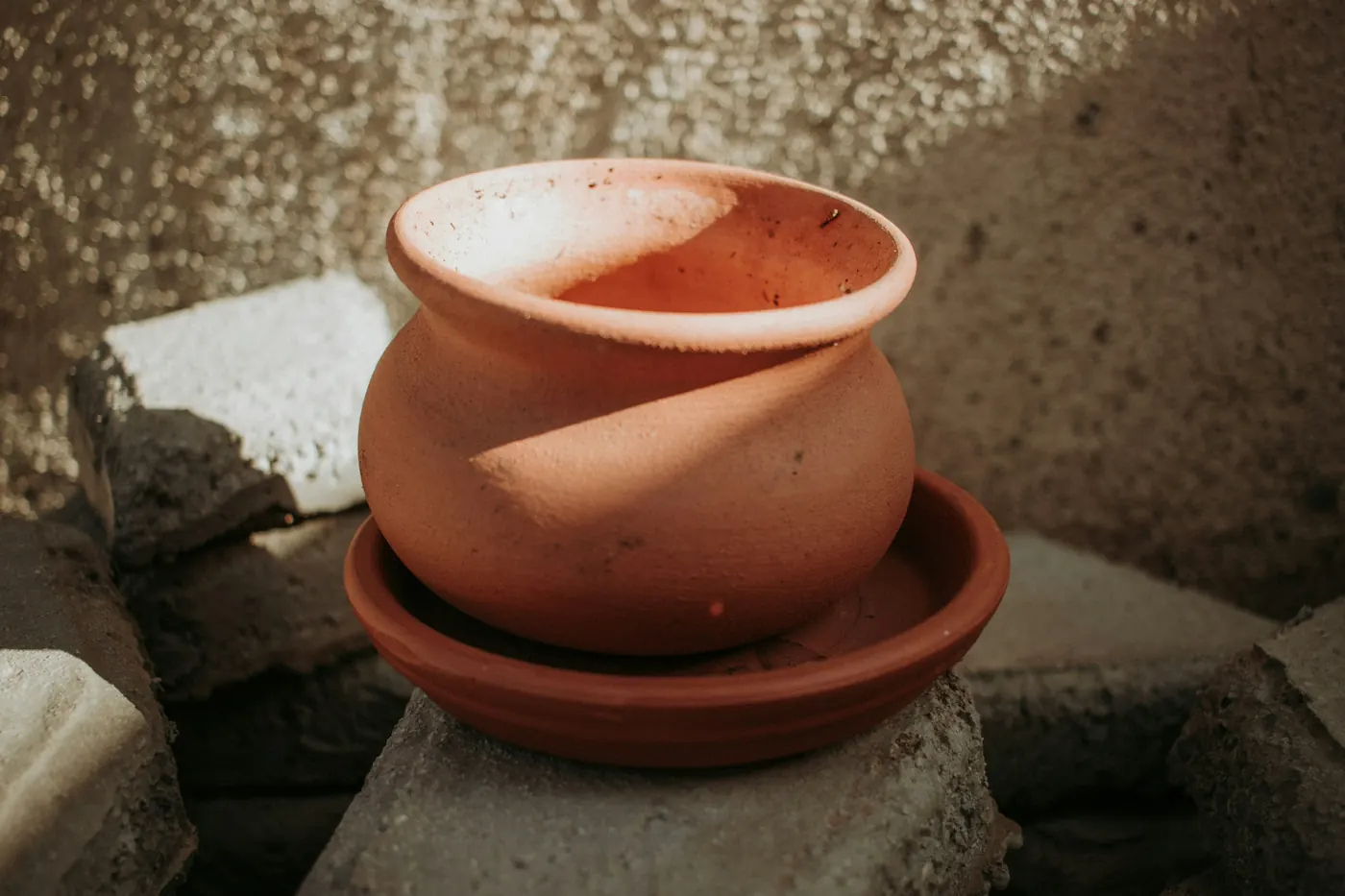
Frijoles de la olla, beans simmered slowly in a clay pot with little more than water, onion, salt and a sprig of epazote, are the base of a Mexican kitchen. They are eaten as they are, in their broth, and they are the starting point for charro beans and refried beans. The olla de barro, a round-bellied clay pot with a narrow neck, is the traditional vessel, and many cooks say beans taste better from it.
Buying one in the United States raises a question the recipe never mentions: lead. Some glazed traditional pottery contains lead that can leach into food, and the FDA has warned that even pottery labeled “lead free” has sometimes tested otherwise. This guide names the clay pots and the alternatives worth buying, reports exactly what each listing says about lead, and explains how to cure a clay pot before the first pot of beans.
Julia’s earns a commission on purchases made through links on this page, at no cost to you. Recommendations are based on what a working Mexican kitchen looks for in a bean pot, the makers’ own specifications and published guidance from the FDA, which we cite.
Quick verdict: which clay bean pot to buy
For most home cooks who want clay, the best clay pot for cooking beans is the Toque Blanche La Chamba 6-quart black clay soup and bean pot: it is unglazed, handmade in Colombia, and rated for gas and electric stoves and the oven, though its listing makes no statement about lead. If you want glazed ceramic with a written lead statement from its maker, choose the Emile Henry Flame 4.2-quart round stewpot, made in France and rated for gas and electric burners. If you would rather skip clay altogether, the Lodge Essential 6-quart enameled cast iron Dutch oven cooks a fine pot of beans on any stove.
The rest of this page explains why, what the FDA says about lead in pottery, and how to choose between clay and its alternatives.
Five bean pots at a glance
Our five standout picks side by side, one for each kind of cook, with what each maker or listing states. All seven pots are reviewed in full below.
| Bean pot | Best for | Material & size | Lead (per maker or listing) | Buy on Amazon |
|---|---|---|---|---|
| Clay on gas or electric | Unglazed black clay, 6 qt | No statement | View on Amazon | |

Emile Henry Flame 4.2-Quart Round StewpotBest stovetop ceramic
|
Ceramic on gas or electric | Glazed Flame ceramic, 4.2 qt | Maker: no lead, cadmium or nickel | View on Amazon |

Hakan Efes 4.4-Quart Unglazed Terracotta PotBest unglazed terracotta
|
Stovetop clay with curing steps | Unglazed terracotta, 4.4 qt | States no lead | View on Amazon |

Lodge Essential 6-Quart Enameled Cast Iron Dutch OvenBest clay alternative
|
Any stove, no curing | Enameled cast iron, 6 qt | No statement (PFAS-free) | View on Amazon |

Granite Ware 4-Quart Enamel Bean PotBudget pick
|
A light, low-cost bean pot | Porcelain enamel on steel, 4 qt | No statement (PFOA/PTFE-free) | View on Amazon |
Product images from Amazon. The lead column reports only what the maker or the Amazon listing states; a statement is not a test result. See the FDA section below before you buy any glazed pottery.
Our picks for the best clay pot for cooking beans
These seven pots cover the realistic choices: unglazed clay from Colombia and Turkey, a French glazed ceramic stewpot, a clay roaster for the oven, and three pots that are not clay at all but cook beans just as well with no curing and no lead question about a glaze. For each one we report what the listing says, and does not say, about lead.
1. Toque Blanche La Chamba 6-Quart Black Clay Bean Pot – Unglazed Clay for Slow Beans

La Chamba is black clay cookware made by hand in Colombia, and this is its round, lidded soup and bean pot. This 6-quart size (about 9 by 9 by 7 inches, per the listing) holds a pound or two of dried beans with plenty of broth, and the lid and side handles make it easy to carry from the stove to the table.
The pot is unglazed earthenware. The listing says its porous body lets a little steam evaporate and that the clay holds heat well and heats evenly, which is what you want for beans that should barely simmer for hours. Being unglazed matters for the lead question too: the FDA’s concern with traditional pottery centers on glazes and decoration, and this pot has neither. That is not the same as a lead statement, and the listing does not make one.
Toque Blanche rates it for gas or electric stoves, ovens and microwaves. The maker’s own catalog pages recommend a heat diffuser on stoves other than gas, which spreads the heat and protects the clay from a hot spot under the base.
Treat it as clay: bring it up to heat slowly, add hot rather than cold water as the beans cook, and never set a hot pot on a cold, wet surface. The listing does not give curing instructions; the common water-and-low-heat cure described further down works for unglazed clay.
Why we like it
- Unglazed black clay, handmade in Central Colombia
- 6-quart capacity with lid and handles
- Gas, electric, oven and microwave, according to the listing
- Goes from stove to table
Key specifications
| Model | SS4 |
|---|---|
| Capacity | 6 quarts; about 9 x 9 x 7 in |
| Material | Black clay earthenware, handmade in Colombia |
| Glaze | Unglazed |
| Lead (per listing) | No statement |
| Heat sources | Gas, electric, oven, microwave |
| Curing | Not stated in the listing |
| Care | Not stated in the listing; maker’s catalog says no dishwasher |
Why we recommend it
It is the most practical way to cook beans in real clay on an American stove: unglazed, a sensible size, with a lid, and rated for electric as well as gas. It suits cooks who make a pot of beans every week and want the slow, gentle heat of clay.
Skip it if you want a written lead statement before buying; the listing does not give one, so ask the seller or test the pot with a home lead kit, as the FDA suggests for pottery you cannot verify. It also will not work on induction.
Pros and cons
Pros
- No glaze to worry about
- Generous 6-quart size
- Rated for gas and electric
Cons
- No lead statement in the listing
- Fragile; avoid sudden temperature changes
- Not for induction
2. Emile Henry Flame 4.2-Quart Round Stewpot – French Ceramic for the Burner
Emile Henry has made ceramic cookware in Burgundy since 1850, and its Flame line is the clay-based cookware it designs for direct heat. This round stewpot holds 4.2 quarts, enough for a pound of dried beans and their broth, with inner dimensions of 9.65 by 3.94 inches according to the listing. It is the closest thing on this list to a glazed clay olla from a company that publishes clear statements about what is in it.
On materials, Emile Henry’s US website says its Flame cookware “is made in Marcigny France from high fired Burgundy clay”, and, in its section on Flame ceramic, that “There is no lead, cadmium or nickel in our products, which means that there is no risk of contamination while cooking.” We quote that exactly; it is the maker’s statement, not an independent test. The listing describes a “highly resistant glaze”.
The stove question has a clear answer from the maker. Emile Henry’s product page for this round stewpot says the range is “designed for use on all types of stove top (except for induction) and in the traditional oven”, and lists gas, glass-ceramic, halogen and electric hobs, the oven, the microwave and the dishwasher, with a maximum temperature of 290°C (about 550°F). The Amazon listing adds BBQ grills and the broiler, and says the pot can go from the freezer to the oven. Emile Henry describes Flame ceramic as a heat diffuser rather than a conductor, which suits a long, gentle simmer.
The listing says it is up to 30% lighter than many cast iron or metal pots, dishwasher safe, and covered by a 10-year warranty. Neither the listing nor the maker’s page we read gives curing instructions.
Why we like it
- Maker states no lead, cadmium or nickel in its products
- Rated for gas, electric, glass-ceramic and halogen stovetops
- Made in France from high-fired Burgundy clay, per Emile Henry
- Dishwasher safe, with a 10-year warranty
- Lighter than cast iron, according to the listing
Key specifications
| Model | EH794540 (Flame round stewpot, Charcoal) |
|---|---|
| Capacity | 4.2 quarts; inner 9.65 x 3.94 in |
| Material | Flame ceramic, high-fired Burgundy clay |
| Glaze | Glazed (“highly resistant glaze”) |
| Lead (per listing) | Maker’s site: “no lead, cadmium or nickel in our products” |
| Heat sources | Gas, electric, glass-ceramic, halogen; oven, broiler, grill, microwave; not induction (maker) |
| Curing | Not stated |
| Care | Dishwasher safe or hand wash; 10-year warranty |
Why we recommend it
It suits cooks who want ceramic on the burner and want the maker’s lead and cadmium statement in writing, from a company that names where and how the pot is made. It is also the easiest clay-based pot here to clean.
Skip it if you cook on induction; Emile Henry says this range is not for induction stovetops. At 4.2 quarts it is also a family pot rather than a party pot, and it costs more than the other clay options.
Pros and cons
Pros
- Clear lead and cadmium statement from the maker
- Works on gas and electric burners
- Dishwasher safe
Cons
- Not for induction
- Smaller than the 6-quart pots
- No curing guidance published
3. Hakan Efes 4.4-Quart Unglazed Terracotta Pot – Stated Lead-Free, Made for the Stovetop
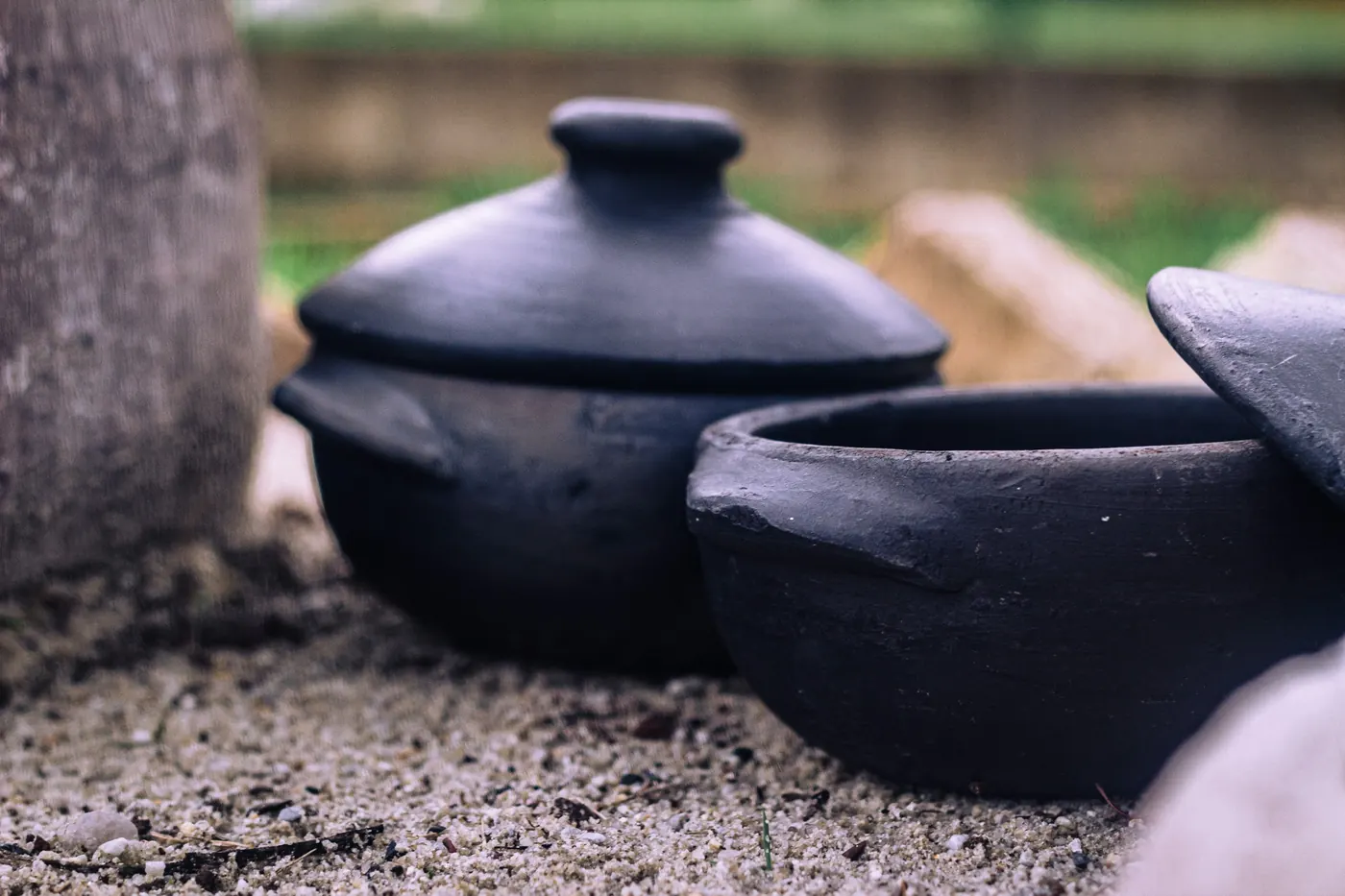
Hakan’s Efes pot is a Turkish clay casserole, handmade from terracotta in the Cappadocia region, and it does the same job as an olla: slow, gentle simmering with a lid. At 4.4 quarts (4.2 liters) it holds a pound of dried beans and their broth comfortably.
It has two things many clay pots on Amazon lack. The listing states plainly that the pots “do not contain lead or any harmful chemicals”, and it describes them as whole, natural, unglazed terracotta, twice baked. It also rates the pot for the stovetop as well as the oven, and it gives a curing method: rub the pot inside and out with oil, put it in a cold oven, heat to 350°F for about an hour, then let it cool.
Because each pot is handmade, Hakan notes that sizes vary slightly, and it promises to replace a pot that arrives damaged. Like all unglazed clay, it absorbs some of what you cook in it, so many cooks keep one clay pot for beans and nothing else.
Why we like it
- Listing states the pot contains no lead
- Unglazed, twice-baked terracotta from Cappadocia
- Rated for stovetop and oven
- Clear curing instructions from the maker
- Replacement promised if it arrives damaged
Key specifications
| Model | Efes, Large |
|---|---|
| Capacity | 4.4 quarts (4.2 L) |
| Material | Natural terracotta, handmade in Turkey |
| Glaze | Unglazed |
| Lead (per listing) | “Do not contain lead” |
| Heat sources | Stovetop and oven |
| Curing | Oil inside and out; cold oven, 350°F for about an hour |
| Care | Not stated beyond curing |
Why we recommend it
It suits cooks who want clay on the stovetop and want the seller’s lead statement in writing. The curing instructions are specific, which takes the guesswork out of the first use.
Skip it if you cook beans for a crowd; 4.4 quarts is a family pot, not a party pot. The listing also does not say which kinds of stovetop it suits, so on electric or glass use a heat diffuser, and on induction it will not heat at all.
Pros and cons
Pros
- Written lead-free statement
- Unglazed, natural clay
- Stovetop rated, with curing steps
Cons
- Smaller than the 6-quart pots
- Stove types not specified
- Fragile, sizes vary
4. Eurita 4-Quart Clay Roaster – Oven Beans in Clay, Lead Statement Included

Not every pot of beans has to sit on a burner. Beans cooked low in the oven need almost no watching, and a covered clay roaster is a classic vessel for them. Reston Lloyd’s Eurita roaster is a 4-quart terracotta pot, 14.4 by 10.5 by 7 inches with the lid on, and it is the most explicit clay option here about what it is made of.
The listing says Eurita uses clay that does not contain lead, cadmium or fillers, and that its products are “European tested & approved”. The bottom section is glazed with a glass frit lining for easier cleaning, while the lid is left unglazed so you can soak it in water before cooking; in the oven that water turns to steam and keeps the beans moist. The lid fits loosely on purpose, so a little steam escapes.
The important limit: Eurita says its roasters are not for stovetops or grills. It is oven and microwave only, up to 550°F. Put the filled roaster into a cold or barely warm oven and then set the temperature, as the maker instructs, and set it down on a wooden board or folded towel when it comes out to avoid temperature shock.
Why we like it
- Listing states no lead, cadmium or fillers
- Glass-frit glazed base, soakable unglazed lid
- Oven and microwave safe to 550°F
- Recipe book and instructions included, per the listing
Key specifications
| Model | 4 Quart Clay Roaster (part 60099) |
|---|---|
| Capacity | 4 quarts; 14.4 x 10.5 x 7 in with lid |
| Material | Terracotta clay |
| Glaze | Base lined with glass frit; lid unglazed |
| Lead (per listing) | Clay “don’t contain lead, cadmium, or fillers” |
| Heat sources | Oven and microwave to 550°F; not stovetop or grill |
| Curing | None stated; soak the lid before use (optional) |
| Care | Cool fully, then hand wash |
Why we recommend it
Choose it if you like to cook beans in the oven, want a written lead and cadmium statement, and would rather not stand over a pot. It also roasts chicken and bakes bread, so it earns its shelf space.
Skip it if you want to cook on a burner. The maker is clear that it is not for stovetops, and its long, oval shape is a roaster rather than a tall olla.
Pros and cons
Pros
- Clear lead and cadmium statement
- Hands-off oven cooking
- Easy-clean glazed base
Cons
- Oven only, not stovetop
- Roaster shape, not an olla
- Must start in a cold oven
5. Lodge Essential 6-Quart Enameled Cast Iron Dutch Oven – Clay-Like Heat on Any Stove
If what you love about the olla is slow, even heat and a pot that keeps beans at a bare simmer for hours, an enameled cast iron Dutch oven gives you that without the fragility or the curing. Lodge’s Essential Enamel Dutch oven holds 6 quarts, the same as the larger clay pots here, and has a lid that the listing says seals in moisture.
Cast iron’s strength is heat retention, which suits beans. The enamel coating means there is nothing to season and nothing to rust, and acidic additions such as tomatoes in charro beans will not react with bare iron. Lodge rates it for the stovetop and the oven up to 500°F, and as magnetic cast iron it works on induction, which no clay pot does.
On materials, the listing describes the pot as PFAS free and calls it “non-toxic”. It makes no statement about lead in the enamel, so we cannot report one. If that matters to you, ask Lodge for its testing information before buying.
Care is easy: the listing says it is dishwasher safe, though Lodge recommends hand washing with warm, soapy water and a nylon brush. It is heavy, as all cast iron is, so lift it with both handles when it is full.
Why we like it
- Holds steady, gentle heat for long simmers
- Enameled: no seasoning, no rust
- Stovetop, including induction, and oven to 500°F
- PFAS free, according to the listing
- Lifetime limited warranty
Key specifications
| Model | EC6D43 |
|---|---|
| Capacity | 6 quarts |
| Material | Enameled cast iron |
| Glaze | Enamel coating inside and out |
| Lead (per listing) | No statement; listed as PFAS free |
| Heat sources | Stovetop (cast iron works on induction); oven to 500°F |
| Curing | None needed |
| Care | Dishwasher safe; hand washing recommended |
Why we recommend it
It suits anyone who cooks on glass or induction, cooks for a family, or simply wants a pot of beans without worrying about cracking clay. It also braises, bakes bread and makes a big pot of pozole.
Skip it if the point for you is cooking in clay. A Dutch oven gives similar heat, but not the earthy flavor many cooks attribute to an olla, and it is heavy to lift when full.
Pros and cons
Pros
- Works on every stove, including induction
- No curing or seasoning
- Durable, lifetime limited warranty
Cons
- Heavy
- No lead statement in the listing
- Enamel can chip if knocked
6. Le Creuset 5.5-Quart Enameled Cast Iron Dutch Oven – A Pot for a Lifetime of Beans

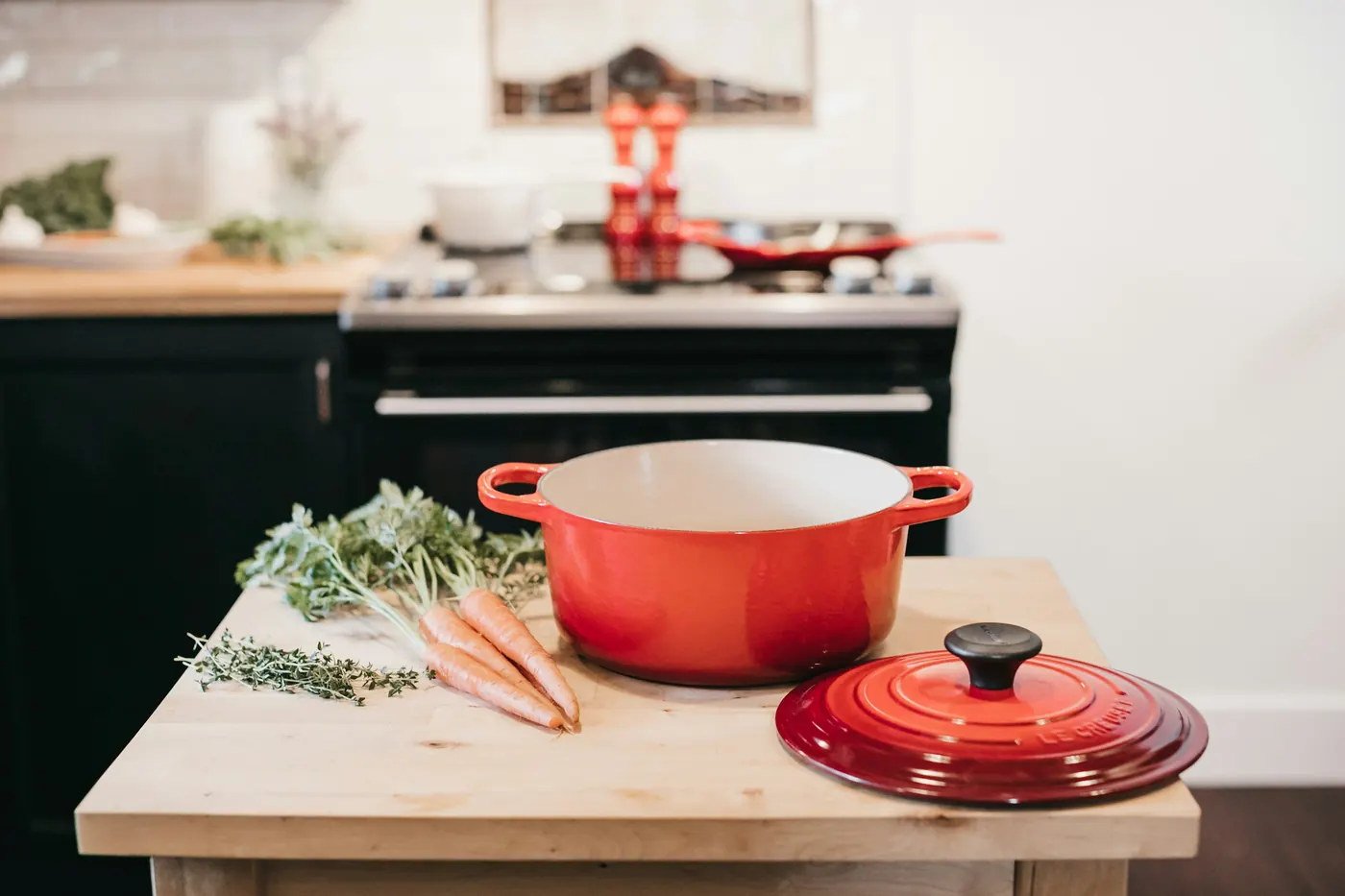
Le Creuset’s round Dutch oven is the premium version of the same idea. The 5.5-quart size is a little smaller than the Lodge, and the listing points to the details that make it pleasant to cook beans in: a tight-fitting lid designed to circulate steam and return moisture to the food, tall sides that contain splatters and reduce boil-overs, and a light-colored interior enamel that lets you see how the beans and broth are doing.
The listing says the enamel resists dulling, staining, chipping and cracking, that the pot needs no seasoning, and that it works on all cooktops and in the oven up to 500°F. It is also dishwasher safe, per the listing. As enameled cast iron, it is induction compatible.
The listing makes no statement about lead or cadmium in the enamel. Le Creuset says its cookware complies with FDA safety regulations; we found no explicit lead-free statement from the maker. Ask Le Creuset directly if you want its test information.
Why we like it
- Lid designed to return moisture to the food
- Tall sides reduce boil-overs
- Light interior enamel to watch the beans
- All cooktops and oven to 500°F
Key specifications
| Model | LS2501-26795SS |
|---|---|
| Capacity | 5.5 quarts |
| Material | Enameled cast iron |
| Glaze | Enamel, light-colored interior |
| Lead (per listing) | No statement |
| Heat sources | All cooktops; oven to 500°F |
| Curing | None needed |
| Care | Dishwasher safe |
Why we recommend it
Choose it if you want one pot that will cook beans, braises and soups for decades, on any stove, and the light interior and well-designed lid are worth the higher cost to you.
Skip it if budget matters; the Lodge does the same job for beans at a fraction of the cost. And like the Lodge, its listing gives no lead statement.
Pros and cons
Pros
- Excellent lid and tall sides
- Light interior shows the beans
- Works on every cooktop
Cons
- Expensive
- Heavy
- No lead statement in the listing
7. Granite Ware 4-Quart Enamel Bean Pot – Light and Inexpensive
A bean pot does not have to be clay or cast iron. Granite Ware’s speckled black bean pot is porcelain enamel fused to a steel core, with a lid, and it is sold specifically for baked beans, stews and slow cooking. At 4 quarts it suits a pound of dried beans for a family.
The listing describes a chip-resistant, non-porous enamel surface that does not absorb flavors, made without PFOA or PTFE. The steel core is thin, so it heats quickly and the pot is light enough to lift easily when full, which is a real advantage over cast iron.
The listing is clear about its limits: it is not recommended for induction or glass stovetops, and it is best on traditional stovetops, in the oven, or even over an outdoor fire. It makes no statement about lead.
Why we like it
- Porcelain enamel on steel, non-porous
- Made without PFOA or PTFE, per the listing
- Light and quick to heat
- Stovetop, oven and outdoor fire
Key specifications
| Model | 6129-4 |
|---|---|
| Capacity | 4 quarts |
| Material | Porcelain enamel on carbon steel |
| Glaze | Porcelain enamel inside and out |
| Lead (per listing) | No statement; listed as PFOA and PTFE free |
| Heat sources | Traditional stovetops, oven, outdoor fire; not induction or glass |
| Curing | None needed |
| Care | Described as easy to clean |
Why we recommend it
It suits gas and electric coil cooks on a budget who want a dedicated bean pot that is light, needs no curing and cleans up easily. It is also a good camping pot.
Skip it if you cook on glass or induction, which the listing rules out, or if you want the heavy, heat-holding body of clay or cast iron. Thin steel is more prone to scorching beans on the bottom if the heat is too high.
Pros and cons
Pros
- Light and inexpensive
- No curing needed
- Oven and campfire friendly
Cons
- Not for induction or glass tops
- No lead statement in the listing
- Thin base can scorch on high heat
Lead in clay pots: what the FDA says
The FDA’s consumer guidance, Questions and Answers on Lead-Glazed Traditional Pottery, is the clearest source on this. It explains that traditional or “folk” pottery is often earthenware, a porous clay that is glazed to hold food and liquid, and that those glazes may contain lead, which can leach into food if the pottery is not properly made. The FDA also reported that some traditional pottery from several Mexican manufacturers labeled “lead free” in fact contained extractable lead, and that potters working in old kilns can leave lead residue even on pottery made with lead-free glazes.
The FDA lists the kinds of pottery to treat with the most caution:
- pottery that is handmade with a crude appearance or irregular shape
- antique, damaged or heavily worn pieces
- pottery bought from flea markets or street vendors, or from a source you cannot verify
- pieces with bright orange, red or yellow decoration
- anything carrying a warning such as “Not for Food Use—May Poison Food”
Its advice is practical. Home lead-test kits are sold in hardware stores and online; most use a swab on the surface that touches food and change color if lead is present. If a test finds leachable lead, the FDA strongly advises against using the pottery for cooking, serving or storing food or drink. If you cannot test a piece or confirm that it comes from a reliable manufacturer, consider not using it for food. And if a child has eaten or drunk from a piece you are worried about, the FDA says to stop using it and ask a healthcare professional about testing your child’s blood for lead.
It is also why a “lead-free” label alone is not enough. Some ollas sold online as lead-free carry California Proposition 65 warnings that name lead, which is a good reason to buy from makers that publish clear, specific statements about what their cookware contains.
That is why we report each listing’s lead statement word for word, and why “no statement” appears in our table. A statement is not a test, and no statement does not mean a pot contains lead; it means the seller has not told you.
How to choose a clay pot for beans
1. Glazed or unglazed clay
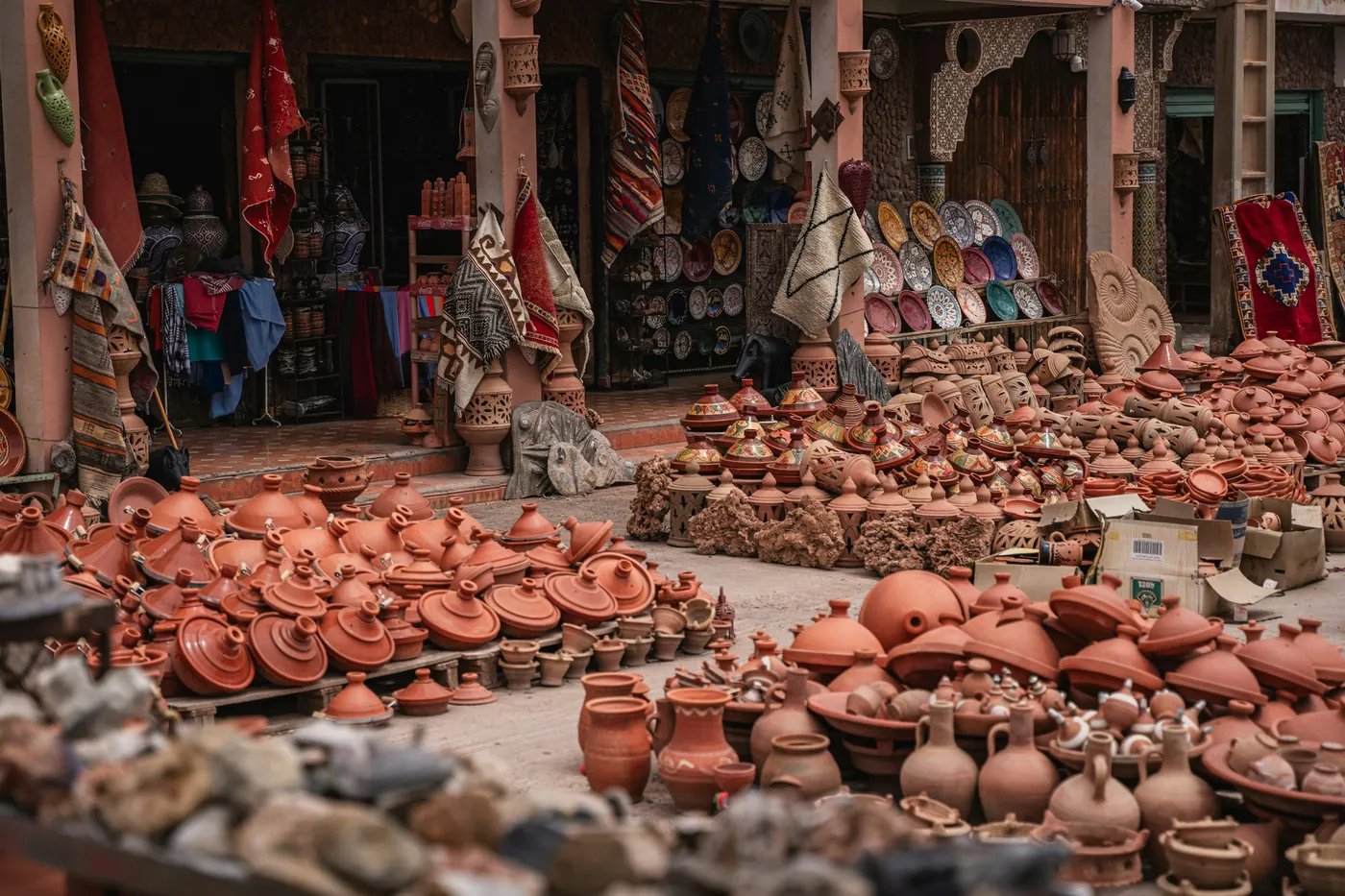
Unglazed clay, such as La Chamba and the Hakan pot, has no glaze, which removes the main source of lead the FDA describes, though not every concern. It is porous, so it soaks up some flavor and needs curing. Glazed clay is easier to clean and does not absorb as much, but the glaze is exactly what you need to ask about. For a glazed olla, look for an explicit lead-free statement, buy from an identifiable seller, and test it at home.
2. Your stove
Clay is happiest over a gas flame. Toque Blanche recommends a heat diffuser on electric stoves, which spreads the heat and keeps a hot coil from stressing one spot on the base. Clay is not magnetic, so no clay pot heats on induction on its own. If you cook on induction or glass and want the slow-simmer experience, an enameled cast iron Dutch oven is the better buy, or cook your beans in the oven in a clay roaster.
3. Size
A pound of dried beans at least doubles in volume as it cooks and needs plenty of broth around it. A 4- to 4.5-quart pot handles a pound comfortably; a 6-quart pot gives room for two pounds or a pot of beans with extra broth for charro beans.
4. Shape
The traditional olla is tall with a narrower mouth, which keeps evaporation down during a long simmer. Wide, shallow pots such as cazuelas are better for stews and moles. For beans, choose something taller than it is wide, with a lid.
5. How carefully you will treat it
Clay cracks from sudden temperature changes. Heat it gradually, add hot water rather than cold to a hot pot, and set it on a wooden board or towel rather than a cold stone counter. If that sounds like more care than you want to give, choose enamel.
How to cure a clay pot before the first beans
Curing seals the pores of unglazed or partly glazed clay, reduces leaks and helps it cope with heat. Follow the maker’s method if the pot comes with one. The methods we found:
- A traditional olla method (Mexgrocer’s instructions for its clay bean pots): soak the outer bottom in cold water for two hours, fill the pot with cool water to below the rim, bring it to a boil and simmer for five minutes, then turn off the heat and let it cool, ideally overnight. Discard the water, clean with a coarse salt paste or baking soda, rinse, and the pot is ready. Mexgrocer says to avoid dish soap and scrub with a plastic scraper.
- Hakan’s method for its terracotta pots: rub the pot with oil inside and out so the clay absorbs it, set it in a cold oven, heat to 350°F for about an hour, then let it cool. Expect an oil smell the first time.
- Eurita roasters need no curing; soak the lid in water before cooking if you want the steam effect, start in a cold oven and hand wash once the roaster has cooled.
Whatever the method, the first few pots of beans finish the job. Keep the heat low, never leave a clay pot empty on a burner, and expect unglazed clay to darken with use.
How we picked these seven bean pots
We started from what a Mexican kitchen asks of a bean pot: gentle, steady heat for a long simmer, a lid, enough room for a pound or two of beans, and a material you can trust. Because lead in glazed pottery is the main safety question with clay, we read every listing for what it says about lead and glaze, quoted it, and checked the maker’s or seller’s own website where it had one. That is why we dropped a traditional Mexican olla we had shortlisted: its Amazon listing called it lead-free clay, but the seller’s own website shows a California Prop 65 warning naming lead on a matching bean pot, and we will not recommend a cooking pot with that doubt. We relied on the FDA’s consumer guidance on lead-glazed traditional pottery for the safety section. We only included pots sold on Amazon in the United States, from an identifiable brand, and in stock when we checked. That ruled out most decorated Mexican ollas on Amazon, which are listed under a generic brand, were down to their last few units, or both. We added enameled cast iron and enamel-on-steel alternatives for cooks on glass or induction stoves. We have not cooked in every pot listed here, and we have not lead-tested any of them; we report what the makers and sellers state.
Frijoles de la olla in any of these pots
The method is simple, and it works in clay, cast iron or enamel. Rinse a pound of dried pinto or black beans and pick out any stones. Soaking overnight is optional; it shortens the cooking time. Put the beans in the pot with a halved onion, a couple of garlic cloves and water to cover by two or three inches, bring it up slowly to a gentle simmer, and partly cover. Add hot water from a kettle whenever the level drops below the beans; cold water can crack hot clay and slows the beans. Salt them once they start to soften, add a sprig of epazote near the end if you have it, and cook until the beans are creamy all the way through, usually two to three hours depending on their age.
From there they are dinner as they are, or the start of charro beans or refried beans. Our guide to charro beans versus refried beans explains the difference.
Clay bean pot questions, answered
Is Mexican clay cookware safe to cook in?
It can be, but you cannot tell by looking. The FDA has found extractable lead in some traditional Mexican pottery, including some labeled “lead free”. Buy from an identifiable seller that makes a lead statement, test glazed pieces with a home lead kit, and follow the FDA’s advice not to use pottery for food if a test finds lead.
Do you need to cure a clay pot?
Yes, for unglazed and traditional glazed ollas. Curing with water, or with oil in the oven for some terracotta, seals the clay and reduces cracking and leaks. Follow the maker’s method where there is one; Hakan publishes one, and the curing section above gives a traditional water method for ollas.
Can you use a clay pot on an electric or glass stove?
Some clay pots are rated for electric stoves, including the La Chamba pot. Use a heat diffuser to spread the heat, bring the pot up to temperature slowly, and check the listing before using clay on a glass top. Clay will not heat on induction.
Glazed or unglazed: which is better for beans?
Both cook beans well. Unglazed clay has no glaze to worry about but absorbs flavors and needs more care. Glazed clay cleans more easily, but its glaze is where lead can be found in poorly made pottery, so look for a clear lead-free statement and test it.
Do beans really taste better in a clay pot?
Many cooks in Mexico say so, and clay’s gentle heat does suit a slow simmer. But the bigger factors are fresh beans, slow cooking and good seasoning, and an enameled cast iron pot gets you most of the way there.
Our final pick for a pot of beans
Buy the Toque Blanche La Chamba 6-quart pot if you want to cook beans in clay on a gas or electric stove, and test it at home if a lead statement matters to you. Choose the Hakan terracotta pot if you want the seller’s no-lead statement in writing, the Emile Henry Flame stewpot if you want glazed ceramic with the maker’s lead and cadmium statement, and the Lodge enameled Dutch oven if you cook on glass or induction or want no fuss at all.
Beans are one part of a Mexican kitchen. Our guide to Mexican cooking tools covers the rest of the kit, our explainer on why rice and beans come with everything explains their place on the plate, and if tamales are next, see the best tamale steamer.
And if you would rather someone else made the beans tonight, see the menu or call to order.