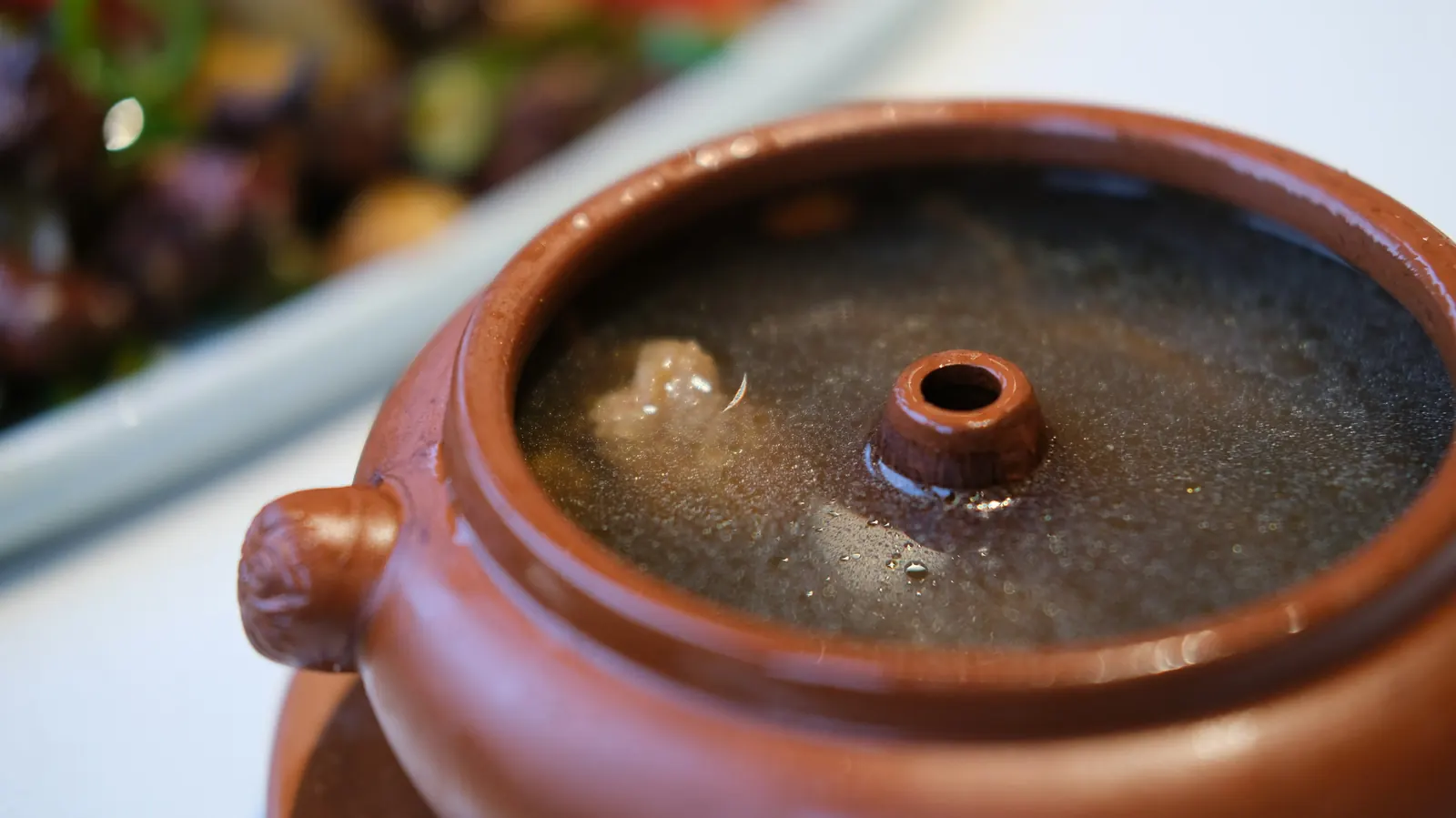
Long before cast iron, Mexican kitchens cooked their slow dishes in clay. The olla for frijoles, the cazuela for mole, the deep pot for pozole: all of them fired earthenware that heats gently and holds a simmer for hours. So when a shopper types “ceramic Dutch oven,” there is a real tradition behind the search. The trouble is that the same two words now cover two very different things.
One is a pot made of ceramic all the way through: fired clay, sometimes glazed, from makers such as Emile Henry in France or the potters of La Chamba in Colombia. The other is an aluminum pot with a thin ceramic nonstick coating, such as Caraway’s. They cook differently, they are cared for differently, and only one of them works on most induction stoves. This guide explains the difference, names seven pots worth buying across both kinds, and is honest about what the U.S. Food and Drug Administration says about glazed pottery.
Julia’s earns a commission on purchases made through links on this page, at no cost to you. Recommendations are based on what a restaurant kitchen looks for, product specifications and verified buyer reports.
Quick verdict: which ceramic Dutch oven to buy
For most kitchens, the best ceramic Dutch oven is the Emile Henry Flame 4.2-quart round stewpot: a true clay pot made in France that Emile Henry rates for every stovetop except induction, as well as the oven and grill, and says contains no lead, cadmium or nickel. For more room and higher heat, the Emile Henry Sublime 6-quart is the maker’s searing pot. If you want traditional unglazed black clay, look at the La Chamba 4-quart casserole, and if what you really want is an aluminum pot with a ceramic nonstick coating, the Caraway 6.5-quart is the one America’s Test Kitchen has reviewed.
The table lines up the five pots we would point most cooks toward. All seven picks are reviewed in full after it.
Five ceramic Dutch ovens side by side
One pick for each kind of cook, with the material and ratings each maker, listing or America’s Test Kitchen states.
| Dutch oven | Best for | Capacity & weight | Material | Buy on Amazon |
|---|---|---|---|---|

Emile Henry Flame 4.2-quart Round StewpotBest overall
|
Stovetop stews and beans in clay | 4.2 qt, about 7.4 lb (Emile Henry) | Glazed Flame ceramic | View on Amazon |

Emile Henry Sublime 6-quart Round Dutch OvenBest for searing
|
Browning, then braising | 6 qt, 6 lb (Emile Henry) | Glazed Sublime ceramic | View on Amazon |

La Chamba 4-quart Black Clay CasseroleBest unglazed clay
|
Stove-to-table cooking | 4 qt, weight not stated | Unglazed black clay | View on Amazon |

Eurita 6.25-quart Clay RoasterBest oven-only clay
|
Whole chickens and roasts in the oven | 6.25 qt, weight not stated | Clay, glazed base | View on Amazon |

Caraway 6.5-quart Ceramic-Coated Dutch OvenBest ceramic-coated
|
Light weight and induction | 6.5 qt, 6 lb (Caraway) | Aluminum, ceramic coating | View on Amazon |
Product images from Amazon. Weights are the maker’s where it publishes one; handmade clay pots vary in size, so check the listing before you buy.
Solid ceramic or ceramic-coated: the difference that matters
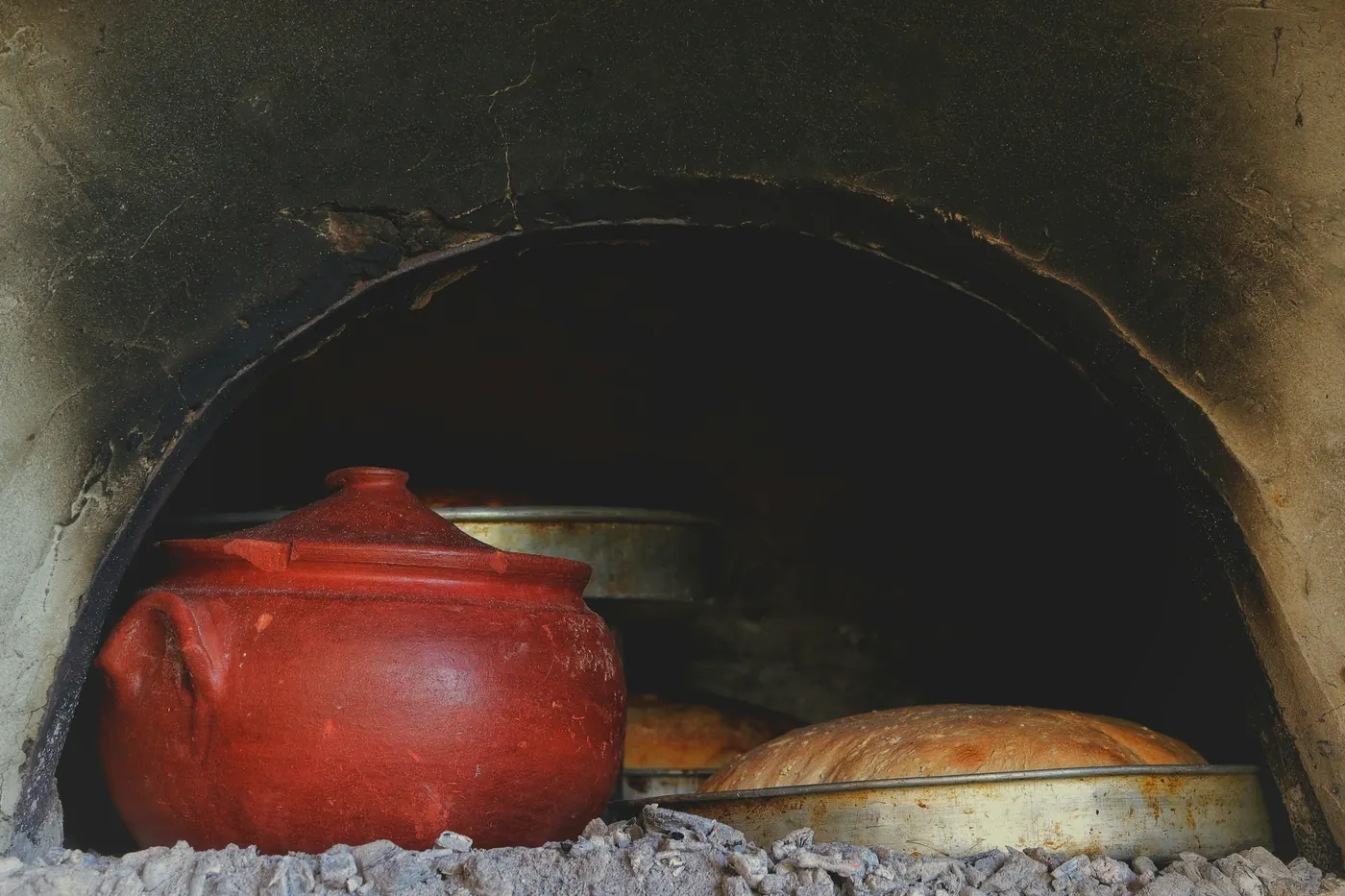
A solid ceramic Dutch oven is fired clay. Emile Henry describes its Flame ceramic as high-fired Burgundy clay made in Marcigny, France, and calls it an excellent heat diffuser rather than a conductor, so food cooks gently. Unglazed pots like La Chamba and Hakan’s terracotta are porous and are often cured before first use. Clay is heavy enough to hold heat but can crack from sudden temperature changes, and America’s Test Kitchen, which reviewed an Emile Henry Flame pot, found ceramic too fragile for the daily abuse a test kitchen gives a workhorse pot. ATK also notes that ceramic Dutch ovens are usually not induction compatible.
A ceramic-coated Dutch oven is a metal pot, usually aluminum, with a thin nonstick layer. GreenPan, which makes one of the best-known coatings, explains that it is made from a sand derivative turned into a sprayable solution through a sol-gel process and hardened in an oven. These pots are light, heat fast, often work on induction and clean easily, but the coating has heat limits and wears with time. ATK found that ceramic coatings are not quite as nonstick or as durable as traditional nonstick, and lose slickness over time.
In short: choose clay for slow, gentle cooking and the flavor of a traditional pot, and accept the care it needs. Choose a coated pot for light weight and easy cleanup. Our guide to the best nonstick Dutch oven covers coated pots in more depth.
Our picks for the best ceramic Dutch oven
These seven pots cover the real choices: two glazed French ceramic pots that go on the stove, an unglazed Colombian black clay casserole, an oven-only clay roaster, a budget unglazed terracotta pot from Turkey, and two aluminum pots with ceramic nonstick coatings. Each pick says what the pot is made of, which heat sources its maker allows and one honest reason to skip it.
1. Emile Henry Flame 4.2-quart Round Stewpot – French Clay That Goes on the Burner
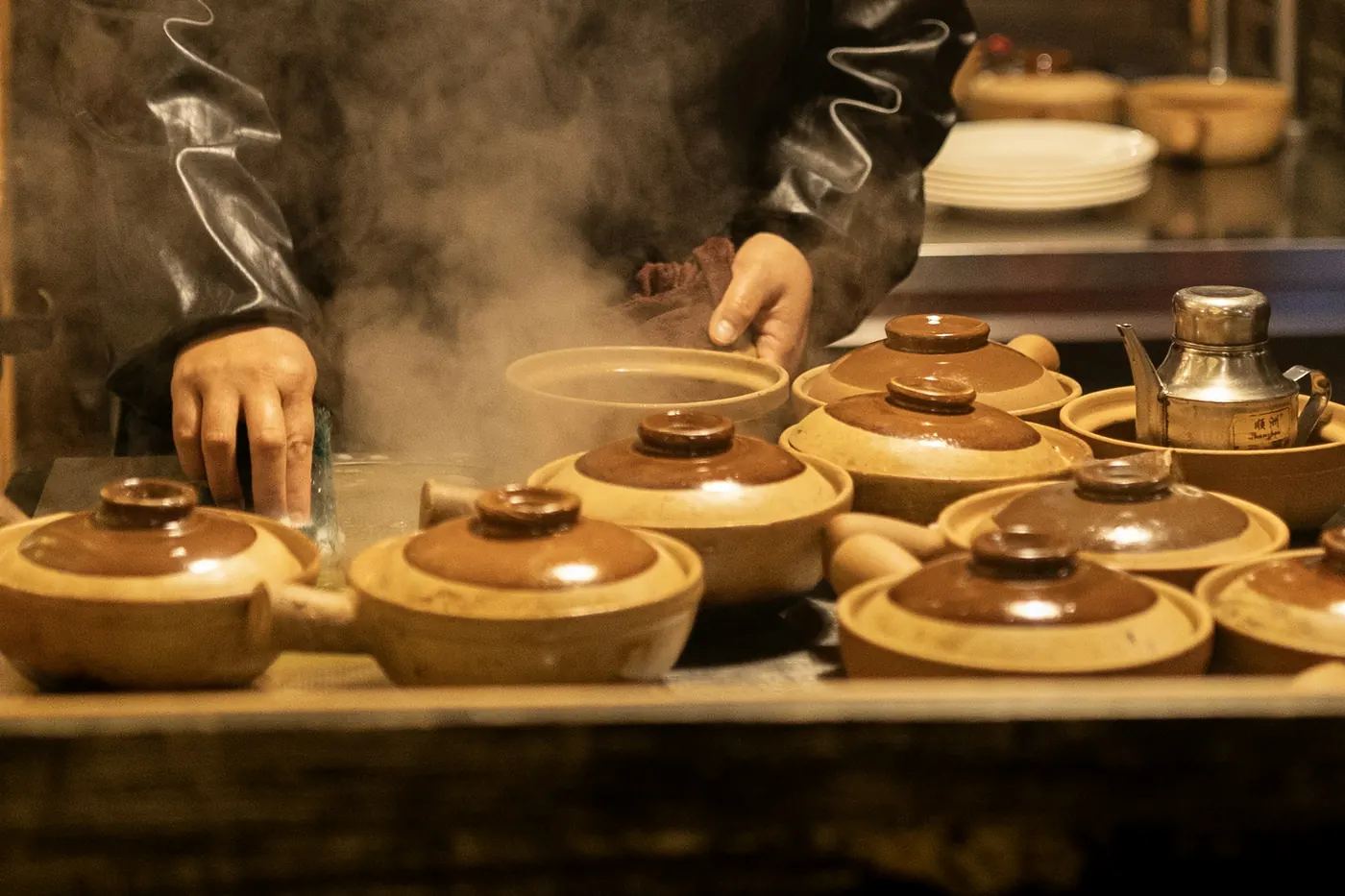
Most clay pots must stay in the oven. Emile Henry’s Flame line is the exception that made the company’s name: a glazed ceramic that the maker designed for direct heat. The listing rates this stewpot for the oven, the stovetop and BBQ grills, under the broiler and in the microwave, and says it can go from the freezer to the oven. Emile Henry’s own page for the round stewpot in this range says it is designed for all types of stovetop except induction.
Emile Henry says the pot is made in France from high-fired Burgundy clay, and that there is no lead, cadmium or nickel in its products. It describes the clay as a heat diffuser, so cooking is gentle and very high temperatures are unnecessary; that suits frijoles, a chicken tinga or a pot of rice that should not scorch. The listing gives inner dimensions of 9.65 by 3.94 inches and says the pot weighs up to 30 percent less than many cast iron or metal pots. Emile Henry lists the 4-liter stewpot at 3.36 kilograms, about 7.4 pounds, with a maximum temperature of 290°C (about 554°F).
The honest caveat comes from America’s Test Kitchen, which reviewed the larger 7-quart Flame Dutch oven. It found the pot cooked a little slowly, had a dark interior that made browning hard to judge and flat handles that were hard to grip when greasy, and its lid cracked when dropped onto the base from about 2 inches. Treat it like good ceramic, not like cast iron. It is dishwasher safe, per the listing, and carries a 10-year warranty.
Why we like it
- Glazed clay rated for all stovetops except induction (Emile Henry)
- Made in France; no lead, cadmium or nickel, per Emile Henry
- Oven, broiler, grill and microwave safe, per the listing
- Dishwasher safe; 10-year warranty
Key specifications
| Model | EH794540 (Charcoal) |
|---|---|
| Capacity | 4.2 qt |
| Material | Flame ceramic (Burgundy clay) |
| Interior/coating | Resistant glaze, dark |
| Knob/lid rating | Max 290°C, about 554°F (Emile Henry) |
| Weight | About 7.4 lb (Emile Henry, 4-liter stewpot) |
| Stovetop/induction | All stovetops except induction |
| Care | Dishwasher safe or hand wash |
Why we recommend it
Choose it if you want the slow, gentle heat of clay on a gas or electric stove, from a maker that publishes clear statements about its materials. It is a natural partner for the bean pots in our guide to the best clay pot for cooking beans.
Skip it if you cook on induction, or if your pots get banged around: ATK found the Flame lid cracked from a short drop.
Pros and cons
Pros
- True clay that works on the stovetop
- Lighter than cast iron
- Clear maker statement on lead
Cons
- Fragile compared with cast iron (ATK)
- Dark interior hides browning (ATK)
- Not for induction
2. Emile Henry Sublime 6-quart Round Dutch Oven – Ceramic Built for Searing
Sublime is Emile Henry’s newer ceramic, and it is aimed squarely at cooks who want to brown meat before they braise it, the step where most clay pots fall short. Emile Henry says it reaches very high temperatures in less than a minute, handles searing, frying and sautéing as well as slow cooking and baking, and is up to 50 percent lighter than comparable cast iron and enamel Dutch ovens.
The listing rates it from -4°F to 500°F and for gas, electric and glass stovetops, BBQ grills, ovens and microwaves. Emile Henry’s own page goes further and says there are no high heat limitations, and that no seasoning or precooking preparation is needed. It does not list induction. Emile Henry lists the 6-quart pot at 6 pounds, with outer dimensions of 14.4 by 12.7 by 7 inches, wide open handles, a dimpled self-basting lid and a smooth satin glaze. It is dishwasher safe and backed by a 10-year guarantee.
Six quarts is a practical size for a family pot of pozole or a full batch of carnitas. We cannot point to an independent review of the Sublime; America’s Test Kitchen’s ceramic results were for the older Flame line, so its durability concerns may or may not apply. Emile Henry says the Sublime ceramic is highly resistant to thermal and mechanical shock.
Why we like it
- Made for searing and frying as well as slow cooking, per Emile Henry
- 6 lb for a 6-quart pot, per Emile Henry
- Gas, electric, glass, grill and oven, per the listing
- No seasoning needed; dishwasher safe
Key specifications
| Model | EH664760 (Indigo) |
|---|---|
| Capacity | 6 qt |
| Material | Sublime ceramic |
| Interior/coating | Satin glaze |
| Knob/lid rating | -4°F to 500°F (listing) |
| Weight | 6 lb (Emile Henry) |
| Stovetop/induction | Gas, electric, glass; induction not listed |
| Care | Dishwasher safe |
Why we recommend it
Choose it if you want one ceramic pot that can brown meat, braise it and go to the table, without lifting cast iron.
Skip it if you want independent test results before you buy; none we could find cover this pot.
Pros and cons
Pros
- Light for its size
- Rated for high-heat searing
- Generous 6-quart capacity
Cons
- No induction rating
- Not independently reviewed
- Other sizes were in short supply
3. La Chamba 4-quart Black Clay Casserole – Handmade Unglazed Clay
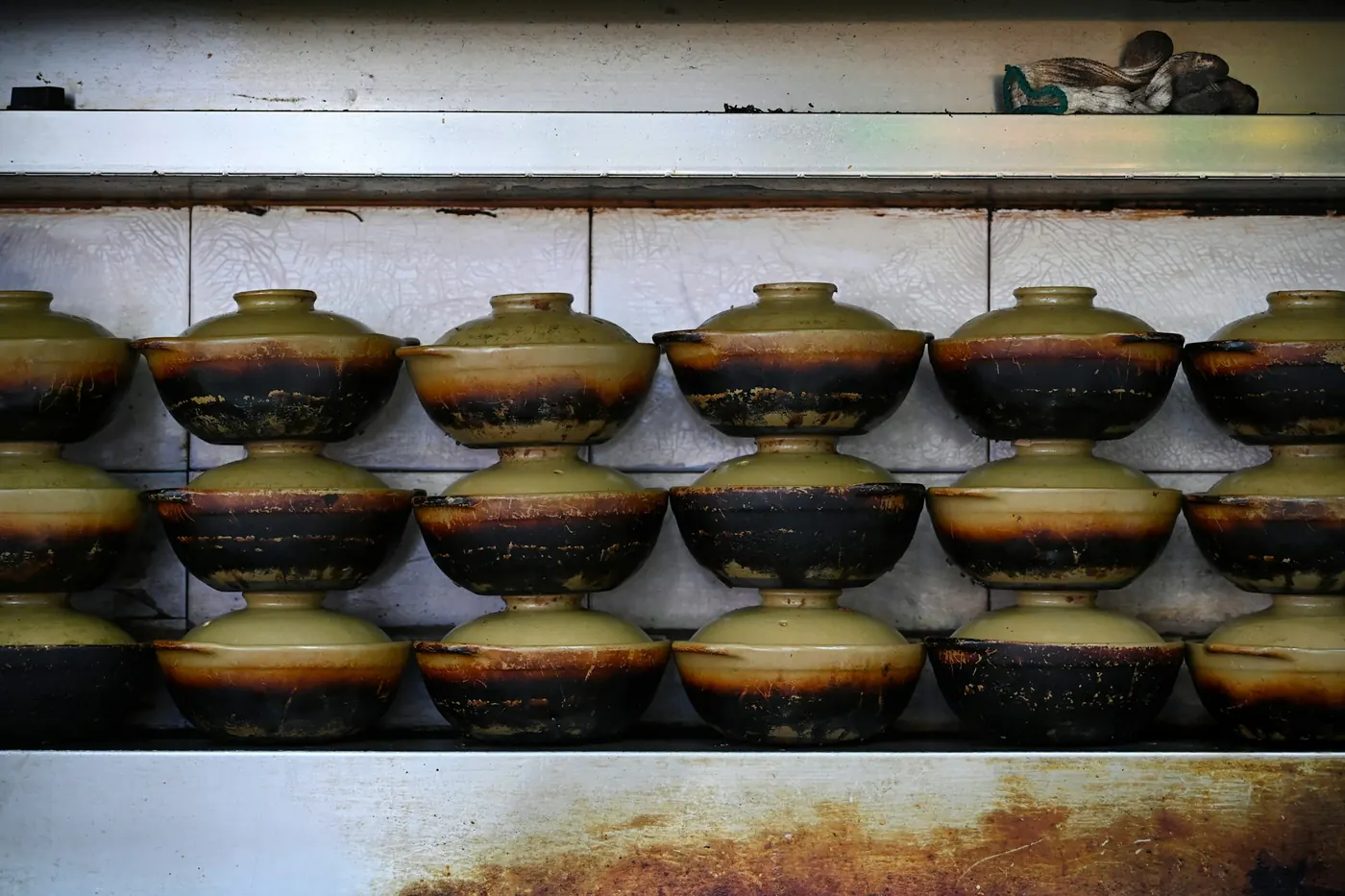
La Chamba pottery comes from a village of the same name in central Colombia, where, according to the listing sold by Toque Blanche, each piece is shaped by hand from local clays and fired in a traditional way. The result is the black, unglazed pot La Chamba is known for, made to go from the stove to the table. It is the closest thing on this list to the cazuelas used for mole and guisados.
The listing says the pot can be used on gas or electric stoves, in the oven and the microwave, and then carried to the table. This X-Large casserole holds about 4 quarts and measures roughly 10 by 10 by 4 inches, though the listing warns that each handmade piece varies. Unglazed clay is porous, which is why many cooks cure a new pot before using it, and why it suits gentle, steady heat rather than a hard sear.
Two things we could not confirm. The Amazon listing gives no care or curing instructions, no weight and no statement about lead. The pot is unglazed, and the FDA’s warnings about lead in traditional pottery are mainly about glazes, but we have no maker statement to report either way, so we say so plainly.
Why we like it
- Handmade in La Chamba, Colombia, from local clay, per the listing
- Unglazed black clay, stove-to-table
- Gas, electric, oven and microwave, per the listing
- Several sizes available
Key specifications
| Model | cs5-tb (X-Large) |
|---|---|
| Capacity | About 4 qt |
| Material | Black earthenware clay |
| Interior/coating | Unglazed |
| Knob/lid rating | Not stated |
| Weight | Not stated |
| Stovetop/induction | Gas or electric; induction not stated |
| Care | Not stated on the listing |
Why we recommend it
Choose it if you want a traditional, handmade clay pot for slow stovetop cooking and serving, and you are comfortable learning to care for unglazed clay.
Skip it if you want a maker’s statement on materials or written care instructions before you buy; the listing has neither.
Pros and cons
Pros
- Traditional handmade clay
- Works on gas and electric stoves
- Handsome at the table
Cons
- No care, weight or lead information
- Size varies piece to piece
4. Eurita 6.25-quart Clay Roaster – A Clay Baker for the Oven
Clay bakers in the German Römertopf tradition are their own kind of ceramic Dutch oven: a lidded clay roaster that steams and roasts at once in the oven. Eurita is sold by Reston Lloyd, and this 6.25-quart model measures 16.5 by 12 by 7.5 inches with the lid on, room for a whole chicken or a pork shoulder for cochinita-style tacos.
The method is unusual and worth knowing before you buy. Reston Lloyd says you can soak the lid in water first so it releases steam as it heats, though this is optional, and that the filled roaster should go into a cold or slightly warm oven before you set the temperature. After cooking, set the hot pot on a wooden board or towel to avoid temperature shock, and hand wash it once it has cooled. The lid is deliberately not tight-fitting, so a little steam escapes.
The base is glazed with a glass frit lining for easier cleaning. Reston Lloyd says it uses clays that do not contain lead, cadmium or fillers, and that Eurita products are tested and approved in Europe. It is oven and microwave safe up to 550°F, and the maker is clear that it is not for grills or stovetops.
Why we like it
- Large 6.25-quart roaster for whole birds and roasts
- Glazed base for easier cleaning
- Oven and microwave safe to 550°F, per Reston Lloyd
- Clear lead and cadmium statement from the seller
Key specifications
| Model | 60199 |
|---|---|
| Capacity | 6.25 qt |
| Material | Clay (earthenware) |
| Interior/coating | Glass frit glaze on the base; unglazed lid |
| Knob/lid rating | Oven and microwave safe to 550°F |
| Weight | Not stated |
| Stovetop/induction | Not for stovetops or grills |
| Care | Hand wash after cooling |
Why we recommend it
Choose it if most of your Dutch oven cooking happens in the oven and you like the idea of meat that steams and roasts in its own juices.
Skip it if you want to sear or simmer on the stove; this pot is oven-only.
Pros and cons
Pros
- Big, roomy shape
- High 550°F oven rating
- Seller states no lead or cadmium
Cons
- Oven only
- Must start in a cold oven
- Hand wash only
5. Caraway 6.5-quart Ceramic-Coated Dutch Oven – Light, Induction-Ready Ceramic Coating
If the word “ceramic” in your search meant a pot that food does not stick to, this is the one to look at first. Caraway’s Dutch oven is aluminum, body and lid, with a ceramic nonstick coating, according to America’s Test Kitchen, and Caraway says the coating is made without PTFE, PFOA and PFAS. It is a different animal from the clay pots above: it weighs 6 pounds by Caraway’s figure, heats quickly and works on every stovetop, including induction.
ATK reviewed it among lightweight Dutch ovens and recommended it with reservations. It liked the sturdy build and comfortable handles, the quick, even heat that gave beef a good sear, and the light interior that made browning easy to see. Its reservations: curved sides that shrink an 8.5-inch cooking surface, a superslick coating that kept fond from building, and a small hole in the lid that let a braise overreduce.
Caraway rates it oven safe to 550°F. Its care page asks for low to medium heat only, no cooking sprays, wooden or silicone utensils, hand washing only and a cool-down before the pot meets cold water.
Why we like it
- Recommended with reservations by America’s Test Kitchen
- Light interior for judging browning (ATK)
- All stovetops including induction
- Oven safe to 550°F, per Caraway
Key specifications
| Model | CW-DTCH-NVY (Navy) |
|---|---|
| Capacity | 6.5 qt |
| Material | Aluminum body and lid (ATK) |
| Interior/coating | Ceramic nonstick coating |
| Knob/lid rating | Oven safe to 550°F (Caraway) |
| Weight | 6 lb (Caraway) |
| Stovetop/induction | All stovetops, including induction |
| Care | Hand wash only; low to medium heat |
Why we recommend it
Choose it if you want a light, easy-cleaning pot for soups, rice and beans, especially on induction, where clay will not work.
Skip it if what you want is the slow, steady heat of real clay; this is a metal pot with a coating.
Pros and cons
Pros
- Light and quick to heat
- Induction compatible
- Easy release and cleanup
Cons
- Little fond for braises (ATK)
- Small cooking surface (ATK)
- Hand wash only
6. Our Place Perfect Pot 6.5-quart – Ceramic-Coated Pot with a Strainer Lid

Our Place’s Perfect Pot is another ceramic-coated aluminum pot, built around one practical idea: a domed lid with a built-in strainer, so you can drain pasta or rinse beans without reaching for a colander. The listing calls it an 8-in-1 pot for boiling, baking, roasting, braising, frying, straining, serving and storing.
Our Place says the body and lid are made from certified post-consumer recycled aluminum, and that its Thermakind ceramic coating is mainly made of a sand derivative and water. According to the listing, the coating is made without PFAS (including PTFE and PFOA), lead and cadmium. It works on induction and is oven safe to 450°F, and the self-basting lid traps steam or releases it as needed.
The listing calls it lightweight but gives no weight, and neither the listing nor the product page we read gives care instructions. We would follow the same rules other ceramic-coating makers publish: moderate heat, a little oil and soft utensils. ATK has not reviewed the Perfect Pot.
Why we like it
- Strainer built into the lid
- Thermakind ceramic coating, per Our Place
- Induction compatible
- Oven safe to 450°F
Key specifications
| Model | Perfect Pot 6.5 qt (Steam) |
|---|---|
| Capacity | 6.5 qt |
| Material | Recycled aluminum (Our Place) |
| Interior/coating | Thermakind ceramic nonstick |
| Knob/lid rating | Oven safe to 450°F |
| Weight | Not stated |
| Stovetop/induction | Induction compatible, per listing |
| Care | Not stated on the listing |
Why we recommend it
Choose it if you boil and drain as often as you braise, such as pasta for sopa seca or beans you rinse after soaking, and want one pot to do it.
Skip it if you want independent cooking results or written care rules before buying.
Pros and cons
Pros
- Built-in strainer
- Works on induction
- Family-size capacity
Cons
- 450°F oven limit
- Weight and care not stated
- Not reviewed by ATK
7. Hakan Efes 2.9-quart Terracotta Pot – Unglazed Clay on a Small Budget

Hakan’s Efes pots are plain, unglazed terracotta, handcrafted in the Cappadocia region of Turkey, according to the listing. This midi size holds 2.9 quarts, enough for a pot of rice, a small batch of beans or a stew for two or three. The listing says it can be used on the stovetop and in the oven.
It comes with clear curing instructions, which unglazed clay needs: rub the inside and outside with oil, put the pot in a cold oven, heat to 350°F for about an hour, then let it cool outside the oven. Hakan warns of a temporary oil smell the first time. The seller states that the pots contain no lead or harmful chemicals; that is the seller’s claim, and we have no independent test to add.
Because each pot is handmade, Hakan notes that sizes and dimensions vary slightly, and it promises a free replacement if one arrives damaged. The listing does not say which stovetops are suitable, so a heat diffuser on an electric coil and gentle heat on gas are the cautious approach.
Why we like it
- Handmade unglazed terracotta, per the listing
- Stovetop and oven use
- Written curing instructions from the seller
- Replacement if damaged in shipping
Key specifications
| Model | H9342 (Midi) |
|---|---|
| Capacity | 2.9 qt |
| Material | Terracotta |
| Interior/coating | Unglazed |
| Knob/lid rating | Not stated; cured at 350°F |
| Weight | Not stated |
| Stovetop/induction | Stovetop (type not stated); not induction |
| Care | Cure with oil before first use |
Why we recommend it
Choose it if you want to try cooking in unglazed clay without a big outlay, for rice, beans or small stews.
Skip it if you need more than about 3 quarts or want a maker’s rating for your exact stovetop.
Pros and cons
Pros
- Simple, traditional clay
- Clear curing method
- Larger sizes available
Cons
- Small capacity
- Stove types not specified
- Lead claim is the seller’s own
What the FDA says about lead in glazed pottery
Clay cookware raises a fair question, and the honest answer comes from the U.S. Food and Drug Administration, not from us. In its questions and answers on lead-glazed traditional pottery, the FDA explains that earthenware is porous and must be glazed to hold food, that glazes may contain lead, and that when pottery is fired properly essentially all the lead is bound into the glaze. If it is not fired properly, lead can contaminate food.
The FDA also reports that traditional pottery from several manufacturers in Mexico labeled “lead free” was found to contain extractable lead, in some cases because potters using lead-free glazes still fired them in old kilns once used for lead glazes. It lists “problem types” to watch for: handmade pieces with a crude appearance or irregular shape, antique or damaged pieces, pottery bought from flea markets or street vendors or whose maker cannot be identified, and pieces brightly decorated in orange, red or yellow. It says pottery made in commercial factories for everyday use is much less likely to have problems.
The FDA’s advice is practical: home lead-test kits are sold in hardware stores and online; if a test finds leachable lead, the FDA strongly advises against using the pottery for cooking, serving or storing food; and if you cannot test it or confirm it comes from a reliable manufacturer, consider not using it for food. That is why the clay pots on this list come from makers or sellers who publish what their pots are made of, and why we tell you plainly when a listing does not.
How to choose a ceramic Dutch oven
1. Decide between clay and coating
This is the first and biggest choice, explained above. Clay gives gentle heat and a traditional pot; a ceramic coating gives light weight, fast heat and easy cleanup.
2. Match the pot to your stove
Read each maker’s heat sources carefully. Emile Henry rates its Flame stewpots for every stovetop except induction and lists gas, electric and glass for the Sublime; La Chamba lists gas and electric; the Eurita roaster is oven-only. ATK notes that ceramic Dutch ovens are usually not induction compatible, so on induction a ceramic-coated metal pot like the Caraway or Our Place is the realistic choice.
3. Glazed or unglazed
Glazed ceramic, like Emile Henry’s, is ready to cook and dishwasher safe. Unglazed clay, like La Chamba and Hakan, is porous, usually needs curing and is washed more gently. For glazed pottery of unknown origin, read the FDA guidance above.
4. Size for what you cook
A 4-quart pot holds a family pot of beans or rice; 6 quarts or more suits pozole, birria or a whole chicken. Handmade clay varies in size, so treat stated capacities as approximate.
5. Plan for the care
Clay dislikes sudden temperature changes. Reston Lloyd tells you to start its roaster in a cold oven and set it on a board or towel afterward, and Caraway warns against putting a hot coated pot under cold water. If you want a pot you can bang around, enameled cast iron is tougher; our guide to the best Dutch oven covers those.
How we picked these seven pots
We started from the dishes a Mexican kitchen cooks low and slow, frijoles, mole, pozole and guisados, and from the traditional clay pots used for them. We then looked for pots sold and in stock on Amazon in the United States, from makers or sellers that publish what their pots are made of and how to use them, and checked capacity, material, heat sources, temperature limits and care against the listing and, where we could reach it, the maker’s own site.
For cooking results we relied on reviews we read in full: America’s Test Kitchen’s Dutch oven review, which tested an Emile Henry Flame pot, and its lightweight Dutch oven review, which covers the Caraway. For lead in pottery we used only the FDA. We have not cooked with these pots ourselves, and where no independent review exists, we say so.
Some pots are missing on purpose. We looked hard for a Mexican olla or cazuela from an identifiable maker, but the ones we found were sold under generic brand names, were in short supply or carried no statement about their glaze, so we left them out. Xtrema’s all-ceramic pots were not available on Amazon when we checked, several Römertopf clay bakers and several Emile Henry sizes and colors were in short supply, and the Römertopf listings that were in stock gave too little care information to recommend over the Eurita.
Ceramic Dutch oven questions, answered
Is a ceramic Dutch oven better than cast iron?
Not for everything. America’s Test Kitchen prefers cast iron for a workhorse pot because it is durable and holds heat well, and it found ceramic too fragile for daily abuse. Clay is lighter than cast iron and cooks gently, which suits beans and slow stews.
Can a ceramic Dutch oven go on the stovetop?
Some can. Emile Henry rates its Flame stewpots for every stovetop except induction and its Sublime for gas, electric and glass, and La Chamba’s listing says gas or electric. Clay roasters such as the Eurita are oven-only. Always follow the maker’s list of heat sources.
Do ceramic Dutch ovens work on induction?
Usually not, ATK notes, because induction needs a magnetic base. None of the clay pots here is rated for induction. Ceramic-coated metal pots like the Caraway and Our Place Perfect Pot are.
Is enameled cast iron the same as ceramic?
No. Enameled cast iron is an iron pot with a glass coating, which ATK describes as a type of glass. It is heavier and tougher than clay. Our guide to the best Dutch oven covers enameled pots.
Do I need to cure a clay pot?
Unglazed clay usually does. Hakan, for example, says to oil the pot and heat it in a cold oven to 350°F for about an hour. Emile Henry says its Sublime needs no seasoning. Follow the instructions that come with your pot.
Our last word on ceramic Dutch ovens
Buy the Emile Henry Flame if you want real clay on a gas or electric stove from a maker that is clear about its materials, and the Sublime if you want to sear in ceramic. Choose the La Chamba for a handmade, traditional pot, the Eurita for oven roasting, and the Caraway if “ceramic” really meant a light, easy-cleaning coated pot. For the bean pot itself, see our guide to the best clay pot for cooking beans, and for ceramic in the oven, the best ceramic baking pan. Whatever you cook in, a long-simmered mole is worth the wait. And when you would rather someone else did the simmering, Julia’s is at 5402 N Highway 6 in Houston: call to order.