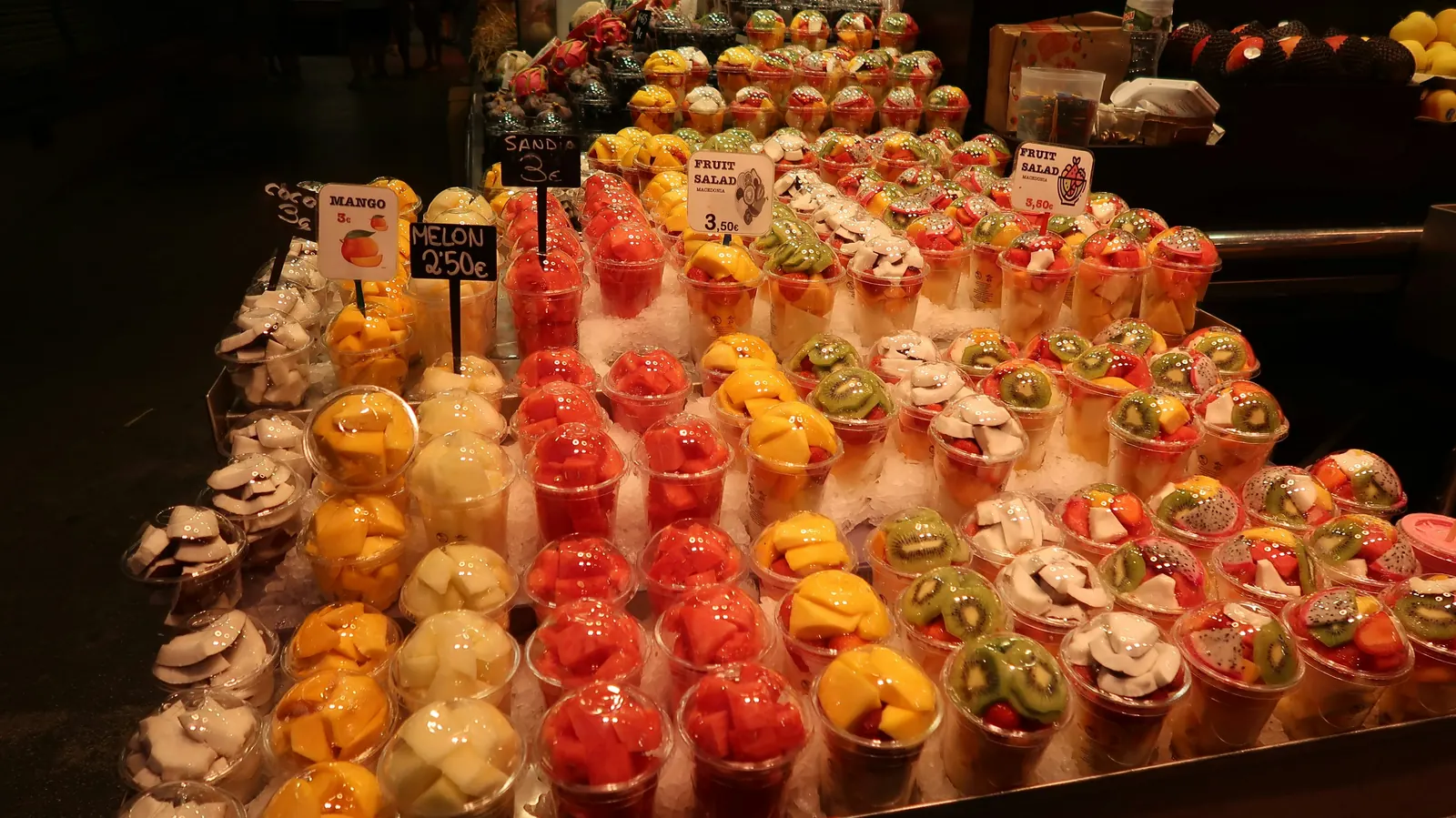
Chamoy is the red, sweet-sour-salty sauce poured over mango, cucumber and jícama, swirled into mangonadas and raspados, and smeared around the rim of a michelada glass. It started as a condiment made from salted, pickled fruit such as apricot or plum, sharpened with chile and lime, and today it covers everything from thin bottled sauces to thick, spoonable rim pastes.
The bottles on the shelf differ more than their red color suggests. Some are built on real fruit, some on water, salt and citric acid; some are sweetened with sugar, some with monk fruit, and some not at all; some are mild and one is noticeably hot. This guide compares seven chamoy sauces and pastes from identifiable makers, explains what is in each, and sets out what US health authorities say about lead in chile and tamarind products, so you can choose with your eyes open.
Julia’s earns a commission on purchases made through links on this page, at no cost to you. Recommendations are based on what a restaurant kitchen looks for, product specifications and verified buyer reports.
Quick verdict: which chamoy to buy
For most people the best chamoy sauce is Siete Chamoy Botana Sauce: it is built on real fruit (pear, apple, dates and apricot) with guajillo chile, lime and hibiscus, and Siete lists no added preservatives. For no sugar at all, choose I Love Chamoy Sugar Free, sweetened with monk fruit. Want more heat? Cholula Chamoy is rated medium. For rimming glasses, a thick paste such as Chilemoy Rim Dip stays put where a thin sauce runs.
The table below compares the five standout picks. All seven are reviewed in full after it, followed by a section on lead.
Five chamoy sauces at a glance
Five picks, one for each kind of buyer, with what each maker or listing states. All seven chamoy products are reviewed below.
| Chamoy | Best for | Sweetened with | Heat (per maker) | Buy on Amazon |
|---|---|---|---|---|

Siete Chamoy Botana Sauce, 10 oz (4-pack)Best overall
|
Fruit cups, everyday drizzling | Fruit, dates, tapioca syrup | A hint of spice | View on Amazon |

I Love Chamoy Sugar Free, Original, 10 ozSugar-free pick
|
Cutting sugar | Monk fruit | Sweet, tangy, spicy | View on Amazon |
| Snacks, drinks, more kick | Sugar | Medium | View on Amazon | |

Chilemoy Rim Dip Chamoy, Original, 8 ozBest rim paste
|
Glass rims, dipping | Sugar | Mild | View on Amazon |

El Chilerito Chamoy Sauce, 355 mlClassic street style
|
Chips, fruit, snacks | Sugar | A hint of spiciness | View on Amazon |
Product images from Amazon. Ingredients and heat are as published by each maker, its Amazon listing or US grocery retailers; formulas change, so read the label on the bottle you buy.
Our picks for the best chamoy sauce
These seven cover the main styles: fruit-based, savory and salty, sugar-free, spicy and thick rim paste. Every one was in stock on Amazon from an identifiable brand when we checked. None of the makers or listings we read published lead test results; the section after the picks explains why that matters and what the authorities advise.
1. Siete Chamoy Botana Sauce, 10 oz (4-pack) – Built on Real Fruit
Siete is a Mexican-American food brand whose founding family comes from Laredo, Texas, and its chamoy reads more like the homemade sauce than most bottles do. According to Siete, the ingredients are water, tapioca syrup, pear puree concentrate, apple juice concentrate, dates, apricot puree concentrate, lime juice concentrate, sea salt, guajillo chile powder, chile pepper powder and hibiscus powder.
That list matters. Traditional chamoy is made from salted, pickled fruit, and Siete builds its sauce on pear, apple, dates and apricot rather than on water, salt and citric acid. The color comes from guajillo chile and hibiscus, not a synthetic dye, and Siete says the chiles give “a hint of spice”. The listing calls it preservative free.
Siete’s nutrition panel lists 10 calories, 55 milligrams of sodium and 1 gram of sugar per teaspoon, low for chamoy. Siete marks it gluten free, grain free, dairy free, soy free, vegan and non-GMO. The listing suggests it on fruit cups, sorbets, raspas, papitas preparadas and pickles, and on the rim of a mocktail or cocktail.
Why we like it
- Fruit-based: pear, apple, dates and apricot (Siete)
- Colored by guajillo chile and hibiscus, no synthetic dye listed
- Preservative free, per the listing
- 55 mg sodium per teaspoon on Siete’s panel
- Gluten free, vegan, non-GMO (Siete)
Key specifications
| Size | 10 oz bottle |
|---|---|
| Count | 4 bottles |
| Main ingredients | Fruit purees and concentrates, dates, lime juice, sea salt, guajillo chile, hibiscus |
| Sweetener | Fruit, dates and tapioca syrup |
| Heat | “A hint of spice” (Siete) |
| Texture | Pourable sauce |
| Allergens/diet | Gluten free, soy free, dairy free, vegan, non-GMO (Siete) |
| Made in | Not stated |
Why we recommend it
Choose it if you want a chamoy that tastes of fruit first, for mango, watermelon and jícama, fruit cups and raspados, and you would rather avoid synthetic colors and preservatives.
Skip it if you want the intensely salty, sour street-cart style, or a single bottle; the in-stock Amazon listing is a four-pack.
Pros and cons
Pros
- Real fruit base
- No synthetic dye or preservatives listed
- Low sodium for chamoy
Cons
- Sold as a four-pack
- Milder and less salty than street-style chamoy
- Contains tapioca syrup
2. I Love Chamoy Sugar Free, Original, 10 oz – Sweetened with Monk Fruit
Most chamoy is sweetened with sugar, which is a problem if you are counting carbohydrates or cooking for someone who must. I Love Chamoy was started to solve exactly that, and its founder has said in interviews that she created it for her diabetic father. The listing describes a sweet, tangy and spicy chamoy with zero sugar, zero carbohydrates and zero calories per serving, sweetened with monk fruit.
The ingredient list on a US grocery listing is chile pepper mix, lime powder, salt, citric acid, xanthan gum, monk fruit, sodium benzoate and hibiscus powder. Hibiscus supplies the red color in place of a synthetic dye, and the listing states no artificial dyes and no aspartame. It is vegan and gluten free, per the listing.
The listing suggests it on mango, watermelon, pineapple, cucumber and jícama, and stirred into aguas frescas, sparkling water or frozen drinks.
Why we like it
- Zero sugar, zero carbs and zero calories per serving (listing)
- Sweetened with monk fruit, no aspartame
- Hibiscus for color, no artificial dyes (listing)
- Vegan and gluten free
Key specifications
| Size | 10 fl oz bottle |
|---|---|
| Count | 1 |
| Main ingredients | Chile pepper mix, lime powder, salt, citric acid, monk fruit, hibiscus |
| Sweetener | Monk fruit; zero sugar |
| Heat | Not rated; “spicy” per the listing |
| Texture | Pourable sauce |
| Allergens/diet | Vegan, gluten free, no aspartame (listing) |
| Made in | Not stated |
Why we recommend it
Choose it if you want the sweet-sour taste of chamoy without sugar, for yourself or for a family member managing their blood sugar. It is the only pick here that is both sweet-tasting and sugar free.
Skip it if you dislike the taste of non-sugar sweeteners or prefer a fruit-based sauce. There is no fruit pulp in the ingredient list.
Pros and cons
Pros
- No sugar or carbs per serving
- No artificial dyes
- Single bottle, easy to try
Cons
- No fruit in the ingredient list
- Monk fruit taste is not for everyone
- Contains a preservative
3. Cholula Sweet & Spicy Chamoy Sauce, 8 oz – Medium Heat from Árbol Chiles

Cholula’s chamoy starts from its own hot sauce. The listing says it is crafted with Cholula Original Hot Sauce, árbol chiles and sweet hibiscus, and Cholula rates it medium heat, the hottest of the sauces here. The maker’s ingredient list begins with distilled vinegar, water, sugar and árbol and piquín peppers, followed by modified corn starch, canola oil, hibiscus powder, citric acid, xanthan gum, salt and spices.
The vinegar and chile give it more of a hot-sauce edge than other chamoys, which suits chips, popcorn, cucumbers with salt and lime, and a drink rim with some bite. The label lists 40 calories and 6 grams of sugar per two-tablespoon serving, and the listing says it is made with no colors from artificial sources.
The listing suggests drizzling it on fresh fruit, frozen treats, candy and savory snacks, and finishing cocktails and other drinks with it.
Why we like it
- Medium heat, per Cholula: árbol and piquín chiles
- Hibiscus for color; no colors from artificial sources
- Single 8 oz bottle
- Works on sweet and savory snacks
Key specifications
| Size | 8 fl oz bottle |
|---|---|
| Count | 1 |
| Main ingredients | Vinegar, water, sugar, árbol and piquín peppers, hibiscus, citric acid |
| Sweetener | Sugar (6 g per 2 tbsp) |
| Heat | Medium (Cholula) |
| Texture | Pourable sauce |
| Allergens/diet | Not stated; contains rice flour and canola oil |
| Made in | Not stated for this product |
Why we recommend it
Choose it if most chamoy tastes too sweet or too tame to you, or you want one bottle that works on chips and drinks as well as fruit.
Skip it if you want a gentle, fruity chamoy for children’s fruit cups; the vinegar and medium heat are noticeable.
Pros and cons
Pros
- The most heat here
- No artificial colors
- From a long-established brand
Cons
- Vinegar-forward, less fruity
- Contains sugar
- Small bottle
4. Chilemoy Rim Dip Chamoy, Original, 8 oz – Thick Enough to Stay on the Glass
A thin chamoy sauce runs down the outside of a glass. A rim paste is made thick on purpose, and Chilemoy’s listing describes a spoonable chamoy paste with enough body to stay on the glass instead of sliding down it: sweet and tangy first, mild chile heat behind. You dip a wet rim into the tub, twist once and lift straight out.
The listing says it is a product of Mexico and gives the ingredients as sugar, water, a chile blend of ground chile, salt, citric acid and dehydrated lemon, plus modified food starch and xanthan gum for body. It is vegan and contains no MSG, according to the listing. Chilemoy says one 8-ounce tub rims about twenty glasses, and it also comes in mango and watermelon.
It is not only for glasses. The listing suggests it as a dip for mango, watermelon, cucumber, jícama, pineapple and green apple, spooned over a fruit cup or a chamoyada, or swirled through shaved ice and paletas. Serve it at room temperature so it spreads easily.
Why we like it
- Thick paste that clings to a glass rim
- About twenty rims per tub, per the listing
- Short ingredient list, vegan, no MSG
- Product of Mexico, per the listing
Key specifications
| Size | 8 oz tub |
|---|---|
| Count | 1 |
| Main ingredients | Sugar, water, ground chile, salt, citric acid, dehydrated lemon |
| Sweetener | Sugar (first ingredient) |
| Heat | Mild chile heat (listing) |
| Texture | Thick, spoonable paste |
| Allergens/diet | Vegan, no MSG (listing) |
| Made in | Mexico (listing) |
Why we recommend it
Choose it for micheladas, cheladas, palomas, beer and hard seltzer, and for non-alcoholic drinks such as sparkling water or agua fresca. A paste gives a clean, thick rim that a pourable sauce cannot.
Skip it if you mainly want a drizzle for fruit cups; sugar is the first ingredient and the paste is too thick to pour.
Pros and cons
Pros
- Stays on the rim
- Doubles as a fruit dip
- Simple ingredients
Cons
- Sugar is the main ingredient
- Small brand with little published detail
- Too thick to drizzle
5. El Chilerito Chamoy Sauce, 355 ml – The Street-Cart Style
El Chilerito is a Mexican brand, and its chamoy is the bright red, salty-sour style familiar from Mexican snack stands and corner stores. The listing describes a sweet and sour taste with a hint of spiciness for fruit, vegetables and snacks.
A US grocery listing for the 1-liter bottle gives the ingredients as water, salt, sugar, citric acid, chile peppers, xanthan gum, sodium benzoate and potassium sorbate as preservatives, and FD&C Red 40, and notes that it may contain traces of soy. It names the maker as Alimentos Extruidos, S.A. de C.V. Salt comes before sugar, and the same listing gives about 840 milligrams of sodium per two-tablespoon serving, so this is a salty sauce: a little goes a long way.
The 355-milliliter (12-ounce) bottle is a sensible size to try. El Chilerito also sells it in a 1-liter bottle, a 5-liter jug and a mango flavor.
Why we like it
- The classic salty-sour Mexican snack-stand style
- From a Mexican maker, named on the label
- Thin enough to drizzle on chips and fruit
- Sold in sizes up to a 5-liter jug
Key specifications
| Size | 355 ml (12 fl oz) bottle |
|---|---|
| Count | 1 |
| Main ingredients | Water, salt, sugar, citric acid, chile peppers |
| Sweetener | Sugar |
| Heat | “A hint of spiciness” (listing) |
| Texture | Pourable sauce |
| Allergens/diet | May contain traces of soy; contains Red 40 (grocery listing) |
| Made in | Not stated; maker listed as Alimentos Extruidos, S.A. de C.V. |
Why we recommend it
Choose it if you want chamoy the way many people grew up with it: salty, sour and bright red, on chips, cucumbers, fruit and candy.
Skip it if you are watching sodium or avoid synthetic dyes and preservatives. It contains Red 40, two preservatives and a lot of salt per serving.
Pros and cons
Pros
- Familiar street-cart flavor
- Many sizes available
- Single bottle to try
Cons
- High sodium per serving
- Contains Red 40 and preservatives
- Thin Amazon listing details
6. Tajín Fruity Chamoy Hot Sauce, 15.38 oz (12-pack) – No Sugar, Made for a Crowd

Tajín, the chile-lime seasoning company, makes a thin, pourable chamoy that it describes as 100% natural chilies, lime juice, sea salt and a touch of apricot. Tajín lists it as sugar free, and its label shows zero carbohydrates and 110 milligrams of sodium per teaspoon. That makes it tangier and saltier than sweetened chamoy, with the fruit you pour it over supplying the sweetness.
US grocery retailers list the full ingredients as water, chile peppers, sea salt, citric acid, lime juice, acetic acid, starch, xanthan gum, natural chamoy flavor, and sodium benzoate and potassium sorbate as preservatives. Tajín rates it mild and kosher, gluten free and free of artificial colors or flavors.
On Amazon it was in stock from Tajín only as a case of twelve 15.38-ounce bottles, which suits a party, a fruit stand or a family that goes through a lot of fruit cups. Pair it with Tajín Clásico powder for the classic finish; our guide to the best Tajín flavor covers the rest of the line.
Why we like it
- Sugar free, per Tajín, with 0 g carbohydrate on the label
- No artificial colors or flavors (Tajín)
- Mild, so it suits most people
- Kosher and gluten free
Key specifications
| Size | 15.38 fl oz bottle |
|---|---|
| Count | 12 bottles |
| Main ingredients | Water, chile peppers, sea salt, citric acid, lime juice, apricot flavor |
| Sweetener | None; sugar free (Tajín) |
| Heat | Mild (Tajín) |
| Texture | Thin, pourable sauce |
| Allergens/diet | Kosher, gluten free (Tajín) |
| Made in | Not stated for the sauce |
Why we recommend it
Choose it if you need a lot of chamoy for an event, or you want a mild, sugar-free sauce from a brand you already know.
Skip it if you only want one bottle, or you like the thick sweetness of candy-shop chamoy.
Pros and cons
Pros
- No sugar
- No artificial colors
- Plenty for a party
Cons
- Twelve-bottle case only on Amazon
- Thin and less sweet
- Contains preservatives, per retailers
7. Amor Chamoy Mexican Fruit Sauce, 12 oz (6-pack) – Mild, in a Squeeze Bottle

Amor’s chamoy is sold as a traditional chamoy from Mexico with fruity sweetness, mild spice and a tangy kick, for what the listing calls a true bittersweet taste. It is one of the few chamoys that gives a number for heat: the listing puts it at 2,500 Scoville heat units, which it calls a mild, subtle kick.
The 12-ounce squeeze bottle is designed to deliver a steady flow, so you can control how much lands on a fruit cup, and the pack holds six. The listing suggests it on fresh fruit, vegetables, chips and popcorn and in juices and cocktails.
Amor publishes less than the other makers here. We could not find a full ingredient list for this bottle from the maker or a retailer; another Amazon listing for Amor’s 33-ounce bottle describes the sauce as a blend of dried chilies and citrus and says it is sugar free and kosher. Read the label when it arrives, especially if you are avoiding particular ingredients.
Why we like it
- Stated heat of 2,500 Scoville units, mild
- Squeeze bottle for controlled pouring
- Six bottles for families or events
- Described as sugar free and kosher on Amor’s larger-bottle listing
Key specifications
| Size | 12 fl oz squeeze bottle |
|---|---|
| Count | 6 bottles |
| Main ingredients | Not published; dried chilies and citrus (Amor listing) |
| Sweetener | Not stated on this listing; “sugar free” on the 33 oz listing |
| Heat | 2,500 Scoville units, mild (listing) |
| Texture | Pourable sauce |
| Allergens/diet | Kosher (33 oz listing); full allergens not stated |
| Made in | Not stated |
Why we recommend it
Choose it if you want a mild, everyday chamoy in a squeeze bottle and enough of it to share.
Skip it if you want to read the full ingredient list before you buy. Amor does not publish one that we could find.
Pros and cons
Pros
- Heat level stated in Scoville units
- Easy-pour squeeze bottle
- Six bottles
Cons
- No published ingredient list
- Sugar content not stated on this listing
Lead in chile and tamarind products: what the authorities say
Chamoy belongs to a family of Mexican-style foods built on chile, salt and sour fruit, and some products in that family have had a lead problem. This is what the two agencies most involved say, in their own terms.
- The US Food and Drug Administration recommends a maximum of 0.1 parts per million of lead in candy likely to be eaten frequently by small children, in guidance issued in 2006. The guidance specifically covers “Mexican-style” candy made with ingredients such as chili and tamarind, and powdered snack mixes of salt, chili powder, sugar and flavoring.
- The California Department of Public Health says in its lead in candy FAQ that products containing tamarind, chili powder or salt mined from certain parts of the world may be more likely to have elevated lead, and that candies with elevated lead appear primarily to be imported from Mexico, Malaysia, China and India. California considers candy with more than 0.10 parts per million of lead to be contaminated. CDPH adds that the only way to know whether a candy contains lead is to have it tested in a laboratory, and that lead exposure is especially dangerous to children and pregnant women.
- Chamoy-flavored snacks have been recalled. In February 2022 the FDA posted a recall of El Super Leon dried salted plums, including a version with chili and chamoy, after CDPH testing found unsafe levels of lead.
Two points keep this in proportion. First, that guidance and that FAQ are written about candy, and chamoy sauce is a condiment; neither agency singles out bottled chamoy sauce. Second, none of the seven makers or Amazon listings we checked published lead test results, and none of the listing details we retrieved mentioned lead testing or a California Proposition 65 warning. The absence of a statement is not evidence either way: it means only that we cannot tell you a product has been tested.
Practical steps, all drawn from that advice: buy from makers that put their name and a full label on the bottle; check the FDA recalls page and CDPH’s announcements if you buy chile, tamarind or chamoy products often; be more cautious with what young children and pregnant women eat regularly; and, as CDPH advises, talk to a health care provider if you think you have eaten a product with elevated lead. The same questions apply to chile-tamarind candy, which our guide to the best Mexican candy covers.
How to choose a chamoy sauce
1. Fruit base or flavoring
Read the first few ingredients. A fruit-based chamoy such as Siete lists fruit purees, dates or apricot near the top. Many others start with water, salt and sugar and rely on citric acid and flavoring for the fruity note. Both styles are traditional in their way; they just taste different.
2. Sugar
Chamoy ranges from sugar first on the label (Chilemoy) to none at all (Tajín, which uses no sweetener, and I Love Chamoy, which uses monk fruit). If you are counting sugar or carbohydrates, check the nutrition panel rather than the front of the bottle.
3. Heat
Most chamoy is mild. Cholula is rated medium, and Amor is one of the few to state a Scoville figure, 2,500. If you want more heat, add a shake of chile-lime powder or a few drops of hot sauce to a mild chamoy.
4. Sauce or paste
Pourable sauces suit fruit cups, mangonadas and raspados. For rimming glasses, a thick paste such as Chilemoy holds where a thin sauce drips down the outside.
5. Colors, preservatives and sodium
Some chamoys use Red 40; others get their color from chile and hibiscus. Some use sodium benzoate and potassium sorbate; Siete lists no preservatives. Sodium varies widely too, from 55 milligrams per teaspoon on Siete’s label to about 840 milligrams per two tablespoons on one El Chilerito listing.
How we picked these seven chamoys
We looked for chamoy sauces and pastes sold on Amazon in the United States by brands that identify themselves, then checked each one’s ingredients, sweetener, heat and diet claims with the maker’s own website where it publishes them, the Amazon listing, or US grocery retailers’ labels, and say in each review which source we used. Stock was confirmed through Amazon’s product data on the day of writing. We left out listings whose descriptions contradicted the product (one large chamoy bottle’s listing described nail polish), listings with no ingredients or maker details at all, products down to their last few units, and chamoy candy, which belongs in a different guide. Miguelito’s liquid chamoy was only available scarce or in a bundle, so it is not reviewed here. We also searched each maker’s site and listing for statements on lead testing or California Proposition 65 and report what we found. We have not tasted these sauces for this guide; flavor descriptions come from the ingredients and the makers’ own words.
Chamoy sauce questions, answered
What is the best brand of chamoy sauce?
It depends on what you want. For a fruit-based sauce with no synthetic dye or preservatives listed, Siete. For no sugar, I Love Chamoy or Tajín. For heat, Cholula. For the classic salty-sour street style, El Chilerito. For rimming glasses, a paste such as Chilemoy.
What is the best rated chamoy sauce?
Ratings change constantly and we do not repeat them here. A better guide is the label: what the sauce is built on, how it is sweetened, how much sodium it has and whether the maker publishes a full ingredient list.
What is chamoy made of?
Traditionally, salted and pickled fruit such as apricot or plum, with chile and lime. Bottled versions vary: some use fruit purees and dates, others water, salt, sugar, citric acid, chile and flavoring, often with a thickener such as xanthan gum.
Is there a sugar-free chamoy?
Yes. Tajín lists its Fruity Chamoy Hot Sauce as sugar free, and I Love Chamoy is sweetened with monk fruit and lists zero sugar per serving.
Does chamoy contain lead?
We cannot say for any specific product, because none of the makers we checked publish test results. The FDA and California Department of Public Health have both flagged chile, tamarind and certain salts as ingredients linked to elevated lead in some imported candies, and a chamoy-flavored dried plum snack was recalled in 2022. See the section above for their advice.
What is the difference between chamoy and Tajín?
Chamoy is a sauce or paste, usually sweet, sour and salty. Tajín Clásico is a dry chile-lime-salt powder with no sugar. Street vendors often use both on the same fruit cup. If you are out of Tajín, see our Tajín alternative guide.
Our final pick for chamoy
Buy Siete’s Chamoy Botana Sauce if you want one bottle that tastes of fruit and lists no synthetic color or preservatives. Choose I Love Chamoy if sugar is the issue, Cholula if you want heat, El Chilerito for the classic salty snack-stand flavor, and a Chilemoy tub for drink rims. Whichever you choose, read the label, buy from a maker that puts its name on the bottle, and keep an eye on recall notices for chile and tamarind products. For the rest of the cupboard, from dried chiles to piloncillo, see our guide to Mexican pantry staples.
And if you would rather someone else did the cooking tonight, see the menu or call to order.