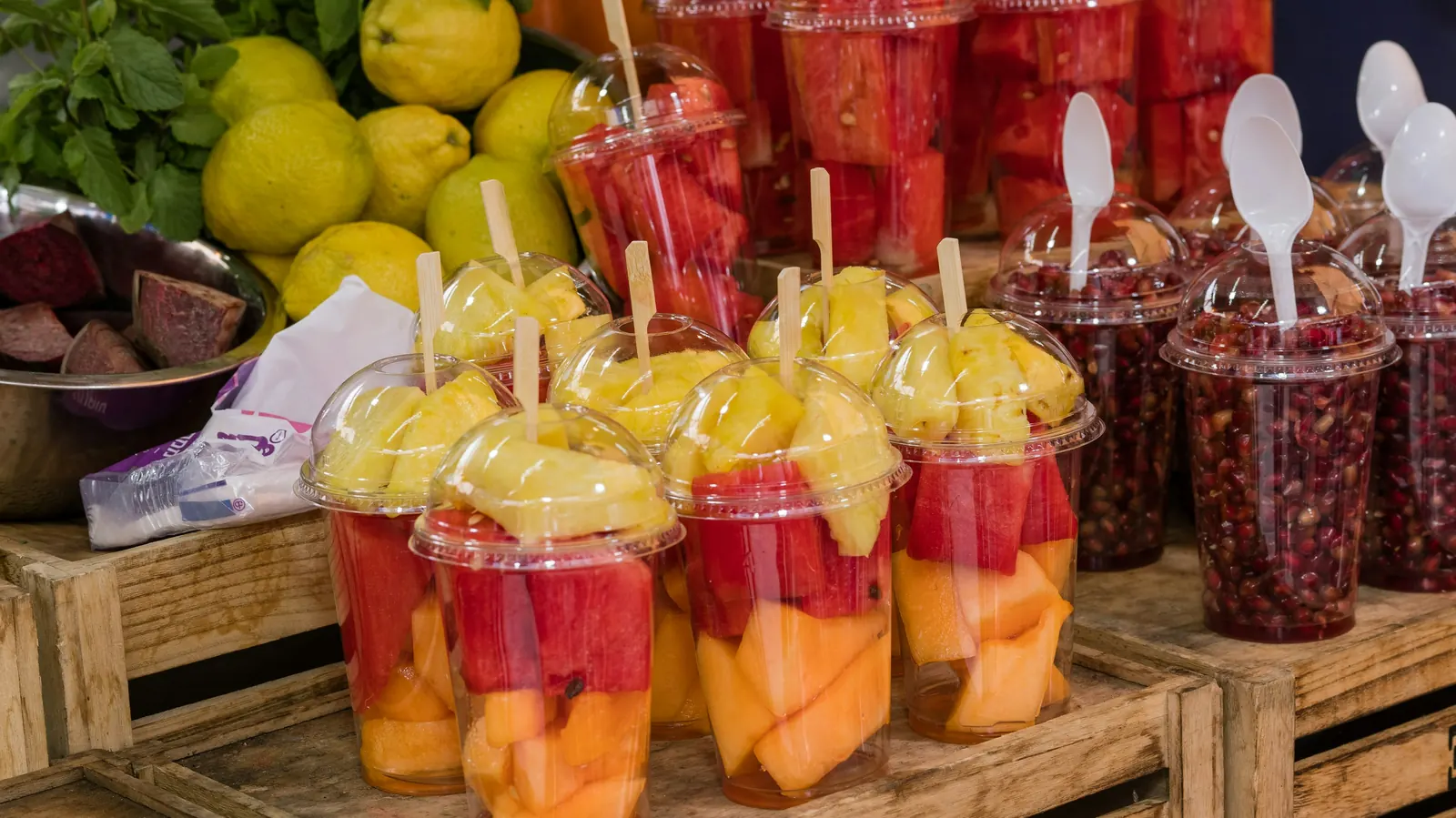
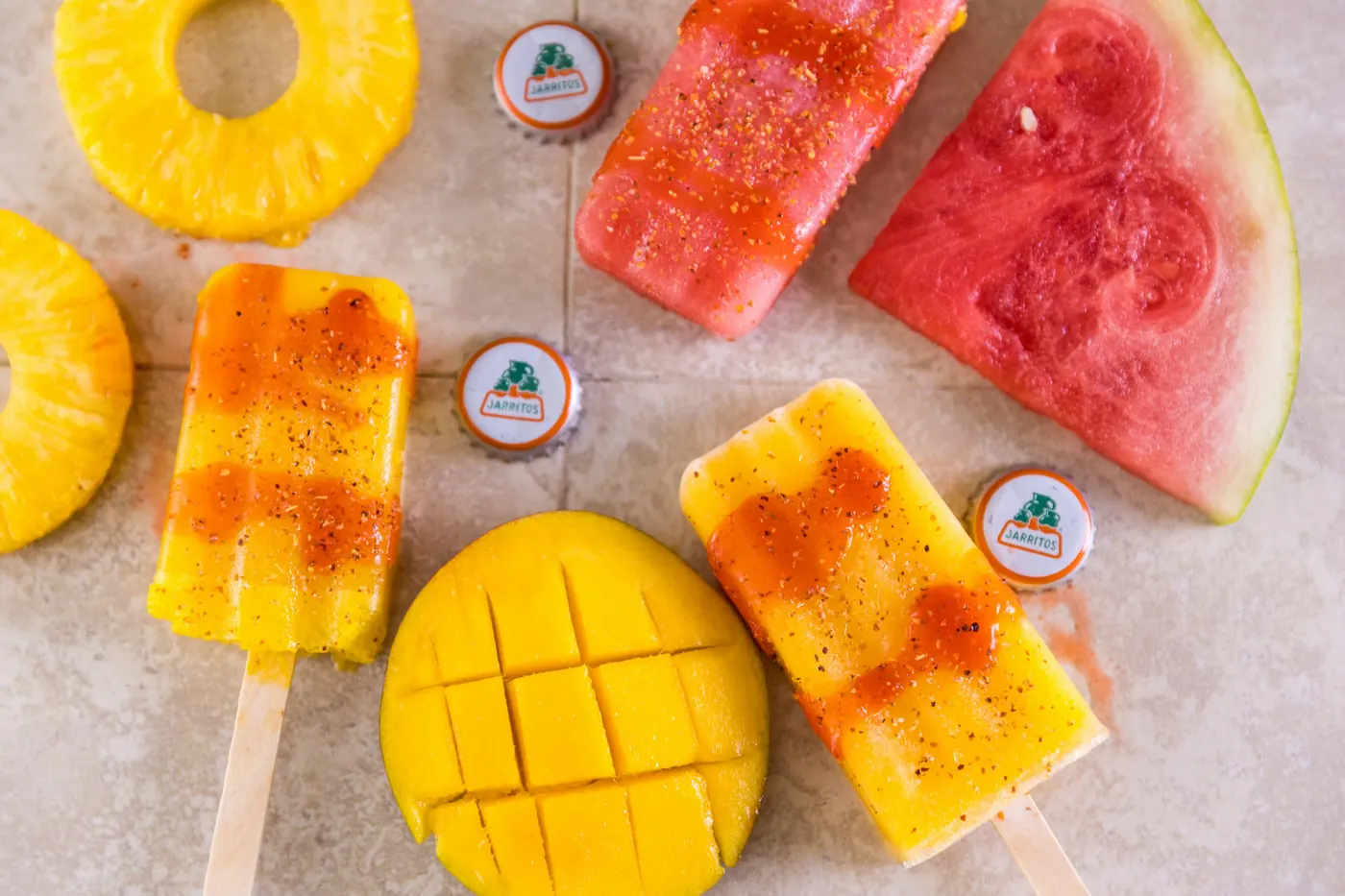
Order a cup of mango from a Mexican fruit cart and there is a good chance it comes finished with two things: a red sauce poured over the top and a red powder shaken on after it. The sauce is chamoy. The powder is very often Tajín. They look alike, they sit side by side on the same shelf, and people search for them together all the time, but they are different products that do different jobs.
Chamoy is a wet condiment: a sauce or paste that is sweet, sour, salty and a little spicy at once. Tajín is a brand, and its best-known product, Tajín Clásico, is a dry powder of chile, lime and sea salt with no sugar. This guide sets them side by side, explains each difference that matters in the kitchen, from texture and sweetness to sodium on the label, and names one product on each side worth buying.
Julia’s earns a commission on purchases made through links on this page, at no cost to you. Recommendations are based on what a restaurant kitchen looks for, product specifications and verified buyer reports.
Quick verdict: chamoy or Tajín?
Buy chamoy when you want a sweet-sour sauce that coats fruit, drips into a raspado or glues a rim to a glass; our pick is Siete Chamoy Botana Sauce, built on real fruit with 55 milligrams of sodium per teaspoon on Siete’s label. Buy Tajín Clásico when you want a dry, sugar-free chile-lime-salt seasoning for fruit, corn, cucumbers and drink rims. Most fruit-cup fans end up keeping both, because they are used together more often than instead of each other.
The rest of this page explains why, one difference at a time.
Chamoy vs Tajin: the differences side by side
Chamoy is a category made by many brands, so the right-hand details come from Tajín Clásico and the left-hand details describe chamoy in general, with Siete’s figures where a single product is needed. Sources are the makers’ own pages and labels.
| Chamoy (Siete Chamoy Botana Sauce) | Tajín Clásico | |
|---|---|---|
| What it is | A condiment category, made by many brands | One brand’s seasoning |
| Form | Pourable sauce or thick paste (powders exist too) | Dry powder in a shaker bottle |
| Base | Fruit, chile, salt and acid | Chiles, sea salt, dehydrated lime juice |
| Sweetness | Usually sweet; Siete uses fruit, dates and tapioca syrup | None; 0 g sugars on the label |
| Heat | “A hint of spice” (Siete) | Mild (Tajín) |
| Sodium on the label | 55 mg per 1 tsp (Siete) | 190 mg per 1/4 tsp (1 g) |
| Best at | Coating, drizzling, rimming with a sticky layer | Sprinkling, dusting, dry rims |
| Storage | A bottle of sauce; follow the label once opened | Dry cupboard; anti-caking agent added |
Sauce or powder: what each one is
Chamoy is a family of condiments rather than a single product. PepperScale describes it as fruit, chile, salt and acid balanced so that no one flavor wins, and says it started as a salted dried fruit before Mexican confectioners turned it into the sweet-sour red sauce most people know today. The fruit can be apricot, plum, mango or tamarind; the acid can be lime, vinegar or citric acid; and commercial versions often add sugar. It comes as a pourable sauce, as a thicker paste for dipping and rimming glasses, and even as a powder, as well as in chamoy candies.
Tajín is a brand made in Jalisco, Mexico, and Tajín Clásico is its original seasoning. Tajín describes it as a blend of 100% natural chile peppers, lime and sea salt, and its FAQ lists the ingredients as chiles, sea salt and dehydrated lime juice, with silicon dioxide added so it does not clump. It is a dry powder, sold in a flip-top bottle, and there is no fruit and no sugar in it.
The confusion is understandable, because Tajín now sells a chamoy of its own, Tajín Fruity Chamoy Hot Sauce. That is a sauce, not a powder, and our guide to the best Tajín flavor reviews it alongside Clásico and the rest of the line. When people say “Tajín” without a qualifier, though, they almost always mean the powder.
Ingredients: fruit and sugar or chile, lime and salt
This is the difference you taste first. A chamoy is built around sweetness and fruit. Siete’s, for example, lists water, tapioca syrup, pear puree concentrate, apple juice concentrate, dates, apricot puree concentrate, lime juice concentrate, sea salt, guajillo chile powder, chile pepper powder and hibiscus powder. Other bottles lean on water, salt, sugar and citric acid with a little fruit flavor, and some are sweetened with monk fruit instead of sugar. Our guide to the best chamoy sauce goes through seven bottles and what is in each.
Tajín Clásico has none of that. It is chile, sea salt and lime, so it adds salt and sourness and a mild warmth but no sweetness. Tajín marks Clásico as sugar free, kosher and gluten free, with no artificial colors or flavors.
In practice that means chamoy can make a plate of fruit taste sweeter and richer, while Tajín makes it taste brighter and saltier. Neither is “better”; they pull the fruit in different directions, which is why street vendors so often use both.
Texture and how each one behaves
A sauce and a powder behave very differently on food. Chamoy coats: it runs into the gaps between mango cubes, pools at the bottom of a fruit cup and soaks into shaved ice. A thick chamoy paste stays where you put it, which is why it is used to glue a layer of seasoning to the rim of a glass. The drawback is mess: a thin chamoy runs, and a sauce makes a cup of fruit wet.
Tajín sits on the surface. It sticks best to food that is already moist, such as cut fruit, cucumber or corn brushed with lime or butter, and it can be measured by the pinch. On a dry rim it needs something wet to hold it; Tajín’s own instructions for its rimming tub are to dip the glass in lime or orange juice first, then into the powder. Swap that juice for chamoy and you get the classic sticky, two-layer rim seen on micheladas and mangonadas.
Heat: both are mild
Neither product is built for heat. Tajín rates Clásico as mild and says in its FAQ that flavor matters more than heat. Siete describes its chamoy as having “a hint of spice”. If you want more fire, both sides have a hotter option: Tajín sells a habanero version of its powder, and Cholula makes a chamoy it rates as medium heat; both are covered in the two buying guides linked above.
Sodium as the labels state it
Both are salty, but the labels measure them in different serving sizes, so read them carefully.
- Tajín Clásico: 190 milligrams of sodium per quarter-teaspoon (1 gram) serving, according to Tajín’s nutrition label. Our arithmetic: a full teaspoon would be about four servings, or roughly 760 milligrams.
- Tajín Clásico Reduced Sodium: 120 milligrams per quarter teaspoon, which Tajín describes as 37% less sodium with the same taste.
- Siete Chamoy: 55 milligrams per teaspoon on Siete’s panel, low for chamoy.
- Tajín Fruity Chamoy: 110 milligrams per teaspoon, per Tajín.
- Street-style chamoy: varies widely. A US grocery listing for El Chilerito’s one-liter bottle gives about 840 milligrams per two tablespoons.
The practical point: a little Tajín goes a long way, and it is easy to shake on more salt than you would ever pour. If sodium is something you watch, compare labels per teaspoon rather than per serving, and look at Tajín’s reduced-sodium bottle or a lower-sodium chamoy. We make no health claims either way; the figures are simply what the makers print.
Uses: where each one earns its place
Chamoy is the finishing sauce for sweet and sour things: fruit cups, mangonadas and chamoyadas, raspados and shaved ice, paletas, gummy candy, chips and papitas preparadas, and the rim of a michelada or a margarita. Siete’s listing suggests fruit cups, sorbets, raspas, papitas preparadas and pickles, and the rim of a cocktail or mocktail.
Tajín is the everyday seasoning. Tajín’s listing suggests fruits and vegetables, salads, popcorn, frozen treats, tacos and cocktail rims for margaritas and micheladas. It is the one you reach for on corn, as in our guide to elote and esquites, on cucumber and jícama spears, on watermelon, and on a plain bowl of popcorn.
The two overlap on fruit and drink rims, and there they work best together: chamoy first for sweetness and stickiness, Tajín on top for salt, sourness and color.
Lead: a short note on chile and tamarind products
The US Food and Drug Administration and the California Department of Public Health have both flagged chile, tamarind and certain salts as ingredients linked to elevated lead in some imported candies, and a chamoy-flavored dried plum snack was recalled in 2022 after state testing. That guidance is written about candy; neither agency singles out bottled chamoy sauce or Tajín seasoning. Neither Siete’s chamoy page nor Tajín’s Clásico page that we read mentions lead testing, which is not evidence either way. Our chamoy sauce guide sets out what each agency says and the practical steps they recommend, especially for food young children eat often.
Choose chamoy if… / Choose Tajín if…
Choose chamoy if…
- You want fruit, shaved ice or a drink to taste sweet, sour and salty at once.
- You need a sauce that coats, drips or soaks in.
- You want a sticky layer on a glass rim that holds a powder on top.
- You are making mangonadas, chamoyadas, raspados or chamoy candy.
Choose Tajín if…
- You want a dry seasoning with no sugar.
- You season corn, cucumbers, popcorn or fruit by the pinch.
- You want a long-lasting shaker for the cupboard rather than a bottle of sauce.
- You want a quick chile-lime rim on a margarita or michelada.
If you are out of Tajín and want a different brand, see our guide to the best Tajín alternative.
Our pick on each side
These are the two products we would put in the pantry first. Each is also reviewed in its own buying guide, with alternatives for less sugar, less salt or more heat.
1. Siete Chamoy Botana Sauce, 10 oz (4-pack) – Built on Real Fruit

Siete is a Mexican-American food brand whose founding family comes from Laredo, Texas, and its chamoy reads more like the homemade sauce than most bottles do. According to Siete, the base is pear puree concentrate, apple juice concentrate, dates and apricot puree concentrate, with lime juice concentrate, sea salt, guajillo chile powder, chile pepper powder and hibiscus powder. The color comes from guajillo and hibiscus rather than a synthetic dye, and the listing calls it preservative free.
Siete’s nutrition panel lists 10 calories, 55 milligrams of sodium and 1 gram of sugar per teaspoon, low numbers for chamoy. Siete marks it gluten free, grain free, dairy free, soy free, vegan and non-GMO, and describes the heat as “a hint of spice”.
It is a pourable sauce, so it suits fruit cups, raspados and drizzling more than a thick rim. The listing suggests it on fruit cups, sorbets, raspas, papitas preparadas and pickles, and on the rim of a mocktail or cocktail. The in-stock Amazon listing is a pack of four 10-ounce bottles.
Why we like it
- Fruit-based: pear, apple, dates and apricot (Siete)
- Colored by guajillo chile and hibiscus
- Preservative free, per the listing
- 55 mg sodium per teaspoon on Siete’s panel
- Gluten free, vegan, non-GMO (Siete)
Key specifications
| Size | 10 oz bottle |
|---|---|
| Count | 4 bottles |
| Form | Pourable sauce |
| Main ingredients | Fruit purees and concentrates, dates, lime juice, sea salt, guajillo chile, hibiscus |
| Sweetener | Fruit, dates and tapioca syrup |
| Sodium per serving | 55 mg per 1 tsp (Siete) |
| Allergens/diet | Gluten free, soy free, dairy free, vegan, non-GMO (Siete) |
| Made in | Not stated |
Why we recommend it
Choose it if you want a chamoy that leads with fruit, for mango, watermelon and jícama, fruit cups and raspados, and you would rather avoid synthetic colors and preservatives.
Skip it if you want the intensely salty, sour street-cart style or a thick paste for rims, or only need one bottle; the in-stock listing is a four-pack.
Pros and cons
Pros
- Real fruit base
- No synthetic dye or preservatives listed
- Low sodium for chamoy
Cons
- Sold as a four-pack
- Milder and less salty than street-style chamoy
- Contains tapioca syrup
2. Tajín Clásico Seasoning, 5 oz – The Original Chile-Lime Powder

This is the bottle everyone means when they say Tajín. Tajín describes Clásico as a blend of 100% natural chile peppers, lime and sea salt, and its FAQ gives the ingredients as chiles, sea salt and dehydrated lime juice, with silicon dioxide added so the powder does not clump in humid weather. Tajín makes it in Jalisco, Mexico.
The flavor is built for fruit and vegetables. Salt sharpens the sweetness of mango, pineapple and watermelon, the lime gives it sourness, and the chile adds color and a gentle warmth. Tajín rates the heat as mild. The label shows no sugar and no calories per serving, and Tajín marks it kosher, gluten free and free of artificial colors and flavors.
The trade-off is salt: 190 milligrams of sodium per quarter-teaspoon serving. The 5-ounce flip-top bottle is the everyday size, and the same seasoning also comes in larger bottles, a rimming tub and single-serve packets, compared in our Tajín flavor guide.
Why we like it
- Short ingredient list: chiles, sea salt, lime, anti-caking agent
- Mild heat, per Tajín
- No sugar and zero calories on the label
- Kosher and gluten free (Tajín)
- Works on fruit, vegetables, corn, popcorn and rims
Key specifications
| Size | 5 oz flip-top bottle |
|---|---|
| Count | 1 |
| Form | Dry powder |
| Main ingredients | Chile peppers, sea salt, dehydrated lime juice |
| Sweetener | None (0 g sugars on label) |
| Sodium per serving | 190 mg per 1/4 tsp (1 g) |
| Allergens/diet | Kosher, gluten free, sugar free (Tajín) |
| Made in | Jalisco, Mexico (Tajín FAQ) |
Why we recommend it
If you keep one chile-lime seasoning in the cupboard, keep this one. It does every job the brand is known for, from a plate of cut mango to a cup of esquites to a chile-salt rim, and it lasts a long time at a pinch per serving.
Skip it if you are cutting back on salt; Tajín’s reduced-sodium Clásico has 120 milligrams per serving instead of 190.
Pros and cons
Pros
- The classic chile-lime-salt balance
- Mild enough for most people
- No sugar, no calories
- Easy to find in several sizes
Cons
- 190 mg sodium per small serving
- Too mild for heat seekers
How we compared chamoy and Tajín
We compared the two on what a kitchen asks of any finishing condiment: what it is made of, how it behaves on food, how sweet, hot and salty it is, and what it is for. Ingredients, nutrition figures and diet claims come from Siete’s and Tajín’s own product pages, labels and FAQ, and from the Amazon listings; the general description of chamoy comes from PepperScale, and the note on lead from the FDA and the California Department of Public Health. Both products were in stock on Amazon when we checked. We have not tasted them for this guide; flavor descriptions come from the ingredients and the makers’ own words.
Chamoy and Tajín questions, answered
Is chamoy the same as Tajín?
No. Chamoy is a sweet, sour and salty sauce or paste made by many brands, usually from fruit, chile, salt and acid. Tajín is a brand; its Clásico seasoning is a dry powder of chile, lime and sea salt with no sugar.
Does Tajín make chamoy?
Yes. Tajín Fruity Chamoy Hot Sauce is a liquid chamoy that Tajín describes as made with chilies, lime juice, sea salt and a touch of apricot, and marks as sugar free. It is reviewed in our guide to the best Tajín flavor.
Which is spicier, chamoy or Tajín?
Both are usually mild. Tajín rates Clásico as mild, and Siete describes its chamoy as having a hint of spice. Hotter versions exist on both sides, such as Tajín Habanero and Cholula’s medium-heat chamoy.
Which has more sodium?
It depends on the bottle and the serving. Tajín Clásico lists 190 milligrams per quarter teaspoon; Siete’s chamoy lists 55 milligrams per teaspoon; some street-style chamoys list far more. Compare labels at the same serving size.
Can you use chamoy and Tajín together?
Yes, and that is how they are most often served: chamoy over fruit or around a glass rim first, then Tajín on top for salt, sourness and color.
Keep both on the snack shelf
If you have to choose one, choose by job: chamoy for a sweet-sour sauce that coats, Tajín for a dry, sugar-free seasoning you sprinkle. Most people who make fruit cups, mangonadas or micheladas at home end up keeping a bottle of each. Both belong on the snack and condiment shelf of a Mexican pantry, which our guide to Mexican pantry staples covers along with the chiles, masa and spices that do the rest of the work.
And if you would rather someone else did the cooking tonight, see the menu or call to order.