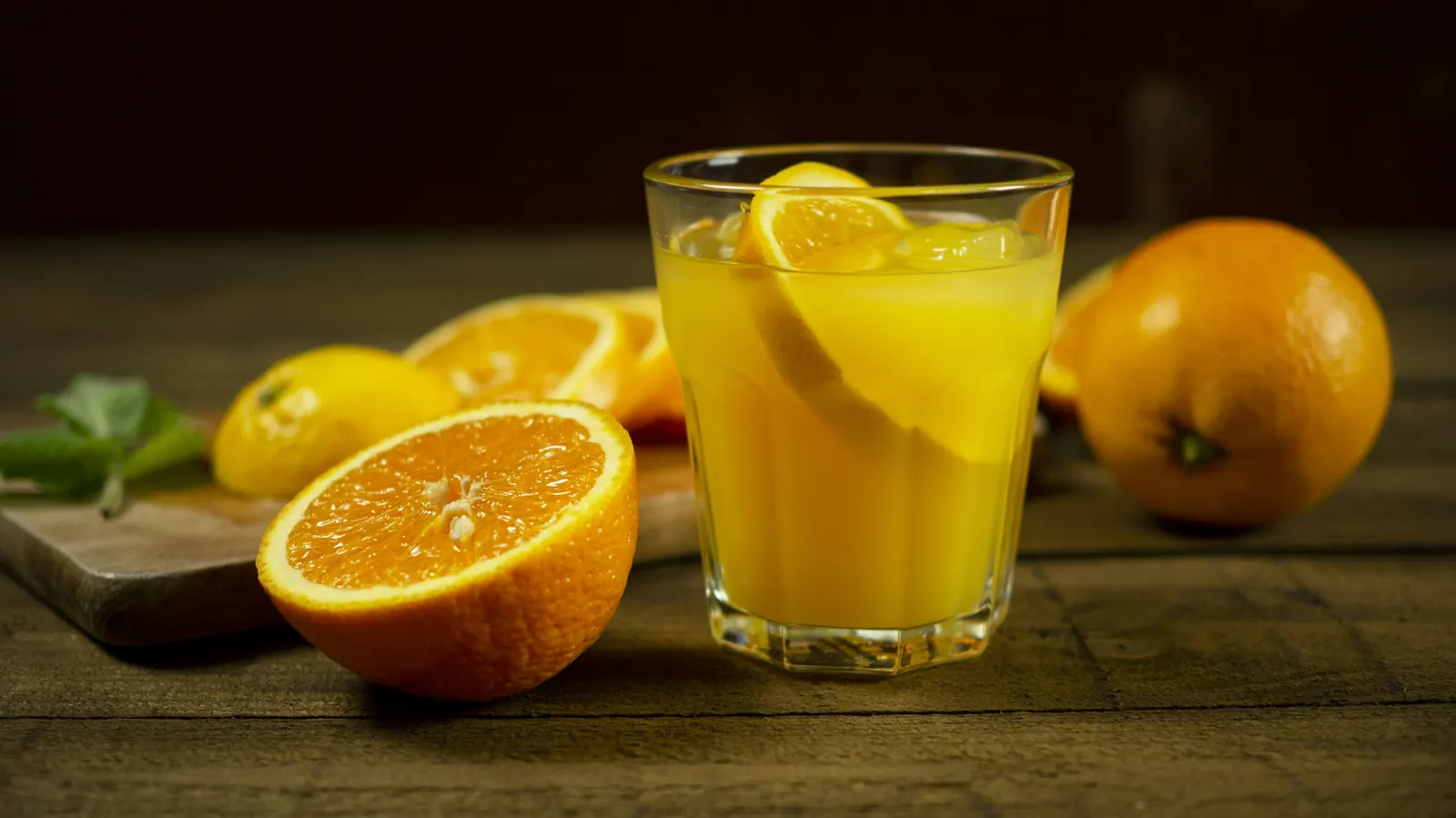
A lime squeezer that handles a margarita round with ease will struggle with a bag of oranges. Oranges are bigger, their peel is thicker, and a glass of juice takes several of them, so a tool sized for limes means a lot of squeezing for not much juice. Grapefruit is bigger again.
For orange juice, what matters is a cone or bowl big enough for the fruit, a motor or a lever to do the pressing, a way to keep pulp and seeds where you want them, and somewhere for the juice to go. This guide compares the juicers that handle oranges well, using the makers’ specifications and what independent reviewers found.
Julia’s earns a commission on purchases made through links on this page, at no cost to you. Recommendations are based on what a restaurant kitchen looks for, product specifications and verified buyer reports.
Quick verdict: which juicer to buy for orange juice
For most kitchens, the best citrus juicer for orange juice is the Breville Citrus Press: you lower a lever and a motor juices oranges and grapefruit with one cone, and it won America’s Test Kitchen’s electric juicer review. If you want a pitcher of juice on a smaller budget, the BLACK+DECKER CJ625 fills a 32-ounce container with adjustable pulp, and Reviewed found almost no bitterness in its orange juice. For no electricity at all, a lever press such as the Zulay Kitchen Cast Iron Juicer takes oranges and grapefruit in a 5-inch bowl.
Hand squeezers are fine for a lemon or two, but for oranges they are slow and tiring; we explain why, and which handheld tool comes closest, further down.
Five orange juicers compared
Our five standout picks side by side, one for each kind of kitchen, with the details each maker or listing states. All eight juicers are reviewed in full below.
| Juicer | Best for | Cones and pulp | Capacity | Buy on Amazon |
|---|---|---|---|---|
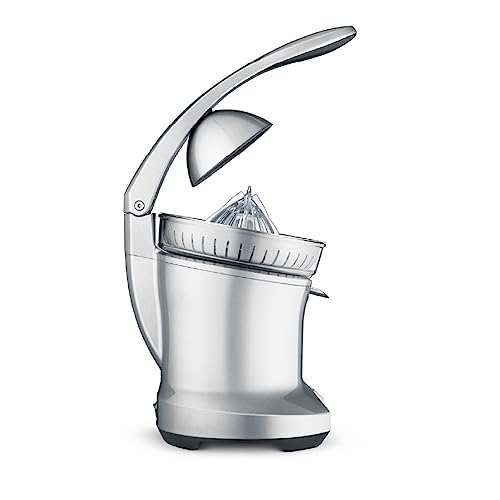
Breville Citrus PressBest overall
|
Fast, lever-operated juicing | One cone, limes to grapefruit; filter | Pours into your glass | View on Amazon |

BLACK+DECKER CJ625 Citrus JuicerBest for a pitcher
|
Breakfast for the family | Small and large cones; adjustable pulp | 32 oz container | View on Amazon |

Cuisinart Pulp Control Citrus JuicerMost pulp settings
|
Choosing your pulp level | Universal cone; low, medium, high pulp | Not stated; spout fills a glass | View on Amazon |

Zulay Kitchen Cast Iron JuicerBest manual
|
No plug, oranges and grapefruit | 5-inch bowl; keeps seeds out | Pours into your glass | View on Amazon |

Dash Dual Citrus JuicerBest compact
|
Small kitchens, a glass or two | Two cones; adjustable pulp screen | 20 oz container | View on Amazon |
Product images from Amazon. Cone sizes and capacities are as stated by each maker; check the listing before you buy.
Our picks for the best citrus juicer for orange juice
These eight juicers cover the realistic ways to make orange juice at home: lever-operated electric presses, press-down electric reamers with a container, manual lever presses, and one handheld juicer sized for oranges. Each pick lists cone sizes, pulp control and capacity, and gives one honest reason to skip it.
1. Breville Citrus Press – One Cone from Lime to Grapefruit
The Breville Citrus Press is the orange juicer to buy if you juice most mornings. You set half an orange on the cone, lower the hinged arm, and a motor does the pressing. Breville says one cone fits everything “from the smallest lime to the largest grapefruit”, so there is nothing to swap when you move from oranges to grapefruit, and a safety switch keeps the cone still until the arm is down on the fruit.
It has the strongest independent record of any juicer here. America’s Test Kitchen made it the winner of its electric juicer review, saying it “pressed citrus of all sizes smoothly and effortlessly at an impressive speed” and extracted almost all the juice. Reviewed, which judged orange juice by taste, said it made rich juice with no pithy bitterness, and called it fast and quiet.
The juice runs out of a drip-stop spout straight into your glass or a pitcher, rather than into a built-in container, which means there is no capacity limit but you need a vessel underneath. A juice filter catches seeds and most of the pulp. The cone, juice collector, filter and fruit dome are dishwasher safe. Its drawbacks are size and weight: it is a big machine, almost seven pounds by ATK’s measure.
Why we like it
- Winner of America’s Test Kitchen’s electric juicer review
- One cone handles limes through large grapefruit, per Breville
- Lever-operated, motorized pressing
- Reviewed found its orange juice rich, without pithy bitterness
Key specifications
| Model | BCP600SIL |
|---|---|
| Type | Electric lever press |
| Power | 110 watts |
| Cone sizes | One cone, smallest lime to largest grapefruit |
| Pulp control | Juice filter (adjustable settings not stated) |
| Capacity | No container; spout pours into your glass |
| Dishwasher-safe parts | Cone, juice collector, filter, fruit dome |
| Warranty | 1-year limited |
Why we recommend it
Choose it if you make orange juice for a household every day and want it done quickly with little effort. The lever also makes it the easiest choice for sore hands, as our guide to juicers for arthritic hands explains.
Skip it if counter space is tight or you only want juice now and then; it is large and heavy for occasional use.
Pros and cons
Pros
- Fast and efficient, per ATK
- Handles grapefruit with the same cone
- Quiet, per Reviewed
- Main parts dishwasher safe
Cons
- Large and heavy
- No built-in pitcher
- Pulp control not adjustable, per listing
2. BLACK+DECKER CJ625 Citrus Juicer – A Pitcher of Juice at Once
The CJ625 is the classic press-down electric reamer. You press half an orange onto the cone, which starts the motor, and the cone reverses direction as it turns to pull out more juice. The juice drains into a clear 32-ounce container with measurement markings, a handle and a drip-free spout, so it doubles as the pitcher you take to the table.
Reviewed named it the best electric citrus juicer in its roundup, noting separate cones for small and large fruit, an adjustable pulp setting that resisted clogging, and “almost no bitterness in the orange juice”. America’s Test Kitchen was cooler, rating it recommended with reservations: quick and efficient with small and medium citrus, but loud enough that its testers worried it was breaking.
Pulp collects in a removable basket, which BLACK+DECKER notes you can empty or use in other recipes. The listing describes it as dishwasher safe, and it carries a one-year warranty. At under two pounds by ATK’s measure, it is easy to lift out of a cupboard.
Why we like it
- 32-ounce container doubles as a pitcher
- Adjustable pulp control with a removable pulp basket
- Reviewed’s best electric pick
- Light and dishwasher safe
Key specifications
| Model | CJ625 |
|---|---|
| Type | Electric reamer, pressure activated |
| Power | Not stated |
| Cone sizes | Auto-reversing cones for small and large fruit |
| Pulp control | Adjustable, with removable pulp basket |
| Capacity | 32 oz (listing; some reviewers list 34 oz) |
| Dishwasher-safe parts | Yes (per listing) |
| Warranty | 1 year |
Why we recommend it
It suits a family breakfast: juice four or five oranges straight into a container you can measure from and pour at the table. It is also the lime-and-lemon electric pick in our lime squeezer guide, so it covers margarita night as well.
Skip it if noise bothers you early in the morning; America’s Test Kitchen found it very loud.
Pros and cons
Pros
- Built-in pitcher with markings
- Adjustable pulp
- Light and compact
Cons
- Loud, per ATK
- You press each half down by hand
- Power rating not stated
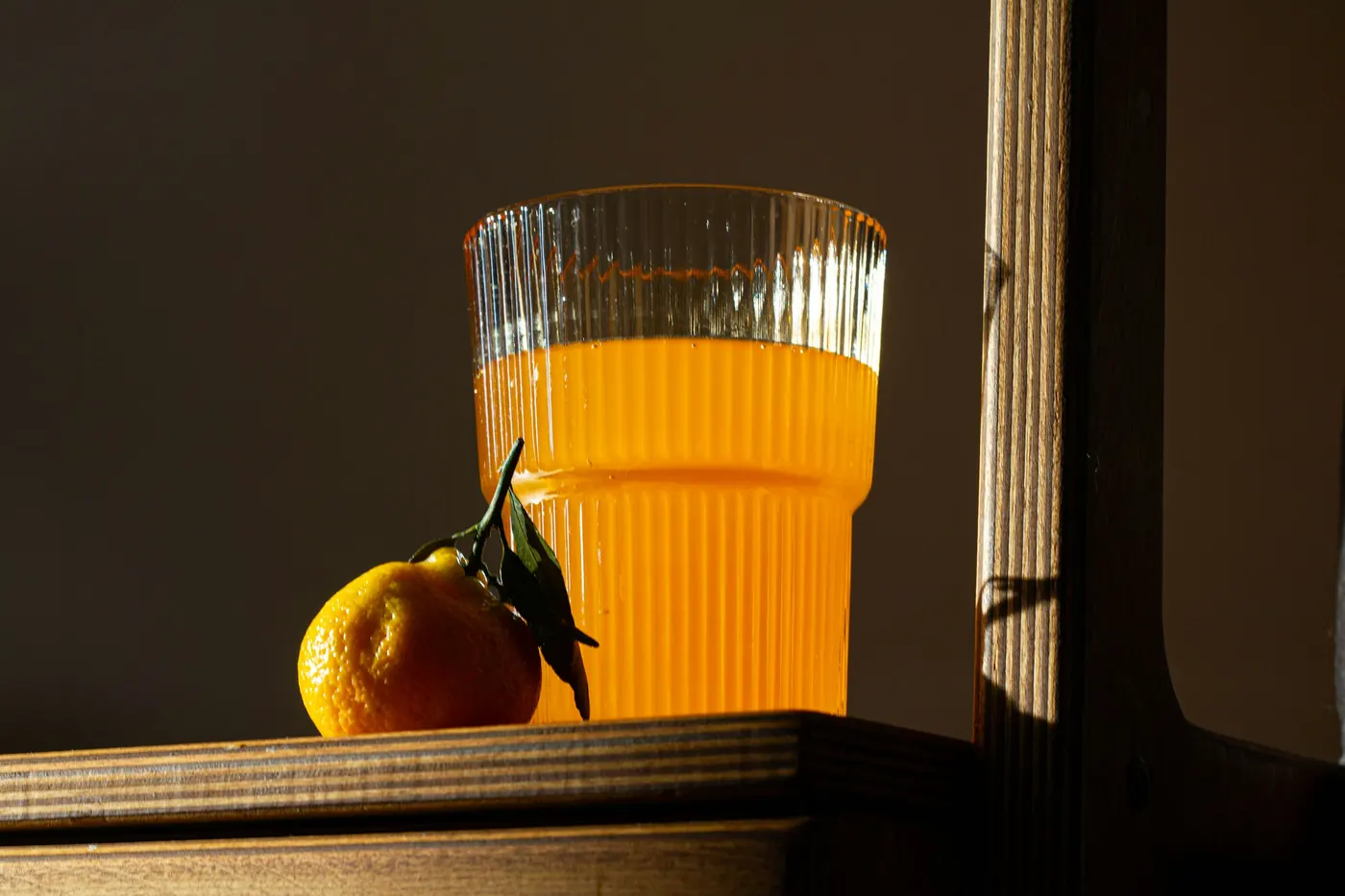
3. Cuisinart Pulp Control Citrus Juicer – Three Pulp Settings
If the argument in your house is about pulp, the Cuisinart is built for it. Its adjustable reamer has three pulp settings, low, medium and high, and one universal auto-reversing cone that Cuisinart says fits “the smallest lime to the largest grapefruit”. A “final spin” feature presses more juice out of the pulp at the end of a batch.
The extra-long snap-up spout lets you stand a tall glass underneath and fill it directly, then flip the spout up to stop drips. The parts are dishwasher safe, and Cuisinart backs it with a three-year limited warranty, the longest of the electric juicers on this page.
Reviewed liked its juice yield and found it decently quiet and compact, but the pulp control did not always behave: it clogged at times and let too much pulp through at others, and the reamer was awkward to refit after washing. Treat the three settings as a rough guide rather than an exact dial.
Why we like it
- Three pulp settings: low, medium, high
- Universal cone for limes through grapefruit
- Long snap-up spout fills a glass directly
- Three-year limited warranty
Key specifications
| Model | CCJ-500P1 |
|---|---|
| Type | Electric reamer, press-down |
| Power | Not stated |
| Cone sizes | One universal auto-reversing cone |
| Pulp control | Three settings (low, medium, high) |
| Capacity | Not stated; spout fills a glass |
| Dishwasher-safe parts | Yes (per listing) |
| Warranty | 3-year limited |
Why we recommend it
It suits a household where some people want smooth juice and others want plenty of pulp, and anyone who values a longer warranty on a small appliance.
Skip it if you need the pulp setting to be precise every time; Reviewed found it inconsistent.
Pros and cons
Pros
- Most pulp choices here
- Three-year warranty
- Quiet and compact, per Reviewed
Cons
- Pulp control inconsistent, per Reviewed
- Reamer awkward to refit
- No pitcher capacity stated
4. Breville Citrus Press Pro – Die-Cast and Built to Last
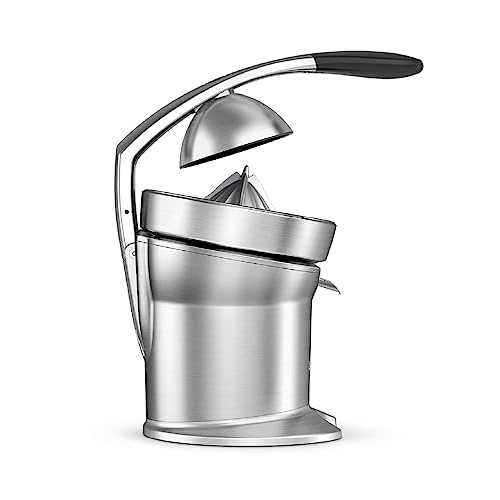
The Citrus Press Pro works like our top pick, with a power-assisted lever and a motorized cone, but in a die-cast metal body with a die-cast stainless steel cone that Breville says resists citric acid. Its finned and undulated Quadra-Fin cone is designed for citrus of every size, and the listing names oranges, lemons, limes and grapefruit.
America’s Test Kitchen rated it highly recommended. Its testers found it a little slower and slightly lower in yield than the cheaper Citrus Press, but said pressing down “feels a bit more smooth”, and they did not think most people need to pay for the upgrade. The listing title includes adjustable pulp control, and the cone, collector, filter and fruit dome go in the dishwasher.
At almost ten pounds by ATK’s measure, it is the heaviest juicer here, which keeps it steady on the counter and makes it a poor choice for a cupboard.
Why we like it
- Die-cast body and acid-resistant stainless cone
- Power-assisted lever ATK found smooth
- Adjustable pulp control
- Dishwasher-safe cone, collector, filter and dome
Key specifications
| Model | 800CPXL |
|---|---|
| Type | Electric lever press |
| Power | 110 watts |
| Cone sizes | One Quadra-Fin cone for all citrus sizes |
| Pulp control | Adjustable (per listing title) |
| Capacity | No container; spout pours into your glass |
| Dishwasher-safe parts | Cone, juice collector, filter, fruit dome |
| Warranty | 1-year limited |
Why we recommend it
It suits someone who wants an all-metal juicer for daily oranges and likes the feel of a smooth, heavy lever.
Skip it if value matters; ATK found the less expensive Citrus Press slightly faster with a little more juice.
Pros and cons
Pros
- Sturdy die-cast construction
- Smooth lever action
- Adjustable pulp
Cons
- Heaviest pick, almost 10 lb
- Slightly slower than the Citrus Press
- No built-in pitcher
5. Dash Dual Citrus Juicer – Two Cones in a Small Footprint
The Dash Dual is a small press-down electric reamer with two interchangeable cones, one for small limes and lemons and one sized for large oranges and grapefruit. The auto-reversing reamer turns both ways to pull more juice out, an adjustable pulp screen sets the texture, and a 20-ounce container with a mess-free spout catches the juice.
America’s Test Kitchen named it the best buy among electric juicers, saying it “did an excellent job juicing all sizes of citrus fruit”. It was slower than the Brevilles, about two minutes longer for ten lemons, and its double strainer sometimes clogged with pulp, which matters more with pulpy oranges than with limes. ATK measured it at just under two pounds.
Dash describes hand washing the removable cones, container and lid; the listing does not say they are dishwasher safe.
Why we like it
- America’s Test Kitchen’s best buy
- Large cone for oranges and grapefruit, small cone for limes
- Adjustable pulp screen
- 20-ounce container with spout
Key specifications
| Model | JB065AQ |
|---|---|
| Type | Electric reamer, press-down |
| Power | Not stated |
| Cone sizes | Two: small (limes, lemons) and large (oranges, grapefruit) |
| Pulp control | Adjustable pulp screen |
| Capacity | 20 oz container |
| Dishwasher-safe parts | Not stated; listing describes hand washing |
| Warranty | Not stated |
Why we recommend it
It suits a small kitchen, a dorm or a household that wants a glass or two of orange juice without giving up much counter space.
Skip it if you juice big batches of pulpy oranges; the strainer can clog and the container is smaller than the CJ625’s.
Pros and cons
Pros
- Compact and light
- Two cone sizes
- ATK’s best buy
Cons
- Strainer can clog, per ATK
- Slower than the Brevilles
- Hand wash; warranty not stated
6. Zulay Kitchen Cast Iron Juicer – A 5-Inch Bowl for Big Fruit
A countertop lever press is the fastest way to juice oranges without electricity. You set half an orange in the bowl and pull the cast iron arm down; Zulay says the arm “delivers serious mechanical advantage”, pressing thick-skinned citrus in a single pull. The generous 5-inch bowl handles “everything from small limes to large grapefruits”, according to Zulay.
The press keeps seeds out of the glass and, Zulay says, minimizes pulp, but there is no adjustable pulp setting and no container: the juice runs straight into the glass or jug you stand underneath. Rubberized feet keep it planted.
America’s Test Kitchen rated a Zulay Kitchen heavy-duty manual press highly recommended, saying it handled “limes, lemons, oranges, and even grapefruits effortlessly”, though testers had to hold the back to keep it steady. ATK lists a 4-inch bowl for the press it reviewed, so it may not be this exact listing; take the review as a guide to the style.
Why we like it
- 5-inch bowl, limes to large grapefruit, per Zulay
- Lever does the pressing
- No electricity needed
- Highly rated style of press, per ATK
Key specifications
| Model | Cast Iron Juicer |
|---|---|
| Type | Manual countertop lever press |
| Power | Manual |
| Cone sizes | 5-inch bowl, small limes to large grapefruit |
| Pulp control | Keeps seeds out, minimizes pulp; not adjustable |
| Capacity | No container; pours into your glass |
| Dishwasher-safe parts | Not stated |
| Warranty | Not stated |
Why we recommend it
It suits anyone who wants fresh orange juice without another appliance, and cooks who also press limes by the dozen for a pitcher of margaritas.
Skip it if you want to choose your pulp level, or need to move the press around; cast iron is heavy and it does not bolt down.
Pros and cons
Pros
- Large bowl for oranges and grapefruit
- Quick single-pull pressing
- No motor to fail
Cons
- No pulp adjustment
- Heavy; base needs steadying
- Care and warranty not stated
7. Hamilton Beach Commercial 932 Manual Citrus Juicer – A Diner-Style Lever Press

The 932 is the kind of lever press you see behind a diner counter, from Hamilton Beach’s commercial line. Its extractor arm, the maker says, exerts up to 2,000 pounds of force to get “maximum juice output with minimum skin oil and pulp residue”, which matters for oranges, where oil from the peel can make juice taste bitter.
Hamilton Beach lists it for lemons, limes, oranges and grapefruit. The metal parts carry an enamel finish meant to resist citrus acid, Sure Grip feet help stop it tipping, and it is NSF certified for food service equipment. The stainless steel strainer cone and plastic funnel come off for cleaning; the listing does not say whether they are dishwasher safe.
It is backed by one year of parts and labor. We found no recent independent review of this model, so this pick rests on the maker’s specifications.
Why we like it
- Long extractor arm, up to 2,000 lb of force per the maker
- Designed for minimum skin oil in the juice
- NSF certified for food service
- One-year parts and labor warranty
Key specifications
| Model | 932 |
|---|---|
| Type | Manual countertop lever press |
| Power | Manual |
| Cone sizes | One strainer cone; lemons to grapefruit (size not stated) |
| Pulp control | Strainer cone; not adjustable |
| Capacity | No container; funnel pours into your glass |
| Dishwasher-safe parts | Not stated; cone and funnel remove for cleaning |
| Warranty | 1 year parts and labor |
Why we recommend it
It suits a home cook who wants a commercial-grade manual press from an established appliance maker, with a warranty that covers parts and labor.
Skip it if you want proof from an independent reviewer before you buy; we could not find one.
Pros and cons
Pros
- Commercial build, NSF certified
- Lever does the pressing
- Parts and labor warranty
Cons
- No recent independent review found
- Bowl size not stated
- Dishwasher use not stated
8. Dreamfarm Orange Fluicer – A Handheld Sized for Oranges

Most hand squeezers are sized for lemons and limes. The Dreamfarm Fluicer comes in three sizes, and the 11-inch orange version is the one recommended for oranges as well as lemons and limes. Instead of crushing the half flat, its hinged mechanism presses the fruit in half from the sides, which Dreamfarm says takes less force than a traditional squeezer.
A built-in pip catcher strains the juice and acts as a funnel into a glass, and the whole tool folds flat for a drawer. America’s Test Kitchen recommended the smaller Lemon Fluicer, finding it quick and effective through small and medium citrus, though it could spray juice and was awkward to clean inside; it did not review the orange size.
Be realistic about a handheld for oranges. You squeeze each half yourself, and a glass of juice takes several oranges, so it suits one glass, not a pitcher. Dreamfarm does not state whether it is dishwasher safe.
Why we like it
- Orange-sized handheld, 11 inches long
- Side-pressing hinge needs less force, per Dreamfarm
- Pip catcher doubles as a funnel
- Folds flat for storage
Key specifications
| Model | DFFU3444 |
|---|---|
| Type | Handheld fold-flat press |
| Power | Manual |
| Cone sizes | Orange size; also lemons and limes |
| Pulp control | Pip catcher strains seeds |
| Capacity | No container; funnels into your glass |
| Dishwasher-safe parts | Not stated |
| Warranty | Not stated |
Why we recommend it
It suits someone who wants one glass of orange juice now and then, and a drawer tool that also handles lemons and limes, without giving counter space to an appliance.
Skip it if you want juice for more than one person; for that, any electric or lever press on this page is faster and easier.
Pros and cons
Pros
- Sized for oranges
- Folds flat
- Strains seeds
Cons
- Slow for more than a glass
- Can spray juice, per ATK’s review of the lemon size
- Care and warranty not stated
How to choose a juicer for oranges
Five things decide whether a juicer suits orange juice. Most of them come down to the size of the fruit and how much juice you want at once.
1. Cone or bowl size
The cone or bowl has to fit the fruit. Lever presses with large bowls, and electric juicers with a large cone or a universal cone, handle oranges and grapefruit. Juicers with two cones (BLACK+DECKER, Dash) switch between a small cone for limes and a large one for oranges; one-cone designs (both Brevilles, Cuisinart) are shaped to grip every size. Hand squeezers sized for lemons cannot fit a whole orange half: Reviewed noted its top handheld squeezer was too small for grapefruit and not suited to large volumes of oranges.
2. Electric, lever or hand
For more than a glass, choose a motor or a lever. A lever-operated electric press (the Brevilles) is fastest and easiest. A press-down electric reamer (BLACK+DECKER, Cuisinart, Dash) is smaller and cheaper, but you push each half down yourself. A manual lever press (Zulay, Hamilton Beach) needs no plug and presses each half in one pull. Hand tools are for a single glass.
3. Pulp control
Orange juice is where pulp preferences show. The Cuisinart offers three settings, the BLACK+DECKER and Dash have adjustable pulp controls, and the Breville Citrus Press Pro lists adjustable pulp in its title. Lever presses and the standard Breville Citrus Press strain out seeds and much of the pulp without a setting to change. Reviewers found pulp controls imperfect: Reviewed said the Cuisinart’s was inconsistent, and ATK found the Dash’s strainer could clog.
4. Capacity
Juicers with a container let you juice a batch and pour from it: 32 ounces for the BLACK+DECKER and 20 ounces for the Dash. The Brevilles, the Cuisinart and the lever presses pour straight into whatever you stand underneath, so a pitcher works as well as a glass.
5. Bitterness and cleaning
Bitter orange juice usually comes from pressing pith and peel too hard. Reviewed found little or no bitterness in juice from the Breville Citrus Press and the BLACK+DECKER, while America’s Test Kitchen found an etched dome on one Eurolux model pushed peel and pith into the juice. Hamilton Beach designs its press for minimum skin oil. For cleaning, dishwasher-safe parts (both Brevilles, BLACK+DECKER, Cuisinart) save hand-scrubbing a ridged cone.
How we chose these eight orange juicers
We looked for juicers with cones or bowls large enough for oranges and grapefruit, then confirmed each model’s cone sizes, pulp control, capacity, cleaning and warranty on the maker’s own Amazon listing, which is where most of these specifications come from. For performance we relied on two independent reviews, named throughout: America’s Test Kitchen’s reviews of electric and manual citrus juicers, and Reviewed’s roundup of citrus juicers, which judged orange juice by taste. Every pick was in stock on Amazon when we checked. We have not used these juicers ourselves; where we describe how one performs, we say whose finding it is.
Some popular models were left out. The Vinci hands-free juicer was not recommended by America’s Test Kitchen, whose testers found its lid could not fully close on oranges or grapefruit. Reviewed rated the Proctor Silex Alex’s Lemonade Stand juicer one to avoid, citing bitter juice and poor pulp control. Several other electric reamers had no independent review we could find, and two lever presses we considered were down to their last few units.
Orange juice questions, answered
Can I use a lemon squeezer for oranges?
Only small oranges, and only for a little juice. Most handheld squeezers are sized for lemons and limes, so an orange half will not fit or will need several squeezes. For oranges, choose a large-cone electric juicer, a lever press with a big bowl, or an orange-sized handheld such as the Dreamfarm Orange Fluicer.
Is an electric juicer worth it for orange juice?
If you make more than a glass at a time, yes. Electric juicers turn the cone for you, and the lever-operated Brevilles do almost all the work. America’s Test Kitchen found its winning electric juicer extracted significantly more juice from ten lemons than its favorite manual juicer.
Which juicer gives the least bitter orange juice?
Reviewed found rich, non-bitter orange juice from the Breville Citrus Press and almost no bitterness from the BLACK+DECKER CJ625. Whatever you use, press gently enough to leave the pith behind; grinding the peel into the cone adds bitterness.
Can these juicers handle grapefruit?
Both Brevilles, the Cuisinart, the Dash and the Zulay press are listed for grapefruit by their makers, and the Hamilton Beach 932 is listed for grapefruit too. The BLACK+DECKER’s large cone suits big citrus, though ATK found it best with small and medium fruit.
Do I need pulp control?
Only if your household disagrees about pulp. A juicer with adjustable pulp, such as the Cuisinart or the BLACK+DECKER, lets you choose; a fixed strainer gives you mostly smooth juice every time.
Our pick for fresh orange juice
Buy the Breville Citrus Press if you make orange juice most mornings and want it quick and easy. Choose the BLACK+DECKER CJ625 for a full pitcher on a smaller budget, the Cuisinart if pulp is a family debate, or the Zulay lever press if you would rather not plug anything in. For an occasional glass, the Dreamfarm Orange Fluicer will do.
For every kind of citrus tool, see our guide to the best citrus juicer, and if price comes first, the best cheap citrus juicer. Juicing limes for drinks as well? Our margarita accessories guide covers the rest of the bar. And if you would rather someone else made the drinks tonight, see the menu or call to order.