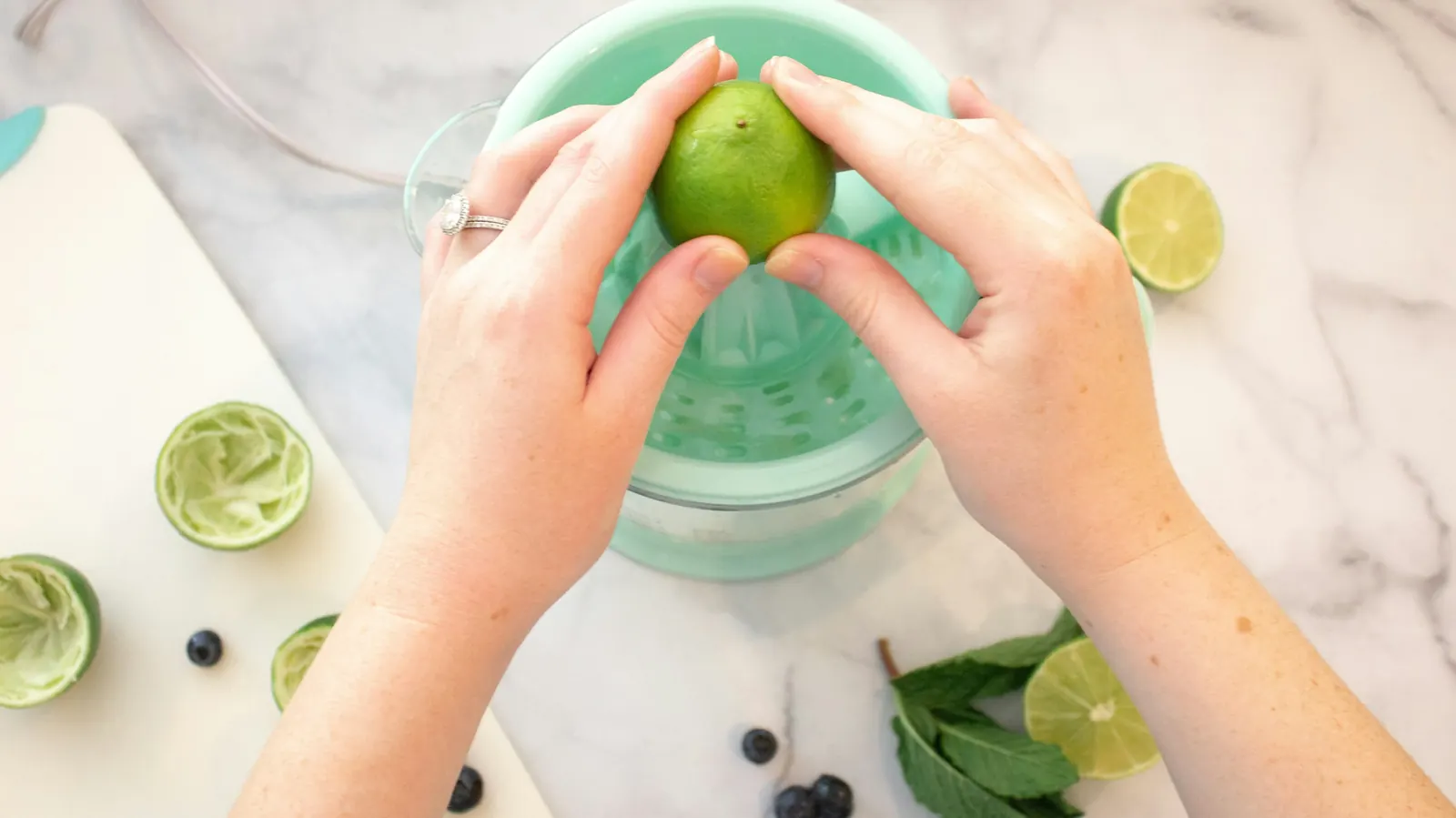
Fresh lime juice is the backbone of a margarita, the finish on a plate of tacos, and the acid that cures ceviche and brightens a salsa. Squeezing a few limes by hand is easy enough; squeezing twenty for a pitcher of margaritas is where a good tool earns its drawer space, getting more juice from each lime with less effort and keeping the seeds out of the drink.
Lime squeezers come in more shapes than you might expect: hinged hand presses, countertop levers, reamers, fold-flat squeezers and electric juicers. This guide names the ones worth buying, explains which suits the way you use limes, and cites the independent reviewers whose findings back them up.
Julia’s earns a commission on purchases made through links on this page, at no cost to you. Recommendations are based on what a working Mexican kitchen looks for in a lime squeezer, the makers’ own specifications and published equipment reviews, which we cite.
Quick verdict: which is the best lime squeezer?
For most kitchens, the best lime squeezer is the Chef’n FreshForce Citrus Juicer: a hinged hand press with a gear mechanism that adds squeezing force, and the top pick of both America’s Test Kitchen and Reviewed. If you juice limes by the dozen for pitchers of margaritas, a countertop lever press such as the Zulay Kitchen Cast Iron Juicer is faster and easier on the hands. If you want juice at the push of a fruit, the BLACK+DECKER CJ625 electric juicer was Reviewed’s best electric pick.
Below, every pick is explained, along with who should skip it.
Five lime squeezers compared
Our five standout picks side by side, one for each way of juicing limes, with the details each maker or listing states. All eight squeezers are reviewed in full below.
| Lime squeezer | Best for | Type & material | Cleaning (per maker) | Buy on Amazon |
|---|---|---|---|---|
Chef’n FreshForce Citrus JuicerBest overall
|
Everyday limes and lemons | Geared hand press, nylon and stainless steel | Top-rack dishwasher safe | View on Amazon |

Zulay Kitchen Cast Iron JuicerBest for pitchers
|
Dozens of limes at a time | Countertop lever press, cast iron | Not stated in the listing | View on Amazon |

Dreamfarm Fluicer Lime JuicerBest for small drawers
|
Tight storage, gentle squeeze | Fold-flat side press, lime size | Not stated in the listing | View on Amazon |

OXO Good Grips Wooden ReamerBest reamer
|
A lime or two over a dish | Handheld reamer, solid beechwood | Hand wash and dry promptly | View on Amazon |

BLACK+DECKER CJ625 Electric Citrus JuicerBest electric
|
Juice by the pitcher, no hand effort | Electric reamer, 32-ounce container | Dishwasher-safe, per the listing | View on Amazon |
Product images from Amazon. Details are as stated by each maker or listing; check the listing before you buy.
Our picks for the best lime squeezer
These eight squeezers cover every common way to juice a lime: hinged hand presses that turn the fruit inside out, a countertop lever for big batches, a fold-flat press, a wooden reamer and an electric juicer. Each pick explains who it suits, the details that matter for limes, and one honest reason to skip it.
1. Chef’n FreshForce Citrus Juicer – More Juice for Less Grip
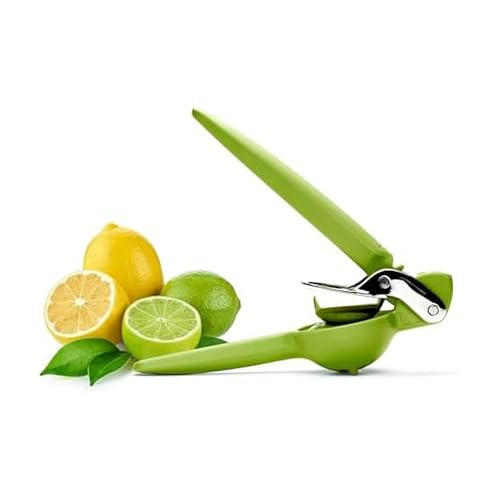
A hinged hand press looks simple, and most of them are. What sets the FreshForce apart is a patented dual-gear mechanism in the hinge, which Chef’n says increases pressing power and reduces hand fatigue. The company claims it produces 20% more juice than conventional handheld citrus juicers.
Independent reviewers agree it works. America’s Test Kitchen named it the overall winner of its manual citrus juicer review, calling it “sturdy and efficient”, comfortable to hold and easy to use, and singling out the gears for the extra squeezing force they give. Reviewed also ranked it first, finding it fast and less messy than most, though too small for grapefruit, which hardly matters for limes.
The bowl takes limes, lemons and other small citrus. It is made from nylon and stainless steel and goes on the top rack of the dishwasher. Put the half lime cut side down, squeeze, and the press turns the fruit inside out while the holes in the bowl hold back seeds. Chef’n also sells a smaller FreshForce sized just for limes, but this citrus version handles both fruits, which is more useful in a kitchen that uses lemons too.
Why we like it
- Top pick of both America’s Test Kitchen and Reviewed
- Patented dual-gear hinge adds squeezing force
- Takes limes, lemons and small citrus
- Nylon and stainless steel; top-rack dishwasher safe
Key specifications
| Model | 102-159-018 |
|---|---|
| Type | Hinged hand press with dual gears |
| Material | Nylon and stainless steel |
| Fits | Limes, lemons and other small citrus |
| Size | 10.25 inches long |
| Seed strainer | Yes, in the bowl |
| Dishwasher safe | Top rack |
| Warranty | Not stated |
Why we recommend it
Choose it if you want one squeezer for everything from a lime over tacos to a round of margaritas. It is the most consistently praised handheld press we found, and the geared hinge makes a real difference when you juice more than a few limes.
Skip it if you regularly juice large oranges or grapefruit; the bowl is sized for limes and lemons, and a countertop press handles big fruit better.
Pros and cons
Pros
- Highly rated by two independent reviewers
- Geared hinge reduces effort
- Strains seeds as it squeezes
- Dishwasher safe
Cons
- Too small for grapefruit
- Mostly nylon rather than all metal
- Warranty not stated
2. Zulay Kitchen Cast Iron Juicer – A Lever for Pitcher-Size Batches
When a recipe calls for a cup or more of lime juice, a hand press becomes tiring. A countertop lever press does the work with your arm and body weight instead of your grip. Zulay’s cast iron juicer has a 5-inch bowl that the company says handles everything from small limes to large grapefruit, and a cast iron lever arm with what Zulay calls serious mechanical advantage.
The rest of the design is built for steady use: heavy cast iron, rubberized feet to keep the press planted, a cone that keeps seeds out of the glass, and a size Zulay pitches at bars, juice stands and restaurant kitchens as well as homes. It comes in more than twenty colors.
America’s Test Kitchen named a Zulay Kitchen heavy-duty manual juice press its favorite countertop press, “speedy” and producing “great volumes of juice with ease”. ATK also noted that because it cannot be bolted down, you need to hold the back steady while you pull the lever, which takes some practice. We could not confirm that ATK’s press is this exact listing, so treat that as a guide to the style rather than a verdict on this model.
Why we like it
- Lever does the work, not your grip
- 5-inch bowl takes limes up to grapefruit
- Heavy cast iron with rubberized feet
- Keeps seeds out of the juice
Key specifications
| Model | Cast Iron Juicer |
|---|---|
| Type | Countertop lever press |
| Material | Cast iron with a stainless steel cone (per the listing title) |
| Fits | Small limes to large grapefruit |
| Size | 5-inch bowl; overall size not stated |
| Seed strainer | Keeps seeds out, per the listing |
| Dishwasher safe | Not stated |
| Warranty | Not stated |
Why we recommend it
Choose it if you make margaritas or agua de limón by the pitcher, host often, or have trouble gripping a hand press. A lever turns twenty limes from a chore into a few minutes’ work.
Skip it if you only need a lime at a time or have little counter space. It is a heavy, permanent fixture rather than something you pull from a drawer.
Pros and cons
Pros
- Fast for big batches
- Easy on the hands
- Handles any citrus size
- Stable rubber feet
Cons
- Heavy and takes counter space
- Needs a steadying hand
- Cleaning guidance not stated
3. Dreamfarm Fluicer Lime Juicer – Folds Flat, Squeezes from the Sides
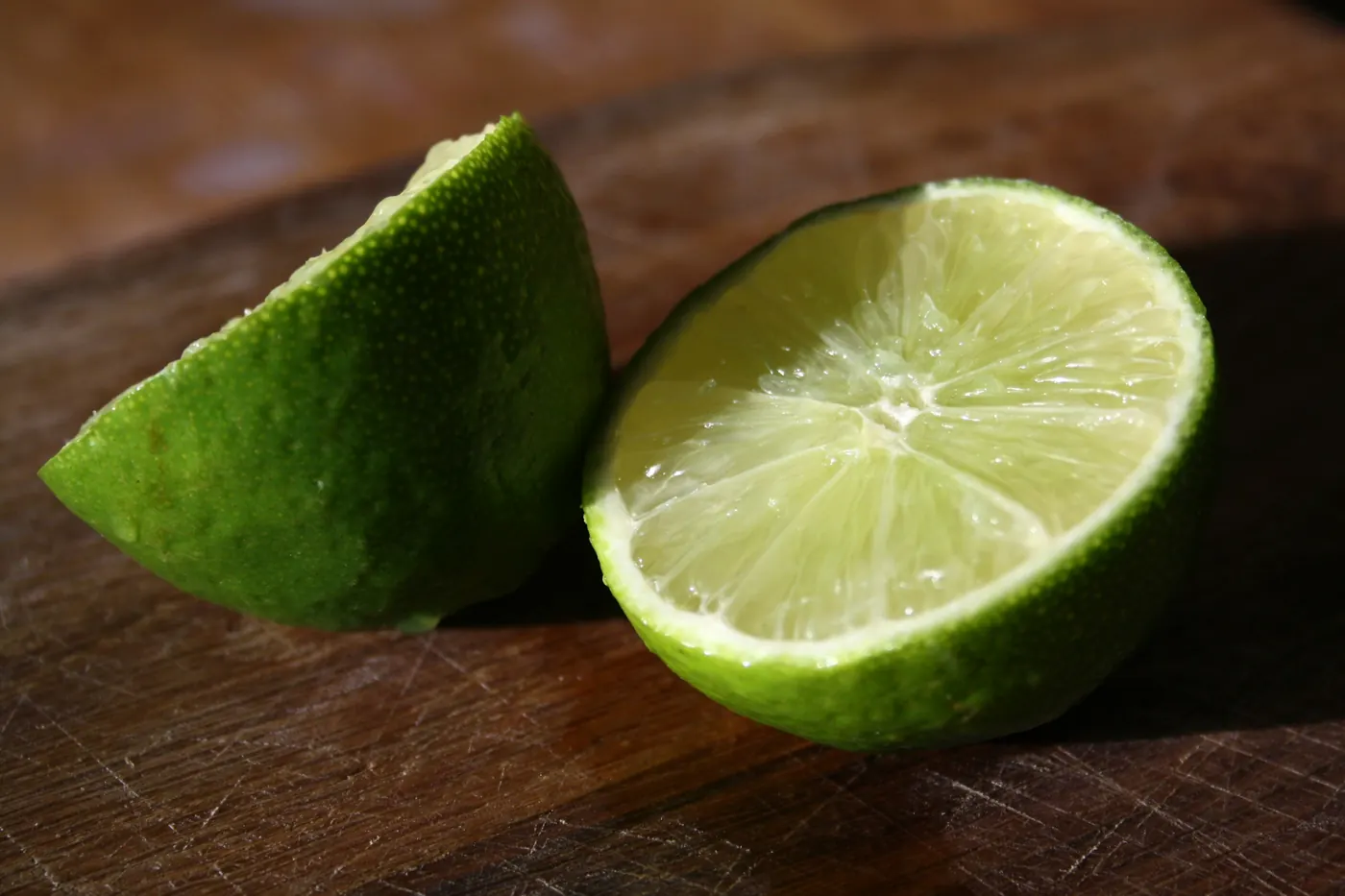
The Fluicer rethinks the hinged press. Instead of squashing the lime flat against a bowl, its hinged arms press the fruit in half from the sides, the way you would squeeze it with your hands, and Dreamfarm says that takes less force than a traditional juicer. When you are done, it folds completely flat, so it slides into a crowded utensil drawer.
A built-in pip catcher strains the juice and doubles as a funnel, directing the flow into a glass or small bowl, which is handy when you are juicing straight into a cocktail shaker. Dreamfarm makes the Fluicer in three sizes, and this green one is the version it recommends for limes; it is 9 inches long.
America’s Test Kitchen recommended the lemon-size Fluicer, finding it worked “quickly and effectively through large amounts of small and medium citrus”, though it could be messy with lemons. The lime version is sized for the fruit you will use most in a Mexican kitchen.
Why we like it
- Folds completely flat for storage
- Side-squeeze action needs less force, says Dreamfarm
- Pip catcher doubles as a pouring funnel
- Sized specifically for limes
Key specifications
| Model | Fluicer, lime size |
|---|---|
| Type | Fold-flat hinged side press |
| Material | Not stated |
| Fits | Limes |
| Size | 9 inches (23 cm) long |
| Seed strainer | Built-in pip catcher and funnel |
| Dishwasher safe | Not stated |
| Warranty | Not stated |
Why we recommend it
Choose it if drawer space is tight, if you find a standard hand press hard on your grip, or if you want a lime squeezer that pours neatly into a shaker or a measuring jigger.
Skip it if you want one tool for lemons and limes; this size is meant for limes, and Dreamfarm sells separate versions for bigger fruit.
Pros and cons
Pros
- Stores flat
- Less force needed
- Funnel-style pip catcher
Cons
- Limes only at this size
- Material and care not stated in the listing
- Reported messy with larger fruit
4. Norpro Stainless Steel Citrus Press – All Metal, Extra-Long Handles

If you would rather have no coating at all, Norpro’s citrus press is solid, heavy-gauge stainless steel with a polished finish that the company says resists corrosion from acidic juice and will not chip, peel, crack or bend. It works like the classic hinged press: the half lime goes in cut side down, and a downward squeeze inverts it.
Norpro gives exact dimensions, which many squeezer listings do not: 8.5 by 3 by 2 inches, with a 3-inch bowl that takes standard lemons, limes and small oranges. The extra-long handles are there for leverage, and Norpro says they reduce hand and wrist strain during long prep sessions. It is dishwasher safe and compact enough for a bar drawer.
Norpro also says the press extracts juice without bitter rind oils, pulp or seeds, and that the finish will not chip or peel, the main advantage of bare stainless steel over painted or enameled squeezers.
Why we like it
- Heavy-gauge stainless steel, no coating to chip
- 3-inch bowl for limes, lemons and small oranges
- Extra-long handles for leverage
- Dishwasher safe
Key specifications
| Model | 523 |
|---|---|
| Type | Hinged hand press |
| Material | Heavy-gauge stainless steel |
| Fits | Standard lemons, limes, small oranges |
| Size | 8.5 x 3 x 2 inches; 3-inch bowl |
| Seed strainer | Yes, in the bowl |
| Dishwasher safe | Yes |
| Warranty | Not stated |
Why we recommend it
Choose it if you want an all-metal squeezer with no paint or enamel to wear, and a bowl large enough for lemons as well as limes.
Skip it if grip strength is a concern. Long handles help, but it has no gears, so a large batch is still hand work.
Pros and cons
Pros
- All stainless steel
- Exact dimensions published
- Long handles for leverage
- Dishwasher safe
Cons
- No gear assist
- Warranty not stated
5. IMUSA Lemon or Lime Squeezer – The Simple Latin Kitchen Classic

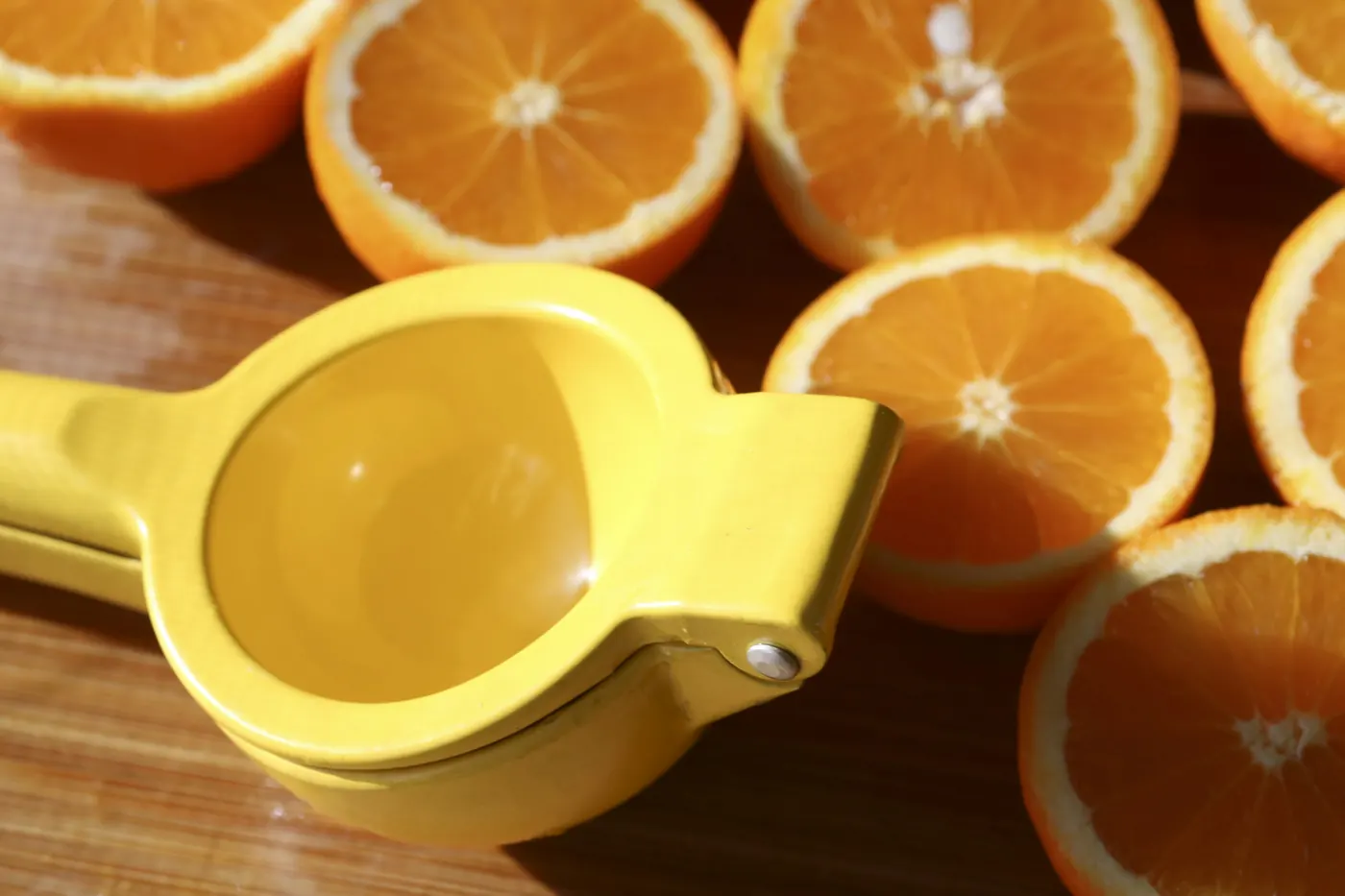
IMUSA’s green aluminum squeezer is the simple version of the hinged press, with nothing to it but two handles and a bowl. It is 9.84 inches long and 3.15 inches wide, with holes in the bowl that filter out seeds and pulp and a metal hanging ring so it can live on a hook by the stove.
IMUSA names margaritas, ceviche, marinades and lemonade among its uses, which is exactly the list for a Mexican kitchen. The aluminum is described as rust-resistant with a green exterior finish, and it is light, which makes it quick to grab for a single lime over a plate of tacos.
The trade-offs are care and durability. IMUSA recommends hand washing in soapy water rather than the dishwasher, and the listing gives only a 30-day warranty. For heavy daily use, the all-steel Norpro or a geared press is the sturdier choice.
Why we like it
- Simple hinged design with seed-filtering holes
- Rust-resistant aluminum, lightweight
- Hanging ring for easy storage
- Sold for margaritas, ceviche and marinades
Key specifications
| Model | J100-00285 |
|---|---|
| Type | Hinged hand press |
| Material | Aluminum with green finish |
| Fits | Lemons, limes and other citrus |
| Size | 9.84 x 3.15 inches |
| Seed strainer | Yes, holes in the bowl |
| Dishwasher safe | No; hand wash recommended |
| Warranty | 30 days |
Why we recommend it
Choose it if you want a basic, light lime squeezer for everyday cooking, or a spare to hang by the stove so lime juice is always one squeeze away.
Skip it if you want a dishwasher-safe tool or plan to juice dozens of limes a week; it is a simple squeezer with a short warranty.
Pros and cons
Pros
- Light and simple
- Hanging ring
- Filters seeds
Cons
- Hand wash only
- 30-day warranty
- No gear or lever assist
6. Joseph Joseph Helix Citrus Juicer – A Twist Instead of a Squeeze

The Helix replaces the squeezing motion with a twist. You hold the two handles horizontally and turn them, and Joseph Joseph says the twist-action design multiplies the squeezing force while using the strength of your shoulders rather than your fingers. For anyone with sore hands, that change of motion is the whole appeal.
It is made from stainless steel and BPA-free nylon, comes apart into two pieces, and is dishwasher safe. Joseph Joseph sells it for lemons, limes and small oranges, and backs it with a one-year warranty against manufacturing defects. It stores more compactly than a countertop press.
The twist takes a few limes to get used to, and like any handheld press it is best for small batches. But for cooks who find a standard squeezer a strain, it offers a different way to get the job done.
Why we like it
- Twist action uses shoulder rather than finger strength
- Stainless steel and BPA-free nylon
- Two-piece, dishwasher-safe design
- One-year warranty
Key specifications
| Model | 20101 |
|---|---|
| Type | Twist-action hand press |
| Material | Stainless steel and BPA-free nylon |
| Fits | Lemons, limes, small oranges |
| Size | Not stated |
| Seed strainer | Not stated |
| Dishwasher safe | Yes |
| Warranty | 1 year against manufacturing defects |
Why we recommend it
Choose it if gripping a hinged press is uncomfortable but you do not want a countertop machine. It is the most different design here, and that is exactly why it suits some cooks.
Skip it if you want the quickest squeezer for a stack of limes; the twist is slower than a geared press once you are working at pace.
Pros and cons
Pros
- Easier on finger grip
- Dishwasher safe
- One-year warranty
Cons
- Motion takes getting used to
- Slower for big batches
- No independent review found
7. OXO Good Grips Wooden Reamer – Simple and Straight Over the Dish
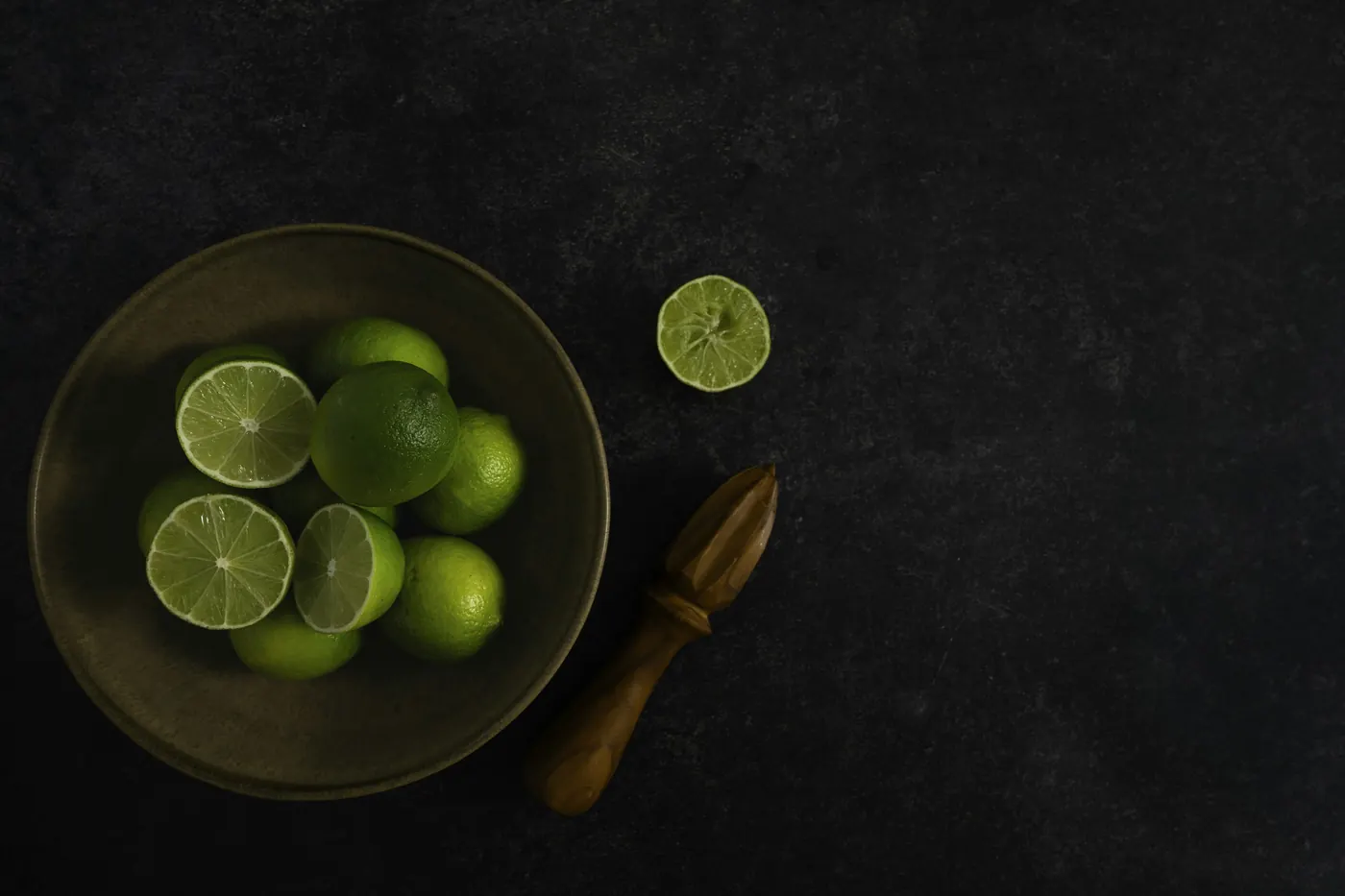
A reamer is the oldest lime tool there is: a ridged cone you twist into the cut half of the fruit. OXO’s is solid FSC-certified beechwood with a natural oil finish and a large, comfortable handle, and it takes up almost no space.
America’s Test Kitchen recommended it for its simplicity, calling it a “compact, straightforward tool”, and Reviewed named it its best value, praising its yield and the flavor of the juice while noting that it is the slowest and messiest option. ATK also found that reamed juice is less aromatic than pressed juice, and that the pointed tip can poke through thin lime peels, so work gently with thin-skinned limes.
Where a reamer shines is the single lime: juice straight over a bowl of guacamole or a plate of tacos, with no tool to wash beyond a quick rinse. OXO says to hand wash it and dry it promptly, as with any wooden utensil.
Why we like it
- Recommended by America’s Test Kitchen; Reviewed’s best value
- Solid FSC-certified beechwood
- Large, comfortable handle
- Takes almost no storage space
Key specifications
| Model | 1064758 |
|---|---|
| Type | Handheld reamer |
| Material | Solid beechwood, natural oil finish |
| Fits | Lemons and limes |
| Size | Not stated |
| Seed strainer | No |
| Dishwasher safe | No; hand wash and dry promptly |
| Warranty | OXO satisfaction guarantee |
Why we recommend it
Choose it if you mostly squeeze a lime or two at a time over food, want something that fits any drawer, or prefer a tool with no moving parts.
Skip it if seeds in the juice bother you or you juice in volume. A reamer has no strainer, and both reviewers found it slower and messier than a press.
Pros and cons
Pros
- Backed by two independent reviewers
- No moving parts
- Tiny to store
Cons
- No seed strainer
- Slow and messy for big batches
- Hand wash only
8. BLACK+DECKER CJ625 Electric Citrus Juicer – Juice by the Pitcher
An electric juicer makes sense once you are juicing limes by the pitcher. The CJ625 is pressure activated: press the half lime onto the cone and it spins, reversing direction automatically to pull more juice. Juice collects in a clear 32-ounce container with measurement markings, which doubles as a pitcher with a handle and a drip-free spout.
Pulp control is adjustable, and pulp collects in a removable basket. Reviewed named it the best electric citrus juicer it reviewed, finding that it handled both small and large citrus and that the bowl was easy to clean; the listing describes it as dishwasher-safe. BLACK+DECKER gives a one-year warranty.
For a party, it is the least tiring way to fill a pitcher: halve a bag of limes, press each one for a few seconds, and pour straight from the container.
Why we like it
- Reviewed’s best electric citrus juicer
- Auto-reversing cones for more juice
- 32-ounce container with markings doubles as a pitcher
- Adjustable pulp control with removable basket
Key specifications
| Model | CJ625 |
|---|---|
| Type | Electric, pressure-activated reamer |
| Material | Plastic container (listing); cone material not stated |
| Fits | Small and large citrus |
| Size | 32-ounce juice container |
| Seed strainer | Adjustable pulp control with basket |
| Dishwasher safe | Yes, per the listing |
| Warranty | 1 year |
Why we recommend it
Choose it if you make margaritas or agua de limón for a crowd and want juice without hand strain. The pitcher-style container means fewer dishes.
Skip it if you mostly need a single lime at a time; plugging in and washing a juicer for one lime is more work than a hand squeezer.
Pros and cons
Pros
- No hand strength needed
- Large container with markings
- Adjustable pulp
- Dishwasher-safe parts
Cons
- Takes counter or cupboard space
- Overkill for a lime or two
- Needs an outlet

How to choose a lime squeezer for your kitchen
Four questions point you to the right squeezer. How many limes you juice at a time matters most.
1. How many limes, how often?
For a lime or two over food, a reamer or a basic hand press is plenty. For a round of margaritas, a geared hand press like the Chef’n saves your grip. For a pitcher, or for a weekly batch of agua de limón, a countertop lever or an electric juicer is faster and far less tiring. Our guide to aguas frescas explains why a pitcher can take a lot of limes.
2. The size of your limes
Most limes in US supermarkets are Persian limes, which a University of Wisconsin Extension guide describes as usually 2 to 2½ inches across and usually seedless. Key limes, the small limes common in Mexico, are only 1 to 2 inches across and have more seeds, according to the Produce Market Guide. A lime-size bowl fits both, but for small key limes choose a squeezer with a good seed strainer.
3. Material
Stainless steel cannot chip or react with citrus. Enameled aluminum is light and non-reactive while the enamel is intact. Painted or bare aluminum is the lightest, but check the care instructions, since some are hand wash only. Nylon presses like the Chef’n are light and durable, and wood reamers need to be dried promptly.
4. Your hands and your storage
If grip strength is a concern, look for gears (Chef’n), a twist (Joseph Joseph), a side squeeze (Dreamfarm) or a lever (Zulay). If drawer space is the limit, the Dreamfarm folds flat and a reamer takes almost none.
How we picked these eight lime squeezers
We started from what a Mexican kitchen needs from a lime squeezer: plenty of juice, few seeds in the glass, a tool that survives daily use, and something that suits both a single lime over tacos and a pitcher of margaritas. We then searched the squeezers sold on Amazon in the United States, checked each was in stock with Amazon’s product data on the day of writing, and took specifications from each maker’s own listing. For how they perform, we relied on two published reviews: America’s Test Kitchen’s manual citrus juicer review and Reviewed’s citrus juicer ranking. Where those reviewers did not recommend a popular squeezer, we left it out, even when its own listing claimed praise; that is why two well-known hand presses from big kitchen brands are not here. We also left out near-identical squeezers from sellers that publish no maker details, and enameled squeezers whose makers give no lead-free statement. We have not used these products ourselves, and where we describe how a design behaves, we say whose findings those are.
Getting the most juice from a lime
- Start with room-temperature limes. Cold limes are firmer, so let refrigerated limes sit out before juicing.
- Roll each lime firmly on the counter under your palm before cutting, to loosen the flesh.
- Cut across the middle, not end to end, so each half sits flat in the bowl.
- Put the half in cut side down in a hinged press, so the press turns it inside out.
- Squeeze straight into a measuring cup or jigger, not into the drink, so a stray seed stays out of the margarita.
- Juice close to serving time. Fresh lime juice tastes brightest the day it is squeezed.
Lime squeezer questions, answered
Which is the best rated lime squeezer?
Among independent reviewers, the Chef’n FreshForce Citrus Juicer comes out on top: America’s Test Kitchen named it the winner of its manual citrus juicer review, and Reviewed ranked it first. For countertop presses, ATK’s favorite is a Zulay Kitchen heavy-duty press.
Which way does a lime go in a squeezer?
Cut side down, facing the holes. It feels backwards, but the press turns the lime inside out and the juice runs straight through.
Is a lemon squeezer the same as a lime squeezer?
Nearly. Lemon squeezers have a slightly larger bowl and handle limes well; lime-size squeezers are compact but too small for most lemons. If you use both fruits, a lemon-size press like the Chef’n FreshForce Citrus Juicer covers both.
How many limes do you need for a margarita?
It depends on the limes and the recipe, so measure the juice rather than counting fruit. Small key limes give much less juice each than larger Persian limes, which is one reason a squeezer that empties every half matters. For the drink itself, see our guide to frozen versus on-the-rocks margaritas.
Are electric citrus juicers worth it for limes?
Yes, if you juice in quantity. For a lime or two, a hand squeezer or reamer is quicker to use and to clean.
Our final pick for limes
Buy the Chef’n FreshForce Citrus Juicer if you want one squeezer that does nearly everything well. Add a countertop lever press like the Zulay, or the BLACK+DECKER electric juicer, if you make margaritas by the pitcher, and keep a wooden reamer in the drawer for a quick lime over dinner. For the rest of the bar, see our guide to margarita accessories, along with our picks for the best margarita glasses and the best margarita mix for nights when fresh limes run out.
And if you would rather someone else made the margaritas, see our drinks or call to order.