Most people give up on a cocktail shaker for one of three reasons. The lid sticks and will not come off, the shaker leaks down their wrist halfway through, or they never quite know how much of anything went in. None of those are a lack of skill. They are design problems, and a few shakers are built to remove them.
This guide is for the first shaker in a home bar. It looks at what makes a shaker forgiving: how easily it seals and opens again, whether it strains on its own, whether it has measurement markings, and how well it holds a seal. It then explains how to shake properly, drawing on named bartending sources, so the shaker you buy gets used.
Julia’s earns a commission on purchases made through links on this page, at no cost to you. Recommendations are based on what a working Mexican kitchen looks for in bar tools, the makers’ own specifications and published guidance from bartending sources, which we cite.
Quick verdict: the shaker to start with
For most people, the best cocktail shaker for beginners is the OXO Good Grips Plastic Cocktail Shaker: two silicone gaskets for a leakproof seal, a jigger cap with measurement markings, a built-in strainer and non-slip grip points, according to OXO, and it is dishwasher safe. If you want measurements on the shaker itself, choose the Rabbit 18 oz glass shaker with etched ounce and milliliter lines. If you want to learn on the tins bartenders use, start with the A Bar Above double-weighted Boston set, which the maker describes as easier to open for people new to mixing.
Below are the five standouts side by side, then all nine shakers in full, then how to choose and how to shake. If you already know the basics and want the wider field, our main guide to the best cocktail shaker covers every style and budget.
Five beginner shakers side by side
Our five standout picks, each for a different kind of first-time home bartender, with the details each maker or listing states. All nine shakers are reviewed in full below.
| Shaker | Best for | Type & material | Beginner features | Buy on Amazon |
|---|---|---|---|---|

OXO Good Grips Plastic Cocktail Shaker, 20 ozBest overall
|
A first shaker that will not leak or stick | Cobbler-style, plastic with silicone gaskets | Marked jigger cap, built-in strainer | View on Amazon |

Rabbit 18 oz Glass Cocktail ShakerBest markings
|
Measuring straight into the shaker | Cobbler-style, glass with steel topper | Etched oz and ml lines, 1.5 oz jigger cap | View on Amazon |

A Bar Above Double-Weighted Boston Shaker SetBest first tin set
|
Learning the bartender’s tin-on-tin method | Boston tin-on-tin, 304 stainless steel | Both tins weighted, easier to open (maker) | View on Amazon |

Viski Paragon Double-Walled Cocktail Shaker, 23 ozBest screw-on lid
|
Anyone worried about a stuck lid | Threaded cobbler-style, insulated steel | Measuring cap 1 to 6 oz, threaded seal | View on Amazon |

Winco 16 oz Three-Piece Shaker SetBudget pick
|
Trying cocktails before spending more | Three-piece cobbler, stainless steel | Built-in strainer, nothing else needed | View on Amazon |
Product images from Amazon. Capacities, materials and features are as stated by each maker or listing; check the listing before you buy.
Our picks for the best cocktail shaker for beginners
These nine shakers were chosen for the problems beginners actually run into. Seven have a strainer built in, so you need nothing else to make a drink. Six have measurement markings on the cap or the body. Three have gasket or screw-on seals that do not depend on cold metal gripping cold metal. And two are Boston sets for anyone who wants to learn the way bartenders do from the start. Each pick ends with one honest reason to skip it.
1. OXO Good Grips Plastic Cocktail Shaker, 20 oz – Leakproof, Marked and Easy to Open
OXO designs kitchen tools for people who are not professionals, and this shaker removes most of the ways a first cocktail goes wrong. The listing describes two silicone gaskets that make a leakproof seal while you shake. Gaskets are the important part: the lid seals against a soft ring rather than metal pressed into metal, so it holds firmly but lifts off without a struggle once you stop.
It also does the measuring and straining for you. The jigger cap has measurement markings, so you can pour your spirit, lime juice and syrup without a separate jigger, and the lid has a strainer built in. OXO says the grip points are non-slip “even when they’re wet”, which matters when the outside of a shaker is cold and slick with condensation, and the base is non-slip too.
It holds up to 20 ounces (590 ml), which leaves room for one drink and plenty of ice. The shaker is single-wall plastic, so it will not break if it is dropped on a tiled floor, and OXO lists it as dishwasher safe. The company’s OXO Better Guarantee covers a repair or replacement if something goes wrong. The stainless steel version of this OXO shaker was not in stock when we checked, which is why the plastic model is the pick.
Why we like it
- Two silicone gaskets for a leakproof seal
- Jigger cap with measurement markings
- Strainer built into the lid
- Non-slip grip points, even when wet
- Dishwasher safe, according to the listing
Key specifications
| Model | 11327200 |
|---|---|
| Type | Cobbler-style with jigger cap |
| Material | Plastic, single wall, silicone gaskets (plastic type not stated) |
| Capacity | Up to 20 oz (590 ml) |
| Pieces | Shaker, strainer lid, jigger cap |
| Markings/strainer | Marked jigger cap; built-in strainer |
| Dishwasher safe | Yes (listing) |
| Made in | Not stated |
Why we recommend it
Choose it if you have never used a shaker before, if you share the kitchen with people who will use it carelessly, or if you mix drinks on a patio. It measures, seals, shakes and strains, and it forgives mistakes.
Skip it if you want a shaker that looks good on display or chills a drink as quickly as possible. Steel does both better, and plastic does not frost on the outside to tell you the drink is cold.
Pros and cons
Pros
- Gasket seal will not stick
- Measures and strains in one tool
- Will not break or dent
- Dishwasher safe
Cons
- Plastic chills more slowly than steel
- Plastic type not stated
- Plain, practical look
2. Rabbit 18 oz Glass Cocktail Shaker – Measurements Etched on the Side
The Rabbit glass shaker puts the measurements where a beginner needs them: on the shaker itself. The listing describes etched milliliter and ounce indicators on the side of the 18-ounce glass body, so you can pour each ingredient to a line and watch the drink build. For someone learning recipes, seeing the proportions in the glass is a quick way to understand why a margarita is mostly tequila and only a little syrup.
The stainless steel topper does two more jobs. Its cap doubles as a 1.5-ounce jigger for the spirit, and it has an angled, slotted strainer spout for pouring into the glass. Rabbit describes the lid as tight-fitting and leak-proof. A removable silicone boot wraps the base so the shaker does not slide on the counter, and it lifts off for washing.
Rabbit calls the glass thick and sturdy and rates the shaker top-rack dishwasher safe, with the boot washed separately; it is not meant for hot liquids. Glass is still glass, though: it is heavier than plastic and can break if dropped, and it does not chill a drink through the walls the way steel does, so shake for the full time.
Why we like it
- Etched ounce and milliliter lines on the body
- Cap doubles as a 1.5-ounce jigger
- Angled, slotted strainer spout
- Non-slip silicone boot on the base
- Top-rack dishwasher safe, according to the listing
Key specifications
| Model | 5289263 |
|---|---|
| Type | Cobbler-style with jigger cap |
| Material | Glass body, stainless steel topper, silicone boot |
| Capacity | 18 oz |
| Pieces | Glass body, strainer topper, jigger cap, silicone boot |
| Markings/strainer | Etched oz and ml lines; 1.5 oz jigger cap; slotted strainer |
| Dishwasher safe | Top rack; boot washed separately |
| Made in | Not stated |
Why we recommend it
Choose it if you are learning recipes and want to measure straight into the shaker, or you are teaching friends to make a drink. It suits anyone who likes to see what they are mixing.
Skip it if the shaker will be used outdoors or by a pool. Glass can break, and the plastic OXO is the safer choice there.
Pros and cons
Pros
- Measure without a separate jigger
- Strainer and jigger built into the topper
- Non-slip base
Cons
- Glass can break
- Chills more slowly than steel
- Not for hot liquids
3. A Bar Above Double-Weighted Boston Shaker Set – Tins That Open More Easily
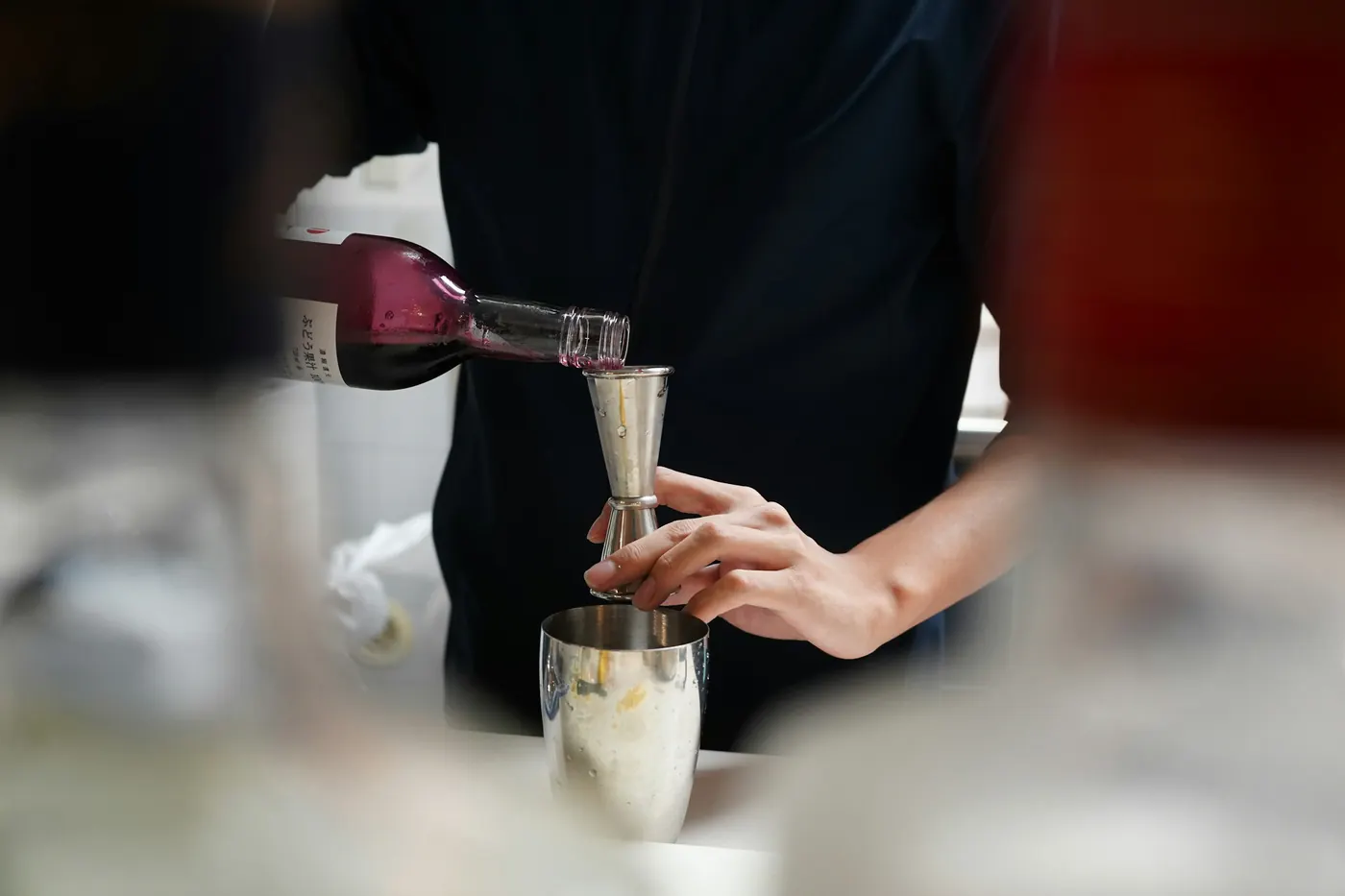
Two metal tins, one pressed into the other, is how most bartenders shake. It is fast, holds more ice than a cobbler and has no strainer holes to clog. Its reputation for being tricky comes from the seal, and this set is the most beginner-friendly version we found. A Bar Above, a company run by working bartenders, sells its Boston set with either one weighted tin or two, and its own shop is unusually direct about which to buy: the double-weighted shaker “is a bit more flexible, making the seal a little less stiff and therefore easier to open”, and “if you are just now learning the difference, go with this one.”
That is the version on this listing, described as both tins weighted. A Bar Above’s shop gives the sizes as a 28-ounce (825 ml) large tin and an 18-ounce (525 ml) small tin, in 304 stainless steel with weights welded to the base. Weighted bases sit lower and steadier on the counter when the tin is full of ice. Both the listing and the maker’s shop say the tins are dishwasher safe.
Weighted tins, put simply: a weight on the base makes a tin steadier and gives it a balanced feel; a tin without one is lighter and its walls flex a little more, which helps the seal grip. A Bar Above notes that a weighted and unweighted pair seals tighter, while two weighted tins open more easily. For a first set, easier to open is what you want. You will need a Hawthorne strainer to pour, which is not included.
Why we like it
- Double-weighted version, which the maker recommends to newcomers
- Standard 28-ounce and 18-ounce tin sizes
- 304 stainless steel with welded weights
- Dishwasher safe, according to the listing and maker
Key specifications
| Model | 121 (both weighted) |
|---|---|
| Type | Boston, tin-on-tin |
| Material | 304 stainless steel |
| Capacity | 28 oz (825 ml) and 18 oz (525 ml) tins (maker’s shop) |
| Pieces | 2 tins |
| Markings/strainer | No markings; strainer not included |
| Dishwasher safe | Yes |
| Made in | Not stated |
Why we recommend it
Choose it if you want to learn the method you will see behind any bar, or you expect to make two drinks at a time. Once the seal clicks, tins are the quickest shaker there is.
Skip it if you want one tool that does everything. You also need a strainer and a jigger, and the first few shakes take a little practice.
Pros and cons
Pros
- Easier-opening double-weighted pair
- Room for ice and two drinks
- No strainer holes to clog
Cons
- Strainer and jigger sold separately
- Small learning curve to seal
- Listing headline names only the 18 oz tin
4. Viski Paragon Double-Walled Cocktail Shaker, 23 oz – A Lid That Screws Off
The stuck lid is the classic beginner complaint about cobbler shakers. Metal contracts as it gets cold, and a pressed-on lid can lock tight. The Paragon avoids that with a threaded lid: Viski describes a threaded, leak-proof seal, so the top unscrews rather than having to be pulled or tapped free.
It measures as well. The cap is a measuring cup with lines from 1 to 6 ounces, enough for a spirit, a citrus juice and a syrup, and a strainer is built in. The faceted pattern on the body is there for grip, according to Viski. The shaker is vacuum insulated with double stainless steel walls, which the maker says keeps cocktails chilled while preventing condensation, so your hands stay comfortable and dry.
Insulation has one catch for a learner: the outside will not frost, so you lose the visual cue many bartenders use to know a drink is cold enough. Count instead; Difford’s Guide suggests about 12 seconds of brisk shaking. The listing gives a 23-ounce capacity but does not state care instructions or the steel grade, so check the box before putting it in a dishwasher.
Why we like it
- Threaded, leak-proof lid that unscrews
- Measuring cap marked from 1 to 6 ounces
- Built-in strainer
- Insulated walls keep hands dry, according to Viski
Key specifications
| Model | 11359 |
|---|---|
| Type | Cobbler-style with threaded lid |
| Material | Double-walled, vacuum-insulated stainless steel |
| Capacity | 23 oz |
| Pieces | Shaker, strainer lid, measuring cap |
| Markings/strainer | Cap marked 1 to 6 oz; built-in strainer |
| Dishwasher safe | Not stated |
| Made in | Not stated |
Why we recommend it
Choose it if you have been put off by a stuck shaker before, if cold wet hands bother you, or if you want one handsome steel tool that measures and strains.
Skip it if you want to judge a drink by the frost on the tin, or you need care instructions spelled out before you buy.
Pros and cons
Pros
- Lid unscrews, will not jam
- Generous measuring cap
- Dry, comfortable to hold
Cons
- No frost to show the drink is cold
- Care instructions not stated
- One drink at a time
5. Cocktail Kingdom Usagi Heavyweight Cobbler Shaker, 500 ml – A Steel Cobbler Made to Separate

If you want a classic all-steel cobbler, the shaker with the cup, strainer lid and little cap, buy a well-made one. Cheap cobblers are the ones that stick. Cocktail Kingdom, a bar-tool maker that supplies professional bars, says the Usagi is “made to an exacting standard for easy separation after shaking”, and precise parts are exactly what keeps a cold cobbler lid from locking on.
The Usagi is 18/8 stainless steel and holds 500 ml (17 ounces), which Cocktail Kingdom rates as one drink. The heavy steel chills quickly and gives the frosted outside that tells you the drink is ready. The built-in strainer means you need only a jigger alongside it, since the Usagi has no markings.
Retailer Boston General Store lists it at 7.3 by 3.3 inches and says the mirror finish is dishwasher safe; Cocktail Kingdom’s own listing does not state care. If the lid does resist, twist rather than pull, as America’s Test Kitchen advises for stuck shakers, and open it straight after shaking rather than letting it sit.
Why we like it
- Made for easy separation, according to Cocktail Kingdom
- 18/8 stainless steel, heavyweight build
- Built-in strainer: no separate strainer needed
- Compact one-drink size
Key specifications
| Model | Usagi Heavyweight Cobbler, mirror finish |
|---|---|
| Type | Cobbler, three-piece |
| Material | 18/8 stainless steel |
| Capacity | 500 ml (17 oz); one drink |
| Pieces | 3 (cup, strainer lid, cap) |
| Markings/strainer | No markings; built-in strainer |
| Dishwasher safe | Mirror finish yes (retailer); not stated by maker |
| Made in | Not stated |
Why we recommend it
Choose it if you want a steel shaker that will last, make one drink at a time, and want to avoid the stuck lids of cheaper cobblers.
Skip it if you need measurements on the shaker or make drinks for a group. You will want a jigger, and tins are faster for rounds.
Pros and cons
Pros
- Precise fit, made to separate
- Frosts to show the drink is cold
- Shakes and strains in one tool
Cons
- No measurement markings
- One drink per shake
- Strainer holes can clog with pulp
6. HexClad 25 oz Insulated Cocktail Shaker – Gaskets at Both Joints

HexClad, better known for its cookware, makes this insulated shaker with leaks in mind. The listing describes removable gaskets that create a secure, leak-proof seal at both connection points, the body to the strainer and the strainer to the cap, which are the two places a cobbler-style shaker usually drips.
It is also one of the few all-in-one shakers sized for two. HexClad gives a total of 25 ounces: a 20-ounce tumbler plus a 5-ounce jigger top, and says it is ideal for shaking up to two cocktails at once. The jigger top has easy-to-read measurement marks up to 5 ounces, and the strainer is built in. The hex texture on the body is there for grip, and the base has a non-slip silicone pad.
Like the Viski, it has double-wall vacuum insulation, which HexClad says keeps cocktails colder while shaking, and the outside will not frost. The listing does not state the steel grade or whether it is dishwasher safe; with removable gaskets, hand washing and drying each part keeps them in good order.
Why we like it
- Removable gaskets seal both joints
- Jigger top marked up to 5 ounces
- Room for up to two cocktails, according to HexClad
- Textured grip and non-slip silicone base
Key specifications
| Model | BRCS25-GD |
|---|---|
| Type | Cobbler-style with jigger top |
| Material | Double-wall vacuum-insulated stainless steel, chrome finish |
| Capacity | 25 oz total (20 oz tumbler + 5 oz jigger top) |
| Pieces | Tumbler, strainer cap, jigger top, gaskets |
| Markings/strainer | Jigger top marked to 5 oz; built-in strainer |
| Dishwasher safe | Not stated |
| Made in | Not stated |
Why we recommend it
Choose it if you want an all-in-one shaker that can make two drinks at once and you hate drips. It suits a couple who make drinks together.
Skip it if you want something simple to wash. Gaskets and a multi-part lid mean more pieces to clean and dry.
Pros and cons
Pros
- Sealed at both joints
- Two-drink capacity
- Large marked jigger
Cons
- More parts to wash
- Care not stated
- No frost cue on the outside
7. True Glass Cocktail Shaker with Recipes, 13.5 oz – Seven Classics Printed On

True’s glass shaker is a recipe card you can shake. The listing says recipes for seven classic cocktails are printed on the glass, the margarita, mojito, cosmopolitan, tequila sunrise, gin martini, kamikaze and Long Island iced tea, along with ounce and milliliter markings, so you can follow a recipe line by line without a phone or book on a wet counter.
It comes with a jigger cap and a strainer lid, which True says lets you make a wide range of cocktails without other bar tools. At 13.5 ounces it is the smallest shaker here: comfortable for one drink with ice, but not two. True describes it as an upgraded glass version of a plastic recipe shaker.
The listing is short on detail beyond that. It does not state whether the shaker is dishwasher safe, and the printed recipes are a reason to hand wash anyway. As with any glass shaker, it is heavier than plastic and needs care on hard floors. Use the printed recipes as a starting point; once you know the proportions, adjust the sweetness to taste.
Why we like it
- Seven classic recipes printed on the glass
- Ounce and milliliter markings
- Jigger cap and strainer lid included
- Compact size for one drink
Key specifications
| Model | 10079 |
|---|---|
| Type | Cobbler-style with jigger cap |
| Material | Glass body; lid material not stated |
| Capacity | 13.5 oz |
| Pieces | Glass, strainer lid, jigger cap |
| Markings/strainer | Printed recipes and oz/ml markings; built-in strainer |
| Dishwasher safe | Not stated |
| Made in | Not stated |
Why we recommend it
Choose it as a gift for someone starting out, or if you want the recipes in front of you while you learn the classics.
Skip it if you want a shaker that lasts for years of heavy use. The listing gives few details, and a steel shaker is more durable.
Pros and cons
Pros
- Recipes and measurements on the glass
- Nothing else needed to make a drink
- Small and easy to store
Cons
- One drink at a time
- Care and lid material not stated
- Glass can break
8. True 3-Piece Barware Set – A Complete Boston Starter

If you want to learn on a Boston shaker but do not want to buy each piece separately, True’s three-piece set puts them together: a shaker tin, a mixing glass and a Hawthorne strainer. The mixing glass has the same seven classic recipes printed on it, with ingredient lists, garnish ideas and ounce and milliliter measurements, according to the listing.
A tin-and-glass Boston works like tins: build the drink in the glass, where you can see it, fit the tin over the top, tap to seal, shake, then break the seal and strain through the Hawthorne. The glass also doubles as a mixing glass for stirred drinks such as a martini, so the set teaches both methods.
The listing does not give the tin or glass capacity, the materials of each piece in detail, or care instructions, and True states no warranty. Difford’s Guide prefers tin-on-tin to glass-and-tin and notes that two-piece shakers need a short period of practice, so treat this as a learning set rather than a lifetime tool.
Why we like it
- Tin, mixing glass and Hawthorne strainer together
- Recipes and oz/ml measurements printed on the glass
- Teaches shaking and stirring
- See the drink as you build it
Key specifications
| Model | 10118 |
|---|---|
| Type | Boston, tin-on-glass |
| Material | Metal shaker tin, glass mixing glass (details not stated) |
| Capacity | Not stated |
| Pieces | 3 (tin, mixing glass, Hawthorne strainer) |
| Markings/strainer | Printed recipes and oz/ml on glass; Hawthorne strainer included |
| Dishwasher safe | Not stated |
| Made in | Not stated |
Why we recommend it
Choose it if you want to learn the Boston method with everything included, or want one set for both shaken and stirred drinks.
Skip it if you want full specifications before you buy. Capacities and materials are not stated, and the glass is less forgiving than a second tin.
Pros and cons
Pros
- Strainer included
- Recipes on the glass
- Shaken and stirred in one set
Cons
- Capacities not stated
- Glass-and-tin seal takes practice
- No warranty stated
9. Winco 16 oz Three-Piece Shaker Set – The Plain Foodservice Basic
Winco makes equipment for restaurants and bars, and this is the simplest shaker in the guide: a 16-ounce stainless steel cup, a strainer lid and a cap, in a polished finish. The listing calls it an integrated design that minimizes spills. There are no markings and no gaskets, just the three parts.
For a beginner who is not sure how often they will make cocktails, that simplicity is the point. Sixteen ounces is enough for one drink and a good handful of ice, the strainer is built in, and all you need alongside it is a jigger. If you find you use it every weekend, you will know what to upgrade to.
The listing gives no steel grade, weight or care instructions. As with any steel cobbler, a cold lid can stick: open it straight after shaking, twist rather than pull, and run the shaker under warm water for a moment if it still resists. Rinse it soon after use so citrus pulp does not dry in the strainer holes.
Why we like it
- Complete three-piece shaker with built-in strainer
- Stainless steel, polished finish
- From a foodservice equipment maker
- Compact 16-ounce size
Key specifications
| Model | BL-3P |
|---|---|
| Type | Cobbler, three-piece |
| Material | Stainless steel (grade not stated) |
| Capacity | 16 oz |
| Pieces | 3 (cup, strainer, cap) |
| Markings/strainer | No markings; built-in strainer |
| Dishwasher safe | Not stated |
| Made in | Not stated |
Why we recommend it
Choose it as a low-risk first shaker, a spare for parties, or for a kitchen that makes a cocktail now and then.
Skip it if you want markings or a lid that is guaranteed not to stick. The OXO and Viski shakers handle both, and the Usagi is better made.
Pros and cons
Pros
- Everything in one simple tool
- Sturdy foodservice design
- Small and easy to store
Cons
- No markings
- Lid can stick when cold
- Few details in the listing
How to choose a forgiving first shaker
Five things decide whether a first shaker gets used or ends up in a drawer. Looks come last.
1. How it seals and opens
This is the big one. There are three kinds of seal. Metal pressed into metal, as on a classic cobbler or a pair of tins, grips harder as it gets cold; America’s Test Kitchen explains that the metal contracts during shaking and the seal tightens the longer you wait. Gaskets, the silicone rings on the OXO and HexClad shakers, seal against something soft that lets go easily. Threads, as on the Viski Paragon, simply unscrew. For a beginner, gaskets or threads remove the stuck-lid problem entirely. If you want steel-on-steel, buy a precisely made cobbler such as the Usagi, or a double-weighted tin set that the maker describes as easier to open.
2. A built-in strainer, or not
Cobbler-style shakers have a strainer in the lid, so you shake and pour with one tool. Tins and Boston shakers need a separate Hawthorne strainer, the flat disc with a coiled spring around its edge. Difford’s Guide notes that three-piece shakers pour more slowly, especially with muddled fruit pulp, but for a first shaker the convenience of a built-in strainer usually wins. If you go with tins, our guide to the best cocktail shaker strainer explains what to pair with them.
3. Measurement markings
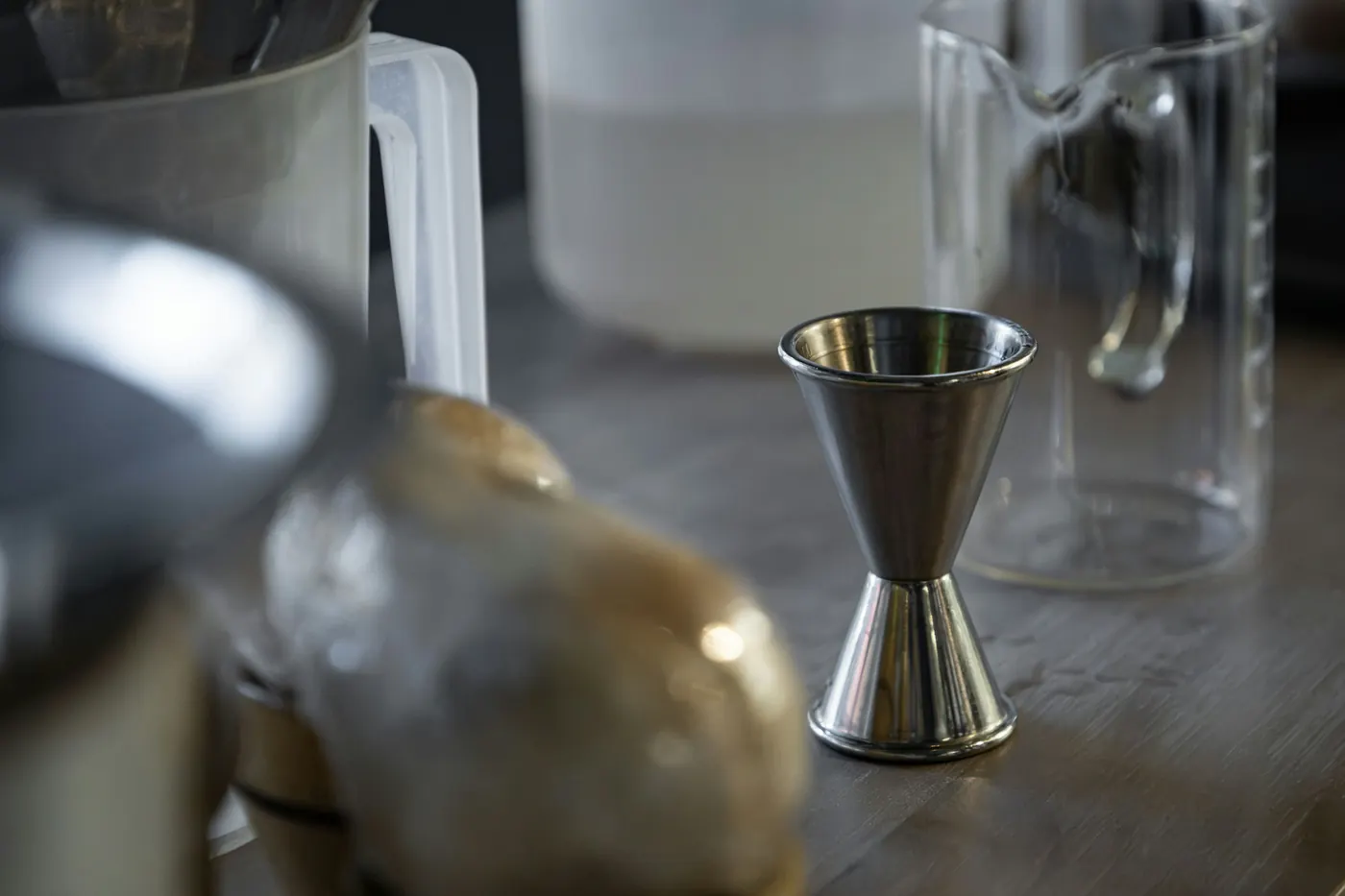
Free-pouring is how drinks end up too strong or too sweet. A marked cap, as on the OXO, Rabbit and HexClad shakers, or lines on the body, as on the Rabbit and True glass shakers, mean one less tool to buy and wash. If your shaker has no markings, buy a jigger: a two-sided one with 1-ounce and 2-ounce cups and inside lines covers almost every recipe.
4. Leak resistance
Leaks come from the joints. Gasket shakers seal every joint by design; HexClad’s has gaskets at both connections. A well-made steel cobbler seals well too, while cheap ones can drip at the cap. With tins, the seal comes from pressing the small tin firmly into the large one at a slight angle; America’s Test Kitchen suggests testing it by lifting the whole shaker by the top half before you shake.
5. Size and material
For one drink, 16 to 20 ounces is plenty; for two, look for 25 ounces or more, or a tin set. Stainless steel chills fastest and lasts longest. Glass lets you see the drink and read the markings but can break. Plastic is light and unbreakable. Insulated steel keeps hands dry but will not frost. If you have smaller hands, our guide to the best cocktail shaker for small hands compares sizes, weights and grips in detail.
How we chose these nine beginner shakers
We started from the problems beginners report most often, sticking lids, leaks and guesswork over measurements, and looked for shakers designed to avoid them. We considered shakers sold on Amazon in the United States from identifiable makers, including OXO, Rabbit, A Bar Above, Viski, Cocktail Kingdom, HexClad, True and Winco, and confirmed each one’s type, capacity, materials, markings and care from the maker’s own Amazon listing or website, noting where a detail came from a retailer instead. Every pick was in stock when we checked; OXO’s steel shaker and several others were not, and were left out. For how to use a shaker, we relied on Difford’s Guide and America’s Test Kitchen. We have not used these products ourselves; where we describe how one performs, we say whose description it is.
How to shake a cocktail: the basics
The method is the same for every shaker, with small differences in sealing and opening. These steps follow Difford’s Guide and America’s Test Kitchen.
- Chill the glass. Fill it with ice and water while you build the drink.
- Measure the ingredients into the shaker, or into the small tin or glass of a Boston, using the marked cap or a jigger.
- Add fresh ice. Difford’s Guide says to fill the shaker two-thirds full of cubed ice. Avoid crushed ice, which it says dilutes a shaken drink far more.
- Seal. On a cobbler, press or screw the lid and cap on firmly. On a Boston, tip the small tin into the large one at a slight angle and give it a firm tap; America’s Test Kitchen says you should be able to lift the whole shaker by the top half.
- Shake hard, with both hands. Difford’s Guide says to hold the shaker firmly with two hands and shake briskly for around 12 seconds. America’s Test Kitchen suggests beginners grip the shaker at either end, with the bottom in the nondominant hand.
- Open straight away. Lift or unscrew a cobbler’s cap; with tins, tap the large tin with the heel of your hand just under where the two meet, or wiggle the top half free.
- Strain over fresh ice, through the built-in strainer or a Hawthorne strainer held in place with a finger.

Shaking is not a performance. Difford’s Guide, citing experiments by Dave Arnold, says that vigorous shaking for about 12 seconds gives roughly the same temperature and dilution whatever style you use. So shake hard, shake for a steady count, and do not worry about looking like a professional.
Beginner shaker questions, answered
Which type of cocktail shaker is easiest for beginners?
A cobbler-style shaker with a gasket or threaded lid, such as the OXO or the Viski Paragon. It strains on its own, often measures too, and will not stick. Tins are not hard to learn, though, and a double-weighted set is the easiest version to open.
Why does my cocktail shaker get stuck?
Metal contracts as it gets cold, America’s Test Kitchen explains, and the seal tightens the longer it sits. Open the shaker as soon as you stop shaking. Twist a cobbler lid rather than pulling, and run it under warm water for a moment if it resists. For tins, tap the large tin firmly with the heel of your hand just under the join.
Do I need a jigger if my shaker has markings?
Not to start. A marked cap or body measures well enough for most recipes. A separate jigger is quicker once you make drinks often, and more precise for small amounts such as a quarter ounce of syrup.
How long should I shake a cocktail?
About 12 seconds of hard shaking with plenty of cubed ice, according to Difford’s Guide. Shaking longer mostly adds water.
How much alcohol is in a home cocktail?
More than many people think. A U.S. standard drink is 1.5 fluid ounces of 40% spirit, as defined by the National Institute on Alcohol Abuse and Alcoholism, and many cocktails use 2 ounces of spirit plus a liqueur. Measure rather than free-pour, drink responsibly, and never drink and drive.
Our starting point for a home bar
Buy the OXO Good Grips plastic shaker if you want a first shaker that seals, measures and strains without fuss. Choose the Rabbit glass shaker to measure straight into the shaker, the A Bar Above double-weighted tins to learn the bartender’s method, or the Viski Paragon if a stuck lid has put you off before. Whichever you choose, use plenty of fresh ice, measure, shake hard for a steady count, and open the shaker straight away.
When you are ready for more, our main guide to the best cocktail shaker covers the full range, and the best cocktail shaker for margaritas explains the tins and capacities that suit a round of margaritas. For the other tools, see the best cocktail tool set and our guide to margarita accessories, and our guide to tequila types explains what goes in the shaker.
And if you would rather leave the shaking to someone else tonight, see our drinks and the menu, or call to order.