Any coffee machine starts to taste a little off if nobody looks after it, in a restaurant or at home. Old coffee oil clings to the basket, minerals from the water settle in the heating path, and the cup slowly goes flat.
A good cleaner fixes that, but only if it suits both the machine and the problem. This guide starts with drip machines, then moves to pod, espresso and fully automatic machines. For each of the eight picks, we say what the maker names, what it does and who should skip it.
Julia’s earns a commission on purchases made through links on this page, at no cost to you. Recommendations are based on what a restaurant kitchen looks for, each maker’s label and product details, Amazon listing information and a retailer’s published guide, which we name where we use it. We have not used these products ourselves.
Quick verdict: the best coffee maker cleaner to buy
For most drip machines, buy Affresh Coffee Maker Cleaner Tablets: one tablet, one brew cycle, and a clear schedule from the maker. If coffee oil is the concern, choose Urnex Biocaf. For espresso machines that backflush, choose Urnex Cafiza. If your manual names a cleaner, use that one first.
The other five cover busy brewers, Keurig machines, and the own-brand tablets from Breville, Ninja and Jura.
Five coffee machine cleaners side by side
Five of the eight, one for each kind of machine. All eight are described in full below.
| Cleaner | Best for | Main job | Pack | Buy on Amazon |
|---|---|---|---|---|

Affresh Coffee Maker Cleaner TabletsBest overall
|
Most drip machines | Scale, general clean | 3 tablets | View on Amazon |

Urnex Biocaf Coffee Machine Cleaning PowderBest for coffee oil
|
Flavor carry-over | Coffee oil | 3 packets | View on Amazon |
Urnex Tabz Z61 Coffee Equipment Cleaner TabletsBest for busy brewers
|
Offices and heavy use | Basket and server | 120 tablets | View on Amazon |

Keurig Rinse PodsBest for single-serve
|
K-Cup brewers | Flavor carry-over | 10 pods | View on Amazon |

Urnex Cafiza Espresso Machine Cleaning PowderBest for espresso
|
Machines that backflush | Group head oils | 566 g tub | View on Amazon |
Product images from Amazon. Details come from each listing or maker.
Our picks for the best coffee maker cleaner
Drip machines come first, then pods, espresso and automatics. These are coffee machine cleaners, and most do not claim to descale, so we say which job each one does. We have not used these products ourselves; where we describe a strength, we say whose claim it is.
1. Affresh Coffee Maker Cleaner Tablets – A Simple Monthly Reset
Affresh is the cleaning line sold by Whirlpool, and this is the easiest routine here for a drip machine. Affresh says to fill the reservoir to the max line, add one tablet and run the clean cycle if your machine has one, or a normal brew cycle if it does not. Then refill and run a full tank of plain water to rinse. On a single-serve machine, it says to run two brew cycles at the largest cup setting, then two rinse cycles.
Be clear on what it does. The listing leads with descaling, and Affresh’s own guide also tells you to wash the carafe and filter basket by hand in warm, soapy water. Treat it as a good all-round monthly clean, not a specialist for heavy coffee oil.
The maker publishes its ingredients: sodium bisulfate, citric acid, sodium carbonate, sodium gluconate, sodium acetate and polyethylene glycol. Its safety data sheet says the product contains no chlorine bleach, phosphates, borates or EDTA.
Why we like it
- One tablet per clean, so there is nothing to measure
- Listing names multi-cup and single-serve coffee makers
- Affresh gives a schedule based on how often you brew
- Full ingredient list published by the maker
Key specifications
| Model | W10355052 |
|---|---|
| Format | Tablet |
| Pack size | 3 tablets |
| Active ingredients | Sodium bisulfate, citric acid, sodium carbonate (per Affresh) |
| Main job | Scale and general cleaning |
| Machines named | Multi-cup and single-serve coffee makers |
| How often | Monthly with daily use; about every 3 months with occasional use |
| Certification | U.S. EPA Safer Choice (per listing) |
Why we recommend it
It suits the household with an ordinary drip machine that wants one product and a reminder on the calendar.
Skip it if your machine’s manual names its own cleaner, or the trouble is thick coffee oil rather than scale.
Pros and cons
Pros
- No measuring
- Works with or without a clean cycle
- No vinegar smell, per the listing
Cons
- Three tablets is a small pack
- Mainly a scale product, so removable parts still need washing
2. Urnex Biocaf Coffee Machine Cleaning Powder – Aimed at Coffee Oil
Scale and oil are different problems. Scale comes from the water. Oil comes from the coffee. Biocaf goes after the oil: the listing says it removes coffee oil build-up from coffee machines and French presses. Urnex’s range is built around coffee equipment care.
It comes in single-dose packets of 9 grams, so there is nothing to scoop. The listing names Keurig, De’Longhi, Nespresso, Ninja, Hamilton Beach, Mr. Coffee and Braun, which covers most kitchens. It also says the cleaner helps prevent flavor transfer when you switch between regular, decaf and flavored coffee.
The listing describes the powder as biodegradable, phosphate free and odorless. It does not give step-by-step directions, so follow the packet and rinse as it says.
Why we like it
- Aimed at coffee oil, not scale
- Pre-measured 9 gram packets
- Listing also names French presses
- Long list of named machine brands
Key specifications
| Model | URN2501 |
|---|---|
| Format | Powder packet |
| Pack size | 3 packets, 9 g each |
| Active ingredients | Not stated |
| Main job | Coffee oil |
| Machines named | Keurig, De’Longhi, Nespresso, Ninja, Hamilton Beach, Mr. Coffee, Braun and others |
| How often | Not stated |
| Certification | Not stated |
Why we recommend it
Pick it if you swap between flavored and regular coffee, or if your machine has been descaled and you want the oil side dealt with too.
Skip it if your problem is mineral scale. This is a cleaner, not a descaler.
Pros and cons
Pros
- Pre-measured
- Broad list of named machines
- Odorless, per the listing
Cons
- Does not claim to remove scale
- Small pack
- Ingredients and frequency not on the listing
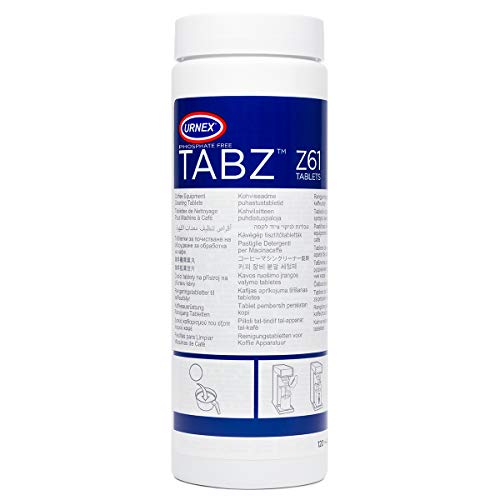
3. Urnex Tabz Z61 Coffee Equipment Cleaner Tablets – One Tablet, Basket to Server
This one is a working-kitchen product. Tabz is a tablet for coffee brewers and servers: run a brew cycle with a tablet in the basket, and the listing says it cleans the brew basket and the server beneath it at the same time.
The tub holds 120 tablets, far more than most homes need, so it makes sense where a brewer runs all day, such as an office. If that is your setup, our guide to the best office coffee maker covers the machines themselves.
The listing says the tablets carry a blue dye for safe use in busy commercial settings. Each tablet is 20 mm across and weighs 4 grams, and the formula has no phosphates.
Why we like it
- Cleans the basket and server in one cycle
- 120 tablets in one tub
- Phosphate free, per the listing
Key specifications
| Model | 13-Z61-UX120 |
|---|---|
| Format | Tablet |
| Pack size | 120 tablets, 4 g each |
| Active ingredients | Not stated |
| Main job | Residue in brewers and servers |
| Machines named | Coffee brewers and servers |
| How often | Not stated |
| Certification | Not stated |
Why we recommend it
It suits anyone cleaning a basket brewer often, where small packs of packets would soon run out.
Skip it if you own one home drip machine. A tub this size is more than you need.
Pros and cons
Pros
- Large supply
- One simple step
- Cleans the server as well
Cons
- Commercial pack size
- Listing names no specific models
- Does not claim to remove scale
4. Keurig Rinse Pods – A Quick Weekly Flush
If you own a Keurig, this is the simplest upkeep there is. A rinse pod is used just like a K-Cup. Keurig says it rinses away residue and oils and reduces flavor carry-over between brews, and it suggests using one weekly, or any time after a flavored coffee, cocoa or tea.
The small print matters. The listing says the pods work with all Keurig coffee makers but not the Vue system. Think of this as a light clean. It does not replace a descale.
For the machines themselves, see our guide to the best Keurig coffee machine.
Why we like it
- Used just like a regular pod
- Gentle, odorless formula, per Keurig
- Made in the USA, per the listing
- From the machine’s own maker
Key specifications
| Model | Rinse (43195-16975) |
|---|---|
| Format | Rinse pod |
| Pack size | 10 pods |
| Active ingredients | Not stated |
| Main job | Residue, oils, flavor carry-over |
| Machines named | All Keurig brewers except Vue |
| How often | Weekly, or after flavored drinks |
| Certification | Not stated |
Why we recommend it
Choose it for a Keurig shared by people with different tastes, where a flavored coffee can follow a plain tea.
Skip it if you have a Vue brewer, or you need to clear scale.
Pros and cons
Pros
- Used like a normal pod
- No mixing
- Made for the brewer
Cons
- Keurig only
- Light clean only
5. Urnex Cafiza Espresso Machine Cleaning Powder – Group Heads, Valves and Lines
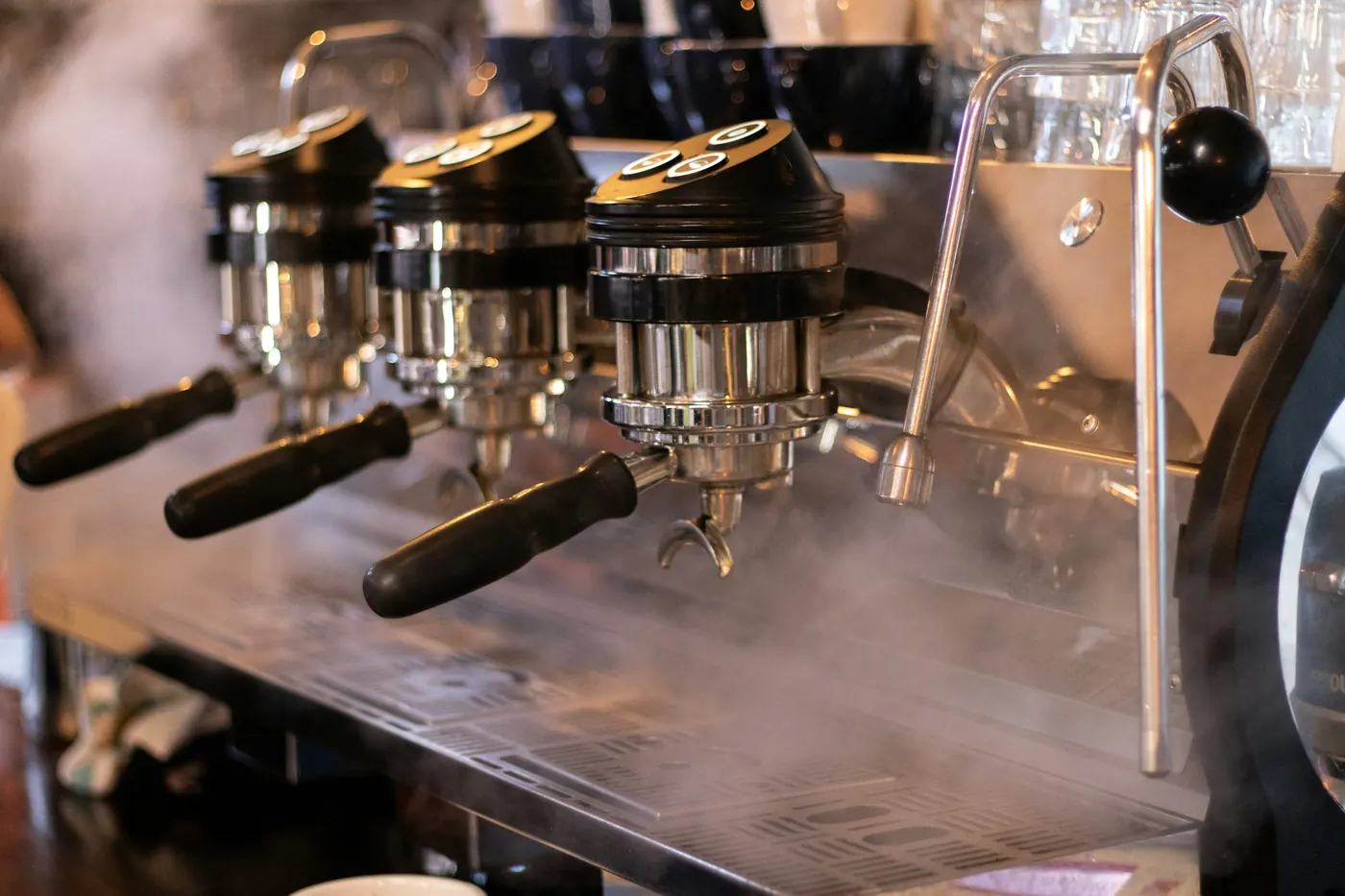
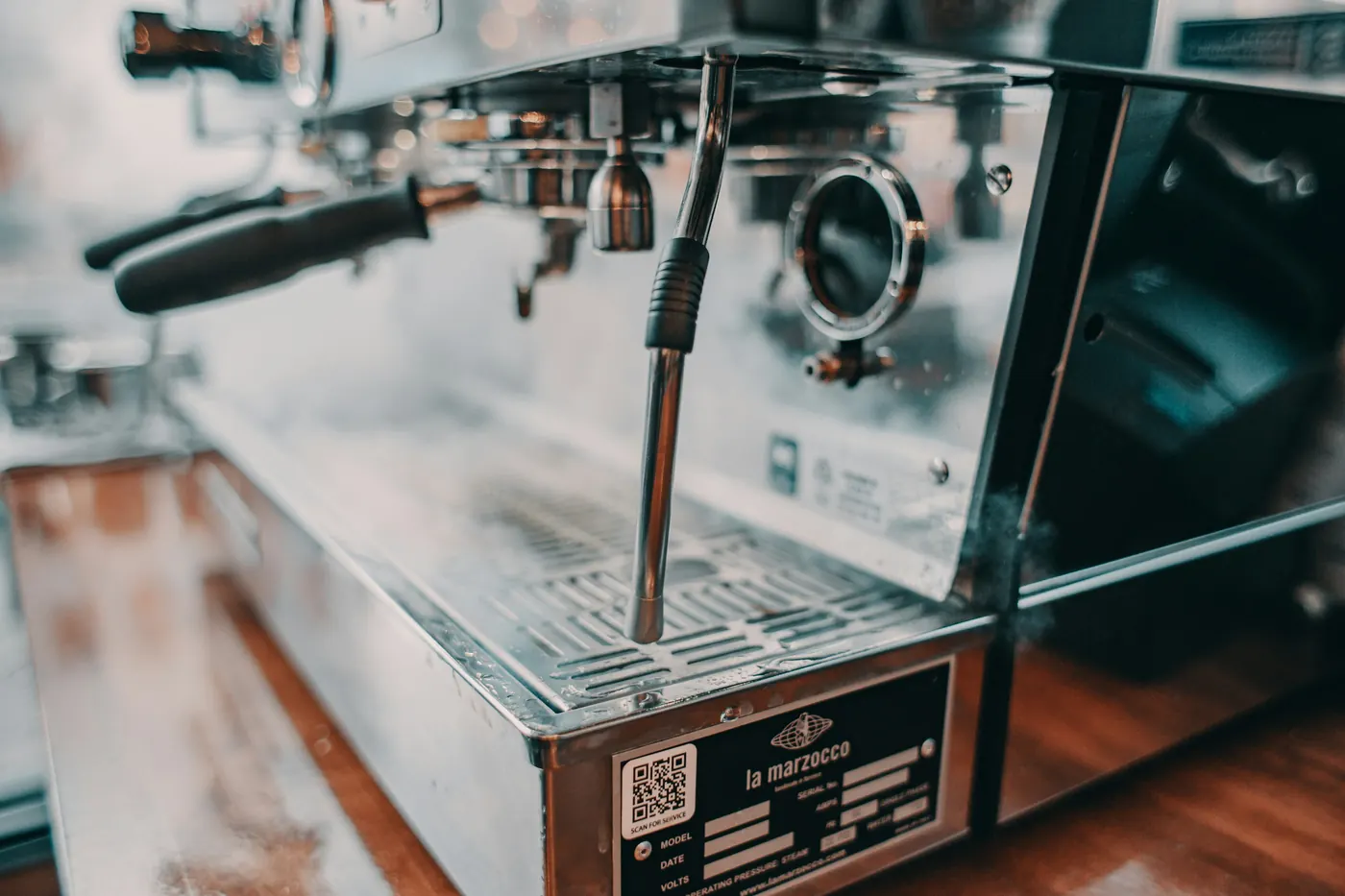
Espresso machines push oil into places a drip machine does not have. Urnex says Cafiza removes coffee residue and oils from group heads, valves and lines, and that you can soak screens, filters, portafilters and baskets in it.
To backflush, Urnex says to put up to half a teaspoon, 3 grams, into a portafilter with a blind filter, then run 10 seconds on and 10 seconds off, five times. Rinse, repeat five times with no powder, then brew one cup and throw it away. Urnex is plain on that last step: discard that espresso, do not drink it. For soaking, it gives 6 grams per liter of hot water for 30 minutes, with the portafilter handle kept out of the solution.
Seattle Coffee Gear, a retailer that sells it, adds two useful limits. It describes backflushing for semi-automatic machines with a three-way solenoid valve, and it says Cafiza never goes near milk parts.
Why we like it
- Named for group heads, valves and lines
- Powder lets you control the dose
- Listing says NSF certified and OMRI listed
- Also works as a soak for baskets and screens
Key specifications
| Model | URN1501 |
|---|---|
| Format | Powder tub |
| Pack size | 566 g |
| Active ingredients | Not stated |
| Main job | Espresso oils and residue |
| Machines named | Espresso machines: group heads, valves, lines |
| How often | Listing recommends a daily backflush regimen |
| Certification | NSF certified, OMRI listed (per listing) |
Why we recommend it
It suits a home barista with a semi-automatic machine that has a three-way valve. Our guide to the best espresso machine helps if you are still choosing.
Skip it if your machine has no three-way valve, or its manual names a different cleaner.
Pros and cons
Pros
- Large tub
- Backflush or soak
- Clear dosing from the maker
Cons
- Not for milk parts
- Needs a blind filter
- Formulated with professional equipment in mind
6. Breville BEC250 Espresso Machine Cleaning Tablets – Made for Its Own Machines

If your machine has a Breville badge, start here. These are Breville’s own tablets, and the listing says they suit all Breville espresso machines. They clear coffee oils and residue from the shower screen and filter baskets.
The maker says the tablets are made to dissolve at a set rate during the clean. Follow the cleaning steps in your manual, because the listing does not give them.
Eight tablets is a small pack, and that is the trade-off. What you get is the tablet your Breville manual has in mind.
Why we like it
- Breville’s own product for its own machines
- Named for shower screens and filter baskets
- Tablet form means no measuring
Key specifications
| Model | BEC25000US1 |
|---|---|
| Format | Tablet |
| Pack size | 8 tablets |
| Active ingredients | Not stated |
| Main job | Espresso oils and residue |
| Machines named | All Breville espresso machines |
| How often | Not stated |
| Certification | Not stated |
Why we recommend it
It suits Breville owners who would rather follow the manual exactly than work out a third-party dose.
Skip it if you own another brand. The listing only names Breville.
Pros and cons
Pros
- Maker’s own tablet
- Simple to use
Cons
- Small pack
- Breville only
7. Ninja Luxe Café Cleaning Tablets – Three Short Steps

Ninja’s tablets are for its Luxe Café espresso machines. The listing’s directions are short: put a tablet in the center of the cleaning disc in the portafilter, install it and press clean.
Ninja says they remove the residue and oil left behind by brewing, and that regular cleaning improves longevity. The pack holds eight tablets. The tablet goes in the cleaning disc, so keep that with your kit.
The listing gives no ingredients or schedule. Follow your machine’s manual.
Why we like it
- Ninja’s own tablet for the Luxe Café
- Three-step use, per the listing
- Removes residue and oil, per Ninja
Key specifications
| Model | XSKCLNTBL8PK |
|---|---|
| Format | Tablet |
| Pack size | 8 tablets |
| Active ingredients | Not stated |
| Main job | Espresso residue and oil |
| Machines named | Ninja Luxe Café |
| How often | Not stated |
| Certification | Not stated |
Why we recommend it
It suits Luxe Café owners who want the tablet sold for that machine.
Skip it if you own any other machine. The directions are written around the portafilter cleaning disc.
Pros and cons
Pros
- Very simple routine
- Maker’s own tablet
Cons
- One product line only
- Uses the cleaning disc
- No ingredients on the listing
8. Jura 2-Phase Cleaning Tablets – Cleans, Then Seals
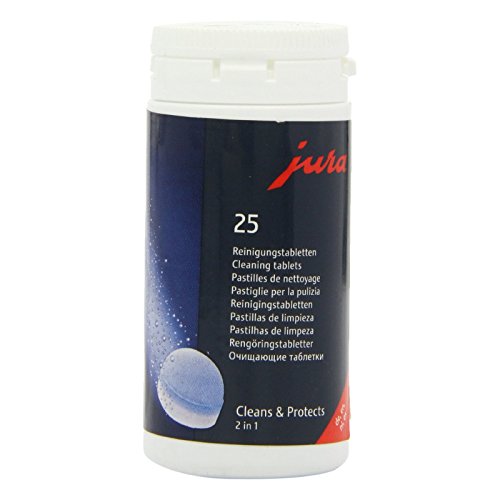
Fully automatic machines often run their own cleaning program, and Jura says these tablets are suited to its integrated one. The two phases are the interesting part. Phase 1 loosens coffee fat and particles. Phase 2 seals surfaces to protect them from coffee residue and fat.
The box holds 25 tablets. If you are shopping for a machine rather than a cleaner, our guide to the best fully automatic espresso machine with grinder compares them.
Use it when the machine asks. The listing gives no fixed schedule.
Why we like it
- Designed for Jura’s integrated cleaning program
- Two-phase action, per Jura
- 25 tablets in the box
Key specifications
| Model | 62535 |
|---|---|
| Format | Tablet |
| Pack size | 25 tablets |
| Active ingredients | Not stated |
| Main job | Coffee fat and residue |
| Machines named | Jura fully automatic coffee machines |
| How often | Not stated |
| Certification | Not stated |
Why we recommend it
It suits Jura owners, and it spares you guessing whether a third-party tablet fits the cleaning program.
Skip it if you own a different brand of automatic machine. Check your own manual for the named tablet.
Pros and cons
Pros
- Made for the machine’s program
- Good pack size
- Two-step cleaning action
Cons
- Jura only
- Listing gives no ingredients
How to choose a coffee machine cleaner
A restaurant kitchen sorts cleaning jobs by what is actually dirty, and the same logic works at home. Start with the problem, then match the product to your machine.
Work out whether it is oil or scale
Coffee oil comes from the coffee itself and sits where the brew passes: baskets, pod holders, group heads, shower screens. Scale comes from minerals in water and sits in the heating and water path. Seattle Coffee Gear makes the same split in its guide, and it says a cleaner such as Cafiza is for oils while Dezcal is for scale. Many products do one job. Affresh sits closest to doing both, and even it tells you to wash the removable parts.
Match it to your machine
Drip machines take the widest choice. Single-serve machines need something that can run through the pod path. Espresso machines and automatics are stricter, and a machine with a cleaning program may expect a specific tablet. That is why four picks on this page are makers’ own products.
Read the manual before the label
Your machine’s manual outranks any listing. Seattle Coffee Gear says many superautomatics specify a particular product, and Affresh says every appliance differs. If the manual names a cleaner, use that one.
Follow the label, and rinse
Use each product only on the machines and surfaces its maker names, at the dose it gives. Urnex’s discard step for espresso and Affresh’s plain-water rinse are there to clear the cleaner from the machine. Keep milk parts separate as well, since Seattle Coffee Gear says Cafiza is not for milk components.
Pick the right pack size
Three tablets will last a home a few months. A tub of 120 is for a brewer that works all day. Buy for how often you will really clean.

How we chose these eight machine cleaners
We looked for products made to clean a coffee machine, from makers we could identify, in stock and sold new on Amazon. We read the Amazon listing data for each pick, then Affresh’s and Urnex’s own pages and safety or ingredient documents where we could reach them, and Seattle Coffee Gear’s cleaner guide. That guide comes from a retailer that sells some of these products, so read it with that in mind.
We searched for independent side-by-side comparisons of these products and found mostly sales-led roundups that we did not rely on. Some well-known review sites were closed to our search, so better comparisons may exist. As a result, most picks rest on maker and listing details, and we say so. We left out picks where we could not square the label details, and thin brands with no independent review, and we checked the CPSC recall database by brand and found no recall for any cleaner here. We have not used these products ourselves, and nothing here is a health claim.
Coffee maker cleaner questions, answered
What is the best coffee machine cleaner for a drip maker?
For most drip machines, start with Affresh tablets for a general monthly clean, and add Urnex Biocaf if you want a product aimed at coffee oil. Check your manual first.
Is a coffee maker cleaner the same as a descaler?
Not always. Some cleaners target coffee oil, and descalers target mineral scale. Affresh’s listing says it descales and cleans, while Biocaf, Tabz and Cafiza are sold for coffee oil and residue.
How often should I clean a coffee maker?
Affresh suggests monthly with daily use, and about every three months with occasional use. Keurig suggests a rinse pod weekly. Follow your own manual where it differs.
Can I use vinegar instead?
Affresh’s guide gives a vinegar option but says to check your user guide, since some appliances do not recommend it. Seattle Coffee Gear says never to use vinegar in an espresso machine.
Can I use Cafiza on a steam wand or milk parts?
No. Seattle Coffee Gear says Cafiza is not for milk components and points to a separate milk cleaner.
Do I need to rinse after using a cleaner?
Yes. Each maker gives its own rinse steps, so follow them. Affresh says to run a full tank of plain water, and Urnex says to discard the cup brewed after a backflush.
Our final pick for a cleaner coffee maker
Buy Affresh tablets for an everyday drip machine, add Urnex Biocaf if coffee oil is the worry, and use your machine maker’s own tablets if the manual names them. For more on the machines themselves, see our guide to the best coffee maker.
And on the mornings when nobody wants to clean anything, see the menu or call to order.