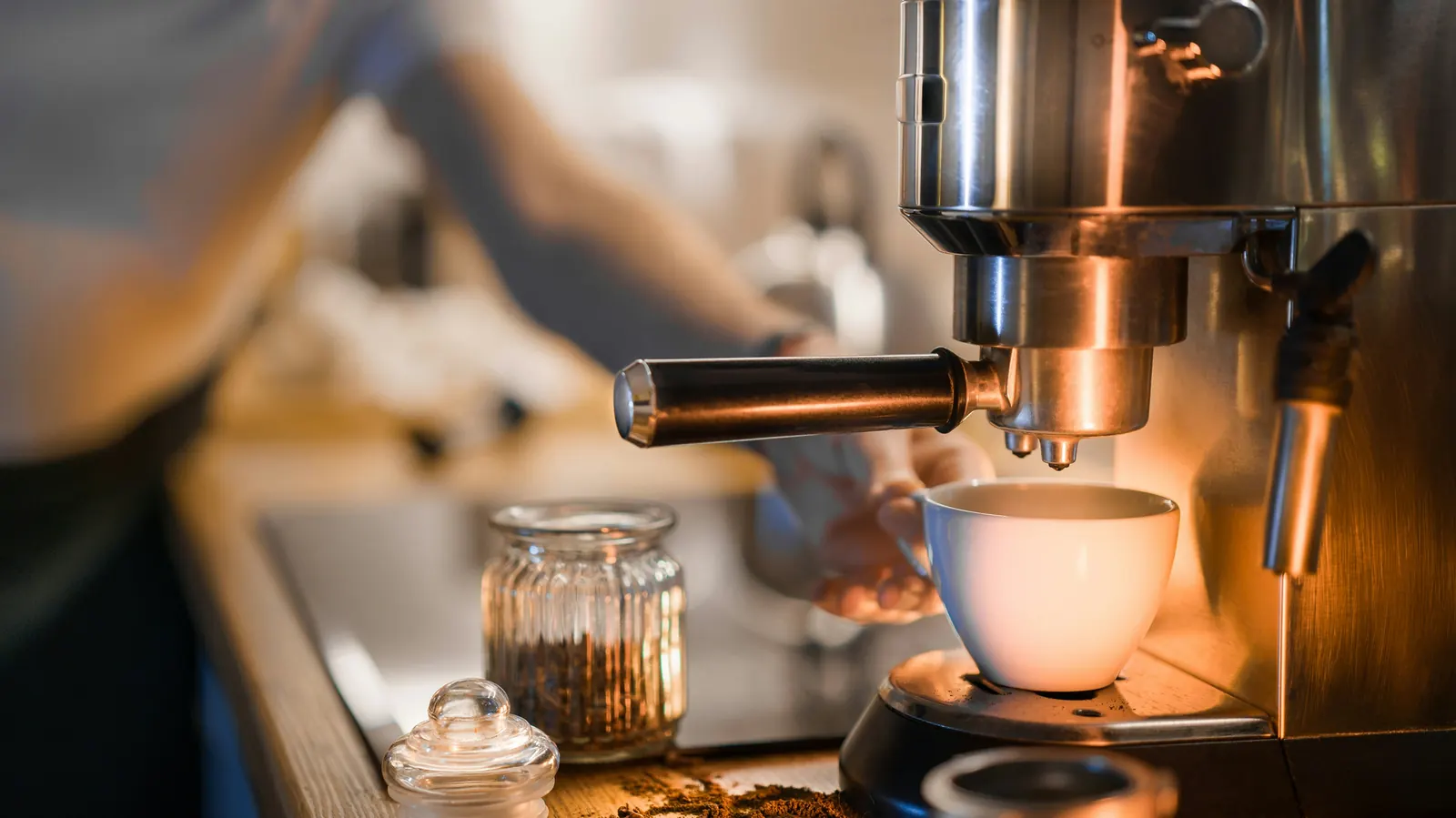
Espresso shows up at the end of a Mexican meal more often than people expect. There is the café con leche with a slice of tres leches, the cortado after a long Sunday lunch, and in much of Mexico, the carajillo: espresso shaken or poured over ice with a sweet liqueur. A home espresso machine makes all of these, and the milk drinks too, but the machines range from a button you press to a lever you learn, and choosing the wrong kind is the most common regret.
This guide covers nine home espresso machines from Breville, Gaggia, Fellow, De’Longhi and Philips: compact semi-automatics, machines with a grinder built in, a super-automatic that does everything at the touch of a screen, and a budget starter. For each we list the type, whether a grinder is built in, the heating system, the steam wand and the portafilter size. Where a figure is not published, we say “Not stated” rather than guess.
Julia’s earns a commission on purchases made through links on this page, at no cost to you. Recommendations are based on what a restaurant kitchen looks for, product specifications and verified buyer reports.
Quick verdict: which espresso machine to buy
For most home kitchens, the best espresso machine is the Breville Barista Express: a semi-automatic with a conical burr grinder built in, PID temperature control, low-pressure pre-infusion and a manual steam wand, so you go from beans to a latte with one machine. If you already own a good grinder or want something smaller, the Breville Bambino Plus heats in seconds and steams milk automatically. To learn espresso by hand on a 58 mm commercial-size portafilter, choose the Gaggia Classic Pro. If you want espresso and lattes at one touch, the Philips 3200 LatteGo is a super-automatic, and the De’Longhi Stilosa is the budget way in.
The table compares the five we would point most households toward, one for each kind of espresso drinker. All nine machines are reviewed in full after it.
Five espresso machines side by side
Type, grinder and portafilter for our five standout picks, as each maker or Amazon listing gives them.
| Espresso machine | Best for | Type & grinder | Portafilter | Buy on Amazon |
|---|---|---|---|---|

Breville Barista Express Espresso MachineBest overall
|
Beans to latte in one machine | Semi-automatic; built-in grinder | 54 mm | View on Amazon |

Breville Bambino Plus Espresso MachineBest compact
|
Small counters, easy milk drinks | Semi-automatic; no grinder | 54 mm | View on Amazon |
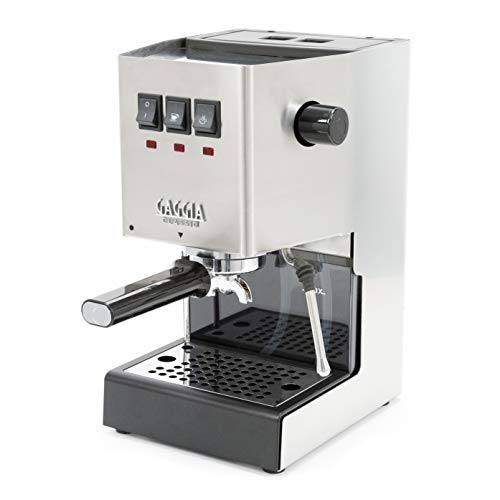
Gaggia Classic Pro E24 Espresso MachineBest for learning by hand
|
Espresso by hand, room to grow | Semi-automatic; no grinder | 58 mm commercial | View on Amazon |

Philips 3200 LatteGo Fully Automatic Espresso MachineBest super-automatic
|
One-touch espresso and lattes | Super-automatic; ceramic grinder | None (internal brew unit) | View on Amazon |
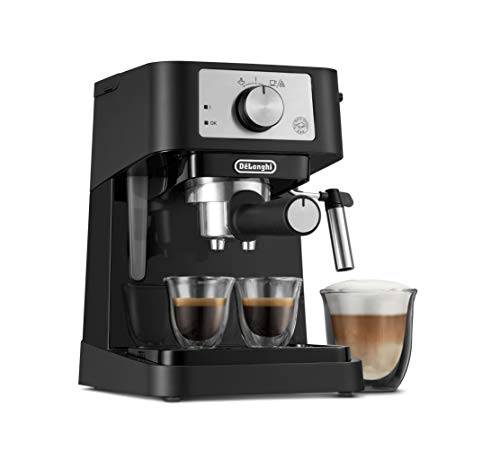
De’Longhi Stilosa Manual Espresso MachineBudget pick
|
Trying espresso at home | Manual pump machine; no grinder | Not stated | View on Amazon |
Product images from Amazon. Specifications are as each maker or listing states them; “Not stated” means we could not find the figure from the maker or listing.
Our picks for the best espresso machine
These nine machines cover the three main kinds of home espresso machine: semi-automatics, where you grind, tamp and start the shot; semi-automatics with a grinder built in; and super-automatics, which grind, brew and froth on their own. Each pick explains who it suits, lists the specifications that matter and gives one honest reason to skip it.
1. Breville Barista Express Espresso Machine – Grinder and Machine in One
The Barista Express is the machine most people starting out should look at first, because it solves the hardest part of home espresso: the grinder. A conical burr grinder is built into the machine and grinds straight into the 54 mm portafilter, with a dial for grind size and an adjustable dose, so you go from beans to espresso in under a minute, according to Breville.
Inside, digital PID temperature control holds the water at the right temperature, and low-pressure pre-infusion gradually raises the pressure at the start of the shot to extract evenly. The manual steam wand textures milk for lattes and cappuccinos; you control it by hand, which takes some practice and rewards it.
The box is complete: single and dual-wall baskets for one and two shots, an integrated tamper, a stainless milk jug, a dose-trimming tool, a cleaning kit and a water filter. The bean hopper holds half a pound, the water tank 67 ounces. The listing gives a one-year limited warranty.
Why we like it
- Built-in conical burr grinder with a grind size dial
- PID temperature control and low-pressure pre-infusion
- Manual steam wand for hand-textured milk
- Half-pound hopper, 67-ounce water tank
- Comes with milk jug, tamper and cleaning kit
Key specifications
| Machine | Breville Barista Express (BES870BSXL) |
|---|---|
| Type | Semi-automatic |
| Built-in grinder | Yes, conical burr; half-pound hopper |
| Boiler/heating | PID temperature control (system not named in listing) |
| Steam wand | Manual |
| Portafilter size | 54 mm stainless steel |
| Water tank | 67 oz |
| Warranty | One-year limited |
Why we recommend it
It suits someone who wants real espresso and milk drinks without buying and matching a separate grinder. Everything you need is in one box, and the grind dial lets you adjust as you learn.
Skip it if you want a machine that does the work for you. You still dose, tamp and steam by hand; a super-automatic such as the Philips is the one-touch alternative.
Pros and cons
Pros
- Grinder built in
- Steady temperature with PID
- Complete set of accessories
- Large water tank
Cons
- One-year warranty on the listing
- Manual steaming takes practice
- Takes a lot of counter space
2. Breville Bambino Plus Espresso Machine – Fast Heat-Up, Automatic Milk
The Bambino Plus is a small machine that makes milk drinks unusually easy. Breville’s ThermoJet heating reaches extraction temperature in three seconds, so there is no long warm-up in the morning, and PID control holds the temperature steady. At 7.7 inches wide it fits on a crowded counter.
Its automatic steam wand is the reason many people choose it. You set the milk temperature and texture, put the jug under the wand and press the button; the machine textures the milk and stops on its own. After steaming, it automatically purges the heating system so the next shot comes out at the right temperature.
It uses a 54 mm portafilter that takes a 19-gram dose and starts each shot with low-pressure pre-infusion. There is no grinder built in, so plan on a separate burr grinder that reaches an espresso grind. Breville gives it a two-year limited warranty.
Why we like it
- ThermoJet heating ready in three seconds
- Automatic steam wand with adjustable temperature and texture
- Only 7.7 inches wide
- PID temperature control and pre-infusion
- Two-year limited warranty
Key specifications
| Machine | Breville Bambino Plus (BES500BTR) |
|---|---|
| Type | Semi-automatic |
| Built-in grinder | No |
| Boiler/heating | ThermoJet, PID control |
| Steam wand | Automatic, adjustable temperature and texture |
| Portafilter size | 54 mm (19 g dose) |
| Water tank | Not stated in listing |
| Warranty | Two-year limited |
Why we recommend it
Choose it for a small kitchen, for someone who mostly drinks lattes and cappuccinos, or as the machine half of a setup with a grinder you already own. It is the quickest machine here from switch-on to drink.
Skip it if you do not own a burr grinder that can reach espresso fineness. Budget for one, or choose the Barista Express with its grinder built in.
Pros and cons
Pros
- Ready in seconds
- Hands-off milk steaming
- Small footprint
- Two-year warranty
Cons
- Needs a separate grinder
- Water tank size not in listing
- Fewer manual controls
3. Gaggia Classic Pro E24 Espresso Machine – A 58 mm Machine Built to Learn On
The Gaggia Classic Pro is a simple, solidly built espresso machine with commercial parts. Gaggia makes it in Italy with a solid steel housing, a brass boiler and group head, and a 58 mm stainless steel portafilter, the same size used on most café machines. That size matters if you want to upgrade baskets and tampers later.
It is a single-boiler machine: Gaggia lists a 3.5-ounce lead-free brass boiler that heats both the brew water and the steam, so you switch between them rather than steaming while a shot pulls. A 15-bar Ulka pump is calibrated by its valve to 9 bar for the shot, and a commercial three-way solenoid valve releases pressure when the shot ends. The stainless steam wand has a two-hole tip and swivels.
The reservoir holds 72 ounces, the filter basket takes 7 to 18 grams, and there is no grinder built in. Gaggia’s page does not state the warranty term.
Why we like it
- 58 mm commercial-size stainless portafilter
- Brass boiler and group head, steel housing
- Commercial-style two-hole steam wand
- Three-way solenoid valve
- Made in Italy
Key specifications
| Machine | Gaggia Classic Pro E24 (RI9380/46) |
|---|---|
| Type | Semi-automatic |
| Built-in grinder | No |
| Boiler/heating | Single boiler, 3.5 oz lead-free brass |
| Steam wand | Manual, commercial-style, two-hole tip |
| Portafilter size | 58 mm stainless steel |
| Water tank | 72 oz |
| Warranty | Not stated |
Why we recommend it
It suits someone who wants to learn espresso properly: grind, dose, tamp and time the shot, steam by hand. Its standard parts and 58 mm group give it room to grow with better baskets and accessories.
Skip it if you want consistency without effort. A single boiler means waiting between brewing and steaming, and every step is up to you.
Pros and cons
Pros
- Commercial 58 mm group
- Solid steel and brass build
- Made in Italy
- Large 72-ounce reservoir
Cons
- Single boiler, one task at a time
- No grinder
- Warranty not stated by Gaggia
4. Breville Barista Express Impress – Guided Dosing and Tamping

The Barista Express Impress takes the Barista Express idea and removes most of the guesswork. Its Impress puck system measures how much coffee you grind and corrects the next dose automatically, then an assisted tamping lever presses the coffee with a consistent 10 kg of force and a seven-degree finishing twist, according to Breville.
The built-in conical burr grinder has 25 settings and a 250-gram hopper. Breville’s Thermocoil heating system with PID control manages temperature and flow, and you can adjust brew temperature and program shot volume. The steam wand is manual, like the Barista Express. The water tank holds 2 liters, and the machine uses a 54 mm portafilter.
Breville gives it a two-year limited warranty, a year longer than the Barista Express listing.
Why we like it
- Automatic dose measuring and correction
- Assisted tamping at a consistent 10 kg
- Built-in grinder with 25 settings
- Thermocoil heating with PID control
- Two-year limited warranty
Key specifications
| Machine | Breville Barista Express Impress (BES876BSS) |
|---|---|
| Type | Semi-automatic, assisted dosing and tamping |
| Built-in grinder | Yes, conical burr, 25 settings; 250 g hopper |
| Boiler/heating | Thermocoil with PID control |
| Steam wand | Manual |
| Portafilter size | 54 mm stainless steel |
| Water tank | 2 L |
| Warranty | Two-year limited |
Why we recommend it
Choose it if you want a grinder built in and the most help getting a consistent puck, the step where beginners most often go wrong. It still feels like making espresso, with less trial and error.
Skip it if you want to learn every step yourself; the assisted dosing and tamping make choices for you.
Pros and cons
Pros
- Consistent dose and tamp
- Grinder built in
- Adjustable temperature
- Two-year warranty
Cons
- Manual milk steaming
- Fewer grind settings than a separate grinder
- Large footprint
5. Breville Barista Touch Espresso Machine – Touchscreen and Automatic Milk

The Barista Touch combines the Barista Express grinder with the Bambino Plus’s automatic milk, and adds a touchscreen. Breville breaks each drink into three steps on the screen, Grind, Brew and Milk, with five preset café drinks and room to save eight of your own.
ThermoJet heating reaches extraction temperature in three seconds, PID control keeps it steady, and low-pressure pre-infusion starts each shot gently. The automatic steam wand lets you set milk temperature and texture, then textures the milk for you. The conical burr grinder has a half-pound hopper, the water tank holds 67 ounces, and there is a hot water outlet for americanos.
It uses a 54 mm portafilter, draws 1,680 watts and has a two-year limited warranty.
Why we like it
- Touchscreen with five presets and eight custom drinks
- ThermoJet heating ready in three seconds
- Automatic steam wand with adjustable texture
- Built-in conical burr grinder
- Two-year limited warranty
Key specifications
| Machine | Breville Barista Touch (BES880BTR) |
|---|---|
| Type | Semi-automatic with touchscreen |
| Built-in grinder | Yes, conical burr; half-pound hopper |
| Boiler/heating | ThermoJet, PID control |
| Steam wand | Automatic, adjustable temperature and texture |
| Portafilter size | 54 mm stainless steel |
| Water tank | 67 oz |
| Warranty | Two-year limited |
Why we recommend it
It suits a household where several people make different drinks, or anyone who wants café-style milk without learning to steam by hand, while still using a real portafilter.
Skip it if you dislike screens on kitchen appliances, or want to keep costs down: you pay for the touchscreen and automatic milk on top of the Barista Express formula.
Pros and cons
Pros
- Easy guided drinks
- Fast heat-up
- Hands-off milk
- Grinder built in
Cons
- Costs more than the Barista Express
- Touchscreen adds complexity
- Large footprint
6. Fellow Espresso Series 1 – Shot Feedback and Pressure Profiling

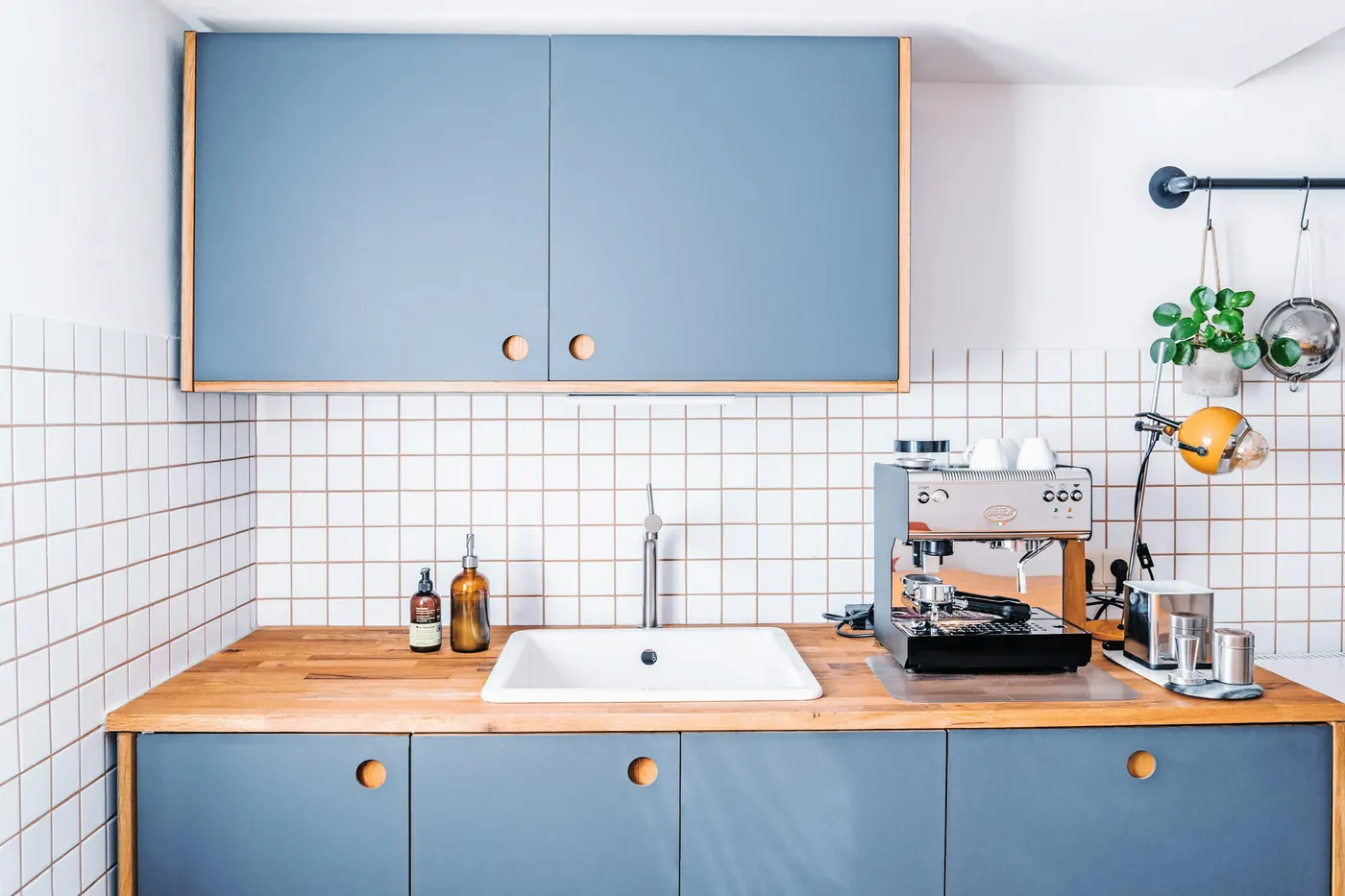
Fellow’s Espresso Series 1 is a newer semi-automatic that tries to teach as it brews. It detects shots that run too fast or too slow and suggests a grind change for the next one, and on-screen recipes walk you through lattes, cappuccinos, americanos and flat whites. As you improve, you can adjust temperature and pressure, and Fellow says pressure profiling and controlled flow improve sweetness, clarity and balance.
It heats in under two minutes, according to Fellow. The steam wand senses milk temperature and stops at your target, so milk does not scald. It uses a 58 mm bottomless portafilter, and the box includes a tamper, an 18-gram single-wall basket, an 18-gram pressurized basket, a shot splitter, a 10-ounce milk pitcher, a backflush disc and cleaning tablets.
The listing does not describe the heating system or water tank size. Fellow gives it a two-year standard warranty.
Why we like it
- Shot feedback that suggests grind changes
- Pressure profiling and temperature control
- Temperature-sensing steam wand
- 58 mm bottomless portafilter and full accessory kit
- Heats in under two minutes
Key specifications
| Machine | Fellow Espresso Series 1 (1SMB-NA) |
|---|---|
| Type | Semi-automatic, pressure profiling |
| Built-in grinder | No |
| Boiler/heating | Not stated; heats in under 2 minutes |
| Steam wand | Assisted, stops at target temperature |
| Portafilter size | 58 mm bottomless |
| Water tank | Not stated |
| Warranty | Two-year standard |
Why we recommend it
Choose it if you want a machine that helps you dial in a grinder and has room for advanced control later, on a commercial-size 58 mm portafilter.
Skip it if you prefer a long-established model with years of owner reports. It is newer than the Breville and Gaggia machines here, and the listing leaves the heating system and tank size unstated.
Pros and cons
Pros
- Learns-with-you shot feedback
- Pressure and temperature control
- Milk stops at target temperature
Cons
- Needs a separate grinder
- Heating and tank not stated
- Newer, shorter track record
7. De’Longhi La Specialista Arte Evo – Built-In Grinder and Cold Brew

De’Longhi’s La Specialista Arte Evo is an alternative to the Breville Barista machines: a semi-automatic with a conical burr grinder built in. The grinder has 15 settings and delivers a dose for single or double espresso. Its Cold Extraction feature, which De’Longhi says it developed with the Specialty Coffee Association, makes cold brew-style coffee in under five minutes.
Active temperature control offers three temperature settings, and De’Longhi says its 15-bar pump keeps extraction at 9 bar. The commercial-style steam wand heats quickly and makes microfoam for latte art, with practice. A barista toolkit comes in the box, and De’Longhi lists four preset recipes.
The listing does not state the portafilter size, the heating system or the water tank capacity. It carries a two-year manufacturer warranty.
Why we like it
- Built-in conical burr grinder, 15 settings
- Cold brew in under five minutes, per De’Longhi
- Three temperature settings
- Commercial-style steam wand
- Two-year manufacturer warranty
Key specifications
| Machine | De’Longhi La Specialista Arte Evo (EC9250M) |
|---|---|
| Type | Semi-automatic |
| Built-in grinder | Yes, conical burr, 15 settings |
| Boiler/heating | Not stated; active temperature control, 3 settings |
| Steam wand | Manual, commercial-style |
| Portafilter size | Not stated |
| Water tank | Not stated |
| Warranty | Two years |
Why we recommend it
It suits a Houston kitchen that drinks as much iced coffee as hot: the cold extraction setting makes a cold coffee base quickly, and the built-in grinder keeps the setup to one machine.
Skip it if you want to know every specification before you buy. The listing leaves out the portafilter size and tank capacity, which matter for accessories and refills.
Pros and cons
Pros
- Grinder built in
- Fast cold coffee
- Two-year warranty
Cons
- Portafilter size not stated
- Tank size not stated
- Fewer grind settings than Breville’s
8. Philips 3200 LatteGo Fully Automatic Espresso Machine – Espresso and Lattes at One Touch
A super-automatic grinds, doses, tamps, brews and froths on its own, and the Philips 3200 is a well-known example. Pick espresso, coffee, americano, cappuccino or latte macchiato on the touch display and the machine does the rest. Its 100% ceramic grinder has 12 settings, according to Philips’ datasheet, and the Aroma Extract system balances brewing temperature and extraction.
Milk is handled by the LatteGo system rather than a steam wand: a two-part milk container with no tubes that Philips says rinses clean in about 15 seconds or goes in the dishwasher. With the AquaClean filter, changed when the machine prompts you, Philips says you will not need to descale for up to 5,000 cups. The datasheet lists a 1.8-liter water tank and a 275-gram bean hopper.
There is no portafilter: the coffee is brewed in an internal brew unit. Philips gives it a two-year warranty.
Why we like it
- Five drinks at the touch of a button
- Ceramic grinder with 12 settings
- Two-part LatteGo milk system, no tubes
- AquaClean filter, up to 5,000 cups without descaling
- 1.8 L tank and 275 g bean hopper
Key specifications
| Machine | Philips 3200 LatteGo (EP3241/54) |
|---|---|
| Type | Super-automatic |
| Built-in grinder | Yes, ceramic, 12 settings; 275 g hopper |
| Boiler/heating | Not stated; Aroma Extract temperature system |
| Steam wand | None; LatteGo automatic milk system |
| Portafilter size | None (internal brew unit) |
| Water tank | 1.8 L |
| Warranty | Two years |
Why we recommend it
Choose it if you want espresso and milk drinks for the whole household with no learning curve, including for guests after dinner who just want a cappuccino.
Skip it if you want control over the shot. A super-automatic decides most of the variables, and you cannot texture milk for latte art.
Pros and cons
Pros
- One-touch drinks
- Quick-clean milk system
- Large tank and hopper
- Two-year warranty
Cons
- Little control over the shot
- No steam wand
- Brew unit needs regular cleaning
9. De’Longhi Stilosa Manual Espresso Machine – The Low-Cost Way In
The Stilosa is the least expensive machine on this list and a reasonable way to find out whether you will actually make espresso at home. It is a compact pump machine with 15-bar pump pressure and a stainless steel boiler, which De’Longhi says is engineered to last.
A manual steam wand textures milk for lattes and cappuccinos. In the box are a portafilter, a measuring scoop that doubles as a tamper, and two filters for single or double espresso. De’Longhi gives it a one-year warranty.
The listing does not state the portafilter size, and retailer figures we found disagree, so check the manual before buying accessories. Expect it to be less consistent than the machines above: there is no temperature control mentioned, and the included tamper is basic.
Why we like it
- Low cost and compact
- 15-bar pump
- Stainless steel boiler
- Manual steam wand for milk drinks
Key specifications
| Machine | De’Longhi Stilosa (EC260BK) |
|---|---|
| Type | Manual pump espresso machine |
| Built-in grinder | No |
| Boiler/heating | Stainless steel boiler |
| Steam wand | Manual |
| Portafilter size | Not stated |
| Water tank | Not stated in listing |
| Warranty | One year |
Why we recommend it
It suits someone curious about espresso who wants to try before spending more, or who mainly wants milky drinks where small differences in the shot matter less.
Skip it if you already know you love espresso. You will likely outgrow it, and one of the machines above will serve you longer.
Pros and cons
Pros
- Lowest cost here
- Small footprint
- Steam wand included
Cons
- Basic tamper
- No temperature control described
- Portafilter size not stated
How to choose an espresso machine for home use
Five decisions matter more than brand or looks. Work through them in this order.
1. How much do you want to do yourself?
A semi-automatic (Bambino Plus, Gaggia, Fellow, Stilosa) leaves grinding, dosing, tamping and steaming to you; the machine controls the water. A semi-automatic with a grinder (Barista Express, Impress, Touch, La Specialista) adds the grinder in the same body. A super-automatic (Philips 3200) does everything at a button press, at the cost of control.
2. The grinder
Espresso needs a fine, even grind that you can adjust in small steps, and a machine is only as good as its grind. If you choose a machine without a grinder, budget for a burr grinder with fine espresso settings; a coffee grinder made for drip coffee will not be enough.
3. Milk drinks and steaming
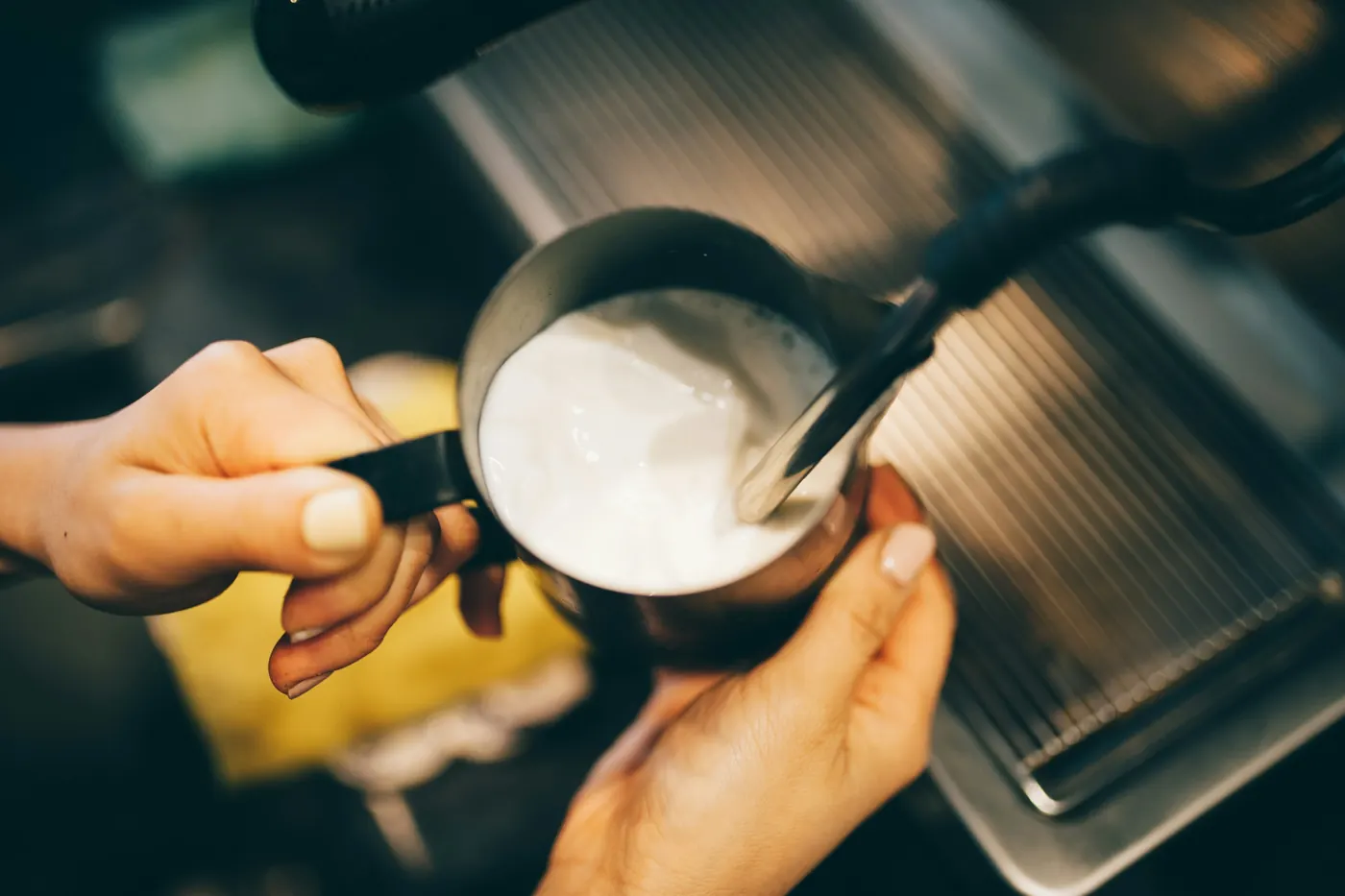
If you mostly drink lattes, cappuccinos or café con leche, the steam wand matters as much as the shot. Automatic wands (Bambino Plus, Barista Touch, Fellow) texture milk for you; manual wands (Barista Express, Gaggia, Stilosa) take practice but give more control. A single-boiler machine such as the Gaggia brews and steams one after the other, not at the same time.
4. Heating and warm-up
Breville’s ThermoJet machines reach brewing temperature in seconds, while a boiler machine needs time to warm up. PID temperature control, as on the Breville machines, holds the water temperature steady from shot to shot.
5. Portafilter size
Most café machines use a 58 mm portafilter, and so do the Gaggia and Fellow. Breville’s machines use 54 mm. Either works, but the size decides which tampers, baskets and accessories fit, so check before you buy extras. A kitchen scale that reads to a tenth of a gram helps you dose and time shots consistently.
How we chose these nine espresso machines
We started from what a home cook asks of an espresso machine: a stable shot, a way to make milk drinks, a sensible amount of effort and a machine that will last. We took specifications from each machine’s Amazon listing and from Gaggia’s and Philips’ own published product information where the listing was thin, and we noted every gap. Every pick was in stock on Amazon when we checked, and we searched the U.S. Consumer Product Safety Commission’s recall database for each brand and found no recall of any of these models. Several machines we wanted were not available in normal stock: every Rancilio Silvia listing, the Breville Barista Pro and De’Longhi’s Dedica Deluxe showed only scarce stock, and Lelit machines were not sold on Amazon US when we checked, so none of them is here. We did not find a current America’s Test Kitchen espresso machine review that we could read, so we cite none. We have not pulled shots on these machines for this guide.
Espresso drinks for a Mexican table
Carajillo. In Mexico, a carajillo is usually a shot of espresso with Licor 43, a Spanish vanilla-citrus liqueur, served over ice or shaken. Pull a double shot, pour it over the liqueur in an ice-filled glass, and serve it as an after-dinner drink. It contains alcohol, so serve it to adults only and sip it slowly.
Café de olla, espresso style. Simmer water with piloncillo and a cinnamon stick until the sugar dissolves, then add a little of the syrup to a long shot or an americano. Our guide to the best piloncillo covers which cones to buy.
Horchata with a shot. Espresso poured over iced horchata is an easy café-style drink to make at home. Start from a good mix, see the best horchata mix, and pour the espresso in last so it layers.
Steamed milk for hot chocolate. A steam wand also heats milk for Mexican hot chocolate. Melt the tablet in a little hot milk first, then steam the rest and froth it, or whip it the traditional way, as our molinillo versus whisk guide explains.
Espresso machine questions, answered
What is the best espresso machine for home use?
For most people, a semi-automatic with a grinder built in, such as the Breville Barista Express. It makes real espresso and milk drinks from one machine. If you already own a good grinder, the Bambino Plus costs less and takes less space.
What is the best espresso machine for the money?
The one that matches how much effort you want to put in. The Bambino Plus plus a good grinder, or the Barista Express, are the best value for a cook who likes to do it by hand. The Stilosa is the cheapest way to try.
Which espresso machine brands are best for home?
Breville makes the widest range of home machines, from compact to touchscreen. Gaggia and Rancilio are long-standing Italian makers of manual semi-automatics; De’Longhi and Philips are known for compact and super-automatic machines; Fellow is a newer entrant.
Do I need a separate grinder?
Only if the machine has none built in. The Barista Express, Impress, Touch, La Specialista and Philips all have grinders; the Bambino Plus, Gaggia, Fellow and Stilosa need one.
Is a super-automatic worth it?
If convenience matters more than control, yes. A super-automatic makes good everyday drinks at a button press, but you give up adjusting the shot and texturing milk by hand.
What is a portafilter, and does the size matter?
It is the handled basket that holds the ground coffee. Size decides which accessories fit: 58 mm is the café standard, and Breville’s home machines use 54 mm.
Our final pick for home espresso
Buy the Breville Barista Express if you want one machine that grinds, brews and steams. Choose the Bambino Plus if you already own a grinder or need a small machine, the Gaggia Classic Pro to learn espresso by hand on a 58 mm group, the Philips 3200 for one-touch drinks, and the Stilosa to try espresso without spending much. Whatever you choose, fresh beans and a capable burr grinder matter as much as the machine.
More coffee gear we’ve covered: coffee makers, coffee grinders, single-serve coffee makers, French presses, pour-over drippers, cold brew makers, milk frothers, coffee mugs, espresso grinders, travel mugs.
New to espresso? See our guide to the best espresso machines for beginners, or skip the learning curve with the best fully automatic espresso machines with a grinder.
On a budget? See our guide to the best cheap espresso machines.
Related guide: Best espresso tamper.
Related guide: Best espresso knock box.
Related guide: Best descaler for coffee machines.
Related guide: Best nespresso machine.
Related guide: Best delonghi espresso machine.
Related guide: Best gaggia espresso machine.
Related guide: Best philips espresso machine.
Related guide: Best water filter for espresso machine.
Related guide: Best bottomless portafilter.
Related guide: Espresso machine vs coffee maker.
Related guide: Semi automatic vs super automatic espresso machine.
And if you would rather finish dinner with someone else doing the cooking, see the menu or call to order.