A college kitchen may be a microwave, a kettle and a shelf you share with someone who eats your cereal. Most cookbooks assume far more than that. They assume a stove, a pantry, money for the shop and a parent who taught you to hold a knife.
A good cookbook for students starts from where you actually are. This guide picks eight books from named authors and established publishers, says what kitchen each one expects, and notes what the publisher and any named reviewers say. If you have a full kitchen and just want to learn to cook, our guide to the best beginner cookbook goes further.
Julia’s earns a commission on purchases made through links on this page, at no cost to you. Recommendations are based on what a restaurant kitchen looks for in a cookbook, the Amazon listing, publisher and author information and published reviews, which we name where we use them.
Quick verdict: the best college cookbook for most students
For most students, start with Spoon University’s How to Feed Yourself, 100 recipes for young cooks with small kitchens and budgets. If all you have is a microwave and a kettle, choose Christine Nelson’s Recipes Every College Student Should Know. If you want the fewest possible ingredients, choose Robin Fields’s The Easy Three-Ingredient College Cookbook.
The other five cover grocery and food-safety basics, a Trader Joe’s shopping list, one-pan dinners, a first-apartment guide and very tight budgets.
Five student cookbooks side by side
Five of the eight, one for each kind of kitchen, with what each listing or publisher gives. All eight are described in full below.
| Cookbook | Best for | Recipes | Length | Buy on Amazon |
|---|---|---|---|---|

How to Feed Yourself, Spoon UniversityBest overall
|
First-time cooks | 100 | 224 pages, paperback | View on Amazon |

Recipes Every College Student Should Know, Christine NelsonBest for dorm rooms
|
Microwave and kettle | Not stated | 144 pages, hardcover | View on Amazon |

The Easy Three-Ingredient College Cookbook, Robin FieldsBest for short shopping lists
|
Fewest ingredients | 100 | 160 pages, paperback | View on Amazon |

Healthy, Quick & Easy College Cookbook, Dana Angelo WhiteBest for learning the basics
|
Shopping and safety basics | 100 | 160 pages, paperback | View on Amazon |
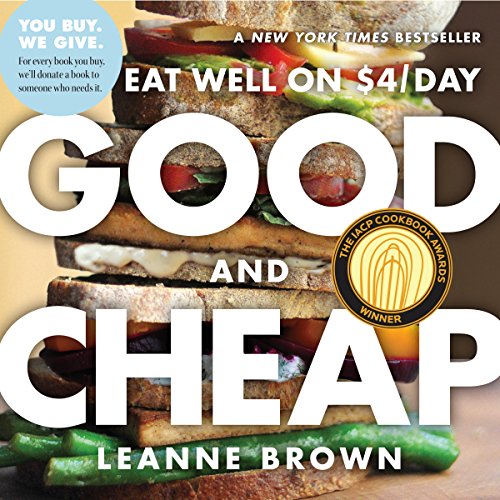
Good and Cheap, Leanne BrownBest for very tight budgets
|
Stretching a small food budget | More than 100 | 208 pages, paperback | View on Amazon |
Cover images from Amazon. Page counts and formats are from the Amazon listings for the editions linked. Recipe counts are from the title or the publisher’s copy.
Our picks for the best college cookbook, book by book
All eight were in stock in print, new and sold by Amazon when we checked. We have not cooked from these books; where we describe a strength, we say whose view it is.
1. How to Feed Yourself, Spoon University – Written for Young Cooks
Spoon University is a food brand aimed at young people, founded in 2013 by Mackenzie Barth and Sarah Adler, according to the publisher’s copy. This book offers 100 fast, inexpensive recipes built on staples such as eggs, chicken, pasta, potatoes, toast and greens, with no special equipment or skills assumed.
Publishers Weekly’s review, which we read, says the recipes are for young adults with small kitchens and budgets. It describes ramen variations, a toast chapter, a breakfast sandwich on toaster waffles and pasta shaken in a used jar. It calls some of this close to improvised, and it dryly says the cocktails include “creations only a freshman could love.”
PW’s summary is that no experience is needed: “No prerequisites are required.” That is the right pitch. Note that the byline is a brand, not one named author, and that the drinks are only for those of legal age.
Why we like it
- 100 recipes, per the title
- No special equipment needed, per the publisher
- Written for young adults, says PW
- Reviewed by Publishers Weekly
Key specifications
| Author | Spoon University (editors) |
|---|---|
| Publisher | Harmony |
| Year | 2018 |
| Pages | 224 |
| Format | Paperback |
| Recipes | 100 |
| Focus | Fast, cheap basics for young cooks |
| Best for | Students starting from zero |
Why we recommend it
If you have never cooked and want a friendly book that takes your situation seriously, start here.
Skip it if you already cook. PW calls some of the ideas improvised, and experienced cooks will not learn much.
Pros and cons
Pros
- Knows its reader
- No experience needed
- Cheap staples
Cons
- Some recipes barely recipes, says PW
- Brand byline, not a single author
2. Recipes Every College Student Should Know, Christine Nelson – Pocket-Sized Dorm Guide
This is the book for a room with no kitchen at all. The publisher describes a pocket-sized guide designed for readers with only a microwave and an electric kettle as well as those with a full kitchen. It covers quick breakfasts, backpack-friendly lunches, dinners for a crowd, study snacks and a microwave mug cake.
It also includes basic tools, cooking terms, budgeting tips and food safety advice. Christine Nelson is a writer, cook and accountant in New Jersey with four college-age sons who call her for advice at dinnertime, according to the author note.
Publisher copy quotes College Magazine saying it is “No bigger than your hand but can teach you tons of useful things about cooking,” and The Star-Ledger saying it “gets down to the basics.” We read those through the bookseller’s copy. Publishers Weekly’s page at this ISBN shows no review, and the copy does not give a total recipe count, so we do not state one.
Why we like it
- Works with a microwave and kettle, per the publisher
- Pocket-sized
- Budget and food safety advice
- Author has four college-age sons
Key specifications
| Author | Christine Nelson |
|---|---|
| Publisher | Quirk Books |
| Year | 2017 |
| Pages | 144 |
| Format | Hardcover |
| Recipes | Not stated |
| Focus | Dorm cooking basics |
| Best for | Students with no stove |
Why we recommend it
If your whole kitchen is a microwave on a mini fridge, this was written for you.
Skip it if you have a real kitchen and want plenty of dinners. At 144 small pages, it is a starter.
Pros and cons
Pros
- No stove needed
- Very small
- Food safety advice included
Cons
- Recipe count not stated
- Small format limits depth
3. The Easy Three-Ingredient College Cookbook, Robin Fields – Three Ingredients Each
The rule here is in the title. The publisher lists 100 recipes that each need three ingredients, with no fully stocked kitchen or special appliances required. They can be made in a microwave, toaster, oven or on a stovetop, and most are single-serving, which keeps leftovers down in a shared fridge.
It covers breakfast, lunch, dinner, dessert and study-break snacks, with examples such as a breakfast burrito, a mac and cheese bowl and peanut butter cookies. Robin Fields is a food blogger and recipe developer who specializes in simple recipes, according to the author note.
Publishers Weekly’s page at this ISBN shows no review, and the bookseller’s page carries no outside praise, so this rests on the publisher’s and author’s details. A three-ingredient rule will not teach much technique, but that is not what the book is for.
Why we like it
- 100 recipes, per the title
- Three ingredients each, per the publisher
- Most recipes are single-serving
- Microwave, toaster, oven or stovetop
Key specifications
| Author | Robin Fields |
|---|---|
| Publisher | Adams Media |
| Year | 2024 |
| Pages | 160 |
| Format | Paperback |
| Recipes | 100 |
| Focus | Three-ingredient student meals |
| Best for | Students with few supplies |
Why we recommend it
If your shopping basket is small and your patience smaller, this removes most of the excuses.
Skip it if you want to learn to cook. A strict ingredient limit does not leave much room for it.
Pros and cons
Pros
- Very short shopping lists
- Single-serving portions
- Flexible on equipment
Cons
- No named review in our sources
- Limited technique
4. Healthy, Quick & Easy College Cookbook, Dana Angelo White – Grocery and Kitchen Basics
Dana Angelo White teaches at Quinnipiac University and has worked with college students for years, according to a university news story that we read. She called the book “my ode to years and years and years of working with college students.” The story says it covers recipes, grocery advice, kitchen equipment, meal prep and food safety.
The listing title promises 100 simple, budget-friendly recipes. White is a registered dietitian, according to the same story, but the word “healthy” in the title is the publisher’s word, and we make no claim about it. We could not open the publisher’s own description, so we cannot tell you much about the individual recipes.
Publishers Weekly’s page at this ISBN shows no review, so this pick rests on the listing and that university article. That article is from her employer, so read it as background and not as a review.
Why we like it
- 100 recipes, per the title
- Grocery and equipment advice, per the university story
- Meal prep and food safety covered
- Author has long worked with students
Key specifications
| Author | Dana Angelo White |
|---|---|
| Publisher | DK |
| Year | 2021 |
| Pages | 160 |
| Format | Paperback |
| Recipes | 100 |
| Focus | Student recipes with grocery and kitchen advice |
| Best for | Students who want guidance |
Why we recommend it
If you want some guidance on shopping and setting up as well as recipes, this covers that ground.
Skip it if you want a detailed idea of the recipes before you buy. Our sources say little about them.
Pros and cons
Pros
- Covers more than recipes
- Author knows students
- Paperback at a short length
Cons
- No named review in our sources
- Few recipe details in our sources
5. The I Love Trader Joe’s College Cookbook, Andrea Lynn – One Store, Student Budget

If you shop at one store, this book knows that store. The title promises 180 quick and easy recipes for busy and broke college students, and the publisher pitches it as an alternative to microwave meals, fast food and cold pizza, with meals that can be made in a dorm.
The publisher lists sample dishes such as sloppy joe nachos, pad thai and monkey bread with cookie butter. The 10th anniversary edition adds recipes using newer products and tips for dorm-friendly appliances such as air fryers and Instant Pots. Andrea Lynn graduated from the Institute of Culinary Education and works as a chef and food writer, according to the author note.
The listing marks this as an unofficial Trader Joe’s cookbook, so it is not from the store itself, and store products do change. Publishers Weekly’s page at this ISBN shows no review, and the bookseller’s page carries no outside reviews, so this rests on the publisher’s and author’s details.
Why we like it
- 180 recipes, per the title
- Built around one store’s products
- Tips for dorm-friendly appliances
- Author trained at a culinary school
Key specifications
| Author | Andrea Lynn |
|---|---|
| Publisher | Ulysses Press |
| Year | 2021 |
| Pages | 200 |
| Format | Paperback |
| Recipes | 180 |
| Focus | Student recipes from one store |
| Best for | Students near a Trader Joe’s |
Why we recommend it
If there is a Trader Joe’s near campus and it is where you already shop, this cuts out the guesswork.
Skip it if you have no Trader Joe’s nearby. The whole idea depends on it.
Pros and cons
Pros
- Large recipe count
- Shopping list made simple
- Includes party snacks
Cons
- Depends on one store
- Products can change
6. The One-Pan College Cookbook, MJ Hong – One Pan, Less to Wash

A dorm sink is no place for a pile of pots. MJ Hong, a recipe developer and culinary instructor, offers 80 one-pan recipes with little prep, aimed at students with limited time, money and kitchen space, according to the publisher.
The publisher adds budget and grocery shopping advice, tips for setting up a small kitchen, and basic knife, seasoning and organization skills that outlast graduation. That extra teaching is what sets it apart from a plain recipe list.
Publisher copy quotes Faye Levy, author of Feast from the Mideast, saying the “basic, budget-friendly recipes would have been so helpful,” and chef Luciano Pellegrini calling them “easy-to-execute.” We read those through the bookseller’s copy. Publishers Weekly’s page at this ISBN shows no review. This one does need a stove or similar heat source, so check your housing rules first.
Why we like it
- 80 recipes, per the title
- One pan each
- Teaches knife and seasoning basics
- Advice on setting up a small kitchen
Key specifications
| Author | MJ Hong |
|---|---|
| Publisher | Callisto |
| Year | 2021 |
| Pages | 150 |
| Format | Paperback |
| Recipes | 80 |
| Focus | One-pan student recipes |
| Best for | Students with a stove |
Why we recommend it
If you have a hot plate or a shared stove and want something to wash less, this is the sensible choice.
Skip it if your room has only a microwave. Choose Nelson’s book instead.
Pros and cons
Pros
- Little washing up
- Teaches real skills
- Budget advice
Cons
- Needs a pan and a heat source
- No named review we read in full
7. Easy College Cookbook for Guys, Noah Stern – First Time on Your Own

Don’t let the title put you off if you are not a guy. The publisher describes a beginner’s guide for students living on their own for the first time, with 75 affordable recipes from snacks and solo meals to dishes for friends or a date, all designed for a dorm-sized kitchen.
It also covers basic techniques, time-saving tips, what to keep on hand and what to buy fresh, and a guide to dorm-friendly equipment. Recipes highlighted include steak fajitas and toaster oven s’mores. Noah Stern is a self-taught home cook who was studying at the Institute of Culinary Education when the book’s author note was written.
Publisher copy quotes Candace Braun Davison, author of The Easy College Cookbook, on its “great mix of recipes,” and Jonah Miller, chef and owner of Huertas, saying it gives you the tools to “become the most popular dinner spot on your floor.” We read those through the bookseller’s copy, and Publishers Weekly’s page at this ISBN shows no review.
Why we like it
- 75 recipes, per the publisher
- Designed for a dorm-sized kitchen
- Equipment and budgeting guides
- Dishes for friends or a date
Key specifications
| Author | Noah Stern |
|---|---|
| Publisher | Callisto |
| Year | 2021 |
| Pages | 142 |
| Format | Paperback |
| Recipes | 75 |
| Focus | Beginner student cooking |
| Best for | Anyone new to living alone |
Why we recommend it
If this is your first year away and you want to feed friends as well as yourself, this is the most social book here.
Skip it if the title’s framing bothers you. Fields’s and Hong’s books cover similar ground.
Pros and cons
Pros
- Equipment guide for small kitchens
- Dishes for guests
- Budget advice
Cons
- Oddly narrow title
- No named review we read in full
8. Good and Cheap, Leanne Brown – For Very Tight Budgets
This is not a student book, and we include it for that reason. It was written for people living on a very small food budget, built around the US SNAP allowance, and its argument is that cooking skill matters more than money. If you are a student watching every dollar, that thinking applies directly.
The publisher lists more than 100 recipes across breakfast, soups and salads, lunches, snacks, big-batch meals and desserts, with shopping tips and a short list of minimal equipment. It also says the book is an IACP Cookbook Awards winner and has a buy-one-give-one program, in which each purchased copy funds a free copy for a person or family in need.
Publisher copy quotes Michael Pollan calling it a “beautiful book full of recipes that fit a food stamp budget,” and Food and Wine saying it will bring meals “to those who need them the most.” We read those through the bookseller’s copy. Publishers Weekly’s page at this ISBN shows no review.
Why we like it
- More than 100 recipes, per the publisher
- Built around a very small budget
- Minimal equipment list
- IACP Cookbook Awards winner, per the publisher
Key specifications
| Author | Leanne Brown |
|---|---|
| Publisher | Workman |
| Year | 2015 |
| Pages | 208 |
| Format | Paperback |
| Recipes | More than 100 |
| Focus | Cooking on a small food budget |
| Best for | Anyone on a tight budget |
Why we recommend it
If money is the main thing and you can cook on a real stove, this may be the most useful book on the page.
Skip it if you need dorm-room recipes. It assumes a more normal kitchen than the student titles.
Pros and cons
Pros
- Serious about budget
- Teaches shopping
- Each copy funds a free copy, per the publisher
Cons
- Not written for students
- No named review we read in full
How to choose a cookbook for students
The key question is not your skill level. It is what you are allowed to plug in.
- Check your housing rules. Many dorms limit appliances. A book for a stove is no use if your room allows a microwave and a kettle, so check first.
- Count your tools. Most of these books need very little. A sharp knife and a board go a long way: see the best chef knife for beginners and the best budget cutting board.
- Do not forget the can opener. Student cooking leans on canned beans and tomatoes. Our guide to a cheap can opener will save you a trip down the hall.
- Plan for a shared fridge. Single-serving recipes, as in Fields’s book, leave less to label and defend.
- Look a little further ahead. If you want to cook ahead on a Sunday, see the best meal prep cookbook.

How we picked these eight books
We searched Amazon’s book listings and kept print editions from named authors or an established brand at known publishers, in stock, new and sold by Amazon when we checked. We left out every title already on our other book pages, including the best beginner cookbook. Author, year, format and page count come from the Amazon listing. Recipe counts and descriptions come from the title or the publisher’s copy, as carried by booksellers, unless we credit someone else.
Here is which evidence stands behind which pick. How to Feed Yourself has a Publishers Weekly review that we read ourselves. Recipes Every College Student Should Know, The One-Pan College Cookbook, Easy College Cookbook for Guys and Good and Cheap have praise we read only as quoted in the publisher’s copy, so we name the source but cannot vouch for the full piece. The Easy Three-Ingredient College Cookbook and The I Love Trader Joe’s College Cookbook rest on the publisher’s and author’s details. Healthy, Quick & Easy College Cookbook rests on its listing and a university news story.
Self-published titles and books with no identifiable author came up often in this category, and we left them out.
College cookbook questions, answered
What is the best cookbook for students with only a microwave?
Recipes Every College Student Should Know. Its publisher says it works with just a microwave and an electric kettle. The Easy Three-Ingredient College Cookbook also includes microwave recipes.
Which book is cheapest to cook from?
We do not compare prices, but Good and Cheap is the one written around a very small food budget. Fields’s three-ingredient rule also keeps the shopping list short.
What is the best gift for a student leaving home?
How to Feed Yourself for someone who has never cooked, or the Nelson book for a dorm room, since it is small and takes up little shelf.
Are these books good for people who are not in college?
Yes. Good and Cheap is not a student book at all, and anyone in a first apartment could use How to Feed Yourself. Our best beginner cookbook guide suits those with a full kitchen.
Do these books cover food safety?
Nelson’s publisher and the university story on White’s book both mention food safety. That matters in a shared fridge, but check official guidance for anything you are unsure about.
Which student cookbook should you buy first?
Buy How to Feed Yourself if you are starting from nothing. Choose Nelson’s book for a dorm room, Fields’s for short lists and Good and Cheap for a very tight budget. White, Lynn, Hong and Stern each suit a narrower kitchen, and each entry says who that is.
And when exams win and nobody can face the kitchen, see the menu or call to order.