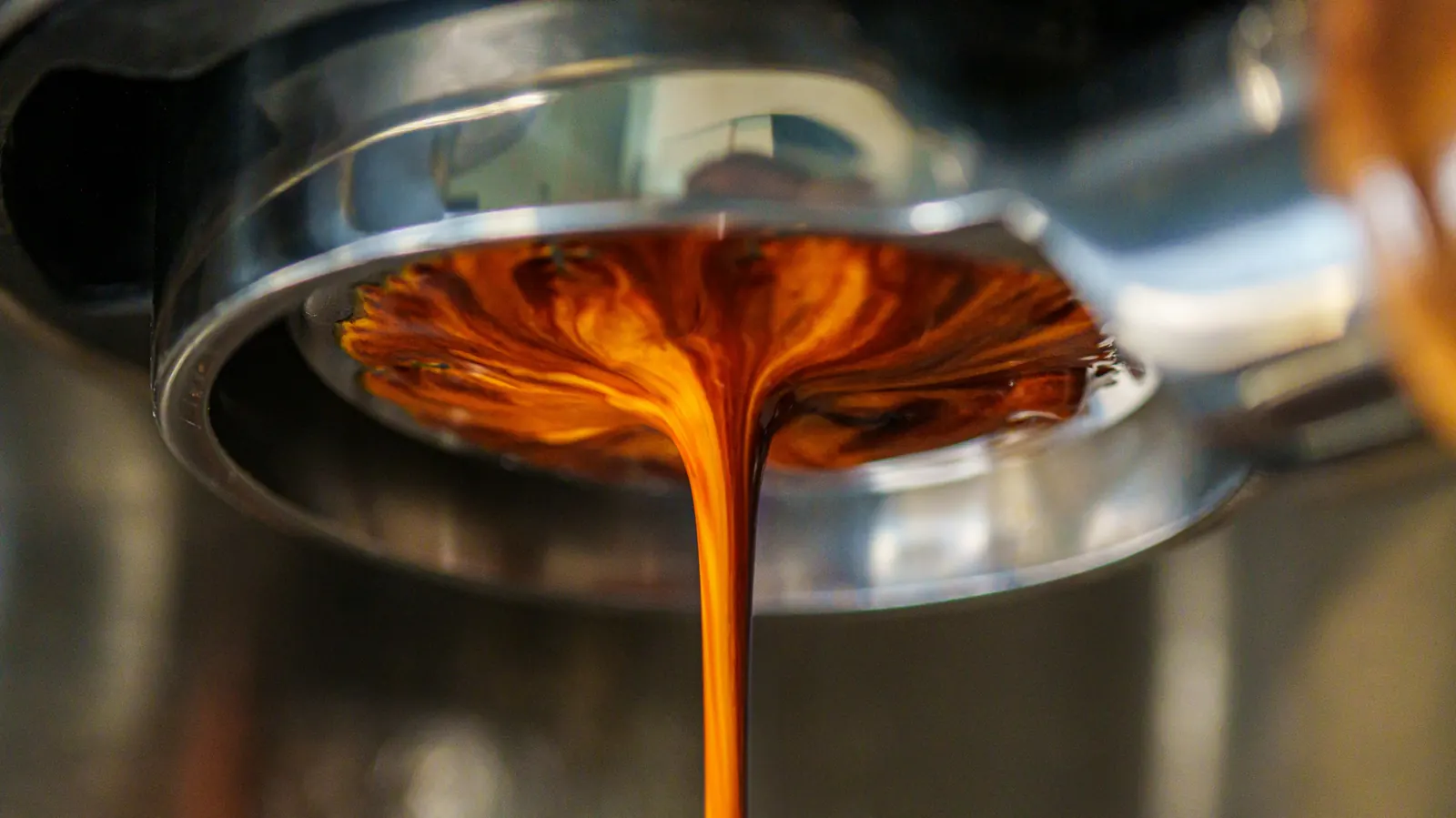
Espresso punishes small mistakes. Grind a little too coarse, tamp unevenly or let the water run a few degrees cool, and the shot pours thin and sour. That is why a first machine should forgive you while you learn: pressurized baskets that still build crema from imperfect grounds, a grinder built in so you are not buying two machines, milk that froths itself, and controls you can understand on the first morning.
This guide is the beginner’s branch of our main best espresso machine guide. To keep it useful, it covers different machines from that page, chosen for how easy they are to live with rather than how far they can be pushed. Eight machines, from capsule to bean-to-cup, with what each maker states.
Julia’s earns a commission on purchases made through links on this page, at no cost to you. Recommendations are based on what a restaurant kitchen looks for, product specifications and verified buyer reports.
Quick verdict: which first espresso machine to buy
For a beginner who wants to learn real espresso, the Ninja Luxe Café Pro is the pick: it has a grinder built in, weighs each dose, tamps with a lever and adjusts temperature and pressure for the drink you choose, according to the listing. If you would rather press one button, the De’Longhi Magnifica Start grinds and brews by itself. For the least effort of all, the Nespresso Lattissima One uses capsules and froths milk at a touch, and the De’Longhi Classic Signature is the lower-cost way in.
If you already know you want to dial in shots by hand, or you want to compare the more advanced machines, the parent guide covers those. This page assumes you are starting from zero.
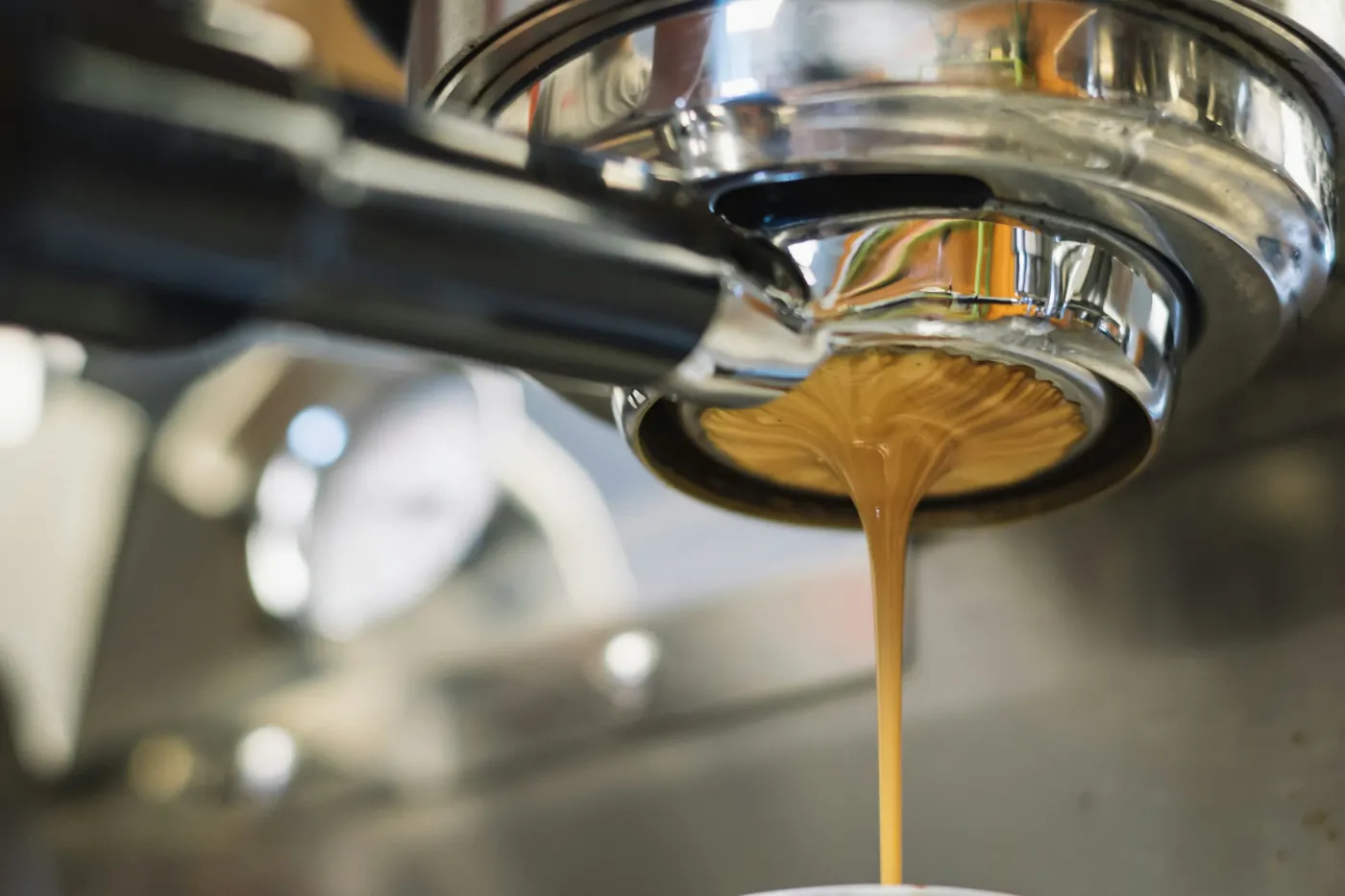
Five beginner machines compared
Our five standout picks, one for each kind of beginner, with the type of machine and how it handles milk, as each maker or listing states. All eight machines are reviewed in full below.
| Machine | Best for | Type | Milk | Buy on Amazon |
|---|---|---|---|---|

Ninja Luxe Café Pro 4-in-1 Espresso MachineBest overall
|
Learning real espresso with a grinder built in | Semi-automatic with grinder and guided dosing | Hands-free frother | View on Amazon |

De’Longhi Magnifica Start Automatic Espresso MachineBest push-button
|
Fresh beans with no tamping or dosing | Fully automatic, bean to cup | Manual frother | View on Amazon |

Nespresso Lattissima One by De’LonghiEasiest to use
|
One-touch lattes with nothing to learn | Capsule (Nespresso Original) | Automatic, single-serve jug | View on Amazon |

KitchenAid Semi-Automatic Espresso Machine with Automatic Milk FrotherBest automatic milk
|
Pulling your own shots, with milk done for you | Semi-automatic, 58 mm portafilter | Automatic frother attachment plus wand | View on Amazon |

De’Longhi Classic Signature Espresso MachineBudget pick
|
Trying espresso without a big outlay | Semi-automatic, pressure gauge | 2-setting steam wand | View on Amazon |
Product images from Amazon. Features are as stated by each maker or listing; check the listing before you buy.
What makes an espresso machine forgiving
Four features do most of the work for a beginner. Pressurized (dual-wall) baskets have a second wall with a single small hole, so pressure builds even when the grind or tamp is off. The shot will not be as nuanced as one from a single-wall basket, but it will be drinkable from day one. Several machines here ship with both kinds, so you can move up when you are ready.
A built-in grinder matters because espresso needs a fine, even grind that most blade grinders and many cheap burr grinders cannot make. One machine that grinds and doses for you takes a whole variable away. Automatic milk removes the hardest skill of all, steaming milk by hand. And simple controls (one or two shot buttons, presets you can trust) let you repeat a good cup instead of guessing.
The trade-off is control. The more a machine does for you, the less you can adjust. That is fine if you want a good latte before work; less so if you hope to learn the craft.
The best espresso machine beginner cooks can learn on: eight picks
Eight machines from Ninja, Breville, De’Longhi, Nespresso, KitchenAid and Mr. Coffee: semi-automatics with beginner aids, two fully automatic bean-to-cup machines, a capsule machine and a budget machine with automatic milk. All were in stock on Amazon when we checked, none of them is a pick on our main espresso machine page, and we searched the CPSC recall database for every brand here.
1. Ninja Luxe Café Pro 4-in-1 Espresso Machine – A Grinder and a Guide in One
The Luxe Café Pro (ES701) is the machine we would point a beginner to who wants real espresso from fresh beans but needs help with the hard parts. Ninja calls its system Barista Assist: a built-in conical burr grinder with 25 settings, weight-based dosing, an integrated tamper you work with a lever, and real-time temperature and pressure adjustments based on the drink you choose, according to the listing.
Those are the steps where most beginners go wrong: how much coffee, how hard to tamp and how hot the water is. Milk is hands-free too. Ninja’s Dual Froth Pro system pairs a magnetic spinning whisk with an automatic steamer, and the XL jug makes enough milk for two drinks at once. The same machine brews drip coffee and cold brew, has a cold-pressed espresso setting, and a separate hot water system for tea and Americanos.
The box list names single, double and “Luxe” baskets rather than pressurized ones, so the machine leans on its dosing and tamping help instead. The listing does not state the water tank size, pump pressure, wattage or warranty. It measures about 13.4 x 12.5 x 14.8 inches, per the listing, so check the space under your cabinets.
Why we like it
- Built-in conical burr grinder, 25 settings
- Weight-based dosing and a lever tamper
- Hands-free milk frothing
- Drip coffee, cold brew and hot water as well
Key specifications
| Model | ES701 |
|---|---|
| Type | Semi-automatic with grinder, 4-in-1 |
| Grinder | Integrated conical burr, 25 settings |
| Milk system | Dual Froth Pro (automatic steamer and whisk) |
| Baskets or coffee | Single, double and Luxe baskets |
| Water tank | Not stated |
| Pump pressure | Not stated |
| Warranty | Not stated in the listing |
Why we recommend it
Choose it if you want to learn espresso from fresh beans with the machine handling dose, tamp and temperature, and want lattes without steaming milk by hand.
Skip it if you want to learn manual milk steaming, or want the simplest machine on the counter; it does a lot, and that means a lot of settings.
Pros and cons
Pros
- Guided grinding, dosing and tamping
- Hands-free milk
- Coffee, cold brew and hot water too
Cons
- No pressurized baskets in the box list
- Tank size and warranty not stated
- Large footprint
2. De’Longhi Magnifica Start Automatic Espresso Machine – Beans In, Espresso Out
A fully automatic machine takes away every step that trips up beginners. The Magnifica Start (ECAM22022B) grinds whole beans in a conical burr grinder with 13 settings, doses, tamps and brews when you press a button, according to De’Longhi’s listing. There are three one-touch drinks, espresso, coffee and Americano, and you can adjust the strength.
Milk is the one manual job: it has a traditional frother wand for lattes and cappuccinos. That is less work than a full barista wand but not hands-free. The removable parts are dishwasher safe, per the listing, which keeps daily cleanup short. It is a newer, simpler sibling of the Magnifica Evo on our coffee maker and espresso combo page, with fewer recipes.
The US listing does not give the water tank or bean hopper size. European retailer spec sheets for the Magnifica Start series list a 1.8-liter tank and a 250-gram hopper, but we have not confirmed that for this US model.
Why we like it
- Grinds, doses and brews at one touch
- 13 grind settings
- Dishwasher-safe removable parts
- 2-year warranty plus 1 year with registration
Key specifications
| Model | ECAM22022B |
|---|---|
| Type | Fully automatic, bean to cup |
| Grinder | Conical burr, 13 settings |
| Milk system | Manual frother wand |
| Baskets or coffee | Whole beans; 3 one-touch recipes |
| Water tank | Not stated in US listing |
| Pump pressure | Not stated in US listing |
| Warranty | 2 years, plus 1 with registration |
Why we recommend it
Choose it if you want fresh-ground espresso and Americanos with no tamping, dosing or grinder to buy separately.
Skip it if you want lattes at the press of a button; the frother is manual.
Pros and cons
Pros
- Nothing to learn for black coffee
- Adjustable strength
- Easy to clean
Cons
- Only three drink buttons
- Tank and hopper sizes not in the US listing
3. Nespresso Lattissima One by De’Longhi – Lattes from a Single Button
If you want espresso drinks without learning anything, capsules are the answer, and the Lattissima One (EN510W) adds milk to that. It makes espresso and lungo from Nespresso Original capsules plus three milk drinks, espresso macchiato, cappuccino and latte macchiato, each at one touch, according to the listing.
The milk system is single-serve: you pour milk into a small jug, the machine froths what is there, and the jug goes in the dishwasher. De’Longhi’s spec tables list a 1-liter water tank, a 19-bar pump, a 165 ml milk jug and a 25-second heat-up. There is a descaling alert, so you do not have to remember. A starter set of capsules comes in the box.
The limits are the flip side of the simplicity. You cannot change the grind, the dose or the beans beyond the capsules on offer, and each drink costs more than one made from beans. The Nespresso Vertuo Up on our combo page uses the other capsule system and has no milk frother.
Why we like it
- Three milk drinks at one touch
- Dishwasher-safe milk jug
- Descaling alert
- Compact footprint
Key specifications
| Model | EN510W |
|---|---|
| Type | Capsule, 1,450 W (De’Longhi) |
| Grinder | None |
| Milk system | Automatic, single-serve 165 ml jug |
| Baskets or coffee | Nespresso Original capsules |
| Water tank | 1 L (De’Longhi) |
| Pump pressure | 19 bar (De’Longhi) |
| Warranty | Not stated in listing |
Why we recommend it
Choose it if you want a cappuccino before work with no grinding, tamping or steaming at all.
Skip it if you want to choose your own beans or learn the craft; capsules lock you in.
Pros and cons
Pros
- Simplest machine here
- Consistent drinks every time
- Milk jug cleans in the dishwasher
Cons
- Capsules only
- Small milk jug: one drink at a time
4. KitchenAid Semi-Automatic Espresso Machine with Automatic Milk Frother – Your Shot, Its Foam
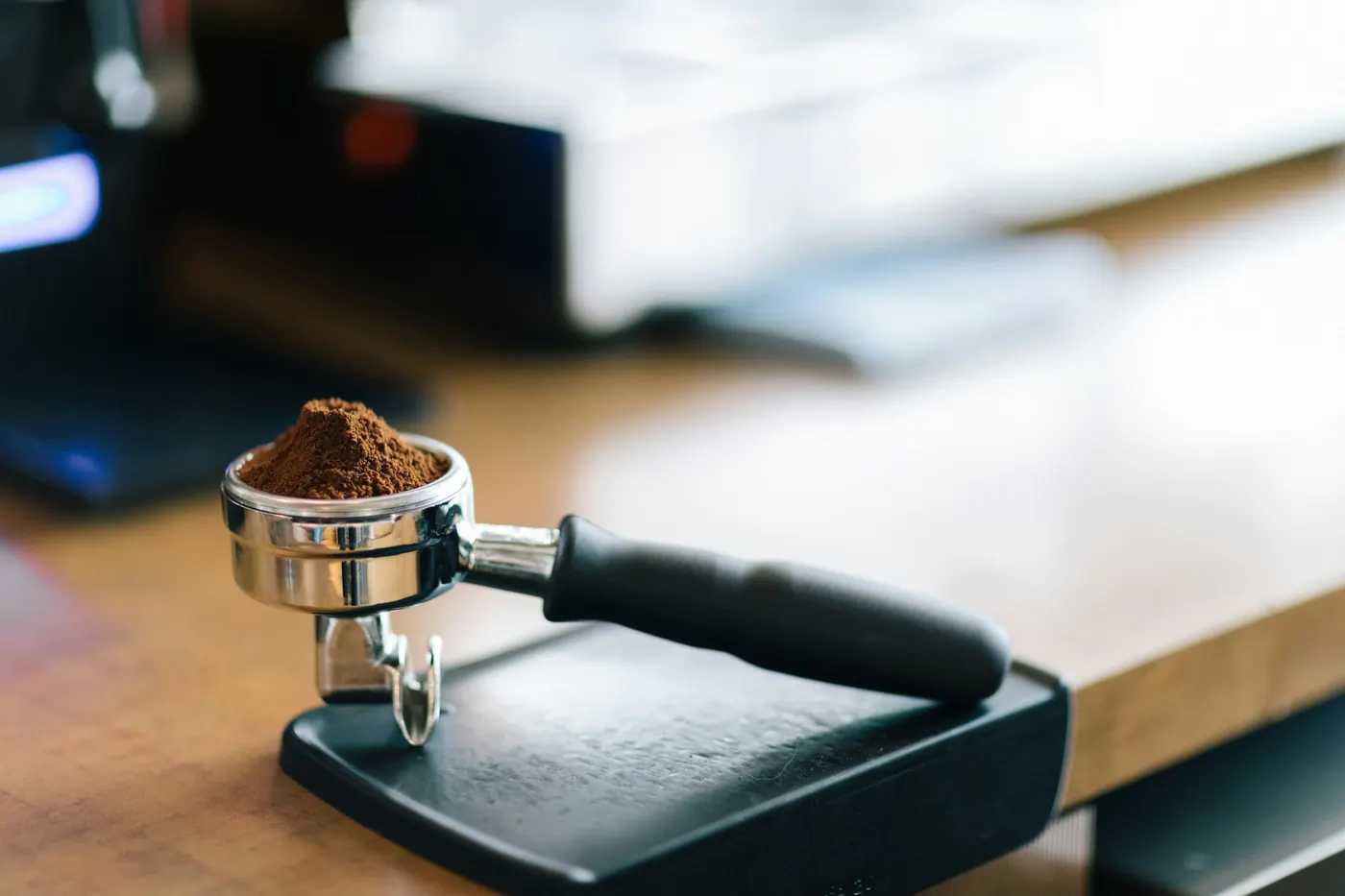
This bundle pairs KitchenAid’s metal semi-automatic machine with its Automatic Milk Frother Attachment, and it suits a beginner who wants to make the espresso by hand but not the milk. The attachment prepares milk at the push of a button with automatic temperature control, programmable dosing and a micro-foam adjuster for texture, according to the listing. The regular steam wand is still there when you want to practice.
For the espresso side, KitchenAid highlights dual smart temperature sensors that it says keep brewing temperature consistent. KitchenAid’s listing for the same machine sold alone (KES6503) describes a 58 mm commercial-grade portafilter with recessed spouts, so it sits flat on the counter for steadier tamping, plus four filter baskets, which a US retailer lists as single-wall and double-wall in 1-cup and 2-cup sizes.
The bundle listing we checked is the black finish and states fewer specifications than the machine-only listing. It does not grind, so you will need a burr grinder or good pre-ground coffee.
Why we like it
- Push-button milk with temperature control
- Adjustable foam texture
- 58 mm portafilter that sits flat for tamping
- Dual temperature sensors
Key specifications
| Model | KES6504OB (bundle, black) |
|---|---|
| Type | Semi-automatic |
| Grinder | None |
| Milk system | Automatic frother attachment plus steam wand |
| Baskets or coffee | 4 baskets, single- and double-wall (KES6503 listing, retailer) |
| Water tank | Not stated in listing |
| Pump pressure | 15 bar (KitchenAid, KES6403 listing) |
| Warranty | 1 year (KES6503 listing) |
Why we recommend it
Choose it if you want to learn to pull shots but want lattes and cappuccinos to come out right from the first week.
Skip it if you have no grinder and do not want to buy one; this machine needs ground coffee.
Pros and cons
Pros
- Automatic milk, manual espresso
- Full-size 58 mm portafilter
- Metal build
Cons
- No grinder
- Bundle listing is light on specifications
5. De’Longhi Classic Signature Espresso Machine – A Pressure Gauge on a Small Budget
The Classic Signature (EM450M) is a compact, lower-cost semi-automatic that still gives a beginner useful feedback. De’Longhi fits a pressure gauge that tracks pressure in real time, so you can see whether your grind and tamp are building enough pressure, and it has single and double espresso presets you can customize.
De’Longhi lists a 15-bar pump, Thermoblock heating for fast heat-up, a removable 57-ounce water tank and a steam wand with two settings, one for silky steamed milk and one for thicker foam for latte art. It comes with single and double filter baskets, which retailers describe as pressurized, so imperfect grounds still make a respectable shot.
It has no grinder, and the steam wand is manual. De’Longhi’s own page also sets out a 9-bar extraction pressure alongside the 15-bar pump rating; the gauge helps you see what is actually happening.
Why we like it
- Pressure gauge for real-time feedback
- Customizable single and double presets
- Two-setting steam wand
- Compact stainless body
Key specifications
| Model | EM450M |
|---|---|
| Type | Semi-automatic, 1,350 W (De’Longhi) |
| Grinder | None |
| Milk system | Manual steam wand, 2 settings |
| Baskets or coffee | Single and double baskets (pressurized, per retailers) |
| Water tank | 57 oz (De’Longhi) |
| Pump pressure | 15 bar |
| Warranty | 1 year (listing) |
Why we recommend it
Choose it if you want to find out whether espresso is for you before spending on a grinder machine.
Skip it if you want milk drinks without practice; the wand is manual.
Pros and cons
Pros
- Gauge shows what each shot is doing
- Lower-cost way in
- Small footprint
Cons
- No grinder
- Basket type confirmed only by retailers
6. Breville Infuser Espresso Machine – A Gauge and Steady Temperature
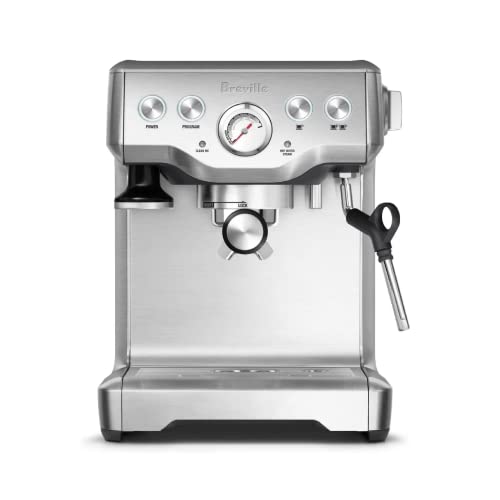
The Infuser (BES840XL) is an older Breville design that remains a good teacher. It has a pressure gauge that, in Breville’s words, guides beginners and pros to the right extraction, and digital PID temperature control you can adjust in 2°F steps. Low-pressure pre-infusion wets the coffee gently before full pressure, which helps even out the shot.
The shot buttons are volumetric: press for one or two shots, or hold to control the volume yourself. After steaming, the machine purges itself so the next espresso is brewed at the right temperature, per the listing. It includes single- and dual-wall filter baskets, a stainless milk jug and a water filter, and has a 61-ounce tank.
Like the Classic Signature, it needs ground coffee, and the steam wand is manual. It costs more than that machine but adds the PID control and auto purge.
Why we like it
- Pressure gauge for feedback
- PID temperature, adjustable in 2°F steps
- Single- and dual-wall baskets
- Auto purge after steaming
Key specifications
| Model | BES840XL |
|---|---|
| Type | Semi-automatic, 1,650 W |
| Grinder | None |
| Milk system | Manual steam wand |
| Baskets or coffee | Single- and dual-wall |
| Water tank | 61 oz |
| Pump pressure | Not stated (low-pressure pre-infusion) |
| Warranty | 1-year limited |
Why we recommend it
Choose it if you already own a good grinder and want a machine that shows you what each shot is doing.
Skip it if you have no grinder; the Ninja Luxe Café Pro solves both at once.
Pros and cons
Pros
- Stable, adjustable temperature
- Gauge and pre-infusion help consistency
- Volumetric shot buttons
Cons
- No grinder
- Older design than Breville’s ThermoJet machines
7. Mr. Coffee One-Touch CoffeeHouse+ Espresso Maker – Automatic Milk for Less

The One-Touch CoffeeHouse+ (model 2168819) brings automatic milk to a lower price range. Choose single or double espresso, cappuccino or latte on the touch panel, and the automatic frother draws milk from an 18-ounce reservoir and froths it to the level you select, according to the listing. The reservoir comes off and goes into the fridge with any leftover milk.
Two details help a beginner. It takes Easy Serving Espresso (ESE) pods, pre-measured paper pods that take the dosing and tamping out of the shot, and a progress bar shows when it is ready and how far along your drink is. A clean cycle steams out the frother without emptying the milk. Mr. Coffee lists a 19-bar pump and includes single and double filters, a scoop and a tamper.
It is a simpler, lighter machine than the Breville or KitchenAid, and the listing does not say whether the filters are pressurized.
Why we like it
- One-touch lattes and cappuccinos
- 18 oz removable milk reservoir
- Takes ESE pods as well as ground coffee
- Frother clean cycle
Key specifications
| Model | 2168819 |
|---|---|
| Type | Semi-automatic with presets |
| Grinder | None |
| Milk system | Automatic, 18 oz reservoir |
| Baskets or coffee | Single and double filters; ESE pods |
| Water tank | Not stated in listing |
| Pump pressure | 19 bar |
| Warranty | 1-year limited |
Why we recommend it
Choose it if you drink milk drinks most days and want them automatic without a high outlay.
Skip it if you want to grow into dialing in shots; it is built for convenience, not control.
Pros and cons
Pros
- Automatic milk at a lower price
- ESE pods remove guesswork
- Milk keeps in the fridge in its reservoir
Cons
- Little room to adjust the shot
- Basket type and tank size not stated
8. De’Longhi Rivelia Automatic Espresso Machine – Guided Setup, Automatic Milk

The Rivelia (EXAM44055BG, the beige version) is the premium end of push-button espresso, and it is built around taking guesswork away. A step-by-step visual walkthrough helps you set the grind, dose and temperature for each bean, then saves those settings, according to De’Longhi’s listing. From there, one touch grinds, doses, brews and froths.
It offers 18 preset drinks, including latte, cappuccino, cortado, flat white, iced coffee and espresso over ice, with an extra-shot function and adjustable strength and size. Two removable 8.8-ounce bean hoppers let you swap between, say, a dark roast and a decaf, and the 13-setting burr grinder grinds fresh for every cup. The LatteCrema Hot system froths milk or plant milk automatically and has an auto-clean function.
It is the most capable machine here and the largest investment. The listing does not give the water tank size or pump pressure.
Why we like it
- Guided setup saves grind and dose for each bean
- 18 one-touch drinks, hot and iced
- Automatic milk with auto-clean
- Two swappable bean hoppers
Key specifications
| Model | EXAM44055BG |
|---|---|
| Type | Fully automatic, bean to cup |
| Grinder | Burr, 13 settings |
| Milk system | Automatic (LatteCrema Hot) |
| Baskets or coffee | Whole beans; 2 × 8.8 oz hoppers |
| Water tank | Not stated in listing |
| Pump pressure | Not stated in listing |
| Warranty | 2 years, plus 1 with registration |
Why we recommend it
Choose it if you want café drinks at a touch and are willing to pay for a machine that sets itself up with you.
Skip it if you only drink straight espresso or Americanos; the Magnifica Start does that for much less.
Pros and cons
Pros
- Most drinks of any machine here
- Guided setup is beginner-proof
- Swap beans in seconds
Cons
- Largest outlay on this list
- Cold foam needs an accessory sold separately
How to choose a first espresso machine
Start with how you drink coffee, then decide how much you want to learn.
1. Straight espresso or milk drinks
If most of your cups are lattes and cappuccinos, milk handling matters more than anything else. Automatic systems on the Luxe Café Pro, Lattissima One, KitchenAid bundle, Mr. Coffee and Rivelia do it for you. A manual wand, as on the Infuser and Classic Signature, gives better microfoam once learned, but it takes weeks of practice.
2. Pressurized baskets
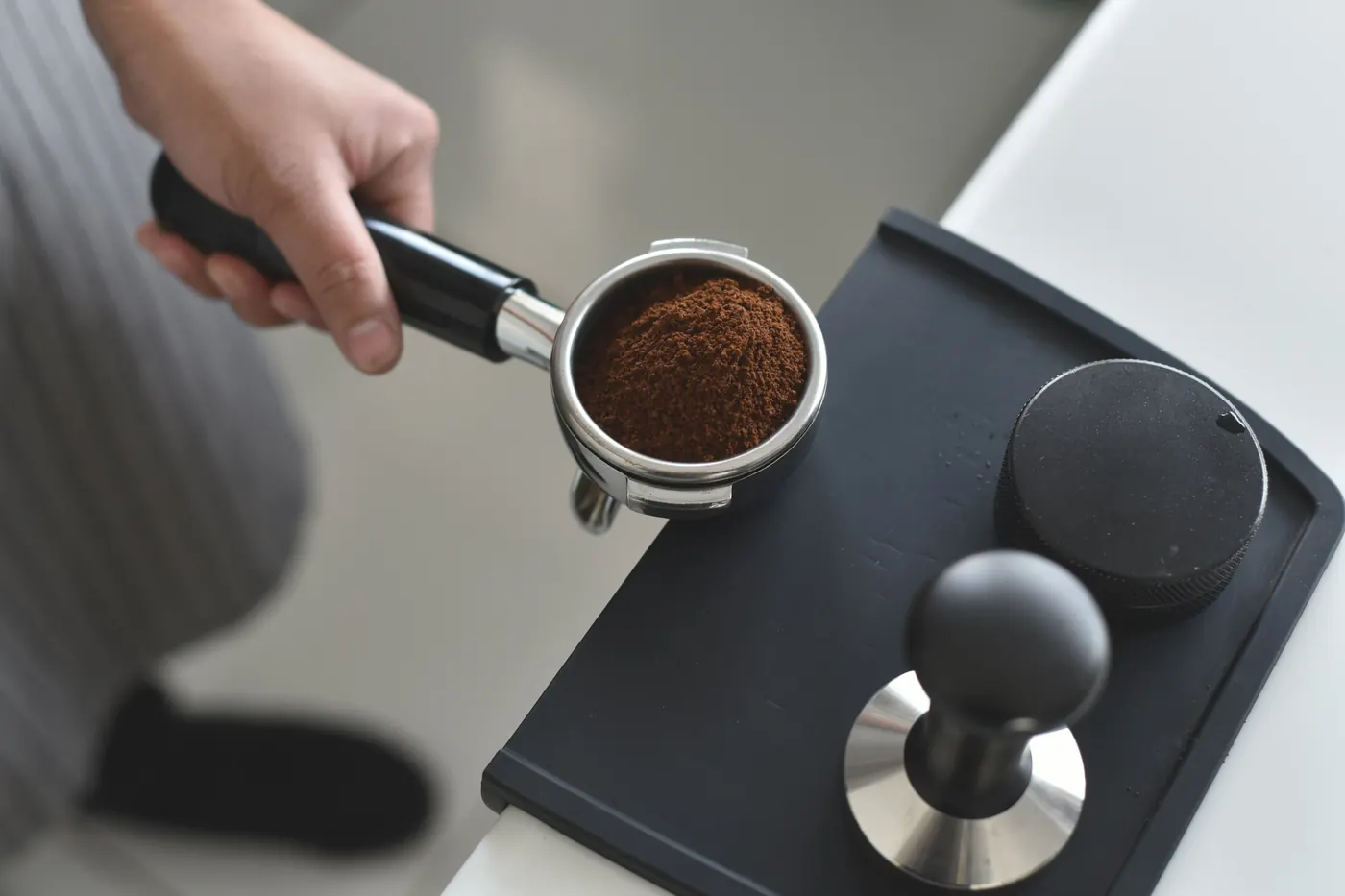
Dual-wall baskets are the single most forgiving feature on a semi-automatic. Breville includes them with the Infuser, alongside single-wall baskets for later. Use the pressurized ones until your shots are steady, then switch.
3. Grinder: built in, separate or none
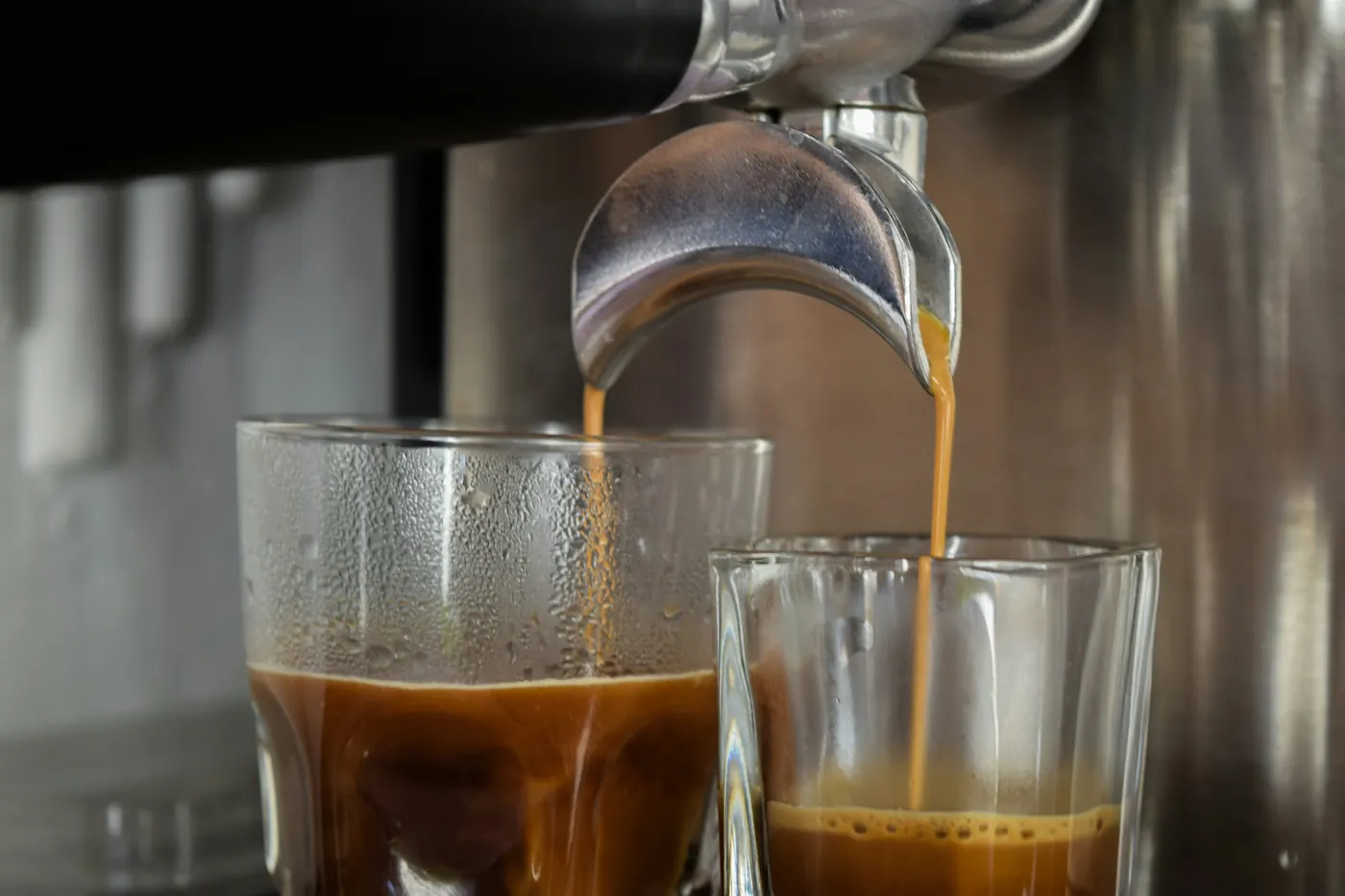
Fresh, fine grinding is where many beginners struggle. A built-in grinder (Luxe Café Pro, Magnifica Start, Rivelia) solves it in one box. A semi-automatic without one needs a burr grinder that can grind for espresso; our best coffee espresso grinder guide covers those. Capsules and ESE pods sidestep grinding entirely.
4. Controls you will actually use
One- and two-shot buttons, presets and progress screens make it easier to repeat a good cup. A pressure gauge (Infuser, Classic Signature) is worth having on a manual machine because it tells you when a shot is running too fast or slow. A small kitchen scale does the same for your dose.
5. Cleaning and space
Every espresso machine needs regular rinsing and descaling. Dishwasher-safe parts, auto-purge and milk clean cycles cut the chore. Check the counter depth and the height under your cabinets, since bean-to-cup machines are tall.
How we picked these eight beginner machines
We started from the features that make espresso easier to learn, pressurized baskets, built-in grinders, automatic milk and simple controls, and looked for machines from established makers sold on Amazon in the United States and in stock when we checked. We left out every machine on our main espresso guide and on our coffee maker and espresso combo page so this page adds new options. Specifications come from each Amazon listing and, where noted, from De’Longhi’s and KitchenAid’s own product information and US retailers; where a figure was missing we wrote “Not stated”.
We searched the CPSC recall database for Breville, De’Longhi, Nespresso, KitchenAid and Mr. Coffee and found no recall of those machines listed here; a search of cpsc.gov for the Ninja Luxe Café turned up no notice for it either, but check the database yourself before buying. We have not pulled shots on these machines ourselves, and we did not find a current America’s Test Kitchen espresso review or read Wirecutter or Serious Eats for this guide, so we do not quote them. We left out the Breville Bambino because our main guide already covers its close sibling, the Bambino Plus, and most De’Longhi Dedica models because they showed limited stock.
Beginner espresso questions, answered
What is the best espresso machine for beginners?
For learning real espresso, the Ninja Luxe Café Pro, because it combines a grinder with guided dosing, tamping and temperature control. For no learning at all, a fully automatic machine like the De’Longhi Magnifica Start or a capsule machine like the Lattissima One.
Are pressurized baskets bad?
No. They are a learning aid. They make a fuller-looking shot from imperfect grounds or pre-ground coffee, at the cost of some flavor detail. Most beginners move to single-wall baskets once they have a good grinder and a steady tamp.
Can I use pre-ground coffee?
Yes, in a machine with pressurized baskets, and ESE pods work in the Mr. Coffee. Pre-ground coffee goes stale quickly, so buy small bags, and expect better results from fresh beans and a burr grinder.
Is a fully automatic machine worth it for a beginner?
If you want good coffee without a learning curve, yes. You give up fine control over the shot, and the machines are larger, but there is nothing to tamp, dose or time.
What can I make besides lattes?
A shot sweetened with piloncillo syrup and a pinch of cinnamon gives you the flavor of café de olla in a small cup; see the best piloncillo brand. A shot stirred into Mexican hot chocolate makes a quick mocha; see the best Mexican hot chocolate.
Our pick for a first espresso machine
Buy the Ninja Luxe Café Pro if you want to learn espresso with a grinder and guidance in one machine. Choose the De’Longhi Magnifica Start for push-button espresso from beans, the Nespresso Lattissima One for one-touch lattes with nothing to learn, the KitchenAid with its automatic frother if you want to pull shots but not steam milk, and the De’Longhi Classic Signature to try espresso for less. When you are ready for more control, our best espresso machine guide picks up where this one ends.
And if you would rather someone else made the coffee and the food tonight, see our drinks and the menu, or call to order.