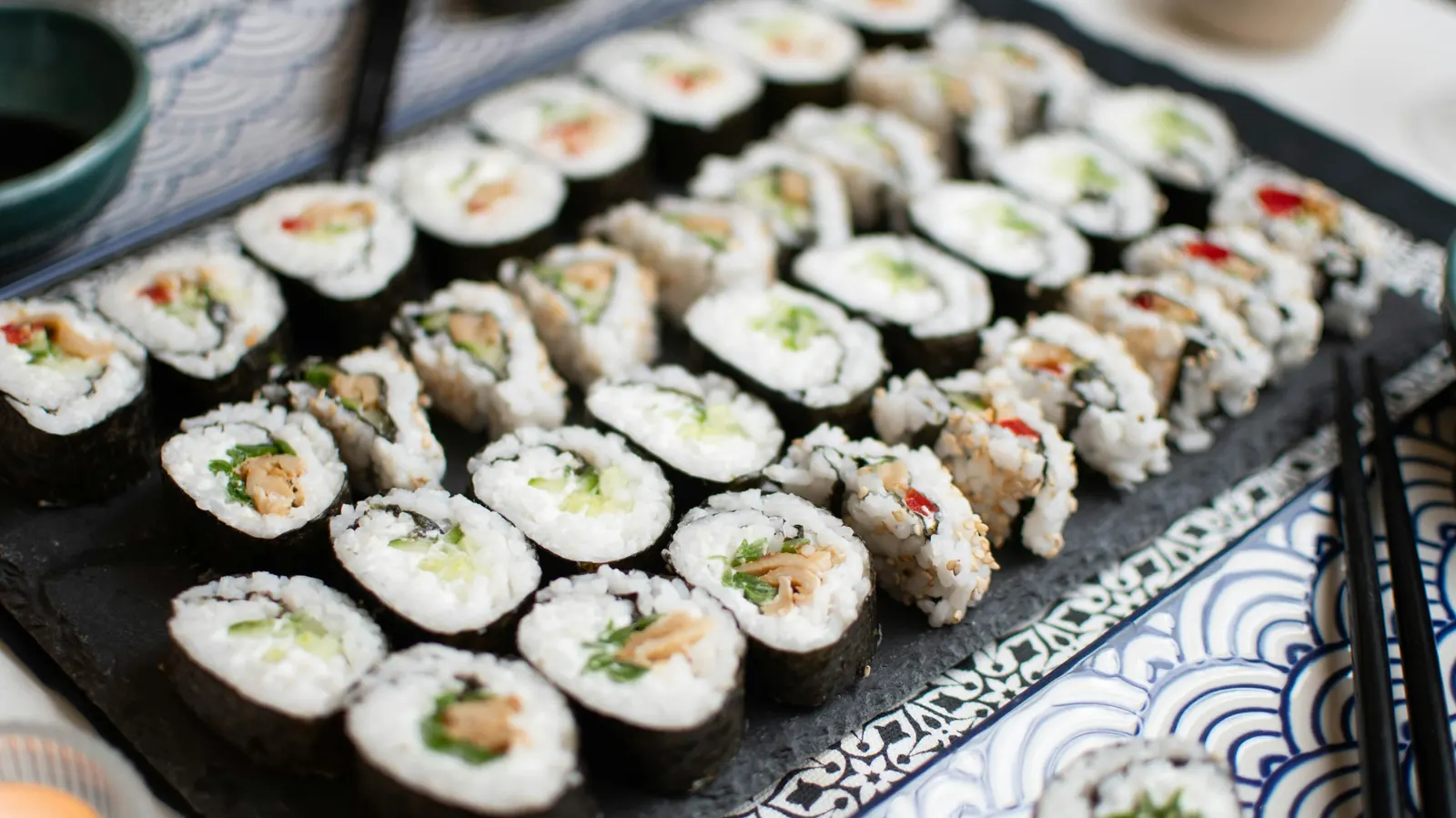
Most sushi lovers already own a bamboo mat. Many got one in a starter kit, used it twice and found that the mat was never the hard part. The rice was, and so was slicing fish cleanly. The best gifts for sushi lovers fix those two problems or make the meal feel more like a sushi bar: good rice and nori, a tub for seasoning rice, a long slicing knife, chopsticks worth keeping and a book that explains the craft.
This guide lists eight gifts from named makers and publishers, from a stocking-sized pack of nori to a Japanese-made sashimi knife. None of them is a sushi kit, because our best sushi making kit guide already covers kits and mats. Each entry says who it suits and who should skip it. We sort by small, mid and splurge instead of prices, which change often.
Julia’s earns a commission on purchases made through links on this page, at no cost to you. Recommendations are based on what a restaurant kitchen looks for, product specifications and listing, publisher and maker details.
Quick verdict: the best gifts for sushi lovers by person
For someone who already rolls sushi at home, give the Mercer Culinary Asian Collection Yanagi, a 10-inch single-edged slicing knife from a maker that supplies culinary schools. For the person who wants to learn properly, choose The Art and Science of Sushi from Tuttle. For a small gift that gets used up, pair Lundberg Sushi Rice with a tub of gimMe organic nori.
The others cover a traditional cypress rice tub, a step-by-step photo guide, lacquered chopsticks in a case and a stainless sashimi knife made in Japan.
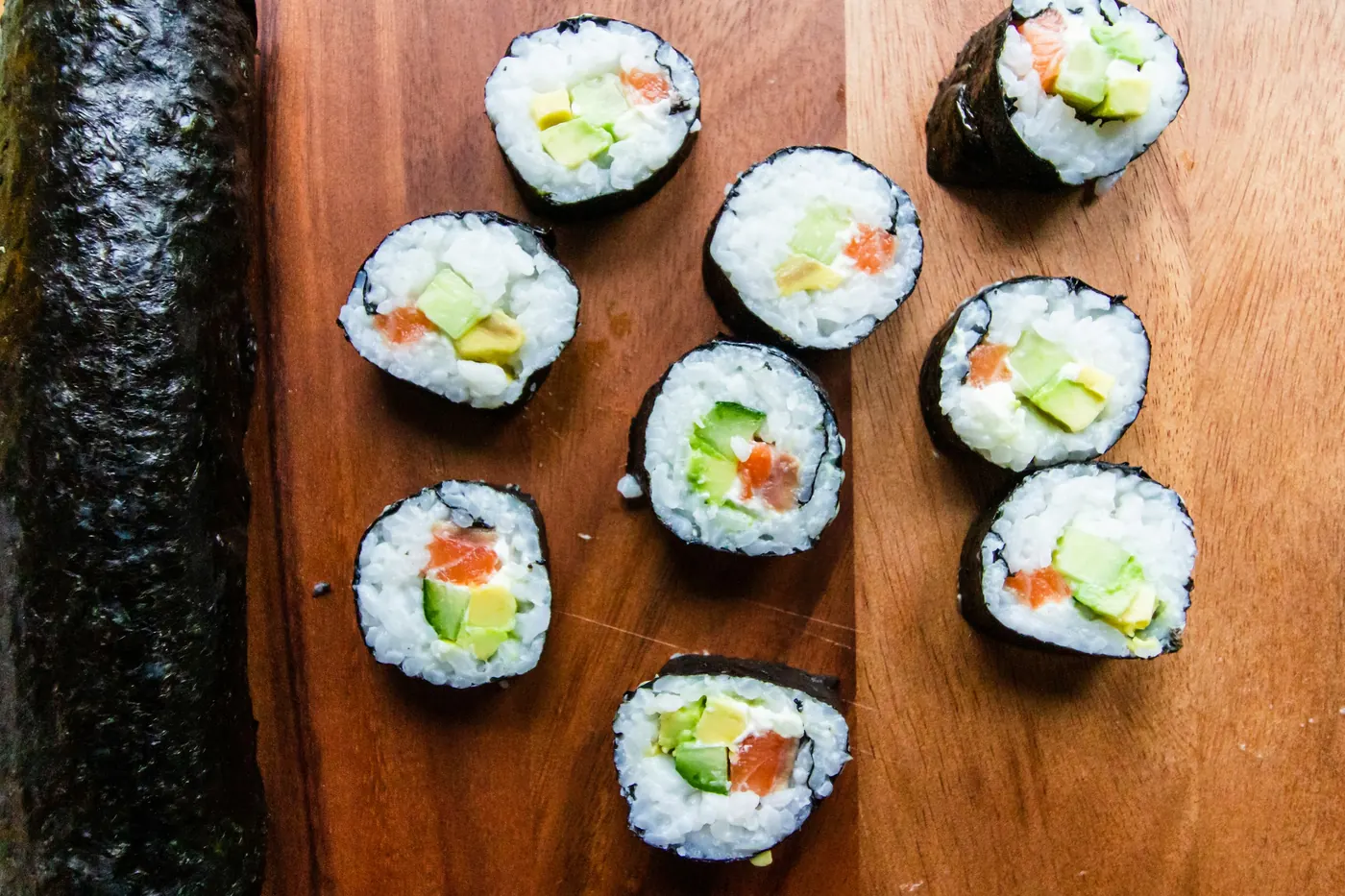
Five sushi gifts side by side
Five of the eight, one for each kind of sushi lover. All eight are described in full below.
| Gift | Who it suits | Gift size | What they get | Buy on Amazon |
|---|---|---|---|---|

Mercer Culinary Asian Collection Yanagi, 10-InchBest overall
|
A home sushi maker | Mid | 10-inch single-edge slicer | View on Amazon |

The Art and Science of SushiBest book
|
Someone who wants the why | Mid | Hardcover guide from Tuttle | View on Amazon |

TIKUSAN Sawara Cypress Hangiri, 11.8-InchBest for sushi rice
|
A regular roller who hosts | Splurge | 30 cm rice tub, copper bands | View on Amazon |

Lundberg Organic Sushi Rice, 32 ozBest rice
|
Anyone who rolls at home | Small | 2 lb organic short grain | View on Amazon |

Tanaka Hashiten Chopsticks with Case, Dark BlueBest small gift
|
A sushi-bar regular | Small | Lacquered pair, travel case | View on Amazon |
Our picks for the best gifts for sushi lovers
The list runs roughly from small gifts to splurges. Each entry ends with who should get it and who should not.
1. gimMe Organic Sushi Nori, 50 Sheets – A Stocking Stuffer That Gets Used

Nori goes stale fast once a pack is open, and many home sushi makers buy small packs at the grocery store and run out halfway through a batch. This tub of 50 full sheets from gimMe solves both problems. The listing says the sheets come in a resealable container, so the last sheet should be as crisp as the first if the lid is closed.
The listing describes the sheets as organic roasted seaweed, USDA Organic and Non-GMO certified, cultivated and harvested in South Korea, with no artificial flavors or preservatives. Seaweed is the only ingredient the listing names. It gives no separate allergen statement, so check the package if the person you are buying for has a food allergy.
Fifty sheets is a lot of rolls, and gimMe also sells the sheets as a snack, so they will not go to waste. It is a modest gift on its own. It makes a better one tucked in with the rice below or a book.
Why we like it
- Full sheets sized for rolls, 50 in a tub
- Resealable container, per the listing
- USDA Organic and Non-GMO, per the listing
- Sold by Amazon.com when we checked
Key specifications
| Model | 10855463005881 |
|---|---|
| Who it suits | Anyone who rolls sushi at home |
| Gift size | Small |
| What it is | Roasted sushi nori |
| Ingredients | Organic seaweed, per the listing |
| Size | 50 sheets, 4.76 oz |
| Allergen statement | Not stated |
| Origin | South Korea, per the listing |
Why we recommend it
Give this to anyone who makes sushi at home a few times a year, or add it to a bigger gift so the first roll can happen the same day.
Skip it if they buy nori from a Japanese grocer and have a favorite brand, since nori lovers can be particular.
Pros and cons
Pros
- Gets used up, so no clutter
- Keeps well in its tub
- Easy to pair with other gifts
Cons
- Plain as a gift on its own
- No allergen statement on the listing
2. Lundberg Organic Sushi Rice, 32 oz – Better Rice, Better Rolls
Ask a sushi chef what matters most and most will say the rice. Long-grain rice will not hold a roll together, and many home cooks start with whatever is in the pantry. Lundberg’s sushi rice is a sticky white short-grain rice grown organically in California by the family-owned Lundberg Family Farms, according to the listing.
The 2-pound bag is resealable and holds about 20 servings, by the maker’s count. The listing says it is certified organic, Non-GMO Project Verified and certified gluten-free, and the only ingredient it describes is the rice itself. It gives no further allergen statement. The rice also works for rice bowls, onigiri and mochi, so it will not sit unused between sushi nights.
Rice is not a showy present. It is one of the few gifts that makes every roll they make afterward a bit better, and it pairs naturally with nori, a rice tub or a book.
Why we like it
- Short grain grown for sushi, per the listing
- Certified organic and gluten-free, per the listing
- Resealable 2-pound bag
- Sold by Amazon.com when we checked
Key specifications
| Model | 01021856 |
|---|---|
| Who it suits | A home cook starting with sushi |
| Gift size | Small |
| What it is | White short-grain sushi rice |
| Ingredients | Organic white short-grain rice |
| Size | 32 oz, about 20 servings |
| Allergen statement | Certified gluten-free; no other statement |
| Origin | California, per the listing |
Why we recommend it
Give this to someone who has tried rolling sushi with regular rice and found that the rolls fell apart.
Skip it if they already buy a Japanese short-grain rice by the large bag, because a 2-pound bag will not impress them.
Pros and cons
Pros
- Fixes the most common sushi problem
- Single ingredient, clearly labeled
- Useful beyond sushi
Cons
- Not exciting to unwrap
- Small bag for a frequent roller
3. Tanaka Hashiten Chopsticks with Case, Dark Blue – A Pair They Carry
A sushi lover who eats out often has probably used a lot of splintery disposable chopsticks. Tanaka Hashiten, a Japanese chopstick maker, sells this pair of lacquered natural wood chopsticks in a slim plastic case. The listing says they are about 9 inches (22.5 cm) long and made in Japan, and the case is small enough to go in a bag.
That case is the point of this gift. It turns a nice pair of chopsticks into something a person can bring to lunch or a sushi bar. The dark blue design is simple, so it suits most tastes.
The finish is lacquer. The listing does not give care directions, so we would hand wash them rather than put them in a dishwasher. Our best chopsticks guide covers sets for the table at home if you want more than one pair.
Why we like it
- Made in Japan, per the listing
- Comes with a travel case
- Simple design suits most people
Key specifications
| Model | LWC-090009 |
|---|---|
| Who it suits | A regular at sushi bars |
| Gift size | Small |
| What it is | Chopsticks with case |
| Material | Lacquered natural wood, plastic case |
| Size | 22.5 cm (about 9 in) |
| Care | Not stated |
| Warranty | Not stated |
Why we recommend it
Give this to a friend who eats sushi for lunch at work, or a coworker you know only a little, since it is small and easy to like.
Skip it if they want a set for guests, because this is a single pair.
Pros and cons
Pros
- Portable
- From a Japanese chopstick maker
- Easy to wrap
Cons
- One pair only
- Sold by a third-party seller when we checked
- Care directions not stated
4. The Complete Guide to Sushi and Sashimi, Jeffrey Elliot and Robby Cook – Step by Step in Photos
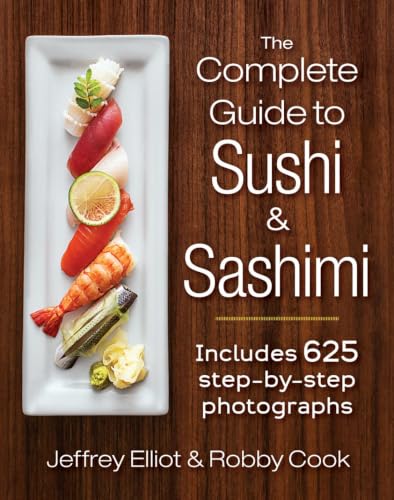
Some people learn best by watching, and this book is the next best thing. It is by Jeffrey Elliot and Robby Cook and published by Robert Rose, and its title promises 625 step-by-step photographs. That puts it closer to a picture-led course than a coffee-table book.
The listing gives the binding as spiral-bound, which matters in the kitchen. A spiral book lies flat on the counter, open at the right page, while both hands are busy with rice and a mat.
We have not read it, so this pick rests on the authors, the publisher and the format. It suits someone who has a kit and wants to get better at rolling and slicing. For a broader shelf of Japanese home cooking, our best Japanese cookbook guide has more.
Why we like it
- Photo-led format, per the title
- Spiral binding lies flat
- Named authors at an established publisher
- Sold by Amazon.com when we checked
Key specifications
| Model | Not applicable |
|---|---|
| Who it suits | A visual learner with a kit |
| Gift size | Mid |
| What it is | Book |
| Publisher | Robert Rose |
| Binding | Spiral-bound |
| Care | Not applicable |
| Warranty | Not applicable |
Why we recommend it
Give this to someone who owns a sushi kit and keeps asking why their rolls come out loose or lopsided.
Skip it if they want history and culture more than technique. The next book is the better fit for that reader.
Pros and cons
Pros
- Practical layout for the counter
- Pictures for each stage
- Nothing to store but a book
Cons
- Rests on author and publisher details
- Spiral binding looks less giftable
5. The Art and Science of Sushi, Jun Takahashi, Hidemi Sato and Mitose Tsuchida – Why Sushi Works
Where the previous pick shows the steps, this one covers the reasons behind them. Its subtitle calls it a comprehensive guide to ingredients, techniques and equipment. It is written by Jun Takahashi, Hidemi Sato and Mitose Tsuchida and published in hardcover by Tuttle, a long-standing publisher of books on Japan.
A sushi lover who reads about food will get the most from it. Ingredients and equipment are where home sushi goes wrong, and a book that explains them helps with every later purchase, from rice to knives.
We have not read this book either, so the pick rests on the authors, the publisher and the subject in its title. As a hardcover from a known press it looks like a gift, which matters to some buyers.
Why we like it
- Covers ingredients, technique and equipment, per the subtitle
- Hardcover from Tuttle
- Sold by Amazon.com when we checked
Key specifications
| Model | Not applicable |
|---|---|
| Who it suits | A curious reader and cook |
| Gift size | Mid |
| What it is | Book |
| Publisher | Tuttle Publishing |
| Binding | Hardcover |
| Care | Not applicable |
| Warranty | Not applicable |
Why we recommend it
Give this to someone who likes to understand how things work, or to a sushi lover who eats out more than they cook and wants to know what they are tasting.
Skip it if they just want quick weeknight rolls, since the subtitle points to depth.
Pros and cons
Pros
- Looks like a gift
- Useful to cooks and diners alike
- Established publisher
Cons
- Rests on author and publisher details
- More than a casual roller needs
6. Mercer Culinary Asian Collection Yanagi Sashimi Knife, 10-Inch – The Slicer Most Cooks Lack
A chef’s knife can cut a roll, but it tends to squash it. A yanagi, the long single-edged knife sushi chefs use, slices fish and rolls in one pull. Mercer Culinary’s version has a 10-inch blade of high-carbon German steel, taper ground with a fine stone finish to a single edge, and a traditional wood handle, according to the listing.
Mercer sells knives to culinary schools and restaurant kitchens, and it stands behind this one with a lifetime limited warranty, per the listing. That makes it a safe choice if you are not sure how far the person will take their sushi hobby. It is serious enough to be useful and plain enough that nobody will be afraid to use it.
A single-edged knife needs a little learning, and it must be washed by hand and dried straight away. The listing says not to put it in a dishwasher or leave it soaking. For someone who has never sharpened a knife, add a word about care with the gift.
Why we like it
- Single-edged yanagi shape for slicing fish
- Lifetime limited warranty, per the listing
- Maker known in professional kitchens
- Sold by Amazon.com when we checked
Key specifications
| Model | M24010 |
|---|---|
| Who it suits | A home sushi maker |
| Gift size | Mid |
| What it is | Yanagi sashimi knife |
| Material | High-carbon German steel, wood handle |
| Size | 10-inch blade |
| Care | Hand wash and dry |
| Warranty | Lifetime limited |
Why we recommend it
Give this to someone who already makes rolls or sashimi at home and is still cutting with a chef’s knife.
Skip it if they are left-handed, because a single-edged blade is made for one hand, or if they only eat sushi out.
Pros and cons
Pros
- The right shape for the job
- Strong warranty
- Good place to start with a yanagi
Cons
- Right-handed edge
- Hand wash only
- Single edge takes practice
7. TIKUSAN Sawara Cypress Hangiri, 11.8-Inch – The Traditional Rice Tub
A hangiri is the shallow wooden tub sushi cooks use to mix hot rice with vinegar. The wood soaks up extra moisture, so the rice cools glossy rather than soggy. This one is handmade by Japanese craftsmen from Sawara cypress with copper bands, according to the listing, and measures 11.8 inches (30 cm) across and 3.5 inches deep.
By the maker’s guide, a 30 cm tub suits rice for three to four people, which is the size most home hosts need. The listing also suggests serving chirashi sushi in it, so it can come to the table. It notes that natural resin may sometimes show on the wood and that the copper may darken with time. Both are normal, but worth knowing before you give it.
A wooden tub needs care. It must be hand washed and dried, and the listing says to wet it before use so rice does not stick. TIKUSAN is a smaller brand, so this pick rests on the listing’s maker details, and the seller when we checked was the TIKUSAN store.
Why we like it
- Sawara cypress with copper bands, per the listing
- Made in Japan, per the listing
- Size suits three to four people
- Doubles as a serving tub for chirashi
Key specifications
| Model | 60003-31 |
|---|---|
| Who it suits | A regular roller who hosts |
| Gift size | Splurge |
| What it is | Sushi rice mixing tub |
| Material | Sawara cypress, copper bands |
| Size | 11.8 in (30 cm) across, 3.5 in deep |
| Care | Hand wash only |
| Warranty | Not stated |
Why we recommend it
Give this to someone who makes sushi for friends and family and has been cooling rice in a metal bowl.
Skip it if they make sushi once a year or have little storage, because a wooden tub is bulky and needs drying.
Pros and cons
Pros
- Traditional tool, handmade
- Helps rice hold its texture, per the listing
- Handsome on the table
Cons
- Needs care and drying
- Bulky to store
- Smaller brand; rests on listing details
8. Kai Sashimi Yanagi Knife, 270 mm – All Stainless and Made in Japan

Kai is a large knife maker based in Seki, Japan, and this is one of its own sashimi knives rather than an export line. The listing gives a 10.6-inch (270 mm) high-carbon stainless steel blade with an 18-8 stainless steel handle, a total weight of about 190 grams and Japan as the country of manufacture.
The longer blade is the reason to choose it over the Mercer. More length means a slice of fish can be cut in one long pull, which is how sushi chefs work. The all-steel handle has no wood to dry out or crack, which suits someone who worries about care.
The listing is short. It does not state the bevel, a warranty or care directions, and it was sold by a third-party seller when we checked, so a buyer gets less support than with the Mercer. We would treat it as a gift for someone who already knows what a yanagi is. Our best Japanese knife guide covers everyday Japanese knives if you want a chef’s knife instead.
Why we like it
- Long 270 mm blade for one-pull slicing
- Made in Japan, per the listing
- All-stainless build, no wooden handle to dry
Key specifications
| Model | 093AK5179 |
|---|---|
| Who it suits | A practiced sushi or sashimi maker |
| Gift size | Splurge |
| What it is | Yanagi sashimi knife |
| Material | High-carbon stainless blade, 18-8 stainless handle |
| Size | 270 mm (10.6 in) blade |
| Care | Not stated |
| Warranty | Not stated |
Why we recommend it
Give this to someone who already slices fish at home and wants a longer, Japanese-made blade.
Skip it if they are new to sushi, or if you want a clear warranty and Amazon as the seller. The Mercer is the safer gift in that case.
Pros and cons
Pros
- Long blade
- From an established Japanese maker
- Easy-care steel handle
Cons
- Thin listing details
- Sold by a third-party seller when we checked
- Warranty not stated
How to choose sushi gift ideas they will use
Find out whether they make it or eat it
Some sushi lovers have never rolled a piece and never plan to. Others make it every week. A knife or a rice tub is wasted on the first group, while chopsticks or a book suits both. If you are not sure, ask what they order at a sushi bar and whether they have ever made it at home.
Do not buy a second kit
Kits are the most common sushi gift, and most people only need one. Look in their kitchen for a bamboo mat. If there is one, the next step up is better rice, better nori or a proper knife, not another set of mats and paddles.
Think about which hand they use
Traditional sushi knives are sharpened on one side, and most are made for right-handed cooks. Both knives here are standard right-handed versions as far as the listings show. Left-handed cooks need a left-handed model, so check before you buy.
Check space and care
A wooden hangiri is bulky and must be dried after each use. A single-edged knife needs hand washing and a safe place to sit. Someone with a small kitchen, or a dishwasher habit, may be happier with food, chopsticks or a book.
Look at the food labels
We kept food gifts to ones whose listings name their ingredients, and both are single-ingredient foods: rice and seaweed. Neither listing gives a full allergen statement beyond the rice’s gluten-free certification, so check the package if the person has an allergy.
How we picked these eight sushi gifts
We kept to named makers and publishers, in-stock listings with a new lead offer, and things a sushi lover would use more than once. We left out sushi kits and bamboo mats, which our sushi making kit guide covers, and every product here is new to this site. We have not used these specific products, so the page rests on listing, maker and publisher details and on what a working kitchen looks for in a knife or a rice tool. We did not rely on outside reviews for this list.
We left out glazed soy sauce dishes and sushi plates, because we could not find a maker lead-free statement for the ones we looked at. We also left out wasabi powders, sushi vinegars and soy sauces whose listings do not list their ingredients. We searched the CPSC recall database by brand for Mercer, Kai, TIKUSAN, Lundberg, gimMe and Tanaka, and found no recall for any of these products.
Sushi gift questions, answered
What do you get a sushi lover who has everything?
Something that gets used up, like good rice and nori, or a tool most home cooks lack, like a yanagi knife or a hangiri. A book is a safe extra if you are unsure.
Is a sushi knife a good gift for a beginner?
Only if they already roll sushi at home. A beginner gets more from better rice and a book. Once they are cutting rolls every week, the Mercer is a sensible first slicing knife.
Why does sushi rice matter so much?
Short-grain rice holds together when it is seasoned and pressed, which is what keeps a roll from falling apart. Long-grain rice stays loose. That is why rice makes a better gift than another gadget.
Do I need a hangiri to make sushi rice?
No. A wide bowl works. A wooden tub helps the rice cool evenly and soak up extra moisture, per the TIKUSAN listing, so it suits someone who makes sushi often and wants the traditional tool.
Are these gifts good for someone who only eats sushi out?
Yes, two of them: the chopsticks in their case and The Art and Science of Sushi. Both suit a diner as well as a cook.
Our final gift pick for a sushi lover
If you can buy only one, buy the Mercer yanagi for a home sushi maker, or the Tuttle book for someone who mostly eats it. Add the rice and nori if you want the gift to feel finished. For the rest of the setup, see our best Japanese rice cooker and best cutting board for Japanese knives guides.
And when nobody feels like rolling anything tonight, see the menu or call to order.