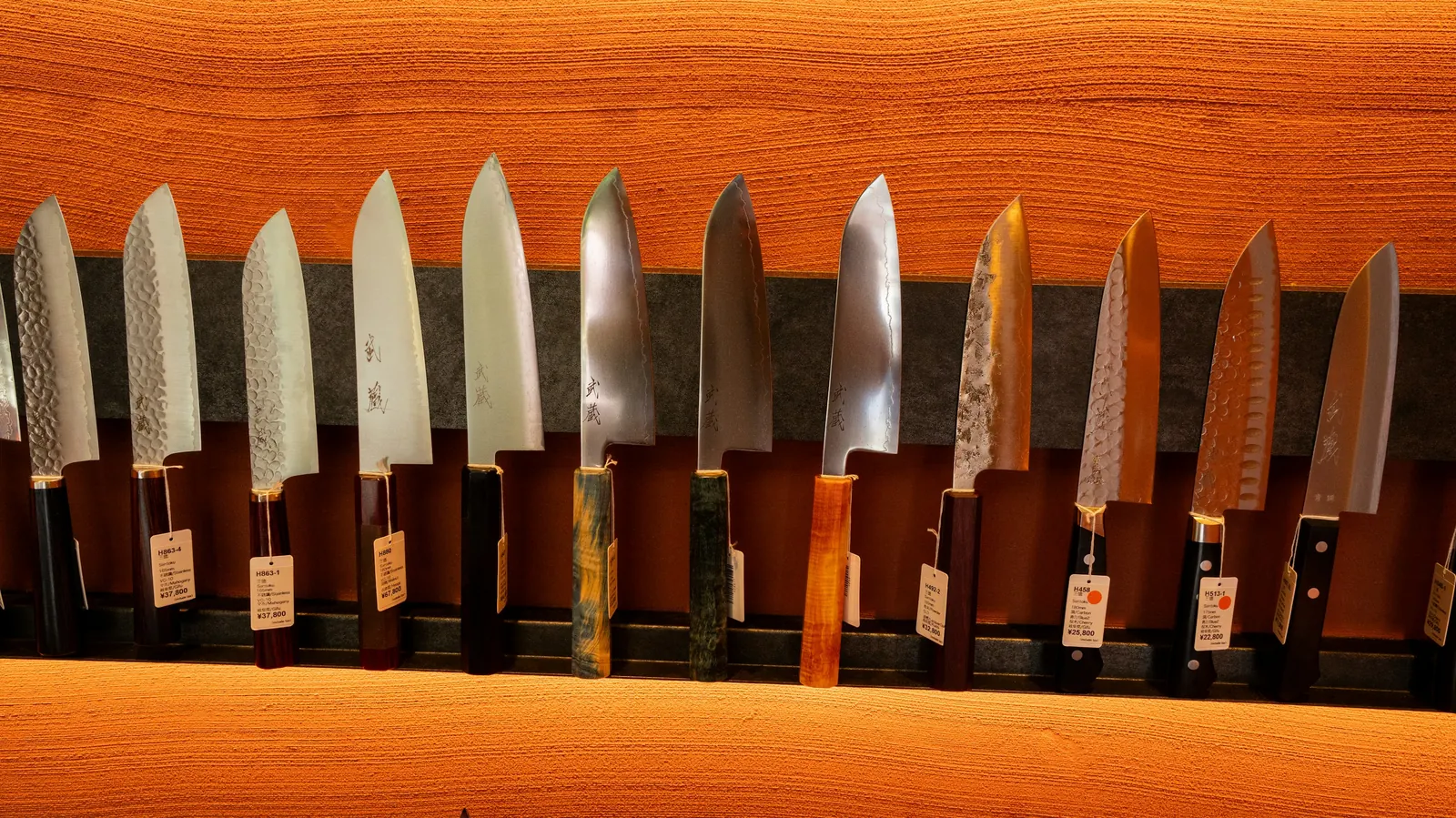
Japanese knives earned their reputation with thin blades and hard steel that hold a fine edge for a long time. In a Mexican kitchen that means paper-thin slices of white onion for tacos, an even dice of tomato and serrano for pico de gallo, and clean strips of grilled carne asada that do not tear. A good Japanese knife makes that kind of precise work feel easy.
“Japanese knife” covers several shapes, though, and the right one depends on what you cut. This guide explains the four that matter most for a home cook (gyuto, santoku, nakiri and petty), names nine worth buying from Japanese makers who publish their specifications, and sets out the care these harder, thinner blades need.
Julia’s earns a commission on purchases made through links on this page, at no cost to you. Recommendations are based on what a restaurant kitchen looks for, product specifications and verified buyer reports.
Quick verdict: which Japanese knife to buy
For most home cooks, the best Japanese knife is the Mac Professional 8-inch gyuto (MTH-80): a thin, sharp all-purpose blade on a familiar Western handle, recommended by America’s Test Kitchen in its gyuto review. If you prefer a shorter, flatter knife for vegetables, choose the Misono UX10 7-inch santoku, the winner of America’s Test Kitchen’s santoku review. For piles of vegetables, the Shun Classic 6.5-inch nakiri chops straight down with no rocking.
The rest of this page explains why, and which of the other knives suits a different kind of cook.
Five Japanese knives side by side
Our five standout picks, one for each shape and kind of cook, with the specifications each maker or listing states. All nine knives are reviewed in full below.
| Knife | Best for | Type & blade | Hardness (stated) | Buy on Amazon |
|---|---|---|---|---|

Mac Professional 8-inch Gyuto with DimplesBest overall
|
One knife for everything | Gyuto, 7.88-inch | Not stated by Mac | View on Amazon |

Misono UX10 7-inch SantokuBest santoku
|
Vegetables, smaller hands | Santoku, 18 cm | 59–60 HRC | View on Amazon |

Shun Classic Blonde 6.5-inch NakiriBest nakiri
|
Chopping piles of vegetables | Nakiri, 6.5-inch | Not stated on listing | View on Amazon |

Tojiro DP 150 mm Petty KnifeBest petty
|
Limes, chiles, garlic, small jobs | Petty, 15 cm | Not stated | View on Amazon |

Miyabi Kaizen 8-inch Chef’s KnifeFinest stated edge
|
Very fine slicing | Gyuto-style chef’s, 8-inch | 60 HRC | View on Amazon |
Product images from Amazon. Hardness is listed only where the maker or its listing states it; check the listing before you buy.
Our picks for the best Japanese knife
These nine knives cover the four Japanese shapes a home cook is most likely to use: the gyuto (an all-purpose chef’s knife), the santoku (a shorter, flatter all-rounder), the nakiri (a square vegetable knife) and the petty (a small utility knife). All are double-beveled, so they sharpen like the knives you already know. Each review covers who the knife suits, the specifications its maker states, and one honest reason to skip it.
1. Mac Professional 8-inch Gyuto with Dimples – Sharp, Light, Familiar Grip
The Mac MTH-80 is the easiest way into Japanese knives for a cook raised on German ones. The blade is a thin gyuto, 2.5 mm thick and 7.88 inches long according to Mac, but the Pakka wood handle is Western-shaped and the knife has a bolster, so it sits in the hand the way a chef’s knife should. The whole knife weighs 6.5 ounces.
The dimples along the blade are there, Mac says, to stop sticky foods such as potatoes and apples clinging to the steel. That helps with thin slices of potato for papas con chorizo or jícama for a salad. The listing describes the steel as molybdenum vanadium stainless and the knife as made in Seki, Japan; Mac’s product page does not give a hardness figure.
America’s Test Kitchen recommends it in its gyuto review, calling it “razor-sharp, nimble, and capable”, with the dimples a minor nuisance to clean. Mac’s listing says to hand wash it and not to put it in the dishwasher.
Why we like it
- Thin 2.5 mm gyuto blade on a Western-style handle
- Light at 6.5 ounces, per Mac
- Dimples to help release starchy foods
- Recommended in America’s Test Kitchen’s gyuto review
Key specifications
| Model | MTH-80 |
|---|---|
| Type | Gyuto (chef’s knife) |
| Blade length | 7.88 inches |
| Steel | Molybdenum vanadium stainless (listing) |
| Hardness (stated) | Not stated by Mac |
| Handle | Pakka wood, Western shape |
| Made in | Japan (Seki) |
| Care | Hand wash; not dishwasher safe |
Why we recommend it
It suits anyone who wants one Japanese knife to do everything, from dicing onions and chiles to slicing grilled steak, without relearning how to hold a knife.
Skip it if you want a traditional Japanese look and feel: the Western handle and bolster are practical rather than classic.
Pros and cons
Pros
- Thin, precise blade
- Comfortable Western handle
- Food releases well
Cons
- Hand wash only
- Dimples take extra care to clean
- No hardness figure from Mac
2. Misono UX10 7-inch Santoku – Agile, Hard and Precise
A santoku is shorter than a gyuto, with a flatter edge and a rounded-down tip, which makes it easy to control for chopping and slicing vegetables. Misono’s UX10 version has an 18 cm (7-inch) double-edged blade of Swedish stain-resistant steel, a stated hardness of 59 to 60 HRC and a composite wood handle, according to the listing.
America’s Test Kitchen names it the winner of its santoku review: testers said it “felt agile, sharp, and really good in hand” and praised its “great precision and control”. The flat edge suits an up-and-down chopping motion, which is how many cooks break down a pile of onions, tomatoes and cilantro for salsa fresca.
This listing is for a right-handed knife. It does not give care instructions, but like any hard Japanese blade it belongs out of the dishwasher and on a wood or plastic board.
Why we like it
- Winner of America’s Test Kitchen’s santoku review
- Stated hardness of 59 to 60 HRC
- Swedish stain-resistant steel
- Compact 7-inch blade, easy to control
Key specifications
| Model | 781 |
|---|---|
| Type | Santoku |
| Blade length | 18 cm (7 inches) |
| Steel | Swedish stain-resistant steel |
| Hardness (stated) | 59–60 HRC |
| Handle | Composite wood |
| Made in | Japan (Misono UX10 listings) |
| Care | Not stated on listing |
Why we recommend it
It suits cooks who mostly cut vegetables, have smaller hands or a small board, and want the highest-rated santoku we could find in stock.
Skip it if you are left-handed or like to rock your knife: the listing is for a right-handed knife, and the flat edge does not rock well.
Pros and cons
Pros
- Top-rated by America’s Test Kitchen
- Hard steel with a stated hardness
- Agile, easy-to-control size
Cons
- Right-handed as listed
- Flat edge is poor for rocking cuts
- No care instructions on the listing
3. Shun Classic Blonde 6.5-inch Nakiri – Straight Edge for Vegetables
A nakiri is a rectangular vegetable knife with a dead-straight edge, so the whole length meets the board at once. You chop straight down rather than rocking, which gives clean, fully separated cuts through green onions, cabbage for curtido or a row of radishes. The tall, square blade also works as a scoop to carry chopped vegetables to the pan.
Shun’s version has a 6.5-inch blade with a VG-MAX steel core, 68 layers of Damascus stainless cladding and a 16-degree edge, according to the listing, plus a D-shaped Pakkawood handle that works for left- and right-handed cooks. Shun says each knife is handcrafted in Japan. This is the Blonde version (model DM0728W): the same Classic nakiri blade with a light-colored Pakkawood handle.
Shun’s care guide is strict: never use the dishwasher, hand wash with warm water and mild soap straight after cutting, dry with a towel rather than air-drying, and cut on wood, never glass, marble, granite or ceramic. Shun backs its knives with a limited lifetime warranty and free sharpening for knives bought from authorized sellers.
Why we like it
- Straight edge for clean, fully separated cuts
- 16-degree edge on a VG-MAX core, per Shun
- D-shaped handle for either hand
- Free sharpening service from Shun
Key specifications
| Model | DM0728W (Blonde handle) |
|---|---|
| Type | Nakiri (vegetable knife) |
| Blade length | 6.5 inches |
| Steel | VG-MAX core, Damascus stainless cladding |
| Hardness (stated) | Not stated on listing |
| Handle | D-shaped Pakkawood |
| Made in | Japan |
| Care | Hand wash and towel dry; never dishwasher |
Why we recommend it
It suits cooks who prep a lot of vegetables and want a dedicated knife that chops quickly and cleanly, alongside a chef’s knife for meat.
Skip it if you want one knife for everything: a nakiri has no point, so it cannot do tip work or slice meat well.
Pros and cons
Pros
- Fast, clean chopping
- Comfortable for either hand
- Free sharpening
Cons
- Vegetables only, in practice
- Hand wash only
- Warranty only for authorized sellers
4. Tojiro DP 150 mm Petty Knife – Hard Core for Small Jobs
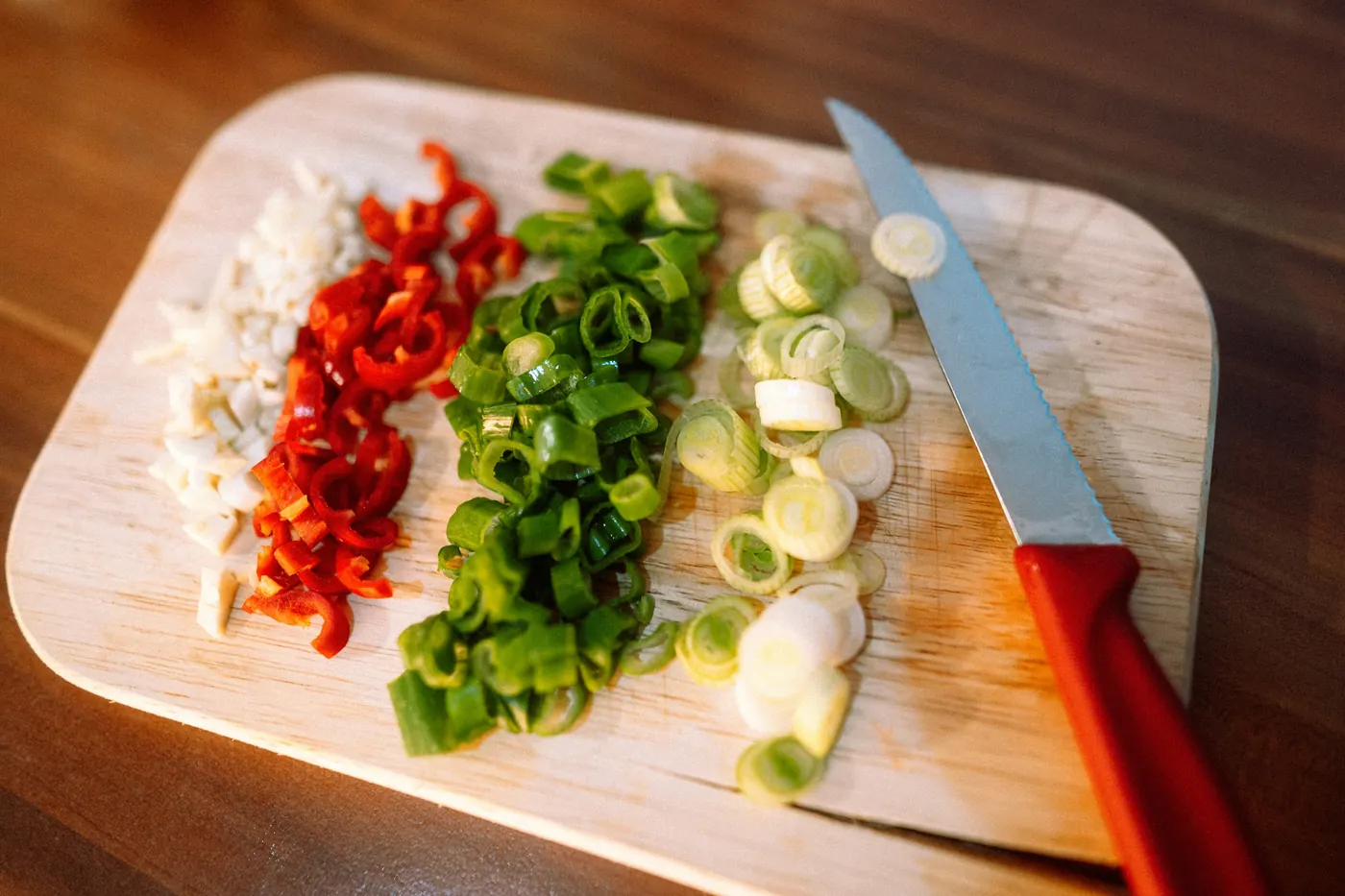
A petty is the Japanese utility knife: longer than a paring knife, shorter than a chef’s knife, and handy for jobs where a big blade is clumsy. Think halving limes, seeding jalapeños, mincing a few cloves of garlic or trimming the membrane off a chile before you stuff it.
Tojiro’s DP petty, model FU-802, has a 15 cm (5.9-inch) blade and a total length of 26 cm, according to the listing. The construction is a cobalt alloy steel core between 13-chrome stainless steel sides, with a laminated reinforced wood handle and an 18-8 stainless bolster. It is double-edged for left- or right-handed use and made in Japan.
The listing is a Japanese-market one, so the description is brief and does not give a hardness, warranty or care instructions. Treat it as any hard-cored Japanese knife: hand wash and dry it, and keep it off bones and frozen food.
Why we like it
- Cobalt alloy steel core with stainless sides
- 15 cm blade, a useful size for small jobs
- Double-edged for either hand
- Made in Japan
Key specifications
| Model | FU-802 |
|---|---|
| Type | Petty (utility knife) |
| Blade length | 15 cm (5.9 inches) |
| Steel | Cobalt alloy core, 13-chrome stainless sides |
| Hardness (stated) | Not stated |
| Handle | Laminated reinforced wood, stainless bolster |
| Made in | Japan |
| Care | Not stated on listing |
Why we recommend it
It suits a cook who already has a chef’s knife and wants a smaller Japanese blade for fruit, chiles, garlic and garnish work.
Skip it if you want full English documentation and a written warranty: this listing has neither.
Pros and cons
Pros
- Hard core steel in a small knife
- Ambidextrous edge
- Handy in-between size
Cons
- Brief listing, no hardness stated
- No warranty terms on the listing
5. Miyabi Kaizen 8-inch Chef’s Knife – Very Fine Stated Edge
Miyabi is Zwilling’s Japanese brand, and the Kaizen is made in Seki, Japan. The listing describes a thin, Japanese-profile 8-inch blade with a VG10 steel core, ice-hardened (Miyabi calls it Cryodur) to 60 on the Rockwell scale, and honed by hand to an edge of 9.5 to 12 degrees, the narrowest edge angle stated for any knife on this page.
The handle is Micarta with a linen pattern, a mosaic pin, red spacers and a steel end cap, in a D shape. The blade carries a 65-layer patterned cladding. A very fine edge like this is at its best on slicing: shaving white onion paper-thin, cutting ripe tomatoes without crushing them, or slicing grilled skirt steak into thin strips for tacos.
The listing carries a lifetime warranty against manufacturer’s defects. It does not give care instructions; a hard, fine edge like this one should be hand washed, dried at once and kept away from bones, frozen food and glass boards.
Why we like it
- Stated 9.5- to 12-degree edge, honed by hand
- VG10 core, ice-hardened to 60 HRC
- Micarta handle in a D shape
- Made in Seki, Japan, with a lifetime warranty
Key specifications
| Model | 34183-203 |
|---|---|
| Type | Gyuto-style chef’s knife |
| Blade length | 8 inches |
| Steel | VG10 core, Cryodur ice-hardened |
| Hardness (stated) | 60 HRC |
| Handle | Micarta, D-shaped |
| Made in | Seki, Japan |
| Care | Not stated on listing |
Why we recommend it
It suits a confident cook who wants the keenest edge here for precise slicing and will look after it.
Skip it if your knife sometimes meets bones or hard squash: a very narrow edge on hard steel is the most likely to chip.
Pros and cons
Pros
- Narrowest stated edge on this page
- Stated hardness of 60 HRC
- Lifetime warranty
Cons
- Fine edge is easier to chip
- Decorative finish adds cost
- No care instructions on the listing
6. Misono UX10 9.4-inch Gyuto – Longer Blade for Big Prep

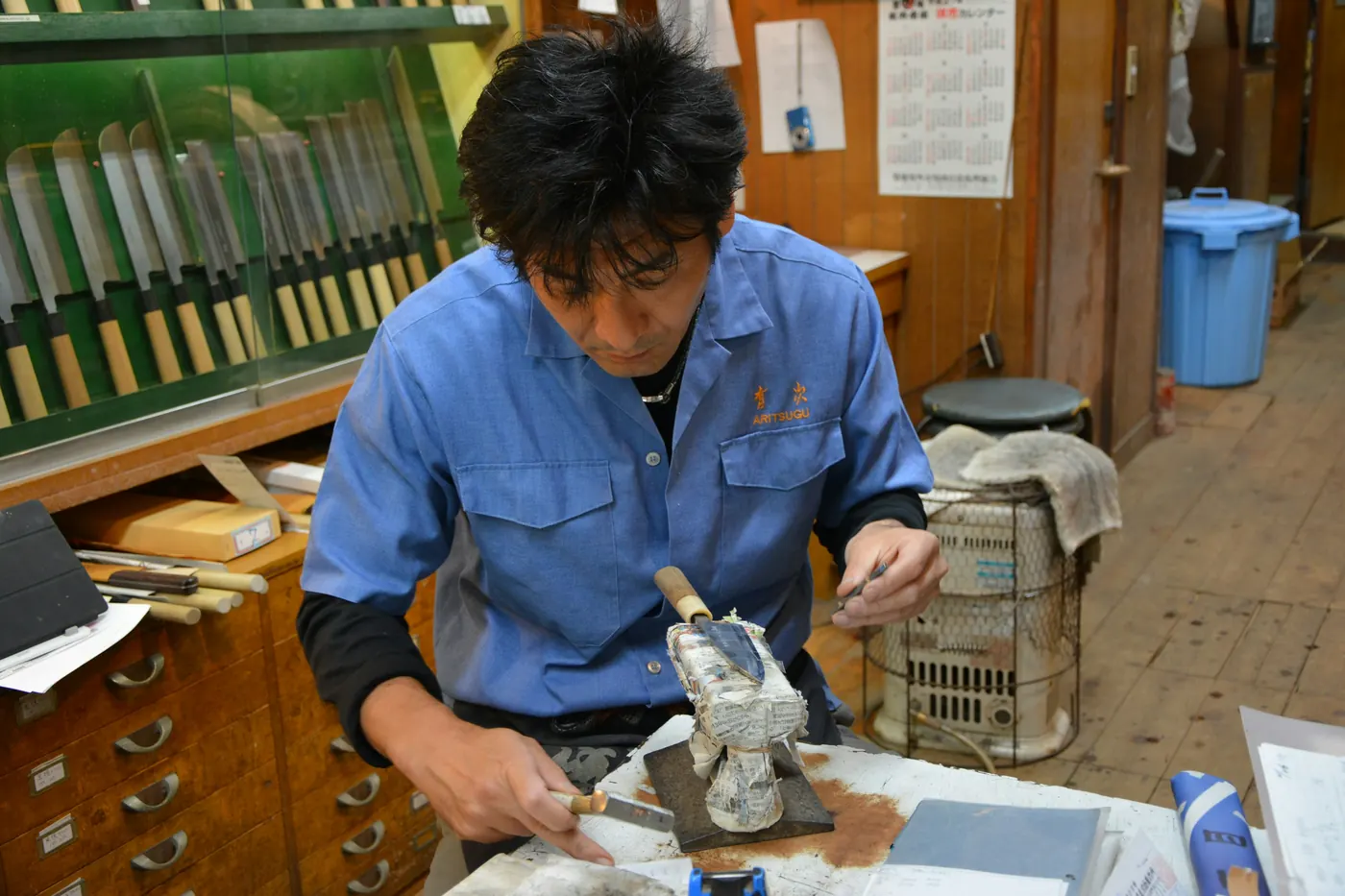
America’s Test Kitchen recommends the Misono UX10 gyuto in its 8.2-inch size, saying it “impressed everyone who tried it”, with a rough, protruding tang its one quibble. That shorter size was down to its last few units on Amazon when we checked, so we list the in-stock 24 cm (9.4-inch) version instead, which is the same line in a longer blade.
The listing gives a total length of 38 cm, a 2.3 mm spine and a weight of 245 grams, about 8.5 ounces. The steel is described as high-purity stainless and the handle as black reinforced wood. The extra length is useful on a big board: you can slice a whole flank steak in one stroke or work through a tray of onions faster. It is listed as right-handed and made in Japan.
The listing does not give a hardness figure for this size, so we have left it as not stated, and it gives no care instructions.
Why we like it
- Same UX10 line America’s Test Kitchen recommends
- 24 cm blade for long slicing strokes
- Thin 2.3 mm spine
- Made in Japan
Key specifications
| Model | 713 |
|---|---|
| Type | Gyuto (chef’s knife) |
| Blade length | 24 cm (9.4 inches) |
| Steel | High-purity stainless |
| Hardness (stated) | Not stated on this listing |
| Handle | Black reinforced wood |
| Made in | Japan |
| Care | Not stated on listing |
Why we recommend it
It suits cooks with a large cutting board who prep in quantity and want a longer gyuto for slicing meat and big batches of vegetables.
Skip it if you have a small board or kitchen: a 9.4-inch blade is a lot of knife for a home counter.
Pros and cons
Pros
- Long, thin blade for big jobs
- Well regarded line
- Made in Japan
Cons
- Long for small kitchens
- Right-handed as listed
- Tang finish criticized by America’s Test Kitchen
7. Global 7-inch Hollow Ground Santoku – All-Steel and Light

Global’s knives are easy to recognize: a stainless steel blade on a stainless steel handle, with no wood or rivets. The G-80 is a 7-inch santoku with a hollow-ground blade, meaning scallops along the side to help food fall away. Global makes its blades from what it calls CROMOVA 18, a high-carbon stainless steel, and says it factory-sharpens them at an angle between 10 and 15 degrees.
The all-steel design has no seams for food to collect in. Global’s own care advice is clear: never put its knives in the dishwasher, wash by hand in warm, soapy water and dry thoroughly, and do not cut on marble, stone, tile or glass. For honing it recommends ceramic or diamond rods rather than ordinary steels.
America’s Test Kitchen recommends Global’s G-48 santoku only with reservations, quoting one tester: “It can cut, but it’s not comfortable”. The steel handle suits some hands and not others, so this is a knife to hold before you commit if you can.
Why we like it
- One-piece steel look with no seams
- Hollow-ground scallops to help release food
- Factory edge of 10 to 15 degrees, per Global
- CROMOVA 18 high-carbon stainless steel
Key specifications
| Model | G-80 |
|---|---|
| Type | Santoku, hollow ground |
| Blade length | 7 inches |
| Steel | CROMOVA 18 stainless |
| Hardness (stated) | Not stated |
| Handle | Stainless steel |
| Made in | Not stated on listing |
| Care | Hand wash; no dishwasher; no glass or stone boards |
Why we recommend it
It suits cooks who like a light, modern knife that is easy to keep clean and who are happy with a metal handle.
Skip it if comfort is your priority: America’s Test Kitchen testers found a Global santoku uncomfortable, and steel handles can feel slick when wet.
Pros and cons
Pros
- Seamless all-steel design
- Clear care guidance from Global
- Scallops reduce sticking
Cons
- Steel handle is not for everyone
- No stated hardness
- Needs ceramic or diamond rod, per Global
8. Kai Seki Magoroku 10000ST 6.5-inch Santoku – Dishwasher-Safe Design

Kai is the company behind Shun; Kai USA runs Shun’s warranty service. This Seki Magoroku 10000ST santoku is built for easy care: the listing describes a seamless, all-stainless design, joined by precision brazing, that can be boiled and put in the dishwasher. That is rare for a Japanese knife and useful in a busy home kitchen where not everyone hand washes.
The blade is 165 mm (6.5 inches) of stainless steel and the handle is 18-8 stainless steel, according to the listing, which gives a weight of 290 grams. Kai describes it as an all-purpose knife for vegetables and fish, and it is made in Japan.
The listing does not give a hardness or edge angle. Even with a dishwasher-safe rating, hand washing will keep any edge sharp longer, because a dishwasher knocks blades against racks and other utensils.
Why we like it
- Dishwasher safe and boil-safe, per the listing
- Seamless all-stainless construction
- Made in Japan by Kai
- Compact 165 mm santoku blade
Key specifications
| Model | AB-5290 |
|---|---|
| Type | Santoku |
| Blade length | 165 mm (6.5 inches) |
| Steel | Stainless steel |
| Hardness (stated) | Not stated |
| Handle | 18-8 stainless steel |
| Made in | Japan |
| Care | Dishwasher safe and boil-safe (listing) |
Why we recommend it
It suits a shared family kitchen, or anyone who wants a Japanese-made santoku that survives the dishwasher.
Skip it if you want hard, high-end steel: the listing names only “stainless steel” and gives no hardness.
Pros and cons
Pros
- Easy care, including the dishwasher
- No seams for food to lodge in
- Made in Japan
Cons
- Steel grade and hardness not stated
- Metal handle can be slippery when wet
- Brief, translated listing
9. Mac Japanese Series 6.5-inch Vegetable Cleaver – Nakiri-Style Chopper

Mac’s Japanese Series vegetable cleaver is a nakiri-style knife: a tall, rectangular 6.5-inch blade with a straight edge for chopping vegetables straight down. It is a simpler alternative to the Shun nakiri, with a 2.5 mm molybdenum steel blade and a Pakka wood handle, according to the listing.
Use it the way you would any nakiri: push straight down through onions, peppers and cabbage, and use the broad side to scoop the pile into a bowl. The square tip means it is not a knife for trimming or tip work, so it pairs well with a petty or paring knife.
Mac’s listing says it is made in Japan, recommends hand washing, and says it is not dishwasher safe. It does not give a hardness figure. The listing carries a limited manufacturer warranty.
Why we like it
- Straight edge for clean vegetable chopping
- 2.5 mm molybdenum steel blade
- Pakka wood handle
- Made in Japan
Key specifications
| Model | JU-65 |
|---|---|
| Type | Vegetable cleaver (nakiri style) |
| Blade length | 6.5 inches |
| Steel | Molybdenum steel |
| Hardness (stated) | Not stated |
| Handle | Pakka wood |
| Made in | Japan |
| Care | Hand wash; not dishwasher safe |
Why we recommend it
It suits cooks who want to try a nakiri for vegetable prep without paying for a patterned blade.
Skip it if you want one knife that does everything: like any nakiri, it has no point for slicing meat or detail work.
Pros and cons
Pros
- Simple, practical vegetable knife
- Made in Japan by Mac
- Wide blade doubles as a scoop
Cons
- No point for tip work
- Hand wash only
- Hardness not stated
Gyuto, santoku, nakiri or petty: matching the shape to the job
Gyuto is the Japanese chef’s knife, and America’s Test Kitchen’s gyuto review explains how it differs from a Western one: lighter (about 3 to 6 ounces against 4 to 9), with a thinner, narrower blade, a straighter edge, usually no bolster and harder steel, typically 58 to 65 HRC against about 55 to 58. If you buy one Japanese knife, buy a gyuto of 21 to 24 cm.
Santoku is shorter and flatter, with a tip that curves down to meet the spine. It is easy to control and good for chopping, but the flat edge does not rock, and it is less handy for long slices of meat.
Nakiri is a square vegetable knife with a straight edge. It chops straight down and separates every cut cleanly, but it has no point.
Petty is a small utility knife, roughly 12 to 15 cm, for fruit, chiles, garlic and trimming. It pairs with any of the others.
For a Mexican kitchen, a gyuto covers onions, tomatoes, chiles, herbs and grilled meat; add a nakiri if you prep large amounts of vegetables, and a petty for limes and chiles.
How to choose a Japanese knife
1. Shape first
Decide whether you need an all-rounder (gyuto or santoku), a vegetable specialist (nakiri) or a small helper (petty). Most people should start with a gyuto.
2. Double or single bevel
Traditional single-bevel Japanese knives such as the yanagiba and deba are sharpened on one side and made for left- or right-handed use; they are specialist tools. Every knife on this page is double-beveled, so it works and sharpens like a Western knife. Note that some listings, such as Misono’s, are sold in right-handed versions.
3. Steel and hardness
Harder steel, around 60 HRC, holds a fine edge longer but chips more easily. Stainless and stain-resistant steels, as on every knife here, are the practical choice for a home kitchen full of lime juice and tomatoes. Carbon steel takes a keen edge but rusts if not dried at once, which America’s Test Kitchen’s gyuto review points out.
4. Handle style
Western handles (Mac, Misono, Tojiro, Miyabi) have rivets or a full tang and feel like a German knife. D-shaped handles (Shun, Miyabi) sit in the palm. All-steel handles (Global, Kai) are seamless and easy to clean but can feel slick.
5. How you will care for it
Only one knife here, the Kai, is rated dishwasher safe by its listing. The rest need hand washing and drying straight away. Be honest about this before you buy.
Caring for a Japanese knife
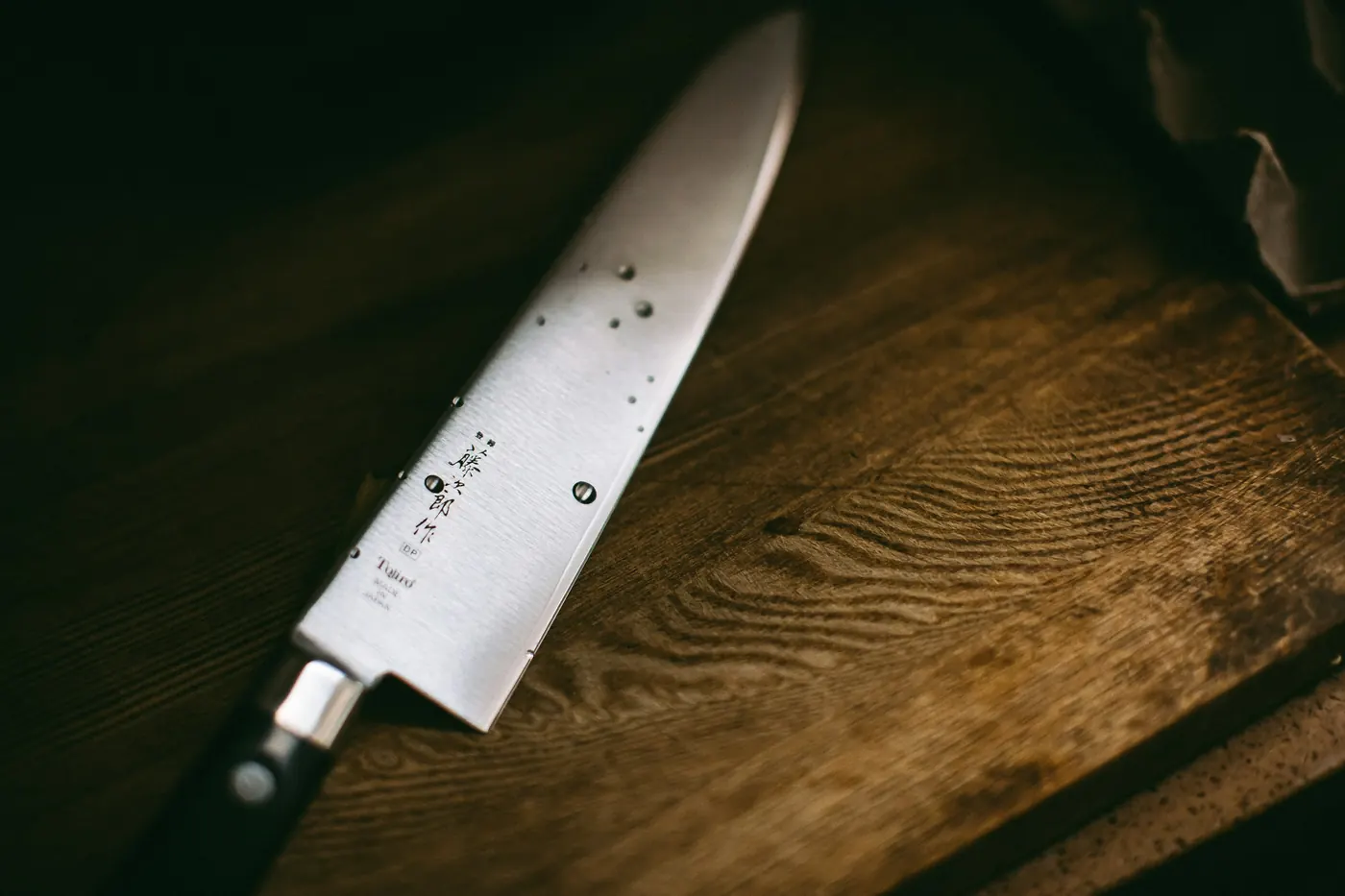
Japanese makers are consistent about care. Shun’s care guide says never put Japanese knives in the dishwasher, hand wash with warm water and mild soap soon after cutting (do not leave citrus or tomato on the blade), and dry completely with a towel instead of air-drying. Global gives the same washing advice and says never to cut on marble, stone, tile or glass.
Cut on wood or plastic. Shun strongly recommends wood boards and says glass, marble, granite, ceramic and titanium should always be avoided. Do not use a Japanese knife on bones, frozen food or very hard rinds, and do not twist the blade in a cut; both Shun and America’s Test Kitchen warn these can chip a hard edge. Hone with a ceramic or diamond rod, as Global advises for its knives, and store the knife in a block, on a magnetic strip or in a guard.
How we chose these nine Japanese knives
We started from what a Mexican kitchen asks of a knife: even dice of onions, chiles and tomatoes, finely chopped herbs, and clean slices of cooked meat. We then looked for knives from Japanese makers (Mac, Misono, Shun, Tojiro, Miyabi, Global and Kai) sold on Amazon in the United States and in stock when we checked, with specifications we could confirm from the maker or the brand’s own Amazon listing (each review says which). We covered the four shapes a home cook is most likely to use and a range of handle styles and care needs. We used America’s Test Kitchen’s reviews of gyuto and santoku knives for how these knives perform, and Shun’s and Global’s own care guidance for upkeep. Some well-regarded makers, including Masamoto and Sakai Takayuki, are missing because their knives were down to their last few units or unavailable on Amazon when we checked. We left out marketplace brands with unverifiable steel or “Damascus” claims. We have not used these products ourselves; where we describe how a knife performs, we say whose findings those are.
Japanese knife questions, answered
What is the best Japanese knife for everyday use?
A gyuto of about 21 cm (8 inches). It handles vegetables, herbs and meat, and it is the closest to the chef’s knife most people already know. The Mac MTH-80 is our pick for most home cooks.
Which Japanese knife brands are worth buying?
Makers that state their steel and stand behind their knives: Mac, Misono, Shun, Tojiro, Miyabi, Global, Kai, Masamoto and Sakai Takayuki among them. Be cautious of marketplace brands that promise exotic steel and dozens of layers without naming a maker.
Is a santoku or a gyuto better?
A gyuto is longer and more versatile, especially for slicing meat. A santoku is shorter, flatter and easier to control, which suits vegetable-heavy cooking and smaller hands. If you can only have one, choose a gyuto.
Can Japanese knives go in the dishwasher?
Most should not. Shun and Global both say never to put their knives in the dishwasher. The Kai 10000ST santoku is an exception: its listing rates it dishwasher safe.
Why do Japanese knives chip?
Harder steel and thinner edges are more brittle. Cutting bones or frozen food, twisting the blade, and cutting on glass or stone boards can all chip the edge, according to Shun’s care guide and America’s Test Kitchen’s gyuto review.
Which Japanese knife to start with
Start with the Mac MTH-80 gyuto if you want one Japanese knife for everything. Choose the Misono UX10 santoku if you mostly cut vegetables and want a smaller blade, and add the Shun Classic nakiri or the Mac vegetable cleaver if you prep big piles of vegetables. A Tojiro petty takes care of the limes and chiles. Whichever you buy, hand wash it, dry it at once and keep it on a wood or plastic board.
A good knife is one piece of a Mexican kitchen. Our guide to Mexican cooking tools covers the rest, and the best molcajete covers the stone mortar for grinding what you chop. For what to make with all those diced chiles and tomatoes, see salsa roja vs salsa verde and Mexican chiles explained.
For Western and Japanese chef’s knives side by side, start with our guide to the best chef knife.
For a Japanese chef’s knife specifically, see our guide to the best gyuto knives, and for a shorter all-rounder, the best Japanese santoku knives.
On a budget? See our guide to the best cheap Japanese knives.
More specific guides: the best Japanese knife sets and the best sharpeners for Japanese knives.
Related guide: Best shun knives.
Related guide: Best dalstrong knives.
Related guide: German vs japanese knives.
And if you would rather leave the chopping to someone else tonight, see the menu or call to order.