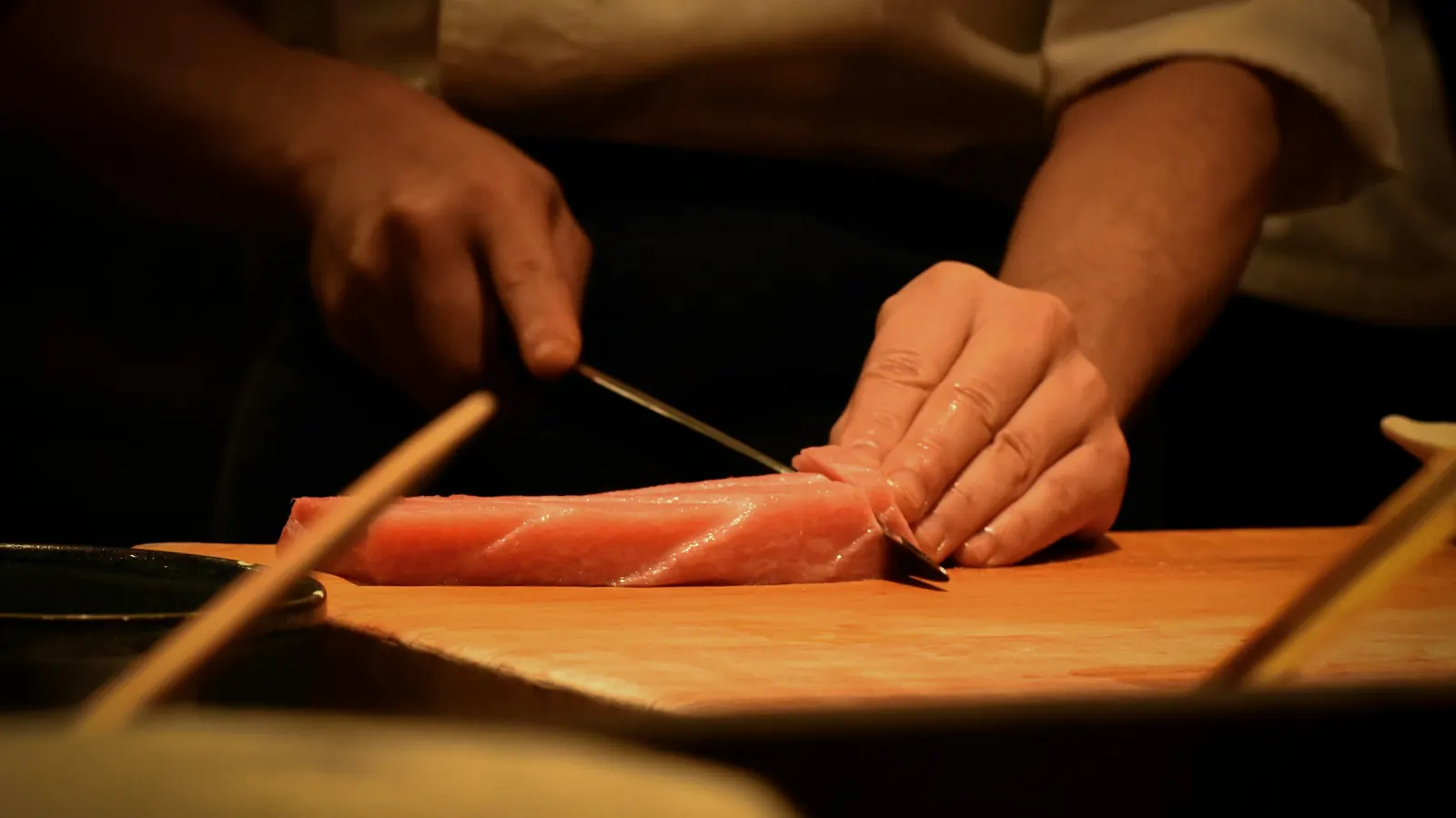
A Japanese knife is usually thinner behind the edge and harder than a typical Western blade, which is what makes it slice so cleanly through an onion for pico de gallo or a tomato for salsa. That same thin, hard edge is the part a bad board ruins first. Glass, stone and hard composite boards stop the edge dead on every cut, and a chipped or rolled edge sends you back to the whetstone far sooner than you planned.
This guide is narrower than our main cutting board guide. It looks only at boards made for hard Japanese steel: synthetic rubber and soft boards from Japanese makers, and hinoki cypress, the medium-soft wood Japanese cooks have used for generations. All seven are different from the boards in our other cutting board guides, and where a maker’s line repeats, we say why.
Julia’s earns a commission on purchases made through links on this page, at no cost to you. Recommendations are based on what a restaurant kitchen looks for in a board for thin, hard knives, the makers’ own specifications and the details on each Amazon listing. Cleaning guidance comes from a university extension service, which we cite.
Quick verdict: which board to buy for a Japanese knife
For most cooks with Japanese knives, the best cutting board is the Yoshihiro Hi-Soft Cutting Board, Medium: a soft, made-in-Japan board that its seller says absorbs each cut instead of resisting it, with no oiling to keep up. If you want wood, choose the Yoshihiro Hinoki Anti-Twist Core Board, hinoki cypress over a maple core that the listing says prevents warping. For a classic synthetic rubber board from a maker that has made them since 1965, the Asahi Cookin’ Cut LL is the one to get.
Below, the five standouts side by side, then all seven boards in full, followed by how to choose a soft board and how to keep it clean.
Five boards for Japanese knives compared
Our five standout boards, one for each kind of cook, with the material and size each maker or listing states. All seven boards are reviewed in full below.
| Board | Best for | Material and size | Dishwasher safe (stated) | Buy on Amazon |
|---|---|---|---|---|

Yoshihiro Hi-Soft Cutting Board, MediumBest overall
|
Daily prep with any Japanese knife | Soft synthetic (EVA, per listing), medium | No, hand wash only | View on Amazon |
Yoshihiro Hinoki Anti-Twist Core Board, X-LargeBest hinoki board
|
Cooks who want wood that stays flat | Hinoki over maple core, 17.72 x 10.24 in | Not stated | View on Amazon |

Asahi Cookin’ Cut Antibacterial Rubber Board, LL, 16.5 x 9.8 inchBest classic rubber board
|
Everyday prep with a gyuto or santoku | Synthetic rubber, 16.5 x 9.8 x 0.5 in | Not stated | View on Amazon |

Kitchen Star Rubber Board with Scraper, 17.3 x 10.2 inchBest dishwasher-safe rubber
|
Easy cleanup after raw meat or fish | Synthetic rubber, 17.32 x 10.23 x 0.39 in | Yes, stood upright | View on Amazon |

Yamasan Kyoto Uji Hinoki Board, LargeBest one-piece hinoki
|
A light, thin wood board made in Japan | One-piece hinoki, 16.53 x 9.44 x 0.59 in | Not stated | View on Amazon |
Product images from Amazon. Materials, sizes and care instructions are as stated by each maker or Amazon listing; check the listing before you buy.
Our picks: the best cutting board Japanese knives deserve
Seven boards in two families. Synthetic boards (rubber, EVA and wood-core polyethylene) are the kind you see in sushi bars in Japan: they give slightly under the blade, can often be resurfaced, and need no oil. Hinoki boards are wood, lighter and softer than the maple and walnut boards in our wooden board guide. Two makers here also appear elsewhere on the site, with different boards: our main guide reviews the standard Asahi Cookin’ Cut, and our wooden board guide reviews the Shun hinoki board in medium. Here we chose the larger, antibacterial LL Cookin’ Cut and the extra-large Shun with a juice groove, because they fill gaps the smaller boards leave.
1. Yoshihiro Hi-Soft Cutting Board, Medium – Soft Surface, No Oiling
The Hi-Soft board is the one sold for sashimi and sushi work, and it is the board we would point most owners of Japanese knives to first. The listing says it is built for high-carbon steel knives and that “every cut is absorbed instead of resisted,” which is exactly what a thin, hard edge needs. It describes the material as a closed-cell EVA and says the surface resists the deep grooves that rigid plastics develop over years of cutting.
Care is simple. The listing says hand wash only, with no oils, sealants or maintenance routine, so there is none of the oiling a wooden board asks for. It is made in Japan, per the title, and comes in seven sizes from Small to XXX-Large.
The Amazon listing does not give the Medium’s dimensions. Retailer size charts we found list it at roughly 17.3 to 17.7 by 9.8 inches and about 0.8 inch thick, enough for a chef’s knife or a gyuto and a few onions and tomatoes. Measure your counter before you order a bigger size.
Why we like it
- Sold for use with high-carbon Japanese knives
- Soft surface the listing says absorbs each cut
- No oil or sealant to maintain
- Made in Japan, in seven sizes
Key specifications
| Model | HSOFM |
|---|---|
| Material | EVA, per the listing |
| Size | Not stated on the listing (retailers: about 17.5 x 9.8 in) |
| Thickness | About 0.8 in, per retailers |
| Weight | Not stated |
| Dishwasher safe | No, hand wash only |
| Made in | Japan |
| Care | Hand wash; no oils or sealants |
Why we recommend it
It suits anyone who has spent money on a Japanese gyuto, santoku or nakiri and wants the surface that does least harm to it, without the upkeep of wood.
Skip it if you want to put your board in the dishwasher; the listing says hand wash only.
Pros and cons
Pros
- Very gentle on thin edges
- No oiling
- Many sizes
Cons
- Dimensions missing from the listing
- Hand wash only
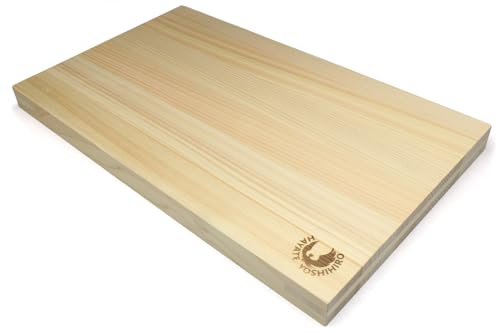
2. Yoshihiro Hinoki Anti-Twist Core Board, X-Large – Hinoki That Stays Flat
Hinoki is a Japanese cypress, and a hinoki board is softer under the knife than the maple, walnut and teak boards most American kitchens use. The trouble with thin softwood boards is warping. Yoshihiro’s answer is a maple “anti-twist” core under the hinoki surface, which the listing says prevents warping for long-lasting durability.
The X-Large measures 17.72 by 10.24 inches, and all three sizes are 2.5 cm (about an inch) thick, per the listing. That is a comfortable size for a 210 mm gyuto and a pile of chopped cilantro and onion. The listing calls the board handcrafted from hinoki and says the wood naturally resists odor absorption; it does not say where the board is made.
The listing gives no care instructions. Treat it as any wooden board: wash with warm soapy water after use, do not soak it, and dry it standing on edge.
Why we like it
- Hinoki surface for a soft, wood feel under the knife
- Maple core the listing says prevents warping
- About an inch thick in every size
- Three sizes up to 19.69 x 11.81 in
Key specifications
| Model | HNOXL |
|---|---|
| Material | Hinoki cypress with maple anti-twist core |
| Size | 17.72 x 10.24 in |
| Thickness | 2.5 cm (about 1 in) |
| Weight | Not stated |
| Dishwasher safe | Not stated |
| Made in | Not stated |
| Care | Not stated; hand wash as for any wood board |
Why we recommend it
It suits cooks who want the feel and look of a wooden board with a Japanese knife, and who have had thin wooden boards cup or twist on them before.
Skip it if you want a board with clear care instructions and a stated country of origin; the listing gives neither.
Pros and cons
Pros
- Soft wood surface
- Built to resist warping
- Generous thickness
Cons
- No care guidance on the listing
- Origin not stated
3. Asahi Cookin’ Cut Antibacterial Rubber Board, LL, 16.5 x 9.8 inch – The Classic Japanese Rubber Board, a Size Up
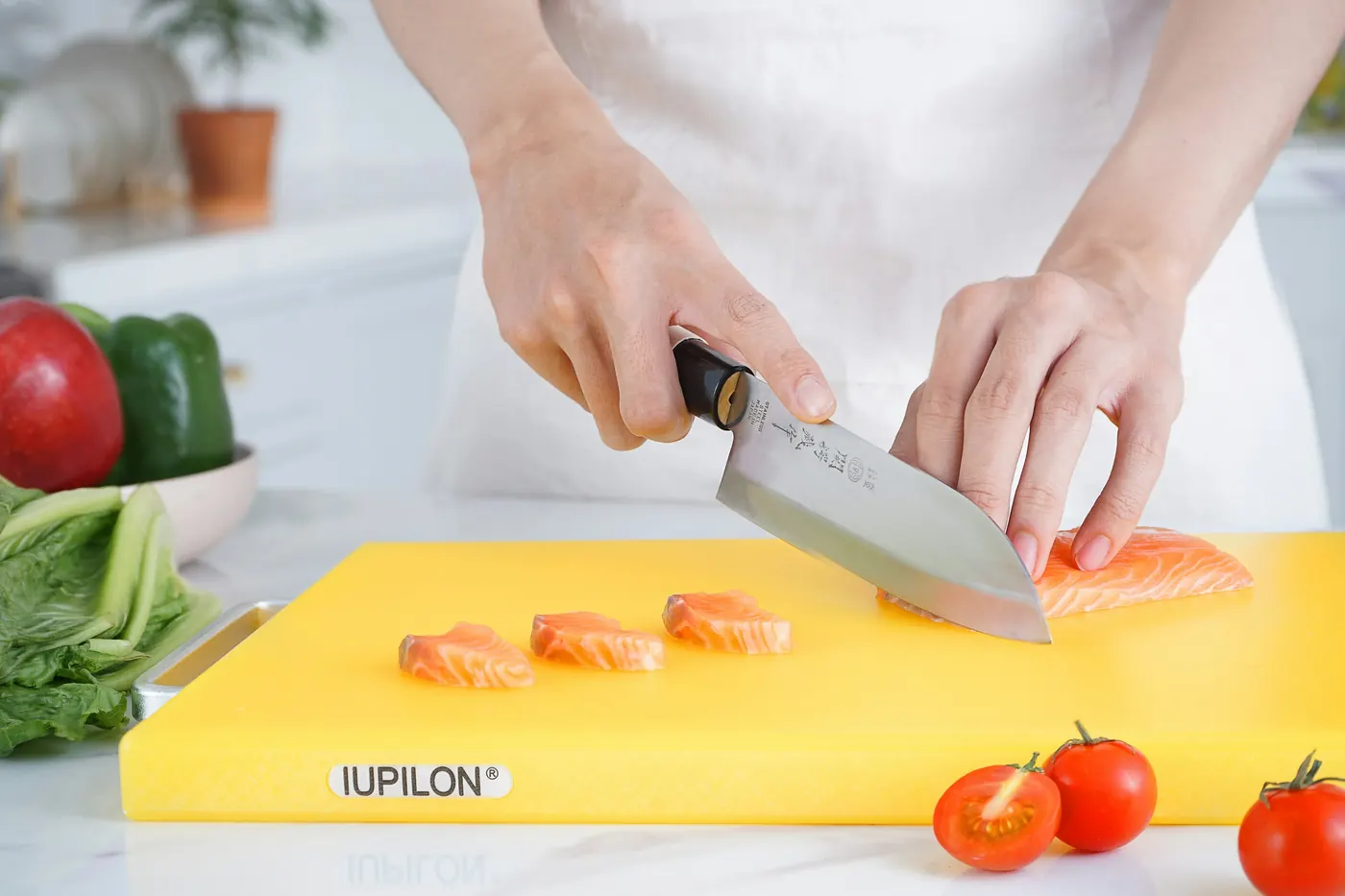
Parker Asahi has made synthetic rubber cutting boards in Japan since 1965, according to its Cookin’ Cut listing on Amazon. Our main cutting board guide covers the standard 15.7 by 9.1-inch Cookin’ Cut. This is a different board from the same maker: the home-use LL size, model NE05704, at 16.5 by 9.8 inches and 0.5 inch (13 mm) thick, which the listing says contains antibacterial agents to prevent the growth of bacteria on the board surface.
The extra length over the standard board gives a 210 mm gyuto room to work, with space left for a pile of chopped onion. This listing says the material is elastic, so it is soft to cut on and scratch-resistant, and that it protects your knives from chipping. Parker Asahi’s standard Cookin’ Cut listing adds that the rubber’s restorative force helps prevent deep scratches and that stains and surface marks can be reduced by sanding with a board scraper or waterproof sandpaper.
The LL listing gives only size, material and the antibacterial claim; it does not give a weight or care instructions. Retailers that sell Cookin’ Cut boards say to hand wash and avoid the dishwasher and hot pans, which can warp the board, so plan on washing it in the sink. An antibacterial additive is not a substitute for washing; clean it after every use like any other board.
Why we like it
- Synthetic rubber the maker says is soft on blades
- A size up from the standard Cookin’ Cut
- 13 mm thick, a solid home-board thickness
- Surface can be sanded to restore it, per the maker
Key specifications
| Model | NE05704 (LL, home use) |
|---|---|
| Material | Synthetic rubber with antibacterial agent, per listing |
| Size | 16.5 x 9.8 in (420 x 250 mm) |
| Thickness | 0.5 in (13 mm) |
| Weight | Not stated |
| Dishwasher safe | Not stated (retailers advise against) |
| Made in | Japan, per listing |
| Care | Hand wash; sand to resurface |
Why we recommend it
It suits a cook who wants the rubber board Japanese kitchens are known for, in a size that fits a gyuto or santoku and still fits in a home sink.
Skip it if you use a 270 mm or longer slicer; at 16.5 inches it is short for a full yanagiba stroke, and the 20-inch Shun hinoki below gives more room.
Pros and cons
Pros
- Roomy for a home rubber board
- Gentle on edges, per the maker
- Can be resurfaced
Cons
- Short for long slicing knives
- Thin listing details
4. Kitchen Star Rubber Board with Scraper, 17.3 x 10.2 inch – Rubber That Goes in the Dishwasher
Most rubber boards are hand wash only. Kitchen Star’s synthetic rubber board is the exception here: the title says dishwasher-safe, and Kitchen Star’s listing for the board gives dishwasher instructions, with one condition. Stand the board almost vertically, and do not lean it at an angle, rest it across other items or force it in, because poor placement may cause warping.
It is synthetic rubber, made in Japan, and measures 17.32 by 10.23 inches and 0.39 inch (10 mm) thick. The listing says it has a soft impact on the blade, resists knife damage and scratches, has almost no water absorption so it drains well, and has enough weight to sit securely while you cut. A mark on the board tells the two sides apart, so you can keep one side for raw meat or fish and the other for vegetables. This listing packs the 3L board with a cutting board scraper, an abrasive pad Kitchen Star says is designed for resurfacing synthetic rubber boards; it warns the pad can scratch other surfaces and may not lift dirt from deep cuts.
At 10 mm it is thinner than the Asahi and the Hi-Soft, which makes it easier to lift and to fit in a dishwasher rack.
Why we like it
- Dishwasher safe when stood upright, per the listing
- Synthetic rubber that the listing says is soft on blades
- Side marking to separate meat, fish and vegetables
- Made in Japan, with a resurfacing scraper included
Key specifications
| Model | 3L, with board scraper |
|---|---|
| Material | Synthetic rubber |
| Size | 17.32 x 10.23 in |
| Thickness | 0.39 in (10 mm) |
| Weight | Not stated |
| Dishwasher safe | Yes, stood almost vertically |
| Made in | Japan |
| Care | Dishwasher or hand wash |
Why we recommend it
It suits cooks who want a rubber surface for their Japanese knives but also want the dishwasher option after raw chicken or fish.
Skip it if your dishwasher cannot hold a board upright; the maker warns that leaning it can warp it.
Pros and cons
Pros
- Dishwasher option
- Two marked sides
- Manageable thickness
Cons
- Can warp if loaded badly
- Weight not stated
5. Yamasan Kyoto Uji Hinoki Board, Large – One Piece of Tono Hinoki
Yamasan Kyoto Uji’s board is a single piece of hinoki, with no glue lines and no metal, made in Japan. The listing says it is cut from Tono hinoki from Gifu Prefecture, and that hinoki’s gentle elasticity helps absorb impact during cutting, reducing stress on knife blades.
It is thin and light: 16.53 by 9.44 inches and 0.59 inch thick. That makes it easy to lift, rinse and stand up to dry, and easy to slide a pile of chopped onion off into a pan. The listing says hinoki’s natural oils help it resist water and odors and that it dries quickly, and it suggests the board for vegetables, fruit, fish, boneless meat, bread and cheese.
Thin one-piece softwood boards can move with moisture, so wash it quickly, dry it on edge and keep it out of standing water. The listing does not give care steps beyond that.
Why we like it
- One-piece hinoki, no glue or metal, per the listing
- Made in Japan from Gifu hinoki
- Light and thin, so easy to handle
- Dries quickly, per the listing
Key specifications
| Model | Hinoki Cutting Board, Large |
|---|---|
| Material | Solid hinoki cypress, one piece |
| Size | 16.53 x 9.44 in |
| Thickness | 0.59 in |
| Weight | Not stated |
| Dishwasher safe | Not stated |
| Made in | Japan |
| Care | Not stated; hand wash and dry on edge |
Why we recommend it
It suits a cook who wants a traditional, all-wood Japanese board for vegetable and fish prep, and likes a light board that is easy to move around.
Skip it if you want a thick board that stays put under heavy chopping; at 0.59 inch it is the thinnest here.
Pros and cons
Pros
- Solid, one-piece wood
- Made in Japan
- Light and easy to handle
Cons
- Thin, so lighter on the counter
- No care guidance on the listing
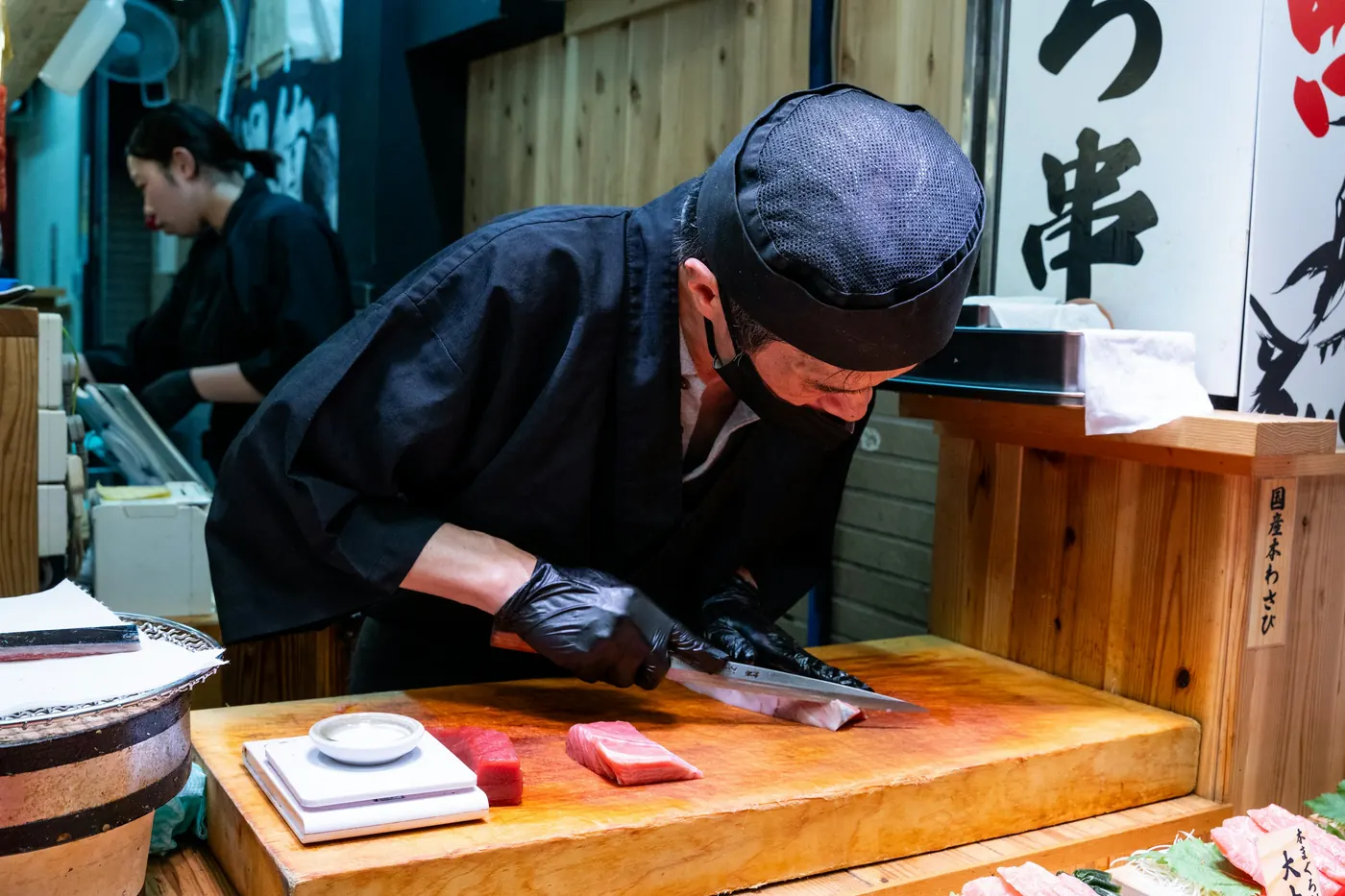
6. Shun Hinoki Cutting Board with Groove, Extra Large – A Big Hinoki Board With a Groove

Our wooden board guide reviews Shun’s hinoki board in medium. We include the extra-large version here because it is a different board for a different job: 20 by 14 inches, double-sided, with a groove around the edge to catch juice, which the medium does not have. That makes it the hinoki board for slicing a rested steak for tacos or carving a roast chicken.
Shun, the Japanese knife maker, says the medium-soft hinoki “gives” as you cut, helping to preserve knife edges. The wood is Forest Stewardship Council certified, per the listing. The listing does not state where the board itself is made; its line about handcrafting in Japan refers to Shun’s knives.
Shun’s care advice is specific: dampen the board before each use to resist staining, clean it with a mild detergent, towel dry and then air dry away from direct sunlight, and rub stubborn stains with a cut lemon.
Why we like it
- Hinoki that the maker says helps preserve edges
- Juice groove for carving
- Large 20 x 14-inch surface, double-sided
- FSC certified wood
Key specifications
| Model | DM0819 |
|---|---|
| Material | Hinoki cypress, FSC certified |
| Size | 20 x 14 in |
| Thickness | Not stated |
| Weight | Not stated |
| Dishwasher safe | Not stated (hand care given) |
| Made in | Not stated |
| Care | Dampen before use; mild detergent; dry away from sun |
Why we recommend it
It suits a cook who wants one large wooden board for both knife work and carving cooked meat, and prefers a known knife maker’s board.
Skip it if you already own the Shun medium hinoki and do not need the groove or the extra size.
Pros and cons
Pros
- Big surface with a groove
- Clear care instructions
- Soft wood under the knife
Cons
- Thickness and weight not stated
- Needs more care than rubber
7. Hasegawa Karukaru Wood-Core Board, 16.1 x 9.1 inch – Light Board With a Wood Core

Hasegawa is a Japanese maker of professional cutting boards, and its Karukaru (“light”) boards wrap a wood core in polyethylene. This is the standard SD type: a 5 mm polyethylene layer on each side, 0.8 inch thick in all, and 16.1 by 9.1 inches, at 2.9 pounds per the listing. The wood core keeps it light for its thickness.
Be clear about what it is. Polyethylene is firmer than the rubber and EVA boards above, and retailers that sell Hasegawa’s range position its rubber-surfaced boards, not this one, for the most delicate knife work. We include the Karukaru because it is a lighter, firmer option from a respected Japanese board maker, for cooks who want a board for everyday chopping that is still softer than glass, stone or hard composite.
This listing is the safety-pink color, which some kitchens use to mark a board for one job. The listing does not give care or dishwasher guidance.
Why we like it
- Wood core keeps it to 2.9 lb at 0.8 inch thick
- From an established Japanese board maker
- Polyethylene surface for everyday chopping
Key specifications
| Model | SD20-4123 P |
|---|---|
| Material | Polyethylene (5 mm per side) over wood core |
| Size | 16.1 x 9.1 in |
| Thickness | 0.8 in (20 mm) |
| Weight | 2.9 lb |
| Dishwasher safe | Not stated |
| Made in | Not stated |
| Care | Not stated |
Why we recommend it
It suits a cook who wants a light, thick professional board for daily vegetable and meat prep, and who keeps the most delicate slicing for a softer board.
Skip it if softness under the knife is your only priority; the rubber and EVA boards above are softer.
Pros and cons
Pros
- Light for its thickness
- Respected maker
- Bright color for a dedicated job
Cons
- Firmer than rubber
- No care guidance on the listing
Why a soft board matters for hard Japanese steel
The makers of every board here make the same basic argument: a surface that gives slightly under the blade is kinder to the edge than one that does not. Shun says its hinoki “gives” as you cut. Parker Asahi says the elasticity of synthetic rubber is gentle on knife blades. The Hi-Soft listing says each cut is absorbed rather than resisted. These are the makers’ claims, not our own measurements; we pass them on along with what a working kitchen looks for.
From a kitchen’s point of view, the rule is simple. A knife should sink a hair into the board at the end of each cut, not bang into it. Glass, marble, slate and steel boards never allow that, and they are hard on any knife. Hard composite and some bamboo boards sit in between. A thin, hard Japanese edge, the kind on a gyuto, santoku or Japanese nakiri, is the edge most likely to show the damage first.
The board is only half of keeping that edge. The other half is how you cut: slice and push rather than twist, do not scrape chopped food off the board with the edge (turn the knife over and use the spine), and do not chop through bones with a thin Japanese blade on any board. When the edge does dull, see our whetstone guide for bringing it back.
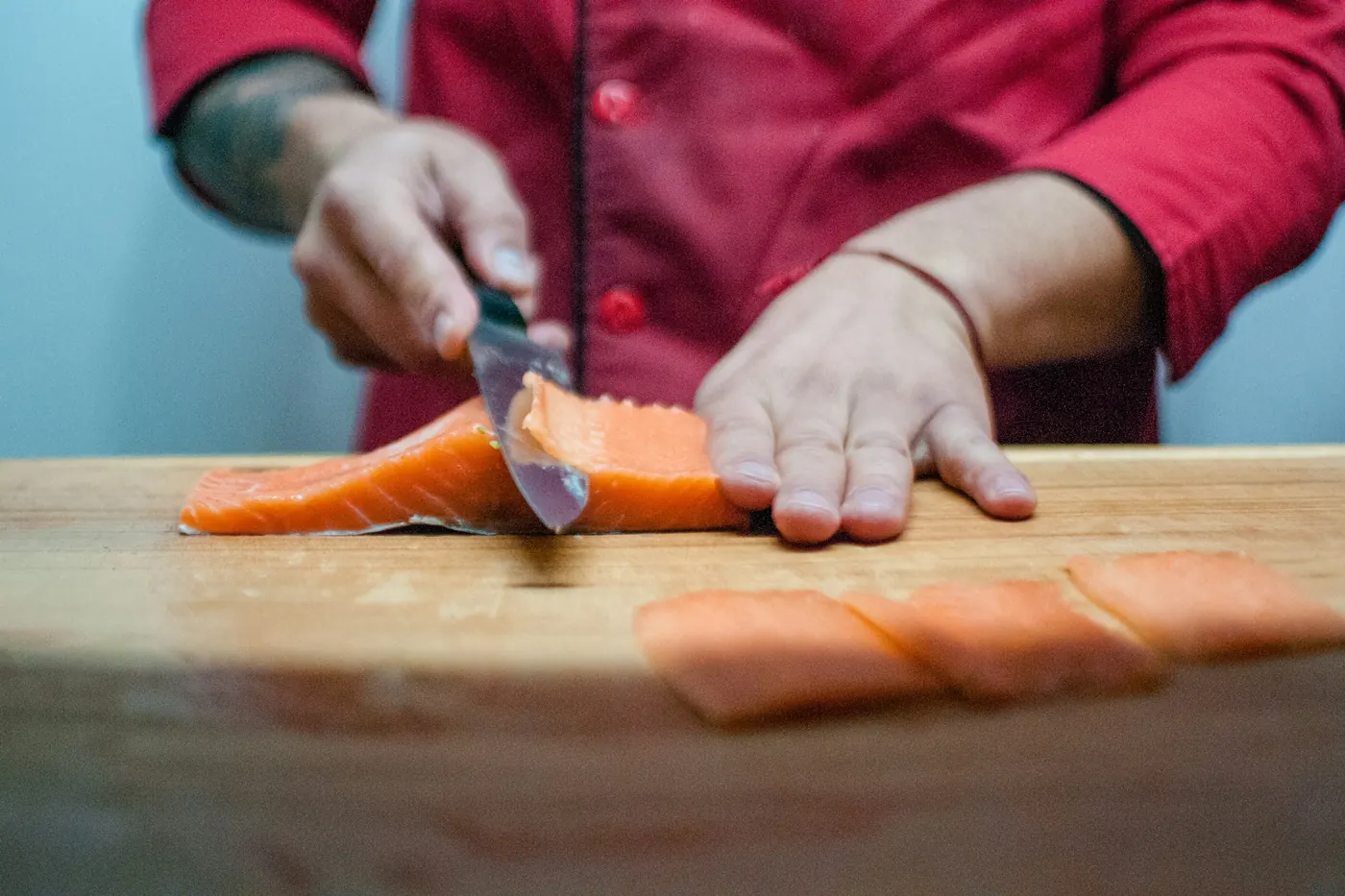
How to choose a board for a Japanese knife
Rubber or wood. Synthetic rubber and EVA boards need no oil, do not crack, and can often be resurfaced with sandpaper when they get scored. Hinoki is lighter, smells pleasant and feels like wood under the knife, but it needs drying and more care, and it stains more easily. If you cook every day and want the least upkeep, choose rubber. If you want wood, choose hinoki.
Size for your longest knife. Your board should be longer than your longest blade with room to spare. A 210 mm gyuto works on a 16- to 18-inch board. A 270 mm yanagiba or sujihiki is happier on a board around 24 inches; the longest here is the 20-inch Shun Extra Large.
Thickness and weight. Thick, heavy boards stay put; thin, light boards are easier to wash and store. A damp towel under any board helps, especially under thin hinoki.
Warping. Thin softwood and rubber can both warp if they are soaked, leaned in a hot dishwasher or left near heat. Yoshihiro’s maple core and Hasegawa’s wood core are both meant to keep their boards flat. Store any of these boards flat or standing straight on edge.
Cleaning. Only the Kitchen Star board here gives dishwasher instructions. If you want a board you can always run through the dishwasher, look at our plastic cutting board guide, accepting that most plastics are firmer.
What about end grain? Thick end-grain boards are often recommended as knife friendly because the knife slips between the wood fibers. They are much heavier than hinoki and need regular oiling. If that appeals, see our end-grain board guide; we did not repeat those boards here.
Cleaning a rubber or hinoki board
The University of Maine Cooperative Extension’s bulletin on cutting boards advises washing a wooden board thoroughly with warm water and dishwashing soap after each use and avoiding soaking it, since excess moisture can cause wood to warp or crack. For plastic boards it advises washing with warm or hot soapy water and scrubbing with a brush. The bulletin does not cover rubber boards specifically, so follow each maker’s care instructions.
The same bulletin suggests separate boards for raw animal products and for ready-to-eat foods, and says boards with deep grooves, cracks or excessive wear should be replaced when they can no longer be cleaned effectively. A rubber board you can sand back, like the Asahi, gets a longer life that way.
How we chose these seven boards
We started from what thin, hard Japanese knives need: a surface softer than the edge, from a maker that sells boards specifically for this use. We looked for boards sold on Amazon in the United States from identifiable makers, mostly Japanese, and checked each one’s stock with Amazon’s product data before writing. Sizes, materials and care come from each brand’s Amazon listing, and where a listing leaves a figure out, we say “not stated”. We excluded boards already picked in our other cutting board guides, boards that were nearly sold out or back-ordered when we checked (several Kai and Hasegawa boards among them), and titanium, steel, glass and unbranded boards. We did not use these boards for this guide, and the cleaning advice comes only from the University of Maine bulletin we read.
Japanese knife board questions, answered
What is the best cutting board for Japanese knives?
A soft synthetic board such as the Yoshihiro Hi-Soft, or a hinoki board such as the Yoshihiro Anti-Twist Core, for most cooks. Both are sold specifically for knife edges and are softer than the maple, walnut and teak boards that most kitchens use.
Is a rubber board better than wood for a Japanese knife?
Neither is simply better. Rubber needs no oil and can be sanded smooth again; hinoki is lighter and feels like wood. Both makers say their material is gentle on blades.
Can I use a bamboo or glass board with a Japanese knife?
We would not use glass, stone or steel with any good knife. Bamboo is firmer than hinoki and rubber, so if you own a hard Japanese knife, a softer board is the safer choice.
Do hinoki boards need oiling?
The hinoki listings here do not call for oil; Shun asks you to dampen the board before use and dry it away from sunlight. For hardwood boards that do need oil, see our cutting board oil guide.
Can rubber cutting boards go in the dishwasher?
Some can. The Kitchen Star board says yes if it stands almost vertically. The Hi-Soft listing says hand wash only, and retailers advise against the dishwasher for Asahi’s boards.
Our board for a Japanese knife
Buy the Yoshihiro Hi-Soft if you want the gentlest everyday surface with no upkeep. Choose the Yoshihiro Hinoki Anti-Twist Core for a wooden board that stays flat, the Shun Extra Large for long knives and big jobs, the Asahi Cookin’ Cut LL for a classic rubber board, or the Kitchen Star if the dishwasher matters. For every other kind of board, go back to our main cutting board guide, and if you are still choosing the knife, see our Japanese knife set guide.
And if you would rather leave the chopping to us tonight, see the menu or call to order.