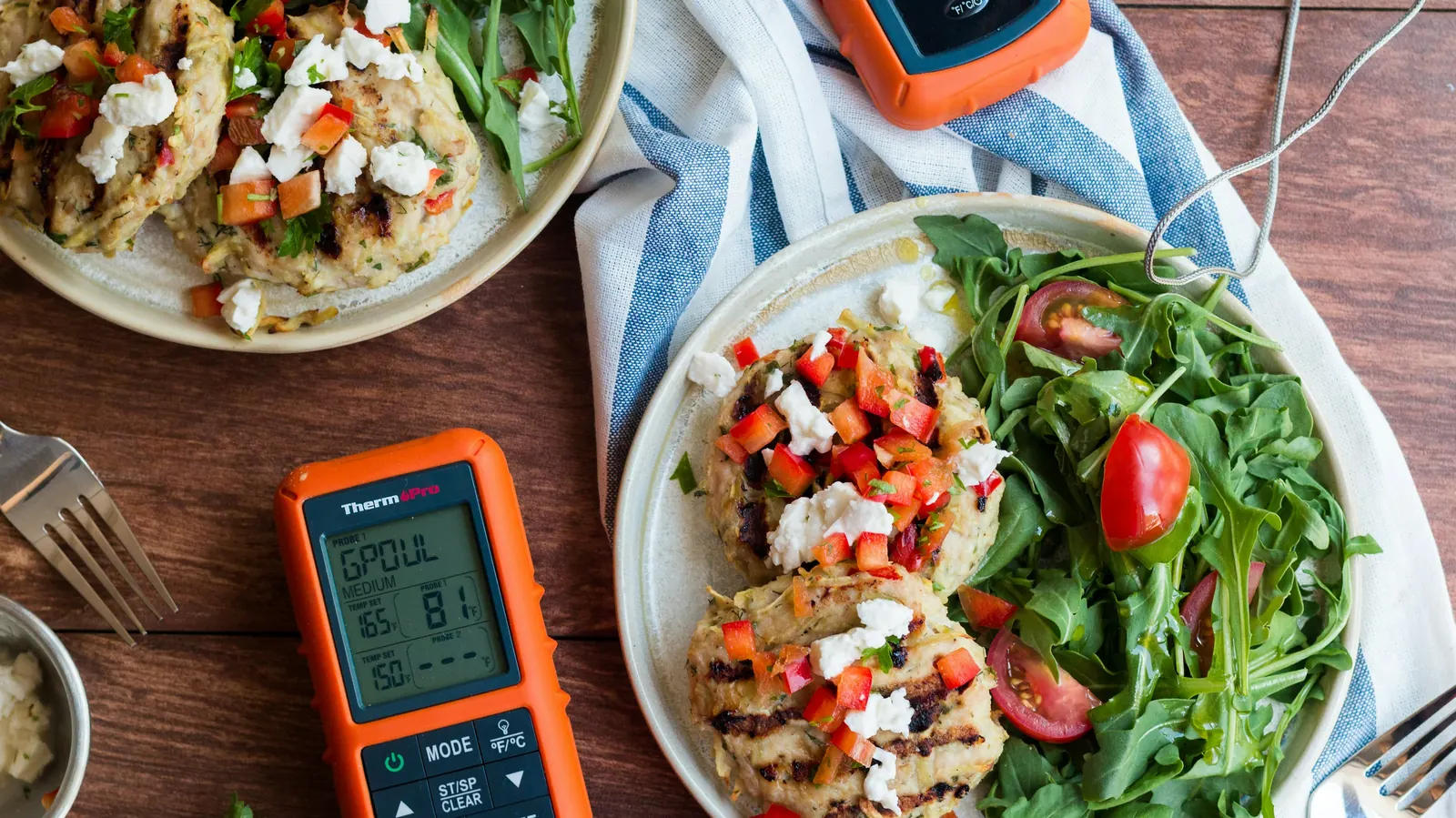
An instant-read thermometer and a leave-in probe thermometer both tell you the temperature inside a piece of meat. The difference is when they tell you. An instant-read is a spot check: you push it in, read the number in a few seconds and pull it out. A leave-in probe goes into the roast before it cooks, stays there the whole time, and sends the reading along a cable to a display outside the oven, usually with an alarm that sounds at the number you set.
On a busy line, that difference decides which tool gets picked up. Thin, fast cuts get a quick stab with an instant-read. A pork shoulder that spends hours in the oven gets a probe and a timer. This guide compares the two on speed, the cuts they suit, how deep they go in, alarms, oven safety, care and calibration, then names two picks for each side.
Julia’s earns a commission on purchases made through links on this page, at no cost to you. Recommendations are based on what a restaurant kitchen looks for, product specifications and verified buyer reports.
Quick verdict: instant-read or leave-in probe?
Buy an instant-read first. It works on everything from a chicken thigh to a whole roast, and Penn State Extension says a digital model reads in 2 to 10 seconds with the tip only a quarter to half an inch in. Add a leave-in probe when you roast, braise or smoke large cuts often and want an alarm instead of opening the door. Most people who cook a lot of meat end up owning both, because the probe watches one spot and the instant-read checks the others.
The table sums up the differences; each one is explained below.
Instant read vs probe thermometer, side by side
| Instant-read (digital) | Leave-in probe (corded) | |
|---|---|---|
| How you use it | Insert, read, remove | Insert before cooking, leave in, watch the display |
| Read time | 2 to 10 seconds for digital types (Penn State Extension) | Reads continuously; speed matters less (America’s Test Kitchen) |
| Best for | Steaks, chops, chicken pieces, burgers, fish, checking a second spot | Roasts, whole birds, pork shoulder, long braises and smoking |
| Insertion depth | About 1/4 to 1/2 inch or deeper (Penn State Extension) | Into the thickest part, away from bone; tip does the reading |
| Alarm | Usually none | Target alarm, often a timer too |
| In the oven | No; the body stays outside | Probe and cable in, display outside |
| Main limit | You have to open the oven or lid to check | Measures one spot only; cable and base need care |
Speed: a few seconds versus all the time
The instant-read lives up to its name only if it is digital. Penn State Extension, in its guide to food thermometers, gives 2 to 10 seconds for digital instant-read types and 15 to 20 seconds for a dial instant-read. Faster models such as the Javelin PRO below claim 2 to 3 seconds. Speed matters here because every second the oven door or grill lid is open, heat escapes and your hand is over the fire.
A leave-in probe changes the question. It is reading all the time, so a slow sensor costs you little. America’s Test Kitchen says in its review of leave-in thermometers that a lightning-fast response “isn’t as essential for a leave-in thermometer as it is for an instant-read thermometer.” What it gives you instead is a running number you can glance at from across the kitchen, and a warning when the meat gets close.
The cuts each one suits
Thin and fast cuts belong to the instant-read. A chicken thigh, a pork chop or a skirt steak for fajitas cooks in minutes, and threading a probe and cable into it is more trouble than it is worth. Penn State gives a quarter to half an inch or deeper for a digital instant-read, so a quick check works on a burger or a fish fillet, where a dial stem needing 2 inches would not fit.
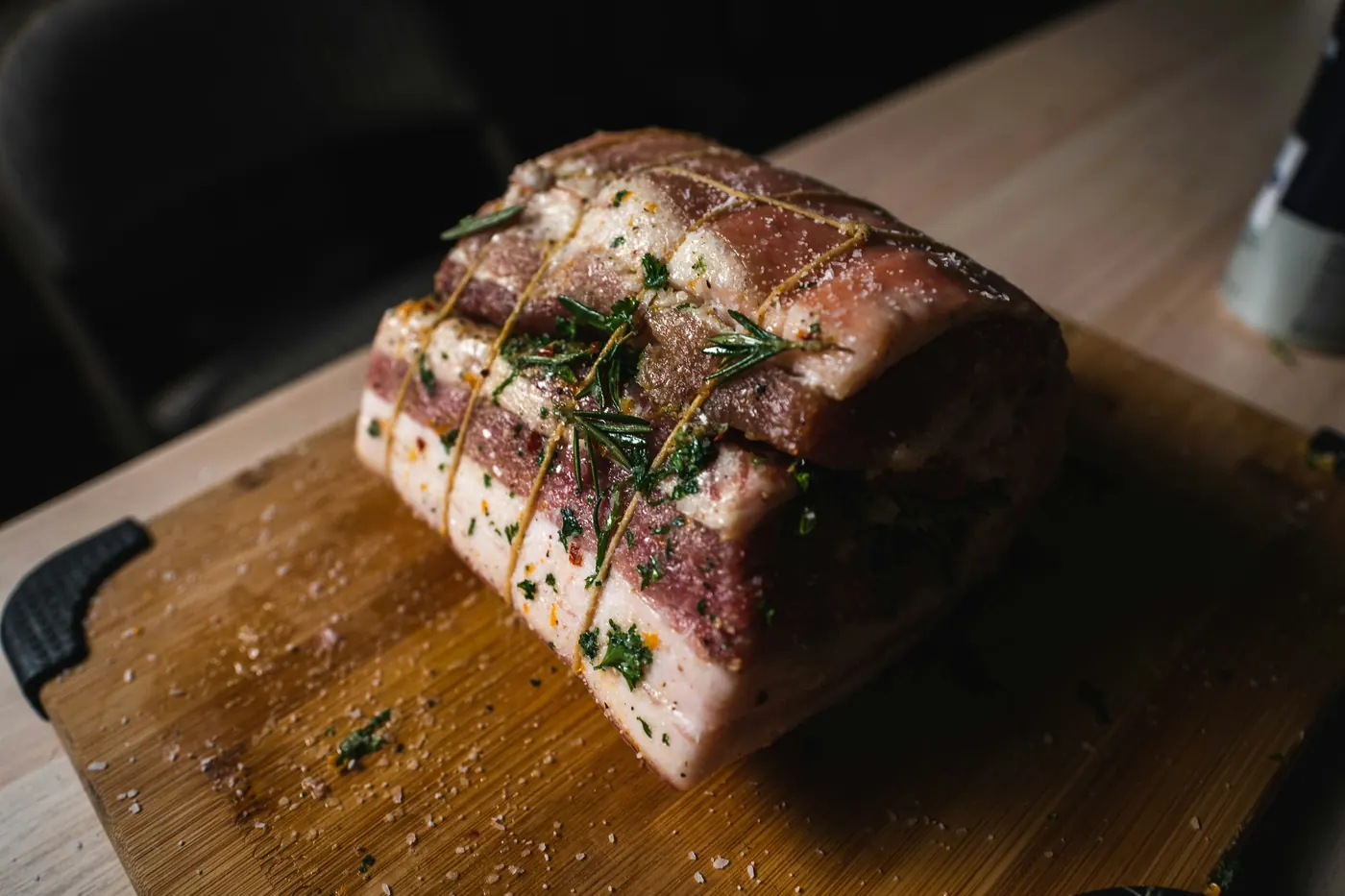
Long cooks belong to the leave-in. America’s Test Kitchen describes leave-in thermometers as the way to monitor long-cooking foods without opening the oven or grill. A pork shoulder roasting for carnitas, a turkey breast or a beef roast are the classic cases: you set the target, close the door and the alarm calls you back. A dial oven-safe thermometer does a slower version of the same job; Penn State says it takes 1 to 2 minutes to register and needs to sit 2 to 2½ inches deep, which suits roasts but not thin cuts.
One spot or several
This is the point that makes most cooks buy both. A leave-in probe measures one place for the whole cook. If the tip drifts near a bone or into a fatty seam, the number on the display is off, and you won’t know it. Penn State Extension advises inserting a thermometer into the thickest part of the food in two different locations. A probe that stays put can’t do that by itself.
So the usual routine is to let the probe tell you when you are close, then confirm with an instant-read in a second spot before you pull the meat. With a whole chicken, that second check goes into the thigh as well as the breast. That habit, rather than any single gadget, is what keeps the food safe.
Alarms, timers and the oven door
Most instant-reads have no alarm, because you are standing there holding them. Leave-in models are built around one. America’s Test Kitchen says most users need only a high-temperature alarm, and that a low alarm helps some cooks when frying or smoking. Both leave-in picks below have a target alarm; the Taylor adds a 24-hour timer.
The other practical difference is the oven door. A probe’s display sits outside, often stuck to the oven with a magnet, so you can read the temperature without opening anything. With an instant-read, each check means opening the oven or lifting the lid. That is fine for a pan on the stove and a nuisance for a three-hour roast.
What can go in the oven
An instant-read is never left in the oven. Its body, battery and display sit at the end of a short probe and are not made for oven heat. Penn State lists digital instant-reads separately from oven-safe dial thermometers for that reason.
With a leave-in, only the probe and its cable go inside. The cable runs out under the door to the display. The listing for the ThermoWorks DOT gives a range of -58 to 572°F, and the Taylor 1478-21 tops out at 392°F, so check the stated range against how you cook. Keep the base itself out of the oven and away from the grill’s hot surfaces.
Safe temperatures to read for
Whichever you buy, the numbers are the same. Penn State Extension, following USDA guidance, gives these safe minimum internal temperatures: all poultry and ground poultry to 165°F; ground meats and meat mixtures to 160°F; fresh beef, veal, lamb and pork steaks, roasts and chops to 145°F with a 3-minute rest; leftovers and casseroles to 165°F; and egg dishes to 160°F.
These are minimums for safety, not doneness targets. A pork shoulder for carnitas cooks well past 145°F because you want it tender enough to pull apart. For reheating, our guide to reheating Mexican leftovers covers the method.
Calibration and cleaning
Penn State Extension describes the ice-water check: put at least two inches of the stem into ice water and look for 32°F. A dial thermometer can be adjusted with a small wrench under the head. A digital thermometer that doesn’t read 32°F, the guide says, should be replaced. That applies to both instant-read and leave-in digital models.
For cleaning, Penn State says to hand-wash thermometers unless the maker says otherwise, wash the stem in hot soapy water, dry it and store it in its sheath. Water ratings differ: the Javelin PRO and the DOT are listed as IP65, which covers splashes and spills, not soaking. Neither Taylor listing gives a water rating, so wipe them rather than rinse the body.
Choose an instant-read if… / Choose a leave-in probe if…
Choose an instant-read if…
- You cook mostly steaks, chops, chicken pieces, burgers and fish.
- You want one thermometer that works for nearly everything.
- You want to check more than one spot before you pull the meat.
- You also use it for oil, candy or bread, within its stated range.
Choose a leave-in probe if…
- You roast, braise or smoke large cuts and want to keep the door shut.
- You’d rather have an alarm call you than keep checking.
- You often cook while prepping other dishes and can’t stand by the oven.
- You already own an instant-read for the final check.
Our picks for each side of the instant read vs probe thermometer choice
Two picks per side, all in stock when we checked. None of these listings appears on our other pages. The Javelin PRO Classic is a different color of the Javelin PRO in our grill thermometer guide, chosen because it is the instant-read model with the clearest stated read time and warranty among the in-stock listings we could use here. For more choices, see our best instant-read meat thermometer guide and, for cable-free probes, our best wireless meat thermometer guide.
1. Lavatools Javelin PRO Classic Instant-Read Thermometer – Fast Read, Auto-Rotating Display

The Javelin PRO Classic is a folding digital instant-read from Lavatools. The listing states 2 to 3 second readouts from a Japanese sensor, and accuracy of ±0.5°F, which Lavatools says is achievable with calibration. The 2-inch backlit display rotates 180 degrees and wakes with motion, which helps when you are reading at an awkward angle over a grill or with your left hand.
The listing gives an IP65 rating, meaning it is made to shrug off spills and splashes, along with NSF certification and a battery life of more than 4,000 hours. Lavatools backs it with a 3-year limited warranty. America’s Test Kitchen and Wirecutter are named on the listing as having picked it as a mid-priced choice; we report that as the maker’s statement.
Use it for everything the probe isn’t watching: chicken thighs on the comal, carne asada, burgers, and the second check in a roast before it comes out. The listing does not state the measuring range, so check the paperwork before using it for deep-fry oil or candy.
Why we like it
- 2 to 3 second readings (listing)
- Auto-rotating, motion-activated backlit display
- IP65 splash resistance and NSF certification (listing)
- 3-year limited warranty
Key specifications
| Model | PX1C (Crimson) |
|---|---|
| Type | Digital instant-read, folding probe |
| Read time (stated) | 2 to 3 seconds |
| Range | Not stated |
| Accuracy (stated) | ±0.5°F with calibration |
| Water resistance | IP65 |
| Alarm or timer | None |
| Warranty | 3-year limited |
Why we recommend it
It suits a home cook buying one serious thermometer for daily use who wants fast, easy-to-read spot checks at the stove and grill.
Skip it if you only roast a few times a year and want something simple and cheap; the Taylor folding thermometer below covers that.
Pros and cons
Pros
- Quick stated read time
- Display readable from any angle
- Long stated battery life
Cons
- Range not given on the listing
- No alarm for long cooks
- IP65 is splash resistance, not submersion
2. Taylor Digital Folding Stem Thermometer – Simple Instant-Read for the Drawer

Taylor’s model 1476 is the plain version of an instant-read: a folding stainless probe, a 0.7-inch LCD and an on/off switch. The listing gives a range of -40 to 396°F, which covers meat and poultry as well as deep-fry oil and air-fryer cooking, and an LR44 battery comes installed.
The probe folds into the handle for storage, and a hole in the end lets it hang on a hook. That makes it easy to keep by the stove, which is half of what makes a thermometer useful: the one you can reach is the one you use.
Taylor doesn’t state a read time, an accuracy figure or a water rating on the listing, so expect it to be slower than the Javelin, and treat it as wipe-clean only. Check it in ice water now and then, as Penn State Extension describes, and replace it if it is off.
Why we like it
- Range of -40 to 396°F (listing)
- Probe folds into the handle
- Battery included and installed
- From a long-running thermometer maker
Key specifications
| Model | 1476 |
|---|---|
| Type | Digital instant-read, folding probe |
| Read time (stated) | Not stated |
| Range | -40 to 396°F |
| Accuracy (stated) | Not stated |
| Water resistance | Not stated |
| Alarm or timer | None |
| Warranty | Not stated |
Why we recommend it
It suits an occasional cook who wants a basic digital instant-read in the drawer for chicken, pork and frying oil.
Skip it if you want a stated read time or accuracy figure; the Javelin PRO gives both.
Pros and cons
Pros
- Wide stated range
- Compact folding design
- Simple on/off operation
Cons
- No stated read time or accuracy
- No water rating
- Small display
3. ThermoWorks DOT Simple Alarm Thermometer – One Probe, One Clear Alarm
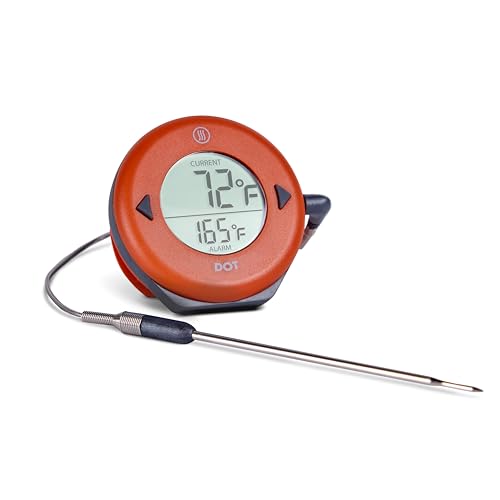
The DOT does one thing: it shows the temperature from a corded probe and sounds an alarm when the food reaches the number you set with its two buttons. The listing gives a range of -58 to 572°F, a Pro-Series probe, a large backlit display, a magnetic back and a kickstand, and an IP65 rating for splashes and spills.
America’s Test Kitchen, in its July 2025 review of leave-in thermometers, calls it “a model of simplicity” with only a high-temperature alarm, and says it performed as accurately as the review’s winners. It did not name it a winner; those were ThermoWorks’ ChefAlarm and Square DOT, which add more functions. For a roast, a turkey or a pork shoulder, a single target alarm is all most cooks use.
Put the probe into the thickest part of the meat, away from the bone, run the cable out of the door and stick the base to the oven. ThermoWorks says its support team is based in American Fork, Utah. The listing does not give the cable length, the battery type or the warranty, so check the box.
Why we like it
- Set the target with two buttons
- Range of -58 to 572°F (listing)
- Magnet and kickstand for the oven or counter
- Accuracy matched the winners in America’s Test Kitchen’s review
Key specifications
| Model | AZ-1225-CY |
|---|---|
| Type | Leave-in probe, corded base |
| Read time (stated) | Not stated |
| Range | -58 to 572°F |
| Accuracy (stated) | Not stated |
| Water resistance | IP65 |
| Alarm or timer | High-temperature alarm |
| Warranty | Not stated |
Why we recommend it
It suits a cook who roasts and smokes regularly and wants a plain alarm thermometer from a specialist maker.
Skip it if you want a timer or a second probe for oven air; the DOT has neither.
Pros and cons
Pros
- Very simple to set
- Wide stated range
- Splash-resistant base
Cons
- One probe only
- No timer
- Cable length and warranty not on the listing
4. Taylor Programmable Probe Thermometer With Timer – Alarm Plus a 24-Hour Timer

Taylor’s 1478-21 is a classic corded probe: a stainless steel probe on a 4-foot silicone cord, and a base that shows the actual temperature next to the target you set. The listing says it has a timer of up to 24 hours as well as the temperature alarm, a stand-up display and a magnetic back for the oven door.
The stated range is 32 to 392°F. That covers roasts, braises and low smoking, but it is lower than the DOT’s, so keep the probe and cord away from broilers and direct flame. Taylor backs it with a 1-year limited warranty, according to the listing.
The timer is the reason to choose it over the DOT. With a braise or a long roast you can track both the time in the oven and the internal temperature on one screen. The listing gives no water rating, so wipe the base rather than rinse it, and wash the probe by hand as Penn State advises.
Why we like it
- Temperature alarm and 24-hour timer
- 4-foot silicone cord (listing)
- Magnetic back and stand-up display
- 1-year limited warranty
Key specifications
| Model | 1478-21 |
|---|---|
| Type | Leave-in probe, corded base |
| Read time (stated) | Not stated |
| Range | 32 to 392°F |
| Accuracy (stated) | Not stated |
| Water resistance | Not stated |
| Alarm or timer | Target alarm and 24-hour timer |
| Warranty | 1-year limited |
Why we recommend it
It suits a home cook who wants a leave-in alarm and a kitchen timer in one unit for oven roasts.
Skip it if you smoke or grill hot; its 392°F top end is lower than the DOT’s.
Pros and cons
Pros
- Timer built in
- Shows actual and target temperature
- Stated warranty
Cons
- Lower stated range
- No water rating
- One probe only
Instant-read and probe questions, answered
Can you leave an instant-read thermometer in the oven?
No. The body and display are not built for oven heat. Use a leave-in probe, whose display stays outside, or an oven-safe dial thermometer, which Penn State says takes 1 to 2 minutes to register.
Is a probe thermometer more accurate than an instant-read?
Not by type. Accuracy depends on the model and on placement. A probe reads one spot for the whole cook, so Penn State’s advice to check two places in the thickest part still applies; an instant-read makes that second check easy.
Do I need both?
If you only cook quick cuts, an instant-read is enough. If you roast or smoke large cuts often, the pair works best: the probe’s alarm tells you when you are close, and the instant-read confirms it.
How deep should each one go?
Penn State gives a quarter to half an inch or deeper for digital thermometers and 2 to 2½ inches for dial types. For a leave-in, aim the tip at the center of the thickest part, away from bone and fat.
How do I know if my thermometer is accurate?
Use the ice-water check: two inches of stem in ice water should read 32°F. Penn State says a digital thermometer that fails it should be replaced.
Which thermometer to buy first
For most kitchens, the instant-read comes first. It handles every cut, it is the tool for the final check, and it stays useful even after you buy a probe. Add a leave-in when long roasts and braises are a regular part of your cooking. Our best meat thermometer guide compares both kinds side by side, and our best oven thermometer guide covers checking the oven itself.
And if you would rather someone else watched the pork shoulder, see the menu or call to order.