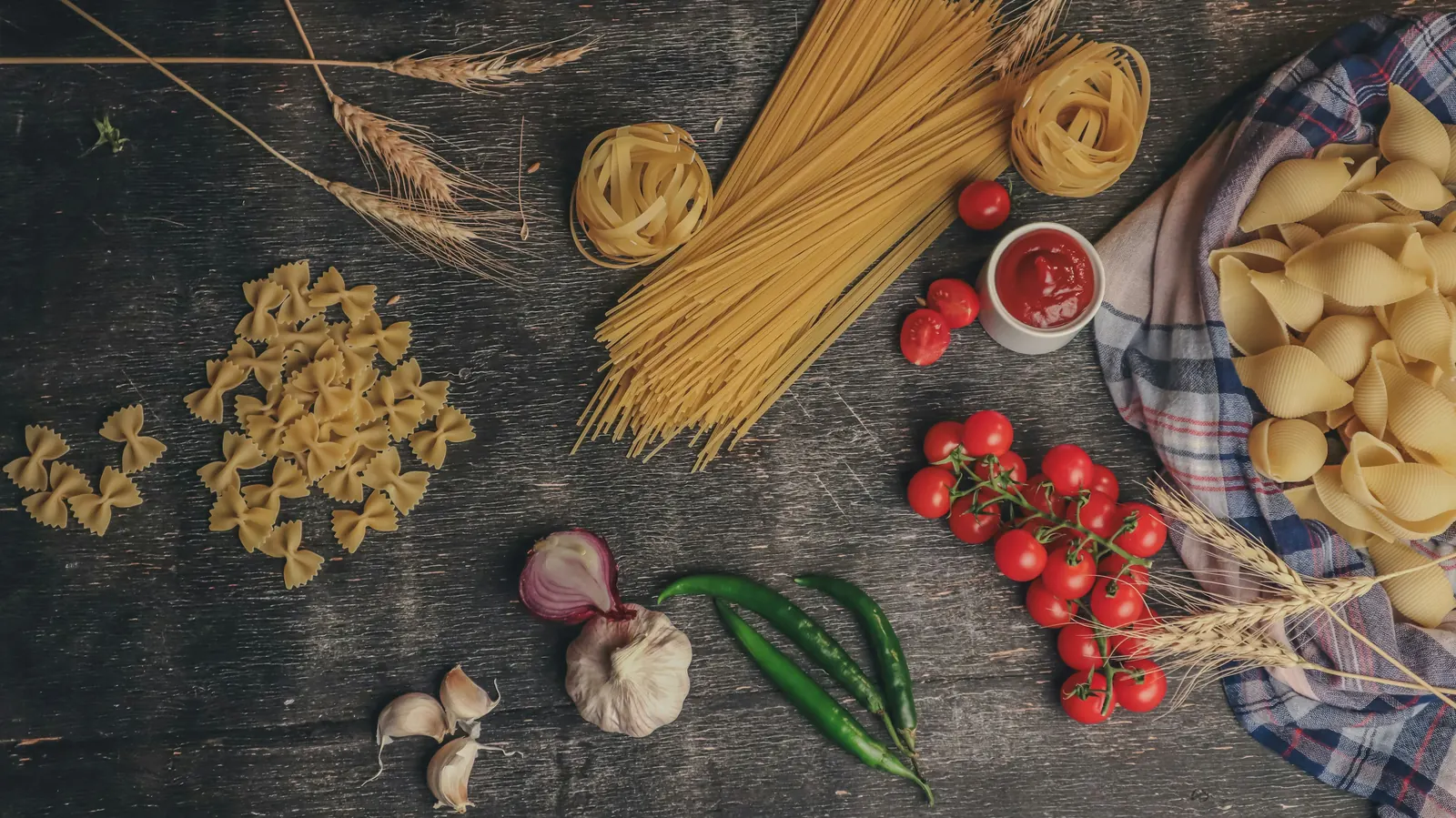
At a Mexican restaurant we have a lot of respect for Italian cooking, because the two kitchens agree on more than you might think. Both start with a few good ingredients, a tomato and a pot. Both owe a great deal to home cooks, and both change from one region to the next. That is why a single dish can taste completely different depending on whose grandmother made it.
It is also why choosing an Italian cookbook is harder than it looks. The shelf runs from 1,500-page household references to books about a single city, and some of what people call Italian food took shape in America. This guide picks eight real books from named authors and established publishers, and for each sets out what the listing, publisher and named reviewers say, and which cook it suits.
Julia’s earns a commission on purchases made through links on this page, at no cost to you. Recommendations are based on what a restaurant kitchen looks for in a cookbook, the Amazon listing, publisher and author information and published reviews, which we name where we use them.
Quick verdict: the best Italian cookbook to start with
For most cooks, start with Essentials of Classic Italian Cooking by Marcella Hazan: nearly 500 recipes from the writer her publisher calls America’s premier teacher of Italian cooking. If you want a giant reference, choose The Silver Spoon. If you want family cooking with a warm voice, choose Lidia’s From Our Family Table to Yours.
The other five cover Italy’s regions, Italian American red sauce, Rome, Sicily and the thrifty peasant cooking known as cucina povera.
Five Italian cookbooks side by side
Five of the eight, one for each kind of cook, with the details from the listing and publisher. All eight are described in full below.
| Cookbook | Best for | Recipes | Length | Buy on Amazon |
|---|---|---|---|---|
| Learning Italian cooking properly | Nearly 500 | 736 pages, hardcover | View on Amazon | |

The Silver Spoon, The Silver Spoon KitchenBest reference
|
Looking up nearly anything | Not stated | 1,504 pages, hardcover | View on Amazon |

La Cucina, The Italian Academy of CuisineBest for regional cooking
|
Exploring Italy region by region | More than 2,000 | 928 pages, hardcover | View on Amazon |

Mother Sauce, Lucinda Scala QuinnBest Italian American
|
Baked ziti and meatballs | 100 | 320 pages, hardcover | View on Amazon |

Tasting Rome, Katie Parla and Kristina GillBest for Roman cooking
|
Carbonara and beyond | More than 85 | 256 pages, hardcover | View on Amazon |
Cover images from Amazon. Page counts and formats are for the editions linked; other editions differ.
Our picks for the best Italian cookbook, book by book
These eight cover teaching, reference, regional cooking, family meals, Italian America, Rome, Sicily and peasant cooking. For each we give what the listing, publisher and any published review say. We have not cooked our way through these books; where we describe a strength, we say whose view it is.
1. Essentials of Classic Italian Cooking, Marcella Hazan – The Book That Teaches the Cuisine

If you buy one Italian cookbook, many well-known cooks would point you here. Marcella Hazan’s Essentials combines her first two books into one volume, and Knopf’s page describes her reputation as “America’s premier teacher of Italian cooking.” The title on the listing marks it as a James Beard Award winner, and this hardcover is the 30th anniversary edition.
The book’s strength is how it teaches. Knopf describes nearly 500 recipes and a manual for cooks at every level, with dishes such as risotto with clams, chicken cacciatora, ossobuco in bianco and zabaglione. This edition adds forewords by Lidia Bastianich and Victor Hazan. Mark Bittman’s line on the publisher’s page is the plainest recommendation we found: “If you know nothing about Italian cooking, this is the book you want.”
Publishers Weekly reviewed the original Knopf edition and wrote that “the outstanding recipes–many of them poetically simple–are too numerous to do justice to in few words.” That review is of the earlier printing, so read it as a verdict on the recipes, not on this anniversary package. One thing to know before buying: the publisher mentions line drawings rather than photographs, so expect to read as well as cook.
Why we like it
- Nearly 500 recipes, per Knopf
- Reviewed by Publishers Weekly in its original edition
- Forewords by Lidia Bastianich and Victor Hazan
- Written for cooks at every level, per its publisher
Key specifications
| Author | Marcella Hazan |
|---|---|
| Publisher | Knopf |
| Year | 2022 |
| Pages | 736 |
| Format | Hardcover |
| Recipes | Nearly 500 |
| Focus | Classic Italian home cooking |
| Best for | Cooks who want one lasting reference |
Why we recommend it
If you want to understand why Italian food tastes the way it does, and not just collect another pile of recipes, this is the one to buy first. It teaches, and then it stays on the shelf as a reference.
Skip it if you choose recipes by the pictures. The publisher mentions line drawings, so a photo-led book such as Tasting Rome may suit you better.
Pros and cons
Pros
- Clear teaching focus
- Huge range of classics
- Strong praise from well-known cooks
Cons
- Line drawings, not a photo book
- A big book for a kitchen counter
2. The Silver Spoon, The Silver Spoon Kitchen – Italy’s Big Household Reference
Every serious Italian shelf has a big reference book on it, and this is one of the best known in English. Phaidon describes the series as a compilation of traditional Italian home cooking, first published in Italy in 1950 as Il Cucchiaio d’Argento. The listing here is Phaidon’s updated hardcover, which runs to 1,504 pages.
Publishers Weekly reviewed Phaidon’s earlier English edition and called it “the most exhaustive Italian cookbook in recent memory.” The reviewer said it “deserves to be a fixture in American kitchens” and noted that most ingredients are available at a typical supermarket.
That review also gives the honest warning. Recipes are “to-the-point, typically summed up in a paragraph,” and the reviewer said a novice “might encounter some frustration” with homemade gnocchi or orecchiette. A few dishes, such as calf’s head salad, need planning ahead too. The review covers an earlier edition, so some details will differ from this one, but the short style is the thing to know about.
Why we like it
- Named review from Publishers Weekly, earlier edition
- A very long book: 1,504 pages, per the listing
- Italian household origins, per Phaidon
- Most ingredients easy to find, per Publishers Weekly
Key specifications
| Author | The Silver Spoon Kitchen |
|---|---|
| Publisher | Phaidon Press |
| Year | 2011 |
| Pages | 1,504 |
| Format | Hardcover |
| Recipes | Not stated |
| Focus | Traditional Italian home cooking |
| Best for | Experienced cooks who want to look things up |
Why we recommend it
If you already cook with confidence and want a book that can answer almost any question about a dish, this is the shelf reference. It gives you a starting point and trusts you to take it from there.
Skip it if you are new to Italian cooking. Short recipes assume you already know what a good result looks like, and Hazan teaches far more.
Pros and cons
Pros
- Enormous scope
- Long Italian history
- Ingredients mostly easy to find
Cons
- Short recipes for a beginner
- Heavy, at 1,504 pages
3. La Cucina, The Italian Academy of Cuisine – Every Region, From the Stove
Italian cooking is really a collection of regional cooking, and La Cucina takes that idea further than any other book here. Rizzoli says the Italian Academy of Cuisine, founded in Milan in 1953 to protect the country’s food heritage, sent associates to villages across Italy to write down recipes from grandmothers and farmers at their stoves. Many had never been recorded before, the publisher says.
The result is more than 2,000 recipes in 928 pages, each marked with its region, with four indexes to help you find your way. Rizzoli calls it “true salt-of-the-earth cooking,” and its examples are modest: white bean and escarole soup, polenta with tomato sauce, chicken with lemon and capers.
Publishers Weekly’s page shows no review for this edition. The praise we can cite comes through Rizzoli’s own page, which quotes Lidia Bastianich calling it a “bible of the Italian culinary tradition” and the San Francisco Chronicle saying “Every home should have a copy.” Treat those as publisher-chosen quotes. The Amazon listing’s feature line carries an odd “Used Book in Good Condition” note, but the offer we saw was New, sold by Amazon.com.
Why we like it
- More than 2,000 recipes, per Rizzoli
- Each recipe marked with its region
- Four indexes
- Recipes collected from home cooks, per the publisher
Key specifications
| Author | The Italian Academy of Cuisine |
|---|---|
| Publisher | Rizzoli |
| Year | 2009 |
| Pages | 928 |
| Format | Hardcover |
| Recipes | More than 2,000 |
| Focus | Traditional recipes from every region |
| Best for | Cooks curious about where dishes come from |
Why we recommend it
If you get excited by the difference between one valley’s soup and the next, this is the book to own. It is closer to a record of home cooking than a modern cookbook, and that is its appeal.
Skip it if you want a guided book. A collection of this size expects you to browse and choose for yourself.
Pros and cons
Pros
- The widest regional coverage here
- Plain, traditional dishes
- Four indexes
Cons
- Rests on publisher-quoted praise
- Big book, little hand-holding
4. Lidia’s From Our Family Table to Yours, Lidia Bastianich and Tanya Bastianich Manuali – Warm, Doable Family Cooking

For many American home cooks, Lidia Bastianich is the familiar face of Italian cooking, thanks to her PBS series. Knopf says she has written seventeen previous books, and this one, with her daughter Tanya, is the family collection: more than 100 recipes she cooks for the people closest to her, and her first book since the death of her mother.
Publishers Weekly called it what “may be her most personal work to date,” saying “each entry feels intimate and heartfelt” and ending: “Home cooks won’t be able to resist.” The review describes dishes for both busy weeknights and special occasions, including mussel bruschetta, spicy roasted cauliflower, fava bean soup and beef rollatini.
The publisher’s list has the same comfortable feel: rigatoni with sausage and cabbage, a prosciutto and onion frittata, simple roast chicken and mimosa cake. At 240 pages it is the shortest book here. Our pasta cookbook page has her pasta book, Lidia’s The Art of Pasta. This one is the better choice if you want dinner of all kinds.
Why we like it
- Warm Publishers Weekly review
- More than 100 recipes, per Knopf
- Weeknight and occasion dishes side by side
- A manageable 240 pages
Key specifications
| Author | Lidia Bastianich and Tanya Bastianich Manuali |
|---|---|
| Publisher | Knopf |
| Year | 2023 |
| Pages | 240 |
| Format | Hardcover |
| Recipes | More than 100 |
| Focus | Family recipes, old and new |
| Best for | Home cooks who like a personal voice |
Why we recommend it
If you want Italian food for real life, cooked for people you love and not to prove anything, this is the friendliest book on the page.
Skip it if you want a complete reference. This is a personal family collection, not a survey of Italy.
Pros and cons
Pros
- Approachable dishes
- Personal stories throughout
- Sensible length
Cons
- Not a full reference
- Fewer recipes than the big books
5. Mother Sauce, Lucinda Scala Quinn – Red Sauce and Its Real History
Italian American food is its own cuisine, and it deserves its own book. Mother Sauce gathers 100 recipes from the last century: baked ziti, chicken marsala, spaghetti and meatballs, penne alla vodka and cannoli, according to its publisher, Artisan. Its argument is that immigrant women created this cooking, often without credit, while men later sold it in red sauce restaurants.
Publishers Weekly said the book “shines a light on the often overlooked role of immigrant Italian women in the rise of Italian American cuisine,” and called it “accessible and nostalgic.” It also noted that the recipes are simple and use easily sourced ingredients, which is what most readers want from this kind of food.
Lucinda Scala Quinn has written eight cookbooks and spent more than a decade overseeing food content at Martha Stewart Living Omnimedia, Artisan says. The publisher adds that Real Simple and The Strategist named it a best cookbook of 2025, and that it includes archival photos and essays along with the recipes.
Why we like it
- Named review from Publishers Weekly
- Ingredients easy to source, per that review
- 100 recipes with their origins, per Artisan
- Essays and archival photographs alongside the food
Key specifications
| Author | Lucinda Scala Quinn |
|---|---|
| Publisher | Artisan |
| Year | 2025 |
| Pages | 320 |
| Format | Hardcover |
| Recipes | 100 |
| Focus | Italian American classics and their history |
| Best for | Fans of red sauce cooking |
Why we recommend it
If the Italian food you crave comes with a checked tablecloth and a long-simmered sauce, this is the one. It gives you the recipes and the story of who actually created them.
Skip it if you want the cooking of Italy itself. Hazan or the regional books will serve you better.
Pros and cons
Pros
- Familiar, crowd-pleasing dishes
- Easy shopping list
- History as well as recipes
Cons
- American focus, not regional Italian
- Narrower than the general books
6. Tasting Rome, Katie Parla and Kristina Gill – One City, Cooked in Depth
Cacio e pepe, amatriciana and carbonara are some of the most copied dishes in the world, and this book goes back to the city they come from. Katie Parla, a food writer who moved to Rome in 2003, and Kristina Gill, a food and travel photographer who moved there in 1999, cover Roman classics, street food and forgotten recipes.
Publishers Weekly called it a “solid introduction to Roman cooking,” with more than 85 recipes. It describes dishes from the city’s Jewish quarter, the offal dishes of Testaccio, breads and pizza, drinks from Rome’s cocktail scene and two methods for carbonara. Saveur, quoted by the publisher, called it “a fantastically detailed look into Rome’s most remarkable dishes.”
This is the most specific book on the list next to Sicilia, and that is the point. If you stop at the pasta you get a set of famous Roman dishes. If you read on, you get braised oxtail and tripe, which not every home cook wants. The photographs are by coauthor Gill, per Publishers Weekly.
Why we like it
- Named review from Publishers Weekly
- Covers Roman Jewish cooking and offal dishes, per its publisher
- Two methods for carbonara
- Photographed by coauthor Kristina Gill
Key specifications
| Author | Katie Parla and Kristina Gill |
|---|---|
| Publisher | Clarkson Potter |
| Year | 2016 |
| Pages | 256 |
| Format | Hardcover |
| Recipes | More than 85 |
| Focus | Classic and modern Roman food |
| Best for | Travelers and pasta lovers |
Why we recommend it
If you fell in love with Rome, or simply want the great Roman pastas with some history behind them, this is the book to buy.
Skip it if you want a tour of all of Italy. This is one city’s food from start to finish.
Pros and cons
Pros
- Deep on one city
- Includes street food and history
- Food and city photography, per its publisher
Cons
- One city only
- Some offal recipes will not suit everyone
7. Sicilia, Ben Tish – Island Cooking, Sweet and Sour

Sicily has a kitchen of its own, which makes it a good second book for anyone who owns a general one. Ben Tish’s Sicilia follows his earlier cookbook, Moorish, and Publishers Weekly called it “a delightfully delicious departure from the typical Italian cookbook.”
The review names plenty: mackerel crudo, grilled monkfish, sardines and squid fritti, fusilli with a ragù of pork, orange and mint, sweet and sour rabbit, and granitas, which it calls “perhaps Sicily’s greatest culinary gift.” Tish also includes short stories from his travels and describes the island’s food markets.
We could not reach Bloomsbury’s page, so what we say comes from that review and the listing, which shows 304 pages in hardcover. Neither gives a recipe count. A cook in a Mexican kitchen will recognize some of the thinking here: sweet next to sour, and fruit in a meat sauce, which is familiar to anyone who has made a mole or a picadillo.
Why we like it
- Named review from Publishers Weekly
- Plenty of seafood, going by the dishes it names
- Travel stories along the way
- Different flavors from a general Italian book
Key specifications
| Author | Ben Tish |
|---|---|
| Publisher | Bloomsbury Absolute |
| Year | 2021 |
| Pages | 304 |
| Format | Hardcover |
| Recipes | Not stated |
| Focus | The food of Sicily |
| Best for | Cooks who already have a general book |
Why we recommend it
If you already own a general Italian cookbook and want something with more surprise in it, this is a strong second book.
Skip it if you can only buy one Italian cookbook. Start with Hazan, then come back.
Pros and cons
Pros
- Distinctive flavors
- Seafood-heavy
- Named review
Cons
- Regional, not general
- Lamb’s hearts and rabbit may mean a trip to the butcher
8. Cucina Povera, Giulia Scarpaleggia – Big Meals From Humble Food

Cucina povera means poor cooking, and the idea will feel familiar to anyone raised on beans, tortillas and the art of stretching a meal. Giulia Scarpaleggia, born and raised in Tuscany, builds the book on legumes, inexpensive proteins, garden produce, grains and leftovers, according to its publisher, Artisan.
Publishers Weekly described the book as celebrating “the art of making do with what you’ve got,” and ended with: “For resourceful home cooks who prefer a farm-to-table approach and Italian flair, this book is a must.” It names Genoese chickpea and chard stew, baked salt cod with potatoes, minestrone and chicken cacciatore, along with bolder dishes such as veal tongue with parsley sauce.
Artisan counts 100 recipes, including pappa al pomodoro, a soup of leftover bread and tomato, and adds that Saveur named her blog, Juls’ Kitchen, the best food culture blog of 2019. For everyday cooking this may be the most practical book here, because so much of it starts from what is already in the kitchen.
Why we like it
- Named review from Publishers Weekly
- 100 recipes, per Artisan
- Built on pantry staples and leftovers
- Written by a Tuscan food writer and cooking teacher
Key specifications
| Author | Giulia Scarpaleggia |
|---|---|
| Publisher | Artisan |
| Year | 2023 |
| Pages | 320 |
| Format | Hardcover |
| Recipes | 100 |
| Focus | Italian peasant cooking |
| Best for | Cooks who hate wasting food |
Why we recommend it
If you like the idea of a good dinner made from stale bread, beans and whatever is in the garden, this is the most useful book on the page for a normal week.
Skip it if you want restaurant-style showpieces. This is deliberately humble food.
Pros and cons
Pros
- Inexpensive ingredients
- Good use of leftovers
- Practical sidebars, per Publishers Weekly
Cons
- Plain by design
- Some adventurous cuts
How to choose the right Italian cookbook
The right Italian book depends less on how good it is and more on what you are trying to do. Four questions settle most of it.
1. Do you want to learn, or to cook tonight?
Hazan teaches, and her publisher pitches the book as a manual for cooks at every level. Lidia’s From Our Family Table to Yours and Mother Sauce are better when you simply want a dependable dinner. If you only ever cook two or three favorite recipes from any book, the shorter one will serve you better than the 1,504-page one.
2. Italy, one region or Italian America?
These are three different kinds of food. The Silver Spoon and La Cucina cover the whole country. Tasting Rome and Sicilia go deep on one place. Mother Sauce is about the food Italian immigrants made in America, which is what many people picture first when they think of Italian cooking. Decide which one you actually want to eat.
3. Do you need pictures?
The older references lean on words. Publishers Weekly said The Silver Spoon‘s recipes often run to a paragraph with no photo, and Knopf mentions line drawings in Hazan. If a picture is how you know you are on the right track, look at Tasting Rome or Mother Sauce, whose publishers both mention photography.
4. Is pasta the real goal?
These are general books, not pasta manuals. If you want to make dough, read our guide to the best pasta cookbook, and our best pasta maker guide for the machine. For the pot, see the best pasta pot with a strainer. Pizza has its own shelf too: see the best pizza cookbook.
How we chose these eight Italian cookbooks
We searched Amazon’s book listings and kept only print editions from named authors or established institutions at trade publishers, in stock and sold new by Amazon when we checked. Author, year, format and page count come from the Amazon listing. We then read the publisher pages we could reach and Publishers Weekly’s page for each title, and ran a small number of web searches for other reviews.
Named reviews: Publishers Weekly has reviewed Essentials of Classic Italian Cooking and The Silver Spoon in earlier editions, and Lidia’s From Our Family Table to Yours, Mother Sauce, Tasting Rome, Sicilia and Cucina Povera in the editions linked here. Publisher details: La Cucina rests on Rizzoli’s description and the praise it quotes. Foreword Reviews has covered it, but we could not open that review, so we do not rely on it. Phaidon’s page for The Silver Spoon would not load when we checked, so details beyond the review come from the listing and Phaidon’s series summary.
Some books you may be looking for are missing because of stock. Rao’s Cookbook, Katie Parla’s Food of the Italian South, Michael White’s Classico e Moderno and Rachel Roddy’s An A-Z of Pasta were running low when we checked, and Lidia’s Mastering the Art of Italian Cuisine, Angie Rito and Scott Tacinelli’s Italian American and Molto Italiano were not in stock. Books by Marc Vetri, Evan Funke and the Pasta Grannies team are on our pasta cookbook page. We have not cooked from the books on this page ourselves; where we describe a strength, we say whose view it is.
Italian cookbook questions, answered
What is the best Italian cookbook for beginners?
Essentials of Classic Italian Cooking, despite its size. Mark Bittman’s line on the publisher’s page says it is the book you want if you know nothing about Italian cooking. For something shorter and warmer, try Lidia’s From Our Family Table to Yours.
What is the most authentic Italian cookbook?
Authentic to where is the better question, because Italian food changes from region to region. La Cucina comes closest to a record of traditional home cooking, with recipes Rizzoli says were collected from home cooks across Italy. The Silver Spoon is the other big household reference.
Is The Silver Spoon a good first cookbook?
Usually not. Publishers Weekly warned that its short recipes may frustrate a novice. It works better as a second book, once you can fill in the steps yourself.
Which book covers Italian American food?
Mother Sauce, by Lucinda Scala Quinn, which Artisan describes as 100 iconic Italian American recipes, with the history of the women behind them.
Do I need a pasta machine for these books?
No. These are general cookbooks, so a machine is not required to get plenty of use from them. If you want to make your own pasta, our best pasta maker guide compares manual and electric machines.
Our final pick for the Italian shelf
Buy Essentials of Classic Italian Cooking if you want one book that teaches you the cuisine. Choose The Silver Spoon or La Cucina for reference, Lidia Bastianich or Cucina Povera for everyday meals, Mother Sauce for red sauce classics, and Tasting Rome or Sicilia once you want to go deeper. Our best Mexican cookbooks guide does the same job for our own kitchen’s food.
And if you would rather someone else did the cooking tonight, see the menu or call to order.