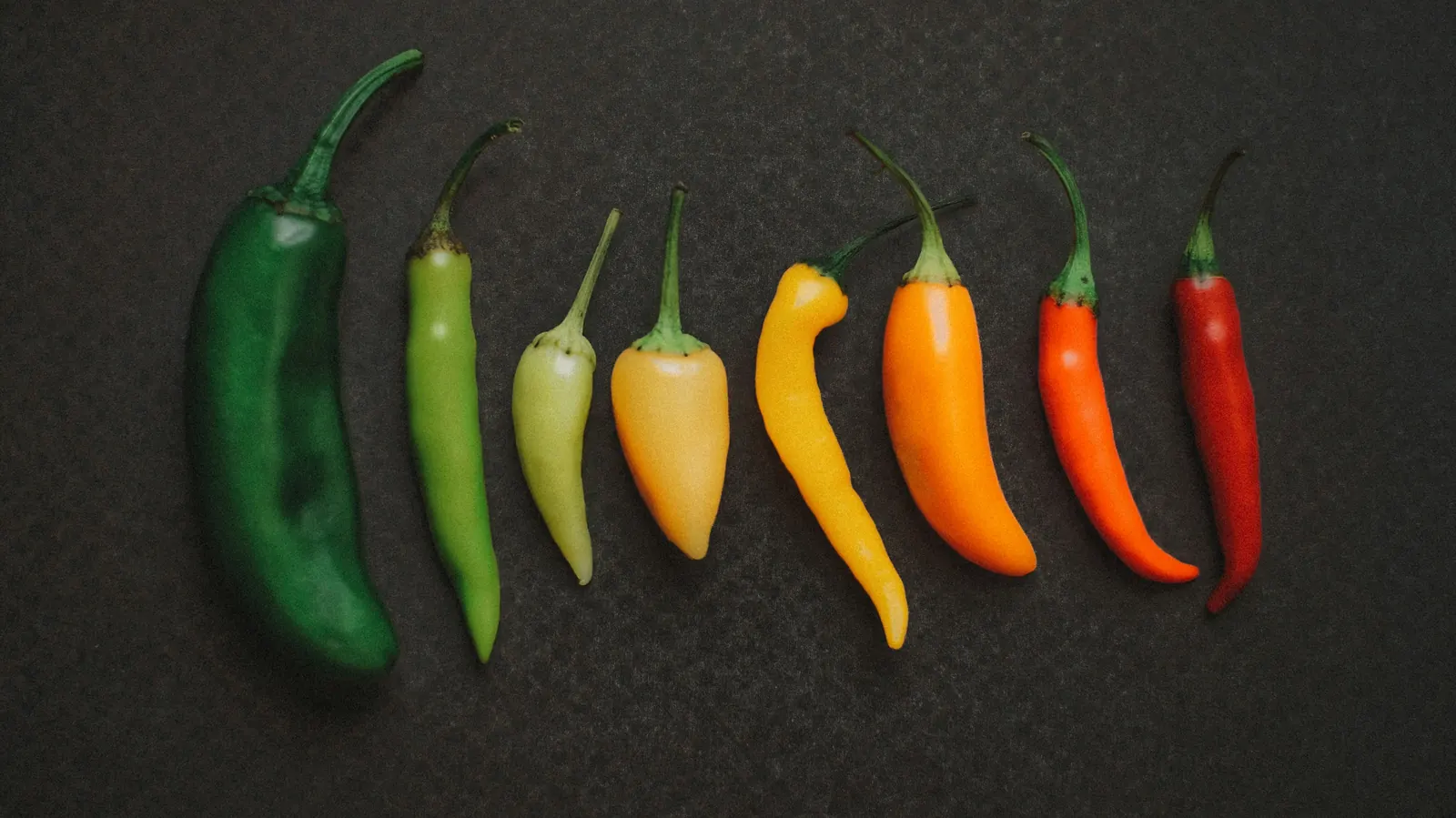
Menus name chiles as though everyone knows what they mean. Poblano, chipotle, guajillo, serrano, habanero — six words, six completely different propositions.
Most of them are not about heat at all, and telling which is which is the whole skill.
The short answer
Mexican chiles split into fresh and dried, and drying changes a chile so completely that it gets a new name. Fresh chiles taste green, bright and sharp; dried ones taste of raisin, tobacco and smoke. Heat is measured in Scoville units and ranges from almost none to extreme, but on a restaurant menu most named chiles are there for flavor. Only a few are genuine warnings.
Fresh and dried are different ingredients
This is the single most useful thing to understand, and it explains why the names multiply.
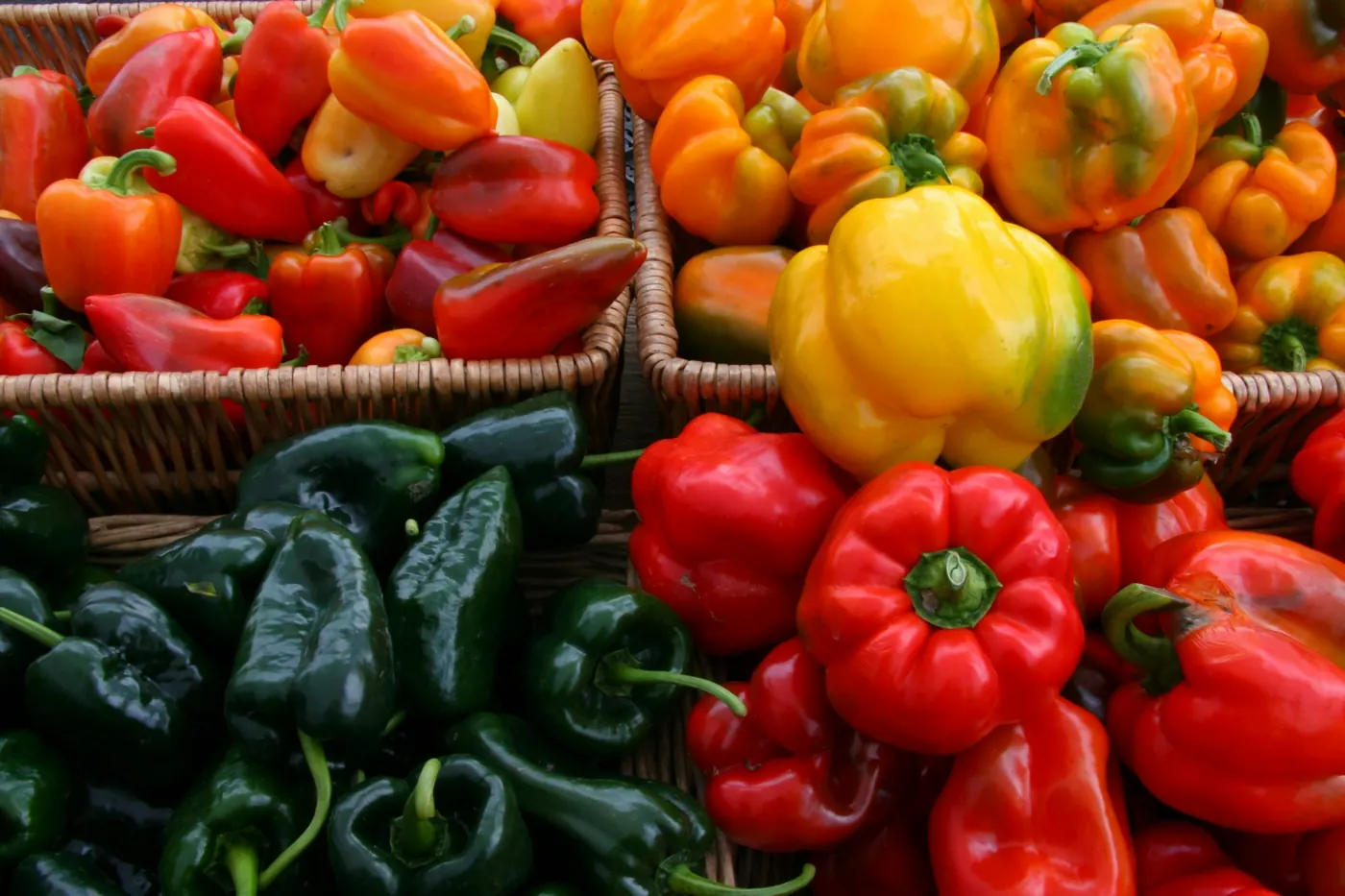
A fresh chile is a vegetable. It tastes green and grassy, it holds water, and it is used raw, roasted or sautéed. A dried chile is a concentrate. The water is gone, sugars have caramelized, and the flavor has moved toward dried fruit, tobacco and cocoa.
Because the two behave so differently, Mexican cooking treats them as separate ingredients and gives them separate names. A fresh poblano becomes an ancho when dried. A fresh jalapeño becomes a chipotle when smoked and dried. Same plant, new word.
The ones you will actually meet
| Chile | Fresh or dried | Scoville | What it brings |
|---|---|---|---|
| Poblano | Fresh | 1,000–1,500 | Green, vegetal, smoky when roasted |
| Ancho | Dried poblano | 1,000–2,000 | Raisin, prune, mild sweetness |
| Jalapeño | Fresh | 2,000–8,000 | Bright, grassy, moderate heat |
| Chipotle | Smoked jalapeño | 2,000–8,000 | Woodsmoke, depth |
| Guajillo | Dried | 2,500–5,000 | Tart, berry-like, deep red color |
| Serrano | Fresh | 10,000–25,000 | Clean, immediate heat |
| Habanero | Fresh | 100,000–350,000 | Floral, tropical, fierce |
Read the Scoville column and one thing jumps out: the first five are all clustered at the bottom. The gap between a guajillo and a habanero is a factor of about fifty.
How heat is measured
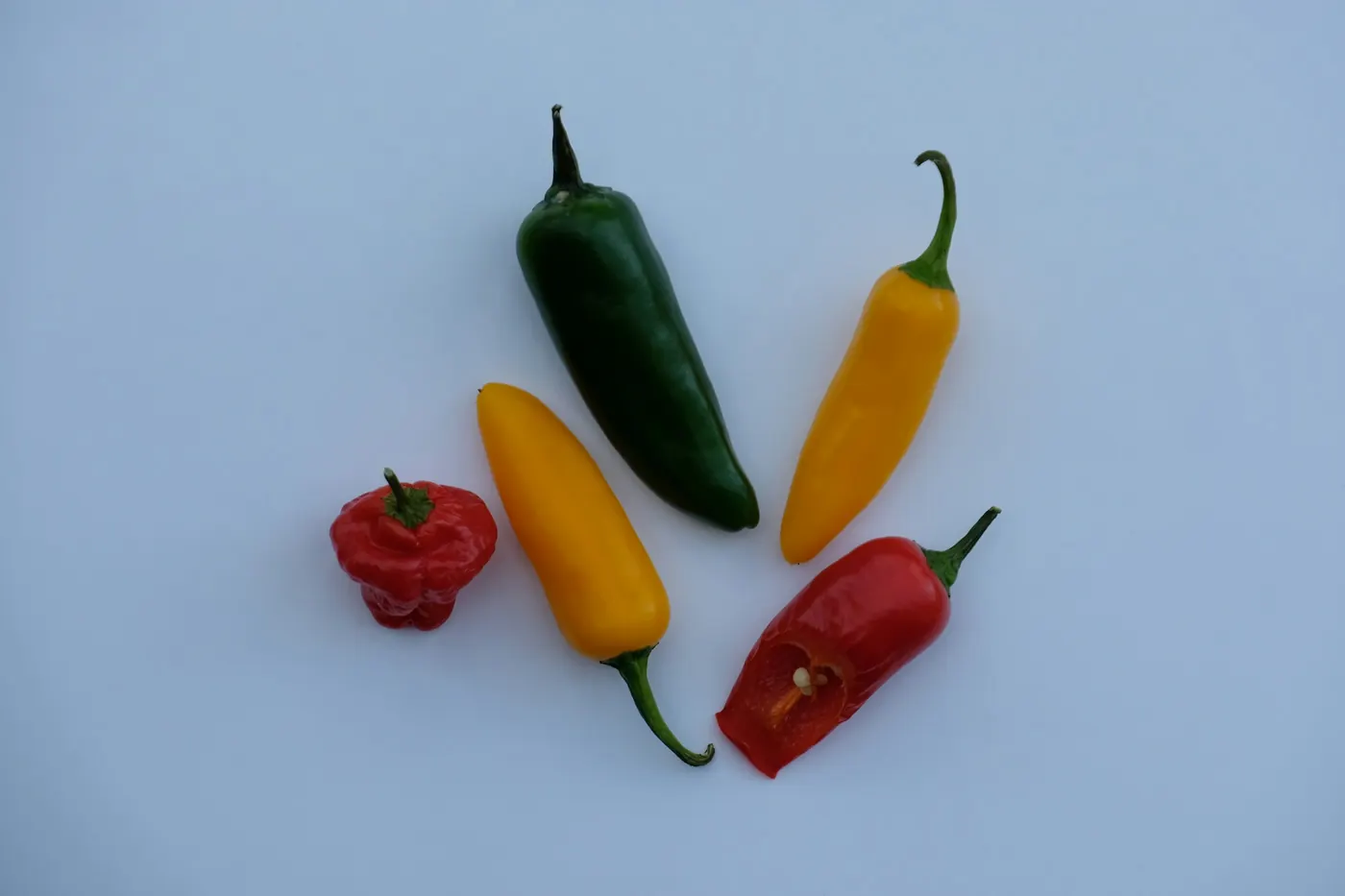
The Scoville scale is older and stranger than most people assume.
New Mexico State University’s extension guide to measuring chile pepper heat explains that heat comes from compounds called capsaicinoids, and that the Scoville Organoleptic Test was the first laboratory method used to measure it. Samples were diluted until human tasters could no longer detect heat, and one unit of dilution is one Scoville Heat Unit.
That is a taste test, with all the imprecision that implies. The same page notes the modern method is high-performance liquid chromatography, which measures individual capsaicinoids directly.
Two practical consequences. Published Scoville numbers are ranges, not values, because two peppers off the same plant differ. And the heat sits in the pale internal ribs, not the seeds — the seeds only taste hot because they touch them.
Which names are warnings
This is the part that matters when you are holding a menu.
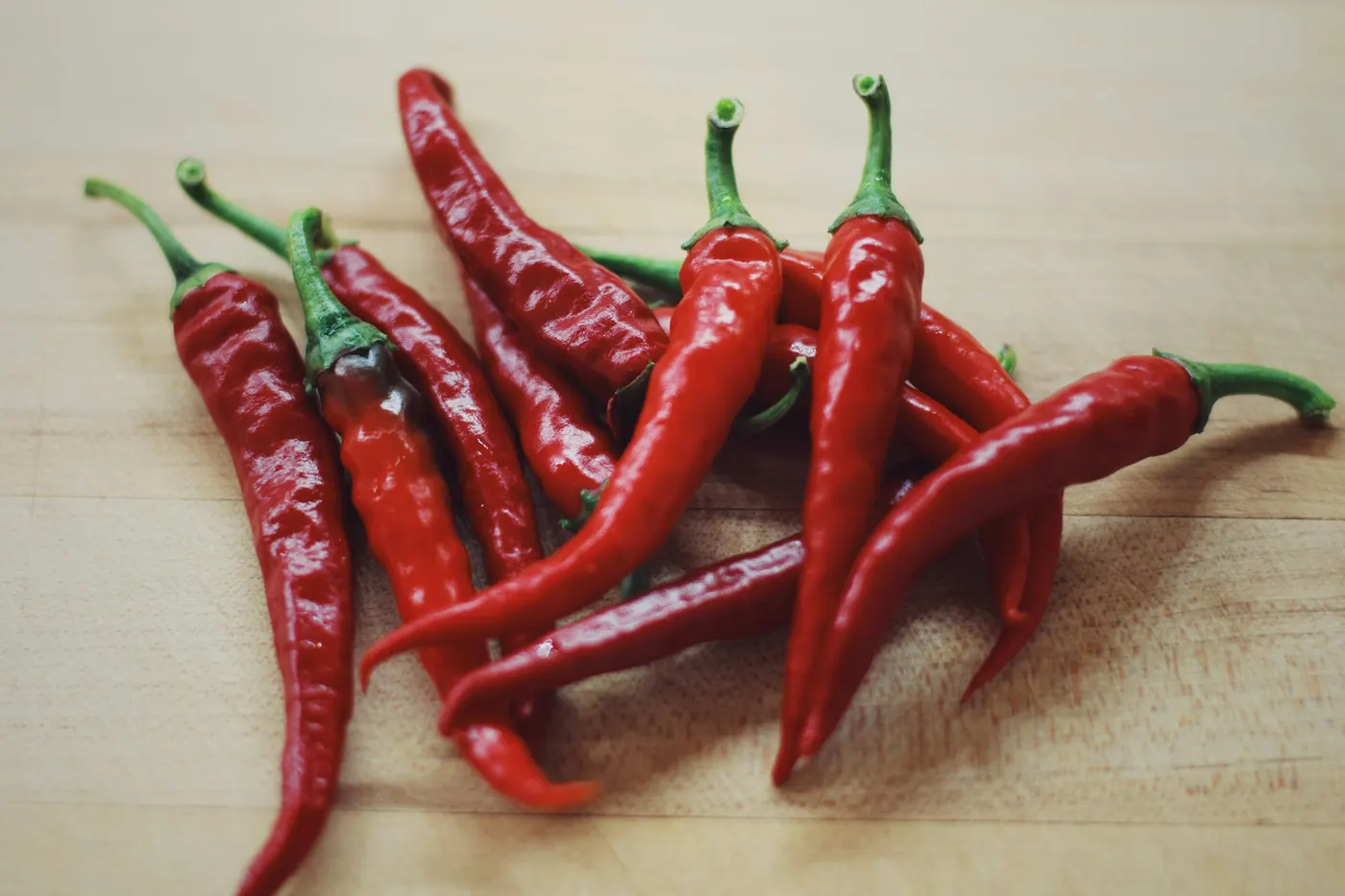
Genuine warnings: habanero, serrano, chile de árbol. If one of these is named, expect heat.
Flavor notes, not warnings: poblano, ancho, guajillo, pasilla, mulato, achiote. These are in the dish for depth and color.
It depends: jalapeño and chipotle sit in the middle. A jalapeño cream sauce is mild; raw jalapeño in a salsa is not.
Two modifiers change everything. Roasted softens a chile and brings out sweetness. Cream or tomato dilutes it. A roasted tomato-habanero sauce is a different animal from raw habanero salsa, and our guide to mild dishes works through the rest of that vocabulary.
Why so many
Mexico grows dozens of chile varieties, and the reason is not novelty. It is that they do different jobs.
A mole can contain four or five dried chiles at once — ancho for sweetness, pasilla for depth, mulato for darkness, chipotle for smoke — because no single one carries the whole flavor. Our mole guide goes through that layering.
Regional cooking narrows the list. The Yucatán leans on habanero. Puebla built its reputation on ancho and mulato. The north uses fewer chiles and more beef, which our regional guide covers.
What roasting and drying actually do
Two processes account for most of the difference between one chile and another on a plate, and neither is about heat.
Roasting is used on thick-walled fresh chiles — poblano above all. Charring the skin over flame does two things: it lets the tough, papery skin be peeled off, and it caramelizes sugars in the flesh, adding a smokiness that raw pepper does not have. A roasted poblano and a raw one barely taste related.
Drying is used on thinner-walled chiles that will not rot before the water leaves. As it happens, sugars concentrate and Maillard-type reactions build flavors that were not there before — which is why a dried chile tastes of raisin and tobacco rather than of intensified pepper.
Smoking is drying with an extra step, and it is used where a chile is too wet to air-dry. The jalapeño is the main example, and the result is a chipotle.
On Julia’s menu
Five chiles are named on Julia’s menu, and the split between flavor and heat is clean.
Poblano appears in five dishes — the chile relleno, the chile con queso rajas, the queso fundido, and two enchiladas. All mild.
Chipotle appears in four, always as a sauce: camarones chipotle, enchiladas de camarón, the empanada dipping sauce, and the al chipotle fajita style.
Jalapeño turns up pickled on the nachos and as a creamy sauce on the sopes and empanadas. Serrano is in the ceviche, the aporreadillo and the carne guisada. And habanero is in four dishes, always roasted into a tomato sauce.
The pozole and the brisket birria are both built on unnamed dried peppers, which is standard — a kitchen rarely lists the blend.
Frequently asked questions
What is the difference between fresh and dried chiles?
Drying removes water and concentrates sugars, moving the flavor from green and grassy toward raisin, tobacco and smoke. They are treated as separate ingredients with separate names.
Which Mexican chile is hottest?
Of the ones commonly named on menus, habanero, at 100,000 to 350,000 Scoville units. Serrano is a distant second.
Is the heat in the seeds?
No. It is in the pale internal ribs the seeds attach to. Seeds taste hot only because they sit against them.
Does a chile name on a menu mean the dish is spicy?
Usually not. Poblano, ancho, guajillo and chipotle are there for flavor. Habanero and serrano are the names to read as warnings.
Why does the same chile have two names?
Because the dried version tastes so different it is treated as its own ingredient. Poblano becomes ancho; jalapeño becomes chipotle.
The short version
Fresh chiles taste green; dried ones taste of dried fruit and smoke, and get their own names. Most chile names on a menu describe flavor. Habanero and serrano are the two that describe heat.
Julia’s names five across the menu, and only one of them is genuinely hot.