
A wok is a simple pan with a steep learning curve. It needs seasoning, it wants more heat than most home stoves give, and it punishes a crowded pan. Most people who buy one get a couple of disappointing stir-fries and put it away. A good book changes that, because the things that go wrong with a wok are about heat, timing and prep, not about the recipe.
This guide covers eight books by named authors and established publishers, from a complete wok manual to a short book of takeout favorites. Some are about the wok itself, and some are Chinese home cooking that gives the wok plenty of work. For each one we say what the named sources report and who it suits, and we say clearly where a pick rests on the publisher’s details alone.
Julia’s earns a commission on purchases made through links on this page, at no cost to you. Recommendations are based on what a restaurant kitchen looks for in a cookbook, publisher and listing information, and published reviews, which we cite.
Quick verdict: the best wok cookbook to buy
For most cooks, buy J. Kenji López-Alt’s The Wok: Publishers Weekly called it a definitive guide, and it covers choosing a wok, caring for it and cooking on a home stove. If you want something shorter and more personal, choose Grace Young’s The Breath of a Wok. If you want everyday dinners, choose The Woks of Life.
The other five are a photo-led Chinese cookbook from the Pang family, a James Beard winner on simple home cooking, a Cantonese family classic, a takeout collection and a short starter book.
Five wok books side by side
Five of the eight, one for each kind of cook. All eight are described in full below.
| Book | Best for | Focus | Named source | Buy on Amazon |
|---|---|---|---|---|
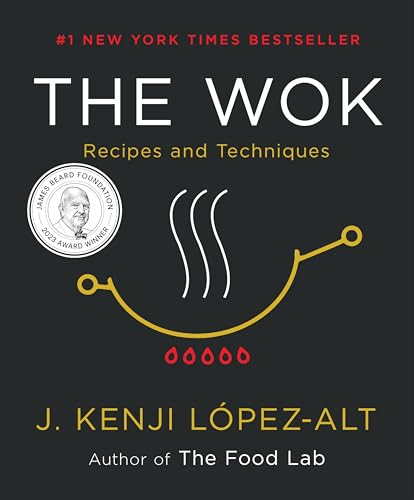
The Wok, J. Kenji López-AltBest overall
|
Learning the wok properly | Technique, equipment, recipes | Publishers Weekly; Atlanta Journal-Constitution | View on Amazon |

The Breath of a Wok, Grace YoungBest for wok lore
|
Cooks who love the wok itself | Wok care, lore and stir-fries | Publishers Weekly | View on Amazon |

The Woks of Life, The Leung FamilyBest for family cooking
|
Everyday Chinese American dinners | Home-style and restaurant-style recipes | Publishers Weekly | View on Amazon |

A Very Chinese Cookbook, Kevin and Jeffrey PangBest step-by-step
|
Learning basics from photos | Regional and American Chinese | Rests on publisher details | View on Amazon |

Chinese Takeout Cookbook, Kwoklyn WanBest for takeout favorites
|
Recreating familiar orders | Chow mein, fried rice, spring rolls | Publishers Weekly | View on Amazon |
Cover images from Amazon. Page counts and formats are for the editions linked; other editions differ.
Our picks for the best wok cookbook, book by book
Two of these eight are about the wok itself, and the rest are Chinese cookbooks with dishes that suit it. Six have a named review or major award that we can cite. A Very Chinese Cookbook and Easy Chinese Recipes rest on the publisher’s details, and we say so in their entries. We have not cooked our way through these books; where we describe a strength, we say whose view it is.
1. The Wok, J. Kenji López-Alt – The Full Course in One Book
The Wok is the book to buy if you want one wok book and intend to use it. Publishers Weekly called it a definitive guide to wok cooking, praising its coverage of technique and culinary history alongside the recipes. It also comes with the kind of practical detail most cookbooks skip, including advice on choosing a 14-inch, flat-bottomed, carbon steel wok and on stir-frying over an electric burner.
Susan Puckett, reviewing it for The Atlanta Journal-Constitution, bought a wok after the book arrived. She reports that it covers wok buying and care, pantry ingredients, several cooking methods, rice and noodles, and sauces, and that her kung pao chicken came close to her favorite takeout in about half an hour. She also learned that a flat-bottomed wok works on a small electric burner if you cook in small batches.
That matters for most American kitchens, which do not have a restaurant burner. If you are cooking on electric, read our guide to the best wok for an electric stove alongside it. Publishers Weekly also points out the Q&As, sidebars and step-by-step photos that break up a very long book.
Why we like it
- Called a definitive guide by Publishers Weekly
- Advice on choosing a wok and on electric burners
- Covers wok care, pantry, methods, noodles and sauces, per the AJC
- Step-by-step photos, Q&As and sidebars
Key specifications
| Author | J. Kenji López-Alt |
|---|---|
| Publisher | W. W. Norton |
| Year | 2022 |
| Pages | 672 (Amazon listing) |
| Format | Hardcover |
| Named source | Publishers Weekly and Atlanta Journal-Constitution reviews |
| Focus | Wok technique, equipment and recipes |
| Best for | Cooks who want one complete wok book |
Why we recommend it
If you own a wok and it mostly sits in the cupboard, this is the book most likely to change that. It covers what to buy, how to care for it and what to cook.
Skip it if you want a short book. At this length it is a reference, and a cook who wants a handful of weeknight stir-fries may find it more than they need.
Pros and cons
Pros
- Complete on technique and equipment
- Covers home stoves, including electric
- Named reviews from two outlets
Cons
- Very long for a casual reader
- A big, heavy book to keep at the stove
2. The Breath of a Wok, Grace Young – The Wok as the Subject
Publishers Weekly called The Breath of a Wok unusual among Chinese cookbooks because it is about the wok itself rather than a whole cuisine or one region. Grace Young explores the pan’s history, uses and meaning, so the book works as both food scholarship and a cookbook.
The practical side is strong. According to the review, about half the content is wok know-how, including how to choose a wok for a home kitchen and how to season a new one, and most of the recipes are stir-fries. Young credits her sources, who range from her own relatives to figures such as Martin Yan and Amy Tan.
The review is honest that this is not a definitive Chinese cookbook, and it was never meant to be. It praises the book’s elegance and meditative tone and calls it a welcome gift. Young’s later Stir-Frying to the Sky’s Edge won a James Beard Foundation award, but it was low in stock when we checked, so this is the Grace Young wok book we can recommend today.
Why we like it
- Focuses on the wok itself, per Publishers Weekly
- About half the book is wok know-how
- Covers choosing and seasoning a wok
- Most recipes are stir-fries
Key specifications
| Author | Grace Young |
|---|---|
| Publisher | Simon & Schuster |
| Year | 2004 |
| Pages | 256 (Amazon listing) |
| Format | Hardcover |
| Named source | Publishers Weekly review |
| Focus | Wok history, care and stir-fries |
| Best for | Cooks who want the story too |
Why we recommend it
Buy this if you like to know where a tool comes from, or as a gift for someone who has just bought their first wok. It is the most personal book on this list.
Skip it if you want one Chinese cookbook to cover everything. Publishers Weekly is clear that it does not try to.
Pros and cons
Pros
- Strong on seasoning and care
- Mostly stir-fry recipes
- Elegant, readable book
Cons
- Not a complete Chinese cookbook
- First published in 2004, so not a recent book
3. The Woks of Life, The Leung Family – Chinese American Home Cooking
The Woks of Life comes from the Leung family, Bill, Judy, Sarah and Kaitlin, creators of the blog of the same name. Publishers Weekly called it a heartfelt debut, drawing on the parents’ restaurant experience and the sisters’ shortcut-minded cooking.
The publisher describes 100 home-cooked and restaurant-style Chinese recipes, plus guidance on essential tools, including what it calls the all-important wok. Publishers Weekly points to practical touches such as a premixed sauce for dan dan noodles, recipes like Hong Kong beef brisket, QR codes that link to demonstration videos, and a tools guide for cooks new to Chinese food.
This is a Chinese American family cookbook, not a book about the wok alone, so expect more than stir-fries. For most households that is a strength: it gives you a reason to take the wok out on a normal weeknight. The publisher also lists it as a James Beard Award nominee and an IACP Award finalist.
Why we like it
- Restaurant experience and home shortcuts, per Publishers Weekly
- QR codes link to demonstration videos
- Tools guide for cooks new to Chinese food
- James Beard nominee and IACP finalist, per the publisher
Key specifications
| Author | Bill, Judy, Sarah and Kaitlin Leung |
|---|---|
| Publisher | Clarkson Potter |
| Year | 2022 |
| Pages | 320 (Amazon listing) |
| Format | Hardcover |
| Named source | Publishers Weekly review |
| Focus | Chinese American home and restaurant cooking |
| Best for | Families and everyday cooks |
Why we recommend it
Choose it if you want dinner more than a lesson. It suits someone who wants to cook Chinese food often and would like some help on the way.
Skip it if you want a book entirely about wok technique. The Wok and The Breath of a Wok go much deeper on that.
Pros and cons
Pros
- Practical shortcuts
- Video links for techniques
- Good introduction to the pantry and tools
Cons
- Broader than wok cooking
- Recipes go well beyond quick stir-fries
4. A Very Chinese Cookbook, Kevin and Jeffrey Pang – Technique Shown in Photos
Kevin Pang wrote this with his father Jeffrey, and America’s Test Kitchen published it. According to Penguin Random House’s page, it has more than 100 recipes from Cantonese, Sichuan, American Chinese and other cooking traditions, told through family stories and food history, with a Chinatown shopping guide for staples such as soy sauce and vinegar.
For a wok owner, the useful part is the teaching. America’s Test Kitchen’s own page says the technique photos run from stir-fry basics to folding soup dumplings, and that they walk you through heating and seasoning a wok.
We should be clear about the evidence. Publishers Weekly’s page shows no review of this book, so this pick rests on the publisher’s details. The publisher says it was named a best cookbook of the year by The New York Times and Serious Eats, and that Kevin Pang is a James Beard Award winner, but we have not read those lists ourselves.
Why we like it
- Photos on heating and seasoning a wok, per the publisher
- More than 100 recipes across several traditions
- A Chinatown shopping guide for staples
- Written by a father and son with family stories
Key specifications
| Author | Kevin Pang and Jeffrey Pang, with America’s Test Kitchen |
|---|---|
| Publisher | America’s Test Kitchen |
| Year | 2023 |
| Pages | 384 (Amazon listing) |
| Format | Hardcover |
| Named source | None read; rests on publisher details |
| Focus | Chinese home cooking with technique photos |
| Best for | Visual learners |
Why we recommend it
Buy this if you learn better from pictures than from paragraphs, and want a broad Chinese cookbook that still teaches the wok.
Skip it if you want a single-subject wok book. The stir-fry basics are one part of a wider collection.
Pros and cons
Pros
- Photo-led technique teaching
- Wide range of Chinese cooking
- Helpful shopping guide
Cons
- Broader than wok cooking
- Rests on publisher details, not a review we read
5. Every Grain of Rice, Fuchsia Dunlop – Plain Chinese Home Cooking

Fuchsia Dunlop’s Every Grain of Rice won the James Beard Foundation’s award for International cooking, and the subtitle tells you what it is: simple Chinese home cooking. It is a good fit for this list because it is the kind of everyday food a wok is made for, even though it is not a wok manual.
Kaitlyn Goalen, writing for Tasting Table, praised the book for making Chinese home cooking approachable. She found the recipes simple, said most readers will already own what they need beyond a few basic pantry items, and picked out a late-night noodle dish and a red-braised pork that tastes as if it took hours. She also noted that the book is largely vegetarian-friendly, which suits healthy weeknight meals.
One point deserves a straight answer: the same review says you do not need a wok to make these recipes. We still include it because it gives wok owners a lot of reasons to cook, and because a skillet start is fine. If you are weighing the two pans, our wok vs. pan guide sets out the differences.
Why we like it
- James Beard Foundation International winner
- Simple recipes and a short pantry, per Tasting Table
- Largely vegetarian-friendly, per the same review
- Everyday food rather than banquet dishes
Key specifications
| Author | Fuchsia Dunlop |
|---|---|
| Publisher | W. W. Norton |
| Year | 2013 |
| Pages | 352 (Amazon listing) |
| Format | Hardcover |
| Named source | James Beard Foundation award; Tasting Table review |
| Focus | Simple Chinese home cooking |
| Best for | Weeknight cooks and vegetable lovers |
Why we recommend it
Choose it if you want plain, quick Chinese food and more vegetables on the table. It suits a cook who wants to use the wok often without a long shopping trip.
Skip it if you want wok technique explained in depth. Tasting Table says the recipes do not even require one.
Pros and cons
Pros
- Award-winning
- Approachable recipes
- Many vegetable dishes
Cons
- Not a wok manual
- A few pantry items may be new to you
6. The Wisdom of the Chinese Kitchen, Grace Young – Family Recipes, No Shortcuts

Grace Young’s earlier book is the traditional choice on this list. Publishers Weekly describes a San Francisco-born recipe developer sharing memories of the Cantonese family meals of her youth, with a first part on basic techniques including preparing produce, chopping, steaming, stir-frying and cooking rice.
The review notes that Young sticks to traditional Cantonese methods and avoids substitutes and shortcuts such as food processors. It warns that the recipes often involve labor-intensive prep, though it finds them clearly written and approachable for home cooks.
Later parts move away from the wok, into the symbolism of festive and Lunar New Year foods and the tradition of yin and yang qualities in food. That makes it a book about a family table as much as a stove. For stir-frying alone, her The Breath of a Wok is the better buy, and this one is the companion.
Why we like it
- Teaches stir-frying among the basics, per Publishers Weekly
- Traditional Cantonese methods without shortcuts
- Clearly written recipes, per the review
- Lunar New Year food traditions explained
Key specifications
| Author | Grace Young |
|---|---|
| Publisher | Simon & Schuster |
| Year | 1999 |
| Pages | 304 (Amazon listing) |
| Format | Hardcover |
| Named source | Publishers Weekly review |
| Focus | Cantonese family cooking and food traditions |
| Best for | Cooks drawn to tradition |
Why we recommend it
Buy this if you want to cook Cantonese food the way a family would, and you enjoy the prep as much as the cooking.
Skip it if you need dinner in 20 minutes. The review warns that much of the prep is labor-intensive.
Pros and cons
Pros
- Rooted in family tradition
- Clear recipes
- Covers core techniques
Cons
- Prep can be long
- Only part of the book is about the wok
7. Chinese Takeout Cookbook, Kwoklyn Wan – Restaurant Dishes at Home
Sometimes you bought a wok because you wanted chow mein. Kwoklyn Wan, a U.K. restaurateur and chef, makes this book for that cook. The title promises more than 70 recipes to re-create your favorites, and Publishers Weekly lists spring rolls, ribs, roast duck, chow mein and fried rice among them.
We include the review’s lukewarm verdict because it is useful. Publishers Weekly found the book competent but not outstanding, noted that Wan makes clear it is not a comprehensive guide to Chinese cuisine, and pointed to his heavy use of cornstarch for texture, sealing in flavor and thickening sauces. It concluded that the book is best for readers who want to recreate restaurant dishes they already know.
That is a fair and narrow job, and it is why the book sits here. It is short by the standards of this list, which makes it easy to use at the stove.
Why we like it
- More than 70 takeout recipes, per the title
- Familiar dishes such as chow mein and fried rice
- Written by a restaurateur and chef, per Publishers Weekly
- A short book that stays on one subject
Key specifications
| Author | Kwoklyn Wan |
|---|---|
| Publisher | Quadrille Publishing |
| Year | 2019 |
| Pages | 160 (Amazon listing) |
| Format | Hardcover |
| Named source | Publishers Weekly review (mixed) |
| Focus | Restaurant-style takeout dishes |
| Best for | Takeout lovers |
Why we recommend it
Buy this if you know exactly which dishes you want to make and would like a short book that sticks to them.
Skip it if you want to learn Chinese cooking more widely. Publishers Weekly says it is not meant for that, and rated it competent rather than outstanding.
Pros and cons
Pros
- Stays on familiar dishes
- Short and easy to use
- From a working restaurateur
Cons
- Competent rather than outstanding, per Publishers Weekly
- Relies heavily on cornstarch
8. Easy Chinese Recipes, Bee Yinn Low – Favorites in a Compact Book

Bee Yinn Low publishes the recipe site Rasa Malaysia, and Tuttle’s page for this book describes it as a way to cook favorite Chinese dishes at home without much time or hard-to-find ingredients. Tuttle lists more than 80 recipes and about 200 color photos.
The dishes it names are the ones many people want from a wok: kung pao chicken, sweet-and-sour pork, homestyle chow mein noodles and Mongolian beef, plus crispy shrimp dumplings. The publisher’s page does not talk about woks or technique, so treat that as our reading of the dish list, not a promise about the book.
This pick rests on the publisher’s details. Publishers Weekly’s page shows no review, and we did not read another. We include it because Tuttle is an established publisher of Asian cookbooks, and because a short, photo-heavy book is a sensible first step for a cook who finds the larger titles here too much.
Why we like it
- More than 80 recipes, per Tuttle
- About 200 color photos
- Popular dishes that suit a wok
- Aimed at busy cooks with limited ingredients
Key specifications
| Author | Bee Yinn Low; foreword by Jaden Hair |
|---|---|
| Publisher | Tuttle Publishing |
| Year | 2011 |
| Pages | 144 (Amazon listing) |
| Format | Hardcover |
| Named source | None read; rests on publisher details |
| Focus | Popular Chinese dishes, simply |
| Best for | Beginners on a short schedule |
Why we recommend it
Choose it if you want a short, picture-led book to get cooking this week, and the big titles here feel like too much.
Skip it if you want wok technique. The publisher’s page does not mention it, so buy The Wok for that.
Pros and cons
Pros
- Short and approachable
- Plenty of photos
- Familiar dishes
Cons
- No wok teaching mentioned by the publisher
- Rests on publisher details, not a review we read
How to choose a wok cookbook
Four questions sort these out quickly. Start with your stove, then think about how often you will actually cook.
1. Your stove
Heat decides a lot. Publishers Weekly and The Atlanta Journal-Constitution both note that The Wok addresses electric burners, and that is a real help if you do not cook on gas. Our guides to the best wok for a gas stove and the best wok for an induction cooktop cover the pan side of that question.
2. Learning or dinner
If you need to learn how a wok works, buy a book that teaches it: The Wok, The Breath of a Wok or the technique photos in A Very Chinese Cookbook. If you already know the basics and want ideas, The Woks of Life and Every Grain of Rice will get more use.
3. How deep you want to go
A long book can be a pleasure or a burden. The Wok is by far the longest book here, and Easy Chinese Recipes and Chinese Takeout Cookbook are the shortest. Be honest about which you will open on a Tuesday. A cookbook stand helps with the big ones, because a stir-fry leaves no spare hand for turning pages.
4. The food you want to eat
These books lean Chinese and Chinese American, which is the wok’s home. Grace Young’s books are the most Cantonese. Chinese Takeout Cookbook is the most restaurant-minded, and Every Grain of Rice is the most vegetable-friendly. Your tools matter too: a good wok ladle and a sharp cleaver make the prep and the toss much easier.
How we chose these eight wok books
We looked for books a working kitchen would respect: written by cooks with a track record, specific about heat and technique, and published by established trade houses. We searched Amazon’s book listings and kept only print editions in stock from Amazon itself when we checked. That ruled out several good titles. Grace Young’s Stir-Frying to the Sky’s Edge was low in stock, Kian Lam Kho’s Phoenix Claws and Jade Trees was dated for later in print, and the print copies of Ken Hom’s Quick Wok we found were used. We also left out the many anonymous wok titles on Amazon with no named author or publisher behind them.
Six picks have a named source we read. Publishers Weekly reviewed The Wok, The Breath of a Wok, The Woks of Life, The Wisdom of the Chinese Kitchen and Chinese Takeout Cookbook; The Atlanta Journal-Constitution also reviewed The Wok; and Every Grain of Rice has a James Beard Foundation award and a Tasting Table review. A Very Chinese Cookbook and Easy Chinese Recipes rest on the publishers’ details, because Publishers Weekly’s pages show no review of them. That does not mean no review exists, only that we did not read one. We have not cooked from these books ourselves. The strengths we describe belong to the reviewers and publishers, and we name them.

Wok cooking book questions, answered
What is the best wok cooking book for beginners?
If you want a real grounding, The Wok covers buying, care and technique. If its length puts you off, A Very Chinese Cookbook teaches heating and seasoning a wok in photos, according to the publisher, and Easy Chinese Recipes is a short place to begin cooking.
Which book explains how to season a wok?
The Breath of a Wok, which Publishers Weekly says covers choosing a wok for a home kitchen and seasoning a new one. The Wok covers care too, according to The Atlanta Journal-Constitution’s review, and the publisher says A Very Chinese Cookbook shows it in photos.
Can I use these books on an electric stove?
Yes, with limits. Publishers Weekly notes that The Wok advises on stir-frying over an electric burner, and The Atlanta Journal-Constitution’s reviewer says a flat-bottomed wok worked on a small burner when she cooked in small batches. See our guide to the best wok for an electric stove.
Do I need a wok to cook from these books?
Not for all of them. Tasting Table says you do not need one for Every Grain of Rice. The Wok and The Breath of a Wok are built around the pan, so they make less sense without one. Our wok vs. pan comparison will help you decide.
Can a wok work for Mexican food?
None of these books covers it, but a wide, hot pan suits fajita-style vegetables and meat. For Mexican technique, read our guide to Mexican cooking methods and our list of the best Mexican cookbooks.
Our final pick for the wok
Buy The Wok if you want one book that covers the whole subject. Choose The Breath of a Wok for wok care and lore, The Woks of Life for family dinners and Every Grain of Rice for simple, vegetable-friendly cooking. If you still need the pan itself, start with our guide to the best wok.
Related guide: Best noodle cookbook.
Related guide: Best chinese cookbook.
Related guide: Best vietnamese cookbook.
Related guide: Best filipino cookbook.
And if you would rather someone else stood at the stove tonight, see the menu or call to order.