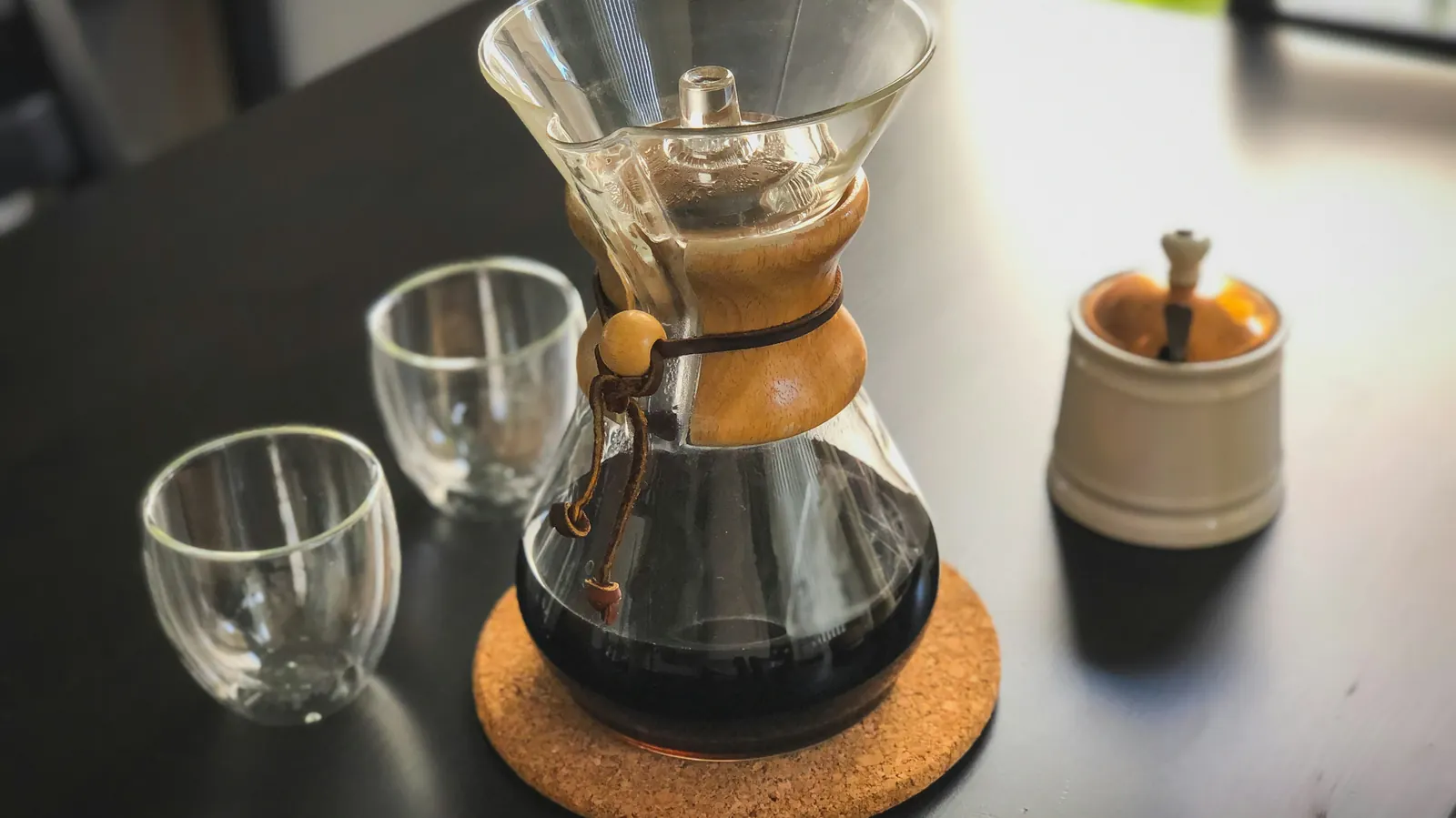
Before drip machines, coffee in a Mexican kitchen was made in a clay olla, a tin pot or an enamel jarro, and nothing plastic came near it. Plenty of people want to get back to that, and the easiest way is to choose a brewer where the hot water and the coffee only ever touch glass, ceramic or metal. Most electric drip machines cannot promise that: their water tanks, brew baskets and lids are usually plastic.
This guide is a narrower branch of our main coffee maker guide. Every pick here is a brewer where, according to its maker or listing, the parts that hold water and coffee are glass, stainless steel or aluminum. For each one we say which parts are plastic, if any, and where a maker does not say what a part is made of, we write “Not stated” rather than guess. We make no health claims about any material; this guide is about what each brewer is made of.
Julia’s earns a commission on purchases made through links on this page, at no cost to you. Recommendations are based on what a restaurant kitchen looks for, product specifications and verified buyer reports.
Quick verdict: which no plastic coffee maker to buy
For most homes, the best no plastic coffee maker is the Chemex Glass Handle 10-Cup: brewer and carafe are one piece of borosilicate glass, handle included, and the only other thing that touches the coffee is a paper filter. For one or two cups, the Kalita Wave 185 Stainless is a steel dripper made in Japan. For espresso-style coffee, the Bialetti Venus is an 18/10 stainless moka pot; for a classic pot on the stove, the Farberware Yosemite percolator is stainless with a glass knob; and for French press, the Secura 34 oz is stainless inside and out.
The table sets out the five we would point most kitchens toward. All eight brewers are reviewed in full below it.
Five plastic-free brewers side by side
What touches the coffee, and where any plastic is, for our five standout picks.
| Coffee maker | Best for | What touches the coffee | Plastic parts | Buy on Amazon |
|---|---|---|---|---|

Chemex Glass Handle 10-Cup CoffeemakerBest overall
|
A full pot, nothing but glass | Borosilicate glass, paper filter | None listed | View on Amazon |

Kalita Wave 185 Stainless Steel DripperBest for one or two
|
Two to four cups over a mug | Stainless steel, paper filter | Resin handle, outside only | View on Amazon |

Bialetti Venus 4-Cup Stainless Moka PotBest moka pot
|
Strong coffee, any stove | 18/10 stainless steel, gasket | Thermoplastic handle; gasket not stated | View on Amazon |

Farberware Yosemite 8-Cup Stainless PercolatorBest percolator
|
A classic pot on the stove | Stainless steel, glass knob | Handle material not stated | View on Amazon |
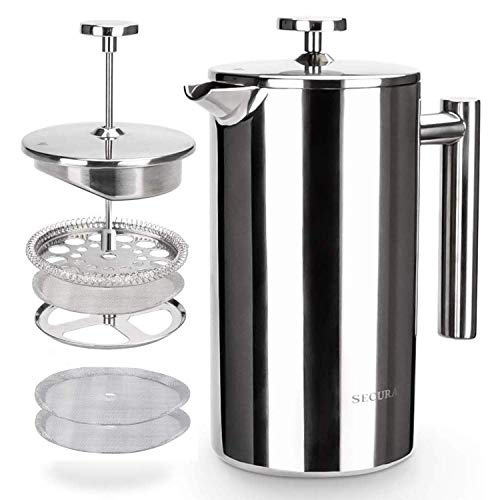
Secura 34 oz Stainless French PressBest French press
|
Full-bodied coffee, no paper | 18/8 stainless body and filter | Handle and knob material not stated | View on Amazon |
Product images from Amazon. Materials are as each maker or listing states them; “not stated” means we could not find the maker’s own statement for that part.
Our picks for the best no plastic coffee maker
Eight brewers in four families: pour-over in glass and stainless steel, moka pots in stainless steel and aluminum, stovetop percolators, and a stainless French press. None of them plugs in. That is not a coincidence: we could not find an electric drip machine in stock whose maker says no plastic touches the water, and we explain the near-misses after the picks.
1. Chemex Glass Handle 10-Cup Coffeemaker – One Piece of Glass, Handle Included
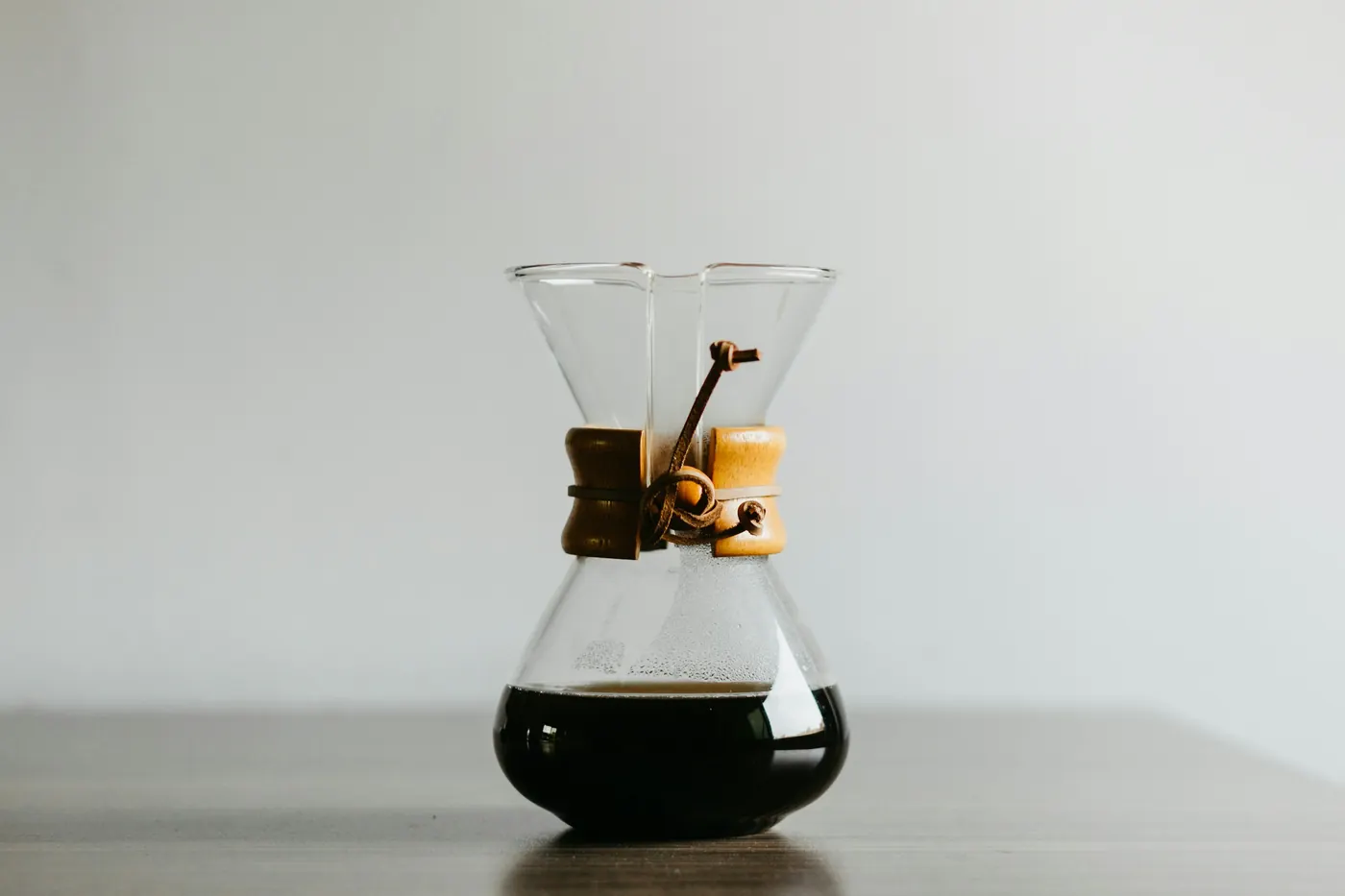
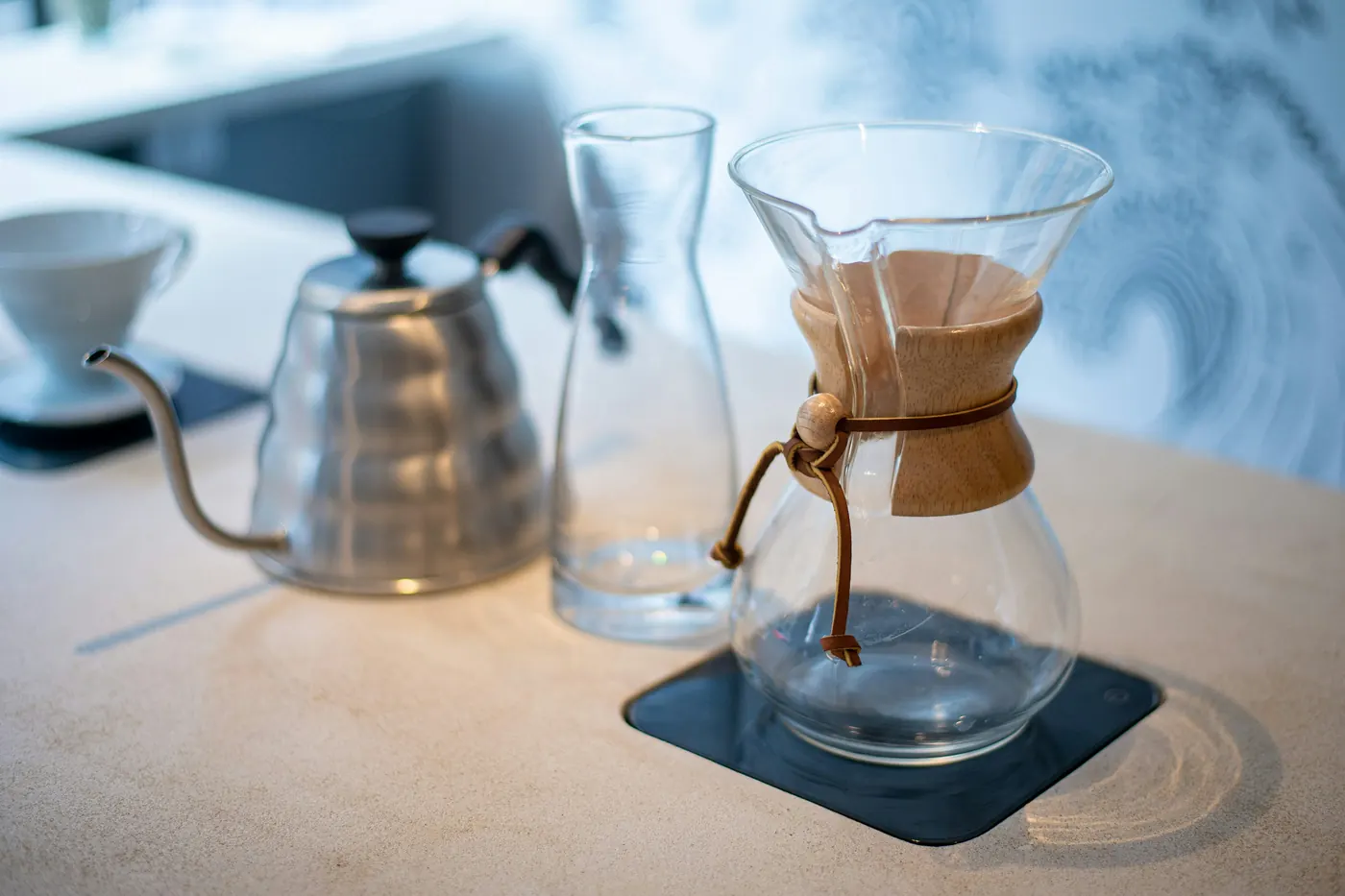
The Chemex is a pour-over brewer and carafe in a single hourglass of glass. You set a Chemex paper filter in the top, add ground coffee and pour hot water over it from a kettle; the coffee drips through into the bottom half, and you lift out the filter and pour. Chemex says all its coffeemakers are made of non-porous borosilicate glass that will not absorb odors or chemical residues.
We chose the Glass Handle Series rather than the Classic because of the handle. The Classic has a wooden collar tied on with a leather thong; on this model the handle is part of the glass, so the whole brewer is glass and nothing else. The coffee touches only that glass and the paper filter. Chemex counts five ounces as a cup, so the 10-cup model holds about 50 ounces, enough for a table of six.
The listing notes that the Chemex design lets you cover the coffee and refrigerate it for reheating. You will need Chemex bonded filters (FP-1, FC-100, FS-100 or FSU-100), which are not included, and a kettle; our plastic-free electric kettle guide covers that half of the setup.
Why we like it
- Non-porous borosilicate glass, per Chemex
- All-glass handle, no wood collar or tie
- About 50 oz (10 five-ounce cups)
- Coffee touches only glass and paper
Key specifications
| Model | CM-10GH |
|---|---|
| Type | Pour-over brewer and carafe |
| Capacity | 10 cups (5 oz each) |
| Touches the coffee | Borosilicate glass, paper filter |
| Plastic parts | None listed |
| Filter | Chemex bonded paper (not included) |
| Heat source | Hot water from a kettle |
| Care | Not stated on listing |
Why we recommend it
It suits anyone who wants a whole pot of clean, clear coffee with only glass in the brew path, and who does not mind pouring water by hand for four or five minutes.
Skip it if you want coffee to stay hot for an hour; the glass carafe has no insulation.
Pros and cons
Pros
- Only glass and paper in contact with coffee
- Makes a full pot
- Glass does not hold on to old flavors
Cons
- Needs its own paper filters
- Glass can break
- No insulation
2. Kalita Wave 185 Stainless Steel Dripper – Steel Cone, Made in Japan
Kalita’s Wave is the flat-bottomed pour-over dripper, and this is the stainless steel version. The listing gives the body as stainless steel and says it is made in Japan, so the only things the hot water and coffee touch are steel and a paper filter. The 185 size is sold for two to four cups and brews straight into a mug or a server.
The flat bed and the Wave’s fluted paper filters are what set it apart from a cone dripper: the coffee sits in an even layer, which makes the brew less sensitive to exactly how you pour. The listing says it takes Kalita’s own Wave Filter 185 papers only, so buy those with it.
There is one plastic part to know about. The listing gives the handle as phenolic resin on a brass frame; it sits on the outside and does not touch the coffee, much like the handle on a moka pot. The dripper weighs about 4.2 ounces (120 grams). What it drips into is up to you; a glass or ceramic mug keeps the brew path plastic-free.
Why we like it
- Stainless steel body, per the listing
- Made in Japan
- Flat bed is forgiving of an uneven pour
- Light and nearly unbreakable
Key specifications
| Model | Wave 185S (listing model #05151) |
|---|---|
| Type | Flat-bottom pour-over dripper |
| Capacity | 2–4 cups (per title) |
| Touches the coffee | Stainless steel, paper filter |
| Plastic parts | Phenolic resin handle (outside) |
| Filter | Kalita Wave Filter 185 paper only |
| Heat source | Hot water from a kettle |
| Care | Not stated on listing |
Why we recommend it
It suits one or two coffee drinkers who want a fresh cup each morning with nothing but steel and paper between the kettle and the mug, and a dripper that will not chip.
Skip it if you want a pot for the whole table, or do not want to track down Kalita’s own Wave filters.
Pros and cons
Pros
- Steel body, no glaze to chip
- Small and easy to store
- Even, forgiving flat-bed brew
Cons
- Small batches only
- Needs Kalita Wave 185 filters
- Resin handle, though it does not touch coffee
3. Bialetti Venus 4-Cup Stainless Moka Pot – Stainless Steel, Induction Ready
A moka pot makes strong, espresso-style coffee on the stove: water in the bottom chamber boils, steam pressure pushes it up through a funnel of ground coffee, and the coffee collects in the top. The Venus is Bialetti’s stainless steel version. Bialetti gives the body material as 18/10 stainless steel, and says it works on electric, gas and induction hobs (except the 2-cup size).
Now the plastic. Bialetti lists the handle as thermoplastic; it is on the outside of the top chamber and does not hold coffee. The gasket, the ring that seals the top and bottom halves, does touch the coffee, and Bialetti does not state its material on the product page. The same is true of the filter plate. If you want to be certain, ask Bialetti before you buy; we found no maker statement either way.
The 4-cup Venus makes about 5.7 ounces, measured in espresso cups. Bialetti says to clean it by rinsing each part in plain water only, with no detergent and no dishwasher, which protects the finish and the taste of the coffee.
Why we like it
- 18/10 stainless steel body, per Bialetti
- Works on induction (4-cup and up)
- Plastic only on the outside handle
- Simple rinse-only care
Key specifications
| Model | Venus 0007254/CN |
|---|---|
| Type | Stovetop moka pot |
| Capacity | 4 espresso cups (5.7 oz) |
| Touches the coffee | 18/10 stainless steel; gasket |
| Plastic parts | Thermoplastic handle; gasket material not stated |
| Filter | Built-in metal funnel and plate |
| Heat source | Gas, electric, induction |
| Care | Rinse with water; no detergent or dishwasher |
Why we recommend it
It suits anyone who likes strong coffee for café con leche or a cortado, wants stainless steel rather than aluminum, and cooks on induction.
Skip it if you need a gasket confirmed plastic-free in writing; Bialetti does not say what it is made of.
Pros and cons
Pros
- Stainless steel, not aluminum
- Induction compatible
- Strong coffee in minutes
Cons
- Gasket material not stated
- Small output
- Hand rinse only
4. Bialetti Moka Express 6-Cup Aluminum Moka Pot – The Original Since 1933

The Moka Express is the eight-sided pot with the little moustached man on the side, and the listing traces it back to 1933, when Alfonso Bialetti invented it. Bialetti gives the body material as aluminum, and the handle and knob as thermoplastic. As with the Venus, the gasket touches the coffee and Bialetti does not state its material.
Aluminum or stainless steel is the main choice with a moka pot. Aluminum is lighter and heats quickly, and it is what the original has always been made from. It will not work on induction on its own; Bialetti says it needs the Bialetti induction adapter plate. It also should not go in the dishwasher: Bialetti says to rinse it with water only, because detergent and the dishwasher can damage the pot and affect the taste. We make no health claim about aluminum either way; if you would rather avoid it, buy the Venus.
The 6-cup size makes six espresso cups, which is two or three small cups of strong coffee. The listing says it is made in Italy and has a patented safety valve.
Why we like it
- The original moka design, per Bialetti
- Made in Italy, per the listing
- Patented safety valve
- Plastic only on the handle and lid knob
Key specifications
| Model | 06800 |
|---|---|
| Type | Stovetop moka pot |
| Capacity | 6 espresso cups |
| Touches the coffee | Aluminum; gasket |
| Plastic parts | Thermoplastic handle and knob; gasket material not stated |
| Filter | Built-in metal funnel and plate |
| Heat source | Gas, electric; induction with adapter plate |
| Care | Rinse with water; no detergent or dishwasher |
Why we recommend it
It suits a gas or electric stove, someone who wants the classic pot, and a buyer who is avoiding plastic but is happy with aluminum.
Skip it if you cook on induction and do not want an adapter plate, or if you want to avoid aluminum.
Pros and cons
Pros
- Light and quick to heat
- Made in Italy
- The original design
Cons
- Aluminum, not stainless
- Induction only with a plate
- Gasket material not stated
5. Alessi Moka 3-Cup Aluminum Espresso Maker – Designer Moka by David Chipperfield

Alessi’s Moka, designed by the architect David Chipperfield, is a modern take on the stovetop pot. The listing gives the body as cast aluminum and the handle and knob as PA, a polyamide thermoplastic resin. So the plastic is on the outside, as with the Bialetti, and the coffee chamber is aluminum.
The listing is unusually frank about one thing: because the body is aluminum, it will not rust, but it can darken as the metal oxidizes. That is normal for aluminum and not a defect. The gasket and filter plate materials are not stated.
The 3-cup size makes three espresso cups, enough for one large or two small drinks. Alessi also makes its well-known 9090 stovetop pot in 18/10 stainless steel, but none of its sizes was in stock without limits when we checked, which is why we picked this one.
Why we like it
- Cast aluminum body, per the listing
- Designed by David Chipperfield
- Plastic only on handle and knob
- Honest note on aluminum oxidizing
Key specifications
| Model | DC06/3 |
|---|---|
| Type | Stovetop moka pot |
| Capacity | 3 espresso cups |
| Touches the coffee | Cast aluminum; gasket |
| Plastic parts | PA handle and knob; gasket material not stated |
| Filter | Built-in metal funnel and plate |
| Heat source | Not stated |
| Care | Not stated on listing |
Why we recommend it
It suits someone who wants a moka pot that looks good on an open shelf, makes a small amount, and is fine with aluminum.
Skip it if you cook on induction or want stainless steel; the listing gives no stove guidance, and aluminum alone does not work on induction.
Pros and cons
Pros
- Distinctive design
- Plastic kept to the outside
- Light
Cons
- Only three cups
- Aluminum darkens with use
- Stove types not stated
6. Farberware Yosemite 8-Cup Stainless Percolator – Stainless Steel and a Glass Knob
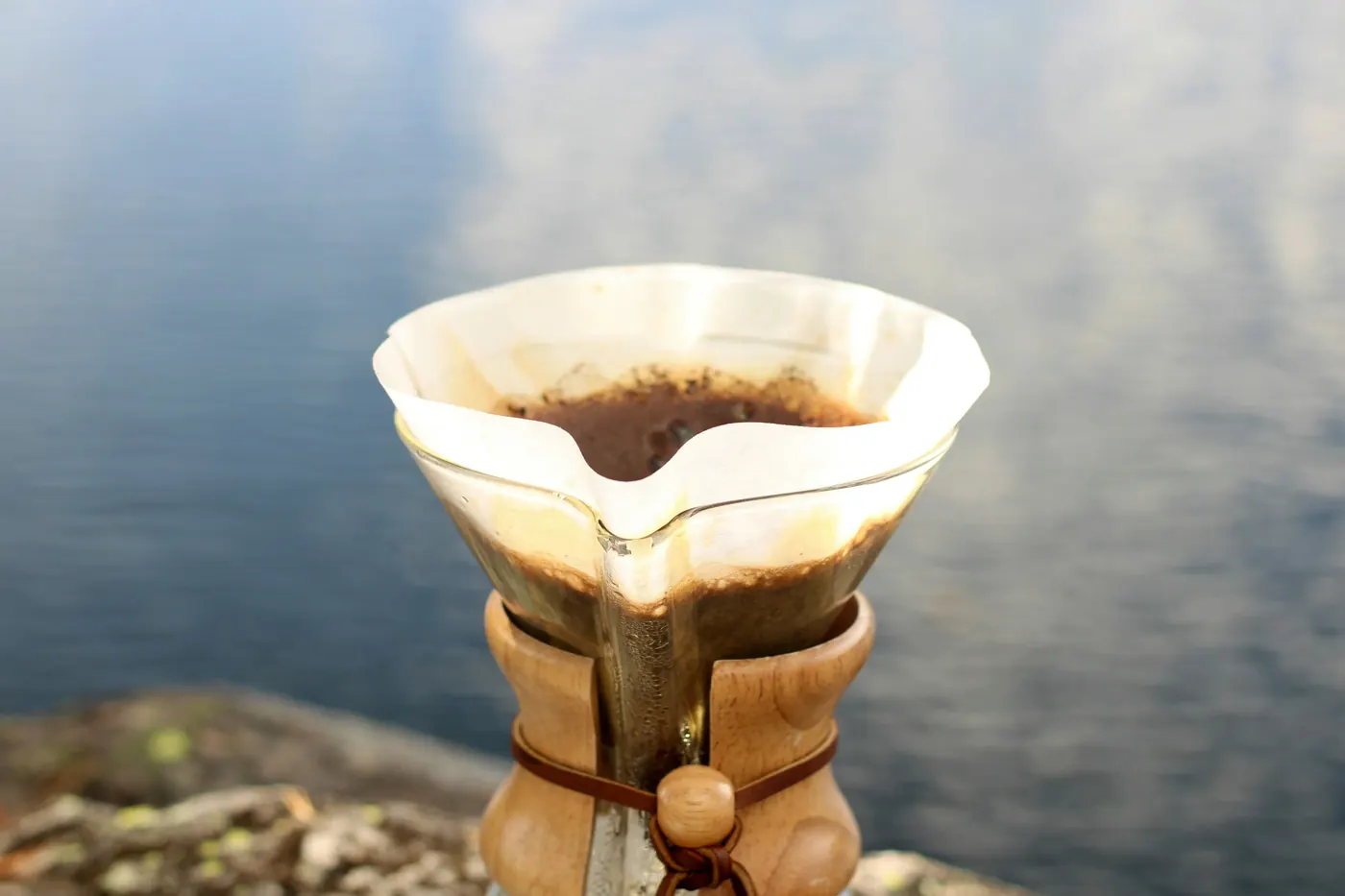
A percolator cycles boiling water up a tube and over the grounds again and again, which gives the strong, hot coffee many families remember from camp or from a grandmother’s stove. In a percolator, the clear knob on the lid is where you watch the coffee bubble, so it is in direct contact with the brew. On the Yosemite, Farberware’s listing describes that knob as clear glass.
The rest of the pot, the stem and the permanent filter basket are stainless steel, polished to a mirror finish. That makes this one of the few classic percolators where the coffee only touches steel and glass. The handle is on the outside; its material is not stated on the listing.
The listing says the pot is fully immersible and dishwasher safe, and the permanent basket means no paper filters. One practical note from reviewers at OutdoorGearLab: the basket is fiddly to clean, so rinse it straight after brewing.
Why we like it
- Clear glass knob, per the listing
- Stainless steel pot, stem and basket
- Permanent filter, no paper
- Dishwasher safe, per the listing
Key specifications
| Model | 50124 |
|---|---|
| Type | Stovetop percolator |
| Capacity | 8 cups |
| Touches the coffee | Stainless steel, glass knob |
| Plastic parts | Handle material not stated |
| Filter | Permanent stainless basket |
| Heat source | Stovetop |
| Care | Fully immersible, dishwasher safe |
Why we recommend it
It suits a household that likes a big pot of hot, robust coffee, cooks on gas or electric, and wants steel and glass in the brew path.
Skip it if you prefer a lighter cup; percolated coffee is strong and can taste harsh if it bubbles too long.
Pros and cons
Pros
- Glass knob, steel everything else
- No filters to buy
- Dishwasher safe
Cons
- Easy to over-brew
- Basket fiddly to clean
- Handle material not stated
7. COLETTI Bozeman 9-Cup Stainless Percolator – Maker Says No Aluminum, No Plastic

If you want a maker to say it in writing, COLETTI does. The Bozeman’s listing says it is made with stainless steel components and a glass view top, “so your coffee isn’t brewing through plastic or aluminum.” That is the clearest no-plastic statement of any brewer we looked at.
It brews up to 45 ounces, which COLETTI points out is about four 12-ounce mugs, since a coffee “cup” is five ounces. It needs no electricity: it works on compatible stovetops, camp stoves, grills or a fire, which makes it a good choice for a cabin or a camping box as well as the kitchen. The listing says it is dishwasher safe and comes with filters for a smoother cup, and COLETTI gives a one-year warranty.
One limit: this model does not work on induction. COLETTI sells a separate Bozeman induction version, which we have not reviewed here.
Why we like it
- “No aluminum, no plastic,” per COLETTI
- Stainless steel with a glass view top
- About four 12 oz mugs per pot
- Works over a fire or camp stove
Key specifications
| Model | Bozeman 9-cup |
|---|---|
| Type | Stovetop percolator |
| Capacity | 9 cups (45 oz) |
| Touches the coffee | Stainless steel, glass view top |
| Plastic parts | None, per the maker |
| Filter | Permanent basket; filters included |
| Heat source | Stovetop, camp stove, grill, fire (not induction) |
| Care | Dishwasher safe |
Why we recommend it
It suits a buyer who wants the maker’s explicit no-plastic, no-aluminum statement, and anyone who brews at camp as well as at home.
Skip it if you cook on induction; buy the induction version instead.
Pros and cons
Pros
- Clear no-plastic statement
- Works without electricity
- Dishwasher safe
Cons
- Not for induction
- Percolated coffee is strong
- One-year warranty
8. Secura 34 oz Stainless French Press – Steel Inside and Out
A glass French press usually sits in a plastic or metal frame with a plastic lid, so if you want to avoid plastic, a stainless steel press is the safer choice. Secura says this one is made from 18/8, 304 stainless steel, both inside and outside, and the listing describes the body as insulated.
The filter is three layers of stainless steel mesh, and Secura includes two extra screens; stacking more than one screen gives a cleaner cup. There is no paper to buy, and Secura says all parts are dishwasher safe. The 34-ounce size makes about four mugs.
The listing describes a “cool touch” handle and knob but does not say what they are made of, and it does not state the material of the underside of the lid. We have marked those “Not stated.” For other presses, including all-steel ones, see our French press guide; we have not repeated its picks here.
Why we like it
- 18/8 (304) stainless steel inside and out
- Three-layer stainless filter, two spare screens
- All parts dishwasher safe, per Secura
- Two-year warranty, per the listing
Key specifications
| Model | SFP-34DS |
|---|---|
| Type | French press |
| Capacity | 34 oz (1 L) |
| Touches the coffee | 18/8 stainless steel body and filter |
| Plastic parts | Handle, knob and lid underside not stated |
| Filter | Three-layer stainless mesh |
| Heat source | Hot water from a kettle |
| Care | All parts dishwasher safe |
Why we recommend it
It suits anyone who likes full-bodied French press coffee, wants steel rather than glass, and does not want to buy filters.
Skip it if you need written confirmation that the knob and lid are not plastic; Secura does not say.
Pros and cons
Pros
- Stainless body will not break
- Insulated
- Spare screens included
Cons
- Handle, knob and lid materials not stated
- Some sediment in the cup, as with any press
How to choose a coffee maker with no plastic
“No plastic” means different things on different listings. Here is how we read them, and what to check before you buy.
1. Look at the brew path, not the whole object
What matters most is what the hot water and coffee touch: the water chamber, the filter, the funnel and the pot. A plastic handle on the outside of a moka pot does not touch coffee; a plastic knob on a percolator lid does. Glass and stainless steel are the materials to look for.
2. Small parts: gaskets, knobs, filters
Every moka pot has a sealing gasket that touches the coffee, and the makers here, Bialetti and Alessi, do not state its material. Percolator knobs may be glass or plastic; Farberware says glass, Cuisinart’s PRC-12N listing says only “transparent”. French press lids and screens vary. If a part is not stated, ask the maker.
3. Aluminum or stainless steel
Moka pots come in both. Aluminum, the original Bialetti material, is light and heats fast, but needs an adapter plate on induction, darkens over time and should be rinsed rather than washed with detergent. Stainless steel is heavier, works on induction and stays bright. Which you choose is a preference; we make no health claim about either.
4. Electric machines and their plastic
Almost every electric drip machine has a plastic water tank or brew basket. Moccamaster says all the plastics it uses are food-safe and free of BPA, BPS, BPF and phthalates, but its brewers still have plastic parts, so they are not plastic-free. Ratio says that once brewing begins on the Ratio Six, water touches only stainless steel, borosilicate glass, aluminum and silicone, though its water tank is Tritan plastic; it was not in stock when we checked.
5. Filters
Paper filters (Chemex, Kalita) are single-use; metal filters (percolators, the French press) are permanent but let more oils and fine sediment through. Both avoid plastic.
How we chose these eight brewers
We started from what a kitchen expects of a coffee maker, a good cup, easy cleaning and a size that suits the household, and added one test: the maker or the Amazon listing has to say what the parts in contact with water and coffee are made of. We read each listing and the makers’ own product pages, and where a part’s material was not stated, we say so. We left out glazed ceramic drippers whose makers give no lead-free statement. We also checked the U.S. Consumer Product Safety Commission’s recall listings for every brand here and found no recall covering any model on this page.
We left out the Chemex Classic, Bodum steel-filter pour-over, Espro, Frieling and SterlingPro presses because they appear in our pour-over coffee maker guide and French press guide. The Alessi 9090, Ratio Six and Hario Technica siphon were not in stock without limits, and Hario’s siphon lists a polypropylene lid and lamp holder. Moccamaster and other electric drip machines have plastic tanks and baskets. We have not brewed with these coffee makers for this guide; where we describe how one performs, we are reporting the maker’s or listing’s claim.
Plastic-free coffee maker questions, answered
What is the best coffee maker with no plastic?
For most homes, the Chemex Glass Handle 10-Cup: the brewer is all borosilicate glass and the coffee touches only glass and a paper filter. For a stovetop pot, the COLETTI Bozeman percolator carries the plainest no-plastic statement of any brewer we looked at.
Is there an electric coffee maker with no plastic?
We could not find one in stock that its maker describes as plastic-free. Some, like the Ratio Six, keep plastic out of the hot water path but still have a plastic tank.
Do moka pots have plastic?
Usually only on the outside: Bialetti and Alessi list thermoplastic handles and knobs. The sealing gasket touches the coffee, and its material is not stated by either maker.
Is a stainless steel or glass coffee maker better?
Glass, as in the Chemex, does not hold on to flavors and lets you see the brew, but it can break and does not keep coffee hot. Stainless steel is tough and often insulated. Both avoid plastic in the brew path.
Is a stainless steel French press plastic-free?
The body and filter usually are. Check the lid, knob and handle: on the Secura we chose, the maker does not state their material.
Our final pick for coffee without plastic
Buy the Chemex Glass Handle 10-Cup for a full pot through nothing but glass, or the Kalita Wave 185 Stainless for one or two cups. Choose the Bialetti Venus for stainless moka coffee, the Moka Express or Alessi Moka if aluminum is fine, the Farberware or COLETTI for a percolator, and the Secura for a steel French press. For electric machines and every other style, go back to our main best coffee maker guide, and for iced coffee, our cold brew coffee maker guide.
A strong moka pot coffee goes well with a sweet roll; if you would rather someone else made breakfast, see the Julia’s menu and call to order.