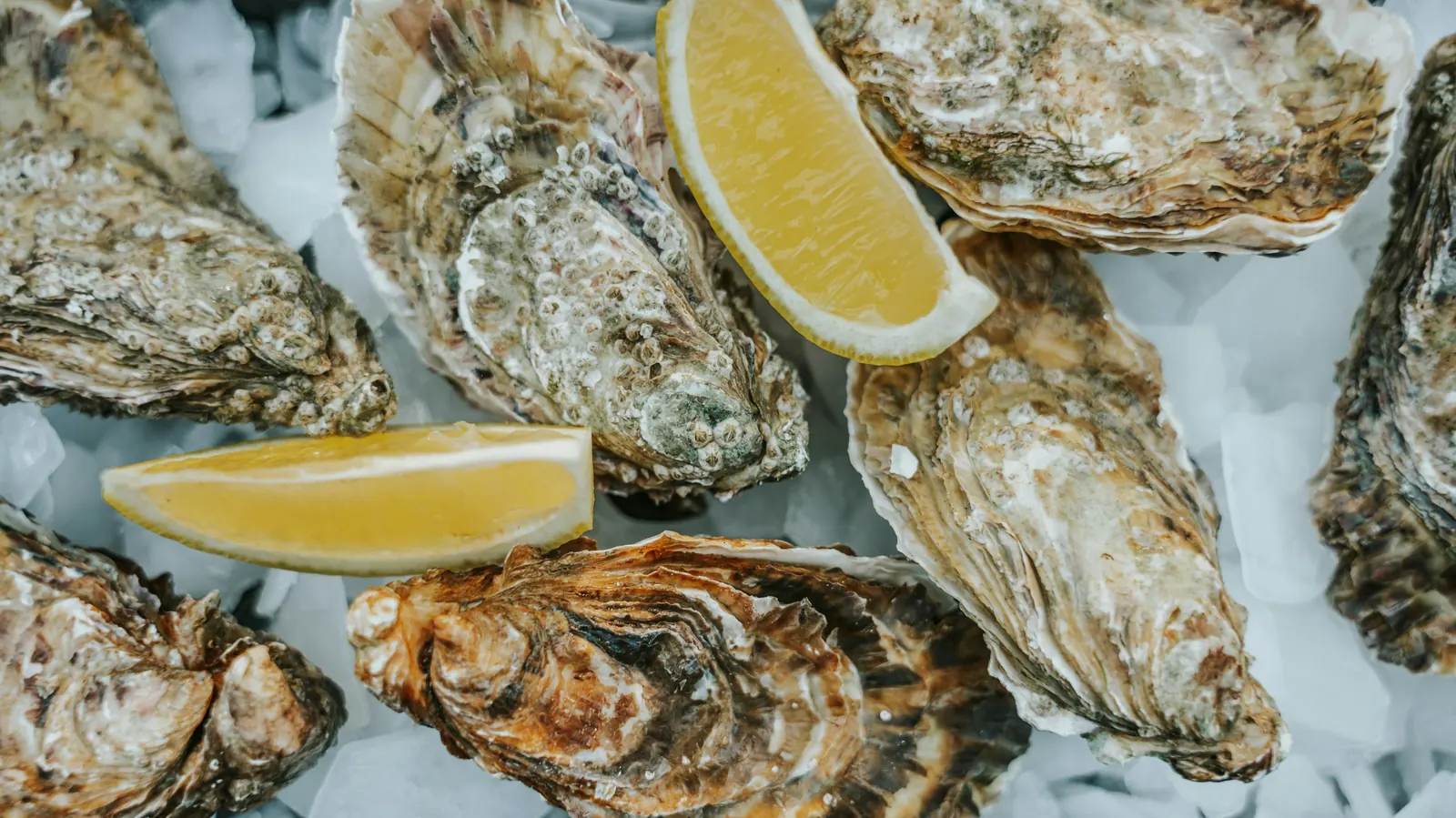
An oyster knife is not really a knife. It is a short, stiff lever with a point, built to find the hinge of a closed shell, twist it open and cut the muscle underneath. Use a paring knife instead and the thin blade can snap or slide straight toward the hand holding the oyster.
The shape of the blade decides how well that works, and the names can be confusing: New Haven, Boston, Galveston, French. This guide explains which shape suits which oyster, and it compares eight knives against the independent reviews we could read. If you are shopping for the rest of the seafood kit, start with our guide to the best fish knife set.
Julia’s earns a commission on purchases made through links on this page, at no cost to you. Recommendations are based on what a restaurant kitchen looks for, product specifications and verified buyer reports.
Quick verdict: which oyster knife to buy
For most kitchens, the best oyster knife is the R. Murphy New Haven Oyster Knife: its shape won America’s Test Kitchen’s review, though the winning version had a plastic handle and this one is wood. For an easier-care knife, the OXO Good Grips Oyster Knife was the review’s Best Buy, and for frequent shucking, the Dexter-Russell Sani-Safe New Haven is the commercial standard.
The table below compares five standouts. All eight knives are covered in full after it, followed by what to look for and common questions.
Five oyster knives at a glance
One pick for each kind of shucker, with blade and handle details from each maker, listing or America’s Test Kitchen.
| Oyster knife | Best for | Blade | Handle | Buy on Amazon |
|---|---|---|---|---|

R. Murphy New Haven Oyster KnifeBest overall
|
Oysters of any size | New Haven, 2.6 inches | Wood | View on Amazon |

OXO Good Grips Oyster KnifeBest buy
|
Beginners and occasional shuckers | New Haven, 2.9 inches | Soft non-slip | View on Amazon |

Dexter-Russell Sani-Safe New Haven Oyster KnifeBest plastic handle
|
Frequent shucking | New Haven, 2 3/4 inches | Textured polypropylene | View on Amazon |

BUBBA Oyster Shucking KnifeBest for large oysters
|
Large oysters | Curved tip, 2.5 inches | Non-slip grip, 4 inches | View on Amazon |

F. Dick Oyster OpenerBest for experienced users
|
Experienced shuckers | French, 7 cm | Hygienic plastic | View on Amazon |
Our picks for the best oyster knife
1. R. Murphy New Haven Oyster Knife – The Classic Upturned Tip
The New Haven shape from R. Murphy has the best record of any knife we looked at. America’s Test Kitchen named the R. Murphy New Haven Shucker its winner in a July 2025 review, saying it dispatched oysters of all sizes easily. Its 2.6-inch blade gave testers superior control, and the upturned tip adds leverage to pop the shell open.
There is one catch, and it matters. The knife America’s Test Kitchen scored, model NHOYSPH, has a recycled plastic handle. The version in stock on Amazon has a wood handle. The blade style and length match, but the handle does not, so the grip findings do not carry over. Wood has its own support: a review reposted on Dexter-Russell’s blog, with photos credited to Serious Eats, named this wood-handled R. Murphy its best overall and said the handle fit like a glove. Dexter sells a rival knife, which makes that praise more interesting, not less.
R. Murphy says the knife is made in the USA with cutlery-grade steel. The listing does not give care instructions, so treat a wood handle the way you would any wood kitchen tool: wash it by hand and dry it soon after.
Why we like it
- Same style that won America’s Test Kitchen’s review
- Short 2.6-inch blade gives good control
- Upturned tip adds leverage at the hinge
- Made in the USA, per the listing
Key specifications
| Model | New Haven Oyster |
|---|---|
| Blade style | New Haven, curved tip |
| Blade length | 2.6 inches |
| Blade material | Stainless cutlery-grade steel |
| Handle | Wood |
| Made in | USA |
| Cleaning | Not stated on the listing |
| Warranty | Not stated on the listing |
Why we recommend it
It suits nearly anyone who eats oysters at home, from a first dozen to a regular habit, and it handles most shells well.
Skip it if you want a handle that shrugs off the dishwasher. The OXO is the easier one to clean.
Pros and cons
Pros
- Strongest independent record among these styles
- Comfortable wood handle, per one reviewer
- US made
Cons
- The scored knife had a plastic handle, not wood
- One roundup says it suits small Kumamotos poorly
- Care and warranty not on the listing
2. OXO Good Grips Oyster Knife – Grippy and Dishwasher Safe
This is the same model America’s Test Kitchen scored, number 35681, and it was named the review’s Best Buy. Its upturned tip did a great job of popping open oysters of all sizes, and it has the longest blade of the New Haven-style knives in that review, which some testers liked for the extra leverage.
The handle is the point of the design. OXO uses a soft, non-slip grip meant to stay secure when hands are wet, and the listing says the knife is dishwasher safe. That is a useful detail on a tool that spends its time in brine. The complaint from the same reviewers is the shape of that handle: some found the bulbous form less comfortable to hold.
A Chowhound roundup adds that some owners wished the blade were wider or thicker for bigger shellfish. It is a good knife for a mixed bag of medium oysters, and less of a specialist for very large ones.
Why we like it
- America’s Test Kitchen Best Buy (same model)
- Upturned tip for leverage
- Non-slip handle stays secure when wet
- Dishwasher safe, per the listing
Key specifications
| Model | 35681 |
|---|---|
| Blade style | New Haven, bent tip |
| Blade length | 2.9 inches, per America’s Test Kitchen |
| Blade material | Stainless steel |
| Handle | Soft non-slip |
| Made in | Not stated on the listing |
| Cleaning | Dishwasher safe |
| Warranty | Satisfaction guaranteed, per the listing |
Why we recommend it
It suits the cook who shucks a few times a year and wants a reliable knife that goes in the dishwasher with everything else.
Skip it if you often buy very large oysters. A wider blade gives more leverage there.
Pros and cons
Pros
- Same model as the independent review
- Easy care
- Forgiving grip for a beginner
Cons
- Bulbous handle did not suit every reviewer
- Some owners want a thicker blade
- Where it is made is not stated
3. Dexter-Russell Sani-Safe New Haven Oyster Knife – The Shuckers’ Standard
America’s Test Kitchen rated this model, the S121, Highly Recommended and called it a standard-bearer among professional shuckers. Its upturned tip and narrow blade let it open oysters of all sizes, and it slices through the adductor muscle cleanly once the shell is open.
Dexter uses its own stain-free, high-carbon DEXSTEEL for the blade, and the textured polypropylene handle is white and slip resistant. The knife is NSF certified, which is the standard that foodservice buyers look for. Dexter’s sister Providence listing says its products are guaranteed against defects for the life of the product, but this S121 listing does not repeat that, so confirm it before you rely on it.
If you want the restaurant-supply version of the New Haven shape, this is it. It is plain, and plainness is the appeal: there is little on it to go wrong.
Why we like it
- Highly Recommended by America’s Test Kitchen (same model)
- NSF certified
- Stain-free high-carbon steel
- Textured handle for wet hands
Key specifications
| Model | S121 |
|---|---|
| Blade style | New Haven |
| Blade length | 2 3/4 inches |
| Blade material | DEXSTEEL stain-free high-carbon steel |
| Handle | Textured polypropylene, white |
| Made in | Not stated on the listing |
| Cleaning | Not stated on the listing |
| Warranty | Not stated on the listing |
Why we recommend it
It suits someone who shucks often and would pick a plain, proven commercial tool over a nicer-looking one.
Skip it if you like a wood handle in the hand. The R. Murphy is the warmer choice.
Pros and cons
Pros
- Proven in an independent review
- Commercial sanitation certification
- Textured grip
Cons
- Plain white commercial look
- Sparse listing
- Care not stated
4. BUBBA Oyster Shucking Knife – Wide Blade, Non-Slip Grip
BUBBA is best known for fishing knives, and its shucking knife looks the part. The 2.5-inch blade is 440C stainless steel, with a curved tip for leverage, set in the brand’s non-slip grip. Chowhound’s roundup of ten oyster knives describes the blade as wide and suited to large oysters, and it reports no notable downsides.
Treat that as a useful pointer and not as a test. Chowhound says it drew on experts, oyster farmers and buyer comments, and it does not say the writer used the knives. America’s Test Kitchen did not include this model in its review.
The warranty is shorter than most here: one year, limited, according to the listing. The listing does at least name its steel, 440C, and calls it commercial grade, which is more than several knives on this page tell you.
Why we like it
- Named by Chowhound as suited to large oysters
- 440C stainless steel blade
- Non-slip grip for wet hands
- Curved tip for leverage
Key specifications
| Model | 1111856 |
|---|---|
| Blade style | Curved tip |
| Blade length | 2.5 inches |
| Blade material | 440C stainless steel |
| Handle | Non-slip grip, 4 inches long |
| Made in | Not stated on the listing |
| Cleaning | Not stated on the listing |
| Warranty | Limited 1 year |
Why we recommend it
It suits a cook who buys large oysters and wants a wider, shorter blade with a firm grip.
Skip it if you want a scored independent trial behind your purchase. The first three picks have that and this one does not.
Pros and cons
Pros
- Named steel grade
- Grip made for wet use
- Short blade with a wide profile
Cons
- Roundup coverage only, no side-by-side trial
- Short warranty
- Care not stated
5. F. Dick Oyster Opener – Thin French Blade
America’s Test Kitchen rated this opener, number 91094000, as Recommended and Best for Experienced Users. It has a thin, very narrow French-style blade, sharpened on one side. That made it especially agile in tight hinges, though it had trouble with large, thick shells.
This is the sharpest knife type here, and you should know what that means. Some testers feared for their safety, because it looks a lot like a paring knife, even though no blood was shed. The fine tip also chipped a little after repeated use. Think of it as a tool for clean work on smaller shells, in hands that already know how a hinge gives.
The listing gives a 7-centimeter blade, a little under 3 inches, and a plastic handle. America’s Test Kitchen lists the blade at 3 inches and calls the handle solid, if small.
Why we like it
- Recommended by America’s Test Kitchen (same model)
- Thin blade fits tight hinges
- Sharp enough to cut the muscle cleanly
Key specifications
| Model | 91094000 |
|---|---|
| Blade style | French |
| Blade length | 7 cm |
| Blade material | Not stated on the listing |
| Handle | Hygienic plastic |
| Made in | Not stated on the listing |
| Cleaning | Not stated on the listing |
| Warranty | Not stated on the listing |
Why we recommend it
It suits a confident shucker working mostly with small and medium oysters who wants a neat, clean cut under the meat.
Skip it if you are new to this. America’s Test Kitchen prefers an unsharpened knife for beginners.
Pros and cons
Pros
- Agile in tight hinges
- Clean cuts at the muscle
- Same model as the review
Cons
- Sharp blade unnerved some testers
- Tip chipped with repeated use
- Struggles with thick shells
6. Mercer Culinary 3-inch Boston Style Oyster Knife – Slim Blade, Pointy Tip

America’s Test Kitchen rated this Mercer, model M33028A, Recommended. The Boston style means a straight, slim blade, here with a fairly pointy tip that fits into tight hinges. The blade occasionally felt a little long for smaller oysters, so it works best on medium shells.
Two honest notes. The review saw a few rust spots develop on the blade, and Mercer’s listing calls it high-carbon steel, so wash it by hand and dry it straight away. Mercer says not to put it in the dishwasher or leave it soaking. And the bumpy plastic handle was a tiny bit slick for a few testers.
Sources differ on the tip: Chowhound’s roundup calls it somewhat blunted and says larger oysters can be tricky. The listing says white in the title and black in the color field, so check the photo before ordering if the color matters.
Why we like it
- Recommended by America’s Test Kitchen (same model)
- Slim blade fits tight hinges
- Textured handle
- Clear care instructions from Mercer
Key specifications
| Model | M33028A |
|---|---|
| Blade style | Boston |
| Blade length | 3 inches |
| Blade material | High-carbon steel |
| Handle | Textured polypropylene |
| Made in | Not stated on the listing |
| Cleaning | Hand wash; no dishwasher |
| Warranty | Not stated on the listing |
Why we recommend it
It suits a home cook who prefers a straight blade and is happy to dry a knife after use.
Skip it if you leave tools in the sink. Rust spots appeared after a brine soak.
Pros and cons
Pros
- Independent recommendation
- Slim and easy to steer
- Simple design
Cons
- Rust spots in the review
- Handle a little slick for some
- Long for small oysters
7. Mercer Culinary 4-inch Galveston Style Oyster Knife – Long Blade for Gulf Oysters

The Galveston style exists for big Gulf oysters. America’s Test Kitchen found that a similar Dexter-Russell knife had a wide 3.75-inch blade that provided extra leverage on those, and that it felt clumsy on smaller ones. Its thick, rounded tip was harder to wedge into the hinge. That Dexter was not in stock when we checked, so this Mercer is the Galveston knife we can point to.
Be clear about what you are getting. Nobody we read has reviewed this exact knife, and the listing gives almost nothing beyond its name, size and style. The part number is M33021A. We kept it because Mercer’s Boston knife above has a clear independent record, and because a Gulf Coast cook should know the shape exists. We list the unknowns below rather than guess.
Why we like it
- Galveston shape for large Gulf oysters
- Sister knife recommended by America’s Test Kitchen
- Long blade for leverage
Key specifications
| Model | M33021A |
|---|---|
| Blade style | Galveston |
| Blade length | 4 inches |
| Blade material | Not stated on the listing |
| Handle | Not stated on the listing |
| Made in | Not stated on the listing |
| Cleaning | Not stated on the listing |
| Warranty | Not stated on the listing |
Why we recommend it
It suits a cook who regularly opens large Gulf oysters and already owns a shorter knife for everything else.
Skip it if you want full specifications, or you only own one knife. A New Haven shape handles more sizes.
Pros and cons
Pros
- Right shape for large Gulf shells
- Known maker
- Extra leverage from a long blade
Cons
- No review of this model
- Very thin listing
- Style is clumsy on small oysters
8. Swissmar Shucker Paddy Malpeque Oyster Knife – Grip Lines Up With the Forearm

This is the odd one out. Swissmar’s Shucker Paddy has a pistol grip that lines the forearm up with the blade, and the listing says it is designed for either hand. It was developed with Patrick McMurray, whom the listing names as a world champion shucker. A finger guard sits between the handle and the blade, and the listing says it is dishwasher safe.
The Malpeque is the 2-inch version. Chowhound’s roundup covers the 3-inch Original, which was nearly sold out when we checked, and it says the handle takes some getting used to. It also says the Original is user-friendly for people with arthritis. That is a report from buyers, and the 2-inch knife is a different size, so take it as a reason to look and not as a promise.
One important warning. Swissmar says the notched blade is sharpened on the top and bottom edges. America’s Test Kitchen recommends an unsharpened knife for most users, so handle this one with more care than the others.
Why we like it
- Pistol grip lines the forearm up with the blade
- Finger guard
- Works in either hand
- Dishwasher safe
Key specifications
| Model | 638790-SK2018YL |
|---|---|
| Blade style | Dual-axis pistol grip |
| Blade length | 2 inches |
| Blade material | Stainless steel, notched |
| Handle | Non-slip with finger guard |
| Made in | Not stated on the listing |
| Cleaning | Dishwasher safe |
| Warranty | Not stated on the listing |
Why we recommend it
It suits someone who finds a straight handle awkward and is willing to learn a different motion.
Skip it if you are a beginner who wants the simplest route. The blade is sharpened on both edges.
Pros and cons
Pros
- Unusual leverage
- Either hand
- Short blade for small oysters
Cons
- Takes time to learn
- Sharpened edges add risk
- Coverage is of the larger model
New Haven, Boston, Galveston or French: blade styles explained
Oyster knives are usually named for a place, and each shape reflects the oysters it was meant to open. Here is how the main styles behaved in the America’s Test Kitchen review.
| Style | Shape | Works best on | Watch out for |
|---|---|---|---|
| New Haven | Short blade with an upturned tip | Oysters of all sizes | Very little; it is the easiest place to start |
| Boston | Longer, slim, straight blade | Medium oysters with tight hinges | Can feel long on small oysters, with less leverage |
| Galveston | Long, wide blade with a rounded tip | Large Gulf oysters | Clumsy on small ones, and harder to wedge in |
| French | Thin, narrow, often sharpened blade | Tight hinges on smaller oysters | Sharp, and thick shells can defeat it |
The review reposted on Dexter’s blog reaches the same conclusion, calling the New Haven style the best for beginners or anyone who wants a relatively easy shucking experience. If you buy one knife, buy that shape.
How to choose an oyster knife for your kitchen
- The oysters you buy. Small, deep shells want a short, narrow tip. Big Gulf oysters reward a wider, longer blade.
- The tip. A thick, rounded tip is harder to work into a hinge. An upturned tip gives you leverage once it is in.
- The edge. America’s Test Kitchen thinks an unsharpened knife is best for most users, and especially for beginners. French and some Japanese-style knives are often highly sharpened.
- The handle. You will be pressing hard with wet hands. Look for a grip with texture, and a length that fits your palm. Both Victorinox and OXO handles divided reviewers by hand size and shape.
- The steel. Rust spots showed up on several knives after a brine soak, including the winner. Rinse and dry the knife after every session, whatever the listing says.
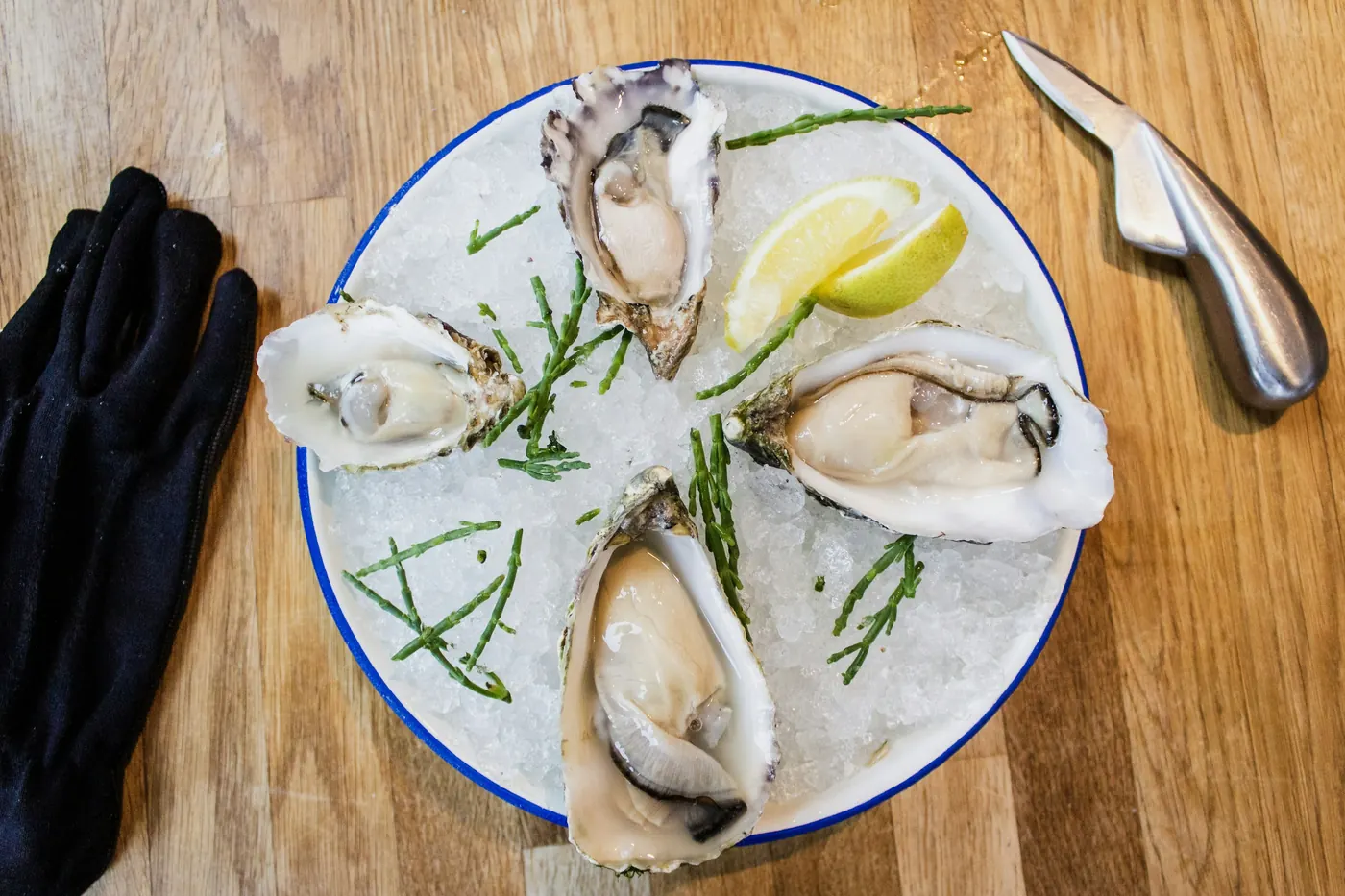
- Your other hand. Hold the oyster in a folded towel or a cut-resistant glove, with the blade pointed away from you. A glove is a backup, not a reason to hurry.
Buying and serving oysters safely
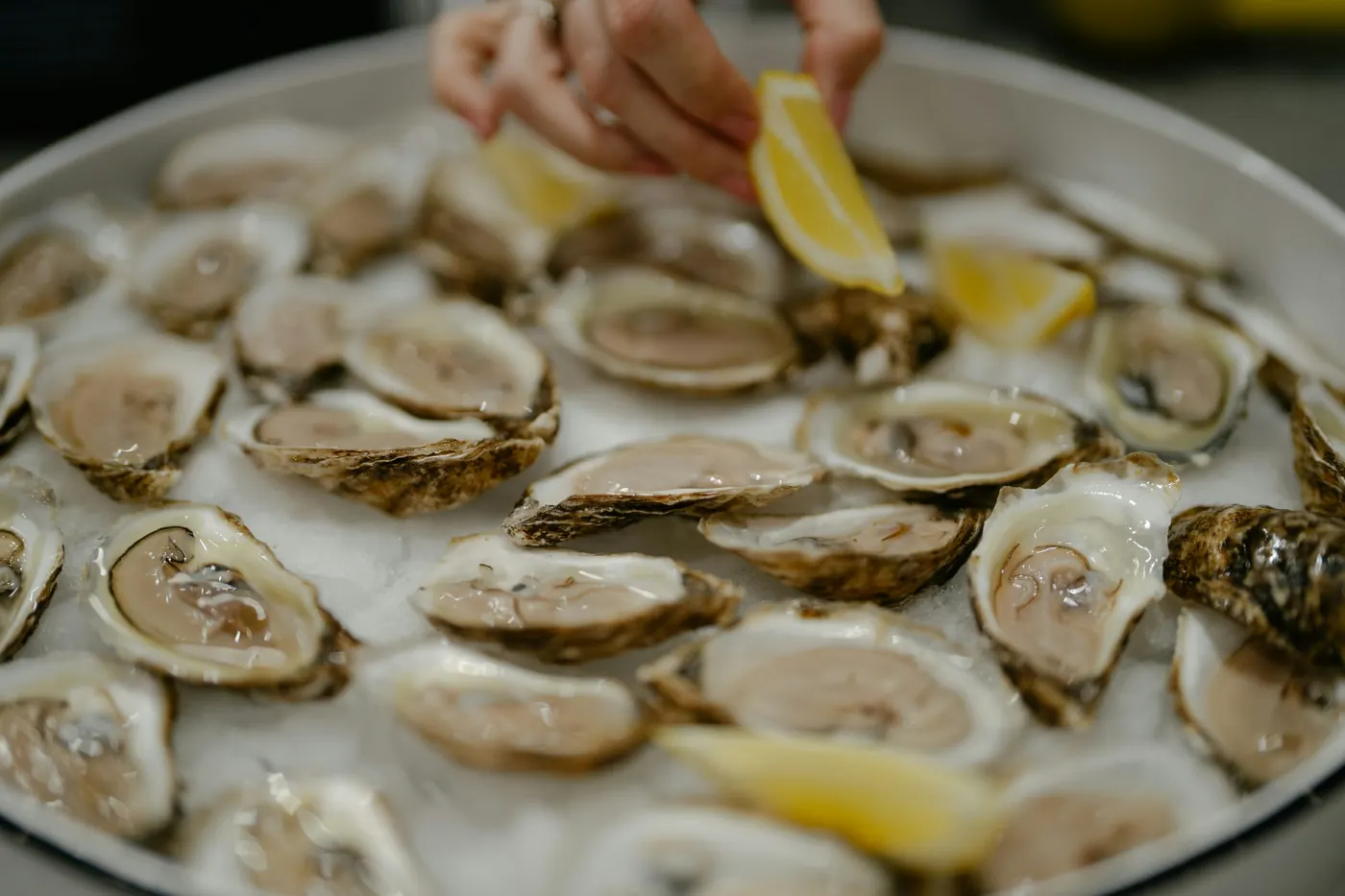
A good knife solves only the mechanical part. The FDA’s seafood guidance says to throw away oysters with cracked or broken shells, and that live oysters close when the shell is tapped. It also advises looking for tags on sacks or containers of live shellfish.
The FDA says people at greater risk of foodborne illness, including pregnant women, children, older adults and people with weakened immune systems, should avoid raw oysters. That includes oysters treated after harvest. The CDC says most people get vibriosis by eating raw or undercooked shellfish, particularly oysters. The FDA also notes that shells open during cooking and that you should throw out any that do not.
How we picked these eight knives
We have not used these products ourselves. We looked through the oyster knives sold on Amazon in the United States, kept only items in stock when we checked, and read each listing. Our main independent source is America’s Test Kitchen’s July 2025 review by Miye Bromberg. Each knife shucked 10 medium, 3 tiny and 3 extra-large oysters, in the hands of five users of different skill levels and dominant hands, and each was soaked in brine for an hour and inspected. We also read Chowhound’s 2025 roundup, which does not say its writer used the knives, and the review on Dexter-Russell’s blog.
We were strict because this is a tool that can hurt you. The Amazon listings are crowded with low-cost knife-and-glove kits from sellers with no independent review behind them, and we left all of those out, including the Rockland Guard knives. We passed on Toadfish too, since we found only a feature summary and not a trial, and that summary disagrees with the current listing on Gulf oysters. One reviewer called Zyliss’s serrated oyster knife particularly fearsome. The Winco KCL-1 received only a Recommended with Reservations verdict from America’s Test Kitchen. Several good knives were out of stock or nearly sold out when we checked, including Dexter’s Galveston, Messermeister’s oyster knife and Victorinox’s Boston knives. We searched the CPSC recall database by brand for every maker here and found no recall of an oyster knife.
Oyster knife questions, answered
What is the best oyster knife?
For most kitchens, the R. Murphy New Haven Oyster Knife. Its style won America’s Test Kitchen’s review, and the shape opens oysters of all sizes. The OXO Good Grips is the easiest to care for.
What is the best oyster knife for beginners?
Choose an unsharpened New Haven style, such as the OXO or the Dexter-Russell. The upturned tip gives leverage, and America’s Test Kitchen thinks an unsharpened knife is best for beginners.
Should an oyster knife be sharp?
Mostly no. It works by wedging and twisting, so it needs a good tip more than a keen edge. The exceptions are French-style knives, which are sharpened to cut the muscle, and those need more care.
What oyster knife works for Gulf oysters?
Large Gulf oysters reward extra leverage. A Galveston-style blade suits them, and a wide, short blade such as the BUBBA is another option for large shells. Keep a New Haven knife for smaller ones.
Can I put an oyster knife in the dishwasher?
Check the knife. OXO and Swissmar say yes, and Mercer says no for its Boston knife. Whatever you own, dry it soon after washing, since several knives showed rust spots after a brine soak.
Do I need a glove to shuck oysters?
You need something between your hand and the shell. A cut-resistant glove or a thick folded towel both help hold the oyster steady. Keep the blade pointed away from the holding hand either way.
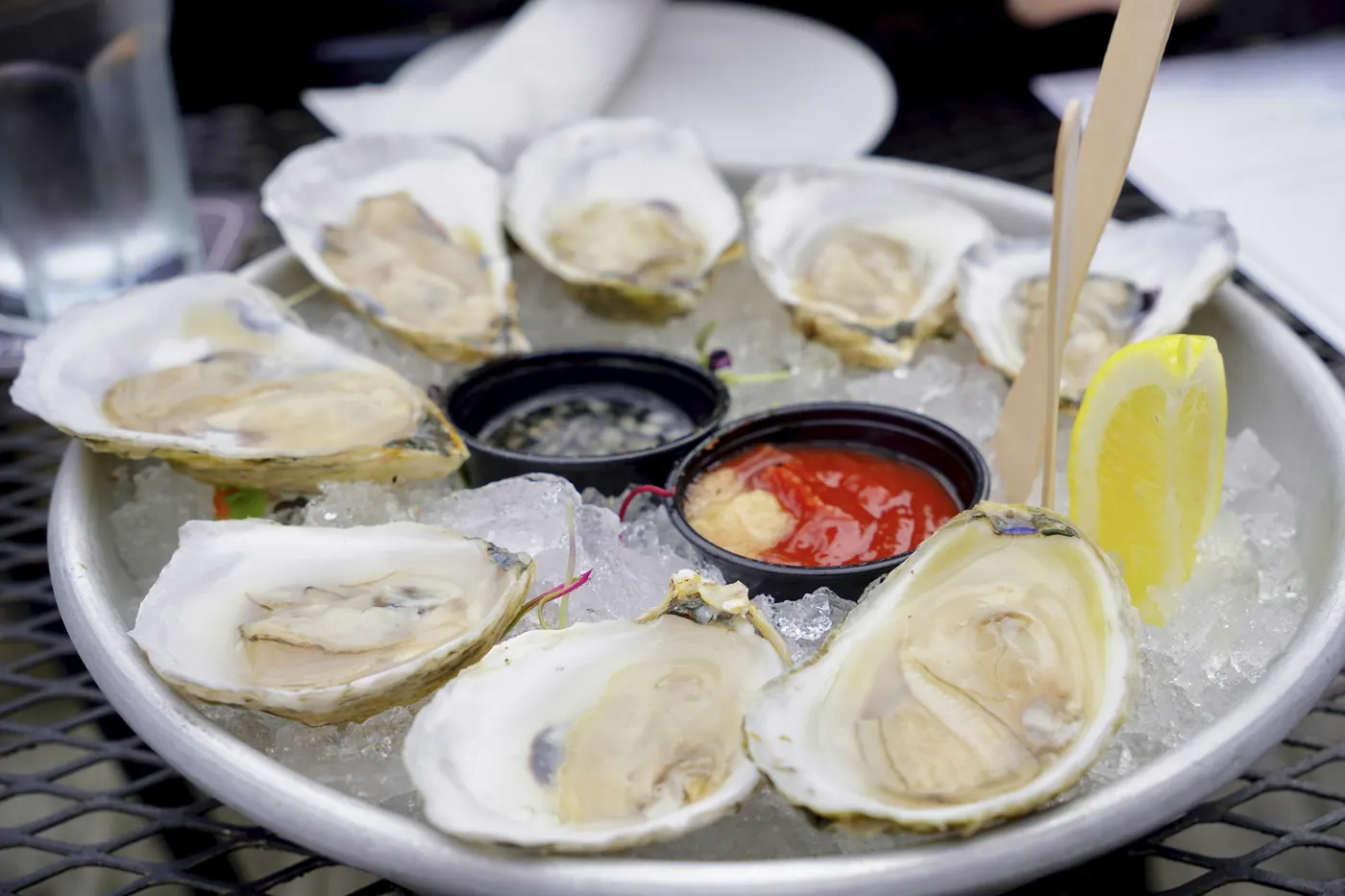
Our final pick for shucking at home
Buy the R. Murphy New Haven if you want the classic. Choose the OXO for easy care, the Dexter-Russell for regular shucking, the BUBBA or a Galveston knife for big oysters, and the F. Dick once you are confident.
Related guide: Best clam knife.
An oyster knife is a specialist in a small kit. See the best fish knife set and the best knife for cutting fish for the rest of the job, and read our guide to seafood at a Mexican restaurant for ideas. And if you would rather someone else did the cooking tonight, see the menu or call to order.