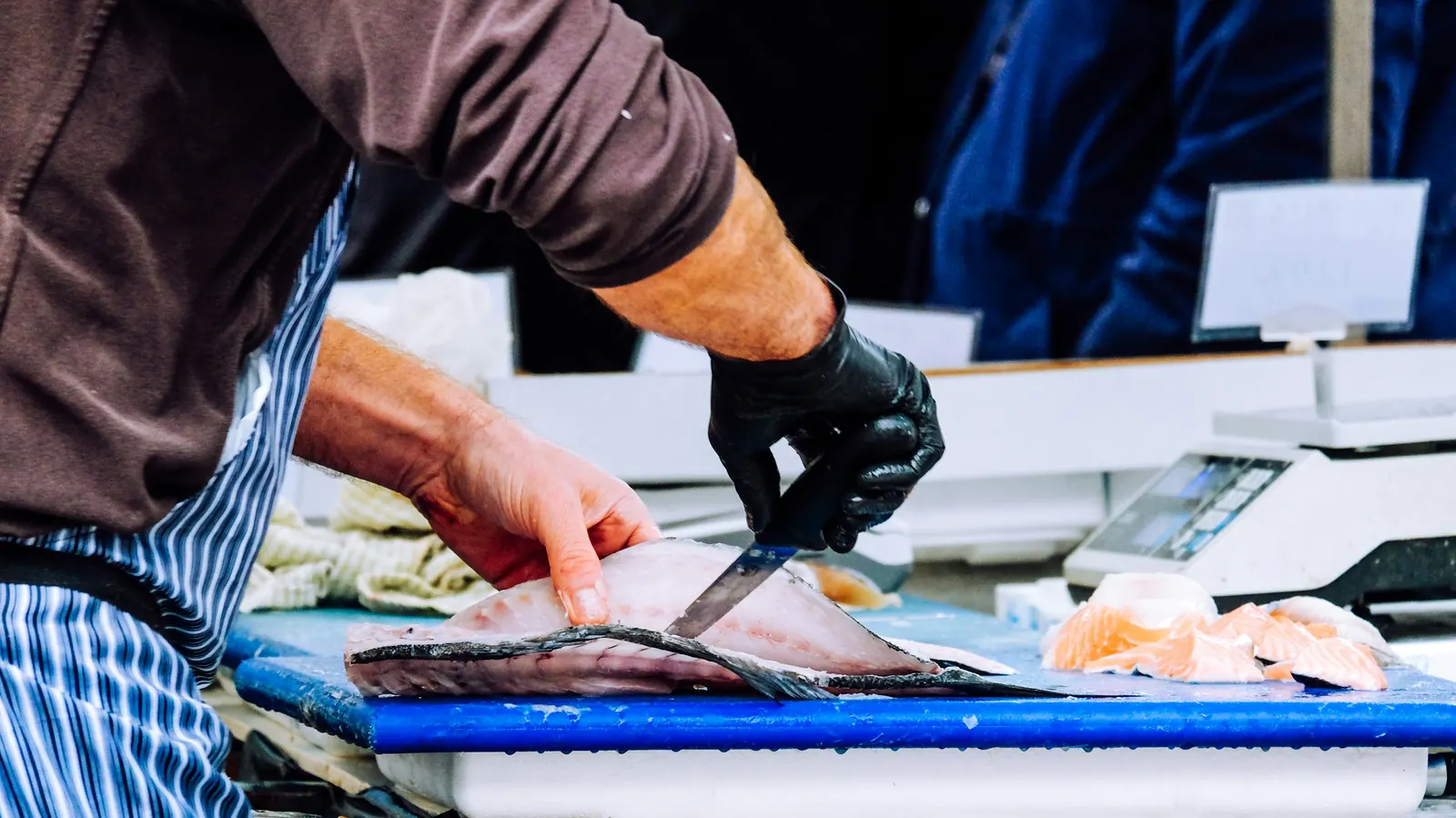
Fish is soft, slippery and full of fine bones, and the knife decides whether you end up with neat fillets or a ragged pile. A good fish knife is thin and sharp enough to follow the bones without tearing the flesh, and the right length for the fish on your board. In a restaurant kitchen that matters every day; at home it matters every time someone brings back a cooler.
Our best fish knife set guide covers the classic fillet knives. This guide answers a narrower question: which knife suits the fish you actually cut, whether that is a delicate flounder, a big redfish, a whole snapper with its head on or a cooler of crappie. None of the knives here repeats a pick from that guide or from our best boning knife guide.
Julia’s earns a commission on purchases made through links on this page, at no cost to you. Recommendations are based on what a restaurant kitchen looks for, product specifications and verified buyer reports.
Quick verdict: which fish knife to buy
For most home cooks, the best knife for cutting fish is a flexible fillet knife of about 7 to 8 inches, and the Global G-30 8-inch flexible fillet knife is our pick: thin, flexible and made in one piece of stainless steel. For big saltwater fish, choose the Kershaw 9-inch curved fillet knife; on a budget, the Mercer Culinary Ultimate White 7-inch. If you clean a lot of fish at once, the Rapala Heavy Duty Electric Fillet Knife is much faster.
Below, the five standouts side by side, all seven knives in detail, and how to match the knife to the fish.
Five fish knives compared
Our five standout picks, one for each kind of cook, with blade and power as each maker or listing states them. All seven are reviewed in full below.
| Fish knife | Best for | Blade | Power | Buy on Amazon |
|---|---|---|---|---|

Global G-30 8-inch Flexible Swedish Fillet KnifeBest overall
|
Clean fillets in a home kitchen | 8 in flexible | Manual | View on Amazon |

Kershaw 9-inch Curved Fillet KnifeBest for big fish
|
Large fresh and saltwater fish | 9 in curved, flexible | Manual | View on Amazon |
| A first fillet knife | 7 in | Manual | View on Amazon | |

Tojiro Fujitora 150 mm DebaBest deba
|
Breaking down whole fish | 150 mm (5.9 in) deba | Manual | View on Amazon |

Rapala Heavy Duty Electric Fillet KnifeBest corded electric
|
Cleaning many fish at once | 7.5 in reciprocating | Corded (110V) | View on Amazon |
Product images from Amazon. Blade lengths and specifications are as given by each maker or listing; check the listing before you buy.
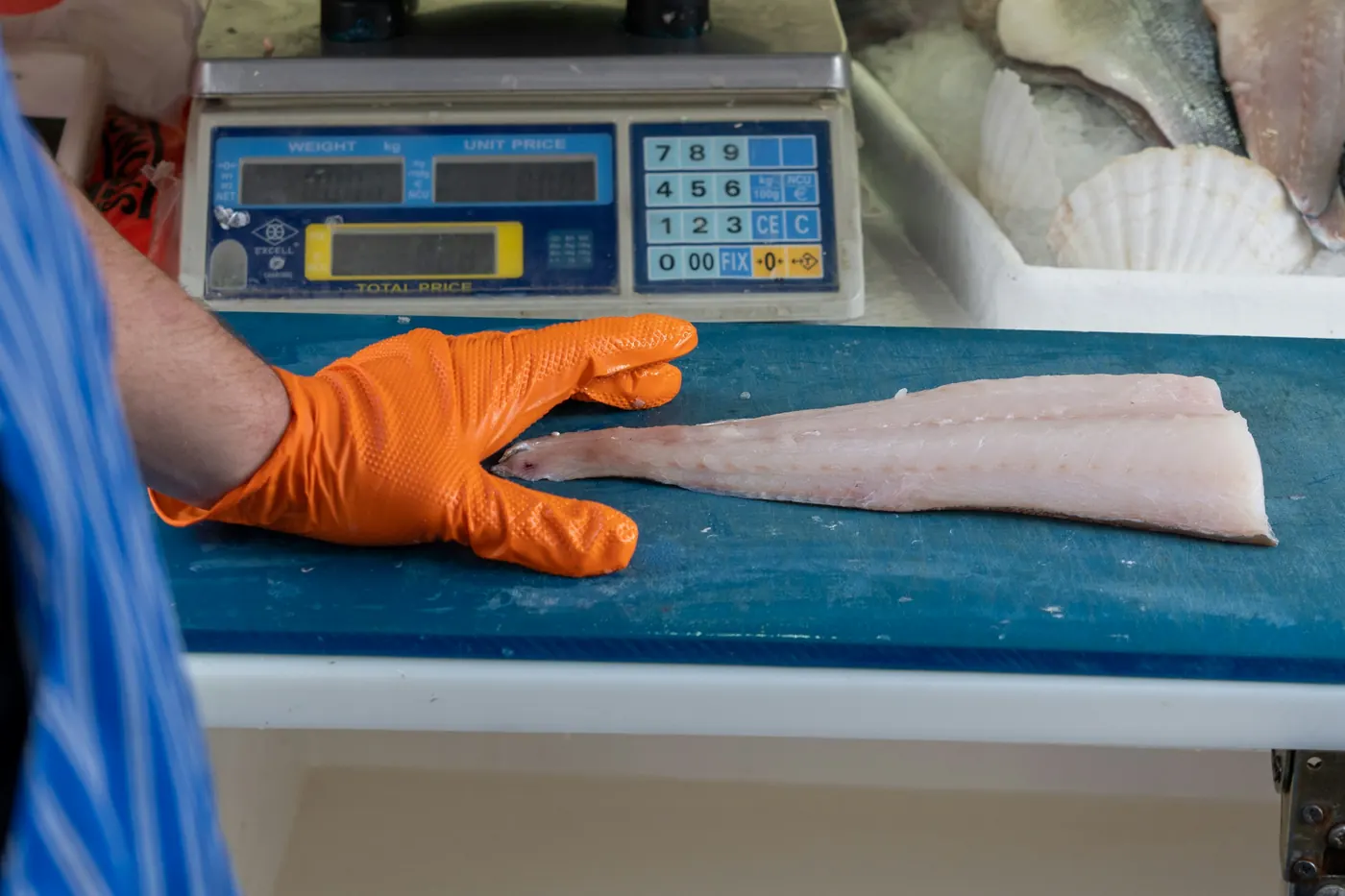
Our picks for the best knife for cutting fish
These seven come from established makers: four kitchen knives (three flexible fillet knives and a Japanese deba), two angler’s fillet knives and an electric fillet knife. Each pick explains who it suits, the specifications that matter and one honest reason to skip it. We have not used these knives ourselves; specifications come from the makers, the Amazon listings and named retailers.
1. Global G-30 8-inch Flexible Swedish Fillet Knife – Thin, Flexible and All Steel
Global is the Japanese maker known for its one-piece stainless knives with dimpled steel handles, and the G-30 is its flexible fillet knife. The 8-inch (21 cm) blade is long enough to take a fillet off a snapper, a redfish or a salmon side in one pass, and flexible enough to bend along the ribs and lift the skin from the flesh.
Amazon’s listing gives only the model, the 8-inch size and a limited lifetime guarantee, so the remaining specifications come from retailers that stock it: they describe CROMOVA 18 stainless steel hardened to about 56 to 58 on the Rockwell scale, a hollow steel handle weighted with sand for balance, and manufacture in Japan. The all-steel construction means there are no seams or rivets for fish slime to collect in.
The polished steel handle is the point of debate with every Global. Its dimples give a grip, but some cooks find steel slippery with wet, scaly hands, so dry your hands and the handle as you work. Wash it by hand and dry it straight away; the edge is thin and should stay off bones and frozen fish.
Why we like it
- 8-inch flexible blade for one-pass fillets
- Seamless all-steel build is easy to clean
- Japanese-made, per retailers
- Limited lifetime guarantee, per the listing
Key specifications
| Model | G-30 |
|---|---|
| Type | Flexible fillet knife |
| Blade length | 8 in (21 cm) |
| Blade steel | CROMOVA 18 stainless (per retailers) |
| Handle | Hollow stainless steel, dimpled |
| Power | Manual |
| Made in | Japan (per retailers) |
| Care and warranty | Care not stated on listing; limited lifetime guarantee |
Why we recommend it
It suits the home cook who buys whole fish from a fishmonger or brings home a cooler of snapper, and wants one precise, flexible kitchen fillet knife that lasts.
Skip it if you dislike steel handles or want a knife for the boat; a rubber-handled fillet knife grips better when wet.
Pros and cons
Pros
- Precise, flexible blade
- Hygienic one-piece design
- Long enough for most fish
Cons
- Steel handle can feel slick when wet
- Listing gives few details
- Higher cost than angler’s knives
2. Kershaw 9-inch Curved Fillet Knife – Reach for Large Saltwater Fish
Large fish need a long blade. Kershaw’s 9-inch curved fillet knife has a trailing point: the tip sweeps upward, so the long curve of the edge stays in contact with the fish as you work from head to tail. Kershaw says it is made for filleting most large fish and game, with just the right amount of flex.
The listing gives the blade as 420J2 stainless steel, chosen for corrosion resistance and toughness and easy to resharpen. The handle is glass-filled nylon with Kershaw’s rubberized K-Texture grip, which the maker says holds securely when wet, and the knife comes with a protective ABS sheath.
420J2 is a soft stainless: it will need touching up more often than the harder Japanese steels on this list, but it shrugs off salt water. Rinse it in fresh water after a day on the coast and dry it before it goes back in the sheath. Kershaw’s lifetime warranty excludes abuse.
Why we like it
- Long 9-inch trailing-point blade
- Rubberized K-Texture grip for wet hands
- Corrosion-resistant 420J2 stainless
- ABS sheath included
Key specifications
| Model | 1242GEX |
|---|---|
| Type | Curved fillet knife |
| Blade length | 9 in |
| Blade steel | 420J2 stainless |
| Handle | Glass-filled nylon, rubberized grip |
| Power | Manual |
| Made in | Not stated |
| Care and warranty | Rinse and dry; lifetime warranty (excludes abuse) |
Why we recommend it
It suits Gulf anglers and anyone filleting redfish, snapper, king mackerel or other large fish who wants a long, grippy blade they can take on the boat.
Skip it if you mostly clean panfish or trout; a 6 to 7-inch blade is easier to steer on small fish.
Pros and cons
Pros
- Length for big fish
- Secure grip when wet
- Sheath for carrying
Cons
- Soft steel dulls sooner
- Long for small fish
- Country of manufacture not stated
3. Mercer Culinary Ultimate White 7-inch Fillet Knife – Sharp Japanese Steel at a Low Cost
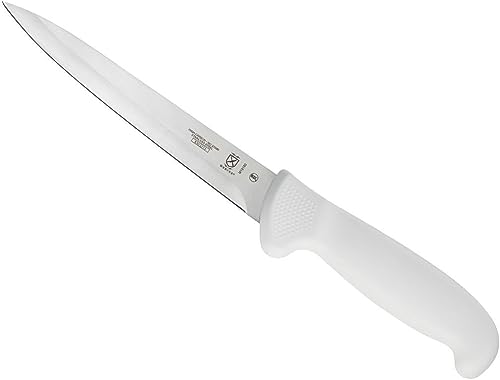
Mercer Culinary makes knives for professional kitchens, and its Ultimate White line is what it calls its range for the value-minded kitchen. Our fish knife set guide recommends Mercer’s longer Millennia fillet knife; this 7-inch knife is a different, lower-cost line and a handier size for trout, bass and the fillets most home cooks buy whole.
The listing describes high-carbon Japanese steel for easy edge maintenance and an ergonomic handle with textured finger points for a non-slip grip. Mercer says it is made for filleting fish and removing flesh from bones.
Mercer asks for hand washing with warm water and mild soap, rinsing and drying with a soft towel, and says not to put it in the dishwasher or leave it soaking. The white handle shows stains, but it is also easy to see when it needs a scrub.
Why we like it
- High-carbon Japanese steel, per the listing
- Textured, non-slip handle
- 7-inch size suits most home fish
- Low cost from a professional maker
Key specifications
| Model | M18170 |
|---|---|
| Type | Fillet knife |
| Blade length | 7 in |
| Blade steel | High-carbon Japanese steel |
| Handle | Textured plastic with finger points |
| Power | Manual |
| Made in | Not stated |
| Care and warranty | Hand wash only; warranty not stated on listing |
Why we recommend it
It suits a cook who fillets fish a few times a month and wants a sharp, inexpensive kitchen knife that does the job without fuss.
Skip it if you fillet at the dock or on a boat; it comes without a sheath.
Pros and cons
Pros
- Inexpensive
- Grippy handle
- Easy to sharpen
Cons
- No sheath
- White handle stains
- Hand wash only
4. Tojiro Fujitora 150 mm Deba – Heavy Japanese Blade for Heads and Bones
A deba is the Japanese fish butcher’s knife: short, thick and heavy, with a single-bevel edge. It is not flexible at all. Its job is the work a fillet knife should not do: cutting through the head and collar, splitting the spine of a small fish and removing fillets from a whole fish in the Japanese style. Many cooks own a deba and a thin fillet knife and use both on the same fish.
This is Tojiro’s Fujitora deba, model FU-635. Amazon’s title is a literal machine translation (“Fujitora Kogyo Fujita Toru Production Blade”), but the brand, model number and specifications identify it. The listing gives a 150 mm (5.9-inch) blade, 280 mm overall, a cobalt alloy steel core clad in 13-chrome stainless steel, an 18-8 stainless steel handle and manufacture in Japan. A retailer that stocks the FU-635 describes it as a single-edged deba with a VG-10 core and a 4 mm thick blade.
A single-bevel blade is sharpened on one side, for right-handed use; Tojiro sells a separate left-handed version. Use the heel for bones and the thinner front of the blade for the fillets, and wash and dry it by hand.
Why we like it
- Thick, heavy blade for heads and collars
- Cobalt alloy steel core with stainless cladding
- Made in Japan by Tojiro
- All-stainless handle is easy to clean
Key specifications
| Model | FU-635 |
|---|---|
| Type | Deba (single bevel) |
| Blade length | 150 mm (5.9 in) |
| Blade steel | Cobalt alloy steel core, 13-chrome stainless cladding |
| Handle | 18-8 stainless steel |
| Power | Manual |
| Made in | Japan |
| Care and warranty | Hand wash; warranty not stated on listing |
Why we recommend it
It suits cooks who buy whole fish, from red snapper to mackerel, and want to break them down Japanese-style, saving the heads and frames for stock.
Skip it if you only need fillets from cleaned fish; a flexible fillet knife is faster and easier to learn.
Pros and cons
Pros
- Handles bones a fillet knife cannot
- Japanese-made steel
- Compact 150 mm size
Cons
- Single bevel is right-handed
- Amazon title is a poor translation
- Takes practice to use well
5. Rapala Heavy Duty Electric Fillet Knife – Corded Power for a Full Cooler
An electric fillet knife uses two serrated blades that slide back and forth against each other, and it cuts through rib bones and scales with little effort. That makes it the tool of choice for anglers cleaning a limit of crappie, bass or speckled trout, where speed matters more than a perfect, skin-on fillet. Rapala, best known for its lures, makes several; this is its heavy-duty corded model.
The listing gives a heavy-duty motor and 7½-inch dishwasher-safe reciprocating stainless blades, and Rapala says the knife has twice the speed and three times the power of standard electric fillet knives. Retailers that stock this model, HDEFAC, list an 8-foot cord. A corded knife will not run down halfway through a cooler, but it needs an outlet, so it is for the garage, the fish-cleaning station or a dock with power.
Electric knives leave a rougher surface than a sharp hand blade and are clumsy on small, delicate fish. Unplug the knife before changing or cleaning the blades, and keep the handle out of water. The listing gives a one-year warranty.
Why we like it
- Fast on large numbers of fish
- 7½-inch dishwasher-safe blades
- Corded, so it never runs flat
- One-year warranty, per the listing
Key specifications
| Model | HDEFAC |
|---|---|
| Type | Electric fillet knife |
| Blade length | 7.5 in |
| Blade steel | Stainless steel |
| Handle | Ergonomic plastic body |
| Power | Corded, 110V; 8 ft cord (per retailers) |
| Made in | Not stated |
| Care and warranty | Blades dishwasher safe; one-year warranty |
Why we recommend it
It suits anglers who bring home a cooler of panfish or trout and want to clean them quickly at home.
Skip it if you fillet away from power or want the neatest possible fillets; a hand knife fits better.
Pros and cons
Pros
- Cuts through ribs easily
- Unlimited run time
- Blades go in the dishwasher
Cons
- Needs an outlet
- Rougher cut than a hand knife
- Noisy compared with a manual knife
6. Mac Professional 7-inch Sole/Fillet Knife – The Thinnest Blade for Delicate Fish

Mac Knife is a Japanese maker of thin, sharp kitchen knives. Its SO-70 is the knife for delicate, flat fish: Mac calls it the thinnest knife it makes, with a blade thin enough to flex nearly 90 degrees, made for sole and flounder and also used for slicing sashimi.
The listing gives a 1.5 mm blade, a razor-sharp edge, a pakka wood handle and manufacture in Japan, and recommends hand washing. Mac’s own page gives the blade length as 6.94 inches and the weight as 3.6 ounces. It does not give the steel; retailers describe it differently, so we list it as not stated.
That thinness is what lets the blade glide under the skin of a flounder fillet without tearing it, and it is also its limit: it is not for cutting through bones or heads. Pair it with the deba above if you buy whole fish.
Why we like it
- Mac’s thinnest blade, made for sole and flounder
- Flexes for skinning delicate fillets
- Pakka wood handle
- Made in Japan
Key specifications
| Model | SO-70 |
|---|---|
| Type | Sole/fillet knife |
| Blade length | 7 in (6.94 in per Mac) |
| Blade steel | Not stated by Mac |
| Handle | Pakka wood |
| Power | Manual |
| Made in | Japan |
| Care and warranty | Hand wash; warranty not stated on listing |
Why we recommend it
It suits cooks who fillet flatfish, trout and other delicate fish in the kitchen and value a clean, neat fillet above all.
Skip it if you clean big, bony saltwater fish; the thin blade is not built for heavy work.
Pros and cons
Pros
- Exceptionally thin and flexible
- Precise skinning
- Doubles as a sashimi slicer
Cons
- Not for bones or heads
- Steel grade not given
- Wood handle needs drying
7. Buck 223 Silver Creek Fillet Knife – A Coated Blade for the Tackle Box

Buck Knives’ Silver Creek line is built for fishing, and the 223 is its fixed fillet knife. The 6⅜-inch blade is 420J2 steel with a titanium coating, which the listing says is for corrosion resistance and flexibility; it is a good length for trout, bass and smaller saltwater fish.
The handle is a TPE rubber overmold with anti-slip ridges and a stainless steel safety guard, and the knife comes in an injection-molded plastic sheath with a belt clip and a drain hole, so it can go straight from the boat into the tackle box. It weighs 5 ounces, per the listing.
Buck backs it with its Forever Warranty. The coating protects the blade, but the edge itself is uncoated steel, so rinse the knife after salt water and dry it before sheathing.
Why we like it
- Titanium-coated 420J2 blade resists corrosion
- Rubber grip with safety guard
- Draining sheath with belt clip
- Buck Forever Warranty
Key specifications
| Model | 0223BLS |
|---|---|
| Type | Fillet knife |
| Blade length | 6⅜ in |
| Blade steel | 420J2 stainless, titanium coated |
| Handle | TPE rubber overmold |
| Power | Manual |
| Made in | Not stated |
| Care and warranty | Rinse and dry; Buck Forever Warranty |
Why we recommend it
It suits anglers who want a dependable, grippy fillet knife to live in the boat or tackle box, from a maker with a lifetime warranty.
Skip it if you fillet big fish often; a 9-inch blade like the Kershaw covers more ground.
Pros and cons
Pros
- Built for wet conditions
- Practical sheath
- Lifetime warranty
Cons
- Medium length only
- Soft steel needs regular sharpening
- Not a kitchen-looking knife
Fillet knife, deba or electric?
A flexible fillet knife is the right first knife for almost everyone. A blade of 6 to 9 inches bends along the ribs and backbone and slides between skin and flesh. Choose 6 to 7 inches for trout, bass and panfish, 8 to 9 inches for snapper, redfish and salmon.
A deba is for cooks who buy whole fish. It cuts through heads, collars and small backbones that would chip or bend a fillet knife, and many Japanese-style cooks use it to take off the fillets too.
An electric fillet knife is for volume. If you clean dozens of fish after a trip, it saves real time; if you cook one fish for dinner, a sharp hand knife gives a cleaner fillet.
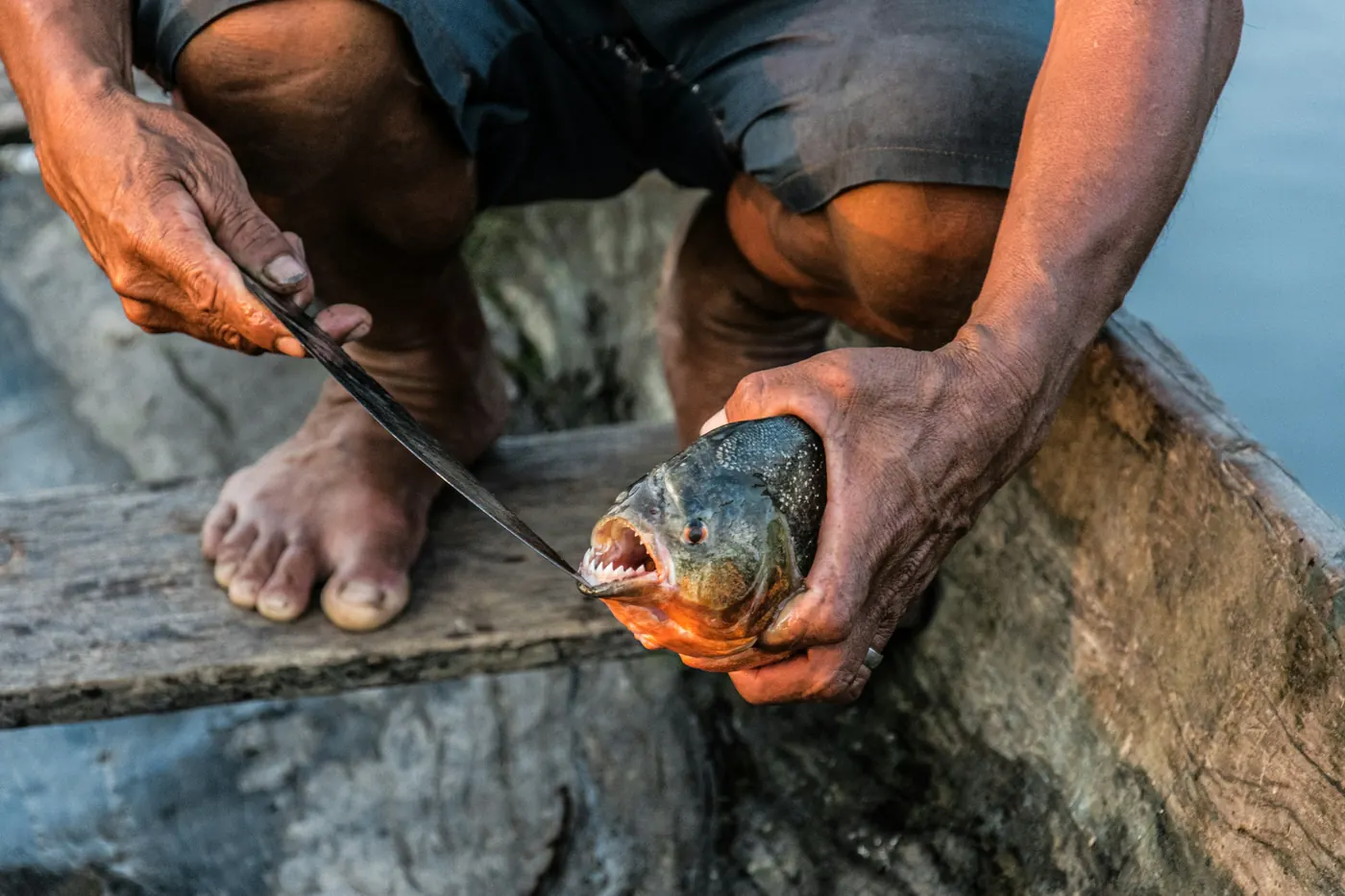
How to choose a knife for cutting fish
Match the length to the fish. The blade should be a little longer than the fish is wide, so it can cross the fillet in one stroke. A knife too long for a small fish is hard to steer.
Choose flexibility for the job. Flexible blades follow bones and skin; stiffer blades push through big fish and work near the head. If you own only one knife, pick a medium flex in the 7 to 8-inch range.
Think about where you fillet. At the kitchen counter, any handle works. On a boat or at the dock, a rubberized grip, a safety guard and a sheath that drains, like those on the Kershaw and Buck, are worth more than looks.
Consider steel and salt. Soft stainless like 420J2 resists salt water and is easy to resharpen. Harder Japanese steels hold a finer edge but need drying and more careful use. Either way, keep it sharp with a knife sharpener; a dull fillet knife tears flesh.
Use a board that cleans easily. Fish smells linger in wood. A plastic board from our best plastic cutting board guide can be scrubbed hot and kept for fish and raw meat only.
Keeping fish fresh while you clean it
Penn State Extension’s guide to field dressing and handling wild game and fish advises cleaning fish promptly, since enzymes and bacteria begin working once the fish is caught, wearing disposable gloves and cleaning the knife between cuts. It recommends cooling fish quickly to 35 to 40°F, keeping the cooler out of direct sunlight, and rinsing fillets in cold water. A good cooler and plenty of ice do as much for the finished dish as the knife does.

How we picked these seven fish knives
We started from what a restaurant kitchen asks of a fish knife: a thin, sharp blade the right length for the fish, a handle that holds when wet, and steel that copes with water and salt. We then chose one knife for each kind of cook and fish, limited to established makers (Global, Kershaw, Mercer Culinary, Tojiro, Rapala, Mac and Buck). Every pick was in stock when we wrote this, and none repeats a product from our fish knife set or boning knife guides.
Specifications come from the Amazon listings and the makers, with retailer pages named where we relied on them. We checked each brand against the U.S. Consumer Product Safety Commission’s recall list. The CPSC lists a 2021 recall of Rapala’s rechargeable fillet knife, item RRFN, for a battery fire hazard; that is a different model from the corded Rapala here. We left out an American Angler electric knife whose Amazon listing shows a serial number named in a 2021 CPSC recall of American Angler electric fillet knives for a trigger that could stick on. We have not used these knives ourselves.
Fish knife questions, answered
What is the best knife for cutting fish?
For most cooks, a flexible fillet knife of 7 to 8 inches, such as the Global G-30. It bends along the bones, removes skin cleanly and suits the fish most people cook. Add a deba if you buy whole fish, or an electric knife if you clean large catches.
Can I fillet a fish with a chef’s knife?
You can, but it is harder. A chef’s knife is stiff and wide, so it does not bend along the ribs and tends to leave meat on the frame. It is fine for cutting fillets into portions or for ceviche once the fish is filleted.
Is an electric fillet knife better than a manual one?
It is faster for many fish, especially panfish, and easier on the hands. A sharp manual knife gives neater fillets and more control, and works anywhere without power or batteries.
What is a deba knife used for?
A deba is a thick, single-bevel Japanese knife for breaking down whole fish: removing the head, cutting through the collar and small bones, and taking off fillets. It is not flexible and is not meant for skinning delicate fillets.
How long should a fillet knife be?
About 6 to 7 inches for trout, bass and panfish, and 8 to 9 inches for larger fish such as snapper, redfish and salmon. Very large fish may call for a longer curved blade.
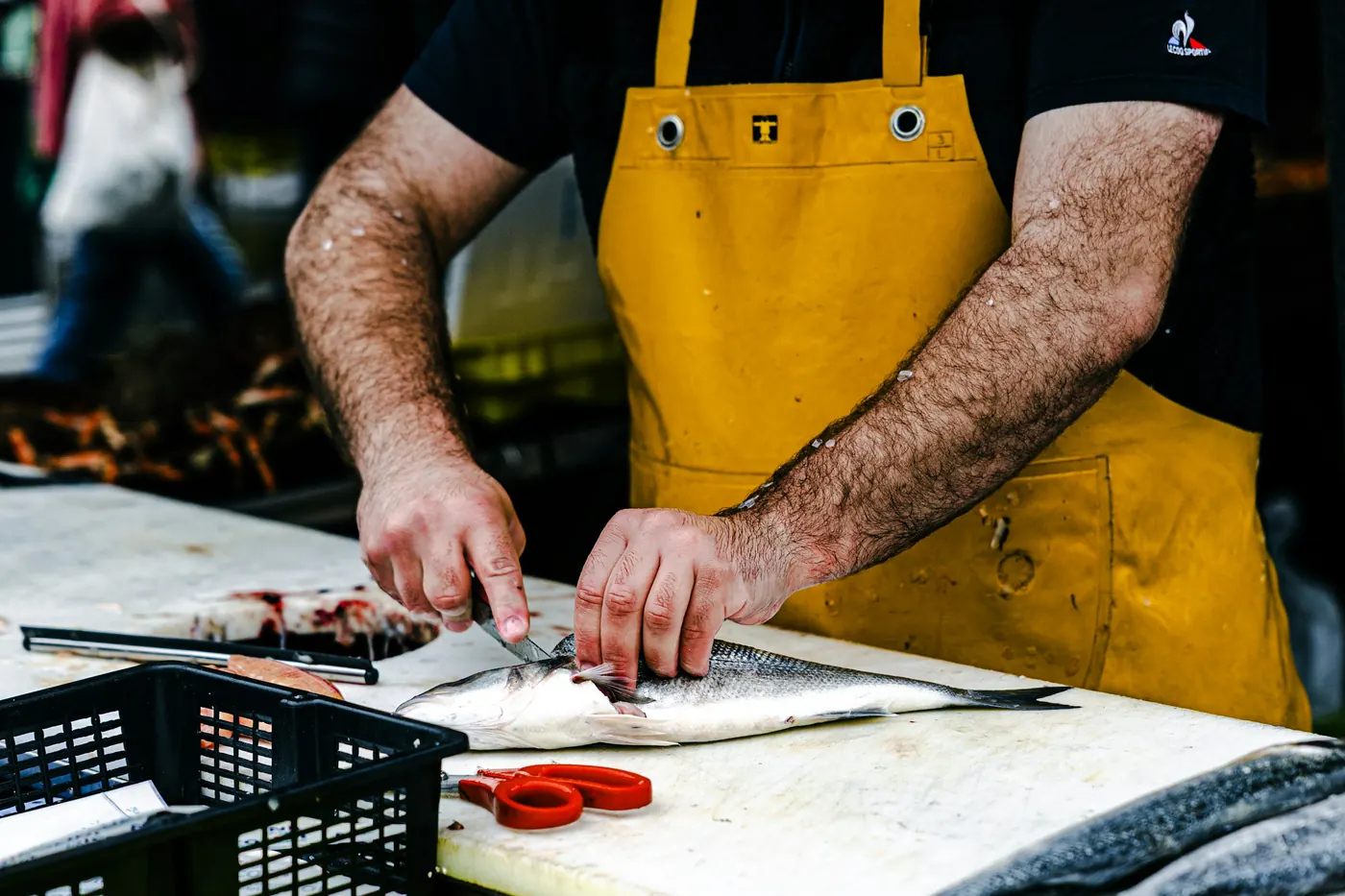
Our pick for cutting fish at home
Buy the Global G-30 if you want one precise kitchen fillet knife, the Kershaw 9-inch for big fish from the coast, and the Mercer Ultimate White if cost comes first. Add the Tojiro deba for whole fish, and the corded Rapala electric knife if you clean whole coolers. For more classic fillet knives and kits, see our best fish knife set guide, and for meat, the best boning knife.
And if you would rather leave the fish to someone else, read about seafood at a Mexican restaurant, see the menu or call to order.