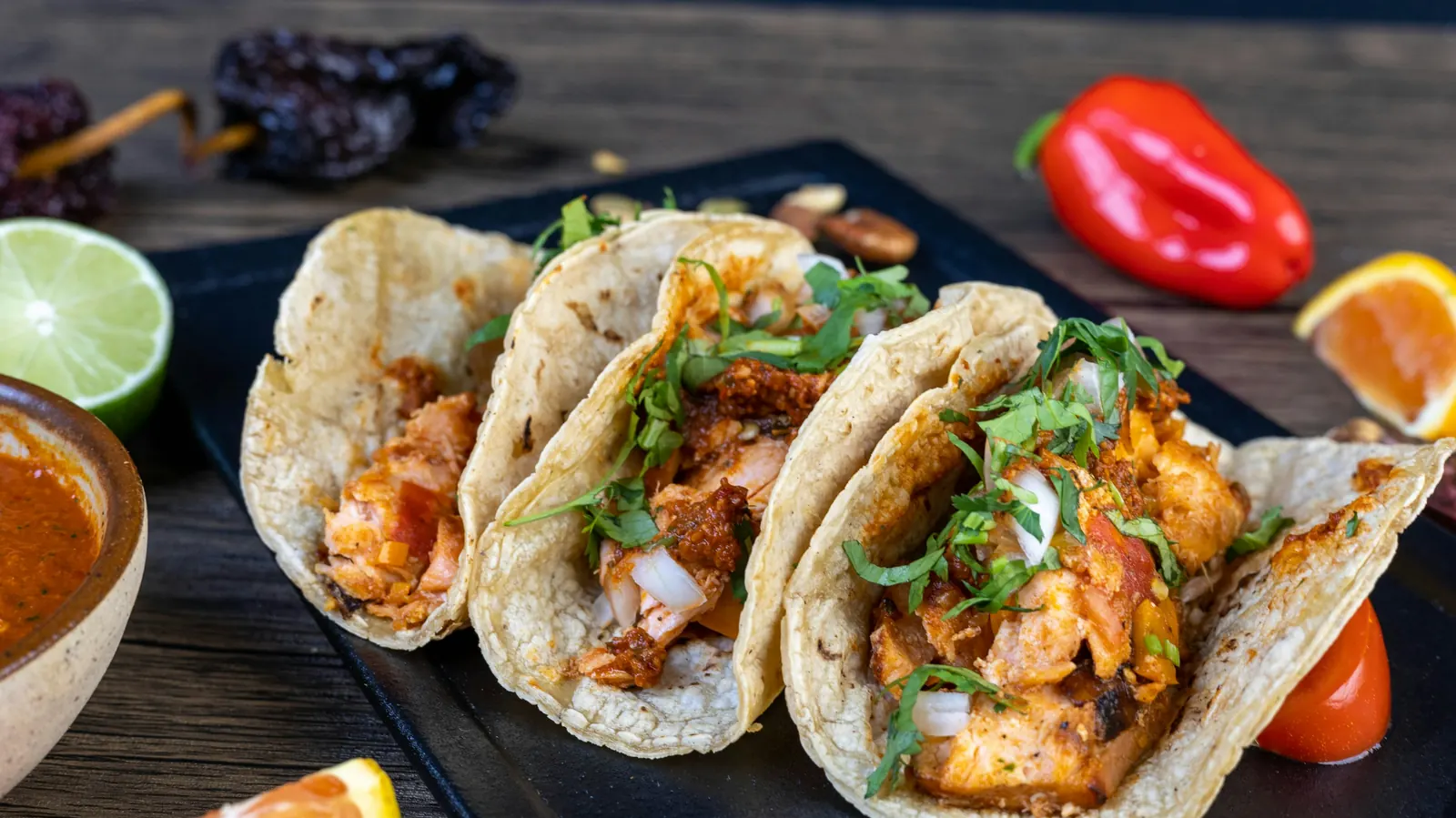
Mexico has around 5,800 miles of coastline, and almost none of it shows up in what Americans picture as Mexican food.
The seafood section of a menu is usually the least ordered and the most interesting part of it.
The short answer
Mexican seafood divides roughly into three things: cold citrus-cured dishes like ceviche and aguachile, seafood cocktails served in a glass with tomato and lime, and hot plates of shrimp or fish in a chile or tomato sauce. It is generally lighter than the rest of the menu, and shrimp is the most common protein by a wide margin.
Two coasts, two styles
The Pacific and the Gulf cook differently, and once you know which is which the menu organizes itself.
The Pacific side — Sinaloa, Nayarit, Baja — leans raw, cold and sharp. Chowhound, surveying iconic Mexican seafood dishes, places the birth of aguachile in Sinaloa and notes that Baja fish tacos originated in the town of Ensenada.
The Gulf side — Veracruz above all — cooks its seafood, and does it with Mediterranean ingredients. The same guide describes pescado a la veracruzana as red snapper with olives, capers and oregano, which is Spanish influence arriving by ship.
Our regional guide covers why those two coasts diverged so completely.
What is on the menu
| Dish | What it is | Hot or cold |
|---|---|---|
| Ceviche | Seafood cured in citrus with tomato, onion, cilantro | Cold |
| Aguachile | Shrimp in a fierce lime-and-chile liquid | Cold |
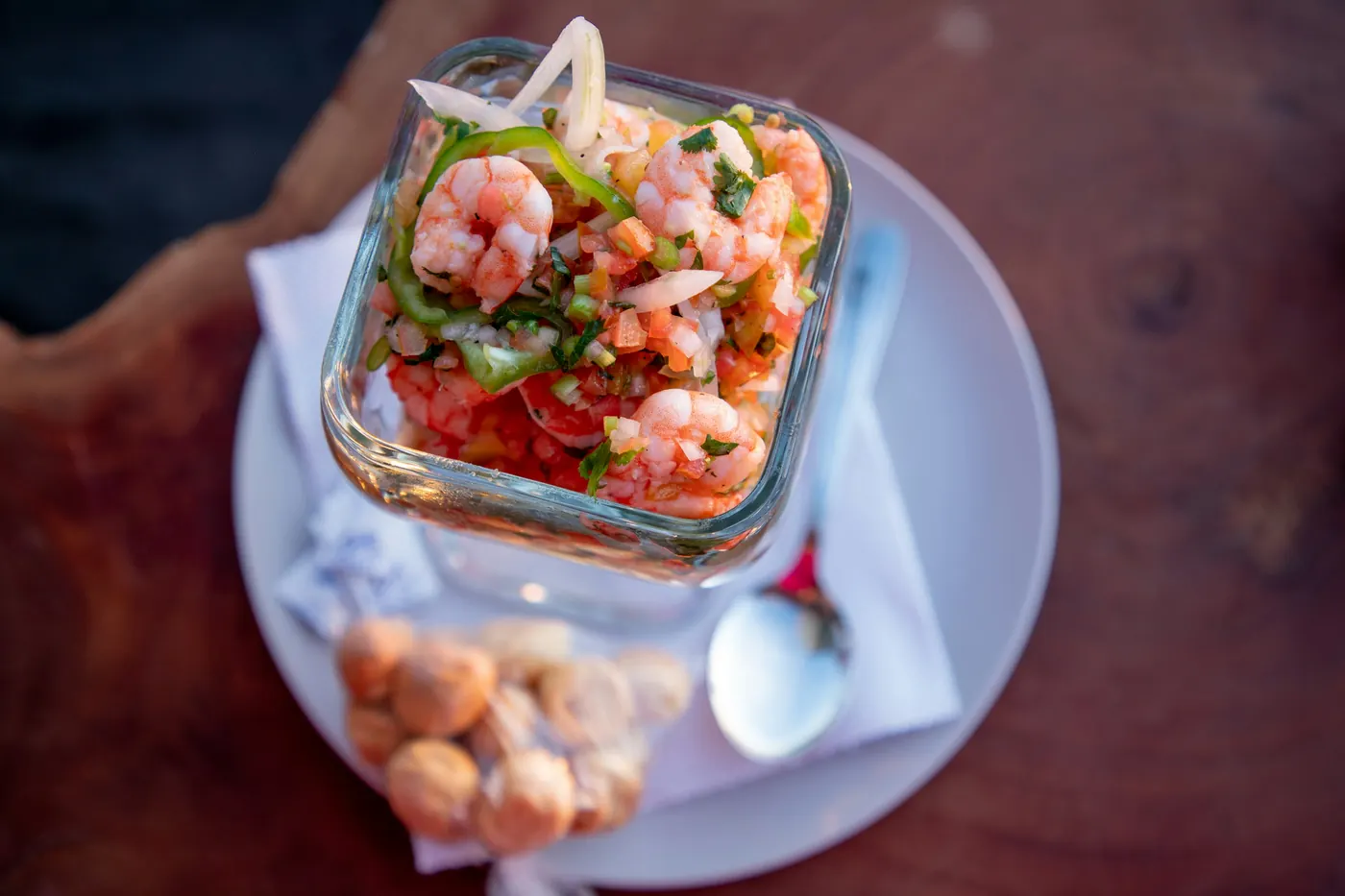
| Coctel de camarón | Shrimp in a tomato-lime broth, served in a glass | Cold |
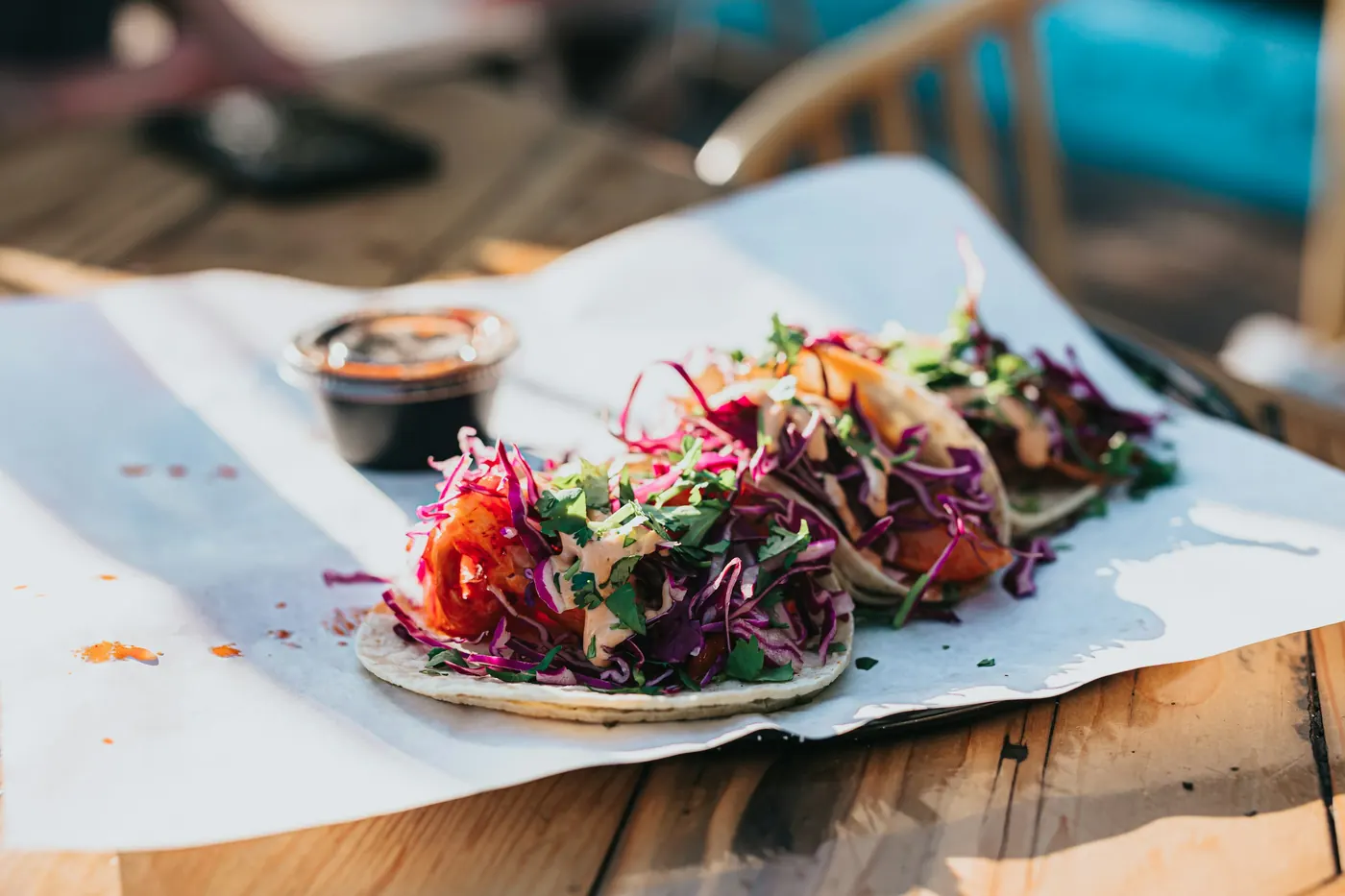
| Tacos de pescado | Battered fried fish, cabbage, crema | Hot |
| Camarones a la diabla | Shrimp in a spicy tomato-chile sauce | Hot |
| A la veracruzana | Fish with tomato, olives and capers | Hot |
The cold half of that table is the half most people skip, and it is where the cooking is most distinctive.
The cocktail is not a cocktail
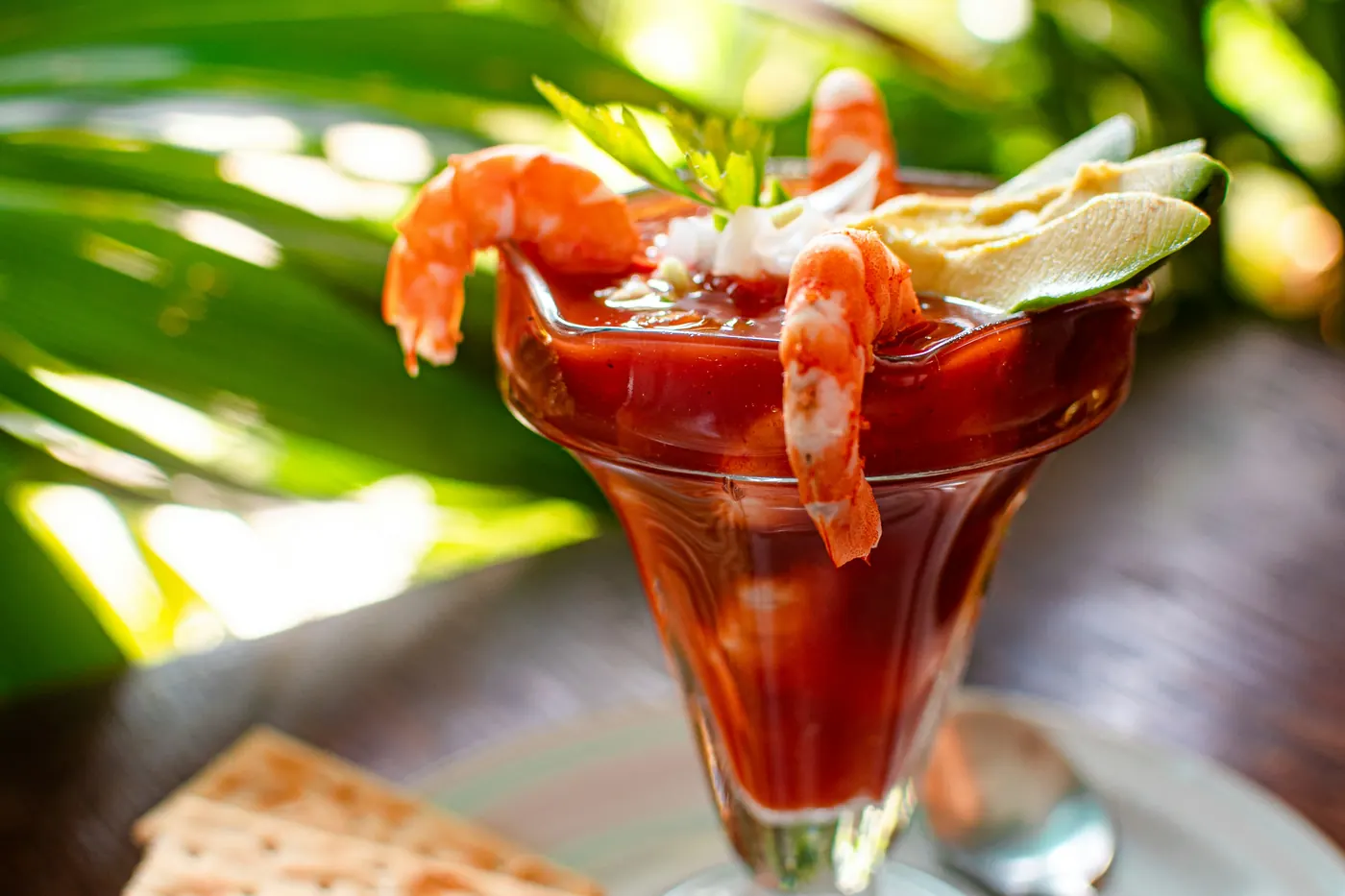
Coctel de camarón is the dish most likely to surprise an American diner, because the word sets the wrong expectation.
It is not shrimp arranged on the rim of a glass with a dab of horseradish sauce. It is a bowl or tall glass of cold tomato broth — lime, tomato juice, sometimes a little of the shrimp cooking liquid — with shrimp, avocado, cucumber, onion and cilantro suspended in it. You eat it with a spoon and crackers.
Chowhound notes it is popular anywhere in Mexico with abundant fresh seafood, which is most of the country’s edge. The larger mixed version, with octopus and shellfish added, is often called vuelve a la vida — return to life — and has the same reputation as a recovery dish that menudo does.
Ceviche, and what citrus does
Ceviche is seafood cut small and left in lime juice until the flesh turns opaque and firm.
The acid denatures the proteins, which changes the texture in a way that resembles cooking. It is a different process from heat, and the two are not interchangeable — which is why the freshness of the seafood is the entire foundation of the dish rather than a nice-to-have.
Mexican ceviche is distinguishable from the Peruvian version. Chowhound describes the Mexican style as including tomatoes, cucumbers, jalapeños and cilantro alongside the fish and lime, where the Peruvian original is more austere.
Aguachile is the sharper cousin: shrimp, lime, and blended chile with water, assembled and eaten almost immediately rather than left to sit.
How to order it
Three things worth knowing before you commit.
Cold dishes are shared. Ceviche, aguachile and cocteles come in portions built for a table with tostadas or crackers alongside. Ordering one as a solo main is possible but not the intent.
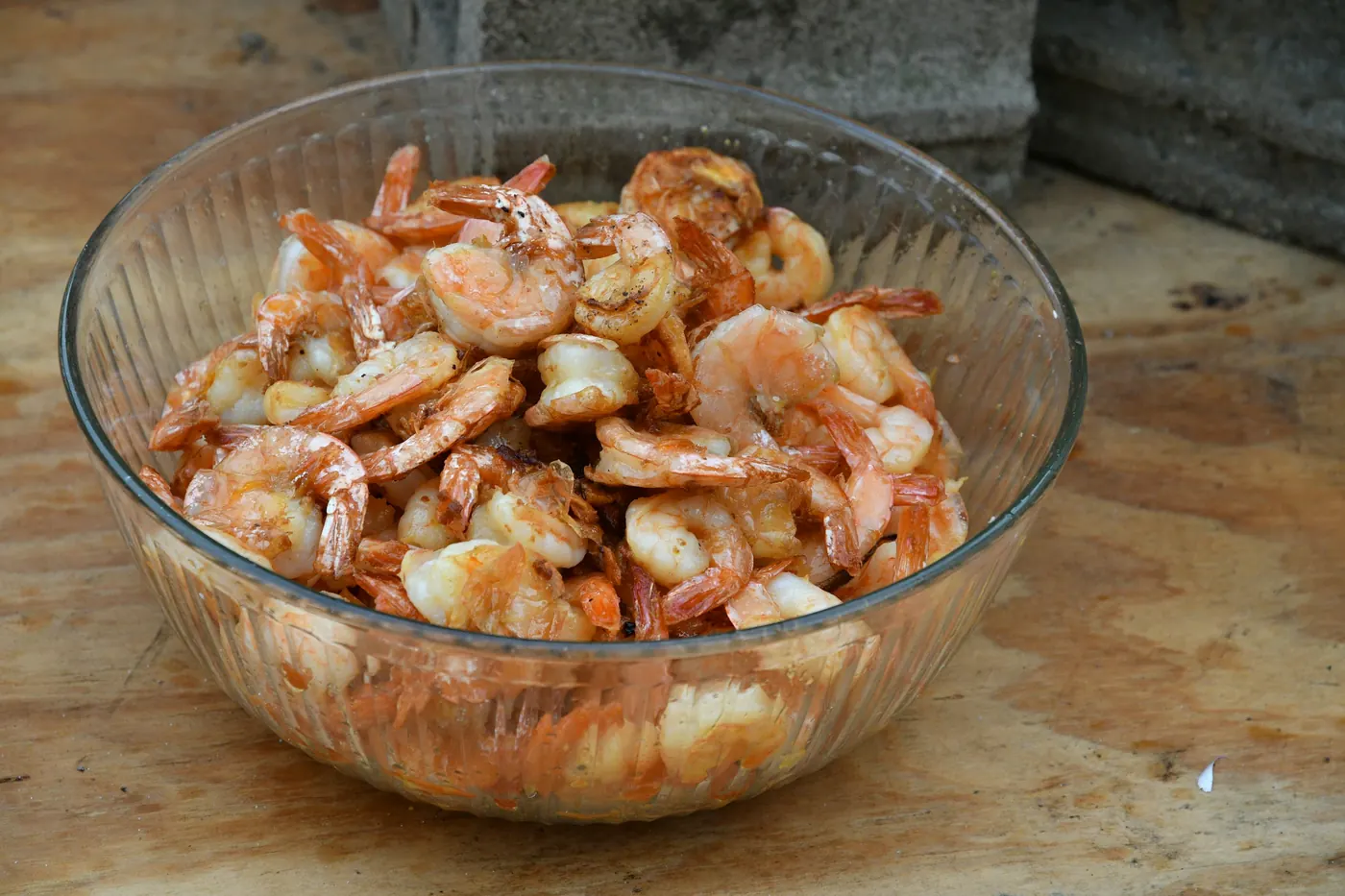
Hot shrimp plates come with rice. Almost universally. The rice is there to catch the sauce, and the sauce is usually the point.
Ask what is fresh. Shrimp is the reliable default because it freezes well; whole fish and anything described as catch-of-the-day depends on the delivery. This is one of the questions our guide to spotting a good Mexican restaurant recommends asking.
The citrus, and why it is lime
Lime runs through Mexican seafood the way lemon runs through Mediterranean cooking, and the substitution is not neutral.
Mexican limes — small, thin-skinned, sharply acidic — are more aromatic and more bitter than lemon, and that bitterness is part of the flavor rather than a flaw. Swapping in lemon makes a ceviche taste rounder and flatter.
It also arrives on the side of nearly every seafood plate as a wedge, and squeezing it is not optional garnish behavior. Acid cuts the richness of fried fish and lifts the sweetness of shrimp, which is the same job it does everywhere else on the menu.
On Julia’s menu
Seafood runs deeper through Julia’s menu than most Tex-Mex kitchens, and shrimp appears in more than a dozen places.
The ceviche on the appetizer list is lemon-lime cured gulf shrimp with avocado, tomato, serrano, onion and cilantro. That ingredient list is the Mexican style described above, more or less exactly.
Among the hot plates, the camarones chipotle are pan-seared shrimp with garlic and mushrooms braised in a roasted tomato-chipotle sauce, and the camarones rellenos are bacon-wrapped shrimp stuffed with Oaxaca cheese and a slice of jalapeño, basted with adobo. Both come with white rice and vegetables.
Salmon Tropical is grilled salmon with white rice and sautéed spinach and mushrooms — the only finfish entrée, and a dinner-only one.
Beyond that, shrimp is an option almost everywhere: fajitas, quesadillas, nachos, the grilled salad, the chile relleno, the empanadas, the enchiladas de camarón under creamy chipotle, and the Fiesta Plate. There is a Fiesta Shrimp family pack that serves four.
What is not there is a coctel or an aguachile. Those are cold-case dishes that belong to a marisquería, and their absence from a full-service Tex-Mex menu is normal.
Frequently asked questions
What seafood is common in Mexican food?
Shrimp above everything else, then white fish, octopus and shellfish. Shrimp appears in cold dishes, hot plates, tacos, fajitas and salads.
What is the difference between ceviche and aguachile?
Ceviche sits in citrus until the flesh firms up. Aguachile is assembled with lime and blended chile and eaten almost immediately, so it is sharper and rawer.
Is a Mexican shrimp cocktail like an American one?
No. It is a cold tomato-and-lime broth with shrimp, avocado and cucumber in it, eaten with a spoon rather than a fork.
Where do fish tacos come from?
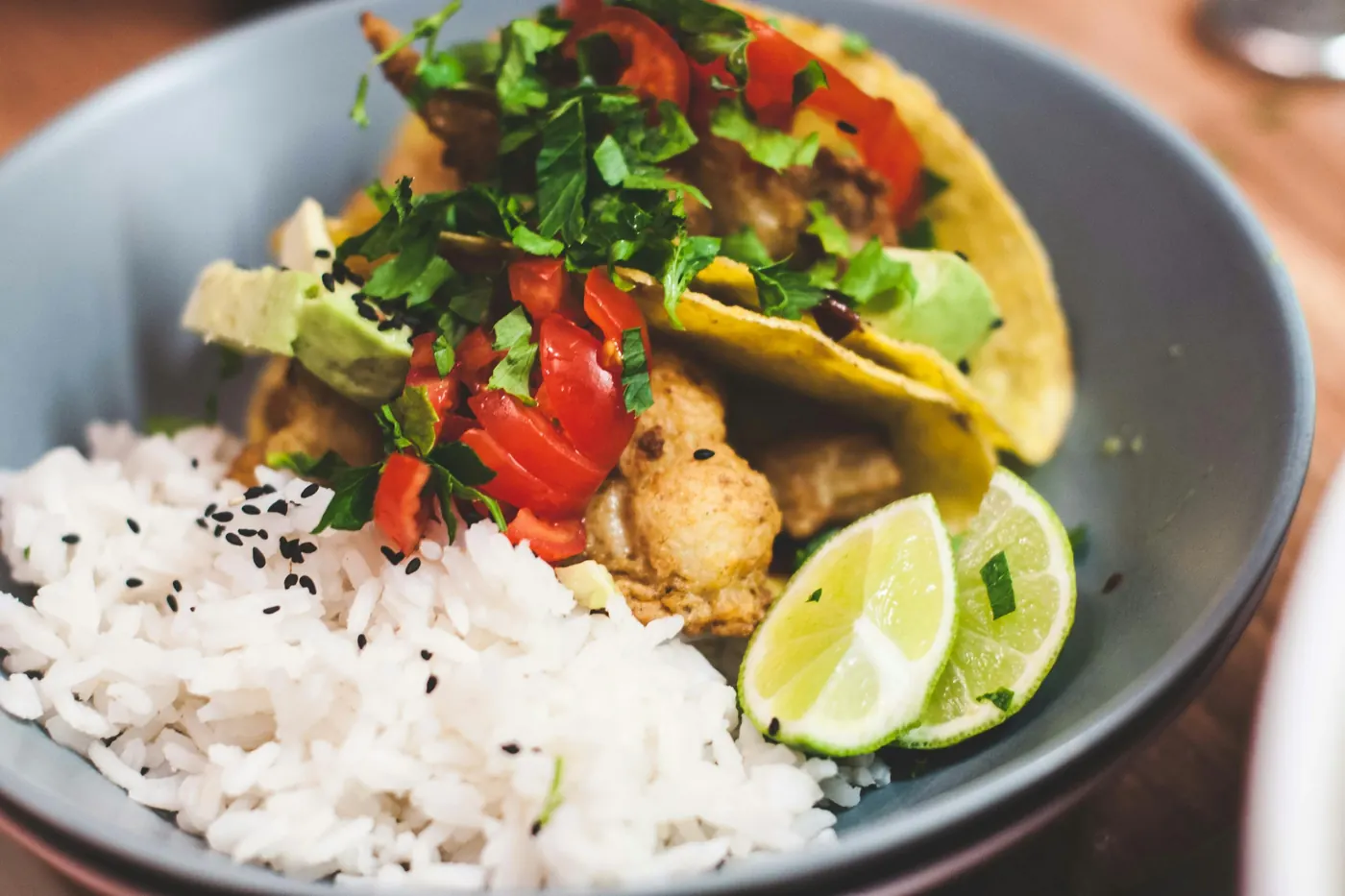
Baja California, and specifically the town of Ensenada, where the battered-fried style with cabbage and crema originated.
Is Mexican seafood spicy?
Some of it. Aguachile and camarones a la diabla are built around heat; ceviche, cocteles and most fish plates are not.
The short version
Cold citrus-cured dishes from the Pacific, cooked tomato-and-olive dishes from the Gulf, and shrimp everywhere. Lighter than the rest of the menu and usually overlooked.
Julia’s runs ceviche, two shrimp entrées, grilled salmon and shrimp as an option across most of the menu.