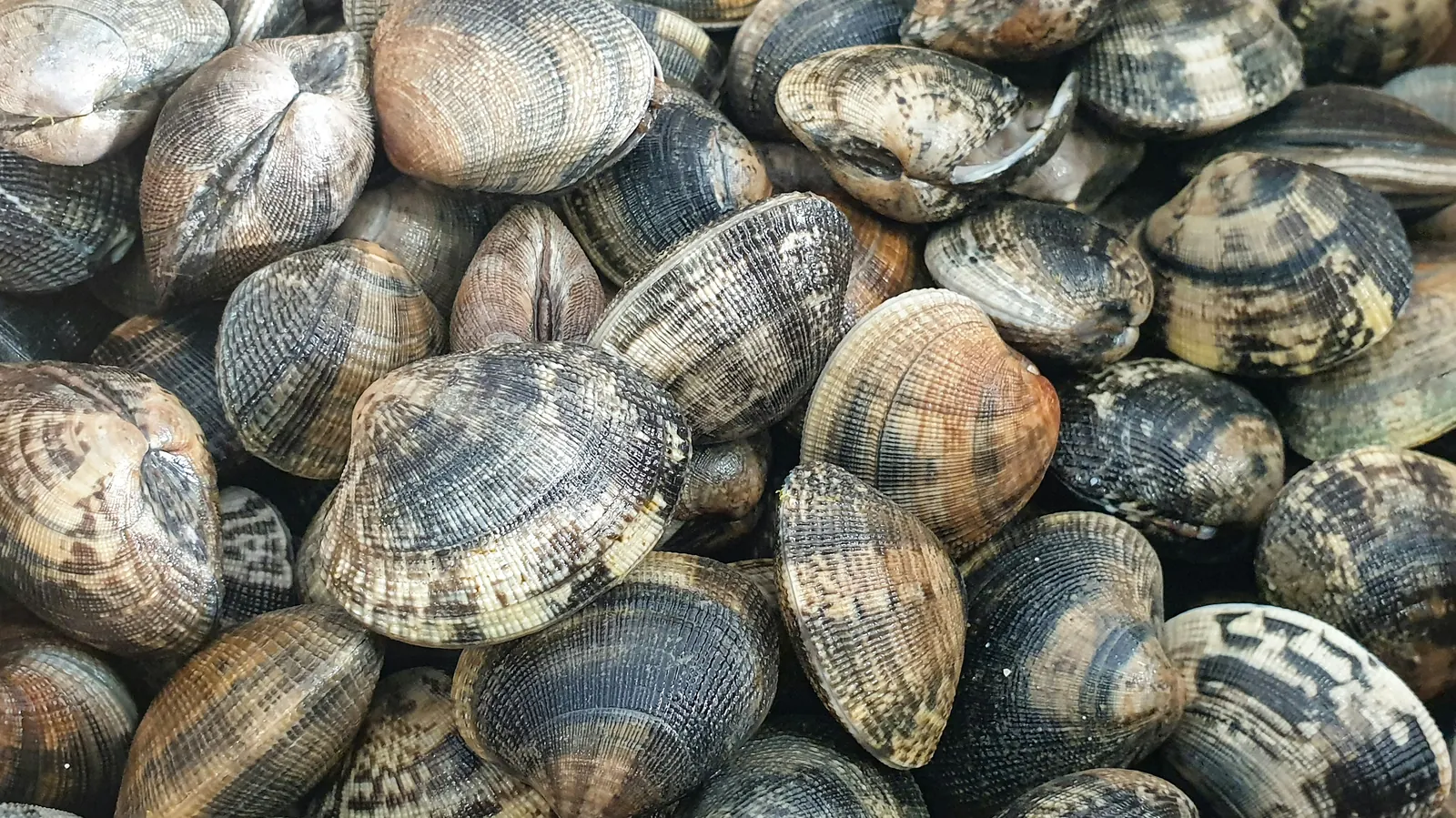
A clam opens differently from an oyster. An oyster knife usually works at the hinge, while the classic clam method slips a thin blade between the shells at the front edge and cuts the muscles holding them shut. That difference is why a separate clam knife exists at all.
The choice mostly comes down to blade width, tip shape, and whether you’d rather dry a carbon-steel blade or just rinse stainless. Here’s how the options on Amazon compare.
Julia’s earns a commission on purchases made through links on this page, at no cost to you. We have not used these knives ourselves. Recommendations rest on maker and listing details, and we name the sources we read.
Quick verdict: which clam knife to buy
Buy the Dexter-Russell Sani-Safe 3-Inch Clam Knife for most kitchens: it has a narrow blade, a textured grip for wet hands and a stated NSF certification. For a first knife, the Mercer Culinary Clam Knife has a rounded safety tip and clear care instructions. If you want American-made and a wood handle, look at the Dexter-Russell S17.
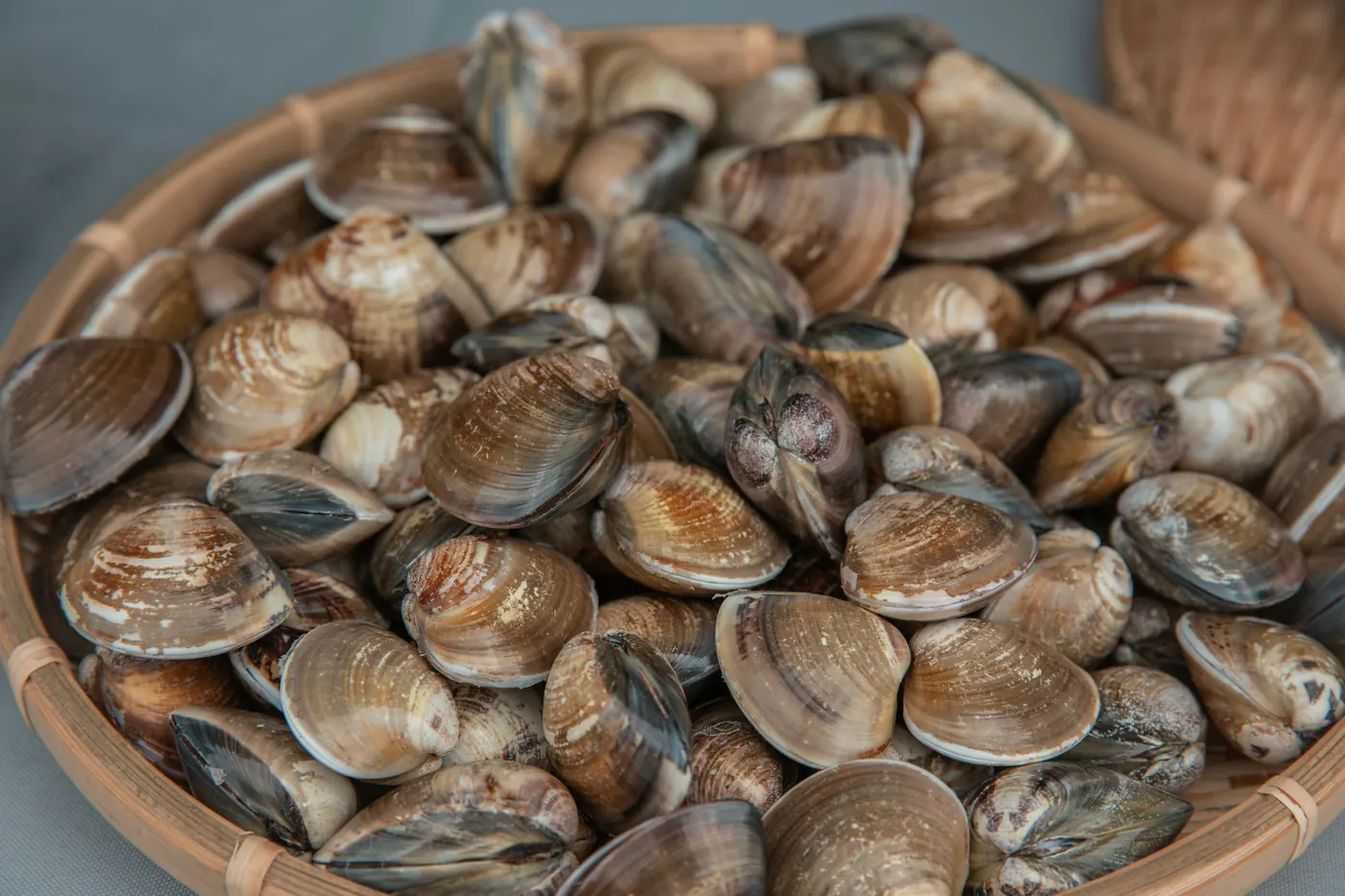
Five clam knives side by side
The five that cover the most buyers, one for each kind of shucker.
| Pick | Best for | Material | Standout detail | Buy on Amazon |
|---|---|---|---|---|

Dexter-Russell Sani-Safe 3-Inch Clam KnifeBest overall
|
Regular shuckers | Polypropylene handle | NSF certified, per listing | View on Amazon |

Mercer Culinary Clam KnifeBest value narrow
|
First clam knife | High-carbon steel, poly handle | Rounded safety tip | View on Amazon |

Mercer Culinary Wide Clam KnifeBest wide blade
|
Big batches | High-carbon Japanese steel | Wide blade | View on Amazon |
Dexter-Russell 3-Inch Clam Shucking KnifeBest made in USA
|
Traditional tool buyers | High-carbon steel, beechwood | Made in USA | View on Amazon |

Winco Oyster and Clam KnifeBest two-in-one
|
Occasional shellfish nights | Stainless, wood handle | Oysters and clams | View on Amazon |
Our picks for the best clam knife
1. Dexter-Russell Sani-Safe 3-Inch Clam Knife – Narrow Blade, Textured Grip
Dexter-Russell is a long-running American cutlery name, and the Sani-Safe line is its white-handled foodservice range. This clam knife has a 3-inch narrow blade and a textured polypropylene grip. The listing title says NSF certified for shellfish and seafood shucking, which tells you this was built with a commercial kitchen’s cleaning standards in mind.
The narrow blade is designed to open shells with precision while protecting the meat inside, and that’s the job. One thing to note: the title calls the blade high-carbon stainless while the feature text says high carbon steel. Treat it as a knife you wash and dry right away. A white handle also shows shell grit and dirt plainly, and that’s useful on this kind of tool.
Why we like it
- NSF certified, according to the listing title.
- Narrow 3-inch blade for slipping between shells.
- Textured polypropylene grip for wet hands.
- Sold by Dexter Cutlery when we checked.
Key specifications
| Model | S127PCP |
|---|---|
| Blade length | 3 inches |
| Blade steel | High-carbon stainless per title; high carbon steel per feature text |
| Blade shape | Narrow |
| Handle | Textured polypropylene |
| Tip | Not stated |
| Dishwasher | Not stated |
| Made in | Not stated |
Why we recommend it
This suits anyone who shucks clams more than once a season and wants one knife that won’t need replacing. It’s a dependable pattern from a maker that sells to commercial kitchens.
Skip it if you want a traditional wood handle. The S17 below is the same size with beechwood.
Pros and cons
Pros
- Foodservice pattern
- NSF stated
- Wet-hand grip
Cons
- Listing conflicts on steel type
- Care not stated on the listing
2. Mercer Culinary Clam Knife – Rounded Tip, Non-Slip Handle
Mercer’s narrow clam knife is 3-1/4 inches, with a high-carbon steel blade and a rounded tip that Mercer includes for safety. A rounded tip matters for this job since your palm is right there when the blade slips. The textured non-slip handle is designed to hold even when your hands are wet.
Mercer states the use plainly: quickly cut the muscle that holds clams closed, then pry them open. The blade is high-carbon steel, so hand wash it with warm water and mild soap, rinse and dry it with a soft towel, and keep it out of the dishwasher. The listing shows two model numbers, M33026A and M33028A, so match the title when you buy.
Why we like it
- Rounded tip for safety, per Mercer.
- Textured handle made for wet hands.
- Sold and shipped by Amazon when we checked.
- Clear care instructions on the listing.
Key specifications
| Model | M33026A |
|---|---|
| Blade length | 3-1/4 inches |
| Blade steel | High-carbon steel |
| Blade shape | Narrow |
| Handle | Textured poly |
| Tip | Rounded |
| Dishwasher | No |
| Made in | Not stated |
Why we recommend it
Buy this if you want a simple, proven clam knife from a brand kitchens use, and you’re willing to dry it after every wash. It’s the easy place to start.
Skip it if you tend to leave knives in the sink. High-carbon steel doesn’t forgive that, so choose a stainless pick.
Pros and cons
Pros
- Rounded tip
- Clear care instructions
- Easy to buy from Amazon
Cons
- Hand wash and dry needed
- Listing shows two model numbers
3. Mercer Culinary Wide Clam Knife – A Wider Blade for Speed
This is the wide version in the same family, with a 3-inch honed blade of high-carbon Japanese steel, and a blade designed for faster, easier opening. It’s a different tool from the narrow one: Mercer says wider is quicker, and it uses the same textured non-slip handle.
A narrow blade is easier to start into a tight seam, and a wide blade gives more to twist against once it’s in. That second part is our reasoning, not a listing statement. Care is the same as the narrow model: wash by hand with warm water and mild soap, rinse, and dry fully with a soft towel. No dishwasher.
Why we like it
- Wide blade designed for faster opening.
- Honed high-carbon Japanese steel.
- Same non-slip handle as Mercer’s narrow knife.
- Sold and shipped by Amazon when we checked.
Key specifications
| Model | M33053A |
|---|---|
| Blade length | 3 inches |
| Blade steel | High-carbon Japanese steel |
| Blade shape | Wide |
| Handle | Textured poly |
| Tip | Not stated |
| Dishwasher | No |
| Made in | Not stated |
Why we recommend it
This fits someone working through a large bag of clams for chowder, when speed matters more than finesse.
Skip it if your clams are small or tightly closed. A narrow blade is easier to start in a small seam.
Pros and cons
Pros
- Wide working surface
- Honed edge
- Non-slip handle
Cons
- Hand wash and dry needed
- Less suited to small clams, by our reasoning
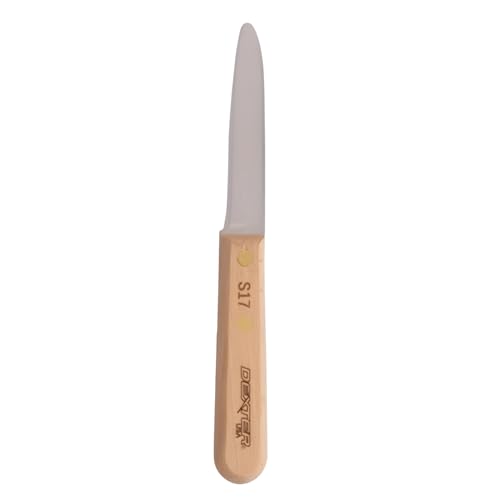
4. Dexter-Russell 3-Inch Clam Shucking Knife – Beechwood Handle, Made in USA
This is the traditional knife many people picture, with a 3-inch high-carbon DEXSTEEL blade and a riveted, contoured beechwood handle. The listing says it’s crafted in the USA and designed for littlenecks, cherrystones and other hard-shell clams, and the warranty field lists a limited lifetime warranty.
Wood and carbon steel both ask for care, and the listing advises hand washing and drying after use. In return, you get a knife with a longer life if it’s looked after, and an American-made tool at the size most people want. The model field reads S17PCP while the title says S17, so go by the title and the wood handle in the photo.
Why we like it
- Made in the USA, per the listing.
- Riveted beechwood handle.
- Limited lifetime warranty listed.
- Designed for littlenecks and cherrystones.
Key specifications
| Model | S17 |
|---|---|
| Blade length | 3 inches |
| Blade steel | High-carbon DEXSTEEL |
| Blade shape | Not stated |
| Handle | Riveted beechwood |
| Tip | Not stated |
| Dishwasher | No, hand wash |
| Made in | USA |
Why we recommend it
Choose this if you value American manufacture and a wood handle and don’t mind the care. It’s a good match for a cook who already maintains carbon steel knives.
Skip it if you need a low-maintenance tool. Carbon steel and wood are both unforgiving of a wet sink.
Pros and cons
Pros
- American made
- Warranty listed
- Traditional handle
Cons
- Needs drying after each wash
- Wood needs more care than poly
5. Victorinox Clam Knife, 3.25-Inch Narrow – A Swiss Maker’s Narrow Blade
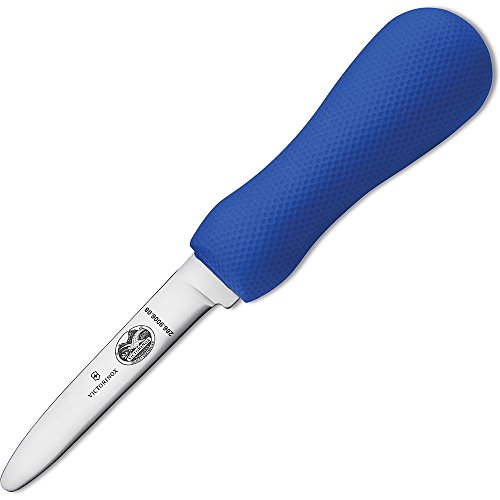
Victorinox is best known for pocket knives and its Fibrox kitchen range, and it also lists a pair of clam knives. This one has a 3.25-inch narrow blade, and the listing gives a country of origin of Switzerland and little more. There’s no steel type, handle material or care guidance, so anything beyond the size and origin would be a guess on our part.
We include it because Victorinox is a maker with a strong record and it’s clearly a clam-specific pattern. It’s worth noting the lead offer is from a third-party seller, Beaute Shoppe, so check what comes in the box and the seller’s return terms before relying on it.
Why we like it
- Swiss country of origin stated.
- Narrow 3.25-inch clam pattern.
- From a maker with a long record.
Key specifications
| Model | 286.9006.08 |
|---|---|
| Blade length | 3.25 inches |
| Blade steel | Not stated |
| Blade shape | Narrow |
| Handle | Not stated |
| Tip | Not stated |
| Dishwasher | Not stated |
| Made in | Switzerland |
Why we recommend it
This is for Victorinox owners who want a matching tool and are happy buying from a third-party seller.
Skip it if you want to see steel and handle details first. The listing doesn’t give them.
Pros and cons
Pros
- Respected maker
- Clam-specific pattern
Cons
- Very thin listing
- Third-party seller when we checked
6. Victorinox Clam Knife, 3.5-Inch Wide – A Longer, Wider Swiss Blade

The wide Victorinox is the longest blade on this page, at 3.5 inches. The listing says only that it’s compact and sturdy, and made in Switzerland, so size and origin are what we can confirm. It’s useful to have the wide and narrow pair in the same line, since that lets you match the pattern to what you shuck.
As with the narrow version, the listing leaves out steel, handle and care, and a third-party seller, Stealth Rabbit, had the lead offer when we checked. Think of this one as a wide-blade alternative for someone set on the Victorinox name, rather than a first choice over the Mercer wide.
Why we like it
- 3.5 inches, the longest here.
- Made in Switzerland, per the listing.
- Wide pattern for larger clams, by our reasoning.
- Same line as the narrow knife.
Key specifications
| Model | 286.9007.09 |
|---|---|
| Blade length | 3.5 inches |
| Blade steel | Not stated |
| Blade shape | Wide |
| Handle | Not stated |
| Tip | Not stated |
| Dishwasher | Not stated |
| Made in | Switzerland |
Why we recommend it
Choose this for larger hard-shell clams if you prefer the longest blade here and trust the name.
Skip it if you want documented materials. The Mercer wide states its steel and care plainly.
Pros and cons
Pros
- Longest blade here
- Swiss origin stated
Cons
- Very thin listing
- Third-party seller when we checked
7. Winco Oyster and Clam Knife – A Short Stainless Restaurant Knife
Winco is a restaurant-supply brand, and this knife is listed for both oysters and clams. It has a 2-3/4-inch stiff stainless blade and a wooden handle, and it’s the shortest knife here. The title calls it dishwasher safe, which is unusual for a knife with a wood handle, so we’d still wash it by hand to look after the wood.
A two-in-one blade comes with a compromise. Marx Foods’ guide prefers a thin, broad clam knife to an oyster knife, which it says takes more force and leaves more shell fragments in the meat. So this is a better fit if you shuck a few of each from time to time, and not if you mainly do clams. Our oyster knife guide covers the dedicated tools.
Why we like it
- Stainless steel resists corrosion, per the listing.
- Listed for both oysters and clams.
- Stiff, short blade for control.
- Sold and shipped by Amazon when we checked.
Key specifications
| Model | KCL-1 |
|---|---|
| Blade length | 2-3/4 inches |
| Blade steel | Stainless steel |
| Blade shape | Stiff |
| Handle | Wood |
| Tip | Not stated |
| Dishwasher | Yes, per title |
| Made in | Not stated |
Why we recommend it
Buy this if you want one short stainless knife for an occasional shellfish night. It’s the least fussy of the group.
Skip it if you shuck clams often. A dedicated, thinner clam blade is the better tool.
Pros and cons
Pros
- Works on both shellfish
- Stainless
- Compact
Cons
- Not a dedicated clam pattern
- Dishwasher claim sits oddly with a wood handle
Which blade suits your clams
Mostly littlenecks and cherrystones, a few at a time: a narrow Dexter or Mercer. A big bag for chowder: the Mercer wide or the Victorinox wide. A shellfish night with some oysters too: the Winco. Easy care above all: the stainless Winco.
Keep your other hand safe. A towel or a pair of cut-resistant gloves is a sensible partner, since the hand holding the clam is the one at risk. And if your interest is mostly oysters, start with our oyster knife guide.
How to choose a clam shucking knife
Blade width
Marx Foods’ guide calls for a thin, broad blade and says it’s safer and leaves fewer shell fragments than an oyster knife. On Amazon, Mercer and Victorinox sell narrow and wide patterns. Our reasoning: narrow is easier to start in a small seam, and wide gives more to twist against.
Steel
High-carbon steel, as in the Mercer and Dexter S17 listings, needs washing and drying straight away. Stainless, as in the Winco, asks less. Read the listing, because Dexter’s S127 states both in different places.
Tip
A clam knife doesn’t need to stab. Mercer specifies a rounded tip for safety.
Handle
Poly with texture holds well when wet. Wood looks traditional, but it needs more care. Whichever you choose, make sure you can grip it firmly with wet hands.
Certification
Only Dexter’s Sani-Safe listing states NSF. It matters most if you work in a commercial kitchen.

How we picked these clam knives
We looked for knives sold specifically as clam knives from named makers, kept those in stock with a new lead offer, and read each listing for blade, steel, handle and care. Mercer, Dexter and Victorinox each have two here, but each pair differs in blade or handle, not just color. The Winco is the one exception to the clam-only rule, and we say so.
We have not used these knives. A search for independent reviews returned technique articles and low-quality pages but no test of these models, so the picks rest on listing and maker details. Technique comes from Marx Foods’ guide, which we could read; other pages returned errors and aren’t used. Toadfish’s clam knife was in short supply when we checked.
Clam knife questions, answered
What’s the difference between a clam knife and an oyster knife?
Marx Foods says a clam knife has a thin, broad blade. An oyster knife works, but it takes more force and carries a higher risk of shell fragments in the meat.
How do you open a clam with a clam knife?
Marx Foods says to hold the clam gently against the base of your thumb, set the blade at the front edge where the shells meet, and push in with one smooth motion. Scrape along the top shell to cut both muscles, then under the meat to free it. Check for shell fragments.
Is there an easier way to open clams?
If you don’t need them raw, Marx Foods says steaming is the easiest way to open live clams. It also passes on a chef’s tip for a boiling water dip of about 10 seconds, so they open with their liquor intact.
Can a clam knife go in the dishwasher?
Usually not. Mercer says no, and the Dexter S17 asks for hand washing. Winco’s title calls its knife dishwasher safe, though it has a wood handle that we’d wash by hand.
Do I need a glove to shuck clams?
None of these listings require one, but Marx Foods warns that you could cut yourself and its second method uses a towel. A towel or a cut-resistant glove on the holding hand is a sensible precaution.
Our final pick for clam night
For most kitchens, the Dexter-Russell Sani-Safe is the one to buy, and the Mercer is a very fair place to start. Add a cut-resistant glove, and read about seafood at a Mexican restaurant for some ideas on what to do next. If you’d rather not shuck anything tonight, call to order from Julia’s.