Philips sells fully automatic espresso machines in a run of series numbers, plus a small Baristina line and a new top model. The numbers don’t tell you much, and reviewers say several of them share the same insides.
This guide assumes you have already chosen the brand. It compares eight different machines, says who each suits, reports what independent reviewers found, including the problems, and names the other brands worth reading about.
Julia’s earns a commission on purchases made through links on this page, at no cost to you. Recommendations are based on what a restaurant kitchen looks for, product specifications, makers’ statements and the independent sources we name. We have not used these products ourselves.
Quick verdict: which Philips espresso machine to buy
Buy the 4400 Series LatteGo if several people share the machine and want milk drinks. Choose the 3300 Series Steam Wand if you like to steam your own milk, and the Baristina if counter space comes first. If strong straight espresso is your priority, read about De’Longhi as well before you buy.
Five Philips espresso machines side by side
Five picks, one for each kind of buyer. All eight are reviewed below.
| Machine | Best for | Milk system | Key detail | Buy on Amazon |
|---|---|---|---|---|
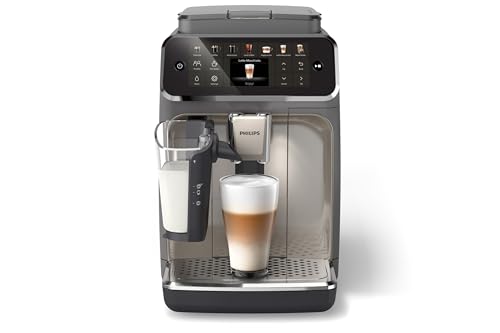
Philips 4400 Series LatteGoBest overall
|
A household of different coffee drinkers | LatteGo | 12 presets, 2 profiles | View on Amazon |

Philips 5500 Series LatteGoBest for variety
|
Variety and iced milk drinks | LatteGo | 20 presets, 4 profiles | View on Amazon |

Philips 3300 Series Steam WandBest steam wand
|
Steaming your own milk | Classic frother wand | 5 presets, full color display | View on Amazon |

Philips 2300 Series LatteGoEntry LatteGo
|
One-touch milk at the entry tier | LatteGo | 3 coffee presets plus hot water | View on Amazon |
| Small counters and straight espresso | No milk system | 16-bar pump, swipe control | View on Amazon |
Product images from Amazon. Details come from the listings and the reviewers named in each pick.
Our picks for the best Philips espresso machine
We start with the three LatteGo and steam wand series that reviewers have covered, then the simpler machines, the small Baristina line and the new flagship. These are different models and not colorways. The popular 3200 isn’t here because it’s already on our best espresso machine page, and neither is the 2200, which is on our fully automatic guide.
1. Philips 4400 Series LatteGo – Profiles and Iced Drinks for Two
The 4400 is the Philips we would start with. It’s a fully automatic machine with an integrated grinder that makes 12 hot and iced drinks, and it saves two user profiles, which is what most shared kitchens want. The listing says it is ready to brew in 3 seconds with QuickStart and that SilentBrew makes it 40% quieter than earlier models, with a Quiet Mark certification.
Home Coffee Expert, a site that earns from Amazon links, reviewed the 3300, 4400 and 5500 together and says all three share the same brew unit and grinder, so the differences are mostly in features and interface. It suggests the 4400 for households with several coffee drinkers who want profiles and iced espresso without paying for the 5500. It also warns that these machines need 20 to 30 drinks before the espresso is good, and that none of the three is good value at full list price, so wait for a discount.
When we checked, this listing was sold by a third party, Zero Gravity Products, and the listing’s title and color field disagreed on the finish. Check the color and the seller’s warranty and return terms before buying.
Why we like it
- 12 hot and iced presets, per the listing
- Two user profiles
- LatteGo has 3 parts and no internal tubes, per the listing
- Same brew unit as the 5500, per Home Coffee Expert
Key specifications
| Model | EP4444/90 |
|---|---|
| Type | Fully automatic |
| Milk system | LatteGo |
| Drinks | 12 presets |
| Profiles | 2 |
| Pump pressure | 15 bar |
| Water filter | Not stated |
| Cleaning | LatteGo dishwasher safe |
Why we recommend it
It suits a couple or family with different tastes, where each person wants their drink saved and nobody wants to clean a steam wand.
Skip it if you want a stronger espresso first. Reviewers of this brew unit found it weak, as we explain below.
Pros and cons
Pros
- Good balance of features
- Quiet, per the listing and Home Coffee Expert
- Easy milk system to clean
Cons
- Needs 20 to 30 drinks to settle, per Home Coffee Expert
- No flat white, per Home Coffee Expert
- Third-party seller when checked
2. Philips 5500 Series LatteGo – Twenty Presets and an Extra Shot
The 5500 adds to the 4400 what its name suggests: more of everything on the screen. The listing gives 20 hot and iced presets and up to 4 saved profiles, with the same QuickStart, SilentBrew and LatteGo. Home Coffee Expert liked its Extra Shot function, which it says makes a big difference to flavor, at the cost of using more beans per drink. It says to buy it if you can find it discounted.
Coffee Kev, who says he bought one for his review, is much harder on it. He measured its espresso at around 4% total dissolved solids, a measure of strength, against 5–8.5% from other automatic machines he has used. He found that milk volumes were nowhere near the set amounts and called parts of the build flimsy and clumsy. He did like the backlit icons, the volume settings and being able to top up the carafe during frothing. He names the De’Longhi Magnifica Evo Next as the obvious alternative.
Two reviewers, two different conclusions, and they disagree mainly on the espresso. If you mostly drink milk drinks with a touch of variety, the case for it is stronger than if you drink straight shots. This listing, the Grey Chrome finish, was sold by a third party when we checked.
Why we like it
- 20 hot and iced presets, per the listing
- Up to 4 user profiles
- Extra Shot praised by Home Coffee Expert
- Espresso and hot water volumes fairly consistent, per Coffee Kev
Key specifications
| Model | EP5544/90 |
|---|---|
| Type | Fully automatic |
| Milk system | LatteGo |
| Drinks | 20 presets |
| Profiles | Up to 4 |
| Pump pressure | 15 bar |
| Water filter | Not stated |
| Cleaning | LatteGo dishwasher safe |
Why we recommend it
It suits a household that wants the longest drink menu and iced milk drinks and can find it at a good discount.
Skip it if you care most about strong espresso. Coffee Kev measured it below other automatics.
Pros and cons
Pros
- Long preset list
- Four profiles
- Quiet grinding, per the listing and reviewers
Cons
- Weak espresso by Coffee Kev’s measure
- Milk volumes off in Coffee Kev’s use
- Big mugs hard to fit, per Home Coffee Expert
3. Philips 3300 Series Steam Wand – For Milk You Steam Yourself
This 3300 trades the LatteGo carafe for a classic milk frother, which is a steam wand you hold a jug under. The listing gives five presets: espresso, coffee, lungo, iced coffee and hot water. It also lists a full color display, the same 40% quieter claim, and an AquaClean filter that it says avoids descaling for up to 5,000 cups when you change it on prompt. Stated size is 17.04 inches wide, 9.68 deep and 14.6 high.
Tom’s Coffee Corner reviewed a Philips 3300 with this kind of wand and was pleasantly surprised by the milk foam, with latte art possible with practice. He also liked the layout of the controls and the consistent drink volumes. His complaint is the older brew group, which he says limits the dose to about 8.5 grams and makes espresso and coffee weak. He measured about 4% total dissolved solids, matching what Coffee Kev found on the 5500, and says the De’Longhi Magnifica Start makes better coffee thanks to a dose of up to 12 grams.
His review doesn’t give an exact model number, so we are matching it on the wand. Home Coffee Expert’s 3300 notes are for the LatteGo version and aren’t about this one. It was sold by Amazon when we checked.
Why we like it
- Steam wand for steaming milk or plant milk, per the listing
- Good milk foam, per Tom’s Coffee Corner
- AquaClean filter, per the listing
- Sold by Amazon when we checked
Key specifications
| Model | EP3326/90 |
|---|---|
| Type | Fully automatic |
| Milk system | Classic frother (steam wand) |
| Drinks | 5 presets |
| Profiles | Not stated |
| Pump pressure | 15 bar |
| Water filter | AquaClean |
| Cleaning | Filter prompts; see manual |
Why we recommend it
It suits someone who wants the machine to grind and brew but likes to do the milk by hand.
Skip it if you want one-touch lattes. The LatteGo models do the milk for you.
Pros and cons
Pros
- More control over milk
- Easy controls, per Tom’s Coffee Corner
- Stated dimensions help you measure
Cons
- Small dose limits strength, per Tom’s Coffee Corner
- Build only adequate, per Tom’s Coffee Corner
- Wand needs wiping after use
4. Philips 2300 Series LatteGo – The Entry Point for LatteGo
The 2300 is the simplest route to the LatteGo system in this group. The listing describes espresso, coffee, latte and hot water, with adjustable strength and volume, a ceramic grinder, and a LatteGo that it says has 3 parts, no tubes, and rinses clean in 10 seconds or goes in the dishwasher.
It also lists an AquaClean filter and the HomeID app for recipes. It doesn’t list SilentBrew or user profiles, which are the things you’d give up against the 4400. We couldn’t read a review of this model, as the one we found returned an error, so this rests on the listing. It was sold by Amazon when we checked.
Why we like it
- LatteGo with 3 parts and no tubes, per the listing
- Ceramic grinder, per the listing
- Adjustable strength and volume
- AquaClean filter, per the listing
Key specifications
| Model | EP2330/14 |
|---|---|
| Type | Fully automatic |
| Milk system | LatteGo |
| Drinks | 3 coffee presets plus hot water |
| Profiles | Not stated |
| Pump pressure | 15 bar |
| Water filter | AquaClean |
| Cleaning | LatteGo dishwasher safe |
Why we recommend it
It suits one or two people who drink a latte a day and don’t need a long menu.
Skip it if you share the machine and want saved profiles. Step up to the 4400.
Pros and cons
Pros
- Simple menu
- Quick to clean, per the listing
- Sold by Amazon when we checked
Cons
- Short drink list
- Listing only; review not readable
- No quiet-brew claim on the listing
5. Philips 1200 Series – Two Drinks and a Wand

The 1200 is the plainest full automatic Philips here. It makes two kinds of coffee, with a touch display, a ceramic grinder and a classic milk frother wand. The My Coffee Choice menu gives three settings for strength and quantity, and the listing says Aroma Extract keeps the water at 90 to 98°C.
One detail to note is that the listing’s size field says “Aquaclean Sold Separately,” so budget for the filter if you want it. We read no independent review of this model, and it rests on the listing. It was sold by a third party, AMZDistributor, when we checked, so read the warranty and return terms carefully.
Why we like it
- Short, simple menu
- Ceramic grinder, per the listing
- Three strength and quantity settings
- Steam wand for milk
Key specifications
| Model | EP1220/04 |
|---|---|
| Type | Fully automatic |
| Milk system | Classic frother (steam wand) |
| Drinks | 2 coffee varieties |
| Profiles | Not stated |
| Pump pressure | Not stated |
| Water filter | AquaClean sold separately |
| Cleaning | See manual |
Why we recommend it
It suits someone who wants espresso and coffee at the touch of a button and will steam milk now and then.
Skip it if you drink lattes daily. A wand each morning is more work than LatteGo.
Pros and cons
Pros
- Simple to learn
- Grinds and brews on its own
- Adjustable strength
Cons
- Only two coffee options
- Filter sold separately, per the listing
- Third-party seller when checked
6. Philips Baristina Espresso Machine – Grinds, Tamps and Brews in a Swipe

The Baristina isn’t a full automatic like the rest of the range. You swipe the handle, and it grinds, tamps and brews into your cup, which the listing says takes under 60 seconds from bean to cup. It offers espresso, lungo and an extra-intense option on a 16-bar pump, in a body sold on being compact. Philips also says it uses over 50% recycled plastics, excluding parts that touch water or coffee.
There’s no milk system on this model, so you need a separate frother for lattes. Tom’s Guide and T3 have both reviewed the Baristina, but the text of those reviews didn’t reach us, so we don’t rely on them, and our attempt to read another test timed out. Treat this pick as resting on the listing and read a review yourself before buying. It was sold by a third party, DLX Deals, when we checked.
Why we like it
- Grinds, tamps and brews automatically, per the listing
- Under 60 seconds bean to cup, per the listing
- Compact body
- Three drink strengths and lengths
Key specifications
| Model | BAR301/60 |
|---|---|
| Type | Automatic with portafilter handle |
| Milk system | None |
| Drinks | Espresso, lungo, extra intense |
| Profiles | Not stated |
| Pump pressure | 16 bar |
| Water filter | Not stated |
| Cleaning | See manual |
Why we recommend it
It suits an espresso drinker with little counter space who doesn’t want a big machine.
Skip it if you drink milk drinks. The Baristina Latte adds a frother.
Pros and cons
Pros
- Small footprint
- Very simple operation
- Grinds fresh beans
Cons
- No milk system
- Listing only; reviews not readable
- Third-party seller when checked
7. Philips Baristina Latte – Small Machine, Built-In Frother

The Baristina Latte keeps the small body and automatic grinding, tamping and brewing, and adds an integrated milk frother with what Philips calls a Smart Steam Wand. The listing says you can choose thick froth, dense microfoam or simply hot milk at the press of a button.
Cleaning is removing the portafilter, taking apart the wand and rinsing both, according to the listing. We read no independent review of this newer model, so this rests on the listing, and we can’t say whether its frother does what the listing promises. It was sold by a third party, National Houseware, when we checked.
Why we like it
- Integrated milk frother, per the listing
- Three milk settings at a button press
- Compact, per the listing
- Grinds, tamps and brews automatically
Key specifications
| Model | BAR400/60 |
|---|---|
| Type | Automatic with portafilter handle |
| Milk system | Smart steam wand |
| Drinks | Espresso and milk drinks; list not stated |
| Profiles | Not stated |
| Pump pressure | 16 bar |
| Water filter | Not stated |
| Cleaning | Rinse portafilter and wand |
Why we recommend it
It suits a small household that wants a latte or cappuccino without giving up counter space to a full automatic.
Skip it if you want a long drink menu or saved profiles. Look at the 4400.
Pros and cons
Pros
- Milk built in
- Small
- Simple clean-up, per the listing
Cons
- Listing only; no review read
- Newer model with little track record
- Third-party seller when checked
8. Philips Café Aromis LatteGo Pro – The Longest Menu Here

The Café Aromis is the new top of this list, with a release date of September 2026 on the listing. It claims more than 50 hot and cold drinks including cold brew, a 4.3-inch color touch display, 8 profiles and seven intensity levels. Philips’ LatteGo Pro has 2 parts, no tubes, and works for hot and cold milk, per the listing.
The interesting part is BrewExtract, which Philips says doses and presses more beans for a stronger coffee. Since reviewers’ main complaint about the 3300 to 5500 is low dose and weak espresso, that’s the one claim here that would matter most if it holds up. We read no independent review of it, and we can’t say that it does. It’s too new to judge, so it’s a bet on the maker’s claim. It was sold by Amazon when we checked.
Why we like it
- Claims 50+ hot and cold drinks
- BrewExtract aims at a stronger cup, per Philips
- LatteGo Pro has only 2 parts, per the listing
- 8 user profiles
Key specifications
| Model | EP8757/20 |
|---|---|
| Type | Fully automatic |
| Milk system | LatteGo Pro |
| Drinks | 50+ presets |
| Profiles | 8 |
| Pump pressure | 15 bar |
| Water filter | Not stated |
| Cleaning | LatteGo Pro rinses or goes in the dishwasher |
Why we recommend it
It suits an early buyer who wants the fullest Philips menu, cold brew and many saved profiles.
Skip it if you’d rather wait for reviews. Nothing we read has checked its claims yet.
Pros and cons
Pros
- Largest drink list here
- Claims a stronger brew
- Sold by Amazon when we checked
Cons
- Very new, with no review read
- Long menu may be more than you need
3300 vs 4400 vs 5500: what actually changes
Home Coffee Expert says these three share the same brew unit, grinder, outer shell and LatteGo system. By its account the changes are in the menu and the screen. Listings agree on the menu part. For a broader view of beginner machines, our beginner espresso guide is a good next read.
| You want to | Choose |
|---|---|
| Save drinks for two people and get iced coffee | 4400 (EP4444/90) |
| Have the longest list of the three, and up to 4 profiles | 5500 (EP5544/90) |
| Steam milk by hand | 3300 (EP3326/90) |
| Have one-touch milk on a short menu | 2300 (EP2330/14) |
| Have just two coffees | 1200 (EP1220/04) |
| Save counter space | Baristina (BAR301/60) or Baristina Latte (BAR400/60) |
| Get the biggest menu and a claimed stronger brew | Café Aromis (EP8757/20) |
Where Philips espresso machines fall short
The clearest complaint is strength. Tom’s Coffee Corner on the 3300 and Coffee Kev on the 5500 both measured espresso at around 4% total dissolved solids, and both link it to the amount of coffee the brew unit holds. Coffee Kev says other automatic machines he has used ran from 5% to 8.5%. If you drink espresso straight, read about the De’Longhi Magnifica Start and Magnifica Evo line first, since both of these reviewers point there. Home Coffee Expert also names Jura at a higher cost.
Home Coffee Expert liked these machines more than the other two did, but it still says none of the three is good value at full list price and that flat whites and microfoam fall short of some competitors. It also warns of 20 to 30 drinks to throw away while the machine settles. Coffee Kev found flimsy parts on the 5500, and Tom’s Coffee Corner called the 3300’s build only adequate.
If you would rather make espresso by hand, Coffee Kev also compares the Breville Barista Express Impress, and a full automatic may not be your machine at all. Our best espresso machine guide compares across brands and types, and our cheaper espresso machine page covers simpler options.
How to choose a Philips espresso machine
Choose your milk system first. LatteGo is a carafe with few parts that froths automatically. A classic frother is a wand you control yourself, and it means wiping it after each use. The Baristina has no milk system at all, and the Baristina Latte has its own steam wand.
Count the drinkers. Profiles matter only if several people want different drinks. The 4400 saves two, the 5500 up to four and the Café Aromis eight.
Be honest about your menu. Long lists of presets sound good, but if you drink a latte a day, the 2300 does that. Iced drinks are listed on the 3300, 4400, 5500 and Café Aromis.
Plan for water and maintenance. An AquaClean filter means no descaling for up to 5,000 cups, according to Philips, if you change it when prompted. Check what is in the box, since the 1200 listing says the filter is sold separately.
Check who is selling it. Only some of these were sold by Amazon when we checked. Others came from third-party sellers, so confirm warranty cover and returns before you buy a machine this expensive.
How we chose these eight Philips models
We have not used these machines. We kept plain in-stock listings with a new lead offer, left out Renewed listings and colorways, and looked for real differences in milk system, menu and size. The Series 800 we looked at was Renewed or out of stock, so it isn’t here. We read Home Coffee Expert on the 3300, 4400 and 5500, Tom’s Coffee Corner on a 3300 with a wand, and Coffee Kev on the 5500. Home Coffee Expert discloses Amazon affiliate links, and Tom’s Coffee Corner carries affiliate-style links. Reviews from Coffeeness, TechRadar, Tom’s Guide, T3 and Galaxus didn’t load or came through as headlines only, so nothing here relies on them. We searched the saferproducts.gov Recall API by brand. The coffee-related Philips entry it returned is a 2009 recall of Senseo one-cup coffeemakers, which aren’t on this page.
Philips espresso machine questions, answered
What is the difference between the Philips 3200 and the 5500 LatteGo?
The 3200 is on our parent guide, and we didn’t compare it directly here. The 5500 listing gives 20 presets, 4 profiles and SilentBrew. Reviewers we read cover the 5500 and not the 3200, so check the 3200 listing for its current menu.
Is LatteGo easy to clean?
Philips says it has 3 parts and no tubes, and it can be rinsed or put in the dishwasher. Home Coffee Expert calls it a big plus for ease of cleaning. The Café Aromis uses a 2-part LatteGo Pro.
Does Philips espresso taste strong?
Two reviewers measured weak shots from these brew units, and a third liked the taste, particularly the 5500’s Extra Shot. If you like strong espresso, start with the reviewers’ De’Longhi comparisons.
Is the Baristina a fully automatic machine?
Philips’ listing describes automatic grinding, tamping and brewing by swiping a handle, with a portafilter you can see. It doesn’t have a bean-to-cup menu like the series machines.
Our final word on Philips espresso machines
The 4400 is the sensible Philips for a shared kitchen, at a discount if you can find one, and the 3300 with a wand suits those who prefer steaming milk themselves. If you are still deciding on the brand, the fully automatic espresso machine guide is the next stop. And if you want one appliance for drip as well, see our coffee and espresso combo guide.