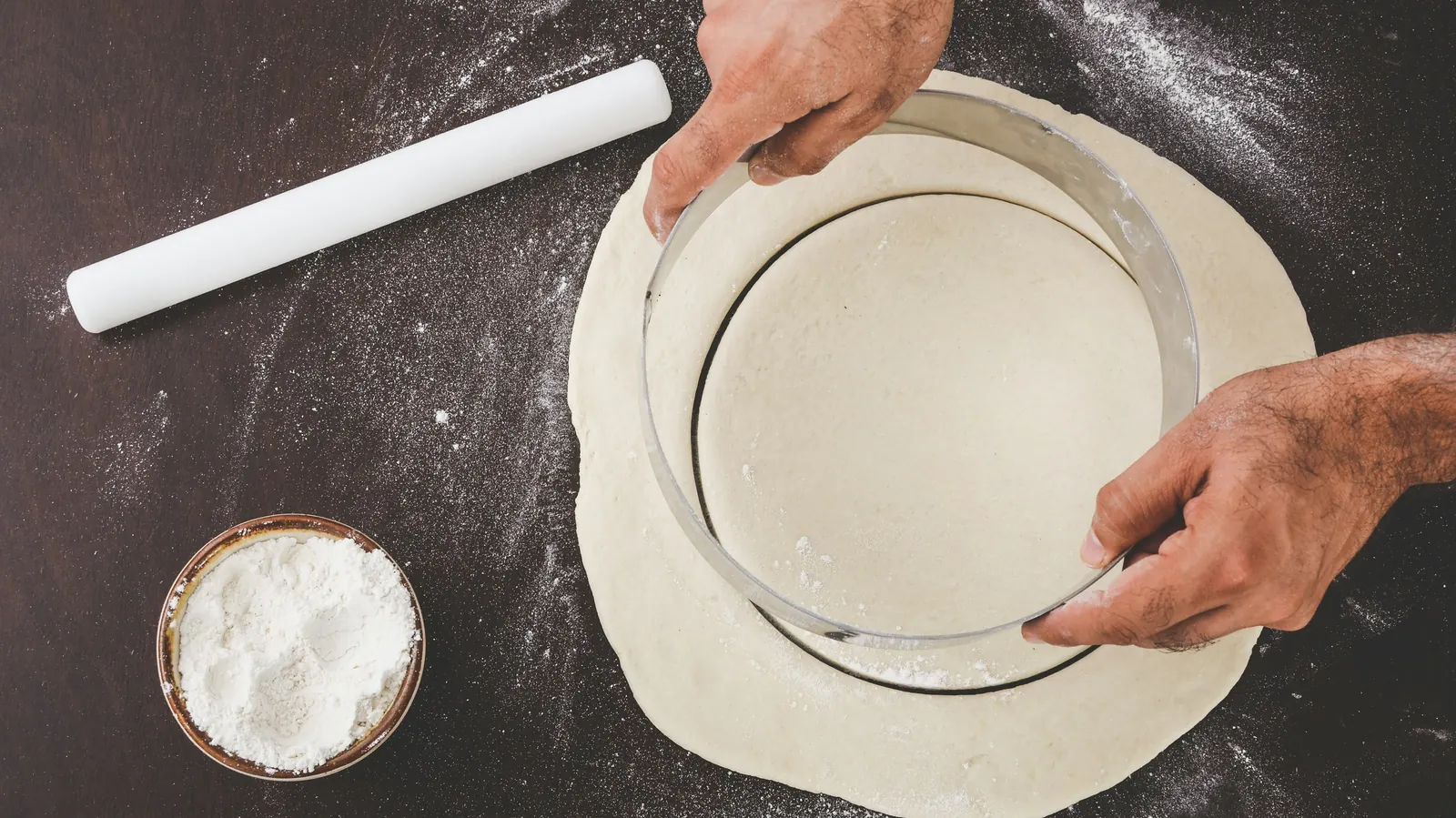
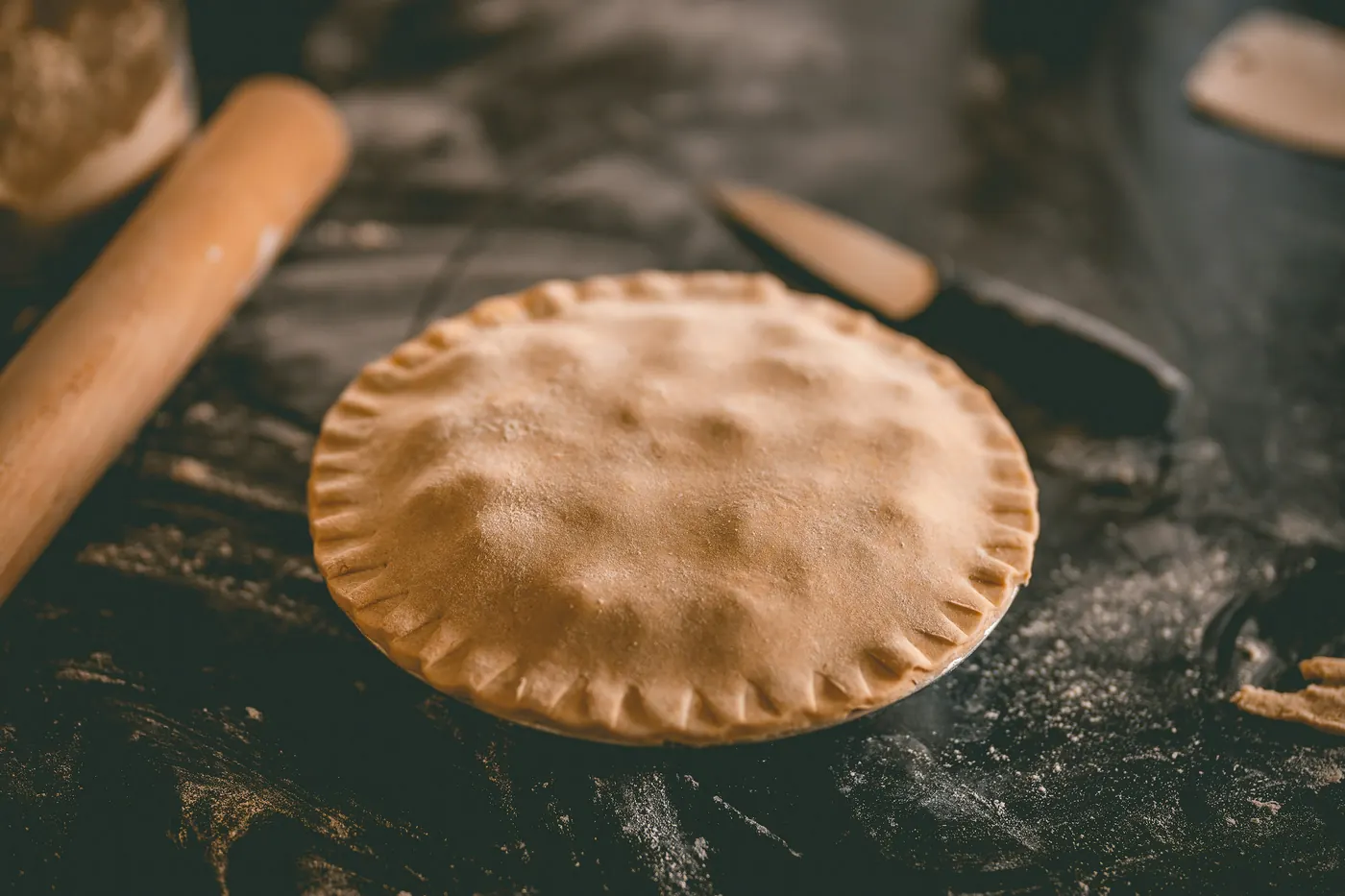
A pie crust baked empty wants to misbehave. Steam lifts the base into a dome, the walls slide down the side of the plate, and the shell you meant to fill with custard or chocolate comes out with a bump in the middle. Pie weights stop that by holding the dough flat until it has set.
In a working kitchen we think about this the way we think about any small tool: how much of it do you need, what is it made of, and how much trouble is it to store and clean. Those three questions sort out the best pie weights faster than any list of features. The answer to the first one surprises most people, because a single small box is rarely enough.
Julia’s earns a commission on purchases made through links on this page, at no cost to you. Recommendations are based on what a restaurant kitchen looks for, product specifications and verified buyer reports.
Quick verdict: which pie weights to buy
For most bakers, buy the Mrs. Anderson’s Ceramic Pie Crust Weights, 1.5 lb: America’s Test Kitchen named this maker’s ceramic weights its winner, and the beads reach the corners of the crust. Want a full shell from one bag? Choose the Gretel Baking Glass Pie Weights. Tired of loose beads? Choose the Hannah’s Baking stainless steel chain, and accept that it mainly holds the base.
Below are seven sets in ceramic, glass and steel, each with one honest reason to skip it. Whatever you buy, line the crust first; the makers here who give directions all say so.
Five sets of pie weights side by side
Five standout picks, one for each kind of baker, with the details each maker or listing states. All seven sets are reviewed in full below.
| Pie weights | Best for | Material | Amount & heat limit | Buy on Amazon |
|---|---|---|---|---|
| Most home bakers | Ceramic stoneware | 1.5 lb, 480 degrees F | View on Amazon | |

Gretel Baking Glass Pie Weights, 2.5 lbBest glass
|
Filling a shell in one bag | Borosilicate glass | 2.5 lb, 600 degrees F | View on Amazon |
| No loose beads, dishwasher cleanup | Stainless steel chain | 10 ft, 475 degrees F | View on Amazon | |

Norpro Ceramic Pie Weights, 0.98 lbBest for small shells
|
Tarts and small quiches | Ceramic | 0.98 lb, limit not stated | View on Amazon |

Tala Baking Beans in Glass Jar, 700 gBest storage
|
Open-shelf storage | Ceramic, per Tala | 700 g, 464 degrees F | View on Amazon |
Product images from Amazon. Amounts and heat limits are as stated by each maker or listing; check the listing before you buy.
Our picks for the best pie weights
These seven sets cover the three materials worth considering, plus the pack sizes that suit tarts, standard pies and deep shells. Each one is listed with who it suits and the plain reason you might pass on it.
1. Mrs. Anderson’s Ceramic Pie Crust Weights, 1.5 lb – The Reviewers’ Ceramic Pick

The one to buy if you want the plain, well-reviewed answer. America’s Test Kitchen compared four styles of pie weight in 2019 and named Mrs. Anderson’s ceramic weights its winner, because they were heavy enough to stop the bottom puffing and to hold the fragile sides up. That review used the small 8-ounce package; this listing is the same maker’s natural stoneware bead in a single 1.5-pound pack, which saves you buying several boxes.
The beads are small and separate, so they settle into the corner where the base meets the wall, which is where a shell tends to slump. The listing rates them to 480 degrees F, which covers the hot oven most pie doughs want for a blind bake.
Amount is the catch. The Test Kitchen used about 2 pounds to fill a pie shell, so 1.5 pounds will cover a standard 9-inch base and part of the walls, not fill it to the rim. Mrs. Anderson’s says to line the crust with parchment, spread the beads evenly, and let them cool fully before you lift them out. Wipe them or hand wash them without soap, then air dry.
Why we like it
- Same maker and material as the America’s Test Kitchen winner
- Rated to 480 degrees F
- Reusable container included
- Loose beads reach the corner of the crust
Key specifications
| Model | 43923 |
|---|---|
| Material | Natural ceramic stoneware |
| Amount | 1.5 lb |
| Heat limit | 480 degrees F |
| Storage | Reusable container |
| Cleaning | Wipe or hand wash without soap, air dry |
| Crust liner | Parchment, per listing |
| Made in | Not stated |
Why we recommend it
This suits most home bakers making a few pies and quiches a year in a standard 9-inch plate. It is the easiest place to start if you have never blind baked.
Skip it if you bake deep-dish pies, since you would need a second pack to fill the shell.
Pros and cons
Pros
- This ceramic line won the America’s Test Kitchen comparison
- Works in any pie or tart shape
- Storage container in the box
Cons
- Less than the 2 pounds the Test Kitchen used to fill a shell
- Loose beads can roll when you pour them out
- No soap, per the listing
2. Gretel Baking Glass Pie Weights, 2.5 lb – Enough to Fill One Pan
This is the pick for anyone who wants the full weight in one bag. Gretel Baking sells 2.5 pounds of borosilicate glass beads, which the listing says fills a 9- or 10-inch pie or tart pan. That lines up with the roughly 2 pounds that America’s Test Kitchen and Food Republic both point to for a full shell.
Glass also has the highest stated heat limit on this page at 600 degrees F, well past any oven temperature a crust recipe will ask for. The listing describes the beads as non-porous and says they will not hold odors, which matters if you use the same weights for savory quiche shells and sweet pies. eHow’s pie weight roundup also names the Gretel glass weights and repeats the same 600-degree rating; that roundup does not claim any testing of its own.
Use is the same as for ceramic: line the pastry with parchment or foil, pour in the weights, and bake. Gretel suggests 375 degrees F for 20 minutes, or what your recipe says. Hand wash in warm soapy water and store them in the drawstring bag. Gretel Baking is an Amazon-first brand, so this pick rests on the listing plus that one roundup, not on a head-to-head review.
Why we like it
- Stated 2.5 pounds fills a 9- or 10-inch pan
- Heat-safe to 600 degrees F, per the listing
- Non-porous borosilicate glass, per the listing
- Hand wash with soap, unlike the ceramic above
Key specifications
| Model | GR-004-GL |
|---|---|
| Material | Borosilicate glass |
| Amount | 2.5 lb |
| Heat limit | 600 degrees F |
| Storage | Drawstring bag |
| Cleaning | Hand wash in warm soapy water |
| Crust liner | Parchment or foil, per listing |
| Made in | Not stated |
Why we recommend it
It suits the baker who wants one purchase to fill a deep shell, and who likes being able to wash the weights properly with soap.
Skip it if you store tools in a crowded drawer, because a soft bag gives glass less protection than a hard case.
Pros and cons
Pros
- One bag is enough for most pans
- Highest stated heat limit here
- Non-porous, per the listing
Cons
- Amazon-first brand
- One roundup mention, no head-to-head review we could read
- Drawstring bag, not a rigid container
3. Hannah’s Baking Stainless Steel Pie Weight Chain, 10 ft – No Loose Beads to Chase
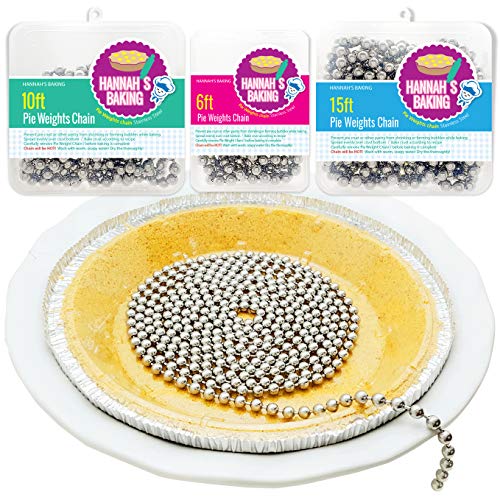
A chain solves the one real complaint about beads: they scatter. You coil this 10-foot stainless steel chain into the shell in a spiral, lift it out in one go, and put it in the dishwasher. The listing rates it to 475 degrees F and says it suits 8-, 9.5- and 10-inch crusts.
It is also the kind of weight with the clearest limits. Food Republic points out that a chain presses mainly on the base, so the walls can puff or collapse, and that hot metal needs care when you take it out. America’s Test Kitchen reached a similar view of a shorter chain: the 6-foot Mrs. Anderson’s model let dough puff between the coils and left the sides slumping, and it marked that chain Not Recommended. Hannah’s 10 feet gives you more coils in the same pan, but it was not part of that comparison.
BestReviews lists this 10-foot chain and notes that some buyers found it too short for larger pies, and eHow lists a 15-foot Hannah’s chain. Neither roundup claims testing of its own. If you bake deep-dish, look at length before you buy. Hannah’s Baking is an Amazon-first brand.
Why we like it
- Lifts out in one piece
- Dishwasher safe, per the listing
- Rated to 475 degrees F
- Hannah’s chains appear in both BestReviews and eHow
Key specifications
| Model | A-N64009T-PIE-10 |
|---|---|
| Material | Stainless steel chain |
| Amount | 10 ft |
| Heat limit | 475 degrees F |
| Storage | Not stated |
| Cleaning | Dishwasher safe |
| Crust liner | Not stated |
| Made in | Not stated |
Why we recommend it
It suits a baker who blind bakes often, dislikes hunting for beads under the stove, and works mostly with shallow tart shells and standard pie plates.
Skip it if tall, straight crust walls matter most, since a chain mainly presses on the base.
Pros and cons
Pros
- Fast to place and remove
- Goes in the dishwasher
- Stores in very little space
Cons
- Mainly weighs the base, per Food Republic
- Some buyers found 10 feet short for large pies, per BestReviews
- Weight not stated on the listing
- Amazon-first brand
4. Norpro Ceramic Pie Weights, 0.98 lb – Tiny Beads for Small Shells
This is Norpro’s plain ceramic bead in a storage case. The listing gives the beads as 3/8 inch across and says they suit 8-, 9- and 10-inch crusts, and Norpro’s own page puts the pack at 0.98 pound.
That amount decides how to use it. Just under a pound will not fill a pie shell the way the Test Kitchen did, so treat one case as enough for a tart pan, a small quiche or a shallow 8-inch plate. Two cases make more sense for a 9-inch pie.
Norpro’s instructions are clear and worth following: wash the beads before the first use, line the uncooked crust with parchment or foil, fill, partly bake, then lift out the liner and weights once they have cooled. Norpro does not state a heat limit on the listing or on the page we read, so stay with your recipe’s blind-bake temperature. This pick rests on the listing and the maker’s details.
Why we like it
- Small 3/8-inch beads, per the listing
- Storage case included
- Clear maker instructions for the liner
Key specifications
| Model | 3293 |
|---|---|
| Material | Ceramic |
| Amount | 0.98 lb, 3/8-inch beads |
| Heat limit | Not stated |
| Storage | Storage case |
| Cleaning | Wash before first use |
| Crust liner | Parchment or foil, per Norpro |
| Made in | Not stated |
Why we recommend it
It suits someone who makes tarts and small quiches, or who wants to top up a set of weights they already own.
Skip it if you want one pack to fill a 9-inch pie, which is more than this holds.
Pros and cons
Pros
- Small beads settle into corners
- Rigid case for storage
- Maker gives clear steps
Cons
- About half the weight the Test Kitchen used for a shell
- No heat limit stated
- Listing names 10-inch crusts, which this amount will not fill
5. Tala Baking Beans in Glass Jar, 700 g – A Jar That Stays Out
Most pie weights live in a plastic tub or a bag at the back of a drawer. Tala packs its baking beans into a 380 ml clip-top glass jar that can sit on an open shelf with the flour. If you only blind bake now and then, a jar you can see is a jar you will remember to use.
At 700 grams, or a little over 1.5 pounds, this is about the same amount as our top pick. Tala rates the beans as oven proof to 240 degrees C, or 464 degrees F, and says they are long lasting. A separate Tala listing of a 700-gram pack calls them ceramic; the jar listing itself does not name the material.
The listing is short, so several details below are marked as not stated. It gives no cleaning or liner advice, so follow the usual rule of lining the crust with parchment or foil, as the other makers here say to. This pick rests on the listing and the maker’s details.
Why we like it
- Clip-top glass jar for storage
- 700 grams is close to our top pick
- Oven proof to 464 degrees F, per the listing
Key specifications
| Model | 10A01078 |
|---|---|
| Material | Ceramic, per Tala’s other 700 g listing |
| Amount | 700 g (about 1.5 lb) |
| Heat limit | 464 degrees F |
| Storage | 380 ml clip-top glass jar |
| Cleaning | Not stated |
| Crust liner | Not stated |
| Made in | Not stated |
Why we recommend it
It suits an open-shelf kitchen and anyone who wants the weights in plain sight, and it makes a tidy gift for someone who bakes.
Skip it if you would rather have full care instructions from the maker, which this listing does not give.
Pros and cons
Pros
- Good-looking storage out of the box
- Good amount for a standard shell
- Stated heat limit
Cons
- Glass jar can break if dropped
- Short listing, few details
- Still under the 2 pounds used for a full shell
6. R&M Ceramic Pie Weights, 1 lb – Simple Ceramic in a Mesh Bag

R&M’s one-pound set is the simplest thing on this list: ceramic beads, a mesh bag and instructions. Clean Eating’s roundup calls the beads non-porous and says they will not hold odors; that piece does not claim any testing of its own.
That same roundup says one pound does two pie shells. We would be careful with that. It may work for a thin layer on the base of a shallow crust, but America’s Test Kitchen needed about 2 pounds to fill a shell and hold the sides up. Read one pound as a base cover for one pie, or a fill for a tart.
A mesh bag lets air reach the beads, which is handy after a wash. The listing gives a sensible reminder that the weights get hot during baking, so have a pair of good oven mitts ready. It does not state a heat limit, and it does not say how to line the crust beyond the instructions in the pack.
Why we like it
- Mesh storage bag
- One pound is easy to top up
- Instructions included, per the listing
Key specifications
| Model | 2723 |
|---|---|
| Material | Ceramic |
| Amount | 1 lb |
| Heat limit | Not stated |
| Storage | Mesh bag |
| Cleaning | Not stated |
| Crust liner | Not stated |
| Made in | Not stated |
Why we recommend it
It suits a baker who wants a basic set for tarts and shallow pies, or a second bag to add to weights already in the drawer.
Skip it if you want a full deep-dish shell filled in one purchase.
Pros and cons
Pros
- Plain, simple set
- Breathable storage
- Named in Clean Eating’s roundup
Cons
- No heat limit stated
- One pound will not fill a shell
- Few details on the listing
7. Chef Aid Ceramic Baking Beans, 500 g – Measured for a Tart Tin

This 500-gram pack is sized for a job, not for a pie. The listing says it covers a 23 cm tart tin, which is about 9 inches. That is a useful detail, since most tart tins are shallow and need far less weight than a deep pie plate.
The maker’s directions are the standard ones and worth repeating: roll out the pastry, prick the base with a fork, line it with parchment or baking paper, add the beans, and slide it into the oven. Chef Aid says to hand wash and air dry, and to let the beans cool before you handle them.
The listing describes the beans as 100 percent ceramic and food safe, and says they can go in the fridge and freezer as well. It does not give a heat limit, so keep to the temperature your recipe sets. This pick rests on the listing and the maker’s details.
Why we like it
- Sized for a 23 cm tart tin, per the listing
- Clear steps for lining and baking
- Described as 100 percent ceramic
Key specifications
| Model | 10E04775 |
|---|---|
| Material | Ceramic |
| Amount | 500 g (about 1.1 lb) |
| Heat limit | Not stated |
| Storage | Not stated |
| Cleaning | Hand wash, air dry |
| Crust liner | Parchment or baking paper, per listing |
| Made in | Not stated |
Why we recommend it
It suits the cook who mostly makes tarts and quiches in a low-sided tin and has no need for 2 pounds of beads.
Skip it if you bake deep pies; 500 grams will only cover the base.
Pros and cons
Pros
- Good size for shallow tins
- Plain maker instructions
- Listing states the coverage
Cons
- No heat limit stated
- Too little for a deep pie
- Storage not stated on the listing
How to choose pie weights for baking
Weight first, then material
This is the factor most buyers miss. America’s Test Kitchen needed about 2 pounds, or 4 cups, to fill a pie shell, and Food Republic suggests about the same for a deep 10-inch pan. The reason is the walls. A thin layer of weights holds the base down, but only a shell filled close to the rim holds the sides up. If your pack is under 2 pounds, buy two, or use it only for tarts.
Ceramic, glass or metal
Ceramic is the usual choice, and it is the material the Test Kitchen’s winner uses. Food Republic also favors it, saying ceramic moves heat more slowly, so it is less likely to speed up the bake, and it carries a lower burn risk than metal. Its weakness is that it can crack if handled roughly. Glass is the other non-metal option; the listing here describes it as non-porous, with a higher stated heat limit. Metal conducts heat well, so Food Republic warns that a metal weight can brown the crust from the top and finish faster than your recipe expects. Keep an eye on the first bake with a chain.
Beads or a chain
Beads fill corners and hold walls, but they scatter, and they need lifting out in the liner. A chain comes out in one piece and needs far less storage space, but it presses mainly on the base. For a shell with straight, tall sides, use beads. For a flat tart base and a baker in a hurry, a chain is fine.
Liner and care
Line the crust with parchment or foil, leaving enough overhang to lift the whole lot out once it has cooled. The weights get very hot, so keep good oven mitts at hand. Follow each maker’s cleaning advice, because it differs: Mrs. Anderson’s says no soap on its ceramic, while Gretel says warm soapy water on its glass. Let anything washed dry fully before you put it away.
The plate matters too
Weights can only do so much. The plate underneath decides how the bottom browns, so read our guide to the best pie dish before you blame the weights for a pale crust. A reliable rolling pin and an even sheet of dough help as well, since a shell with thin patches will brown unevenly under any weight.
How we picked these seven sets
We have not used these products ourselves. We started from Amazon listing data for what is in stock, then compared what each maker or listing states about material, amount and heat limit. For performance we leaned on the America’s Test Kitchen pie weight review from 2019, the one head-to-head comparison we could read, along with Food Republic’s comparison of metal and ceramic. Roundups from BestReviews, eHow and Clean Eating helped show which products are widely named, though none of the three claims its own testing. Where a pick rests only on its listing, the pick says so.
Two popular options are missing on purpose. America’s Test Kitchen marked the Chicago Metallic disc and the 6-foot Mrs. Anderson’s chain Not Recommended, the first because the crust slumped and the second because dough puffed between the coils. The Chicago Metallic listing says it was top rated by Cook’s Illustrated, which does not match that current review. We also left out small brands with no maker details behind them. We checked each brand here against the CPSC recall database and found no pie weight recall.
Pie weight questions, answered
What are the best pie weights for baking at home?
For most kitchens, ceramic beads. Mrs. Anderson’s ceramic weights won the America’s Test Kitchen comparison, and loose beads fill the corners of a shell in a way a chain cannot. Buy enough to get close to 2 pounds if you want the walls held up too.
How many pie weights do I need?
America’s Test Kitchen used about 2 pounds, or 4 cups, for a pie shell. A tart tin needs much less, and Chef Aid says 500 grams covers a 23 cm tin.
Can I use dried beans or rice instead?
Yes, dried beans or rice can stand in for weights if you line the crust first. They are lighter than ceramic, so use more of them, and keep them for baking afterward; do not cook them.
Do pie weights touch the dough?
They should not. Mrs. Anderson’s, Norpro, Gretel and Chef Aid all say to put parchment, foil or baking paper between the crust and the weights. It keeps the dough clean and makes the weights easy to lift out.
When should I take the weights out?
Follow your recipe; Gretel suggests 20 minutes at 375 degrees F as a guide. Norpro and Mrs. Anderson’s both say to let the weights cool before you remove them. Many recipes then return the bare shell to the oven to finish browning.
Our final word on blind baking
Related guide: Pie weights alternative.
Start with the ceramic weights from Mrs. Anderson’s, add a second pack if you bake deep pies, and line the crust every time. Then pair them with a good plate from our best pie dish guide. If your baking leans more toward flan and pastries than fruit pies, our guide to Mexican desserts is a good next read. And if you would rather leave dessert to someone else, call to order from Julia’s.