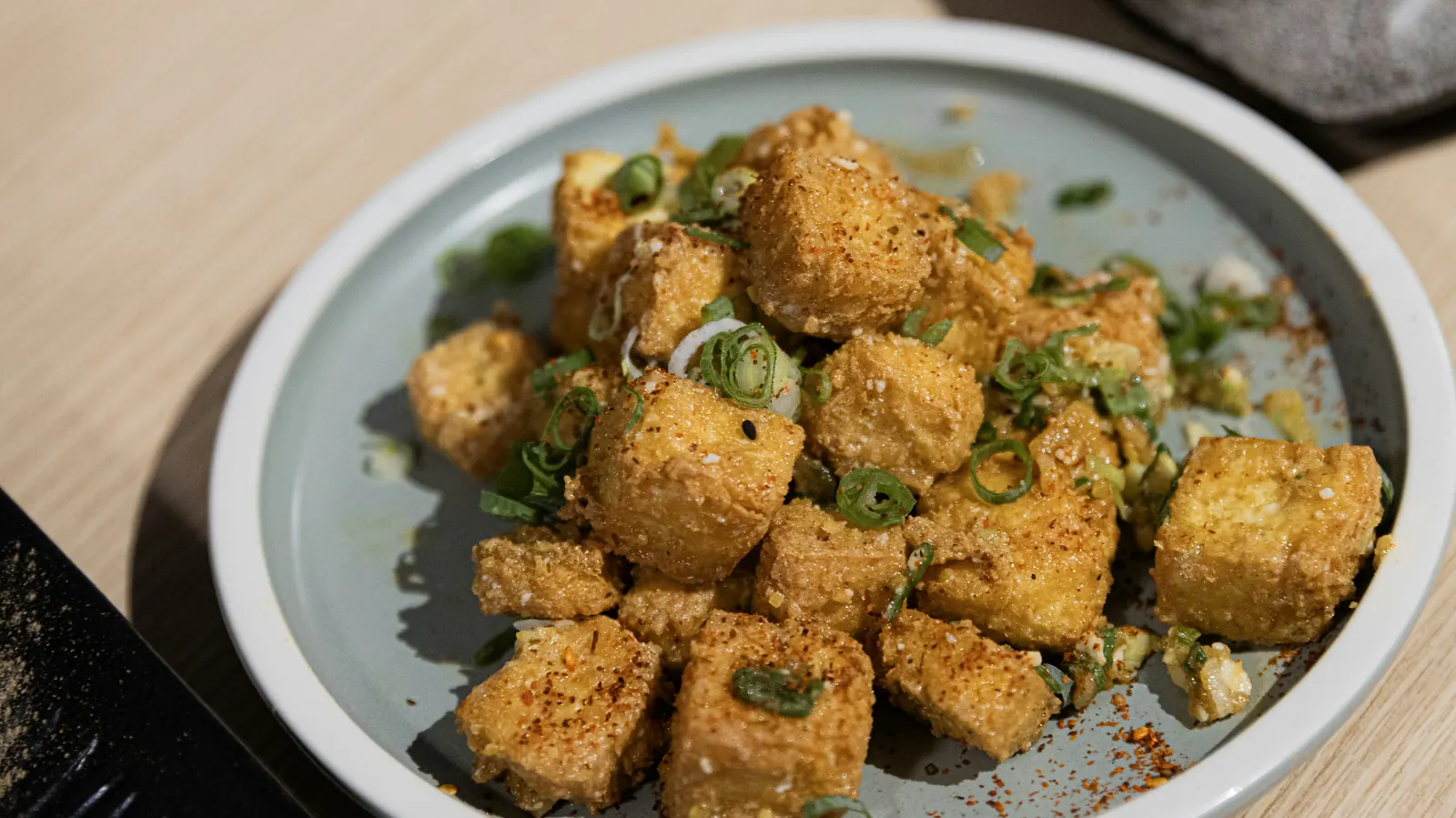
Tofu is not a traditional Mexican ingredient, but it has found a home in a lot of plant-based Mexican cooking. Crumbled and fried with chile, it stands in for chorizo in a breakfast taco. Cut into slabs and marinated in adobo, it goes on a tortilla with pineapple and onion. In each case the block has to give up its water first, or it steams in the pan and never takes on the flavor.
You can press tofu under a plate and a stack of cookbooks, and plenty of cooks do. A press is for the cook who does it every week and is tired of a sliding tower and a wet counter. This guide covers the seven worth considering and what independent reviewers found, including where they disagreed.
Julia’s earns a commission on purchases made through links on this page, at no cost to you. Recommendations are based on what a restaurant kitchen looks for in a prep tool, product specifications and published reviews, which we name. We have not used these products ourselves.
Quick verdict: which tofu press to buy
For most cooks, the best tofu press is the NOYA Adjustable Tofu Press: a dial sets the firmness, the water stays contained, and Reviewed named it best overall. If you want a compact, tidy option that marinates too, choose the Tofuture Tofu Press. If you never want to touch a press again once it is loaded, the TofuXpress is the upgrade.
Reviewers do not agree on everything here. Where they split on a press, we say so.
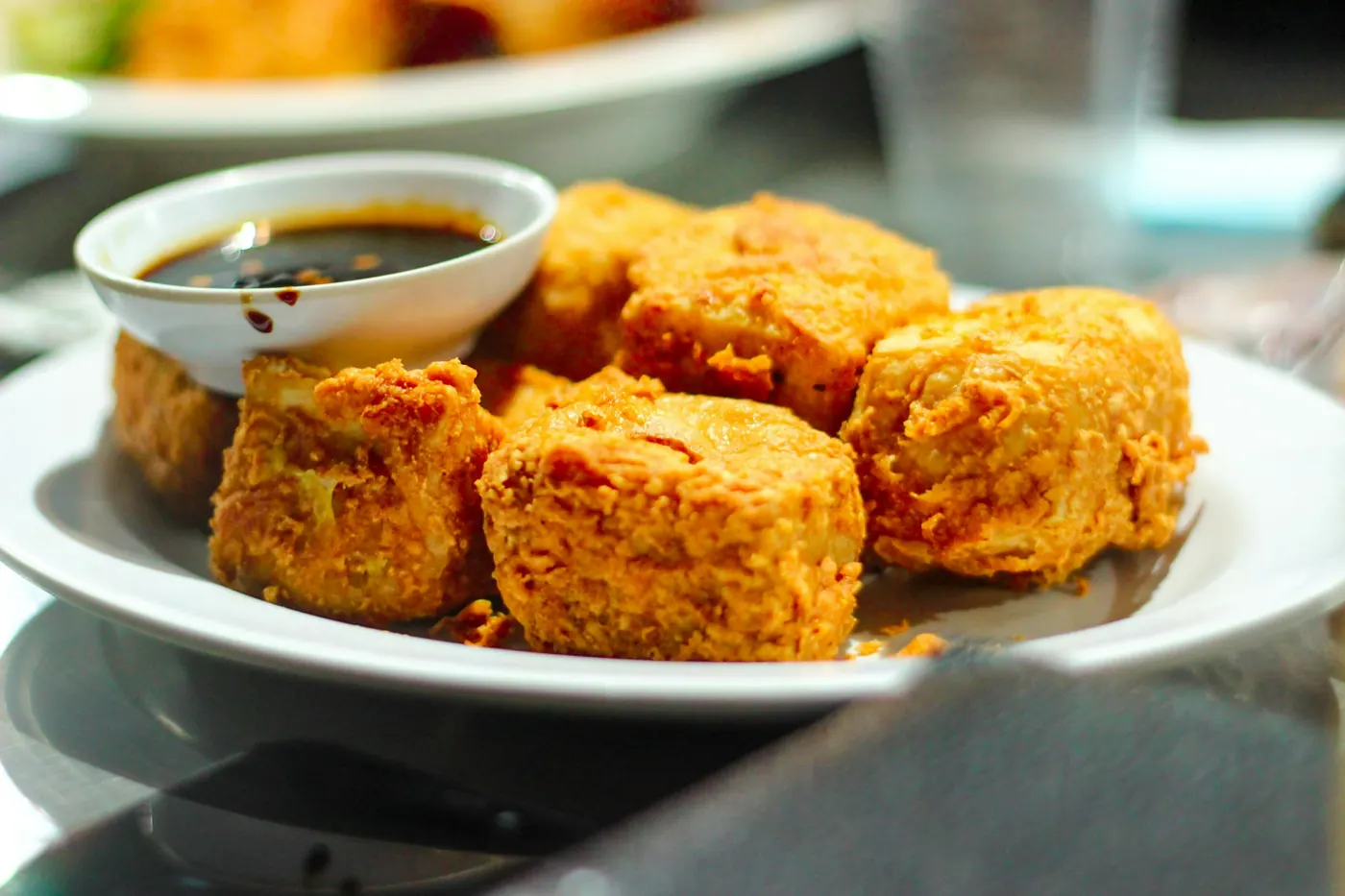
Five tofu presses side by side
Our five standouts, one for each kind of cook, with what each maker or reviewer states. All seven presses are reviewed in full below.
| Product | Best for | How it presses | Where the water goes | Buy on Amazon |
|---|---|---|---|---|

NOYA Adjustable Tofu PressBest overall
|
Most cooks, adjustable firmness | Spring and central dial | Clear catcher with pour spout | View on Amazon |

Tofuture Tofu PressBest self-contained
|
Small kitchens, no-mess pressing | Silicone bands | Stays inside the container | View on Amazon |

TofuXpress Gourmet Tofu PressBest upgrade
|
Firm tofu with no tightening | Automatic, one setting | Not stated on the listing | View on Amazon |
EZ Tofu PressSimplest design
|
Simple build, made in the USA | Two tension knobs | None; use a bowl or sink | View on Amazon |

OXO Good Grips Tofu PressBest from a major maker
|
A known kitchen brand | Rigid plate, two strengths | Clear body, tofu held above water | View on Amazon |
Our picks for the best tofu press
1. NOYA Adjustable Tofu Press – A Dial for Any Firmness
The NOYA is the press to buy if you want one tool that handles lightly pressed and very firm tofu. You turn a central dial, a stainless steel spring does the rest, and NOYA says the job takes 10 to 30 minutes. Depth markings on the clear water catcher let you note a setting you liked and go back to it, which is more control than a press with a fixed spring gives you.
Reviewed named it best overall after pressing extra-firm tofu for 15 minutes in each press it compared, and said it made some of the firmest tofu of the group. That review carries an October 2022 update date, so treat it as a good record, not this week’s news. Just One Cookbook lists it as its best adjustable press.
The openable U-shaped drip tray is the useful detail for tacos. NOYA says it makes a block easy to place and move without crumbling, and the base keeps the tofu out of the water it has already given up. A marinating lid turns the container into a covered box for the fridge, so an adobo marinade can go straight in.
The cost of all this is parts. Just One Cookbook notes there are many to clean and says it may not hold larger blocks as well. Love and Lemons calls it clunky to store.
Why we like it
- Named best overall by Reviewed
- Central dial sets the pressure
- Depth markings help you repeat a setting
- Pour spout empties water without opening the lid
- Marinating lid included
Key specifications
| Model | Not stated |
|---|---|
| Pressure system | Stainless steel spring with central dial |
| Pressure settings | Adjustable; depth markings on the catcher |
| Block size | Not stated; listing says any thickness |
| Water handling | Clear catcher with pour spout |
| Materials | BPA-free per the listing; stainless spring |
| Care | Dishwasher safe per the listing |
| Made or designed in | Not stated |
Why we recommend it
Choose it if you press tofu often and want to set firmness by the dish, softer for a stew and firmer for crumbling into a taco filling.
Skip it if storage is tight or you buy big blocks, because it is bulky for its job and may not hold larger blocks as well.
Pros and cons
Pros
- Fine control over firmness
- Best overall at Reviewed
- Keeps pressed tofu out of the water
- Marinates and stores in the same container
Cons
- Many parts to clean
- Clunky to store, says Love and Lemons
- May not suit larger blocks
- Block size not stated by the maker
2. Tofuture Tofu Press – Press and Marinate in One Box
Tofuture’s press is an outer container with an inner drainer and silicone bands that apply the pressure. There is nothing to tighten. You load the block, fit the bands, and the water collects inside the outer container, so there is no bowl to balance and no puddle on the counter. Tofuture says 15 to 20 minutes will do it.
It suits a small kitchen. The listing gives about 6 by 5 by 3 inches, it takes blocks from 8 to 16 ounces, and it comes with a silicone lid, so you can press, marinate and store in one container. A second set of bands is in the box, which is a sensible admission that bands wear.
Reviews split here, and you should see both sides. Love and Lemons made it its top pick, and Namiko Hirasawa Chen of Just One Cookbook says she has used it in her own kitchen. Reviewed found it pressed quickly and did not crack the block, but said parts came loose during use and marked it down for build quality. Love and Lemons also warns the bands can pop off, and Just One Cookbook says they can be tight.
Tofuture says the polypropylene is BPA-free and SATRA-certified for food contact, and that the Vegetarian Society has approved it.
Why we like it
- Water stays inside the container
- Fits 8 to 16 ounce blocks
- Silicone lid for marinating and storing
- Spare bands included
- Dishwasher safe
Key specifications
| Model | 93340 |
|---|---|
| Pressure system | Silicone bands |
| Pressure settings | Not stated on the listing; Reviewed refers to low and high settings |
| Block size | 8 to 16 oz |
| Water handling | Collects in the outer container |
| Materials | BPA-free polypropylene, silicone bands and lid |
| Care | Dishwasher safe |
| Made or designed in | Designed in the UK |
Why we recommend it
Choose it if you want the least mess and a small footprint, or if you like to press and marinate in the same box with no extra dish.
Skip it if fiddly bands would annoy you. They are this design’s weak point, and Reviewed was not impressed by the build.
Pros and cons
Pros
- Self-contained, no drips
- Compact
- Top pick at Love and Lemons
- States food-contact certification
Cons
- Reviewed saw parts come loose
- Bands can pop off or feel tight
- Only one color, per Love and Lemons
3. TofuXpress Gourmet Tofu Press – Load It and Walk Away
TofuXpress sells this press under its own name, and the listing’s promise is that it removes moisture automatically and without mess. Once it is loaded there is nothing more to do, which is the reason to pay extra for it.
Reviewed named it best upgrade and reported very firm tofu after just 15 minutes. Its reviewer also said it has one pressure setting and needs no repeat tightening, which is the trade-off in a sentence: less fuss, less choice. The same review says it is expensive, that the reviewer’s time with this press was brief, that it has several parts to clean and that the tofu can be hard to get out.
The listing calls it a marinating dish as well as a press, so flavoring can happen in the same container. It gives a size of about 5.75 by 5 by 4 inches. We could not open TofuXpress’s own site, because its security certificate had lapsed when we checked, so this entry rests on the listing and Reviewed. Check the size against your usual block before you buy.
Why we like it
- Best upgrade at Reviewed
- No repeat tightening
- Doubles as a marinating dish
- Very firm tofu in 15 minutes, per Reviewed
Key specifications
| Model | Not stated on the listing |
|---|---|
| Pressure system | Automatic; no repeat tightening |
| Pressure settings | One, per Reviewed |
| Block size | Not stated |
| Water handling | Not stated on the listing |
| Materials | Not stated on the listing |
| Care | Dishwasher safe, per Reviewed |
| Made or designed in | Not stated |
Why we recommend it
Choose it if you want firm tofu with no knobs to turn, and do not mind paying more for a press that looks after itself.
Skip it if you want to choose your firmness, since there is one pressure setting.
Pros and cons
Pros
- No tightening
- Firm results at Reviewed
- Press and marinade in one dish
Cons
- Expensive, says Reviewed
- One pressure setting
- Several parts to clean
- Tofu can be hard to remove
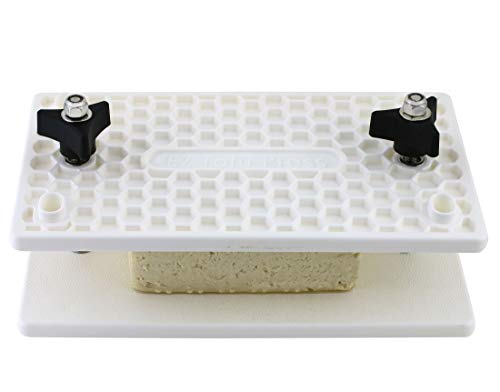
4. EZ Tofu Press – Two Plates, No Springs
This is about as plain as a press gets: two plates and two knobs. You set the block on the centering marks and tighten. There are no springs or bands to replace, and the maker says it is made in the USA from BPA-free plastic, with a stainless steel grommet in the top plate.
The catch is that you do the work. The listing says to tighten the knobs every 2 to 4 minutes over a press of 10 to 15 minutes, and it is meant for firm and extra-firm tofu. There is no tray, so you stand it over a bowl or the sink. Love and Lemons calls it the best basic press, and says it needs constant tightening and a separate bowl.
Reviewers disagree on the results. Just One Cookbook likes it for convenience and lists it as its best simple option. Reviewed was harder on it, reporting watery tofu and vague instructions in its 15-minute comparison. Our read is that a press like this asks for your attention: if you plan to be in the kitchen anyway, that is no burden, and if you want to walk away, look at the TofuXpress or Tofuture.
Cleanup is the good part. The press goes on the top rack of the dishwasher, or wash it by hand in warm soapy water.
Why we like it
- No springs or bands to replace
- Made in the USA, per the maker
- Top-rack dishwasher safe
- Works with most brick sizes, per the maker
Key specifications
| Model | Original version |
|---|---|
| Pressure system | Two tension knobs |
| Pressure settings | Set by hand as you tighten |
| Block size | Most brick sizes, per the maker |
| Water handling | No tray; use a bowl or sink |
| Materials | BPA-free plastic plates, stainless steel grommet |
| Care | Top-rack dishwasher safe |
| Made or designed in | USA |
Why we recommend it
Choose it if you like simple tools, and you will be in the kitchen anyway while the block presses.
Skip it if you want to load a press and leave it, or if you want the water contained.
Pros and cons
Pros
- Simple design
- No springs or bands
- Made in the USA
- Easy to clean
Cons
- Needs tightening every few minutes
- No drip tray
- Reviewed reported watery results
- Meant for firm and extra-firm tofu
5. OXO Good Grips Tofu Press – Two Strengths, Clean Design
OXO is the one big kitchen-tool maker on this page. Its press uses a rigid plate to push evenly across the block, and it offers two pressing strengths. The clear body holds the water, and OXO says the tofu sits above it, so a finished block is not soaking in what it just lost. Non-slip feet keep it steady on the counter.
OXO’s listing frames the goal the way a cook would: firmer tofu and better browning. That matters for Mexican-style cooking, where you want a real crust on tofu before it goes into a taco or a pan of salsa roja. The design comes apart for cleaning and goes back together, and it is dishwasher safe.
Be aware of what we do not have here. We searched for an independent test of this press and did not find one, so this pick rests on OXO’s listing and its standing as a kitchen-tool maker, not on a named review. The listing also leaves out block size and materials, so check those with OXO if they matter to you.
Why we like it
- Rigid plate presses evenly
- Two pressing strengths
- Tofu is held above the extracted water
- Comes apart for cleaning
- Dishwasher safe
Key specifications
| Model | 11385800 |
|---|---|
| Pressure system | Rigid press plate |
| Pressure settings | Two |
| Block size | Not stated |
| Water handling | Clear body catches water |
| Materials | Not stated |
| Care | Dishwasher safe |
| Made or designed in | Not stated |
Why we recommend it
Choose it if you want a well-known maker’s take on a simple two-strength press, and you like a tool that comes apart easily.
Skip it if you want a press backed by a named review, because we found none for this model.
Pros and cons
Pros
- From a major kitchen brand
- Two strengths
- Holds tofu above the water
- Easy to take apart
Cons
- No independent test found
- Block size not stated
- Materials not stated
6. TofuBud Tofu Press – Sized for the 14-Ounce Block

TofuBud sizes its press for the 14-ounce block it says most US brands sell, and says it is flat enough to press in the fridge. A spring system offers two pressure levels, firm or extra firm, and pressed water collects in a clear drainer that lifts out to pour away.
Love and Lemons ranks it as its second favorite, says it can press in as little as 20 minutes, and likes that it holds the liquid. It also says the spring is hard to twist into place and that the press takes up more storage room than the Tofuture. Reviewed liked it less, calling it inefficient: the block came out decently firm but wet, needed drying with paper towels, and was hard to remove without breaking.
The listing says the same press handles paneer and queso fresco, which need the same steady pressure, so a cook who makes fresh cheese gets a second use from it. All six parts go in the dishwasher, and a recipe book comes with it. If you buy it, pat the block dry before it hits the pan.
Why we like it
- Sized for 14-ounce blocks
- Two pressure levels
- Flat enough for the fridge, per the listing
- Love and Lemons’ second favorite
- Also presses paneer and queso fresco, per the listing
Key specifications
| Model | Not stated |
|---|---|
| Pressure system | Spring system |
| Pressure settings | Two |
| Block size | Up to 14 oz |
| Water handling | Removable clear drainer |
| Materials | BPA-free per the listing |
| Care | Six parts, dishwasher safe |
| Made or designed in | Not stated |
Why we recommend it
Choose it if you buy standard 14-ounce blocks, want to press in the fridge, or also make paneer or queso fresco at home.
Skip it if you are after the driest block, because Reviewed found it left tofu wet.
Pros and cons
Pros
- Fits a 14-ounce block
- Two pressure levels
- Water stays contained
- Second use for fresh cheese
Cons
- Reviewed called it inefficient
- Spring is hard to fit
- Six parts to wash
- Tofu can be hard to remove
7. Raw Rutes Ninja Tofu Press – All Stainless, No Springs
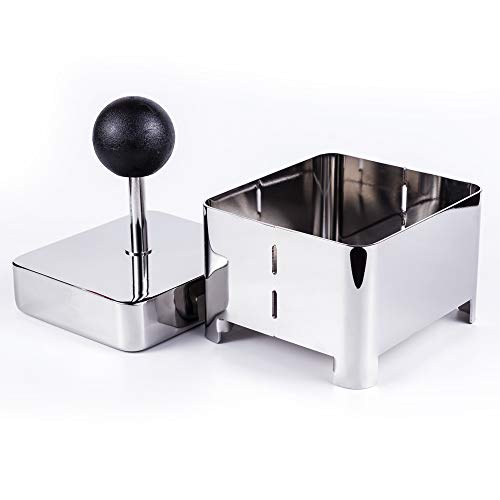
Most presses here are plastic. This one is not. Raw Rutes says each press is handcrafted in the USA from stainless steel: cut, welded, ground and buffed. There are no springs, rubber bands or plastic parts, and it relies on a heavy pressing weight. The Amazon listing gives a weight of about 6 pounds.
That makes it the one press here for a cook who wants to avoid plastic parts. Just One Cookbook calls it stylish and very durable. Love and Lemons mentions it as heavier and pricier, and neither site places it among its ranked picks. Both point to the cost, so go in knowing this is far from the cheap end of the category.
It also does more than drain store-bought tofu. Raw Rutes says it can be used to make your own tofu or paneer. The listing gives no block size, water tray or care instructions, and the size it gives is about 4.1 by 3.1 by 2.5 inches, so confirm the fit with your usual block before you order. We could not reach the maker’s site to check further, so these details are from the Amazon listing.
Why we like it
- Stainless steel, no plastic parts
- No springs or bands
- Handcrafted in the USA, per the maker
- Can also make tofu or paneer, per the maker
Key specifications
| Model | RR-301 |
|---|---|
| Pressure system | Heavy pressing weight |
| Pressure settings | Fixed by the weight |
| Block size | Not stated |
| Water handling | Not stated |
| Materials | Stainless steel |
| Care | Not stated |
| Made or designed in | USA |
Why we recommend it
Choose it if you want to avoid plastic, plan to make tofu or paneer yourself, and are happy to pay for it.
Skip it if you press tofu only now and then. A plastic press does that job for much less.
Pros and cons
Pros
- No plastic parts
- Very durable, says Just One Cookbook
- Made in the USA
- Makes homemade tofu, per the maker
Cons
- Reviewers note the high cost
- Heavy
- Water handling not stated
- Care not stated
How to choose a press for the way you cook
A press has only one job, so the choice comes down to how much attention you want to give it and where the water ends up.
Mechanism: springs, bands, knobs or weight
Springs and bands keep pushing on their own, so you can leave them alone. Knob presses like the EZ need tightening every few minutes, but there are no springs or bands to replace. A weight, as in the Raw Rutes, is the simplest idea of all and the heaviest to store.
Where the water goes
This is the difference you will notice most. A contained press like the NOYA, Tofuture or TofuBud can sit on the counter with no bowl. An open press has to stand over a bowl or a sink. If the block sits in its own water, part of the work is undone, which is why OXO and NOYA both keep the tofu clear of it.
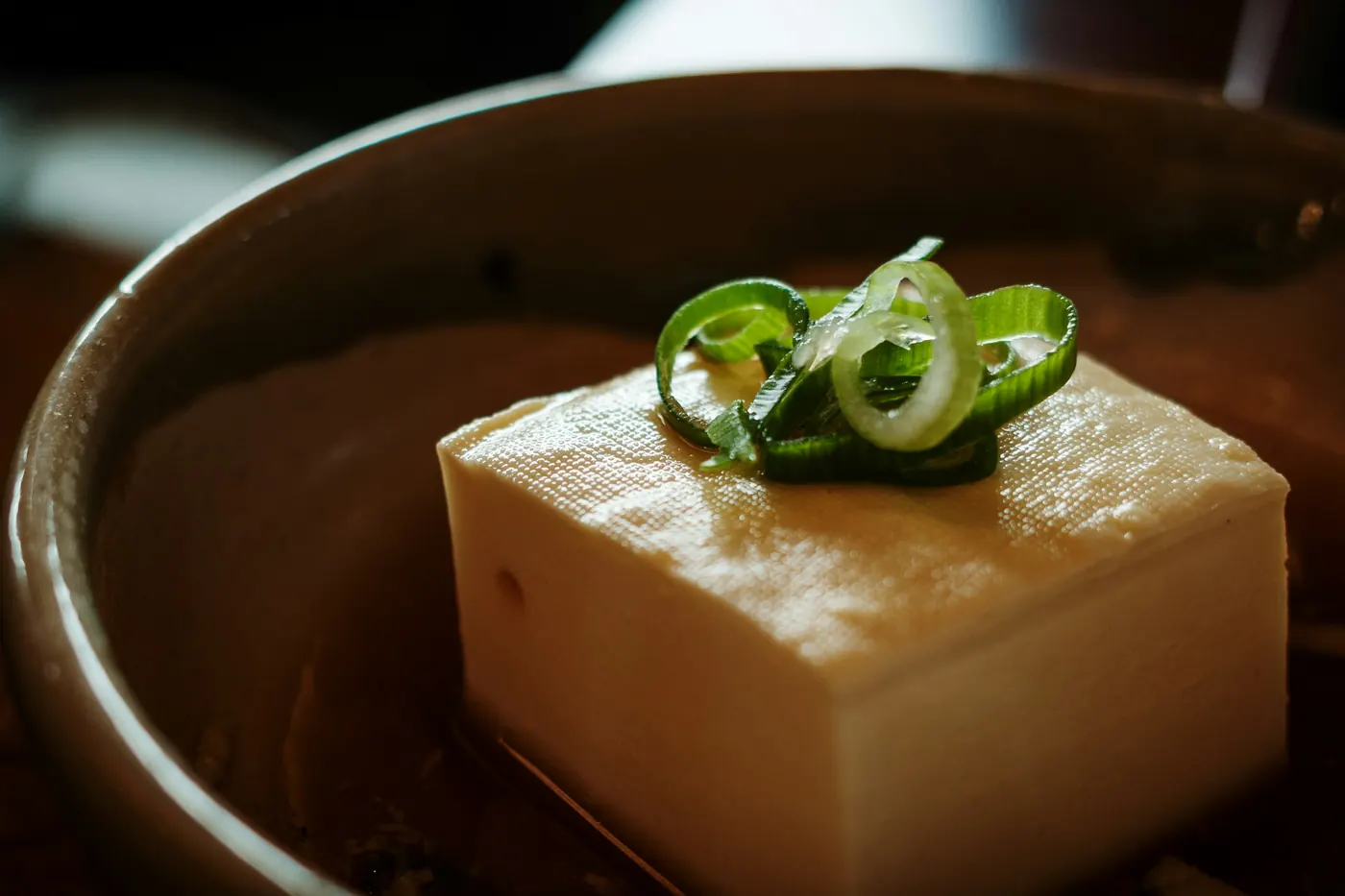
Block size
Blocks vary by brand, and several makers leave size off the listing. Tofuture states 8 to 16 ounces and TofuBud states up to 14 ounces. For any other press, compare your usual block with the stated dimensions first.
Cleaning and parts
More features mean more pieces. TofuBud has six parts, and Just One Cookbook notes the NOYA has many as well. Six of the seven presses here have a dishwasher statement from the maker or a reviewer; the Raw Rutes listing gives no care advice.
Other uses
The TofuBud and Tofuture listings name paneer, and TofuBud also names queso fresco. If fresh cheese is part of your plan, follow your recipe and the maker’s instructions for that use.
How we picked these seven presses
We started with the presses named most often by independent reviewers and looked for ones sold new and in stock on Amazon US from an identifiable maker. We kept Amazon-first brands to two. We dropped a bamboo press from a known maker, because we found no review of it, its listing gives no care instructions, and a reviewer of a different bamboo press warned of mold and splinters without careful upkeep. We also left out lesser-known brands with no independent review.
The reviews we used are Reviewed, which compared presses on extra-firm tofu over 15 minutes; Love and Lemons, which pressed several blocks in each one and cooked them; and Just One Cookbook. Those are their tests, not ours. Reviewed’s page is dated October 2022, so products may have changed since.
Specifications come from the Amazon listings and, where we could reach it, the maker. We checked the U.S. Consumer Product Safety Commission’s recall database by brand and found no recall of a tofu press from any maker here. We have not used these products ourselves, and we do not quote prices, which change daily.
Tofu press questions, answered
Do you really need a tofu press?
No. Plates and something heavy will work. A press earns its place if you cook tofu often, because it gives even pressure and keeps the water off your counter.
How long should you press tofu?
Makers here say anywhere from about 10 to 30 minutes, depending on the press and how firm you want the block. Reviewed got firm results from its top presses in 15 minutes.
Which tofu works in a press?
Firm and extra-firm tofu are the usual choices, and the EZ is meant for those two. Tofuture’s listing also names silken tofu, but silken is fragile, so go gently.
Can you use a tofu press for cheese?
TofuBud says its press also handles paneer and queso fresco, and Tofuture and Raw Rutes name paneer. Follow your recipe for pressing time.
Can you press tofu in the fridge?
If the press fits on a shelf, yes. TofuBud’s listing says its press is flat enough for it, and a contained press will not drip on your food. Follow the storage directions on your tofu package.
Our final pick for tofu tacos
Buy the NOYA if you want the most control, and the Tofuture if you want the least mess. Then cut the pressed block into slabs, brown it hard in a good pan, and fold it into warm tortillas. For the pan, see our guide to the best nonstick stir-fry pan, and for the tortillas, the best tortilla press.
For recipes to go with it, start with our guide to the best vegan Mexican cookbook, or the broader best vegetarian cookbook list. And when you would rather someone in Houston did the cooking, see the menu or call to order.