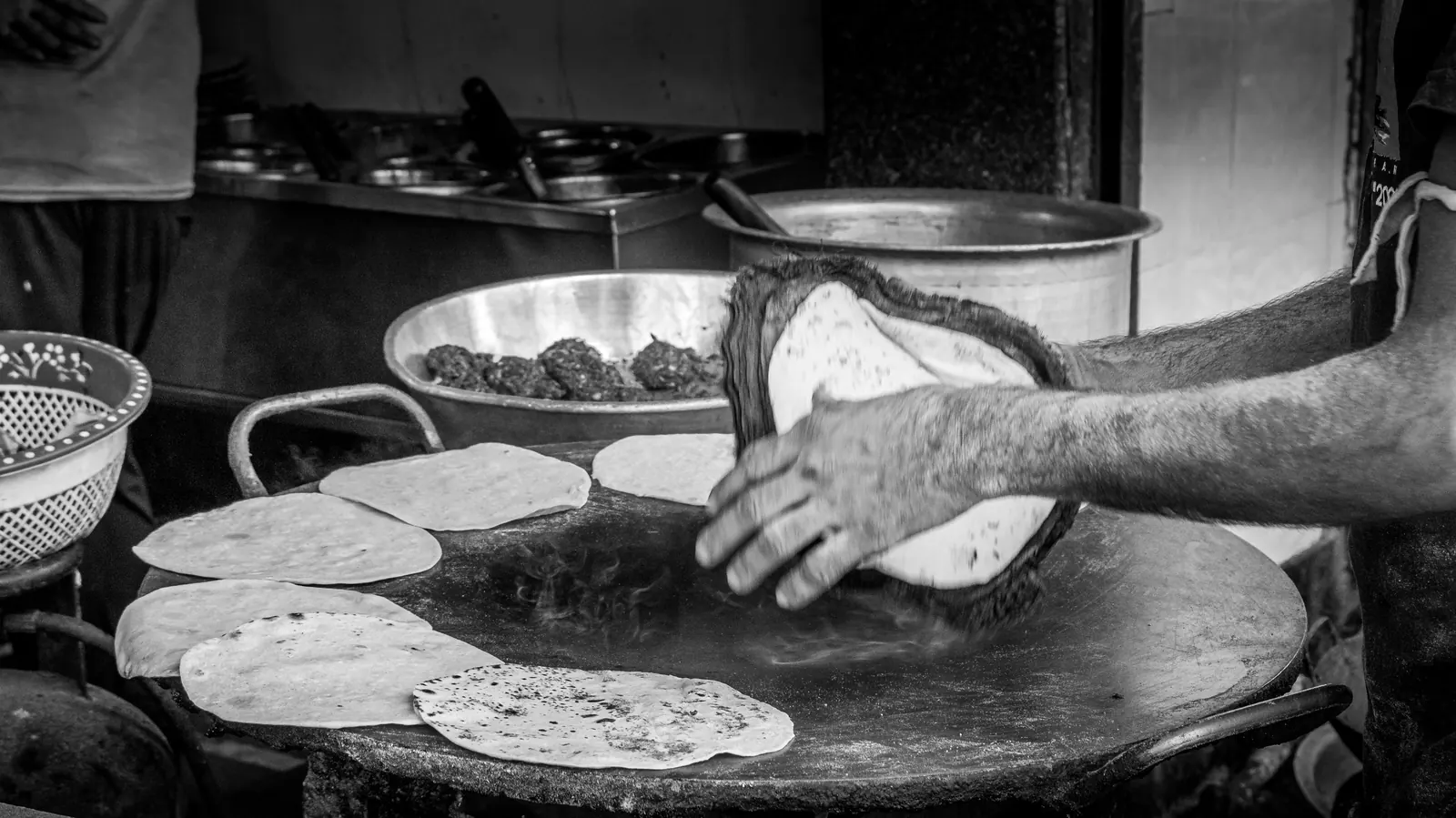
A tortilla press is a simple machine: two flat plates, a hinge and a lever. Put a ball of corn masa between two liners, pull the lever down, and you get a thin, even round in about two seconds. Every tortilla comes out the same thickness, so a whole batch cooks at the same pace on the comal. For anyone who makes corn tortillas at home, it is the tool that turns a slow job into a quick one.
Presses look alike, but they are not. They come in cast iron, cast aluminum, wood, steel and plastic, in sizes from about six inches to ten, with hinges and handles that range from solid to flimsy. This guide explains which of those differences matter for corn tortillas, names the presses worth buying for different kitchens, and finishes with how to press masa cleanly with liners.
Julia’s earns a commission on purchases made through links on this page, at no cost to you. Recommendations are based on what a working Mexican kitchen looks for in a tortilla press, the makers’ own specifications and published equipment reviews, which we cite.
Quick verdict: which tortilla press to buy
For most home kitchens, the best tortilla press is the Victoria 8-inch Traditional Cast Iron Tortilla Press: heavy enough to do most of the pressing for you, with flat plates that Victoria says are engineered to prevent pinching, a flaxseed-oil seasoning and a size that suits standard corn tortillas. America’s Test Kitchen named Victoria’s 8-inch press its best buy. If you want a lighter press that will never rust, choose the IMUSA 8-inch cast aluminum press, and press a little harder. If you cook for a crowd, the Uno Casa 10-inch press and comal set gives you a bigger press and a cast iron comal in one box.
The rest of this page explains why, and which press suits the way you cook.
Five tortilla presses side by side
Our five standout picks, one for each kind of kitchen, with the details each maker or listing states. All eight products are reviewed in full below.
| Press | Best for | Material & plate | Weight (as stated) | Buy on Amazon |
|---|---|---|---|---|
| Everyday corn tortillas | Cast iron, 8-inch | About 8 lb | View on Amazon | |

Uno Casa 10-inch Cast Iron Press and Comal SetBest for big batches
|
Large tortillas, family batches | Cast iron, 10-inch, plus 11.5-inch comal | Not stated | View on Amazon |

IMUSA 8-inch Cast Aluminum Tortilla PressLightest metal press
|
Occasional use, easy lifting | Bare cast aluminum, 8-inch | Lighter than cast iron | View on Amazon |

IMUSA 7.5-inch Wood Tortilla PressBest wooden press
|
The traditional look, no rust | Pine, 12 x 7.5-inch surface | Not stated (lightweight) | View on Amazon |

Norpro 6-inch Cast Aluminum Tortilla PressBest small press
|
Street-taco size, small drawers | Cast aluminum, 6-inch | Not stated | View on Amazon |
Product images from Amazon. Weights and sizes are as stated by each maker, listing or the retailer we name; check the listing before you buy.
Our picks for the best tortilla press
These eight picks cover every common kind of press for corn tortillas: heavy cast iron, light cast aluminum, a nonstick option, a wooden press and a small one for street tacos, plus the liners that make any of them easier to use. Each review says who the press suits and gives one honest reason to skip it. If you have already settled on cast iron, our guide to the best cast iron tortilla press compares more of them in detail.
1. Victoria 8-inch Traditional Cast Iron Tortilla Press – Weight That Does the Work

If you want one press for corn tortillas and do not want to think about it again, start here. Victoria has made cast iron cookware in its own factories in Colombia since 1939, and this is its traditional 8-inch press: a heavy round base, a matching top plate and a long lever. Breadtopia, which sells it, lists it at about eight pounds, and that weight is what makes it easy to use. Close the lid on a ball of masa, press the lever with a steady hand, and the press does most of the work.
An 8-inch plate is the standard size for corn tortillas. It gives a taco-size round with room to spare at the edges, so the masa does not squeeze out past the plates. Victoria describes the press as a reinforced design with engineered flat plates that prevent pinching, and an ergonomic handle for better resistance. America’s Test Kitchen named Victoria’s 8-inch press its best buy among tortilla presses, praising the wide plates and the long, fairly flat handle. Its one caution was that pressing very hard could leave a tortilla uneven, so press firmly, not forcefully.
The finish is plain cast iron seasoned with non-GMO, kosher-certified flaxseed oil, and Victoria states it is made without PTFE, PFAS or synthetic coatings. That also means it can rust. The listing is clear that it should never be air dried or put in a dishwasher: wipe off any masa, dry it with a towel and keep a thin film of oil on it.
Why we like it
- Heavy cast iron, about 8 lb according to Breadtopia
- Flat plates engineered to prevent pinching, according to Victoria
- Seasoned with flaxseed oil; no PTFE or PFAS
- Victoria’s 8-inch press was America’s Test Kitchen’s best buy
- Made in Colombia, with a limited lifetime warranty
Key specifications
| Model | TOR-003 |
|---|---|
| Material | Cast iron |
| Plate size | 8-inch round |
| Weight | About 8 lb (Breadtopia) |
| Finish | Flaxseed-oil seasoning; no PTFE or PFAS |
| Liners included | Not stated |
| Made in | Colombia |
| Care | Towel dry, never air dry; no dishwasher |
Why we recommend it
It is the press most home cooks should buy: heavy enough to press evenly, the right size for corn tortillas, from a maker with a long cast iron history. It is also the press we name in our tortilla making tools starter kit.
Skip it if you cannot lift eight pounds comfortably or know you will forget to dry it; an aluminum press is lighter and will not rust.
Pros and cons
Pros
- Weight does most of the pressing
- Right size for corn tortillas
- No synthetic coating
- Lifetime warranty (limited)
Cons
- Heavy to lift and store
- Rusts if left wet
- Pressing too hard can leave it uneven
2. Uno Casa 10-inch Cast Iron Press and Comal Set – Press and Cook in One Box
Uno Casa sells this as its family-size set: a 10-inch cast iron press, the largest in its line, and an 11.5-inch cast iron comal. A 10-inch plate gives you room for larger corn tortillas, for tlayuda-style rounds or for gorditas pressed thicker, and it leaves a generous margin around a standard taco tortilla so the masa never reaches the hinge.
The comal is what makes this a set rather than just a bigger press. Uno Casa says it holds and spreads heat evenly up to 450°F and works on gas, electric, induction and ceramic stovetops, as well as a grill, an oven or an open flame, with a removable silicone sleeve on the handle. Both pieces arrive pre-seasoned, and the box includes 100 parchment sheets and a recipe e-book.
One note from published reviews: America’s Test Kitchen tested Uno Casa’s 8-inch press, not this 10-inch one, and found its rough surface let the handle catch on a ridge of the top plate. We could not confirm whether the 10-inch casting shares that detail, so check that the lever moves smoothly when your set arrives. The listing does not give the weight or where the set is made.
Why we like it
- 10-inch press, the largest in Uno Casa’s range
- 11.5-inch cast iron comal included
- Comal rated for gas, electric, induction and ceramic stoves
- Both pieces pre-seasoned
- 100 parchment sheets and a recipe e-book in the box
Key specifications
| Model | Not stated (10-inch press with 11.5-inch comal) |
|---|---|
| Material | Cast iron (press and comal) |
| Plate size | 10-inch round |
| Weight | Not stated |
| Finish | Pre-seasoned |
| Liners included | 100 parchment sheets |
| Made in | Not stated |
| Care | Not stated; dry fully and oil, as for any cast iron |
Why we recommend it
Choose it if you are starting from scratch and cook for four or more: one order gets you a large press and a comal sized to match. If you already own a comal, compare it with the options in our guide to the best comal for tortillas before paying for a second one.
Skip it if you only make taco-size tortillas for one or two people; a 10-inch press is bigger and heavier to store than you need.
Pros and cons
Pros
- Large 10-inch press
- Matching cast iron comal
- Comal works on induction
Cons
- Weight not stated
- ATK found a rough finish on the 8-inch model
- Parchment is heavier than thin plastic for masa
3. ARC 10-inch Heavy Duty Cast Iron Tortilla Press – The Heaviest Press Here
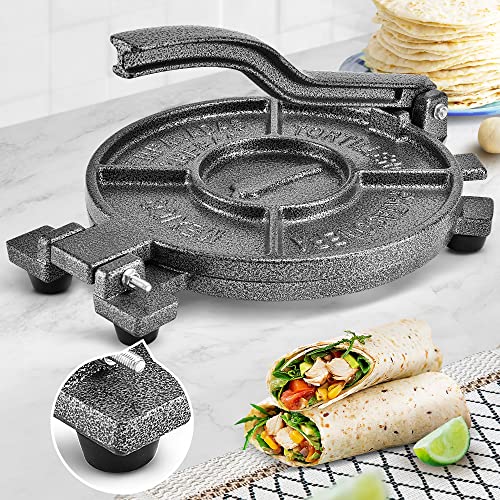
America’s Test Kitchen’s main finding about tortilla presses was that weight matters most: a heavy press needs less force to make an evenly thin tortilla. ARC’s 10-inch press takes that idea furthest. The listing gives its weight as 18.25 pounds, more than twice the Victoria 8-inch, with a wider, thicker handle that ARC says is reinforced against breaking and non-slip feet that keep the base from shifting or scratching a counter.
The finish is different from Victoria’s plain seasoning. ARC describes a rustproof surface treatment that gives the iron a natural stone appearance, and says the press is pre-seasoned and ready to use. The listing does not say what the treatment is made of. Care is straightforward: hand wash before and after use and dry it thoroughly with a paper towel before you put it away. ARC includes 100 parchment sheets, and its own tip is worth repeating: corn tortillas do better in a smaller press, flour in a larger one.
We include this press with a caveat. The 18.25-pound figure is ARC’s, and it is unusually high for a 10-inch press, so treat it as a sign that this is a very heavy casting rather than an exact number. ARC also sells the same design in 6.5-, 7- and 8-inch sizes.
Why we like it
- Listed at 18.25 lb, so the press does almost all the work
- 10-inch plate for large or thick rounds
- Reinforced, wider handle and non-slip feet
- Pre-seasoned, with a rustproof surface treatment
- 100 parchment sheets included
Key specifications
| Model | Not stated (10-inch) |
|---|---|
| Material | Cast iron |
| Plate size | 10-inch round |
| Weight | 18.25 lb (ARC listing) |
| Finish | Pre-seasoned; rustproof surface treatment (type not stated) |
| Liners included | 100 parchment sheets |
| Made in | Not stated |
| Care | Hand wash; dry thoroughly before storing |
Why we recommend it
Choose it if hand or wrist strength is the problem: the heavier the press, the less you have to push. It also suits cooks who press thick masa for gorditas and sopes.
Skip it if the press has to come out of a cupboard every time; at this weight it is best left on the counter.
Pros and cons
Pros
- Very heavy, very little effort
- Stable on the counter
- Large plate
Cons
- Hard to lift and store
- Surface treatment not described
- Larger than needed for taco tortillas
4. IMUSA 8-inch Cast Aluminum Tortilla Press – Light and Rust-Free
This is the silver press many people picture when they think of a tortilla press, and IMUSA has sold it for years. It is cast aluminum with a bare gray finish, 8 inches across, with a simple lever. IMUSA describes it as lighter than traditional cast iron, easier to handle, and easy to clean and store.
The light weight is the reason to buy it and the reason to think twice. Aluminum does not rust, so there is no seasoning and no worry if it gets wet, and it is much easier to lift down from a shelf than a cast iron press. But America’s Test Kitchen found this press “simply too light to press dough evenly”, because a light top plate puts more of the job on your arm. The fix is technique: press, open, turn the tortilla in its liners and press once more, as Masienda recommends for any press.
Wipe it clean and dry after use. IMUSA does not say it is dishwasher safe, so wash it by hand.
Why we like it
- Cast aluminum, lighter than cast iron
- No seasoning and no rust
- Standard 8-inch plate for corn tortillas
- Simple lever, easy to clean and store
Key specifications
| Model | MEXI-86008 |
|---|---|
| Material | Cast aluminum, bare finish |
| Plate size | 8-inch round |
| Weight | Not stated (lighter than cast iron) |
| Finish | Bare aluminum, no coating |
| Liners included | Not stated |
| Made in | Not stated |
| Care | Wipe clean and dry; hand wash |
Why we recommend it
Choose it if you make tortillas now and then, store the press in a high cupboard, or find cast iron too heavy. It is the easiest press here to live with.
Skip it if you want a tortilla evenly thin from one press; a heavier cast iron press does that with less effort.
Pros and cons
Pros
- Light and easy to handle
- Will not rust
- No seasoning needed
Cons
- ATK found it too light to press evenly
- Needs a second press for thin tortillas
- Weight not stated
5. Kundita 8-inch Nonstick Cast Aluminum Tortilla Press – Easy Release, No Seasoning

Kundita’s 8-inch press is the nonstick version of the aluminum idea. It is high-density cast aluminum, which Kundita says resists deformation and gives even pressure, with a nonstick coating on the plates so the dough lifts away cleanly. There is no rust and no seasoning, and cleanup is a wipe or a rinse.
Two things set it apart from the bare IMUSA press. First, the handle: Kundita describes an ergonomic handle designed to give smooth, consistent pressure across the whole 8-inch plate. Second, the box: it comes with 50 parchment sheets and a dough scraper, so you can start pressing the day it arrives. Kundita’s own tip, to press once, turn the round 180 degrees and press again, works for corn masa as well as the flour dough it was written for.
A coating does not remove the need for liners with fresh corn masa, which is wet and sticky. Use thin plastic or the included parchment, and keep metal tools off the plates. The listing does not say what the coating is made of.
Why we like it
- Nonstick-coated cast aluminum plates
- No rust and no seasoning
- Ergonomic handle for even pressure
- 50 parchment sheets and a dough scraper included
Key specifications
| Model | KTP-8S |
|---|---|
| Material | Cast aluminum |
| Plate size | 8-inch round |
| Weight | Not stated (lighter than cast iron) |
| Finish | Nonstick coating (type not stated) |
| Liners included | 50 parchment sheets |
| Made in | Not stated |
| Care | Wipe or rinse |
Why we recommend it
Choose it if you want a light press that cleans up in seconds and never needs oiling. It is a sensible press for a small kitchen or a first press.
Skip it if you would rather avoid coated cookware; the bare IMUSA press or a seasoned cast iron one does the same job without a coating.
Pros and cons
Pros
- Dough releases easily
- Wipe-clean plates
- Starter accessories included
Cons
- Coating type not stated
- Lighter press, more effort
- Coating needs gentle tools
6. IMUSA 7.5-inch Wood Tortilla Press – The Traditional Wooden Style
Wooden presses are a traditional style in parts of Mexico, and many home cooks like them for the look and the feel. Most of the wooden presses on Amazon come from sellers that publish almost nothing about them. This one comes from IMUSA, a long-established cookware brand, which makes it the wooden press we can recommend with the most confidence.
IMUSA describes it as solid pine with a natural finish and a 12 by 7.5-inch pressing surface, with manual control of the thickness: you decide how hard to press. That rectangular board gives you room for a full corn tortilla with space around it. Wood does not rust and needs no seasoning, and IMUSA notes that it is light and easy to store.
Lighter also means more effort. America’s Test Kitchen found that the wooden press it reviewed, from a different maker, was not as heavy as the metal options and needed more pressing force, but its tortillas were always even. Expect the same trade-off here. IMUSA does not publish care instructions; as with any wooden kitchen tool, wipe it with a barely damp cloth, never soak it, and let it dry fully.
Why we like it
- From an established brand, unlike most wooden presses
- Solid pine with a natural finish
- Roomy 12 x 7.5-inch pressing surface
- No rust and no seasoning
Key specifications
| Model | MEXI-86004 |
|---|---|
| Material | Pine wood |
| Plate size | 12 x 7.5-inch pressing surface |
| Weight | Not stated (described as lightweight) |
| Finish | Natural wood finish |
| Liners included | Not stated |
| Made in | Not stated |
| Care | Not stated by IMUSA |
Why we recommend it
Choose it if you want the traditional wooden style, a press that will never rust, or one light enough to hang on a wall.
Skip it if you want the press’s weight to do the work; you will push harder than with cast iron.
Pros and cons
Pros
- Traditional wooden design
- Large pressing surface
- Light and rust-free
Cons
- Needs more pressing force
- No care instructions published
- Wood must be kept from soaking
7. Norpro 6-inch Cast Aluminum Tortilla Press – Small Rounds for Street Tacos
Not everyone wants a full-size tortilla. Street tacos use small corn tortillas, often doubled, and a smaller press makes them without trimming. Norpro’s 6-inch press is cast aluminum and, in Norpro’s words, a traditional press that is sturdy, durable and has excellent leverage. It comes with a recipe, and Norpro says it is easy to clean and compact for storage.
Size sets the limit. A press makes a tortilla a little smaller than its plates, so expect rounds of about five inches, which is right for street tacos, sopes and small quesadillas but too small for enchiladas or a full-size taco. America’s Test Kitchen found that the 6.5-inch press it reviewed, from a different maker, was too small and too light for all-round use, which is why we recommend a 6-inch press only as a second press or for cooks who really do want small tortillas.
Care is easy: Norpro says to wipe it with a damp or dry cloth. Aluminum will not rust.
Why we like it
- 6-inch plate for street-taco tortillas
- Cast aluminum, will not rust
- Compact to store
- Recipe included; wipe-clean care
Key specifications
| Model | 1063 |
|---|---|
| Material | Cast aluminum |
| Plate size | 6-inch round |
| Weight | Not stated |
| Finish | Not stated |
| Liners included | Not stated |
| Made in | Not stated |
| Care | Wipe with a damp or dry cloth |
Why we recommend it
Choose it for street tacos and small antojitos, for a small kitchen drawer, or as a second press beside a full-size one.
Skip it if this will be your only press; an 8-inch press makes every common corn tortilla size, including small ones.
Pros and cons
Pros
- Right size for street tacos
- Compact
- Rust-free
Cons
- Too small for full-size tortillas
- Light, so more effort
- Few published details
8. Masienda Tortilla Press Liners, 5-pack – Clean Release for Fresh Masa

Whatever press you choose, the liners decide whether masa comes away cleanly. Masienda, which sells heirloom corn masa and its own press, says well-hydrated masa should never go directly on a press, and that parchment and zip-top bags are too heavy to peel cleanly off fresh masa. Thin plastic is the answer, and these are thin plastic liners made for the job.
Masienda designed them for its own Doña Rosa press but says they can be trimmed to fit any press, including Victoria and other cast iron, steel and wooden presses. Each has a printed tortilla sizing ruler, so you can see how far a round has spread. They are reusable: wipe them after each use, let them dry and store them inside the press, and throw them away once they are damaged.
The free alternative works too. Masienda’s own advice is to cut two circles of 8 to 9 inches from a thin plastic grocery bag or a bread bag without a zip seal. These liners are simply tidier and last longer.
Why we like it
- Thin plastic that peels cleanly off fresh masa
- Trim to fit any press
- Printed tortilla sizing ruler
- Wipe, dry and reuse
Key specifications
| Model | Not stated (pack of 5) |
|---|---|
| Material | Thin plastic (type not stated) |
| Plate size | Trim to fit any press |
| Weight | Not stated |
| Finish | Printed sizing ruler |
| Liners included | 5 liners |
| Made in | Not stated |
| Care | Wipe after use, dry, store in the press |
Why we recommend it
Choose them if your press came with parchment and your masa keeps tearing as you peel it, or if you want liners that last longer than a cut-up bag.
Skip them if you are happy cutting liners from bread bags; they do the same job for free.
Pros and cons
Pros
- Right thickness for masa
- Reusable
- Sizing ruler printed on
Cons
- Only five in a pack
- Need trimming for small presses
- Plastic type not stated
How to choose a tortilla press for corn tortillas
Masienda judges a press on how easy it is to press, its tension, durability, flexibility and surface area. America’s Test Kitchen boiled its findings down to weight, plate width and handle length. Put together, five things decide which press suits you.
1. Material
- Cast iron is the classic choice and the heaviest. Weight is what produces an evenly thin tortilla with little effort, which is why both of America’s Test Kitchen’s top presses were heavy. It must be dried straight away and kept oiled, or it rusts. Our guide to the best cast iron tortilla press covers weights, seasoning and rust care in detail.
- Cast aluminum is light, rust-free and easy to store. The trade-off is that you supply more of the pressing force; America’s Test Kitchen found both aluminum presses it reviewed too light to press evenly on their own.
- Wood is traditional and handsome, and wooden presses can make very even tortillas, but they are lighter than iron and ask more of your arm. Quality varies widely, and many sellers publish no details at all.
- Steel presses are the heavy-duty end of the range. Masienda’s Doña Rosa press, America’s Test Kitchen’s winner, is rolled steel weighing nearly 11 pounds, but we could not find it on Amazon through the product data we use, and the stainless presses we did find either gave no plate size or came from sellers with almost no published detail, so none made our list.
- Plastic presses are the cheapest and the least effective. The plastic press America’s Test Kitchen reviewed could not press a tortilla more than about three inches wide, and the branded plastic presses we found were down to their last few units, so we left them out.
2. Size: 6.5 to 10 inches
A press makes a tortilla a little smaller than its plates. A 6- to 6.5-inch press suits street tacos and sopes; an 8-inch press is the standard for corn tortillas of every common size, and it is where most cooks should start; a 10-inch press gives larger rounds and more room at the edges. Masienda warns that a press with too little surface lets the masa squeeze out at the sides, and America’s Test Kitchen preferred plates at least 8 inches wide.
3. Hinge and handle
The hinge decides whether the plates meet flat. A press whose top plate tilts as it closes makes tortillas thicker on one side, which is why Victoria makes a point of its engineered flat plates and reinforced design. Look for a solid hinge with metal pins and a spare screw or rivet in the box, which several makers include. For the handle, America’s Test Kitchen found that handles of at least 10 inches gave better leverage, and that a handle that lies flat makes the press easier to store.
4. Weight
Heavier is better for corn masa, up to the point where you can still lift it. An 8-inch cast iron press of about six to eight pounds is the sweet spot for most cooks. If you cannot manage that, choose aluminum or wood and make a habit of pressing twice.
5. Finish and care
Bare, seasoned cast iron needs drying and oiling. Coated or enameled presses resist rust but have a surface to look after. Aluminum and nonstick presses only need a wipe. Choose the one you will actually keep clean, because a rusty press is a press you stop using.
How we picked these eight presses
We began with what a Mexican kitchen wants from a tortilla press: thin, even corn tortillas from fresh masa or masa harina, pressed quickly, from a press that will last. We looked at every in-stock press on Amazon in the United States that we could find, across cast iron, aluminum, wood, steel and plastic, and checked stock with Amazon’s product data on the day of writing. We kept presses from identifiable makers whose material and size we could confirm, and left out near-identical presses from sellers that publish no details, products down to their last few units, and listings whose descriptions contradict themselves. Some listings call an aluminum press “cast iron” in one line and aluminum in the next; we excluded those and explain how to spot them in our cast iron guide. Specifications come from the maker’s own website where it publishes them and otherwise from the brand’s Amazon listing, which we name; one weight comes from Breadtopia, a retailer. For how presses perform, we relied on America’s Test Kitchen’s tortilla press review and Masienda’s guide to choosing a press. We have not pressed tortillas with every press listed here; where we describe how a press behaves, we say whose findings those are.
How to press corn masa with liners
This is the method from Masienda and Rick Bayless, adapted for any press on this list. If you are buying masa harina rather than fresh masa, our guide to the best masa harina for tortillas compares the brands.
- Heat the comal first. Start it over medium to medium-high heat before you press the first tortilla; cast iron needs the longest.
- Portion the masa. Roll it into even balls. Masienda suggests about 32 grams each for a standard tortilla. Keep the rest covered with a damp cloth.
- Line the press. Lay one thin plastic liner on the bottom plate, set the ball in the middle, and cover it with the second liner. Trim the liners to the size of the plates so they lie flat.
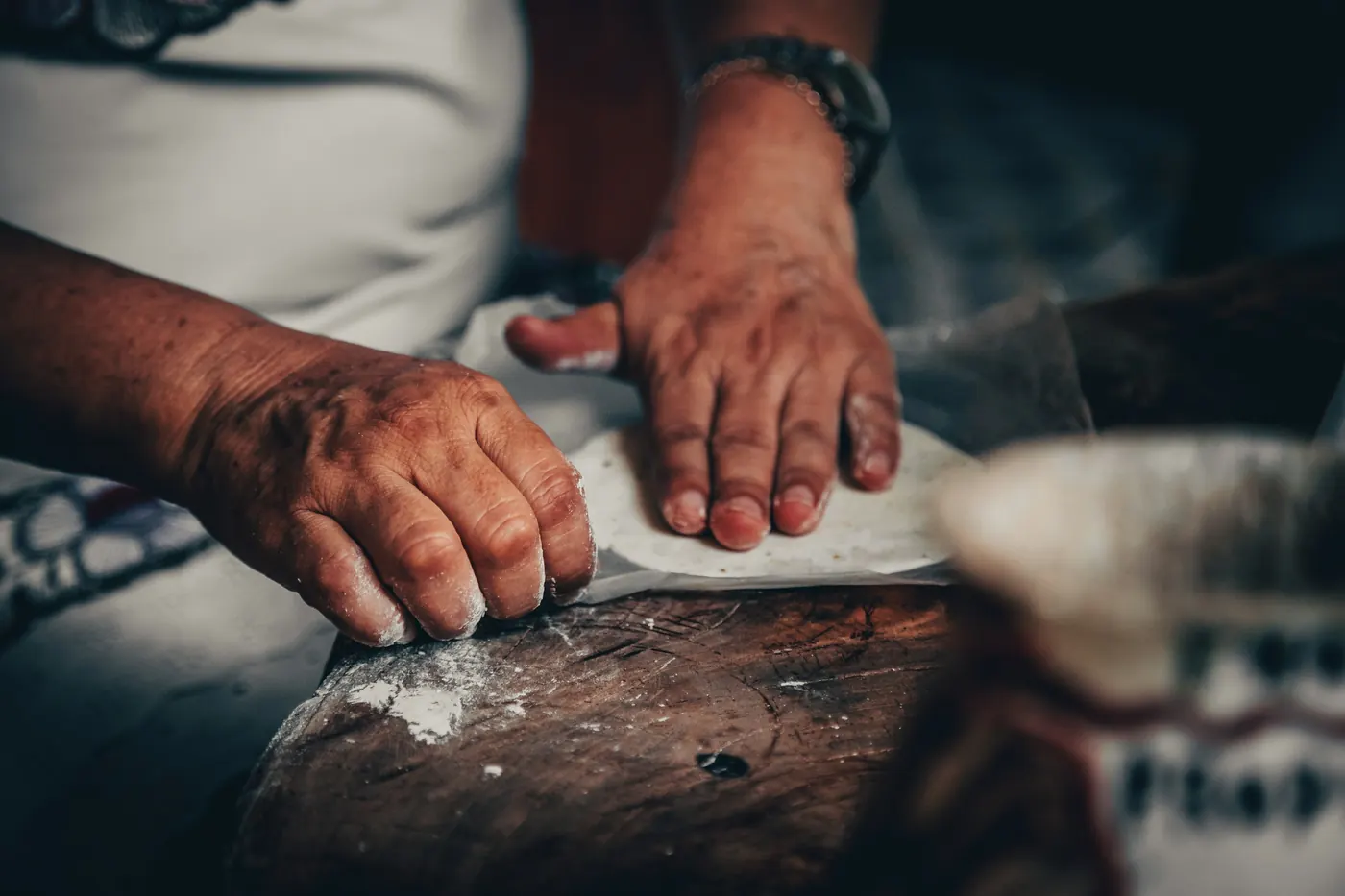
- Press, turn, press. Close the lid and press the lever with steady pressure. Open it, turn the tortilla over between its liners, and press again for an even thickness.
- Peel. Peel off the top liner, flip the tortilla onto your fingers and peel the bottom liner away from the tortilla, not the tortilla away from the liner.
- Check the edges. Bayless’s test is the first tortilla: if the edges are rough and cracked, the masa needs more water. Knead a little in and press again.
- Cook. Lay it on the hot, dry comal. Masienda sears each side for about 20 to 30 seconds; Bayless turns it once more and presses lightly so it puffs.
If the masa sticks to the liner, the masa is too wet or the liner too thick; switch from parchment to thin plastic before adding more masa harina.
Tortilla press questions, answered
What is the best type of tortilla press?
For corn tortillas, a heavy cast iron press with 8-inch plates. Weight is what makes an evenly thin tortilla with little effort, and 8 inches covers every common corn tortilla size. Aluminum and wood are good choices if weight or rust is a concern, as long as you are happy to press twice.
What is the best brand of tortilla press?
Victoria is the brand we would start with: it has made cast iron in its own Colombian factories since 1939, publishes detailed specifications, and its 8-inch press was America’s Test Kitchen’s best buy. IMUSA is the long-standing name for aluminum and also makes the one wooden press we recommend. America’s Test Kitchen’s overall winner was Masienda’s steel Doña Rosa press.
What makes a tortilla press high quality?
Plates that meet flat, a hinge that does not wobble, enough weight to press evenly, plates at least 8 inches wide and a long handle. A spare screw for the lever is a good sign that the maker expects the press to last.
What is the most authentic tortilla press?
Cooks in Mexico use cast iron, cast aluminum and wooden presses, and many still pat tortillas out by hand. There is no single authentic material. What matters is that it presses masa thin and even.
Can I use a tortilla press for flour tortillas?
You can, but wheat dough springs back after pressing. Our guide to the best tortilla press for flour tortillas explains which presses and tools work with flour dough.
Do I need liners in a tortilla press?
Yes for fresh masa. Thin plastic cut from a bread bag or reusable press liners peel off cleanly; Masienda finds parchment and zip-top bags too heavy for wet masa.
Our final word on tortilla presses
Buy the Victoria 8-inch traditional cast iron press if you want the one press that suits most kitchens. Choose the IMUSA aluminum press if lightness and no rust matter more than effort, the IMUSA wooden press if you want the traditional style, and the Uno Casa set if you are buying a press and a comal together for a family. Whichever you choose, use thin liners, press twice, and keep it dry.
For the rest of the kit, see our guide to tortilla making tools, and for what goes into the masa itself, what nixtamalization is and corn versus flour tortillas.
And if tonight is not a tortilla-making night, see the menu or call to order.