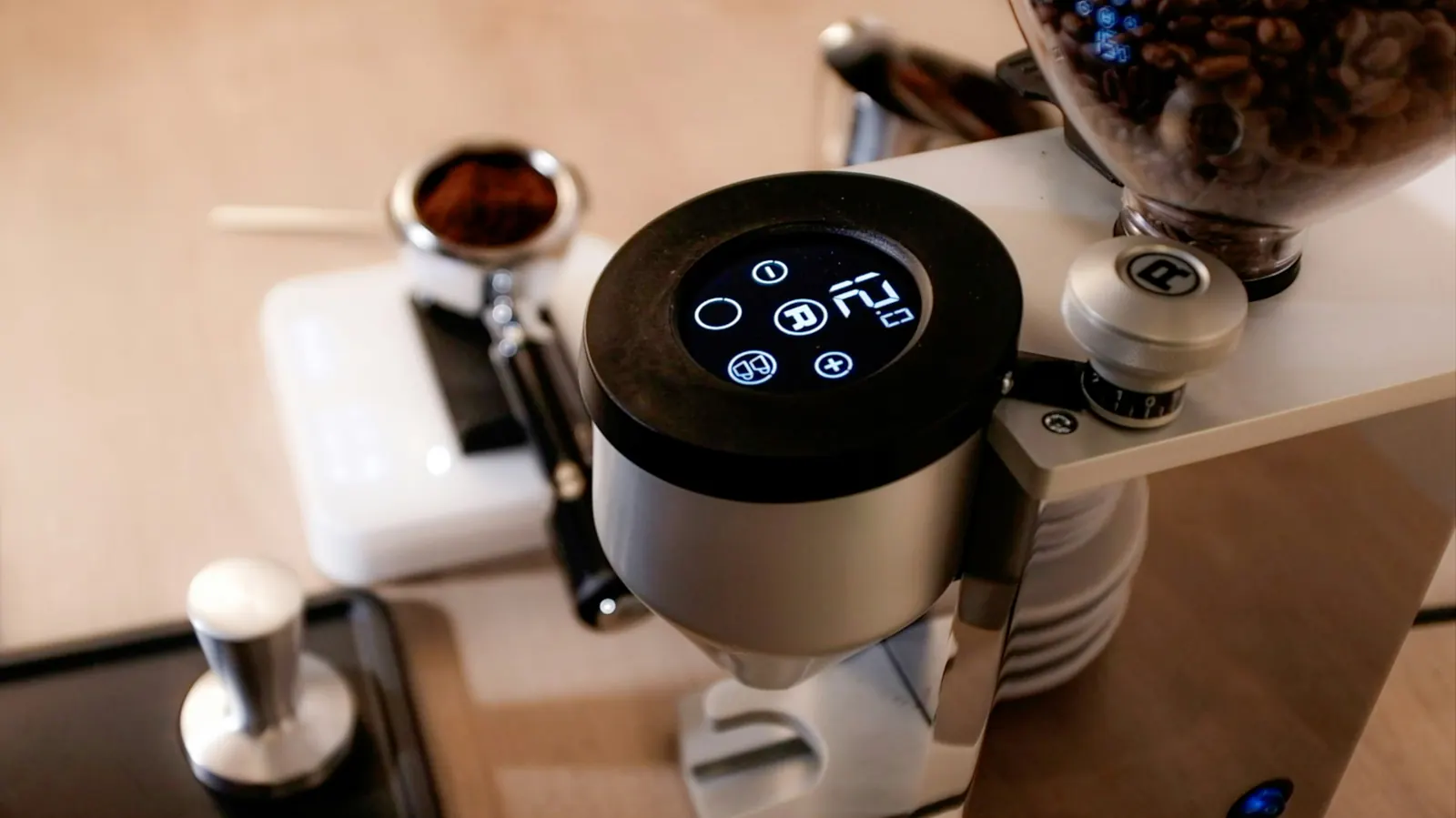
An espresso grinder has to do one hard thing: grind fine enough, and adjust in small enough steps, that you can move a shot from gushing to dripping and back. At the top of the market that job is done with large flat burrs, stepless dials and single-dose hoppers. At the entry level it is done with smaller conical burrs, stepped or micro-stepped adjustment and a timer, and the question is which of those trade-offs you can live with.
This guide covers eight entry-level grinders that their makers sell as able to grind for espresso: five electric and three hand-cranked, from Baratza, Breville, Cuisinart, SHARDOR, MiiCoffee, KINGrinder, Normcore and Wacaco. We list no prices because they change, but every grinder here sits at the bottom of its maker’s espresso-capable range. Our main guide to the best coffee espresso grinder covers the step-up models, and we have not repeated any of its picks.
Julia’s earns a commission on purchases made through links on this page, at no cost to you. Recommendations are based on what a restaurant kitchen looks for, product specifications and verified buyer reports.
Quick verdict: which budget espresso grinder to buy
For most people starting espresso on a budget, the best value espresso grinder is the Baratza Encore ESP: 40 mm steel conical burrs, 20 fine micro-steps set aside for espresso and a burr that comes out without tools. If you want a timer and a portafilter cradle, the Breville Smart Grinder Pro programs grind time in 0.2-second steps. On the tightest budget, a hand grinder such as the KINGrinder K1, at a stated 18 microns per click, gets you to espresso fineness for the least money.
The five standouts are compared below, one for each kind of buyer, and all eight grinders are reviewed in full after the table.
Five entry-level espresso grinders compared
Burrs, adjustment and dosing for our five standout picks, as each maker or Amazon listing states them.
| Grinder | Best for | Burrs & adjustment | Dosing (as stated) | Buy on Amazon |
|---|---|---|---|---|

Baratza Encore ESP Coffee Grinder, WhiteBest overall
|
A first espresso setup that also brews filter | 40 mm steel conical; 20 micro-steps for espresso | Pulse button or on/off switch | View on Amazon |

Breville Smart Grinder Pro, Damson BlueBest timed dosing
|
Grinding straight into the portafilter | Conical; 60 settings | Timer in 0.2 s steps, two cradles | View on Amazon |

Cuisinart Espresso & Coffee Conical Burr GrinderLongest stated warranty
|
A household brewing both espresso and drip | Conical; 35 settings | 1 to 14 cup selector or manual | View on Amazon |

KINGrinder K1 Manual Coffee GrinderBest hand grinder for less
|
The smallest spend that still reaches espresso | Steel conical; 18 microns per click | By hand, 20 to 25 g | View on Amazon |

Wacaco Exagrind Pro-E Manual Coffee GrinderBest outside dial
|
Switching often between espresso and filter | 38 mm steel conical; 207 external positions | By hand; capacity not stated | View on Amazon |
Product images from Amazon. Burr, adjustment and capacity figures are as each maker or listing states them; we have not measured them.
Our picks for the best value espresso grinder
Each grinder below is the entry point of its maker’s espresso-capable range, and each is sold as able to grind fine enough for espresso. Two of them, the Encore ESP and the Smart Grinder Pro, also appear on our all-purpose grinder page in other colours; we include them here because they are the cheapest way into each maker’s espresso line, and a different colour is the same machine. Every pick names who it suits and one honest reason to skip it.
1. Baratza Encore ESP Coffee Grinder, White – Micro-Steps Set Aside for Espresso
The Encore ESP is Baratza’s entry espresso grinder, built on the same body as the plain Encore but with a different adjustment system. Baratza calls it dual-range: settings 1 to 20 are micro-steps for high-resolution espresso grinding, and settings 21 to 40 are larger macro-steps for filter brewing. That split is the main reason it works for espresso at this level, because the fine end gets the small steps a shot needs.
The burrs are 40 mm hardened alloy steel conical burrs, which the listing says are made in Liechtenstein, driven by a DC motor. You grind with a front pulse button or an on/off switch, and change the setting by twisting the hopper. US retailers list the hopper at 300 grams and the grounds bin at 120 grams. The burr comes out quickly without tools for cleaning.
What you give up against the stepless grinders on our main espresso page is the in-between setting: if your shot sits between two micro-steps, you adjust the dose instead. There is no timer, so you weigh beans in or time the grind yourself. The listing says it is backed by Baratza’s support and warranty but does not give the term.
Why we like it
- Settings 1 to 20 are micro-steps for espresso
- 40 mm steel conical burrs
- Tool-free burr removal
- Same grinder covers filter brewing at 21 to 40
Key specifications
| Model | Baratza Encore ESP (ZCG495WHT) |
|---|---|
| Burrs | 40 mm hardened alloy steel conical |
| Adjustment | 40 settings; 1 to 20 micro-steps for espresso |
| Electric/manual | Electric, DC motor |
| Capacity | 300 g hopper, 120 g bin (US retailer listings) |
| Dosing | Pulse button or on/off switch; no timer |
| Warranty (as stated) | Not stated as a term in the listing |
| Power | 70 W (retailer listing) |
Why we recommend it
It suits someone buying a first espresso machine who still wants pour-over or drip from the same grinder. The micro-step range gives you real control at the fine end without paying for a stepless dial.
Skip it if you want hands-free dosing; there is no timer, so you weigh or watch every grind.
Pros and cons
Pros
- Fine steps where espresso needs them
- Easy burr access for cleaning
- Simple controls
Cons
- No timer or portafilter cradle in the listing
- Stepped, not stepless
- Warranty term not in the listing
2. Breville Smart Grinder Pro, Damson Blue – Timed Doses Into the Portafilter
The Smart Grinder Pro is Breville’s standalone grinder for home espresso, and it brings the workflow features that most entry-level grinders leave out. Breville’s Dosing IQ lets you program grind time in 0.2-second increments, so once a dose is set you press one button for the same amount each morning. The LCD shows the grind setting, the grind time and the number of shots or cups selected.
There are 60 grind settings on its conical burrs, from espresso to French press. It grinds straight into a portafilter, an airtight container, a gold-tone filter basket or a paper filter, and comes with two portafilter cradles, one for 50 to 54 mm baskets and one for 58 mm. The bean hopper holds 18 ounces and the motor is rated at 165 watts.
The trade-off against our main espresso page is the burr and adjustment: a grinder with 60 fixed settings across the whole range has fewer steps at the espresso end than a stepless or micro-stepped design. This Damson Blue model is the same grinder as the colour on our burr-grinder page. The listing gives the warranty as one year in one place and two years in another, so check it at purchase.
Why we like it
- Grind time programmable in 0.2 s steps
- Two portafilter cradles included
- 18 oz bean hopper
- LCD shows setting and time
Key specifications
| Model | Breville BCG820DBL |
|---|---|
| Burrs | Conical (size not stated in listing) |
| Adjustment | 60 settings |
| Electric/manual | Electric |
| Capacity | 18 oz bean hopper; grounds container included |
| Dosing | Timer in 0.2 s increments; cradles for 50–54 mm and 58 mm |
| Warranty (as stated) | Listing states both 1 year and 2 years limited |
| Power | 165 W |
Why we recommend it
It suits a home espresso maker who wants to grind directly into the portafilter and repeat a dose by time without a scale. The included cradles fit both common basket sizes.
Skip it if you mostly change beans every day; a hopper grinder like this is designed to stay filled, and the settings are spread across every brew method.
Pros and cons
Pros
- Repeatable timed doses
- Grinds into a portafilter or container
- Clear display
Cons
- Fewer steps at the espresso end than micro-stepped designs
- Burr size not stated in the listing
- Warranty term listed two ways
3. Cuisinart Espresso & Coffee Conical Burr Grinder – Three-Year Warranty, Portafilter Ready
Cuisinart’s CBM-22 is the maker’s grinder aimed at espresso as well as drip, and its name puts espresso first. It has 35 grind options from ultra-fine for espresso to extra-coarse for French press, and the listing calls it portafilter compatible; retailer listings and Cuisinart’s UK manual show a portafilter holder accessory.
It keeps the drip-machine habits of Cuisinart’s other grinders: a cup selector from 1 to 14 cups plus a manual grind option, a removable 8-ounce hopper that holds about half a pound of beans, and a large grounds container. Cuisinart lists anti-static technology for less mess, cord storage, and a scoop that doubles as a cleaning brush.
The listing’s bullet points give a limited three-year warranty, the longest stated term on this page, though the listing’s own information field says “no warranty”, so keep your receipt. Cuisinart does not publish burr size, motor power or a retention figure in the listing.
Why we like it
- 35 settings from ultra-fine to extra-coarse
- Portafilter compatible
- Limited 3-year warranty in the listing
- Removable 8 oz hopper
Key specifications
| Model | Cuisinart CBM-22 |
|---|---|
| Burrs | Conical (size not stated) |
| Adjustment | 35 settings |
| Electric/manual | Electric |
| Capacity | 8 oz hopper; large grounds container |
| Dosing | 1 to 14 cup selector or manual; portafilter compatible |
| Warranty (as stated) | Limited 3-year |
| Power | Not stated |
Why we recommend it
It suits a kitchen where one person drinks espresso and someone else wants a full pot of drip. The cup selector covers the drip side and the fine end and holder cover espresso.
Skip it if espresso is your only drink; 35 settings across the whole range leaves less room to fine-tune a shot than the Encore ESP’s micro-steps.
Pros and cons
Pros
- Longest warranty term stated here
- Cup selector for drip batches
- Anti-static design
Cons
- Few independent espresso reports yet
- Burr size and power not stated
- Coarser steps at the fine end
4. SHARDOR Conical Burr Coffee Grinder, Silver – A Timer for Less

SHARDOR’s CG203S is the simpler sibling of the timed SHARDOR on our main espresso page. It has a conical burr that SHARDOR says runs at low speed to keep heat down, with 48 settings from espresso to French press, and an LCD touchscreen with an electronic timer you set in one-second steps up to 40 seconds.
The hopper holds 9.7 ounces and locks in place, and the listing names a 150-watt motor and detachable parts for cleaning. SHARDOR adds an anti-static design to stop grounds clinging to the chamber.
The one-second timer is coarser than the Breville’s 0.2-second steps, so for espresso you will likely still weigh your dose. SHARDOR does not give a burr size, retention figure or warranty term in the listing.
Why we like it
- 48 settings from espresso to French press
- Timer up to 40 seconds
- Locking 9.7 oz hopper
- Anti-static design
Key specifications
| Model | SHARDOR CG203S |
|---|---|
| Burrs | Conical (size not stated) |
| Adjustment | 48 settings |
| Electric/manual | Electric, low speed |
| Capacity | 9.7 oz hopper |
| Dosing | Timer in 1 s steps, up to 40 s |
| Warranty (as stated) | Not stated |
| Power | 150 W |
Why we recommend it
It suits a buyer who wants an electric grinder with a timer and a touchscreen while spending as little as possible.
Skip it if you want a maker with a long repair record; SHARDOR sells mainly through Amazon and publishes little about parts.
Pros and cons
Pros
- Timer and touchscreen at entry level
- Wide setting range
- Parts come apart for cleaning
Cons
- One-second timer steps
- No burr size or warranty in listing
- Mostly an Amazon-first brand
5. MiiCoffee PT2 Portable Electric Burr Grinder – Cordless, 85 Outside Clicks

The PT2 is MiiCoffee’s small rechargeable grinder, and the cheapest way on this page to get a motor without a cord. It has stainless steel conical burrs in an aluminum body and an external adjustment ring with 85 steps; MiiCoffee says it can grind fine enough for espresso as well as pour-over and French press.
A built-in 800 mAh battery charges by USB-C and, by MiiCoffee’s figure, lasts 20 to 30 grinds. The grinder stops on its own when the beans are gone, and the whole unit comes apart for cleaning with the included brush.
Small battery grinders are slower than mains-powered ones, and the listing gives no burr size or bean capacity. MiiCoffee also sells the larger DF-series single-dose grinders under its own name.
Why we like it
- 85-step external adjustment ring
- USB-C rechargeable, 20 to 30 grinds per charge
- Stops automatically when empty
- Stainless conical burrs, aluminum body
Key specifications
| Model | MiiCoffee PT2 |
|---|---|
| Burrs | Stainless steel conical (size not stated) |
| Adjustment | 85 external steps |
| Electric/manual | Electric, 800 mAh battery |
| Capacity | Not stated |
| Dosing | Auto-stop when beans run out |
| Warranty (as stated) | Not stated |
| Power | USB-C charging |
Why we recommend it
It suits someone with a small counter, or who travels with a portable espresso maker, and wants a motor without a plug.
Skip it if you pull several shots back to back; a battery grinder this size is built for one or two doses at a time.
Pros and cons
Pros
- No cord needed
- External dial, no disassembly to adjust
- Compact metal body
Cons
- Capacity and burr size not stated
- Battery limits grinds per charge
- Few independent reports yet
6. KINGrinder K1 Manual Coffee Grinder – 18 Microns per Click
The K1 is the entry model in KINGrinder’s K series of hand grinders. KINGrinder states 18 microns of movement per click, with 40 clicks in one full turn of the internal numbered dial, and says the K1 supports grind settings from espresso to pour-over. Fine clicks matter more than anything else for espresso, and this is the smallest step size stated on any grinder at this level here.
The body is aluminum, the burr set is stainless steel, and two bearings hold the shaft steady. The hopper takes 20 to 25 grams, enough for a double shot. It comes apart by hand for cleaning with a brush.
The adjustment is internal, so you take off the catch cup to change it, which is slower if you switch between espresso and filter often. KINGrinder gives a one-year warranty and notes that shipping for replacement parts may be the buyer’s cost.
Why we like it
- 18 microns per click, stated by the maker
- Aluminum body, stainless burrs, dual bearings
- Holds 20 to 25 g
- One-year warranty
Key specifications
| Model | KINGrinder K1, straight handle |
|---|---|
| Burrs | Stainless steel (size not stated) |
| Adjustment | Internal; 18 µm per click, 40 clicks per turn |
| Electric/manual | Manual |
| Capacity | 20 to 25 g |
| Dosing | By hand |
| Warranty (as stated) | 1 year |
| Power | None (hand crank) |
Why we recommend it
It suits a first-time espresso maker who wants fine adjustment and is happy to grind each dose by hand.
Skip it if you grind several doses a day; hand grinding espresso takes effort and time for every shot.
Pros and cons
Pros
- Very small click size
- Metal build
- Stated warranty
Cons
- Internal dial is slower to change
- Burr size not stated
- Hand work for every dose
7. Normcore Manual Coffee Grinder V2 – 38 mm Burr in a One-Piece Body
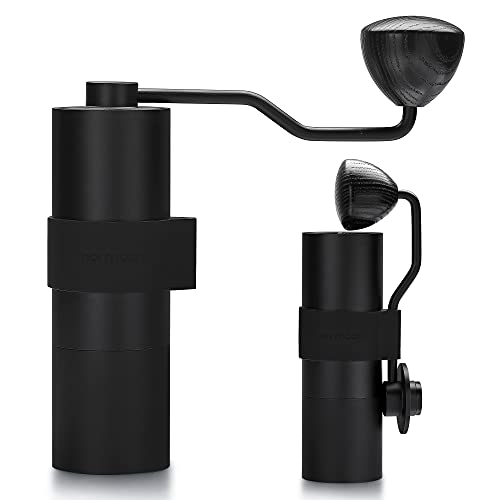
Normcore’s V2 is the smaller, simpler model under the 46 mm V3 that Normcore also sells. It uses a 38 mm stainless steel conical burr that Normcore calls its Contemporary burr, and the listing names espresso along with AeroPress, pour-over and French press.
The body is a two-segment unibody cut from a single block of aluminum alloy, with a widened opening for loading beans. A centred steel shaft runs on stainless rolling bearings for steadier grinding, and a fixed silicone thumb band lets you hold the top with less pressure.
Normcore’s listing does not give a click size, bean capacity or warranty term, which makes it harder to compare against the KINGrinder’s stated 18 microns. We include it as a simple, metal-bodied option from a maker with a full range of hand grinders.
Why we like it
- 38 mm stainless steel conical burr
- One-piece aluminum body
- Steel shaft on rolling bearings
- Thumb band for a relaxed grip
Key specifications
| Model | Normcore V2, 38 mm stainless burr |
|---|---|
| Burrs | 38 mm stainless steel conical |
| Adjustment | Adjustable; click size not stated |
| Electric/manual | Manual |
| Capacity | Not stated |
| Dosing | By hand |
| Warranty (as stated) | Not stated |
| Power | None (hand crank) |
Why we recommend it
It suits someone who wants a solid hand grinder for occasional espresso and daily AeroPress or pour-over.
Skip it if you want to compare click sizes on paper; Normcore does not publish one for the V2 in this listing.
Pros and cons
Pros
- Machined one-piece body
- Comfortable grip
- Covers espresso to French press
Cons
- No stated click size
- Capacity and warranty not stated
8. Wacaco Exagrind Pro-E Manual Coffee Grinder – 207 Settings on an Outside Ring
Wacaco is best known for portable espresso makers like the Picopresso, and the Exagrind Pro-E is the grinder it pairs with them. It has 38 mm stainless steel conical burrs and an external adjustment ring with 207 positions and a window that shows the exact setting, so you can change grind size without taking anything apart.
The body is a machined aluminum unibody that Wacaco says keeps the burrs aligned, and a stainless centre shaft on dual bearings is meant to keep grinding smooth even at the finest espresso settings. A silicone grip helps hold it steady, and the handle placement keeps the packed size small.
Wacaco does not give a bean capacity, a micron figure per position or a warranty term in the listing.
Why we like it
- External ring with 207 visible positions
- 38 mm stainless conical burrs
- Aluminum unibody, dual bearings
- Pairs with Wacaco’s portable espresso makers
Key specifications
| Model | Wacaco Exagrind Pro-E |
|---|---|
| Burrs | 38 mm stainless steel conical |
| Adjustment | External ring, 207 positions |
| Electric/manual | Manual |
| Capacity | Not stated |
| Dosing | By hand |
| Warranty (as stated) | Not stated |
| Power | None (hand crank) |
Why we recommend it
It suits someone who moves between espresso and filter coffee often and wants to read the setting at a glance rather than count clicks.
Skip it if you want a stated capacity and warranty before you buy; the listing gives neither.
Pros and cons
Pros
- Easy, visible adjustment
- Compact for travel
- Metal body
Cons
- Capacity not stated
- No warranty term in the listing
How to judge value in an espresso grinder
A cheap grinder that cannot reach espresso fineness, or that jumps from too fine to too coarse in one click, is not good value at any price. These are the points that separate a usable entry-level espresso grinder from a drip grinder with “espresso” in its title.
Step size at the fine end
This matters most. Look for micro-steps reserved for espresso (the Encore ESP’s settings 1 to 20), a stated click size (KINGrinder’s 18 microns) or many positions on an external ring (Wacaco’s 207). A grinder with 30 to 60 settings spread evenly from espresso to French press has fewer usable steps where espresso needs them.
What you give up against the step-up grinders
Compared with the picks on our main espresso grinder guide, entry-level grinders mostly give up stepless adjustment, larger flat burrs and published low-retention single dosing. In practice that means more time dialing in and sometimes adjusting the dose rather than the grind.
Timer, cradle or scale
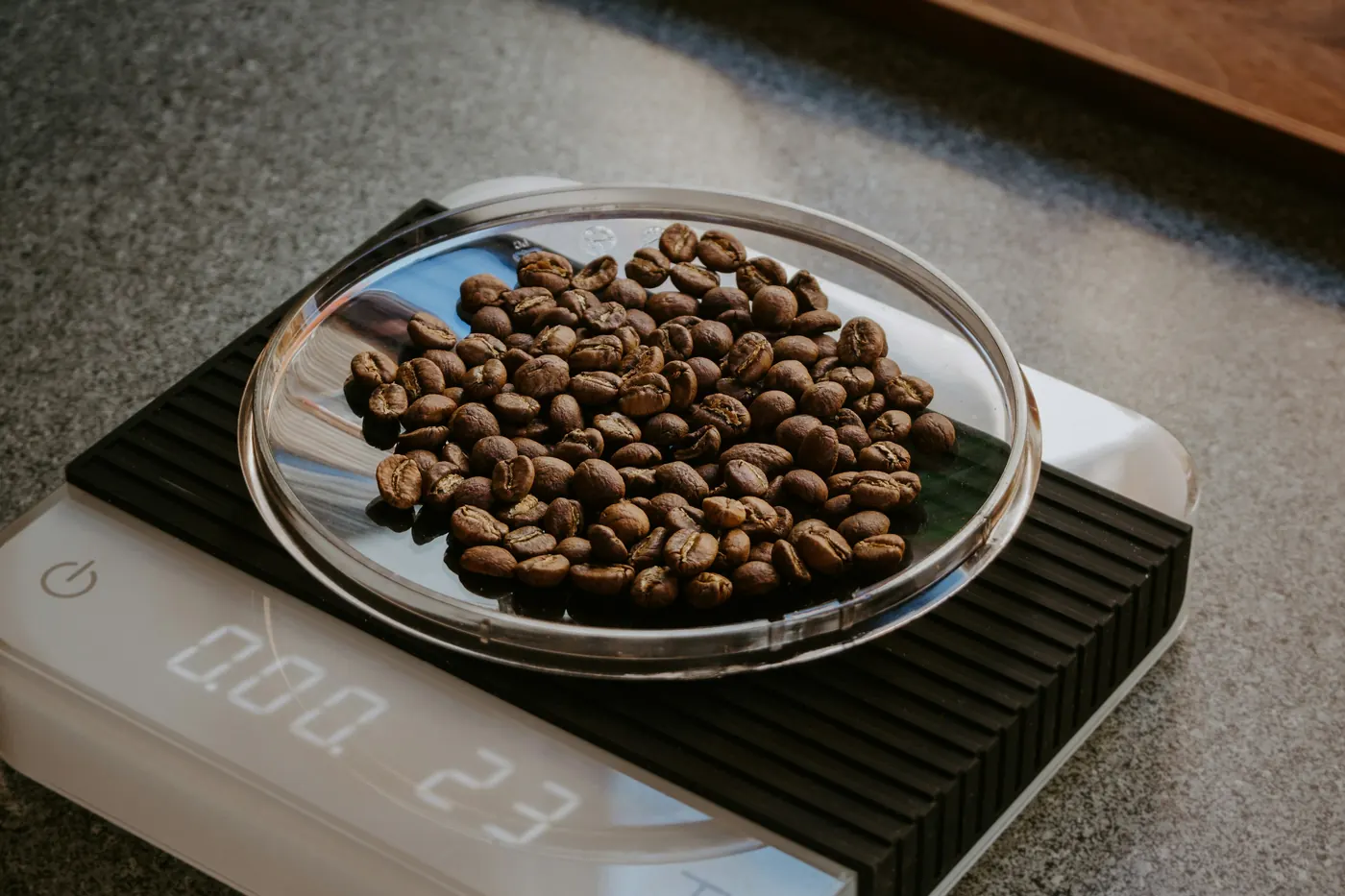
Timers (Breville, SHARDOR) and cup selectors (Cuisinart) make daily dosing faster but are not weight. A small kitchen scale under the cup or portafilter covers that gap on any grinder here.
Warranty and parts
Check what the listing states. Cuisinart lists three years and KINGrinder one; several others state no term. A maker that sells replacement burrs and parts makes a grinder last longer than its warranty.
Hand or electric
For the same spend, a hand grinder usually buys finer adjustment than an electric one, because the money goes into burrs and bearings instead of a motor. The cost is effort and time for every dose.
How we chose these eight grinders
We started from each maker’s espresso-capable range and took the entry model that is in stock on Amazon, using the maker’s listing for burr type, adjustment, capacity and warranty. We left out every grinder already picked on our main espresso, compact espresso, burr espresso and budget coffee grinder pages, and grinders whose makers sell them for filter only. We checked the US Consumer Product Safety Commission’s recall database for each brand and found no recall covering these grinders. We have not used these grinders ourselves, and we list no prices because they change.
Budget espresso grinder questions, answered
What is the best affordable espresso grinder?
For most people, the Baratza Encore ESP, because its fine end is split into micro-steps. If you would rather grind by hand, the KINGrinder K1 states 18 microns per click.
What is the best espresso grinder on a budget for a beginner?
One that is simple to adjust and forgiving. The Encore ESP’s twist-the-hopper dial or the Breville’s timer and cradles make the first weeks of dialing in easier than a hand grinder.
Is a hand grinder good enough for espresso?
Yes, if its maker sells it for espresso and it adjusts in small steps. The K1, Normcore V2 and Exagrind Pro-E are all listed for espresso. They take effort for each dose.
Can a cheap blade grinder make espresso?
Not well. Blade grinders chop rather than grind, and espresso needs fine, even grounds, which is why every pick here uses burrs.
Do I need a stepless grinder for espresso?
No. Stepless adjustment helps fine-tuning, but micro-steps or small clicks get most home espresso where it needs to be. You can also adjust the dose when a shot falls between steps.
Our final word on budget espresso grinders
The Baratza Encore ESP is the safest entry point, with fine steps for espresso and a range that still covers filter. The Breville Smart Grinder Pro is the pick for timed doses into the portafilter, and the KINGrinder K1 gets you to espresso for the least spend. When you are ready to step up, our best coffee espresso grinder guide covers stepless and flat-burr models, our hand coffee grinder guide covers more manual options, and if you still need the machine, start with our beginner espresso machine guide. If you would rather leave the coffee to someone else and come in for a meal, call to order at (346) 546-8283.