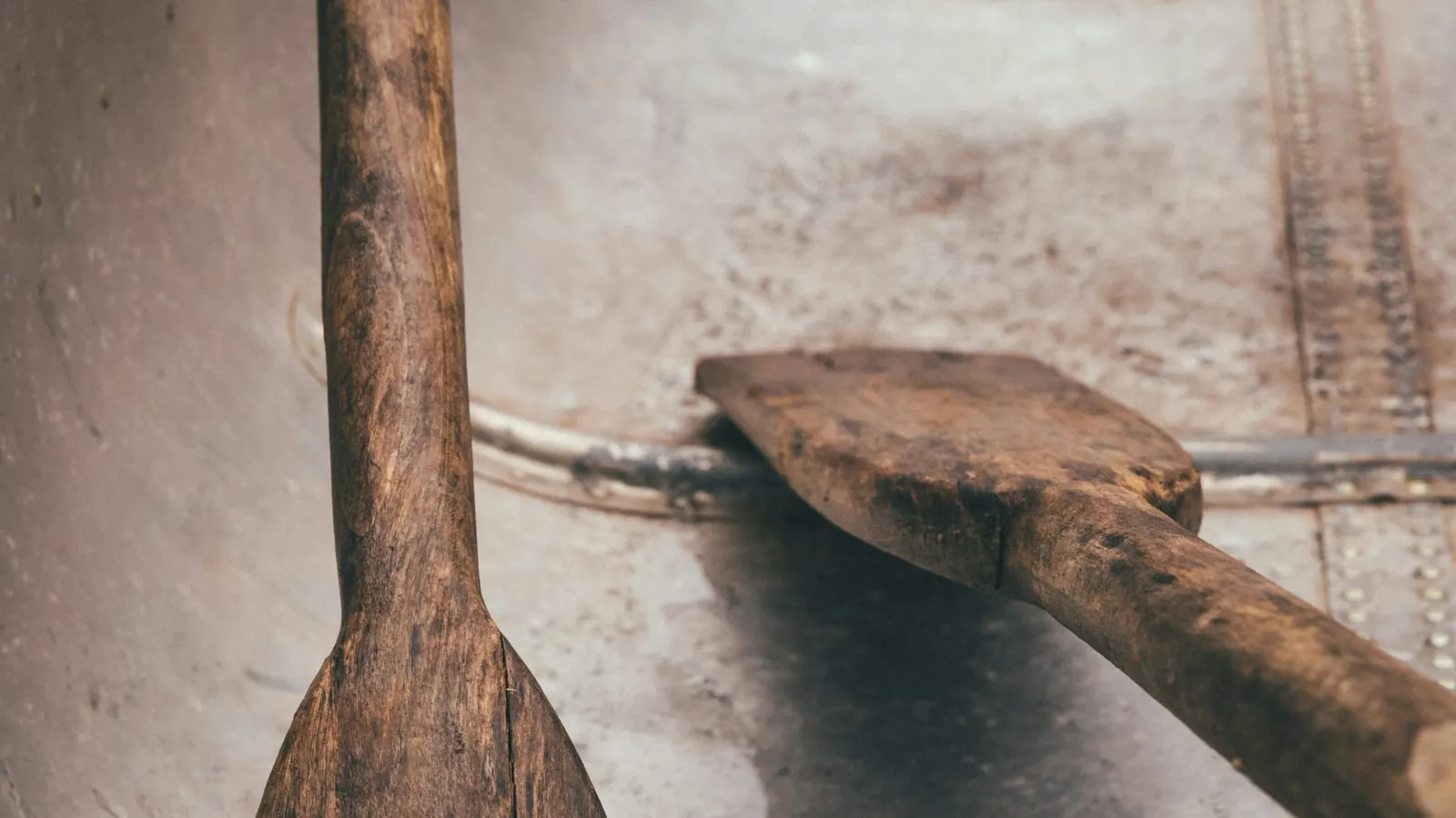
A round wooden spoon is good at stirring and bad at scraping. Its curved tip touches the bottom of the pan at one point, so the browned bits from chorizo or the rice toasting for arroz rojo stay stuck where the spoon cannot reach. A wooden spatula, or a spoon with a flat or angled edge, meets the pan along a straight line and lifts all of it.
That is the tool this guide is about: flat-edged wooden spatulas, sauté paddles and corner spoons that scrape like a spatula and, in some cases, scoop like a spoon. We cover the ones worth buying, how the shapes differ, and which suits the way you cook.
Julia’s earns a commission on purchases made through links on this page, at no cost to you. Recommendations are based on what a restaurant kitchen looks for, product specifications and verified buyer reports.
Quick verdict: which wooden spoon spatula to buy
For most cooks, the best wooden spoon spatula is the FAAY 13.5-Inch Teak Corner Spoon: a straight corner edge that scrapes fond and breaks up ground meat, with a deep bowl that still stirs and serves, carved from one piece of teak with a coconut oil finish, according to FAAY. If you want a pure flat edge for cast iron and eggs, choose the Earlywood 13-Inch Jatoba Flat Sauté, handmade in Montana. On a budget, the OXO Good Grips Wooden Sauté Paddle is a plain, flat beechwood paddle from a maker that is easy to find.
For round stirring spoons, see our cluster lead on the best wooden spoons. We left its flat-edged picks out of this guide, so the two pages do not repeat each other.
Five wooden spatulas compared
Five standout picks side by side, one for each kind of cook, with the details each maker or listing states. All seven are reviewed in full below.
| Spatula | Best for | Shape | Wood | Buy on Amazon |
|---|---|---|---|---|

FAAY 13.5-Inch Teak Corner SpoonBest overall
|
Scraping and scooping in one | Corner spoon, right-handed | Teak, coconut oil finish | View on Amazon |

Earlywood 13-Inch Jatoba Flat SautéBest for cast iron
|
Fond, eggs, cast iron | Flat, straight front edge | Jatoba, made in Montana | View on Amazon |

OXO Good Grips Wooden Sauté PaddleBest sauté paddle
|
Sautéing and stir-frying | Flat paddle | FSC-certified beech | View on Amazon |

Berard Olive Wood Curved SpatulaBest curved spatula
|
Turning and slipping under food | Thin, gently curved | Olive wood, oil and beeswax | View on Amazon |
| A light, low-cost corner spoon | Corner spoon | Bamboo | View on Amazon |
Product images from Amazon. Wood, finish and sizes are as stated by each maker or listing; check the listing before you buy.
Our picks for the best wooden spoon spatula
We chose seven tools across the three flat-edged shapes: corner spoons, which keep a bowl; flat sautés and paddles, which have none; and a thin curved spatula for turning. We stopped at seven rather than pad the list with near-identical teak spatulas from sellers that say little about how they are made. Each review covers the shape, the specifications that matter and one honest reason to skip it.
1. FAAY 13.5-Inch Teak Corner Spoon – Spoon and Spatula in One
FAAY sells this corner spoon as the wooden answer to a silicone spoonula, and the description fits. One side of the head runs in a straight edge that, according to FAAY, scrapes fond, gets under food and breaks up ground meat like a spatula, while the deep bowl stirs and serves like a spoon. For a skillet of picadillo, that means one tool from browning the beef to spooning it into tortillas.
It is carved from a single thick piece of Thai teak by local artisans, with no lacquer, dye or synthetic coating; the only finish is coconut oil, according to FAAY. The handle is rounded and tapered with a slightly flat top, which is the handle shape America’s Test Kitchen preferred in its wooden spoon review, because it gives the thumb somewhere to brace. FAAY describes the weight as balanced and substantial.
At 13.5 inches it is long enough for a Dutch oven. This is the right-hand version: the straight edge sits where a right-handed cook pushes along the pan, so left-handed cooks should check the listing for a left-hand option before buying; we found left-hand versions of some FAAY angled spatulas, but not of this corner spoon. Wash it by hand, never soak it or put it in the dishwasher, and re-oil it when the wood looks dry.
This is a different product from the FAAY round spoon in our cluster lead, and the maker’s track record with that spoon is part of why we trust this one.
Why we like it
- Straight corner edge scrapes, deep bowl scoops
- One solid piece of teak; coconut oil finish only, according to FAAY
- 13.5 inches long for deep pots
- Rounded, tapered handle with a slightly flat top
Key specifications
| Model | Not stated (right-hand corner spoon) |
|---|---|
| Shape | Corner spoon with a deep bowl |
| Wood | Thai teak, one solid piece |
| Length | 13.5 in |
| Edge | Straight corner edge, right-handed |
| Finish | Coconut oil; no lacquer, dye or coating (FAAY) |
| Made in | Thailand (handcrafted by Thai artisans) |
| Care | Hand wash, never soak; re-oil when dry |
Why we recommend it
It suits the cook who wants one wooden tool to do most of the work at the stove: brown, scrape, stir and serve. It is especially handy for dishes that start with browning and end saucy, like chile colorado or fideo.
Skip it if you are left-handed, or if you want a thin edge for flipping eggs; a corner spoon is thicker than a flat turner.
Pros and cons
Pros
- Scrapes and scoops
- Uncoated teak, coconut oil finish
- Long enough for a Dutch oven
Cons
- Right-handed design
- Too thick for delicate flipping
- Teak darkens with use
2. Earlywood 13-Inch Jatoba Flat Sauté – A Sharp Flat Edge for Cast Iron
Earlywood’s flat sauté is the tool for anyone who cooks in cast iron. It is a flat, short-bladed wooden spatula with what Earlywood calls a sharp flat front, and the maker lists a long run of jobs for it: pancake flipper, egg spatula, skillet scraper, a chopper for ground beef and a garlic crusher. The flat front lifts a wide path of eggs at once, so a pan of huevos a la mexicana cooks evenly rather than catching.
America’s Test Kitchen included an Earlywood flat sauté in its wooden spoon review and liked it for scraping fond and breaking up meat, though not as an all-purpose spoon, because a flat paddle does not scoop. That is the honest trade-off with this shape, and why it pairs well with a round spoon rather than replacing one.
Earlywood says its utensils are handcrafted in Montana and backed by a lifetime warranty. This one is jatoba, a hard, dense wood; the 13-inch version keeps your hand out of the heat, and the listing describes a half-inch thick, hand-rounded tail end for a comfortable grip. A 10-inch version (ASIN B00X8K7VV0) suits small skillets. Wash it by hand.
Why we like it
- Sharp, straight front edge for scraping and lifting eggs
- Handcrafted in Montana, USA
- Lifetime warranty from the maker
- Liked by America’s Test Kitchen for scraping fond and breaking up meat
Key specifications
| Model | Not stated (13-inch scraper, jatoba) |
|---|---|
| Shape | Flat sauté / scraper, no bowl |
| Wood | Jatoba |
| Length | 13 in (also sold in 10 in) |
| Edge | Sharp, straight flat front |
| Finish | Not stated in the listing |
| Made in | USA (Montana) |
| Care | Hand wash |
Why we recommend it
Choose it for cast iron and carbon steel: scraping a skillet after searing, scrambling eggs, chopping chorizo as it browns. Our guide to the best cast iron skillet covers the pans it suits.
Skip it if you want one tool that also stirs soup or serves beans. With no bowl, it will not scoop.
Pros and cons
Pros
- Made in the USA
- Lifetime warranty
- Wide, sharp scraping edge
Cons
- Does not scoop
- Finish not stated in the listing
- Short blade for big turns
3. OXO Good Grips Wooden Sauté Paddle – Flat, Plain and Easy to Find
OXO’s sauté paddle is the simple version of the flat wooden spatula: a broad, flat beechwood paddle with a large handle, sold for sautéing vegetables and stir-frying. Push onions and peppers around a pan for fajitas, keep rice moving as it toasts before the tomato goes in, or scrape the bottom of a pan after browning.
The listing says it is solid FSC-certified beechwood with a natural oil finish and safe for nonstick cookware. OXO asks for hand washing and prompt drying, and backs it with its satisfaction guarantee: return it for repair, replacement or refund.
It is the plainest tool on this page and that is the point. Beech is pale and fairly light, and a straight paddle is easy to clean. The listing does not give its length or where it is made. OXO’s corner spoon, which our cluster lead reviews, is the shape to buy if you want a bowl as well as an edge; this paddle is for cooks who want only the edge.
Why we like it
- Broad, flat paddle for sautéing and stir-frying
- Solid FSC-certified beech with a natural oil finish
- Large, comfortable handle, according to OXO
- Satisfaction guarantee
Key specifications
| Model | 1130980 |
|---|---|
| Shape | Flat sauté paddle |
| Wood | FSC-certified beech |
| Length | Not stated |
| Edge | Flat paddle edge |
| Finish | Natural oil (OXO) |
| Made in | Not stated |
| Care | Hand wash and dry promptly |
Why we recommend it
It suits anyone who wants a basic, reliable flat wooden spatula from a brand sold almost everywhere, at an everyday price. It is a good first flat tool to keep beside your round spoons.
Skip it if you cook mostly in cast iron and want a sharper scraping edge; the Earlywood is the better scraper.
Pros and cons
Pros
- Simple, easy-to-clean shape
- FSC-certified beech
- Satisfaction guarantee
Cons
- Length not stated
- No bowl for scooping
- Pale beech shows stains
4. Lancaster Cast Iron 12-Inch Cherry Corner Spoon – Hand-Carved in Pennsylvania

Lancaster Cast Iron’s corner spoon is hand carved by an Amish craftsman in Lancaster, Pennsylvania, according to the listing, from sustainably harvested black cherry. The maker describes it as a spoon and spatula combination for sautéing, mixing and serving, built for dishes that need a spoon and also a tool to reach the corner of the pan.
Cherry is a natural hardwood and a traditional wood in American kitchens, as Lancaster notes. The spoon is 12 inches long, and the maker says it is designed to be light in the hand yet strong enough for a lifetime of use, backed by a lifetime warranty. Clean it with soap and warm water.
One caution about the corner shape in general. America’s Test Kitchen found that the pointed corner on some corner-style spoons got in the way at times, even though their broad heads scraped well. If you mostly stir, a round spoon may suit you better; if you scrape and stir in equal measure, the corner is useful. Our cluster lead covers Lancaster’s cherry spoon and spatula set; this corner spoon is a separate product.
Why we like it
- Hand carved in Lancaster, Pennsylvania
- Black cherry from sustainably harvested trees
- Combines a bowl with a corner edge
- Lifetime warranty
Key specifications
| Model | ACC-019 |
|---|---|
| Shape | Corner spoon |
| Wood | Black cherry |
| Length | 12 in |
| Edge | Angled corner edge |
| Finish | Not stated |
| Made in | USA (Lancaster, Pennsylvania) |
| Care | Soap and warm water |
Why we recommend it
Choose it if you want a handmade, American-made corner spoon from a named maker, with a lifetime warranty behind it.
Skip it if you need a long tool for a deep pot; at 12 inches it is shorter than the FAAY, and the listing does not say how it is finished.
Pros and cons
Pros
- Made in the USA by hand
- Lifetime warranty
- Scoops and scrapes
Cons
- Finish not stated
- Shorter than our top pick
- Corner can get in the way when stirring
5. Berard Olive Wood Curved Spatula – Thin Enough to Slip Under Food
Berard’s spatula is the thinnest tool on this page: about 12.5 inches long, 2.8 inches wide and only a fifth of an inch thick, according to the listing. It is gently curved along its length, which Berard says helps it turn food or slip underneath it. That makes it the best pick here for flipping, from a fried egg for huevos rancheros to a quesadilla on a comal.
The wood is olive, from sustainably managed forests, with a satin finish of mineral oil and beeswax, according to the listing. The listing says this spatula is designed in France and made in Albania. Every piece is hand finished and no two are identical, so the grain and color vary.
A thin edge is a trade-off. It slides under food easily, but it has less mass for heavy scraping or breaking up a pan of ground meat; that is a job for a thicker sauté or corner spoon. Hand wash only.
Why we like it
- Thin, gently curved blade for turning and lifting
- Olive wood with a mineral oil and beeswax finish
- Designed in France by Berard, with the dimensions published
Key specifications
| Model | 66475 |
|---|---|
| Shape | Curved spatula |
| Wood | Olive wood from sustainably managed forests |
| Length | About 12.5 in (2.8 in wide, 0.2 in thick) |
| Edge | Thin, gently curved |
| Finish | Satin: mineral oil and beeswax |
| Made in | Albania (designed in France) |
| Care | Hand wash only |
Why we recommend it
It suits cooks who flip more than they scrape: eggs, quesadillas, fish, pancakes. It is also gentle on nonstick pans, where a metal turner is out of the question.
Skip it if you want a heavy scraper for fond or ground meat; the thin blade is built for lifting, not force.
Pros and cons
Pros
- Very thin edge
- Finish stated: oil and beeswax
- Olive wood grain
Cons
- Not for heavy scraping
- No bowl
- Each piece varies
6. Naturally Med 12-Inch Olive Wood Corner Spoon – Handmade in Tunisia

Naturally Med’s corner spoon brings the spoon-and-spatula shape to olive wood. It is about 12 inches long and handmade by artisans in Tunisia, according to the listing, with a bowl for stirring and an angled edge for scraping into the corner of a pan.
The listing describes olive wood as very hard and able to withstand heat well, with natural patterning that makes each piece different. It also warns that the photo is an example, not the exact spoon you will receive, which is normal for hand-carved olive wood but worth knowing if you are buying a gift and want a particular look.
Care is hand wash only. The listing does not state a finish, so we cannot tell you whether it arrives oiled; a rub of mineral oil before first use does no harm to any bare wood. It is a good companion to the Berard if you want a matching olive wood pair with one scraping tool and one turning tool.
Why we like it
- Corner spoon shape in dense olive wood
- Handmade by artisans in Tunisia
- 12 inches, a practical length for skillets and saucepans
Key specifications
| Model | OL139 |
|---|---|
| Shape | Corner spoon / spatula |
| Wood | Olive wood |
| Length | About 12 in (30 cm) |
| Edge | Angled corner edge |
| Finish | Not stated |
| Made in | Tunisia |
| Care | Hand wash only |
Why we recommend it
Choose it if you like olive wood and want a tool that both stirs and scrapes, from a small maker that names where its spoons are made.
Skip it if you want to know the finish before buying, or want a spoon that looks exactly like the photo.
Pros and cons
Pros
- Olive wood corner spoon
- Origin stated
- Scoops and scrapes
Cons
- Finish not stated
- Piece varies from the photo
- Few other details published
7. Helen’s Asian Kitchen 12-Inch Bamboo Corner Spoon – Light and Low Cost

This 12-inch corner spoon from Helen’s Asian Kitchen is the bamboo take on the spoon-spatula. The listing sells it for stirring, mixing, dividing, tasting, turning and serving.
Bamboo is a grass rather than a wood, and the listing describes it as lightweight, strong and less absorbent than wood. It is safe on nonstick as well as metal pots and pans, and will not scratch them, according to the maker. The light weight makes it comfortable for quick jobs like stirring a pot of rice or scraping a pan of beans as they fry.
It is hand wash only. The listing does not state a finish or where it is made, and since the listing stresses how light it is, expect less heft for heavy scraping than the carved hardwood picks. As a spare corner spoon, or a first one to see whether you like the shape, it is the easiest way in.
Why we like it
- Corner spoon shape at a low cost
- Light bamboo, described as less absorbent than wood
- Safe on nonstick and metal pans, according to the listing
Key specifications
| Model | 97054 |
|---|---|
| Shape | Corner spoon |
| Wood | Bamboo |
| Length | 12 in |
| Edge | Angled corner edge |
| Finish | Not stated |
| Made in | Not stated |
| Care | Hand wash only |
Why we recommend it
It suits a cook trying a corner spoon for the first time, or anyone who wants a light spare for a second pan.
Skip it if you want a solid carved hardwood tool with weight behind the edge; the FAAY or Lancaster corner spoons are sturdier choices.
Pros and cons
Pros
- Low cost
- Light in the hand
- Safe on nonstick
Cons
- Finish and origin not stated
- Less heft for scraping
- Bamboo, not solid wood
Corner spoon, flat sauté or curved spatula?
The three shapes on this page look alike in a utensil crock but do different jobs.
- Corner spoon. A spoon with one side cut straight or at an angle. It keeps a bowl, so it stirs and serves, and the straight side scrapes and reaches into the corner of a pan. This is the true spoon-spatula, and the best single tool if you own only one.
- Flat sauté or paddle. A flat blade with a straight front edge and no bowl. It scrapes the most surface at once, breaks up meat and lifts eggs, but it will not scoop.
- Curved or thin spatula. A thin blade, sometimes curved, made to slide under food and turn it. It flips well and scrapes lightly.
America’s Test Kitchen’s wooden spoon review found that flat-fronted heads need width to scrape well: most narrow flat-edged heads it tried scraped poorly, and only a wider one worked. When you compare listings, check the head width if it is given.
How to choose a wooden spatula for your pans
1. Match the shape to your cooking
If you brown meat and then build a sauce in the same pan, a corner spoon does both stages. If you cook eggs and sear in cast iron, add a flat sauté. If you flip a lot, a thin spatula is the one to reach for.
2. Edge width and thickness
A wider straight edge clears more of the pan with each pass. A thinner edge slides under food more easily but bends or wears faster. Berard lists its spatula at a fifth of an inch thick; Earlywood describes a sharp flat front on a sturdier body.
3. Length
Twelve inches is fine for skillets and saucepans. For a Dutch oven or a deep pot of pozole, 13 inches or more keeps your hand out of the steam.
4. Wood and finish, as the maker states them
Teak, jatoba, cherry, olive wood and beech are all hard enough for scraping. What differs most between listings is how clearly they state the finish: FAAY says coconut oil, Berard says mineral oil and beeswax, OXO says natural oil, and several others do not say. Choose a maker that names the finish if that matters to you.
5. Handedness
Some corner spoons and angled spatulas are made for one hand: our top pick is a right-hand design, and FAAY sells left-hand versions of some of its angled spatulas. A symmetrical paddle like the OXO, or Earlywood’s straight-fronted sauté, works for either hand.
How we picked these seven spatulas
We looked for wooden tools with a flat or angled edge from makers we could identify, then checked each one through Amazon’s product data on the day we wrote this to confirm it was in stock. Specifications come from the maker or the brand’s Amazon listing, and we wrote “Not stated” rather than guess where a listing is silent. We used America’s Test Kitchen’s wooden spoon review for how flat edges, corners, handle shape and length perform. We left out the flat-edged tools already reviewed in our cluster lead (Le Creuset’s Revolution scraping spoon, OXO’s corner spoon and Lancaster’s cherry spoon and spatula set), generic teak spatulas from sellers with no identifiable maker, and listings that were low on stock. We chose seven rather than fill the list with similar tools, and we have not cooked with every spatula listed here.
Caring for a wooden spatula
A wooden spatula takes more abuse than a stirring spoon, because its edge scrapes hot metal. Wash it by hand soon after cooking, without soaking, and stand it up to dry. When the edge looks pale and fuzzy, rub in a little food-grade mineral oil; our guide to cutting board oil covers products that suit spoons too. ATK’s review found that ten dishwasher cycles faded wooden spoons’ finishes and cracked or split some of them, so keep yours out of the machine.
Edges wear with use, and a slightly rounded edge still works. Replace a spatula when the edge splinters or the blade cracks.
Wooden spatula questions, answered
What are the best wooden spoons and spatulas?
For a spatula with a spoon’s bowl, the FAAY teak corner spoon. For a flat scraper, the Earlywood flat sauté or the OXO sauté paddle. For round stirring spoons, see our guide to the best wooden spoons.
What is the best wood for spoons and spatulas?
Any dense, close-grained hardwood works: teak, olive wood, cherry, maple, beech and jatoba all appear on good tools. Choose by weight, color and stated finish. Bamboo is lighter and cheaper but is a grass rather than a wood.
Is a wooden spatula safe on nonstick pans?
Every maker on this page describes its tool as safe for nonstick cookware, and wood does not have the hard metal edge that can scratch a coating. Wood is also kind to enamel and well-seasoned cast iron.
What is a spoonula?
A spoon-spatula hybrid: a spoon’s bowl with a spatula’s edge. The term is used mostly for silicone tools; in wood, a corner spoon is the closest match. FAAY describes its corner spoon as the wooden answer to a silicone spoonula.
Should a wooden spatula be flat or slanted?
Flat-fronted spatulas scrape the widest path; slanted or corner edges reach into the edge of a pan where the side meets the base. Angled tools are often sold in right- and left-hand versions, so check which one a listing is before you buy.
Our pick for scraping and stirring
Buy the FAAY 13.5-inch teak corner spoon if you want one wooden tool that scrapes like a spatula and stirs like a spoon. Add the Earlywood flat sauté for cast iron and eggs, or the OXO paddle for a plain flat edge at a modest price. For other turners and spatulas, including silicone and metal, see the best spatula and the best spatula set, and for the rest of the kit, our guide to Mexican cooking tools.
And if tonight is a night off from the stove, see the menu or call to order.