
A cast iron skillet is close to indestructible, and in a Mexican kitchen it does a lot of the heavy work: searing fajita steak, blistering chiles, frying eggs for huevos rancheros. But it is heavy, it wants drying and oiling after every wash, and it is not the pan you want for a long-simmered tomato salsa. Plenty of cooks love what cast iron does and still want something that asks less of them.
This guide covers the cast iron skillet alternatives that actually do the job: carbon steel, clad stainless steel, and two kinds of nonstick. For each we say what it does as well as cast iron, where it falls short, and which pan from an established maker to buy. Where a fact comes from a review or a maker, we name the source.
Julia’s earns a commission on purchases made through links on this page, at no cost to you. Recommendations are based on what a restaurant kitchen looks for, product specifications and verified buyer reports.
Why cooks look for a cast iron skillet alternative
The reasons are practical, and the right replacement depends on which one is yours.
- Weight. America’s Test Kitchen’s 2025 cast iron skillet review says its favorite 12-inch pans were among the heaviest, at around 8 pounds. That mass is why cast iron holds heat so well, and also why it is hard to lift one-handed.
- Slow heating. Lodge, which makes both, says cast iron is slow to heat up but retains heat longer than carbon steel, while carbon steel reaches cooking temperature quickly.
- Care. Lodge’s own routine for its cast iron is “wash, dry, oil,” every time. Some cooks simply want a pan they can put in the dishwasher.
- Acidic food. Lodge advises holding off on dishes with tomato or lemon until you have built up the seasoning. Stainless steel, by contrast, doesn’t react to acidic foods, according to America’s Test Kitchen.
- Eggs and delicate food. A well-seasoned skillet can fry an egg, but a new one often won’t release it cleanly.
Quick verdict: the best cast iron skillet alternative
For most cooks the best cast iron skillet alternative is a carbon steel pan, and our pick is the OXO Obsidian 10-inch Carbon Steel Frying Pan: it sears like cast iron, it is lighter, it heats faster, it arrives pre-seasoned and it works on induction. If the problem is care rather than weight, buy clad stainless steel instead, such as the Misen Stainless Steel Everyday Pan, which needs no seasoning and is fine with tomato and lime. Keep a nonstick skillet only for eggs and delicate fish; it will not replace cast iron for searing.
Five cast iron alternatives side by side
Our five standout picks, one per kind of cook, with what each maker or listing states. All six pans are reviewed in full below.
| Pan | Material | Best for | Stated heat and stoves | Buy on Amazon |
|---|---|---|---|---|

OXO Obsidian 10-inch Carbon Steel Frying PanBest overall
|
Pre-seasoned carbon steel | Searing with less weight | Oven to 660°F; all stoves incl. induction | View on Amazon |
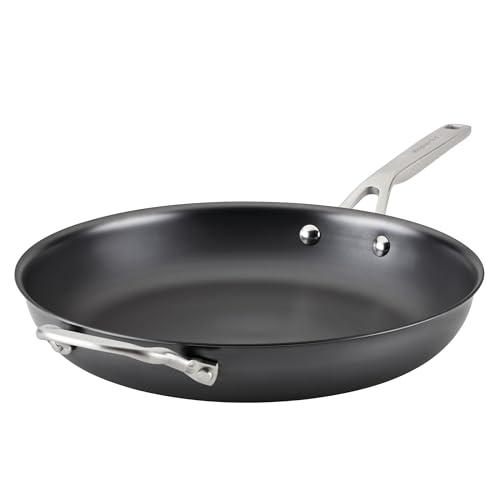
KitchenAid NITRO 12-inch Carbon Steel SkilletBest large pan
|
Nitrided carbon steel | Family-size searing | Oven and broiler to 750°F; induction | View on Amazon |
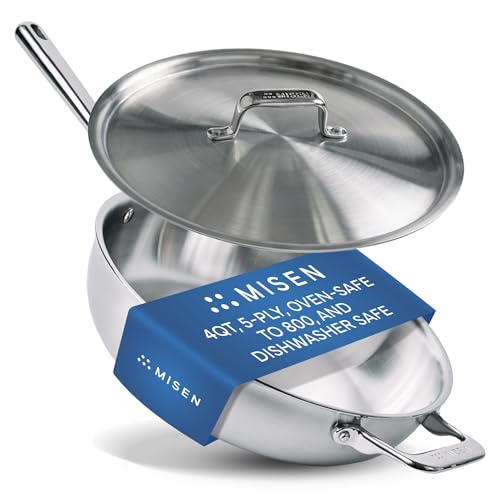
Misen Stainless Steel Everyday PanBest no-seasoning pan
|
Stainless steel | Tomato and lime dishes, pan sauces | Oven safe; all stovetops; dishwasher safe | View on Amazon |
| 3-ply stainless, titanium nonstick surface | Easy release with metal tools | Oven to 600°F; induction | View on Amazon | |

T-Fal Signature 12-inch Nonstick Frying PanBest for eggs
|
Aluminum, ProGlide nonstick | Eggs, quesadillas, fish | Oven to 350°F; not for induction | View on Amazon |
Product images from Amazon. Heat ratings and stove compatibility are as stated in each listing. None of these listings states a weight, so check the listing before you buy if weight is your reason for switching.
Which alternative fixes which cast iron problem
Before the picks, match the pan to the complaint. Each material solves some of cast iron’s drawbacks and keeps others.
Too heavy or too slow: carbon steel
Carbon steel is the closest thing to cast iron without the weight. America’s Test Kitchen’s 2025 carbon steel skillet review says it gives cast iron’s searing with far less weight, and that it is heavy enough to retain heat well but thin enough to heat quickly. It also has a smoother surface, which ATK says makes it easier to build a slick patina than on cast iron, which is often rough enough to need several rounds of seasoning. The catch is that it still needs the same care. Lodge says both are cleaned the exact same way: wash in warm water, dry, and oil. ATK also warns that a long-simmered tomato sauce can strip most of a carbon steel pan’s patina, and that “none of these pans are featherweights.”
Tired of seasoning, or cooking acidic food: stainless steel
Clad stainless needs no seasoning at all, and it is the pan for salsas, tomato rice and pan sauces finished with lime. America’s Test Kitchen’s stainless skillet review calls stainless its top choice for golden, uniform browning and for building fond, the browned bits that become a sauce, and says most of its recommended 12-inch models weigh around 3 pounds. The trade-off is sticking: food releases only once the pan is properly preheated and the food has browned, which takes practice.
Eggs that stick: nonstick, as a second pan
For eggs, omelets and quesadillas, a nonstick pan is easier than any bare metal. America’s Test Kitchen’s 2026 nonstick skillet review says you can count on a fried egg sliding out, but calls nonstick a poor choice for pan sauces and advises keeping it out of ovens above 450°F and away from the broiler. ATK also notes that all PTFE coatings eventually wear out, and suggests cast iron or carbon steel if you want something that lasts. So a nonstick pan is a partner for cast iron, not a full replacement.
What about enameled cast iron?
Enameled cast iron solves the seasoning and acid problems but keeps the weight, so it is an alternative only for some cooks. We cover it separately in our enameled vs bare cast iron comparison and our best enameled cast iron guide, which hold enamel to a maker lead-free statement. We have not added an enameled skillet here because none we could confirm against that rule was both in stock and not already on another of our pages.
Six pans to use instead of a cast iron skillet
We chose pans from established cookware makers that publish their specifications, covering carbon steel, stainless and nonstick. Each was in stock on Amazon US and sold new when we checked, and none appears on our other pages.
1. OXO Obsidian 10-inch Carbon Steel Frying Pan – Cast Iron Searing, Lighter Pan
If you like what cast iron does but not what it weighs, start here. The OXO Obsidian is a pre-seasoned carbon steel pan, so you can cook in it the day it arrives, and the listing says it builds a natural nonstick patina with use. OXO describes it as delivering the same high-heat searing and browning as cast iron in a lighter form, with faster heating. That matches what Lodge and America’s Test Kitchen say about carbon steel in general.
It goes where cast iron goes. The listing rates it for every stovetop, including induction, and for the oven up to 660°F, and says it can be used on the grill. It comes with an iron cleaning brush for scrubbing off stuck food without stripping the seasoning, and a removable silicone sleeve for the handle. OXO says it is metal-utensil safe, though it recommends silicone tools.
Care is the same as cast iron: hand wash, dry fully and keep the patina going. A 10-inch pan suits two or three people; for a family-size batch of fajitas, see the KitchenAid below. The listing does not state a weight or warranty.
Why we like it
- Pre-seasoned, ready to cook (listing)
- All stovetops including induction
- Oven safe to 660°F
- Includes an iron cleaning brush
Key specifications
| Model | CC011490-001 |
|---|---|
| Material | Pre-seasoned carbon steel |
| Size | 10 inches |
| Seasoning needed | Arrives pre-seasoned; maintain patina |
| Oven limit | 660°F |
| Induction | Yes |
| Care | Hand wash, dry fully |
| Warranty | Not stated |
Why we recommend it
It suits a cook who wants cast iron’s sear for steak, chicken and chiles in a pan that is lighter and quicker to heat, without starting the seasoning from scratch.
Skip it if your reason for leaving cast iron is the drying and oiling; carbon steel needs the same routine.
Pros and cons
Pros
- Ready to cook out of the box
- Works on induction, oven and grill
- Comes with a cleaning brush
Cons
- Still needs drying and oiling
- 10 inches is small for a crowd
- Weight and warranty not stated
2. KitchenAid NITRO 12-inch Carbon Steel Skillet – Big Pan, Rust-Resistant Surface
The KitchenAid NITRO is a 12-inch carbon steel skillet with a helper handle, which is the size most families reach for when they cook fajitas or a pan of chicken thighs. KitchenAid pitches it as cast iron’s cooking performance in a lighter, rust-resistant pan, and the helper handle makes it easier to lift full.
The difference from ordinary carbon steel is the nitriding. KitchenAid says a nitrogen heat treatment seals the surface to lock out the moisture that causes rust, and that the surface is 22 percent harder than traditional carbon steel. That should make it more forgiving than plain carbon steel if it is left damp, though it still needs seasoning: the listing says it can be seasoned over time to develop nonstick-like performance.
The heat ratings are generous. The listing says it is induction suitable, oven and broiler safe up to 750°F and usable on the grill, and that it is metal-utensil safe and backed by a limited lifetime warranty. It does not state a weight.
Why we like it
- 12 inches with a helper handle
- Nitrided surface to resist rust (KitchenAid)
- Oven and broiler safe to 750°F
- Limited lifetime warranty (listing)
Key specifications
| Model | 48737 |
|---|---|
| Material | Nitrided carbon steel |
| Size | 12 inches, with helper handle |
| Seasoning needed | Yes, builds over time |
| Oven limit | 750°F, broiler safe |
| Induction | Yes |
| Care | Not stated in the listing |
| Warranty | Limited lifetime |
Why we recommend it
It suits a household that cooks in big batches and wants a large carbon steel pan that is less likely to rust than plain steel.
Skip it if you want a pan that is slick from day one; the listing describes seasoning that builds over time.
Pros and cons
Pros
- Family-size cooking surface
- Highest oven rating of our picks
- Long warranty
Cons
- Needs seasoning to release well
- Weight not stated
- Care instructions not in the listing
3. de Buyer 9.5-inch Blue Carbon Steel Fry Pan – Small French Pan for Eggs and Chiles

de Buyer has made cookware in France since 1830, according to the listing, and this blue carbon steel pan is a small, traditional option for one or two people. It is 2 mm thick, 9.5 inches across with a 6.5-inch cooking surface, and has a welded handle, so there are no rivets inside the pan to catch food. America’s Test Kitchen’s carbon steel review found that thin pans tended to scorch food and warp, so the 2 mm wall is worth noting.
The blue finish comes from a heat treatment that, de Buyer says, gives some initial protection against corrosion and helps seasoning. You still season it yourself before first use: the listing says to wash it, dry it, heat a thin layer of high-smoke-point oil until it smokes lightly, then cool and wipe. After that, de Buyer describes it as naturally nonstick, lighter and more heat-responsive than cast iron.
This is the pan for fried eggs, a few toasted chiles or a single steak. Its small cooking surface makes it a second pan rather than a main skillet. The listing says it is oven safe but gives no temperature, and does not state induction compatibility or a warranty. The lead offer was sold new by a third-party seller, not Amazon, when we checked.
Why we like it
- 2 mm carbon steel, made in France
- Welded handle, no rivets inside
- No coating; seasoning builds with use
- Clear seasoning instructions from de Buyer
Key specifications
| Model | 5214.24 |
|---|---|
| Material | Blue carbon steel, 2 mm |
| Size | 9.5 inches; 6.5-inch cooking surface |
| Seasoning needed | Yes, before first use |
| Oven limit | Oven safe; temperature not stated |
| Induction | Not stated in the listing |
| Care | Hot water, no soap needed; dry and oil |
| Warranty | Not stated |
Why we recommend it
It suits a cook who wants a light, uncoated egg and toasting pan and doesn’t mind seasoning it from scratch.
Skip it if you need one pan for everything; the 6.5-inch cooking surface is small.
Pros and cons
Pros
- Established French maker
- Uncoated, lasts with care
- Easy to lift
Cons
- Small cooking surface
- Must be seasoned before use
- Sold by a third-party seller
4. Misen Stainless Steel Everyday Pan – No Seasoning, Fine With Tomato and Lime
If you are leaving cast iron because of the care, stainless steel is the clean break. There is no seasoning to build or protect, and America’s Test Kitchen notes that stainless doesn’t react to acidic foods, so a tomato salsa can simmer for as long as it needs, and a pan sauce can finish with lime juice or wine.
Misen’s Everyday Pan is a deep, sauté-style pan, listed at 4 quarts, rather than a shallow skillet. The listing says its stainless construction spreads heat evenly across the base so food browns without hot spots, and that it works on all stovetops. The handle has a hollowed center and holes at each end to stay cool, and the pan is dishwasher and oven safe. The deep sides help with braises, rice and saucy dishes that would splash out of a skillet.
Stainless asks for a different habit: preheat the pan properly and let meat brown before you move it, and it will release. The listing says the surface resists sticking when preheated properly. It does not state the oven temperature limit, the weight or a warranty. Misen itself was the seller when we checked.
Why we like it
- No seasoning, no coating to wear out
- Safe for acidic dishes (ATK on stainless)
- Dishwasher and oven safe (listing)
- Works on all stovetops
Key specifications
| Model | Everyday Pan (listed as SAUTE-PARENT) |
|---|---|
| Material | Stainless steel |
| Size | 4 quarts |
| Seasoning needed | No |
| Oven limit | Oven safe; temperature not stated |
| Induction | All stovetops, per the listing |
| Care | Dishwasher safe |
| Warranty | Not stated |
Why we recommend it
It suits a cook who wants to stop seasoning altogether and who cooks a lot of tomato, chile and lime dishes.
Skip it if you mostly fry eggs; stainless takes practice to release them cleanly.
Pros and cons
Pros
- Goes in the dishwasher
- Handles acidic food
- Deep sides for saucy dishes
Cons
- Food sticks without a proper preheat
- Deeper than a skillet; less room to flip
- Oven limit and weight not stated
5. Viking PureGlide Pro 12-inch Nonstick Frying Pan – Clad Steel With an Easy-Release Surface

The Viking PureGlide Pro sits between stainless and nonstick. It is a 12-inch, 3-ply pan with a stainless steel and aluminum core and an induction-ready stainless exterior, and its cooking surface is what Viking calls a patented titanium nonstick, applied by a plasma fusion process and made without PFAS, according to the listing. Viking says the surface is three times harder than stainless steel and safe with metal utensils.
That makes it an answer for cooks who want eggs and fish to release but don’t want a soft coating they must baby. It is oven safe to 600°F, well above most coated pans. Viking does advise low to medium heat for best results, noting that high heat is rarely needed and may cause scorching, so it is not a pan for ripping-hot searing the way cast iron or carbon steel is.
The listing says to hand wash it, and notes that a faint circle may be visible in the center of the cooking surface from the plasma fusion process. It does not state a weight or warranty.
Why we like it
- Easy release with metal tools (Viking)
- Made without PFAS, per the listing
- Oven safe to 600°F
- Induction-ready clad body
Key specifications
| Model | 40011-1112PGC |
|---|---|
| Material | 3-ply clad stainless, titanium nonstick surface |
| Size | 12 inches |
| Seasoning needed | No |
| Oven limit | 600°F |
| Induction | Yes |
| Care | Hand wash; low to medium heat advised |
| Warranty | Not stated |
Why we recommend it
It suits a cook who wants eggs and fish to release easily from a sturdy clad pan, with no seasoning and no worry about metal spatulas.
Skip it if you sear over high heat most nights; Viking itself recommends low to medium heat.
Pros and cons
Pros
- Metal-utensil safe surface
- High oven rating for a nonstick
- Works on induction
Cons
- Not meant for very high heat
- Hand wash only
- Warranty not stated in the listing
6. T-Fal Signature 12-inch Nonstick Frying Pan – Light Pan for Eggs and Quesadillas
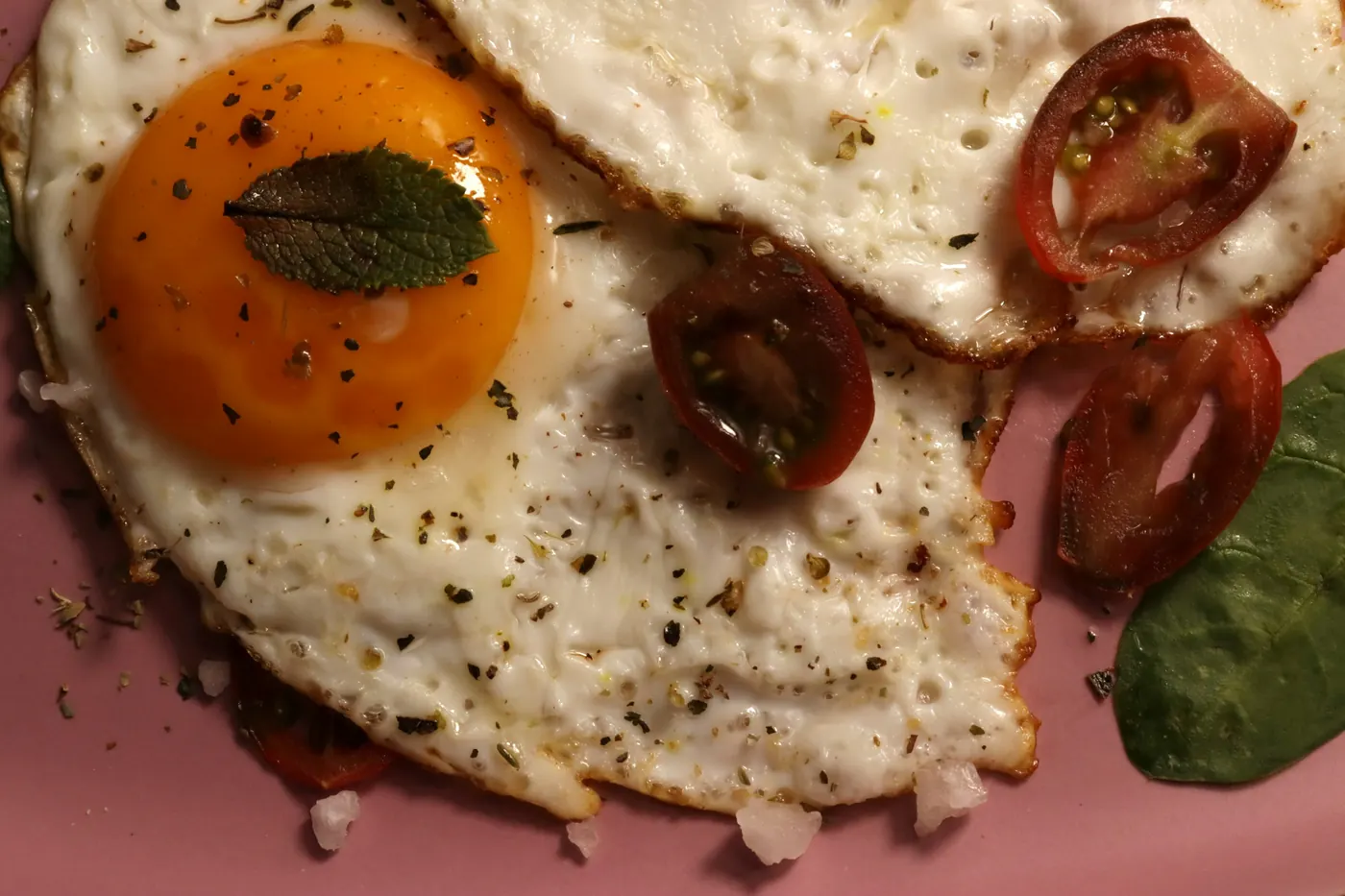
This is the simple answer for the jobs cast iron does least well. The T-Fal Signature is a 12-inch aluminum pan with T-Fal’s ProGlide nonstick interior, and the listing says it releases food easily with little or no oil. That makes it the pan for fried eggs, omelets, quesadillas and a piece of fish, the things a young cast iron skillet tends to grab.
T-Fal’s Thermo-Spot heat indicator turns solid red when the pan is preheated, which takes some guesswork out of cooking on an unfamiliar stove. The pan has a riveted handle, is dishwasher safe and carries a limited lifetime warranty, according to the listing.
Its limits are the reason it is a partner for cast iron rather than a replacement. The listing gives an oven limit of 350°F and says it works on all cooktops except induction. America’s Test Kitchen’s nonstick review also points out that coatings eventually wear out and recommends silicone or wooden tools rather than metal. Use it for gentle cooking, and keep cast iron or carbon steel for searing.
Why we like it
- Easy release for eggs and fish
- Thermo-Spot preheat indicator
- Dishwasher safe (listing)
- Limited lifetime warranty (listing)
Key specifications
| Model | B9810764 |
|---|---|
| Material | Aluminum, ProGlide nonstick interior |
| Size | 12 inches |
| Seasoning needed | No |
| Oven limit | 350°F |
| Induction | No |
| Care | Dishwasher safe |
| Warranty | Limited lifetime |
Why we recommend it
It suits a cook who keeps cast iron for searing and wants an easy pan for breakfast and quesadillas.
Skip it if you cook on induction or want one pan that does everything; it is neither.
Pros and cons
Pros
- Best release of our picks for eggs
- Dishwasher safe
- Large 12-inch size
Cons
- Not for induction
- Low 350°F oven limit
- Coating wears with time
How we chose these six pans
We started from the reasons people give for leaving cast iron, then looked for a material that fixes each one. The material claims come from sources we read directly: America’s Test Kitchen’s current reviews of cast iron, carbon steel, stainless and nonstick skillets, and Lodge’s own guidance on cast iron and carbon steel care. Product details come from each pan’s Amazon listing, which we cite in our notes. We did not cook with these pans, and we state no weights the listings don’t give.
Every pick is from an established cookware maker, was in stock and sold new on Amazon US when we checked, and is not on any of our other guides. We also checked the U.S. Consumer Product Safety Commission’s recall database for each brand and found no recall of these pans.
Cast iron alternative questions, answered
What is the best alternative to a cast iron skillet?
For most cooks, carbon steel. It sears like cast iron, heats faster and weighs less, according to Lodge and America’s Test Kitchen. If you want to stop seasoning altogether, choose clad stainless steel instead.
Is carbon steel lighter than cast iron?
Yes. Lodge says carbon steel pans are much lighter, and America’s Test Kitchen says carbon steel gives cast iron’s searing with far less weight. ATK adds that none of the carbon steel pans it reviewed were featherweights.
Can I cook tomato sauce in a cast iron alternative?
In stainless steel, yes: America’s Test Kitchen says stainless doesn’t react to acidic foods. Carbon steel behaves more like cast iron here; ATK found that simmering tomato sauce stripped most of a carbon steel pan’s patina.
Do carbon steel pans need seasoning like cast iron?
Yes. Lodge says both are cleaned the exact same way: wash, dry and oil. Some carbon steel pans, like the OXO Obsidian, come pre-seasoned, and ATK says carbon steel’s smoother surface builds a slick patina more easily than rough cast iron.
Can a nonstick pan replace cast iron?
Only for some jobs. America’s Test Kitchen recommends nonstick for eggs, omelets and quesadillas, calls it a poor choice for pan sauces, and advises against the broiler or an oven above 450°F. Most kitchens keep one nonstick pan beside cast iron or carbon steel.
Our final word on replacing cast iron
If cast iron is too heavy or too slow, switch to carbon steel; if it is the seasoning or the tomato sauce, switch to stainless; and keep a nonstick pan for eggs either way. If you decide cast iron is still the pan for you, our best cast iron skillet guide covers the best of them, our carbon steel vs cast iron and cast iron vs nonstick pan comparisons go deeper on each pairing, and our best carbon steel pan and best stainless steel pans guides have more models. Going the other way, our nonstick pan alternatives guide covers leaving nonstick behind. And when you would rather someone else did the cooking, see the menu or call to order.