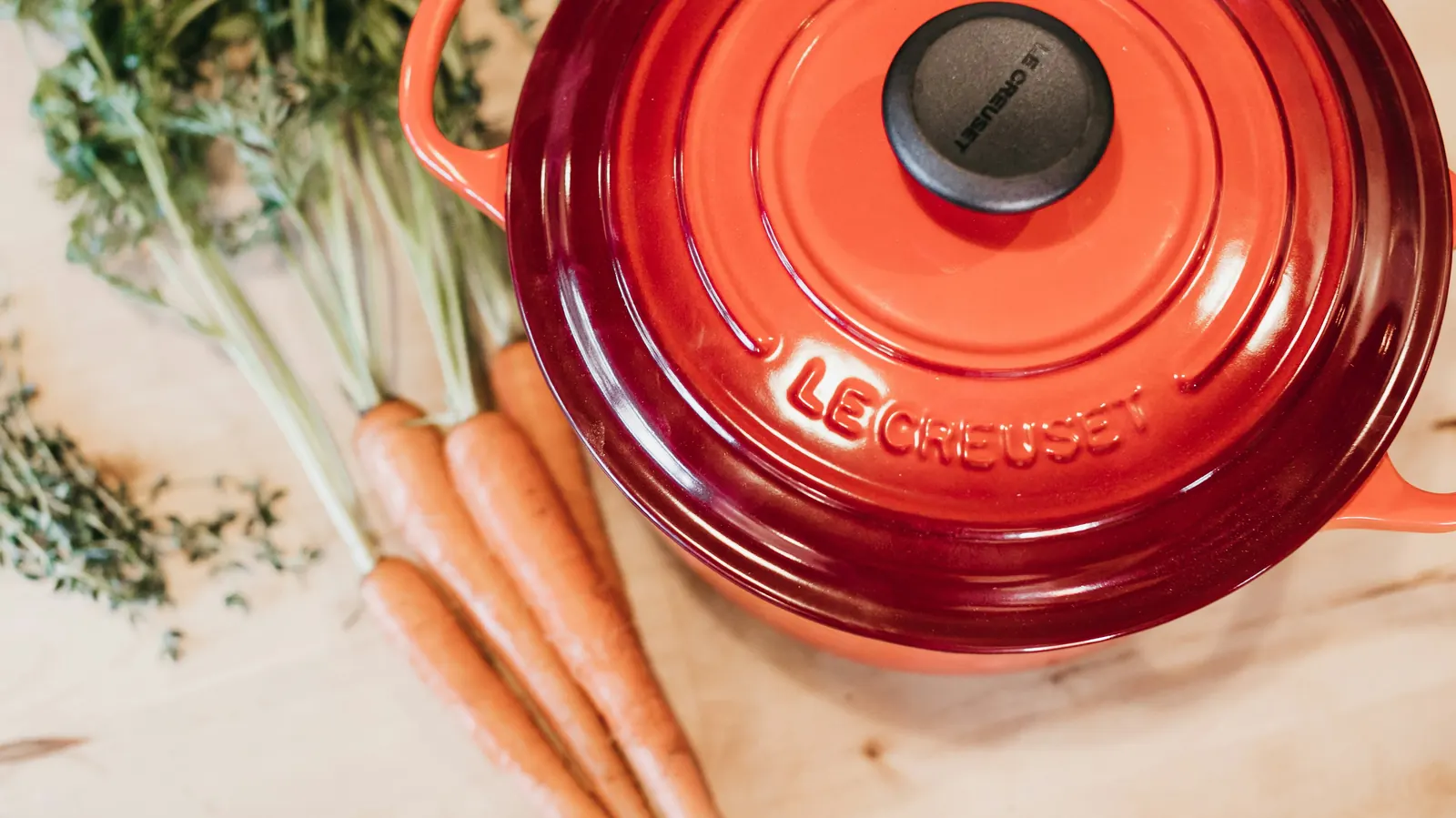
Enameled and bare cast iron start as the same thing: a thick, heavy casting of iron that soaks up heat and gives it back slowly. The difference is the surface your food touches. Bare cast iron is protected by seasoning, layers of oil baked onto the metal. Enameled cast iron is coated in a layer of porcelain enamel, a kind of glass fused to the iron. That one layer changes what you can cook in the pot, how you clean it, how hot it can go and what can go wrong with it.
In a Mexican kitchen both earn their place. Bare iron is the comal and the skillet that sears carne for tacos and takes any amount of heat. Enamel is the pot for a long tomato tinga, a chile colorado or a big batch of frijoles de olla. This guide compares the two finishes for Dutch ovens and skillets, using what Lodge, Staub, Made In and America’s Test Kitchen say, then names one matched Lodge pot on each side.
Julia’s earns a commission on purchases made through links on this page, at no cost to you. Recommendations are based on what a restaurant kitchen looks for, product specifications and verified buyer reports.
Quick verdict: which finish to buy first
For a Dutch oven, most home cooks should buy enameled. Pots spend their lives on stews, beans, braises and tomato or chile sauces, which is exactly what enamel handles best, and you can wash it with soap. For a skillet, most should buy bare. It sears harder, takes any heat including a grill or campfire, costs less and grows more nonstick with use. Choose a bare Dutch oven only if you cook outdoors or want a pot you can’t really hurt; choose an enameled skillet only if you hate seasoning and cook a lot of pan sauces.
The table sums up the differences. Each section after it explains one of them.
Enameled vs bare cast iron, side by side
| Enameled cast iron | Bare cast iron | |
|---|---|---|
| Cooking surface | Porcelain enamel (glass) fused to iron | Seasoning: oil baked onto the iron |
| Acidic food | Fine, “even tomato sauce” (Lodge) | Wait until the seasoning builds (Lodge); acid wears seasoning over time (Made In) |
| Seasoning needed | No | Yes, kept up with use and a little oil |
| Stated oven limit | 500°F (Lodge, most Staub); 580°F (Made In) | 900°F (Made In); any heat, broiler or grill (ATK) |
| Grill and campfire | Not for grill or fire (Lodge) | Yes (Lodge, Made In) |
| Main risk | Chipped or scratched enamel | Rust if left wet; stripped seasoning |
| Cleaning | Soap and sponge; dishwasher allowed, hand wash preferred | Wash, dry straight away, oil lightly |
| Cost | Higher for the same size | Lower |
Acidic food: the reason enamel exists
This is the difference that matters most to a cook who makes Mexican food. Tomatoes, tomatillos, lime, vinegar and wine are in a large share of our sauces and braises, and they don’t get along with bare iron. Lodge’s own care guide for its seasoned cookware says it is smart to hold off on dishes with tomato or lemon until you’ve built up your seasoning. Made In says acidic ingredients like tomatoes, wine and citrus can gradually wear down seasoning over time. America’s Test Kitchen doesn’t recommend traditional cast iron for long-simmered acidic sauces.
Enamel removes the problem. Lodge says its enamel surface can handle acidic and alkaline ingredients, “even tomato sauce”, and that the enameled pot can marinate food and store leftovers in the fridge. Made In says acidic ingredients can be cooked in its enameled pieces without affecting the surface. So a pot of tinga de pollo, a salsa roja reduced for enchiladas or pork simmered in red chile all belong in enamel.
A quick sear of something with a squeeze of lime at the end won’t hurt a well-seasoned bare pan. The trouble comes from long, slow simmering of acidic liquid. In general kitchen terms, that is the job a Dutch oven does most, which is why the finish matters more for pots than for skillets.
Seasoning, sticking and searing
Bare cast iron depends on its seasoning. Lodge seasons its pans at the foundry with vegetable oil, and every time you cook with fat and oil the pan afterward, that layer builds. The reward is release: America’s Test Kitchen says an enameled pan will never become as nonstick as a well-seasoned traditional pan. For eggs, cornbread, crisp-edged potatoes or a fried tortilla, a seasoned bare skillet gets better over the years.
Enamel needs no seasoning at all, which is its biggest convenience. You cook with fat as usual, but you never have to rebuild a surface. The matte black interiors that Lodge and Staub use are made for browning, and they brown well, but food can still stick, so you deglaze rather than flip and slide.
For a hard sear, bare iron has the edge. Made In says bare cast iron excels at extremely high-heat cooking, and the makers ask you to keep enamel at lower settings, as the next section explains. If your main job is searing arrachera or making smash burgers, bare iron is the better tool.
Heat limits: bare iron takes almost anything
The two finishes have very different heat ratings. Made In rates its bare cast iron to 900°F in the oven and its enameled cast iron to 580°F. Lodge rates its enameled cast iron to 500°F, and Staub says most of its pieces are oven safe to 500°F with the lid, with some cocottes rated higher without it. America’s Test Kitchen says a traditional pan can handle any temperature, under the broiler or on the grill over live fire, and that you won’t use an enameled pan under the broiler.
On the stovetop the makers are just as clear. Lodge says enameled cast iron holds heat so well that there is no need to preheat or cook above medium, and that prolonged exposure to high temperatures can damage the porcelain enamel. It also says not to heat an empty enameled pot on the stovetop, although preheating it empty in the oven is fine. Staub says high burner settings are rarely necessary and advises starting on low for several minutes before moving to medium.
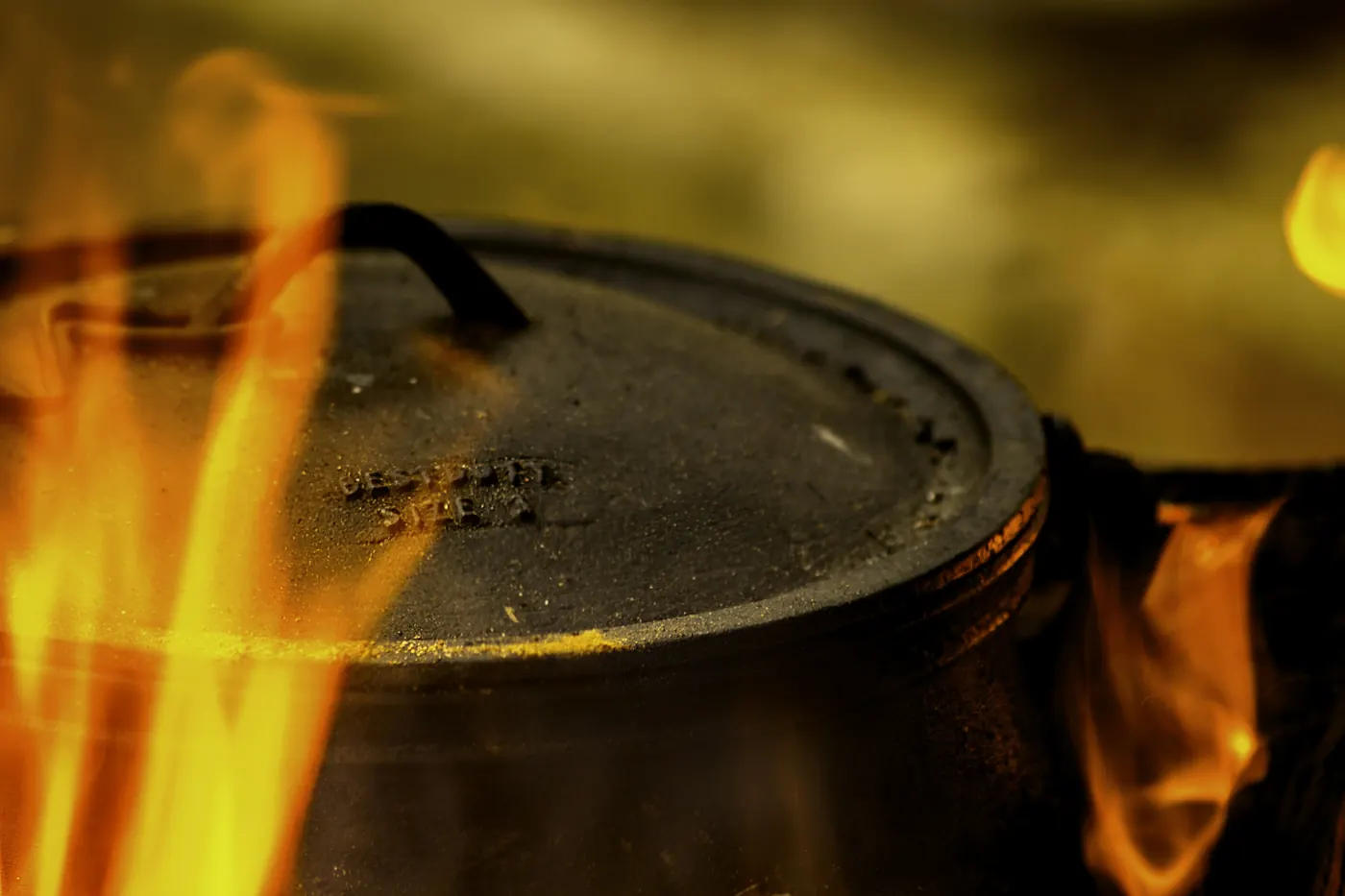
Outdoors, the choice is made for you. Lodge’s bare Dutch oven is listed for stovetop, oven, grill and campfire. Its enameled Dutch oven is marked as not made for use on a grill or over a fire. For pozole at a campsite or beans on the edge of a charcoal grill, buy bare.
Durability: chips against rust
Each finish has its own way of failing. Bare iron can rust if it stays wet, and its seasoning can be scrubbed off or eaten by acid. Both problems are fixable: you clean off the rust, oil the pan and heat it, and you are back in business. America’s Test Kitchen says you can bang a traditional pan around without fear of damage, and Made In calls its bare cast iron extremely durable.
Enamel is tough glass, but it is still glass. Staub warns that striking metal utensils on the rim can chip the enamel. Lodge recommends wooden, silicone or nylon utensils because metal can scratch the finish, says to use pot protectors when storing a pot with its lid on to prevent chipping, and warns against putting cold ingredients into a hot, empty pan, which can cause thermal shock. Staub adds that you should avoid sudden temperature changes, such as moving a pot straight from the refrigerator to a hot burner. Made In says plainly that enamel scratches easily.
The practical difference is that a chipped enamel interior can’t be restored at home the way rusty bare iron can. In general kitchen terms, an enameled pot rewards a gentle cook, while a bare one forgives a rough one.
Cleaning and everyday care
Enamel is the easier pot to live with. Lodge says to let it cool, then wash with warm soapy water and a sponge, scrub cloth or brush, and dry it. It calls enameled cast iron technically dishwasher safe but prefers hand washing to keep the finish, and Staub says the same. For stains, Staub suggests a soak in warm soapy water and Bar Keepers Friend. Lodge says to avoid citrus-based cleaners, which can dull the exterior gloss.
Bare iron is not hard either, but it has a routine. Lodge sums it up in three words: wash, dry, oil. It allows warm, soapy water and a hand wash once the pan has cooled. America’s Test Kitchen suggests little to no soap, hot water and a scrub brush, and warns against soaking. What you can’t do is leave it wet in the sink overnight or put it in the dishwasher. Our best cast iron conditioner guide covers the oils and waxes for that last step.
Weight, cost and lead questions
Weight is close to a tie. The enamel adds little, so a pot of either finish in the same size weighs about the same. Lodge lists its 6-quart enameled Dutch oven at 13.52 pounds and its 5-quart bare Dutch oven with bail handle at 13.21 pounds. Either one, full of beans, is a two-handed lift.
Cost is not a tie. America’s Test Kitchen’s recommended enameled skillets cost from about twice to several times as much as its top traditional skillet, and in general the same gap holds for pots. Where they are made differs too: Lodge says its Essential Enamel pieces are made by partners in China or Vietnam, while its bare Dutch ovens are made in the USA.
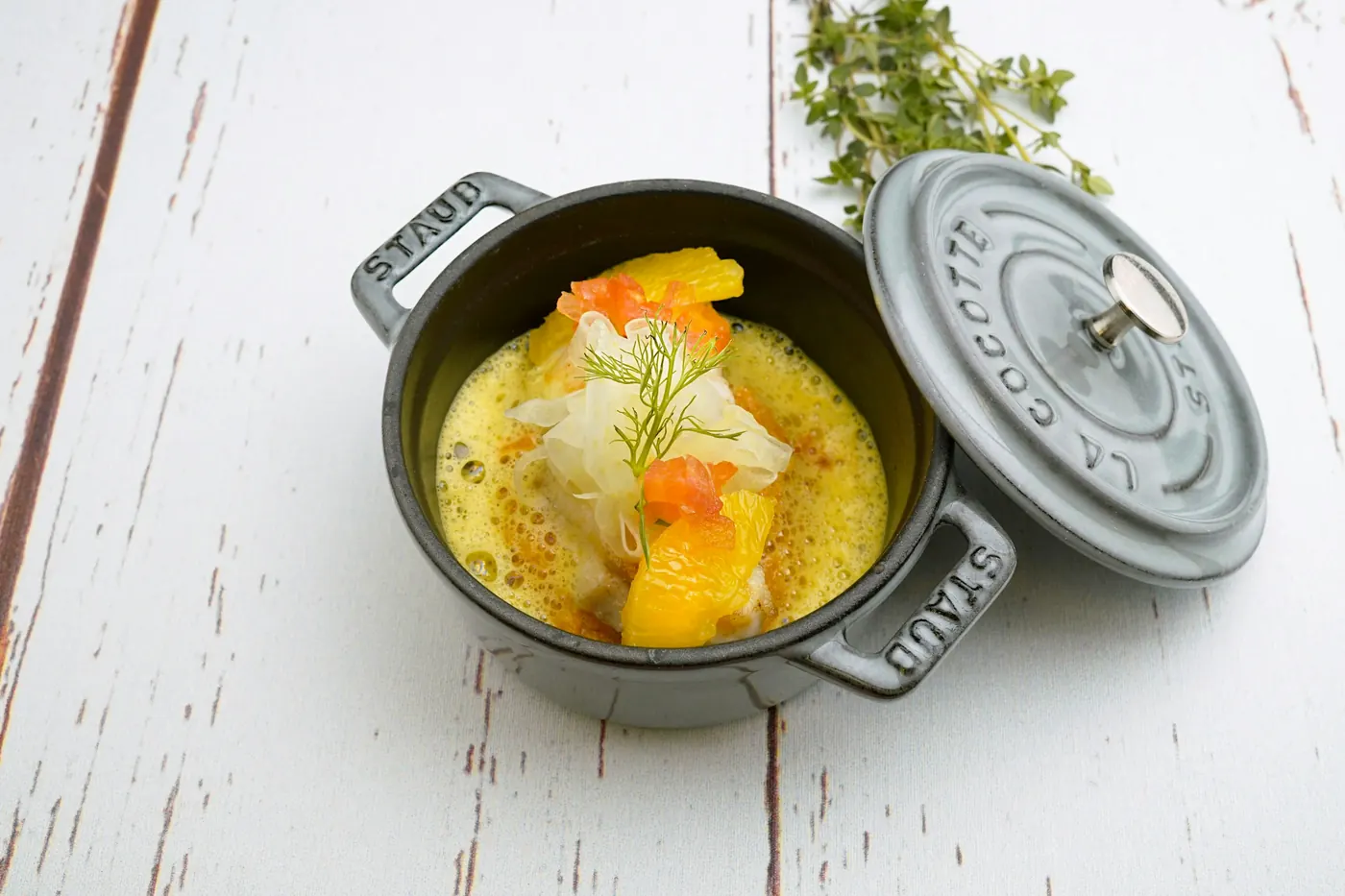
Enamel raises one more question that bare iron doesn’t: what is in the glaze. Bare seasoned iron is, in Lodge’s words, made with just iron and vegetable oil. For enamel, look for a maker that says what it tests for. Lodge says it relies on vetted third-party testing to verify its cookware is free of PFAS and of “dangerous levels of Lead and Cadmium”. Staub says its products are lead-free and cadmium-free and meet FDA guidelines and California Proposition 65 limits. Our best enameled cast iron guide only includes makers that publish a statement like this, and explains why.
Which finish for which shape
The verdict changes with the piece, so think about what each shape spends its life doing.
- Dutch oven: enameled for most kitchens. Beans, birria, pozole, tinga and anything with tomato or chile simmer for hours, and enamel is happy doing that. Our best Dutch oven guide covers both finishes.
- Skillet: bare for most kitchens. Searing, frying and baking want high heat and a seasoned surface. See our best cast iron skillet guide.
- Braiser: enameled, since its whole job is a brown-then-simmer dish. Our Dutch oven vs braiser comparison explains when the shallower pan is worth it.
- Comal and griddle: bare. A comal lives at high heat and never sees a sauce. Our comal vs cast iron skillet guide goes further.
Choose enameled if… / Choose bare if…
Choose enameled cast iron if…
- You cook a lot of tomato, tomatillo, chile, citrus or wine-based dishes.
- You want to wash with soap and never think about seasoning.
- You like to marinate food or store leftovers in the same pot.
- You cook indoors at low to medium heat and handle pans gently.
Choose bare cast iron if…
- You sear hard, fry, or bake cornbread and want a surface that gets more nonstick with use.
- You cook on a grill, over a campfire or under the broiler.
- You want the lowest cost and a pan that is close to indestructible.
- You don’t mind drying and oiling the pan after each wash.
Our pick on each side of the enameled vs bare cast iron question
One Dutch oven per side, both from Lodge, so the comparison is fair: a 6-quart enameled pot and a 5-quart bare one, close in size and weight. Both were in stock when we checked. Neither listing appears on our other pages, but each is another color or size of a Lodge pot we cover elsewhere: the enameled pot is the Midnight Chrome color of the 6-quart Essential Enamel in our Dutch oven guides, chosen here because the same 6-quart model is the fairest match for a bare Lodge pot; and the bare pot is the 5-quart size of the bail-handle Dutch oven in our best cast iron Dutch oven guide, chosen because 5 quarts is the closest bare size to the 6-quart enameled one.
1. Lodge Essential Enamel 6-Quart Dutch Oven – Enamel for Tomato and Chile Dishes

This is the enameled side of the choice in its most common form: a round 6-quart pot with a porcelain enamel interior, loop handles and a heavy lid. Lodge’s page gives the 6-quart size as 13.25 inches long, 11.6 inches wide and 6 inches tall, with a weight of 13.52 pounds, and says the enameled surface stands up to acidic ingredients, can marinate food and can store leftovers in the fridge.
Six quarts is a family size for frijoles de olla, a pork chile verde or a tinga for a crowd. Lodge rates it for every stovetop, including induction, and for the oven up to 500°F, and says it is not made for a grill or a fire. If you store it with the lid on, Lodge recommends pot protectors between lid and rim to prevent chipping.
Follow Lodge’s heat advice and it should last: preheat with oil over low to medium heat, never heat it empty on a burner, and don’t go above medium, since the iron holds heat and prolonged high heat can damage the enamel. Use wood, silicone or nylon tools. It is dishwasher safe, but Lodge recommends hand washing. Lodge says the Essential Enamel line is made by partners in China or Vietnam, and that third-party testing verifies its cookware is free of dangerous levels of lead and cadmium.
Why we like it
- Enamel handles acidic food, per Lodge
- Oven safe to 500°F and works on induction
- Fridge safe for leftovers, per Lodge
- Lead and cadmium statement from Lodge
Key specifications
| Model | EC6D18 (listing part EC6D18PLT) |
|---|---|
| Type & capacity | Enameled Dutch oven, 6 qt |
| Size | 13.25 x 11.6 x 6 in (Lodge) |
| Weight | 13.52 lb (Lodge, 6-qt Essential Enamel) |
| Heat sources | Any stovetop incl. induction; oven to 500°F; not grill or fire |
| Surface | Porcelain enamel, no seasoning |
| Made in | China or Vietnam (Lodge) |
| Care | Hand wash recommended; dishwasher safe |
Why we recommend it
It suits a home cook who wants one pot for beans, braises and tomato or chile dishes, cooked indoors and cleaned with soap.
Skip it if you want a pot for the grill or campfire; Lodge says this one is not made for either.
Pros and cons
Pros
- No seasoning to keep up
- Fine with acidic food
- Family-size 6 quarts
Cons
- Keep to medium heat or lower
- Enamel can chip or scratch
- Heavy at 13.5 pounds empty
2. Lodge 5-Quart Pre-Seasoned Dutch Oven with Bail Handle – Bare Iron for Any Heat
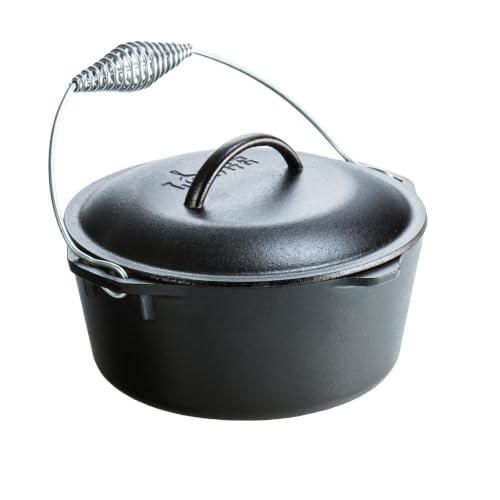
This is bare cast iron as Lodge has made it for generations: a 5-quart pot seasoned with vegetable oil, with a cast iron lid and a steel bail handle for lifting and hanging. Lodge lists model L8DO3 at 11.62 by 11 inches and 6.75 inches tall with the lid, and 13.21 pounds, and says it is made in the USA.
Its strength is where it can go. Lodge says it works on any stovetop, including induction, in the oven, on a grill or over a campfire, and the bail handle makes it easy to carry. That makes it the pot for charro beans at a cookout or a pot of pozole simmered over coals, jobs where an enameled pot shouldn’t go.
The trade-off is acid and upkeep. Lodge suggests holding off on tomato or lemon dishes until you’ve built up the seasoning, so use it first for frying, browning, bread and beans without tomato. Care is wash, dry and oil: hand wash once it cools, dry it right away and wipe on a thin coat of oil.
Why we like it
- Made in the USA, per Lodge
- Stove, oven, grill and campfire
- Steel bail handle for carrying
- Made with just iron and vegetable oil, per Lodge
Key specifications
| Model | L8DO3 |
|---|---|
| Type & capacity | Seasoned Dutch oven, 5 qt |
| Size | 11.62 x 11 x 6.75 in with lid (Lodge) |
| Weight | 13.21 lb (Lodge) |
| Heat sources | Any stovetop incl. induction, oven, grill, campfire |
| Surface | Seasoned with vegetable oil |
| Made in | USA (Lodge) |
| Care | Hand wash, dry, oil |
Why we recommend it
It suits a cook who wants one tough pot for the stove, the oven and outdoor cooking, and who doesn’t mind a little seasoning care.
Skip it if most of what you cook is tomato or chile based; an enameled pot is the better fit until the seasoning is well built.
Pros and cons
Pros
- Goes on a grill or campfire
- Made in the USA
- Seasoning improves with use
Cons
- Not ideal for long acidic simmers
- Must be dried and oiled
- Oven limit not stated on Lodge’s page
Enameled and bare cast iron questions, answered
Is enameled cast iron better than bare cast iron?
Not overall; each is better at different jobs. Enamel is better for acidic, slow-simmered dishes and easy soap-and-water cleanup. Bare iron is better for high-heat searing, outdoor cooking and long-term nonstick release, and it costs less.
Can you cook tomato sauce in bare cast iron?
A short cook in a well-seasoned pan is generally fine. Lodge suggests holding off on tomato or lemon dishes until the seasoning is built up, and America’s Test Kitchen doesn’t recommend bare iron for long-simmered acidic sauces. Use enamel for those.
Do you need to season enameled cast iron?
No. The enamel is the cooking surface. Cook with oil or fat as usual, but there is no seasoning layer to build or maintain.
Can enameled cast iron go on the grill or under the broiler?
Lodge says its enameled Dutch oven is not made for a grill or a fire, and America’s Test Kitchen says you won’t use an enameled pan under the broiler. Bare cast iron handles both.
What happens if enamel chips?
A chip exposes the iron underneath and can’t be repaired at home the way you would re-season bare iron. Avoid it by using wood or silicone tools, not knocking metal on the rim, and avoiding sudden temperature changes, as Lodge and Staub advise. Check your maker’s warranty if it happens.
Our final word on enamel and bare iron
Most kitchens end up with both, and that is the right answer. Buy enameled for the Dutch oven, where acidic stews and beans spend hours, and bare for the skillet and comal, where heat and seasoning do the work. If you can only buy one pot this year, buy the one that matches what you cook most: enamel for sauces and braises, bare iron for searing and anything outdoors.
For more choices, our best enameled cast iron guide covers enameled skillets, braisers and saucepans with lead statements from each maker, and our best budget enamel Dutch oven guide covers lower-cost pots. And if you would rather someone else made the chile colorado, see the menu or call to order.