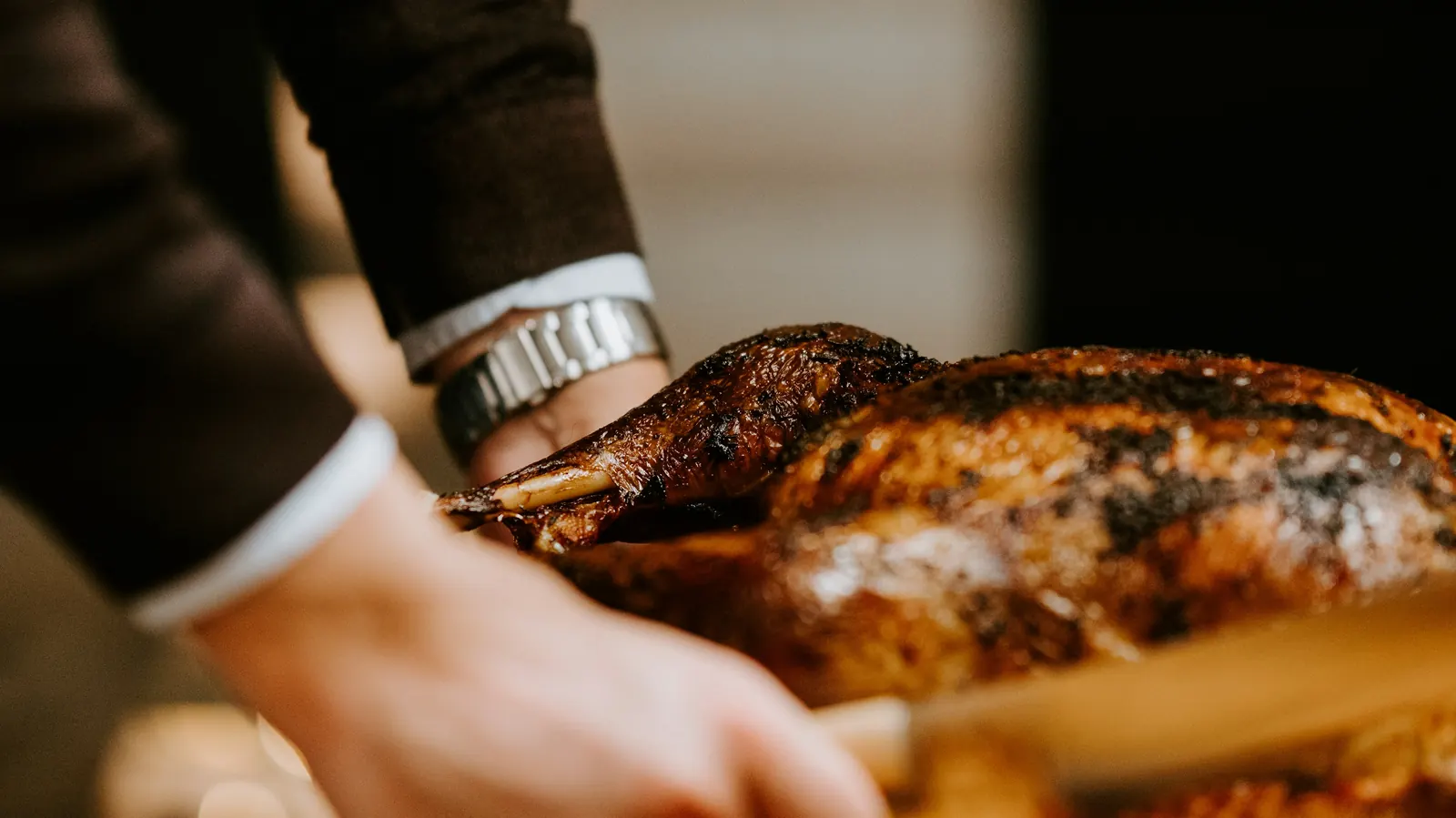
Every November the same question comes up in kitchens across Houston: do you carve the turkey with the electric knife that lives in the hall closet, or with a long carving knife? Both will get the bird onto the platter. They get there in different ways. An electric knife drives two short serrated blades back and forth for you. A carving knife is one long, smooth blade, and you supply the stroke.
In a restaurant kitchen, long roasts are sliced by hand, and that habit shapes our view. This guide compares the two on reach, slice quality, noise, comfort, safety, cleanup and upkeep, using America’s Test Kitchen’s reviews of both kinds of knife and what the makers state. Then it says who should buy which, names two manual carving knives, and points to our electric knife guide for the electric side.
Julia’s earns a commission on purchases made through links on this page, at no cost to you. Recommendations are based on what a restaurant kitchen looks for, product specifications and verified buyer reports.
Quick verdict: which knife carves a turkey better
For most home cooks, a manual carving knife is the better buy. A 10 to 12-inch blade reaches across a turkey breast or a roast in one stroke, it is silent, it needs no cord, and it sharpens. Choose an electric knife if gripping and sawing is hard on your hands, or if you mostly carve skin-on poultry and want the easiest possible way through crisp skin. America’s Test Kitchen found electric knives especially good on skin-on poultry, but their blades are short and they are loud.
The table gives the differences at a glance. The sections after it explain each one.
Electric vs manual carving knife, side by side
| Electric knife | Manual carving or slicing knife | |
|---|---|---|
| How it cuts | Two serrated blades move back and forth under power | One blade; you draw it through the meat |
| Blade length | Most under 7 inches (America’s Test Kitchen) | Usually 10 to 12 inches for slicers (America’s Test Kitchen); carving knives from 8 inches |
| Best at | Skin-on poultry without tearing the skin | Long, even slices across big roasts, brisket and turkey breast |
| Noise | Loud: 80 to 89 decibels in America’s Test Kitchen’s review | Silent |
| Effort | Low; the motor does the sawing | Needs a steady hand and a sharp edge |
| Power | Cord or battery | None |
| Care | Unplug, release the blades, wash, dry the parts | Hand wash and dry; hone and sharpen over the years |
| Storage | A case for the handle, blades and any fork | A block slot, magnet strip or blade guard |
Reach: blade length decides how clean the slice is
The biggest practical difference is length. America’s Test Kitchen’s review of electric knives notes that the blades are quite short, most under 7 inches, which it says makes them less than ideal for very large roasts or briskets. A short blade means more strokes per slice, and every extra stroke is a chance to leave a ridge in the meat.
Slicing knives go the other way. In its review of slicing knives, America’s Test Kitchen describes narrow blades of 10 to 12 inches and found that 12-inch blades were better at spanning bigger foods. It also liked blades about 1.5 inches tall, because a taller blade stays flush against a big cut. It found that a chef’s knife’s shorter blade does not reach as far across big foods, which is why a dedicated slicer is the tool for turkey breast, flank steak and brisket.
For a whole turkey this matters most on the breast. The usual way is to take each breast half off the frame in one piece and slice it across on the board. A long blade does that in one or two pulls. A 6 or 7-inch electric blade will still do it, just with more back and forth.
Skin, crumbs and slice quality
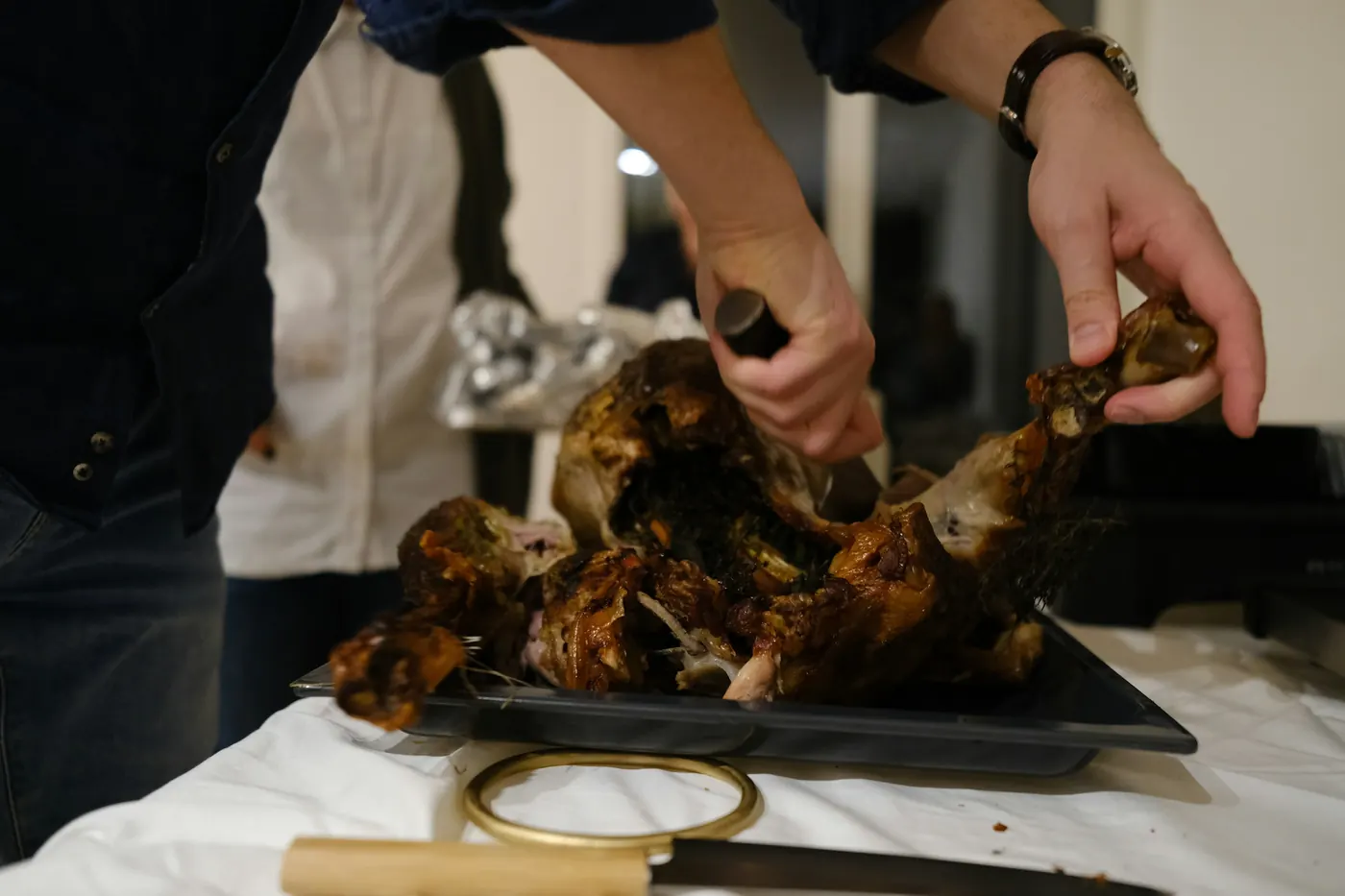
Here the electric knife earns its place. America’s Test Kitchen says electric knives are especially good for cutting skin-on poultry without ripping or pulling the skin. Crisp turkey skin is where a dull or short manual knife tends to snag and tear, and the reciprocating serrations of an electric knife go through it cleanly with little downward pressure.
A sharp manual carving knife can also keep the skin on, but it relies on the edge being sharp and on long, light strokes. That is general kitchen sense rather than a measured result, and it is the honest trade: the electric knife makes clean skin easier for anyone, while the manual knife does it well only if you keep it sharp.
Bread is a side question for many buyers, since an electric knife is often sold for both jobs. America’s Test Kitchen’s view is that electric knives are usually not very good at slicing bread, and it suggests a standard bread knife instead. Our electric knife guide covers models sold for bread and meat if you want one tool for both.
Noise and comfort
Electric knives are loud. America’s Test Kitchen measured its top pick at 80 decibels and the loudest model it tried at 89, and says testers had to raise their voices to be heard while using them. If you carve at the table with the family around you, that is worth knowing.
Comfort cuts both ways. The motor does the sawing, so an electric knife asks less of your grip and wrist. That is the strongest reason to buy one, and it matters to cooks with arthritis or weak hands. But America’s Test Kitchen also found that some handles vibrate heavily, and that start buttons on top of the handle made testers’ thumbs hurt. Look for a trigger underneath and a handle that fits your hand.
A manual carving knife has no vibration and no noise, but it does need a steady hand. With a sharp edge, slicing cooked meat takes little force; with a dull one, it is hard work for anybody.
Safety
Both are sharp tools, and both need a stable board and a fork or a towel to hold the meat. The electric knife adds a switch. America’s Test Kitchen valued safety locks, which stop the knife starting by accident, and called a lock especially useful if you carve at big family gatherings. Not every model has one: its recommended Hamilton Beach 74251G has no safety lock, while its top pick does. Check the listing for a lock before you buy.
Unplug an electric knife before you take the blades out or put them back. A manual knife has no switch to forget, but it has a long, exposed edge; store it in a block, on a magnet or in a guard, not loose in a drawer. That is general kitchen practice. A carving fork, which many sets include, keeps your other hand away from the edge on either kind; our carving fork guide covers the choices.
Cleanup, storage and upkeep
America’s Test Kitchen describes cleaning an electric knife as simple: unplug it, eject the blades, wash them by hand, and dry every part thoroughly. Some makers say their blades are dishwasher safe, so read the manual for your model. The handle holds the motor and never goes in water. America’s Test Kitchen also found that storage cases helped keep the knives safe and contained.
A manual carving knife is one piece of steel and a handle. Mercer and Wüsthof both say to wash their knives by hand. A plain edge needs honing and, now and then, sharpening, and it should last for decades with that care. An electric knife’s serrated blades are a different matter; buy replacements from the maker when they wear out rather than trying to sharpen them yourself. That is general kitchen sense, and so is the point that a corded knife only works within reach of an outlet.
Think also about how often you will use it. Many households carve a turkey once or twice a year. A manual carving knife can do other jobs between holidays, such as slicing a pork loin, a roast chicken or a brisket. An electric knife tends to come out mainly at the holidays.
Choose an electric knife if… / Choose a manual carving knife if…
Choose an electric knife if…
- Gripping and sawing with a knife is hard on your hands or wrists.
- You mostly carve skin-on turkey or chicken and want the skin to stay on each slice with little effort.
- You carve rarely, and you do not want to keep a long blade sharp.
- You don’t mind the noise or the cord.
Choose a manual carving knife if…
- You carve big roasts, brisket or large turkeys and want long, even slices.
- You want a quiet knife you can use at the table.
- You want a knife that also works for everyday slicing and lasts for years with sharpening.
- You would rather not store a motor, a cord and a case for a once-a-year job.
If you want both, a manual knife with a matching fork is the better first buy. Add an electric knife later if carving day turns out to be harder on your hands than you would like. Our best carving set guide pairs knives with forks, and our carving knife brands guide compares the makers.
Our picks for the electric vs manual carving knife question
Two manual knives are below. Both were in stock as new items when we checked, and both were sold by Amazon.com.
For the electric side, go to our electric knife guide. The current electric knives from established makers are reviewed there, among them Black+Decker’s ComfortGrip, which America’s Test Kitchen chose as its top electric knife, and the Hamilton Beach 74251 set with fork and case, which it recommends. Neither is repeated here. If you pick one for carving, look for a safety lock and a trigger under the handle, as America’s Test Kitchen advises; the Hamilton Beach 74251 has no lock.
1. Mercer Culinary Genesis 10-Inch Carving Knife – Forged Reach for Turkey and Roasts
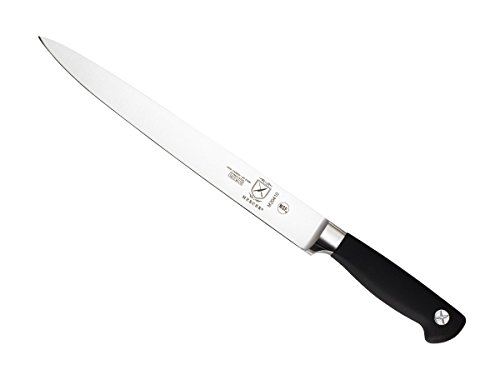
Mercer Culinary sells its Genesis line to professional cooks and home cooks alike, and Genesis is its forged range. Mercer lists this carving knife as item M20410, with a 10-inch blade of high-carbon German steel, precision forged, with a 15-degree edge and a hardness of 56, plus or minus 1, on the Rockwell C scale. The handle is Santoprene, which Mercer says gives a non-slip grip even with wet hands, and the knife is certified by NSF.
Ten inches is the right length for most home turkeys and roasts. It reaches across a breast half on the board, and it is easier to steer near the bone than a 12-inch slicer. The listing names chicken, pork loin, turkey, roast beef and ham as its jobs. That breadth is the point of a manual knife. It is not just a holiday tool.
Mercer says not to put the knife in a dishwasher. Wash it by hand in warm, soapy water, rinse, and dry it with a soft towel. Mercer backs it with a limited lifetime warranty for home users.
Why we like it
- 10-inch forged blade, per Mercer
- Non-slip Santoprene handle, per Mercer
- NSF certified, per Mercer
- Limited lifetime warranty, per Mercer
- Sold by Amazon.com when we checked
Key specifications
| Model | M20410 |
|---|---|
| Type | Manual carving knife, forged |
| Blade length | 10 inches |
| Blade and edge | High-carbon German steel; plain 15° edge |
| Handle | Santoprene |
| Power | None |
| Care | Hand wash and dry; not for the dishwasher |
| Warranty | Limited lifetime |
Why we recommend it
It suits the cook who carves a turkey at the holidays and roasts the rest of the year, and wants one long knife that does both without a cord.
Skip it if you regularly slice whole briskets or very large roasts; America’s Test Kitchen preferred 12-inch slicers for big foods, and our brisket slicing knife guide covers those.
Pros and cons
Pros
- Good length for turkey and most roasts
- Forged blade with a stated hardness
- Professional maker with a lifetime warranty
Cons
- Plain edge, no grantons
- Hand wash only
- No fork included
2. Wüsthof Gourmet 8-Inch Carving Knife – Light Blade for Poultry

Wüsthof is a family-owned knife maker in Solingen, Germany, and its Gourmet line is the stamped range: the listing says the blades are laser cut from high-carbon stainless steel rather than forged. That makes the knife lighter than a forged one. On poultry, a lighter knife is easy to steer around a thigh joint or along a breastbone.
The listing describes this 8-inch carving knife as longer and narrower than a chef’s knife, with a pointed tip that helps guide meat away from the bone. At 8 inches it is short for a big roast, but the right size for a turkey, a roast chicken or a pork loin. The handle is synthetic polypropylene, which Wüsthof says resists fading, discoloration, heat and impact.
The same knife comes with a fork in the Wüsthof Gourmet 2-Piece Carving Set in our carving set guide. We list it alone here for cooks who already own a fork and want only the blade. That makes it one of two uses of this model on our site. Wüsthof says the knife is made in Germany, should be washed by hand only, and carries a limited lifetime warranty.
Why we like it
- Pointed tip to work around bones, per the listing
- Light, laser-cut stamped blade
- Made in Germany, per Wüsthof
- Limited lifetime warranty, per the listing
Key specifications
| Model | 1025048820 |
|---|---|
| Type | Manual carving knife, stamped |
| Blade length | 8 inches |
| Blade and edge | High-carbon stainless steel; plain edge |
| Handle | Synthetic polypropylene |
| Power | None |
| Care | Hand wash only |
| Warranty | Limited lifetime |
Why we recommend it
It suits a cook who mostly carves poultry and wants a light, nimble knife from an established maker, with a fork already in the drawer.
Skip it if you carve large roasts; an 8-inch blade takes more strokes than the Mercer’s 10 inches.
Pros and cons
Pros
- Light and easy to steer
- Established Solingen maker
- Sold by Amazon.com when we checked
Cons
- Short for big roasts
- Stamped, so less heft than forged
- Hand wash only

Carving knife questions, answered
Which carves a turkey better, an electric or a manual knife?
Either does the job. An electric knife is easier through crisp skin and on tired hands; America’s Test Kitchen found electric knives especially good on skin-on poultry. A sharp 10-inch manual carving knife gives longer, cleaner slices across the breast, makes no noise and needs no outlet. For most people the manual knife is the better buy.
Is an electric knife good for brisket or big roasts?
Not ideal. America’s Test Kitchen says most electric knife blades are under 7 inches, too short for very large roasts or briskets. A 12-inch slicer is the better tool there.
How long should a manual carving knife be for a turkey?
About 10 inches suits most turkeys. Slicing knives run 10 to 12 inches, according to America’s Test Kitchen, and the 12-inch ones span bigger foods. An 8-inch carving knife works for chicken and smaller birds.
Do I need a carving fork with either knife?
It helps. A fork holds the meat steady and keeps your fingers away from the blade. Many electric knife sets include one, and our turkey carving board guide covers the board that catches the juices.
Are electric knives loud?
Yes. America’s Test Kitchen measured 80 to 89 decibels across the models it tried and had to raise its voice to be heard over them.
Our final word on carving day
Buy the manual knife first. A 10-inch carving knife like the Mercer Genesis reaches across a turkey breast, slices a roast evenly, and works all year. If your hands are what make carving hard, an electric knife is a real help, and it is especially kind to crisp skin. For the full range of electric models, start with our electric knife guide; for knife and fork pairs, our best carving set guide.