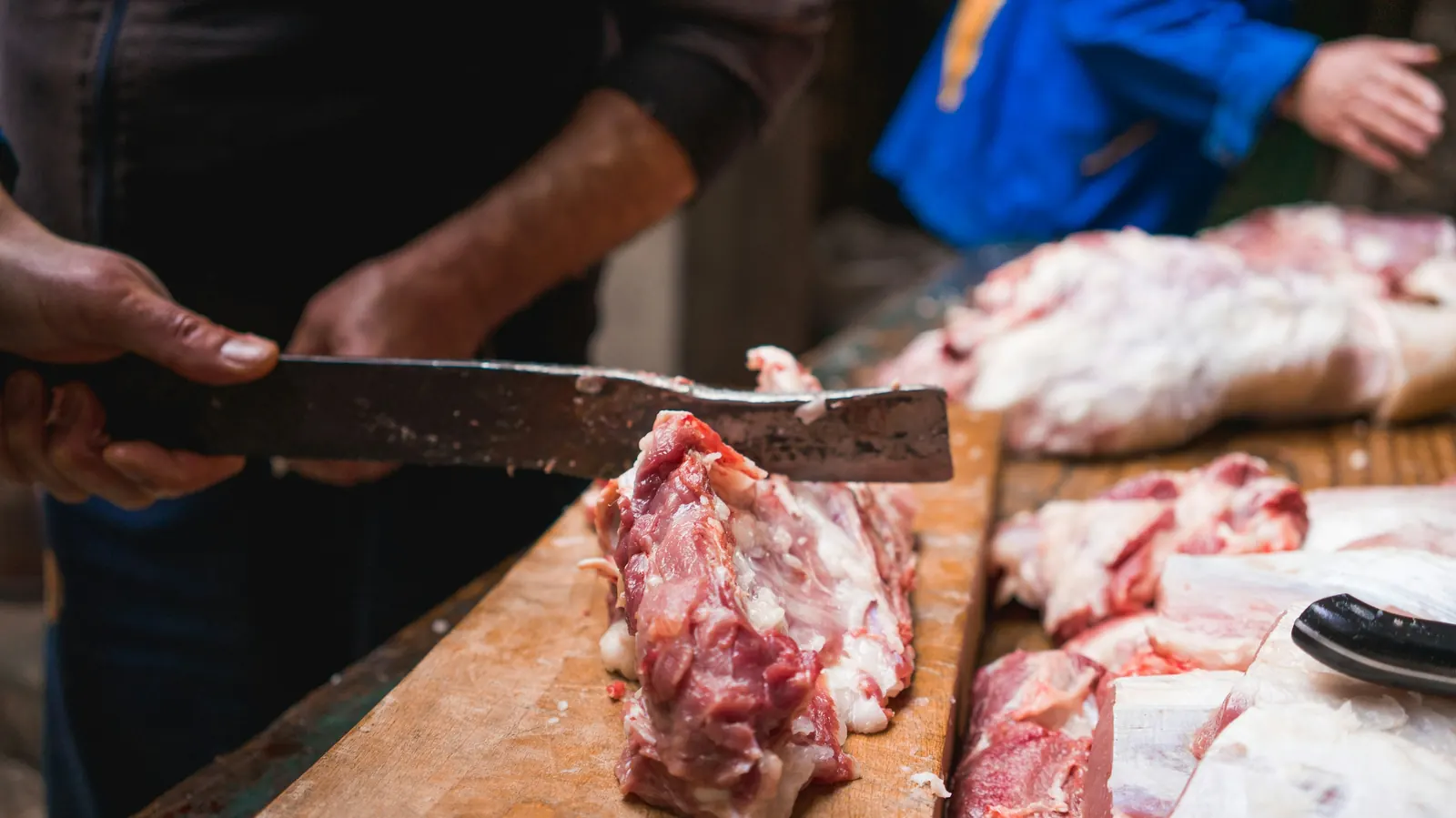
A bone cleaver is the heavy end of the cleaver family. Where an everyday meat cleaver splits chicken joints and a Chinese vegetable cleaver slices onions, a bone cleaver is built to drop through pork ribs, lamb and goat for barbacoa or birria, and the neck bones that give pozole its body. It is thick behind the edge, heavy in the hand and hardened to take impact rather than to hold a razor edge.
That weight is also what makes it the most dangerous knife in most kitchens. This guide names the heavy cleavers worth buying, explains what their makers say they can and cannot cut, and sets out the technique and safety advice that America’s Test Kitchen and the makers themselves give. If you want a lighter, all-round cleaver instead, start with our cluster guide to the best cleaver.
Julia’s earns a commission on purchases made through links on this page, at no cost to you. Recommendations are based on what a restaurant kitchen looks for, product specifications and verified buyer reports.
Quick verdict: which bone cleaver to buy
For most kitchens, the best bone cleaver is the Wüsthof 8-inch cleaver: Wüsthof names ribs, racks and bones as its job, the blade is long and tall, and it comes with a lifetime warranty. If you want more weight behind each stroke, the Victorinox Wood Kitchen Cleaver weighs 20.7 ounces and was recommended by America’s Test Kitchen. For a compact butcher-shop tool, the F. Dick 6-inch steel splitter, a German splitter that F. Dick sells for meat and bone, is NSF certified and made in Germany.
Before you buy any of them, read the safety section below. A heavy cleaver rewards a slow, controlled stroke and punishes a wild one.
Five heavy cleavers compared
Our five standout bone cleavers side by side, with the weight and thickness each maker, listing or reviewer states. All seven are reviewed in full below.
| Bone cleaver | Best for | Blade | Weight (as stated) | Buy on Amazon |
|---|---|---|---|---|

Wüsthof 8-inch CleaverBest overall
|
Ribs, racks, poultry, pork bones | 8 in, 56 HRC | Not stated by Wüsthof | View on Amazon |

Victorinox Wood Kitchen Cleaver, 7-inchBest classic heavy cleaver
|
Big pieces, separating meat from bone | 7.1 in, 3.9 mm spine (ATK) | 20.7 oz (Victorinox) | View on Amazon |

F. Dick 6-inch Steel SplitterBest butcher’s splitter
|
Pork and lamb bones, butcher-shop work | 5.9 in (15 cm), 56 HRC | About 1.1 lb (retailers) | View on Amazon |
Dalstrong Obliterator 9-inch CleaverHeaviest pick
|
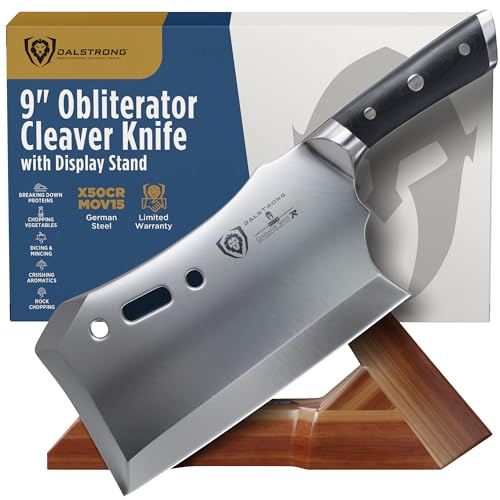
Large cuts, when weight is the point | 9 in, 6 mm thick | 2.9 lb (listing) | View on Amazon |
Zhang Xiao Quan Heavy-Duty Chinese Bone CleaverBest Chinese bone chopper
|
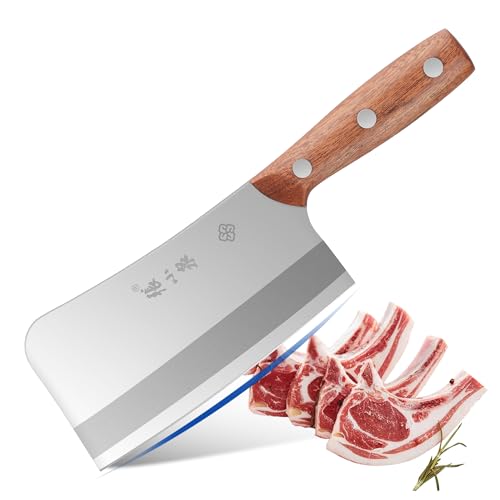
Poultry and meat portions, Chinese style | 7.2 in, 40Cr13 stainless | Not stated | View on Amazon |
Product images from Amazon. Weights and thicknesses are as stated by the maker, the listing or the reviewer named; where none is published we say so.
Our picks for the best bone cleaver
Seven heavy cleavers made the list. All are sold for cutting through bone by their makers or listings, which is the first test a bone cleaver has to pass, and they range from a 6-inch German splitter to a 9-inch cleaver of almost three pounds. We have not padded the list with near-identical marketplace “butcher axes”: where a maker publishes little, we say so.
1. Wüsthof 8-inch Cleaver – Long, Tall and Rated for Bones
The bone cleaver to buy if you want a well-documented blade from a maker that is specific about its use. Wüsthof’s product page says this cleaver makes it easy to cut ribs, racks, bones and extremely hard-skinned fruit such as coconuts, and lists it under chopping, bones and meat.
The blade is 20 cm (8 inches) long and 7.8 cm tall, according to Wüsthof, hardened to 56 HRC. That is softer than Wüsthof’s slicing knives on purpose: a slightly softer edge tends to deform rather than chip when it meets bone, and it is easy to bring back on a sharpening steel. The listing describes the blade as stamped from high-carbon steel with a stain-resistant alloy, tapered from base to tip, with a triple-riveted polypropylene handle, made in Germany.
Eight inches of blade is the useful size for Mexican braises that start with bone-in meat. It splits a pork spare rib rack into single ribs for costillas en salsa verde, cuts lamb or goat shoulder into chunks for barbacoa or birria, and chops chicken backs and wings for a rich caldo, with enough length to cover a wide piece in one stroke.
Wüsthof does not publish this model’s weight or blade thickness, and retailer figures disagree, so we leave both as not stated. Care is by hand: wash, towel-dry straight away, and avoid soaking and hard surfaces such as metal, glass or bamboo, as Wüsthof advises.
Why we like it
- Wüsthof names ribs, racks and bones as its job
- Long 8-inch, 7.8 cm tall blade
- 56 HRC edge suited to impact
- Made in Germany with a limited lifetime warranty
Key specifications
| Model | 4680/20 (current SKU 1129500920) |
|---|---|
| Type | Heavy meat cleaver |
| Blade length | 8 in (20 cm), 7.8 cm tall |
| Blade thickness | Not stated |
| Steel | High-carbon steel with a stain-resistant alloy, 56 HRC |
| Weight | Not stated by Wüsthof |
| Handle | Synthetic polypropylene, triple riveted |
| Dishwasher-safe (maker) | No: hand wash and towel-dry |
| Warranty | Limited lifetime against manufacturing defects |
Why we recommend it
Choose it if you regularly break down ribs, poultry, lamb or goat at home and want a long, tall blade from a maker that rates it for bone and stands behind it with a lifetime warranty. It is the most balanced choice between control and power on this list.
Skip it if you want to know exactly how heavy the cleaver is before you buy: Wüsthof does not publish it, and retailer figures conflict.
Pros and cons
Pros
- Rated for bones by the maker
- Long, tall blade
- Lifetime warranty
- Made in Germany
Cons
- Weight and thickness not published
- Hand wash only
- Stamped rather than forged
2. Victorinox Wood Kitchen Cleaver, 7-inch – Weight That Does the Work
Victorinox calls this Swiss-made cleaver a workhorse, and the numbers back it up. Victorinox lists the blade at 7.1 inches with a straight edge and the whole cleaver at 20.7 ounces, about a pound and a quarter. America’s Test Kitchen recommended it in its meat cleaver review, measured a 3.9 mm spine, and found it among the heaviest models tested: plenty of power, with a long blade that handles large pieces well.
The Amazon listing sells it as the Victorinox restaurant cleaver, item 40093, for hacking and separating meat from the bone and for crushing herbs and spices. Restaurant suppliers list item 40093 under Victorinox’s current model number 5.4000.18, the Wood Kitchen Cleaver. The handle is wood: Victorinox lists the material as modified maple, while several retailers call it rosewood.
That weight suits the heavy end of Mexican home cooking: cutting pork neck bones for pozole, chopping a rack of beef short ribs between the bones, or splitting a whole chicken down the backbone in one stroke. ATK’s caution applies too: a heavy cleaver tires the arm over a long session, so it is best for a few decisive cuts rather than an hour of chopping.
Victorinox states plainly that it is not dishwasher safe, and covers it with its lifetime warranty against defects in material and workmanship.
Why we like it
- Recommended by America’s Test Kitchen
- 20.7 oz, per Victorinox: real chopping power
- Long 7.1-inch straight-edge blade
- Swiss made, lifetime warranty
Key specifications
| Model | 5.4000.18 (listing item 40093) |
|---|---|
| Type | Heavy meat cleaver |
| Blade length | 7.1 in, about 3.5 in tall |
| Blade thickness | 3.9 mm at the spine (America’s Test Kitchen) |
| Steel | Not stated by Victorinox |
| Weight | 20.7 oz (Victorinox) |
| Handle | Wood (modified maple per Victorinox) |
| Dishwasher-safe (maker) | No |
| Warranty | Lifetime against defects (Victorinox) |
Why we recommend it
Choose it if you want independent testing behind your bone cleaver and like a heavy blade that lets gravity do most of the work. It suits cooks who cut bone-in pork and beef for stews and soups.
Skip it if you have weak wrists or long prep sessions: ATK found its weight tiring over longer use, and the wood handle needs hand washing and drying.
Pros and cons
Pros
- ATK recommended
- Heavy, powerful stroke
- Long blade for large pieces
- Lifetime warranty
Cons
- Tiring over long sessions
- Steel grade not published
- Handle wood described inconsistently
3. F. Dick 6-inch Steel Splitter – A German Butcher-Shop Splitter
Friedr. Dick has made butcher’s knives in Germany since the 18th century, and this is one of its shop splitters, the short, heavy-bladed chopper butchers keep for meat and bone. The listing describes a 6-inch (15 cm) blade of high-alloy, rust-proof steel hardened to 56 HRC, designed for cutting and chopping meat and bones, with a balance meant for long use in butcher shops and professional kitchens.
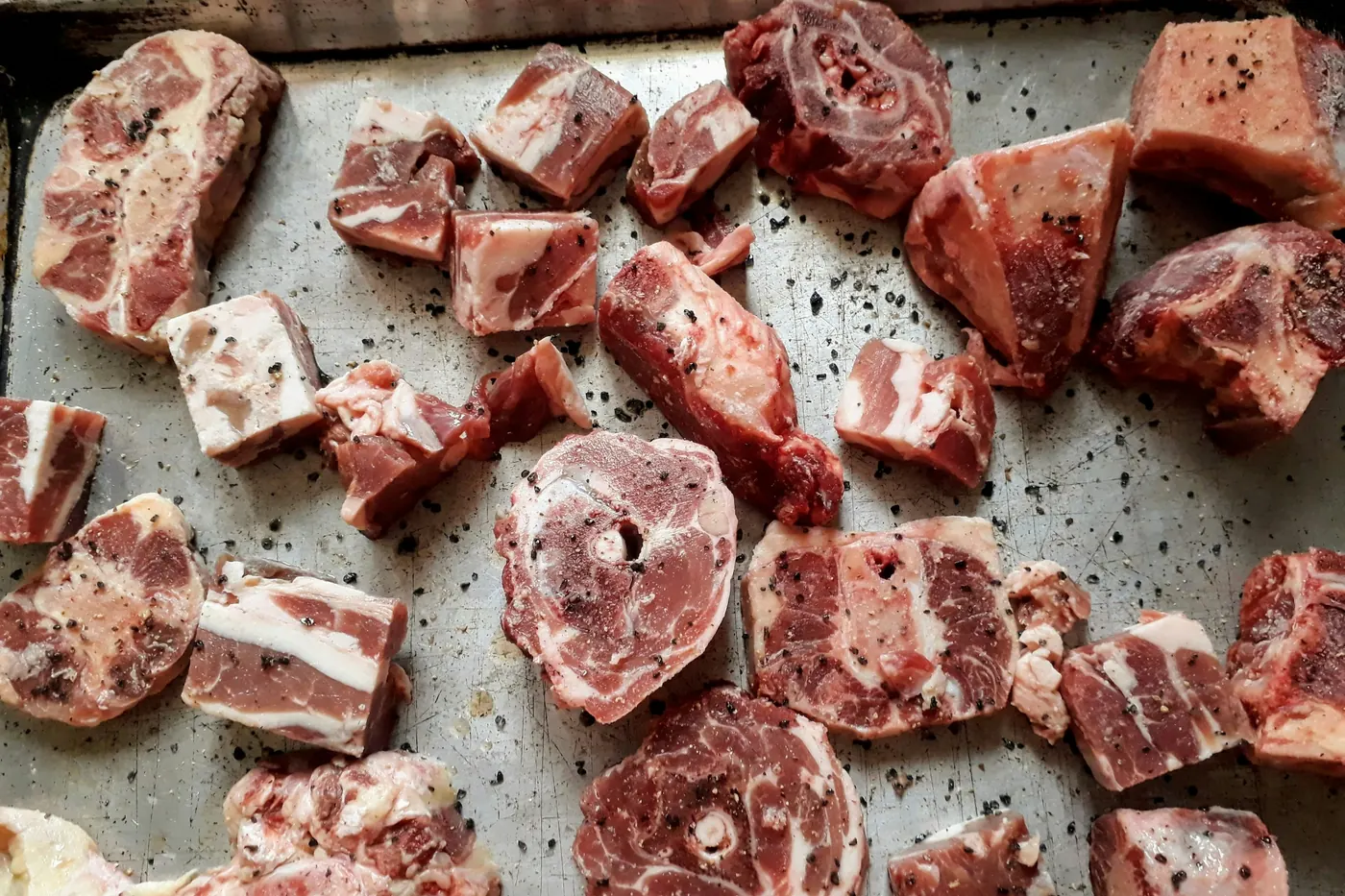
It is compact rather than huge. European retailers list it at about 500 grams, roughly 1.1 pounds, with an overall length of about 39 cm (15 inches). That is a little lighter than the Victorinox but still above the 14 to 15 ounces America’s Test Kitchen preferred for everyday home meat cleavers, and the short blade keeps the weight close to your hand. Use it for pork ribs and neck bones, lamb necks for birria, or pig’s feet for patitas en escabeche.
The handle is non-slip plastic, joined seamlessly to the blade so it is easy to clean, and the listing says the knife is NSF certified and made in Germany. F. Dick does not state the blade thickness, dishwasher use or warranty on the listing. Treat it as a hand-wash tool and keep it on a thick wood or polyethylene board.
Why we like it
- A butcher’s splitter sold for meat and bone
- High-alloy, rust-proof steel, 56 HRC
- NSF certified, made in Germany
- Hygienic, non-slip handle
Key specifications
| Model | 91099150 |
|---|---|
| Type | Butcher’s splitter |
| Blade length | 5.9 in (15 cm) |
| Blade thickness | Not stated |
| Steel | High-alloy, rust-proof, 56 HRC |
| Weight | About 1.1 lb (European retailers; not stated by F. Dick) |
| Handle | Non-slip plastic |
| Dishwasher-safe (maker) | Not stated |
| Warranty | Not stated |
Why we recommend it
Choose it if you cut pork and lamb bones often and want a compact splitter from a butcher’s-knife maker, built for exactly that work.
Skip it if you want the longest reach or the most weight: the 9-inch Dalstrongs carry far more mass, and the short blade will not cross a wide rack in one stroke.
Pros and cons
Pros
- Built for meat and bone
- Compact and balanced
- Professional, NSF certified
Cons
- Short blade
- Thickness and warranty not stated
- Plastic handle looks utilitarian
4. Lamson 7.25-inch Meat Cleaver, Walnut – Forged and Weighted for Joints

Lamson’s listing is unusually specific about this cleaver’s job. It says the blade is forged from high-carbon stainless steel and weighted for work thinner kitchen knives cannot do: “splitting chicken joints and pork ribs cleanly in a single decisive stroke”. The broad face also crushes garlic and ginger and carries food from board to pan.
America’s Test Kitchen measured it at 14 ounces with a 7.25-inch blade and a 2.3 mm spine. That makes it the lightest cleaver on this list and the closest to ATK’s preferred home weight, but also the thinnest: it is a joint and rib cleaver rather than a beef-bone splitter. The handle is solid American walnut with brass rivets.
ATK’s verdict was “recommended with reservations”: its sample arrived in an extremely dull state, which made it hard to use, though it otherwise looked promising. If you buy it, plan to sharpen it on arrival; our guide to the best knife sharpener covers tools that take a wide cleaver blade.
Lamson says the stainless blade tolerates the dishwasher but the walnut handle does not, so wash it by hand with warm soapy water and dry it promptly.
Why we like it
- Sold for chicken joints and pork ribs in a single stroke
- Forged high-carbon stainless blade
- 14 oz (ATK), the lightest pick here
- Solid walnut handle with brass rivets
Key specifications
| Model | 33100 |
|---|---|
| Type | Meat cleaver (joints and ribs) |
| Blade length | 7.25 in |
| Blade thickness | 2.3 mm at the spine (America’s Test Kitchen) |
| Steel | Forged high-carbon stainless |
| Weight | 14 oz (America’s Test Kitchen) |
| Handle | American walnut, brass rivets |
| Dishwasher-safe (maker) | No: blade tolerates it, walnut handle does not |
| Warranty | Not stated on the listing |
Why we recommend it
Choose it if your bone work is mostly chicken and pork ribs and you want a manageable weight with a handsome wooden handle.
Skip it if you want a cleaver that is sharp out of the box or one for beef and lamb bones. ATK found its sample very dull, and its thin spine is not built for heavy splitting.
Pros and cons
Pros
- Manageable home weight
- Forged blade
- Walnut handle
Cons
- ATK’s sample arrived very dull
- Thin for heavy bones
- Hand wash because of the wood
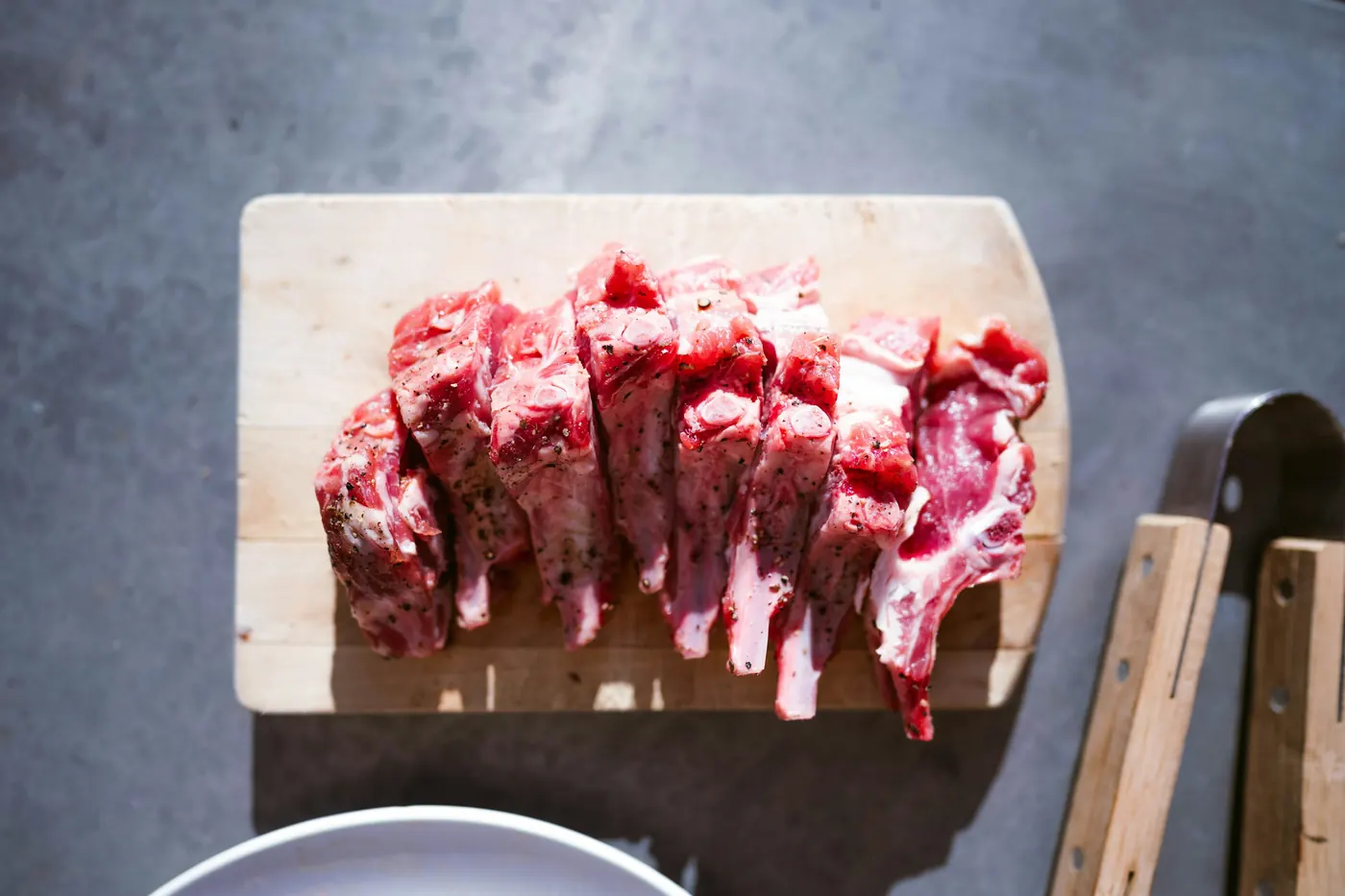
5. Dalstrong Obliterator 9-inch Cleaver – Almost Three Pounds of Steel
The Obliterator is the extreme end of this list, and Dalstrong is upfront about it. The listing calls it a heavy cleaver for portioning meat and preparing poultry for the grill or smoker, with a 6 mm-thick blade and a 2.9-pound weight that give it substantial chopping momentum, and advises: “Choose it when weight is part of the task.”
The blade is 9 inches of high-carbon 7Cr17MoV steel, full tang, with a thick black G10 handle. It comes with an acacia wood stand and a fitted sheath with a retaining pin, which is sensible: a cleaver this heavy should never sit loose in a drawer.
For a backyard cook preparing a whole pork shoulder or a rack of beef ribs for the smoker, the mass lets the blade fall through with little arm effort. For anything finer it is clumsy: at nearly three times the weight America’s Test Kitchen preferred for home meat cleavers, it is hard to aim and tiring to lift repeatedly.
Dalstrong does not publish the hardness or dishwasher guidance on this listing. Its warranty page offers a limited lifetime warranty against defects and a 70-day money-back guarantee.
Why we like it
- 6 mm blade and 2.9 lb weight, per the listing
- Long 9-inch blade covers large cuts
- Stand and fitted sheath included
- Limited lifetime warranty (Dalstrong)
Key specifications
| Model | Obliterator, Gladiator Series Elite |
|---|---|
| Type | Heavy bone cleaver |
| Blade length | 9 in |
| Blade thickness | 6 mm (listing) |
| Steel | High-carbon 7Cr17MoV |
| Weight | 2.9 lb (listing) |
| Handle | Black G10, full tang |
| Dishwasher-safe (maker) | Not stated |
| Warranty | Limited lifetime against defects (Dalstrong) |
Why we recommend it
Choose it if you smoke or roast large bone-in cuts and want maximum momentum for a few heavy cuts, with a stand to keep it safely on display.
Skip it if you want an everyday cleaver. Its weight makes it slow to aim and tiring to use, and it is far more than poultry or ribs need.
Pros and cons
Pros
- Maximum weight and thickness
- Stand and sheath
- Long blade
Cons
- Very heavy to control
- Hardness not stated
- No independent review found
6. Dalstrong Ravager 9-inch Cleaver – Forged German Steel for Rib Sections

Dalstrong positions the Ravager between a standard 7-inch cleaver and the Obliterator: wide enough for bone-in chicken joints and large rib sections, long enough to cover full pork shoulder sections in single strokes. The listing gives examples that fit a barbecue cook’s week: driving through a rack of beef short ribs between each bone, halving a spatchcocked chicken through the backbone and sectioning a Boston butt.
The construction is a step up from the Obliterator in one respect: the blade is forged German high-carbon steel at 56+ HRC, a hardness Dalstrong says absorbs repeated bone work without chipping or rolling. It is full tang, with a triple-riveted G10 handle and a stainless bolster for balance, and ships with a protective sheath.
For a Mexican kitchen, that length is useful for costillas and for portioning a pork shoulder before it goes into the carnitas pot. Unlike the Obliterator, Dalstrong does not publish this model’s weight or blade thickness, so compare it by length and steel rather than heft.
Dalstrong’s warranty page covers its knives with a limited lifetime warranty against defects; the listing itself mentions the 70-day money-back guarantee. Hand wash and dry it.
Why we like it
- Forged German high-carbon steel, 56+ HRC
- 9-inch blade for rib racks and shoulder sections
- Full tang, triple-riveted G10 handle with bolster
- Sheath included
Key specifications
| Model | Ravager, Gladiator Series Elite |
|---|---|
| Type | Heavy meat cleaver |
| Blade length | 9 in |
| Blade thickness | Not stated |
| Steel | Forged German high-carbon steel, 56+ HRC |
| Weight | Not stated |
| Handle | G10, triple riveted, stainless bolster |
| Dishwasher-safe (maker) | Not stated |
| Warranty | Limited lifetime against defects (Dalstrong) |
Why we recommend it
Choose it if you want a long, forged cleaver for barbecue prep and rib work without going to the Obliterator’s extreme weight.
Skip it if you want hard numbers: Dalstrong’s listing gives no weight or thickness, and we found no independent review.
Pros and cons
Pros
- Forged German steel
- Long blade for rib racks
- Sheath included
Cons
- Weight and thickness not published
- No independent review found
- Large to store
7. Zhang Xiao Quan Heavy-Duty Chinese Bone Cleaver – The Chinese Bone Chopper
Chinese kitchens use two kinds of cleaver: the thin slicing cai dao for vegetables and boneless meat, and a thicker chopping cleaver for bone. This is the second kind, from Zhang Xiao Quan, a Hangzhou scissor and knife maker whose history, according to China Daily and Wikipedia, goes back centuries.
The listing describes a heavy-duty Chinese cleaver in 40Cr13 stainless steel with a broad cutting surface and substantial leverage, built for meat and supported bone-cutting tasks such as poultry and meat portions, where a heavier blade is preferred. The handle is Shabili wood with a traditional round shape, and the listed size is 7.2 inches.
This is the cleaver for Chinese-style chopping: cutting a whole chicken into bite-sized pieces through the bone, chopping spare ribs into short lengths, or portioning duck. For a Mexican cook, the same skill turns a whole chicken into small pieces for arroz con pollo.
The weaknesses are on paper. The listing gives no weight, blade thickness, hardness or warranty, and says only “supported” bone cutting, so keep it to poultry and pork bones rather than beef leg bones. Hand wash and dry the wooden handle.
Why we like it
- True Chinese bone-chopping shape
- 40Cr13 stainless blade, per the listing
- Traditional Shabili wood handle
- From a long-established Hangzhou maker
Key specifications
| Model | Heavy-duty butcher knife (no model number on listing) |
|---|---|
| Type | Chinese bone cleaver |
| Blade length | 7.2 in (listing size) |
| Blade thickness | Not stated |
| Steel | 40Cr13 stainless |
| Weight | Not stated |
| Handle | Shabili wood |
| Dishwasher-safe (maker) | Not stated |
| Warranty | Not stated |
Why we recommend it
Choose it if you cook Chinese-style dishes that call for poultry and ribs chopped through the bone, and want the traditional tool for it.
Skip it if you need published weight, hardness or warranty terms before you buy; this listing has none of them.
Pros and cons
Pros
- Traditional bone-chopper design
- Stainless steel blade
- Wood handle
Cons
- Few specifications published
- Poultry and pork bones only
- No warranty stated
How to choose a heavy cleaver for bones
A bone cleaver is a specialist tool, so choose it for the bones you actually cut. Five things decide whether one suits you.
1. The bones you cut
Chicken joints, pork spare ribs and lamb ribs need a meat cleaver of moderate weight, such as the Wüsthof or the Lamson. Pork neck bones, shoulder knuckles, goat and lamb necks call for more mass, like the Victorinox or the Dalstrong cleavers. Large beef leg bones, the cross-cut shank used for caldo de res, and marrow bones are best cut by the butcher on a saw, since no maker here sells its cleaver for that.
2. Weight
America’s Test Kitchen’s testers preferred everyday meat cleavers of 14 to 15 ounces and found anything over a pound tiring for long sessions. A bone cleaver goes heavier on purpose, from the Victorinox’s 20.7 ounces to the Obliterator’s 2.9 pounds, but more weight means less control. Buy the lightest cleaver that does the job.
3. Blade thickness and grind
Thickness protects the edge. ATK measured spines from 2.3 mm on the Lamson to 3.9 mm on the Victorinox and 4.3 mm on Mercer’s heaviest cleaver; Dalstrong’s Obliterator is 6 mm. ATK also found that very thick blades wedge into squash, which is why a bone cleaver makes a poor vegetable knife.
4. Steel hardness
Most of these cleavers sit around 56 HRC, the hardness Wüsthof, F. Dick and Dalstrong state. That is softer than a Japanese slicing knife on purpose: a tougher edge dents or rolls instead of chipping, and is easy to restore.
5. Handle, length and storage
Pick a handle that stays secure with greasy hands; ATK notes that grippy handles matter with slippery raw meat. Seven to 8 inches of blade suits most home kitchens; 9 inches covers a whole rack of ribs but needs a big board and storage. A sheath or stand, as Dalstrong includes, keeps a heavy blade out of the drawer.
Bone cleaver safety and technique
America’s Test Kitchen’s guide to using a meat cleaver is the clearest advice we found, and every maker’s warning on this page points the same way.
- Use a heavy, stable board. ATK recommends a sturdy, unwarped board with a wet towel or gripper mat underneath. Wüsthof warns against glass, metal and hard bamboo boards. A thick wood block or polyethylene board is best; our best wood cutting board guide has options.
- Grip it like a handshake. ATK’s power grip wraps all four fingers around the handle; resting the thumb on the spine adds control.
- Keep the other hand away. ATK advises keeping your non-dominant hand well out of chopping range, even behind your back, and only steadying the far end of long pieces like a rack of ribs.
- Do not wind up. Lift from the elbow, let the weight of the blade do the work, and strike with the top third of the edge.
- Finish stuck cuts by pressing, not hacking. If the blade lodges in bone, ATK says to press down on the spine with your other hand. A second blow rarely lands in the same place and mangles the meat.
- Cut between joints where you can. A cleaver goes through the soft spot between two rib bones or a chicken joint far more easily than through the middle of a bone.
- Do not chop frozen meat or very hard bone unless the maker says so. Global’s care advice, for example, tells owners not to cut through frozen foods or bones with its knives, and Wüsthof keeps its Chinese chef’s knife off bones entirely.
Afterward, wash the cleaver by hand, dry it at once and store it in a sheath, on a magnetic strip or on a hook through its hanging hole, never loose in a drawer.
How we picked these seven bone cleavers
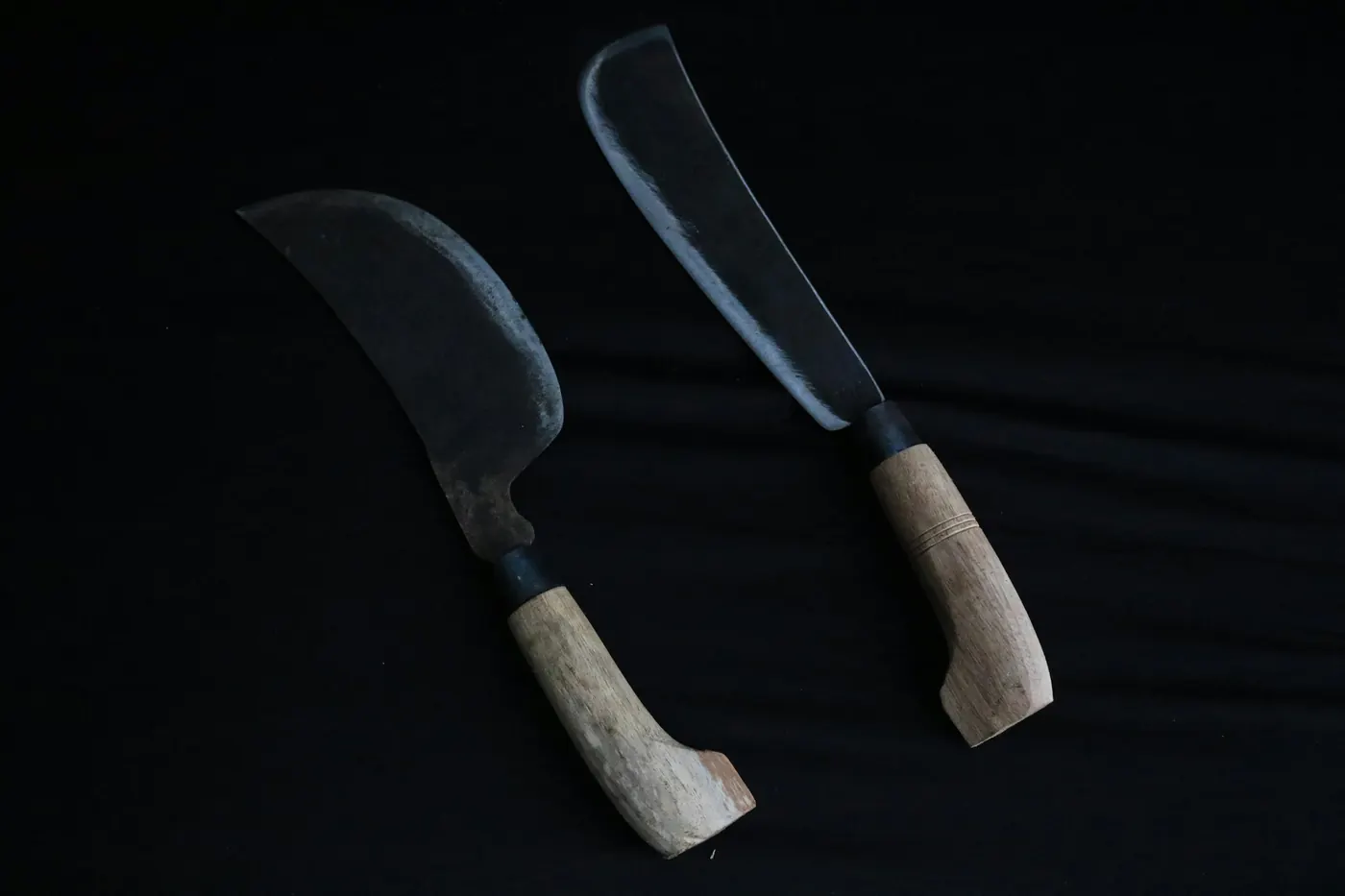
We looked for heavy cleavers that a maker or its listing sells for cutting through bone, then checked that each was sold on Amazon in the United States and in stock. Specifications come from the maker’s site where one exists (Wüsthof, Victorinox, Dalstrong’s warranty page) or the brand’s own Amazon listing, and weights and spine thicknesses measured by America’s Test Kitchen in its meat cleaver review are credited to ATK. For technique and safety we used ATK’s guide to using a meat cleaver and the makers’ care warnings, all of which we read. We did not use these cleavers ourselves. We left out Dexter-Russell’s heavy cleavers, Mercer’s heavier 7-inch cleaver and Victorinox’s Fibrox kitchen cleaver because they were out of stock or down to their last units, and passed over the many unbranded “butcher axes” whose steel and weight claims we could not verify. There are fewer credible heavy cleavers on Amazon than the search results suggest, which is why the list stops at seven.
Bone cleaver questions, answered
What is the best cleaver for bones?
For most home kitchens, the Wüsthof 8-inch cleaver, which Wüsthof rates for ribs, racks and bones. If you want more weight, the 20.7-ounce Victorinox Wood Kitchen Cleaver was recommended by America’s Test Kitchen; for a compact butcher-shop splitter, the F. Dick is built for meat and bone.
How heavy should a bone cleaver be?
ATK’s testers preferred about 14 to 15 ounces for everyday meat cleavers. For regular bone work, 1 to 2 pounds gives more power, but heavier cleavers are harder to control and tiring to use for long.
Can a cleaver cut through beef bones?
Ribs and smaller joints, yes, with a heavy cleaver and good technique. Thick beef leg bones, such as the shank used for caldo de res, are better cut by the butcher with a saw; none of the makers here sells its cleaver for that.
Can I use a Chinese vegetable cleaver on bone?
No. Shun and Wüsthof both say their vegetable cleavers are not for bones, and ATK found thin Chinese-style blades prone to chipping. Use a bone cleaver like the ones above; our best cleaver guide explains the difference.
How do I keep a bone cleaver sharp?
Hone it often and sharpen it when it stops biting. At around 56 HRC, these blades respond well to a honing steel and a pull-through or stone sharpener; ATK’s guide also warns against dragging the edge across the board to scrape up food.
Our final pick for bone work
Buy the Wüsthof 8-inch cleaver if you want one well-documented bone cleaver for ribs, poultry and lamb. Choose the Victorinox if you want ATK-recommended weight, the F. Dick if you want a compact German splitter for pork and lamb bones, and the Lamson if your bone work is mostly chicken. For every other cutting job, our guides to the best cleaver, the best chef knife and the best chef knife cleaver cover the lighter blades, and our guide to Mexican cooking methods explains the braises and soups that start with all those bones.
And if you would rather let someone else break down the pork tonight, see the menu or call to order.