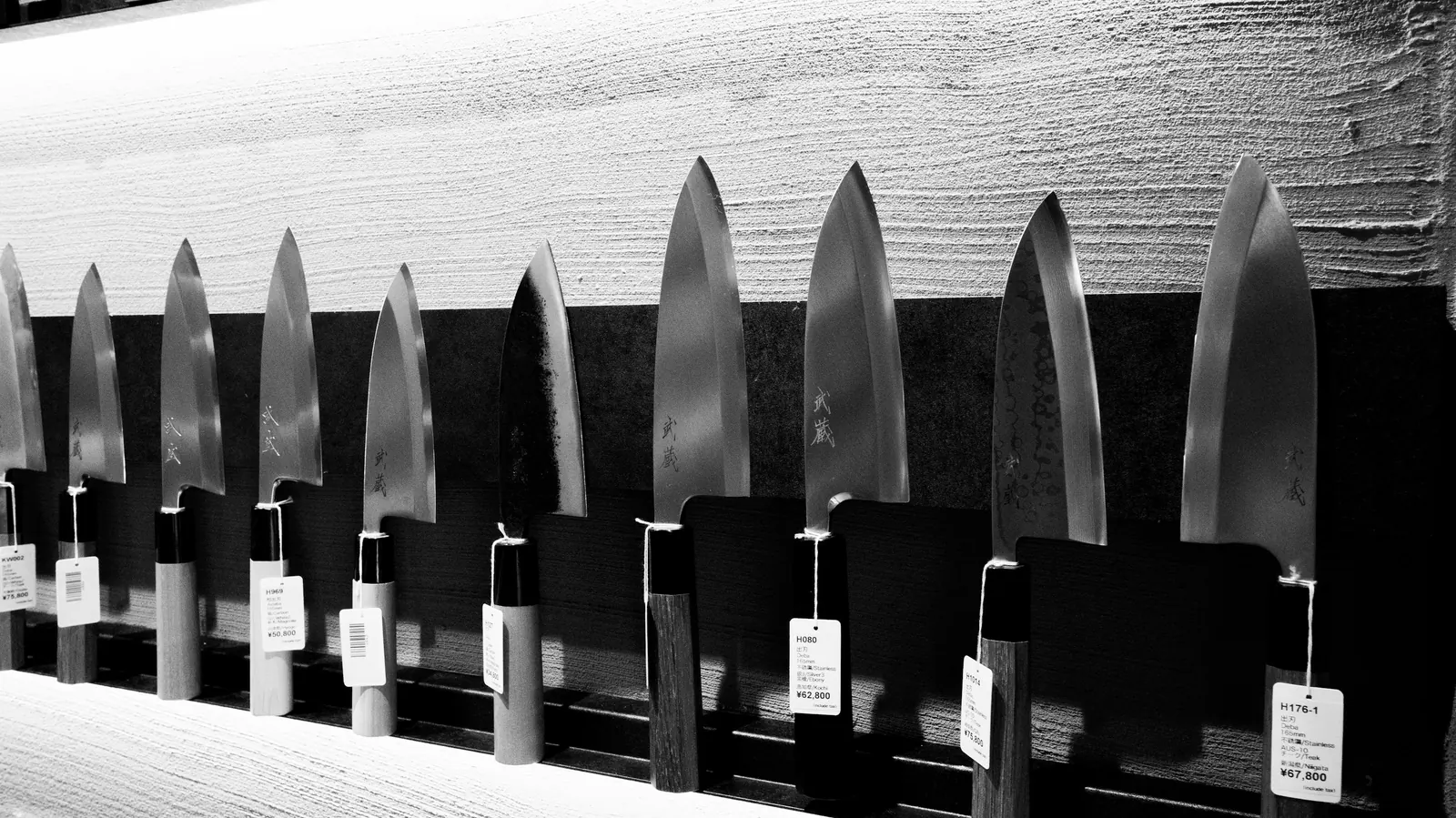
A Japanese knife set is a different purchase from a single Japanese knife. Instead of one blade chosen for one job, you are buying a small kit from one maker: usually a chef’s knife or santoku for the onions and chiles, a paring knife for limes and jalapeño seeds, and sometimes a nakiri, a bread knife, a honing steel and a block to keep them in. Done well, it gives you matching steel, matching handles and one set of care rules.
Done badly, it gives you six knives you never use. This guide covers sets from Japanese makers only, Shun, Mac, Global, Enso, Tojiro and Kai, and looks at what each set actually contains, what the steel and stated edge angle are, how the knives are stored and what the warranty says. If you want one knife rather than a set, our Japanese knife guide is the better starting point.
Julia’s earns a commission on purchases made through links on this page, at no cost to you. Recommendations are based on what a restaurant kitchen looks for in a set of knives, the makers’ own specifications and the details on each Amazon listing.
Quick verdict: which Japanese knife set to buy
For most home cooks, the best Japanese knife set is the Shun Classic 6-piece block set: an 8-inch chef’s knife, a 7-inch santoku and a paring knife in VG-MAX steel with a stated 16-degree edge, plus shears, a honing steel and a slim block, backed by Shun’s free sharpening and limited lifetime warranty. If you only need the core knives, the Mac Professional 3-piece set pairs Mac’s dimpled 8-inch chef’s knife with a paring knife and a long bread and roast slicer. On a tighter budget, the Kai PRO 3-piece set covers the essentials with a 16-degree edge and free sharpening.
Below, the five standout sets side by side, then all eight in full, and what to look for before you buy a set rather than single knives.
Five Japanese knife sets compared
Our five standout sets, one for each kind of cook, with the pieces and steel each maker or listing states. All eight sets are reviewed in full below.
| Knife set | Best for | Knives included | Steel and edge (stated) | Buy on Amazon |
|---|---|---|---|---|

Shun Classic 6-Piece Block SetBest overall
|
A complete starter block | Chef’s, santoku, paring, plus shears and steel | VG-MAX, 16 degrees | View on Amazon |

Mac Professional 3-Piece Knife SetBest three-knife set
|
Core knives, no block | Chef’s, paring, bread and roast slicer | Mac alloys; angle not stated | View on Amazon |

Global Ikasu 7-Piece Block SetBest all-steel set
|
Light knives, easy to wipe clean | Six knives incl. nakiri, plus block | Cromova 18, 15 degrees | View on Amazon |

Shun Classic 3-Piece Japan Starter SetBest for vegetable prep
|
Onions, chiles, herbs | Santoku, nakiri, paring | VG-MAX, 16 degrees | View on Amazon |

Kai PRO 3-Piece Starter SetBudget pick
|
First Japanese set, busy kitchens | Chef’s, utility, paring | AUS6M, 16 degrees | View on Amazon |
Product images from Amazon. Pieces, steels, edge angles and warranties are as stated by each maker or Amazon listing; check the listing before you buy.
Our picks for the best Japanese knife set
Eight sets from six Japanese makers, from three-knife starter sets to block sets with shears and a honing steel. None of them repeats the Shun Slimline or Global 8-piece sets in our general knife set guide; this page looks only at Japanese makers and sorts them by what a Japanese set does best. Each review lists the pieces, the steel, the stated edge angle, the storage, where it is made and the warranty, and says “not stated” where the maker or listing does not publish it.
1. Shun Classic 6-Piece Block Set – Three Core Knives, Steel and Block
This is the smallest Shun Classic block set that still covers a full day of prep. It holds an 8-inch chef’s knife, a 7-inch santoku, a 3.5-inch paring knife, multipurpose kitchen shears and a 9-inch combination honing steel, all in an 8-slot dark wood slim block. The two spare slots leave room to add a nakiri or a slicer later.
Shun says the blades are VG-MAX steel clad in 68 layers of Damascus, with a 16-degree edge, and handcrafted in Japan. The D-shaped Pakkawood handle is designed for both left- and right-handed cooks. Having both a chef’s knife and a santoku is useful in a Mexican kitchen: the chef’s knife rocks through a pile of cilantro, the santoku chops straight down through onions and tomatoes for salsa.
The set comes with Shun’s support. The listing describes free sharpening and honing, and Shun’s warranty page says the knives carry a limited lifetime warranty for the original owner and that Shun sharpens double-bevel knives at 16 degrees. The same page asks owners to use the knives on meat and produce only, not on bones, frozen food or produce pits, so keep a heavier knife for splitting a chicken.
Why we like it
- Chef’s knife and santoku in one set
- VG-MAX core with 68-layer Damascus cladding, per Shun
- Includes shears, honing steel and an 8-slot block
- Free sharpening and a limited lifetime warranty
Key specifications
| Model | DMS0620 |
|---|---|
| Pieces | 8″ chef’s, 7″ santoku, 3.5″ paring, shears, 9″ honing steel, block |
| Steel | VG-MAX core, 68-layer Damascus cladding |
| Edge angle | 16 degrees |
| Handle | D-shaped Pakkawood |
| Storage | 8-slot dark wood slim block |
| Made in | Japan |
| Warranty | Limited lifetime; free sharpening |
Why we recommend it
It suits a cook setting up a kitchen who wants Japanese knives that match, a place to keep them and a steel to maintain them, without paying for a large block of knives that will sit unused.
Skip it if you already own shears and a steel; a three-piece set and a separate block may cost less for the same knives.
Pros and cons
Pros
- Covers chopping, rocking and small work
- Block has two spare slots
- Maker sharpening service
Cons
- No bread knife
- Not for bones or frozen food, per Shun
2. Mac Professional 3-Piece Knife Set – Dimpled Chef’s Knife and a Long Slicer
Mac builds this set around its MTH-80, an 8-inch chef’s knife with dimples, and adds a 5-inch dimpled paring knife and a 10.5-inch bread and roast slicer. That third knife is what makes the set useful for meat: a long, thin slicer is the right tool for carving a roast or cutting a whole grilled skirt steak across the grain.
Mac says the chef’s knife uses its sub-zero tempered alloy, which it says holds an edge about 10 to 15 percent longer than its original molybdenum steel, and the paring and bread knives use its stain-resistant molybdenum alloy. The blades are stamped and then tapered from spine to edge, and the dimples are meant to release starchy foods such as potatoes. The Pakka wood handles are bolstered, with a half-bolster that leaves the heel of the edge free for sharpening.
Mac says the knives are handcrafted in Seki, Japan, and gives a 25-year warranty against manufacturing defects. The set has no block, and the listing does not state an edge angle.
Why we like it
- Includes Mac’s MTH-80 dimpled chef’s knife
- 10.5-inch bread and roast slicer for carving
- Bolstered Pakka wood handles
- Handcrafted in Seki; 25-year warranty
Key specifications
| Model | PRO-31 |
|---|---|
| Pieces | 8″ chef’s (MTH-80), 5″ paring (PKF-50), 10.5″ bread/roast slicer (MSB-105) |
| Steel | Sub-zero tempered alloy (chef’s); molybdenum alloy (others) |
| Edge angle | Not stated |
| Handle | Bolstered Pakka wood |
| Storage | None included |
| Made in | Seki, Japan |
| Warranty | 25 years against manufacturing defects |
Why we recommend it
It suits a cook who wants three excellent knives rather than a block full of good ones, and who carves meat as often as they chop vegetables.
Skip it if you want a santoku or nakiri in the set, or a block to store it in.
Pros and cons
Pros
- Strong chef’s knife at the core
- Long slicer for roasts and bread
- Long stated warranty
Cons
- No block or storage
- Edge angle not published
3. Global Ikasu 7-Piece Block Set – Six All-Steel Knives in a Clear Block
Global’s knives are all metal: the handle is moulded stainless steel with a dimpled grip, so there is no wood to soak up water and nothing to oil, which suits a kitchen that handles raw chicken one minute and tomatoes the next. This Ikasu set puts six of them in a bamboo and acrylic block: a 3-inch paring knife, a 4.5-inch utility knife, a 5-inch chef’s utility and prep knife, a 5.5-inch nakiri, an 8-inch chef’s knife and an 8-inch bread knife.
Global says the blades are its own Cromova 18 stainless steel, ice-tempered to a Rockwell hardness of 58, ground symmetrically on both sides to a 15-degree convex edge. The nakiri is the piece that sets this apart from most block sets; its flat edge suits straight-down chopping of onions, cabbage for tostadas and herbs.
The set is made in Japan, carries a limited lifetime warranty, and Global recommends hand washing.
Why we like it
- All-stainless knives with dimpled steel handles
- Includes a nakiri and a bread knife
- Symmetrical 15-degree edge, per Global
- Made in Japan; limited lifetime warranty
Key specifications
| Model | 79585 |
|---|---|
| Pieces | 3″ paring, 4.5″ utility, 5″ prep, 5.5″ nakiri, 8″ chef’s, 8″ bread, block |
| Steel | Cromova 18 stainless, HRC 58 |
| Edge angle | 15 degrees, 50/50 bevel |
| Handle | Moulded stainless steel, dimpled |
| Storage | Bamboo and acrylic Ikasu block |
| Made in | Japan |
| Warranty | Limited lifetime |
Why we recommend it
It suits a cook who likes light knives, wants all-metal handles, and would use a nakiri alongside a chef’s knife.
Skip it if steel handles feel slippery in your hand; try a Global knife in a shop first if you can.
Pros and cons
Pros
- Six knives, including nakiri and bread knife
- All-metal handles, nothing to oil
- Block shows the knives
Cons
- Steel handles are not to every taste
- Softer steel than some sets here
- Hand wash recommended
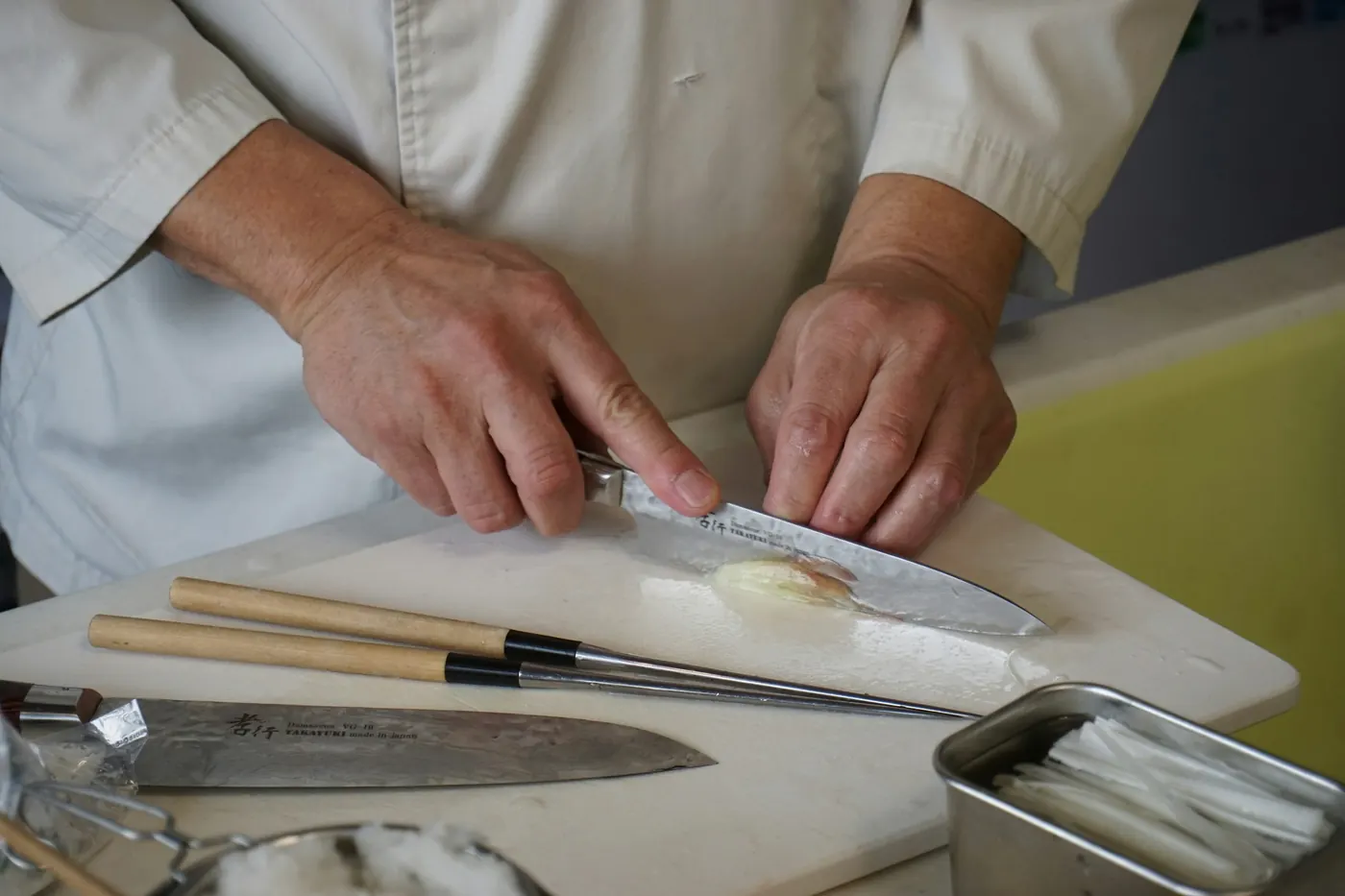
4. Shun Classic 3-Piece Japan Starter Set – Santoku, Nakiri and Paring
Most starter sets are a Western chef’s knife, a utility knife and a paring knife. Shun’s “Japan” starter set swaps in the two Japanese shapes instead: a 7-inch hollow-ground santoku and a 6.5-inch nakiri, plus a 3.5-inch paring knife. For a kitchen whose daily work is onions, tomatoes, chiles, cabbage and cilantro, that is a better fit.
The blades are the same as the rest of the Shun Classic line: VG-MAX steel with 68 layers of Damascus cladding and a 16-degree edge, handcrafted in Japan, with D-shaped Pakkawood handles for either hand. The santoku’s hollow-ground scallops help slices fall away, and the nakiri’s flat edge meets the board along its whole length, which is what you want for finely shredded cabbage or a stack of sliced jalapeños. Our nakiri guide explains the shape in more detail.
The listing does not include storage and does not state the warranty, but Shun’s warranty page covers Shun knives with a limited lifetime warranty and free sharpening.
Why we like it
- Two Japanese vegetable shapes in one set
- VG-MAX steel, 16-degree edge
- Hollow-ground santoku
- Covered by Shun’s warranty and sharpening service
Key specifications
| Model | DMS0330 |
|---|---|
| Pieces | 7″ hollow-ground santoku, 6.5″ nakiri, 3.5″ paring |
| Steel | VG-MAX core, 68-layer Damascus cladding |
| Edge angle | 16 degrees |
| Handle | D-shaped Pakkawood |
| Storage | None included |
| Made in | Japan |
| Warranty | Limited lifetime (Shun warranty page) |
Why we recommend it
It suits a cook who prepares more vegetables than meat and prefers chopping straight down to rocking the blade.
Skip it if you want a long chef’s knife for carving or rock-chopping; add one separately or choose the six-piece block set.
Pros and cons
Pros
- Ideal shapes for vegetable work
- Same steel as Shun’s block sets
- Free sharpening from Shun
Cons
- No chef’s knife or slicer
- No block
5. Enso HD 7-Piece Set with Birch Block – Hammered VG10 With a Fine Edge

Enso’s HD set is the larger block option here. It includes a 4-inch paring knife, a 6-inch utility knife, a 6.5-inch santoku, an 8-inch chef’s knife, a 9-inch bread knife and forged stainless take-apart shears, in a 6-slot birch block. The listing gives the assembled block as 12 inches long, 3 inches wide and 14.5 inches tall.
The blades are VG10 steel in 37 layers of stainless Damascus with a hammered tsuchime finish, which helps food release from the side of the blade. Enso states a Rockwell hardness of 61 and says the blades are hand-ground to about 12 degrees, the finest edge angle stated on this page. The double bevel works for right- and left-handed cooks, and the black canvas micarta handles have three stainless rivets. Enso says all its knives are handcrafted in Seki City, Japan, with a lifetime warranty.
A 12-degree edge is very keen but has less metal behind it than a 15- or 16-degree edge, so it rewards a wooden or rubber board and a light touch around bone.
Why we like it
- Five knives plus take-apart shears and a block
- VG10, 37-layer hammered Damascus, HRC 61
- Hand-ground to about 12 degrees, per Enso
- Made in Seki City; lifetime warranty
Key specifications
| Model | Enso HD 7-piece (birch block) |
|---|---|
| Pieces | 4″ paring, 6″ utility, 6.5″ santoku, 8″ chef’s, 9″ bread, shears, block |
| Steel | VG10, 37-layer stainless Damascus, HRC 61 |
| Edge angle | About 12 degrees, double bevel |
| Handle | Canvas micarta, three rivets |
| Storage | 6-slot birch block, 12 x 3 x 14.5 in |
| Made in | Seki City, Japan |
| Warranty | Lifetime |
Why we recommend it
It suits a cook who wants a full block from one Japanese maker, including a bread knife and shears, with hard steel and a very fine edge.
Skip it if you are hard on knives; a thinner edge chips more easily than the 15- and 16-degree edges elsewhere on this list.
Pros and cons
Pros
- Most complete set here
- Hard steel, very fine stated edge
- Durable micarta handles
Cons
- Fine edge needs careful use
- Tall block needs cabinet clearance
6. Tojiro DP Damascus 2-Piece Set – A Gyuto and Paring Knife Pair

Some cooks need only two knives, and Tojiro sells exactly that: an 8.25-inch gyuto, the Japanese chef’s knife, and a 4-inch paring knife. Between them they handle nearly every job in a home kitchen, from breaking down a pork shoulder for carnitas to coring jalapeños.
The listing says each blade has a thick VG-10 core wrapped in 37 layers of low- and high-carbon stainless steel, forged into a Damascus pattern. A bolster adds heft and balance while the edge stays thin, and the handles are micarta with three stainless rivets, a Western-style grip that feels familiar if you are coming from German knives. Tojiro states the knives are made in Japan with a lifetime warranty; the listing does not state the edge angle or include storage.
Why we like it
- Gyuto plus paring knife covers most jobs
- VG-10 core with 37-layer Damascus cladding
- Bolstered, riveted micarta handles
- Made in Japan; lifetime warranty
Key specifications
| Model | Tojiro DP Damascus 2-piece |
|---|---|
| Pieces | 8.25″ gyuto, 4″ paring |
| Steel | VG-10 core, 37-layer Damascus |
| Edge angle | Not stated |
| Handle | Micarta, three rivets, bolster |
| Storage | None included |
| Made in | Japan |
| Warranty | Lifetime (listing: limited lifetime) |
Why we recommend it
It suits a cook who wants a capable Japanese gyuto without paying for knives they will not use, and who prefers a Western-style handle.
Skip it if you want a bread knife or block in the box.
Pros and cons
Pros
- Two knives, no filler
- Familiar Western grip
- VG-10 core
Cons
- Edge angle not stated
- No storage included
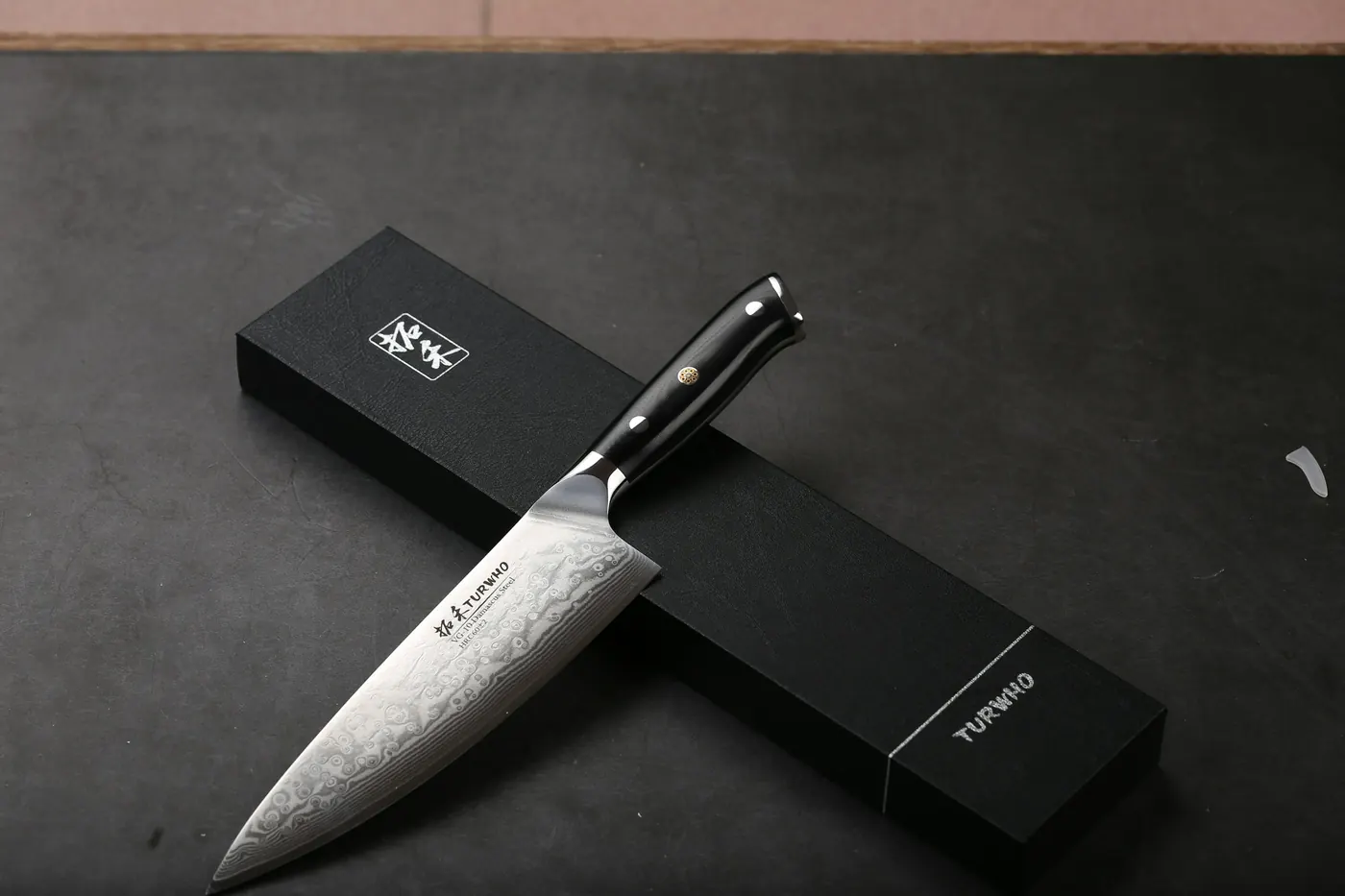
7. Shun Sora 3-Piece Starter Set – VG10 Edge, Easy-Care Handle

Sora is Shun’s lower-cost line, and the way it gets there is clever. Shun describes a San Mai construction it calls Composite Blade technology: the cutting edge is VG10 steel and the upper blade is 420J stainless, so the expensive steel is used where it does the cutting. The edge is the same 16 degrees as Shun Classic.
This three-piece set has an 8-inch chef’s knife, a 6-inch utility knife and a 3.5-inch paring knife. The handles are full tang with a textured polymer blend (PP/TPE) that Shun says gives a secure grip for either hand, which is practical when your hands are wet from rinsing chiles or slick from trimming fat. The knives are handcrafted in Japan and the listing notes free sharpening and honing; Shun’s warranty page gives a limited lifetime warranty. No block is included.
Why we like it
- VG10 cutting edge with a 420J upper blade
- 16-degree edge, as on Shun Classic
- Textured polymer handles for a secure grip
- Free sharpening and honing from Shun
Key specifications
| Model | VBS0351 |
|---|---|
| Pieces | 8″ chef’s, 6″ utility, 3.5″ paring |
| Steel | VG10 edge, 420J stainless upper (San Mai) |
| Edge angle | 16 degrees |
| Handle | Full tang, textured PP/TPE |
| Storage | None included |
| Made in | Japan |
| Warranty | Limited lifetime (Shun warranty page) |
Why we recommend it
It suits a cook who wants a Shun edge and Shun’s sharpening service but would rather spend less and have handles that shrug off a wet kitchen.
Skip it if you want the look of Damascus cladding or a santoku in the set.
Pros and cons
Pros
- Shun edge at a lower tier
- Grippy, practical handles
- Free sharpening
Cons
- No block
- Western shapes only
8. Kai PRO 3-Piece Starter Set – NSF-Certified Knives for Hard Use
Kai is the Japanese company that also makes Shun, and Kai PRO is a line it describes as built for rigorous use. This three-piece set has an 8-inch chef’s knife, a 6-inch utility knife and a 3.5-inch paring knife, and the listing title says the knives are NSF certified.
The blades are Japanese AUS6M stainless steel, hand-sharpened to 16 degrees, with a hammered tsuchime finish that helps release food. The handles are contoured POM, a hard plastic, securely riveted to full-tang blades. Kai says the set is backed by free sharpening and honing and a limited lifetime warranty. The listing does not state where the knives are made.
AUS6M is a softer, tougher steel than the VG-MAX and VG10 sets above, so expect to hone more often, but also expect an edge that forgives a knock against a sheet pan.
Why we like it
- Hand-sharpened 16-degree edges
- Full-tang blades with riveted POM handles
- NSF certified, per the listing
- Free sharpening; limited lifetime warranty
Key specifications
| Model | HTS0370 |
|---|---|
| Pieces | 8″ chef’s, 6″ utility, 3.5″ paring |
| Steel | Japanese AUS6M stainless |
| Edge angle | 16 degrees |
| Handle | Contoured POM, riveted, full tang |
| Storage | None included |
| Made in | Not stated |
| Warranty | Limited lifetime; free sharpening |
Why we recommend it
It suits a first Japanese set for a busy household, or a cook who wants tough knives with a fine Japanese edge and does not want to baby them.
Skip it if you want harder steel that holds an edge longer between sharpenings; the Shun and Enso sets state harder steels.
Pros and cons
Pros
- Tough, practical construction
- Free sharpening service
- Food-release hammered finish
Cons
- Softer steel needs more honing
- Country of manufacture not stated
Set or single knives: what a Japanese set should contain
The honest case against most knife sets is that they include pieces you will not use. For a home kitchen cooking Mexican food, three knives do almost everything: a chef’s knife or gyuto (or a santoku) for onions, tomatoes, chiles and meat; a paring knife for limes, garlic and seeding jalapeños; and a long serrated or slicing knife for bread and roasts. A nakiri is a welcome fourth if you chop a lot of vegetables.
So before you buy, count the knives you would actually reach for. A three-piece set such as the Mac or Kai is often better value than a big block. If you want a block, the Shun Classic six-piece has the core knives plus room to grow; if you would rather choose your own storage, our knife block guide covers blocks that take Japanese blades.
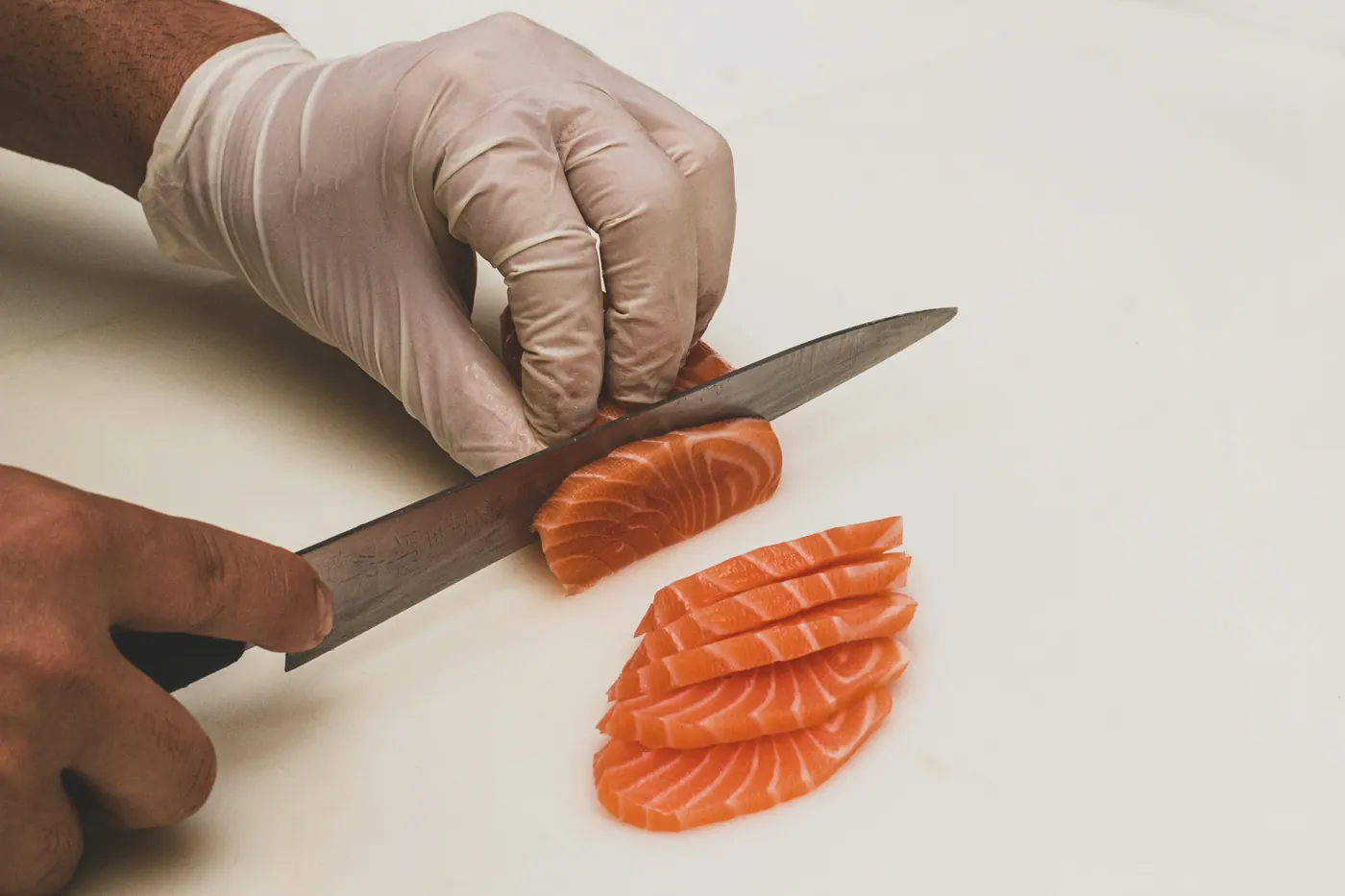
How to choose a Japanese knife set
Steel. Japanese makers list their steels by name. VG-MAX (Shun Classic) and VG10 (Enso, Tojiro, the edge of Shun Sora) are hard stainless steels that hold an edge well. Global’s Cromova 18 is stated at Rockwell 58 and Kai PRO’s AUS6M is softer still; softer steels are tougher and easier to sharpen but need honing more often.
Edge angle. Japanese knives are usually sharpened thinner than German ones. Stated angles on this page run from about 12 degrees (Enso) through 15 (Global) to 16 (Shun and Kai). Thinner edges cut more easily and chip more easily. Whatever you buy, sharpen at the maker’s angle; our whetstone guide covers the tools.
Shapes. Decide whether you want Western shapes made in Japan (chef’s knife, utility, paring) or Japanese shapes (santoku, nakiri, gyuto). For straight-down chopping of onions and cabbage, a santoku or nakiri is ideal; our santoku guide compares them with chef’s knives.
Handles. Pakkawood and micarta feel like wood but resist water better; Global’s handles are moulded stainless steel; polymer handles on Shun Sora and Kai PRO are the most forgiving in a wet kitchen. A handle that fits your hand matters more than any steel figure.
Storage and service. Japanese edges are thin, so a block, magnetic strip or blade guards protect them in a drawer. Shun and Kai offer free sharpening, which is worth more over the life of the set than a spare knife.
Looking after a Japanese knife set
Hand wash and dry each knife straight after use; Global recommends hand washing for its set, and hard, thin Japanese edges are easily knocked in a dishwasher basket. Use the knives on a wooden, rubber or soft plastic board rather than glass or stone. Shun asks owners not to use its knives on bones, frozen food or produce pits, which is sensible advice for any thin Japanese blade: keep a heavier knife or cleaver for splitting chicken and cutting through frozen tortillas. Hone lightly with a honing rod between sharpenings, holding it near the knife’s own angle.
How we chose these eight Japanese sets
We looked only at sets from Japanese knife makers: Shun and its parent company Kai, Mac, Global, Enso and Tojiro. We started from what a Mexican kitchen asks of its knives, chopping onions, chiles and herbs, slicing tomatoes and limes, trimming and slicing meat, and looked for sets that cover those jobs without padding. Each set had to be sold on Amazon in the United States and in stock when we checked it with Amazon’s product data. Pieces, steels, edge angles and warranties come from the brand’s Amazon listing, and Shun’s warranty and sharpening terms from Shun’s own warranty page; where neither states a figure, we say “not stated”. Miyabi sets were left out because every one we found was down to its last few units, and we excluded unbranded “Japanese-style” Damascus sets with little maker information. We did not use these knives for this guide, and we have not cited published equipment reviews, because we did not read them for this page.
Japanese knife set questions, answered
What is the best Japanese knife set for the money?
A three-piece set usually gives the best value, because you pay only for knives you will use. The Kai PRO three-piece set is the budget pick here; the Mac Professional three-piece set costs more but includes a long slicer and the chef’s knife Mac calls its best seller.
What is the best quality Japanese kitchen knife set?
Among the sets here, Enso HD states the hardest steel (VG10 at Rockwell 61) and the finest edge, and Shun Classic uses VG-MAX with a 16-degree edge and adds free sharpening. Both are made in Japan.
Are Japanese knife sets worth it for a home cook?
Yes, if you choose a set that matches how you cook. Japanese knives are usually thinner and sharpened at a finer angle than German ones, which makes slicing onions, tomatoes and herbs easier. They do ask for more care: hand washing and no bones or frozen food.
Should a Japanese knife set include a santoku or a chef’s knife?
Either works. A chef’s knife or gyuto rocks through herbs and handles meat; a santoku chops straight down and suits vegetables. The Shun Classic six-piece set includes both.
Can Japanese knives go in the dishwasher?
Global recommends hand washing for its set, and the other listings here do not say the knives are dishwasher safe. Washing by hand and drying straight away is the safe course for thin, hard Japanese edges.
Which Japanese set to start with
Buy the Shun Classic six-piece block set if you want the core Japanese knives, a steel and a block in one box, with free sharpening for life. Choose the Mac three-piece set for three excellent knives including a slicer, the Shun Classic Japan set if you mostly prep vegetables, the Global Ikasu block for light, all-steel knives with a nakiri, and the Kai PRO set if you want a tough first Japanese set on a budget.
For a single knife instead, start with our best Japanese knife picks, and for what all that chopping is for, see our guide to Mexican herbs. If you would rather leave the knife work to us tonight, see the menu or call to order.