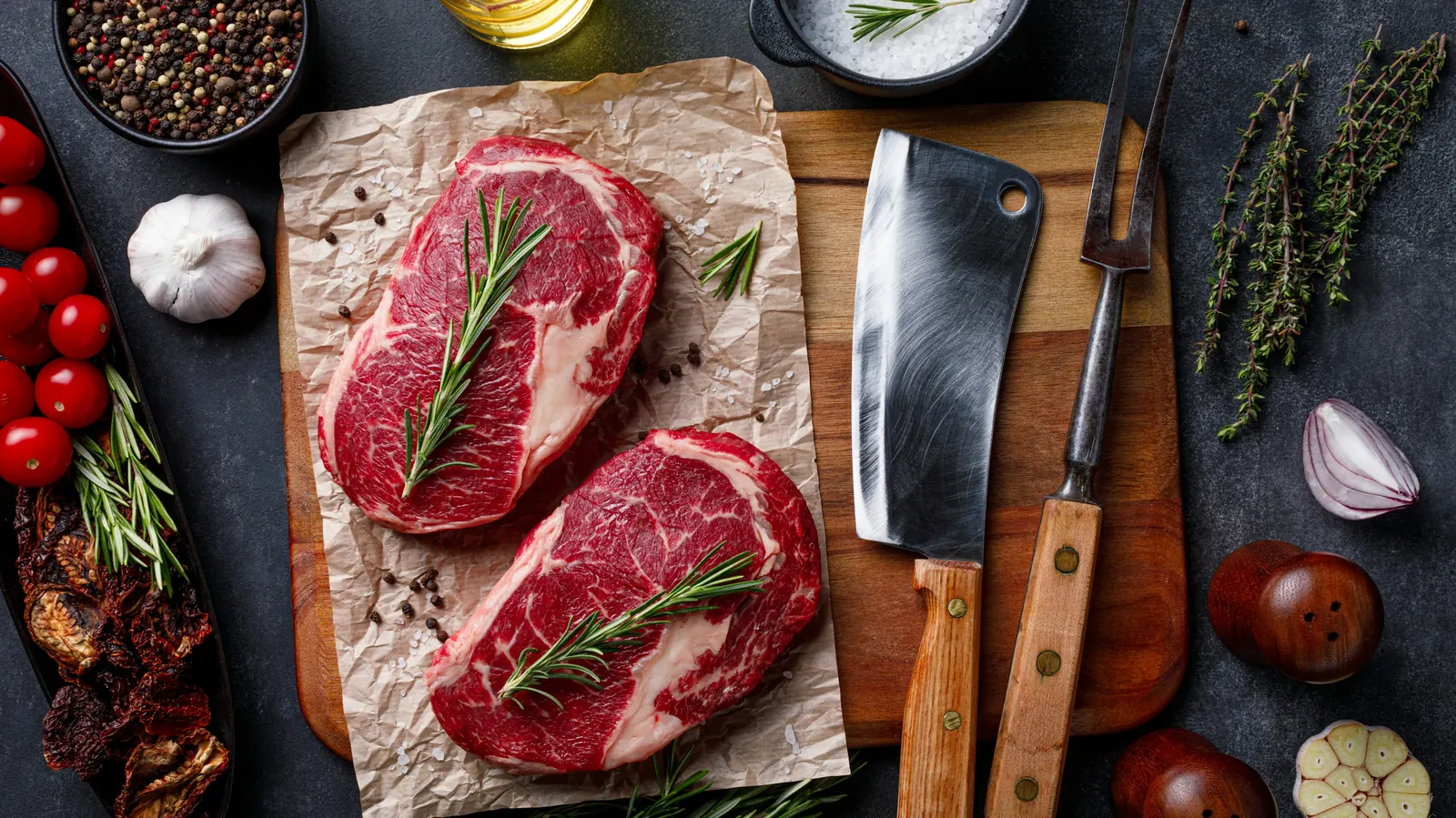
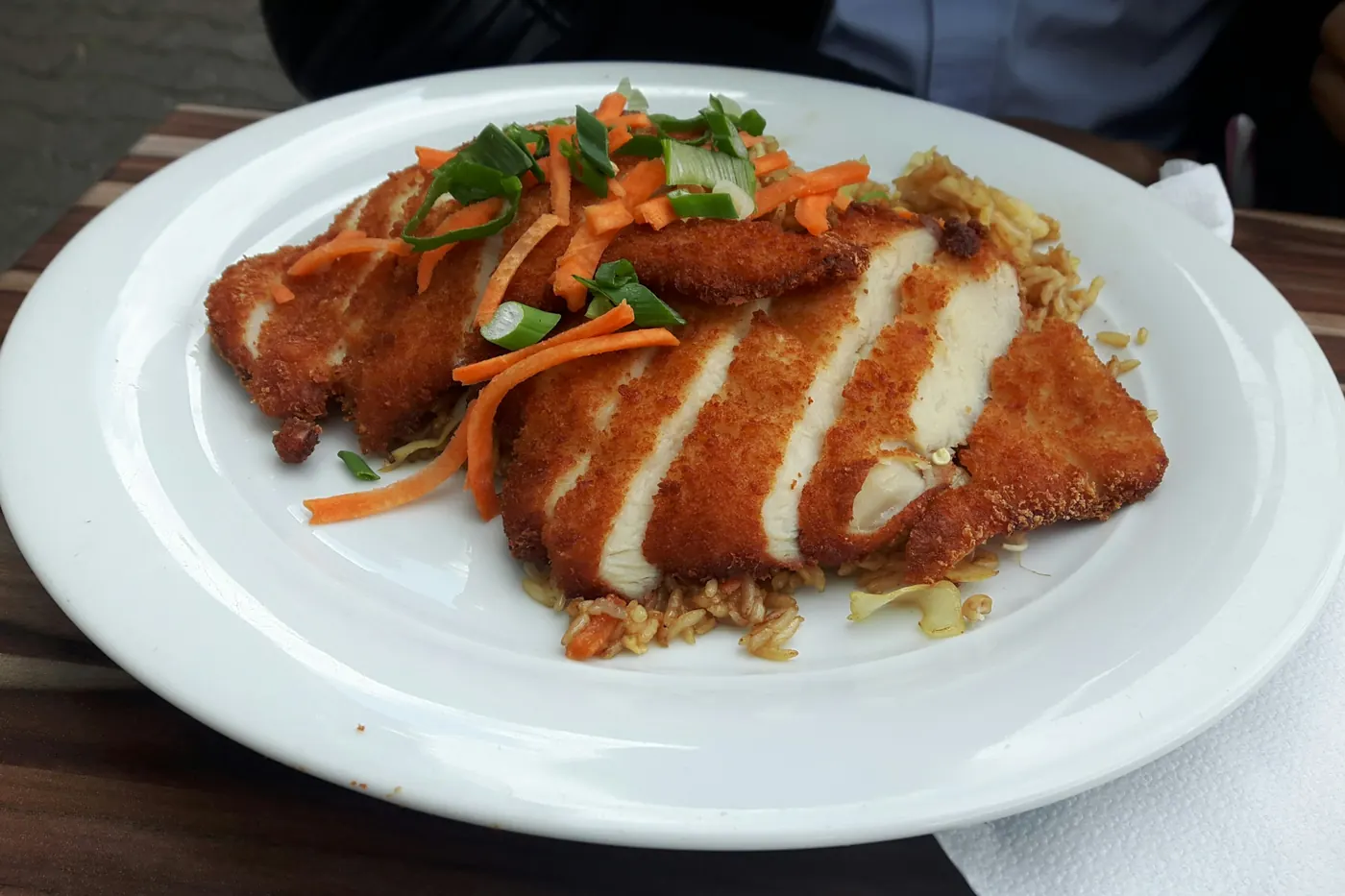
You have chicken breasts for milanesa, the recipe says to pound them to a quarter inch, and there is no mallet in the drawer. That is a common spot to be in, and it is easy to get out of. A meat mallet does two separate jobs: it flattens meat to an even thickness, and its textured face breaks up tough fibers. Most kitchens already hold something that can do the first job, and a few inexpensive tools and pantry items can do the second.
They are not equal, though. A heavy pan flattens cutlets well and does nothing for a chewy flank steak. A blade tenderizer cuts fibers but leaves the steak thick. Baking soda and enzyme powders change the meat chemically, with real limits. This guide sorts the substitutes by the job they do, says how well each one works, and names the version worth buying if you do not already own it.
Julia’s earns a commission on purchases made through links on this page, at no cost to you. Recommendations are based on what a working Mexican kitchen looks for, product specifications and published methods and reviews, which we name.
Why people look for a meat mallet alternative
The reasons fall into a few groups, and the right substitute depends on which one is yours.
- You need cutlets tonight. The chicken is thawed and the mallet is missing. A heavy skillet or a rolling pin will do the flattening.
- You only pound meat a few times a year. A tool with one job takes drawer space. A pan or pin earns its keep every day.
- Your wrists or neighbors object. Pounding is loud and jarring. Pressing tools and pantry methods are quieter.
- You want tender steak, not thin steak. For carne asada from flank or skirt, flattening is the wrong goal; cutting fibers or treating the surface is what helps.
Quick verdict: the best meat mallet alternative
For flattening chicken, pork or beef into cutlets, the best meat mallet alternative is a small, heavy cast iron pan such as the Lodge 8-inch Dual Handle Pan, used on meat between sheets of plastic wrap; Ree Drummond names a cast iron skillet first among the things she pounds meat with. A rolling pin such as the J.K. Adams Maple Bakers Rolling Pin is the second choice, and the better one if you want to roll a cutlet even after pounding. For tough steak you want to keep thick, a Jaccard 16-Blade Meat Tenderizer does what a mallet’s textured face does, more evenly. For thin-sliced meat in a stir-fry or fajitas, baking soda is the cheapest tenderizer in the kitchen. If you pound cutlets every week, though, a real pounder is still the better buy.
Five mallet substitutes at a glance
Our five standout substitutes, one for each kind of job. All seven are reviewed in full below.
| Alternative | Best for | What it does | Limits | Buy on Amazon |
|---|---|---|---|---|

Lodge 8-inch Cast Iron Dual Handle PanBest overall alternative
|
Milanesa and thin cutlets | Flattens with weight | No textured face | View on Amazon |

J.K. Adams Maple Bakers Rolling PinBest rolling pin option
|
Evening out cutlets | Taps and rolls flat | Lighter blows than a pan | View on Amazon |

Jaccard 16-Blade Meat TenderizerBest for tough steak
|
Flank, skirt, chops | Cuts fibers, keeps thickness | Does not flatten; cook to 145°F | View on Amazon |

Arm & Hammer Pure Baking Soda, 8 ozBest pantry method
|
Sliced meat for stir-fries | Raises surface pH | Thin pieces only; easy to overdo | View on Amazon |

Adolph’s Original Unseasoned Tenderizer, 3.5 ozBest enzyme option
|
Thin steaks, quick prep | Pineapple enzyme on the surface | Turns mushy if left too long | View on Amazon |
Product images from Amazon. Sizes, materials and ingredients are as each maker or listing states them; check the listing before you buy.
Flattening, cutting or softening: what a mallet really does
The Beef Checkoff’s fact sheet on mechanical tenderization describes two ways the industry tenderizes steak. Needle or blade tenderizing pierces the meat with a set of needles or blades, cutting muscle fibers and connective tissue. Cubing runs a steak through small blades on rollers until the surface is macerated, and the fact sheet notes that pounding “accomplishes the same result as cubing” and is usually done at home with a meat hammer. That is the useful split for choosing a substitute.
If what you want is an even, thin cutlet for milanesa or tortas, any heavy, flat, clean object will do the job, and weight matters more than texture. If what you want is a tougher steak that eats more tenderly, you need either blades that cut through fibers or something that works on the meat’s surface: baking soda, which America’s Test Kitchen explains raises the surface pH, or an enzyme powder. Pick the substitute by the job, not by what looks most like a hammer.
Seven tools that can stand in for a mallet
These are all from identifiable makers and showed as in stock on Amazon when we checked. The first three flatten; the next four tenderize without flattening. None of them repeats a tool from our best meat tenderizer guide, which covers real pounders, mallets and the larger Jaccard models. Each review says what results to expect and one honest reason to skip it.
1. Lodge 8-inch Cast Iron Dual Handle Pan – Weight That Flattens Evenly
A heavy pan is the substitute most cooks reach for, and with good reason. Ree Drummond says she will “use anything as a mallet,” starting with her cast iron skillet, and she lays the meat between wax paper or plastic wrap first, according to The Daily Meal’s account of her advice. The weight of the iron does much of the work, and the flat underside spreads each blow over a wide area, which is what makes an even cutlet.
A small pan is easier to control than a big one, and this Lodge has a detail that helps: two short loop handles instead of one long handle. You can hold it by both sides and bring the base down squarely, or press and slide it outward from the center of the cutlet. Lodge says it is made in the USA, seasoned with only iron and oil, and works on the stove, in the oven, on a grill and over a campfire, so it earns its place for eggs, cornbread and tortillas the rest of the week.
Expect good cutlets from chicken breast, pork loin and beef round. Do not expect the effect of a textured face; a smooth pan flattens but does not break up fibers. Work on a sturdy board on a solid counter, since Drummond warns that delicate countertops and boards can split.
Why we like it
- Cast iron weight does much of the flattening
- Two loop handles for square, level blows
- Made in the USA, per Lodge
- A pan you will use for far more than cutlets
Key specifications
| Model | L5RPL3 (listing part no. 17L5RPL3) |
|---|---|
| Type | Cast iron pan used as a pounder |
| What it does | Flattens cutlets |
| Material | Pre-seasoned cast iron |
| Size | 8 inches |
| Weight (stated) | Not stated |
| Cleaning | Not stated on the listing; dry and oil, as for any cast iron |
| Made in | USA |
Why we recommend it
Choose it if you make milanesa or chicken cutlets now and then and would rather own a pan than a single-purpose pounder.
Skip it if you already own any heavy skillet; the one in your cupboard does the same job.
Pros and cons
Pros
- Heavy, flat and even
- Easy to keep level
- Useful every day
Cons
- No textured face
- Weight not stated
- Must be kept dry and oiled
2. J.K. Adams Maple Bakers Rolling Pin – Tap, Then Roll Even
A rolling pin is the other tool Ree Drummond names, and it works in two ways. Held by the handles, the barrel can tap a cutlet flat along its length. Then, because it rolls, it can smooth out the lumps that pounding leaves, which a pan cannot. On a chicken breast between plastic wrap, that combination gives a flatter, more even cutlet than tapping alone.
J.K. Adams makes this baker’s pin in Vermont from maple, with waxed barrels, easy-grip handles, a full-length steel axle and self-lubricating bearings, according to the listing. The barrel is 10½ inches long and about 2⅛ inches across, a size that suits a cutting board rather than a whole counter. The listing gives a 5-year warranty against manufacturer’s defects.
The trade-off is force. A pin is lighter than a cast iron pan, so it takes more taps to flatten a thick breast, and the handles and bearings are not built to be used as a hammer all day. Keep the blows moderate, and keep the plastic between the meat and the wood. The listing says to hand wash it with warm soapy water and dry it promptly, which matters more after raw meat.
Why we like it
- Taps and rolls, so cutlets come out more even
- Maple with a full-length steel axle
- Made in Vermont, per J.K. Adams
- 5-year warranty against defects, per the listing
Key specifications
| Model | BRP-1 |
|---|---|
| Type | Handled rolling pin used as a pounder |
| What it does | Flattens and evens cutlets |
| Material | Maple, waxed barrel; steel axle |
| Size | 10½ x 2⅛-inch barrel |
| Weight (stated) | Not stated |
| Cleaning | Hand wash, dry promptly |
| Made in | Vermont, USA |
Why we recommend it
Choose it if you also bake or roll flour tortillas and want one tool that handles cutlets in a pinch. Our best rolling pin guide covers more styles.
Skip it if you mostly need force; a heavy pan flattens a thick breast in fewer blows.
Pros and cons
Pros
- Evens out cutlets
- Well-made, US-made pin
- Useful for baking
Cons
- Lighter blows than iron
- Wood needs careful cleaning after raw meat
- Not built as a hammer
3. Victoria Cast Iron Grill Press – A Flat Iron Weight with a Handle
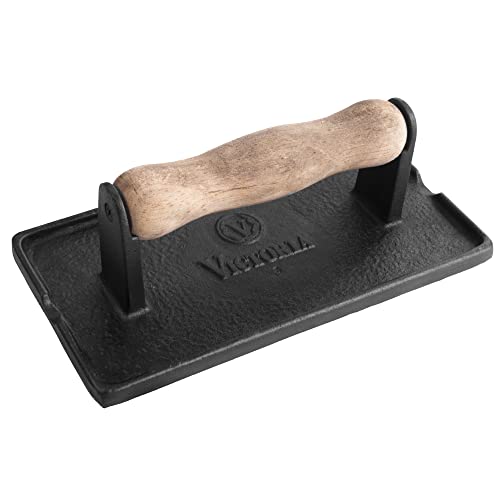
A grill press is, in shape, very close to a meat pounder: a flat, heavy iron plate with a handle on top, brought straight down. Victoria’s rectangular press weighs 2.4 pounds, according to the listing, which is heavier than either of the stated-weight pounders in our tenderizer guide. Used on a cutlet between plastic, it flattens with straight-down pressure in the same way. This use is our own kitchen reasoning from its shape and weight; Victoria sells it for pressing bacon, sandwiches and burgers.
The bottom is textured, which Victoria says helps stop the press from slipping. On meat through plastic, that texture adds a little bite, somewhere between a smooth pounder and a toothed mallet face. Victoria says it has made cast iron in its own factories in Colombia since 1939, seasons this press with flaxseed oil, and backs it with a limited lifetime warranty. The wood handle comes off with a Phillips screwdriver when the iron needs re-seasoning.
Its real home is the stove or grill, where it presses bacon flat and helps a smash burger or a torta crisp up. If you would use it that way too, it is a good second job for the tool. Note that the lead offer was from a third-party seller, not Victoria itself, when we checked.
Why we like it
- 2.4 pounds of cast iron, per the listing
- Flat face and top handle, like a pounder
- Limited lifetime warranty
- Also presses bacon, burgers and tortas
Key specifications
| Model | GAD-025 |
|---|---|
| Type | Cast iron grill press used as a pounder |
| What it does | Flattens cutlets; light texture |
| Material | Cast iron, flaxseed-oil seasoning; wood handle |
| Size | Rectangular (dimensions not stated) |
| Weight (stated) | 2.4 lb |
| Cleaning | Not stated; handle removable for re-seasoning |
| Made in | Colombia |
Why we recommend it
Choose it if you want a pounder-shaped tool that also presses meat on the grill. Our cast iron grill press guide compares more.
Skip it if you only want a cutlet tool; a pounder from the parent guide is built for exactly that.
Pros and cons
Pros
- Pounder-like weight and shape
- Two uses
- Lifetime warranty
Cons
- Not sold for pounding
- Dimensions not stated
- Third-party seller at the time of writing
4. Jaccard 16-Blade Meat Tenderizer – Cuts Fibers Without Flattening
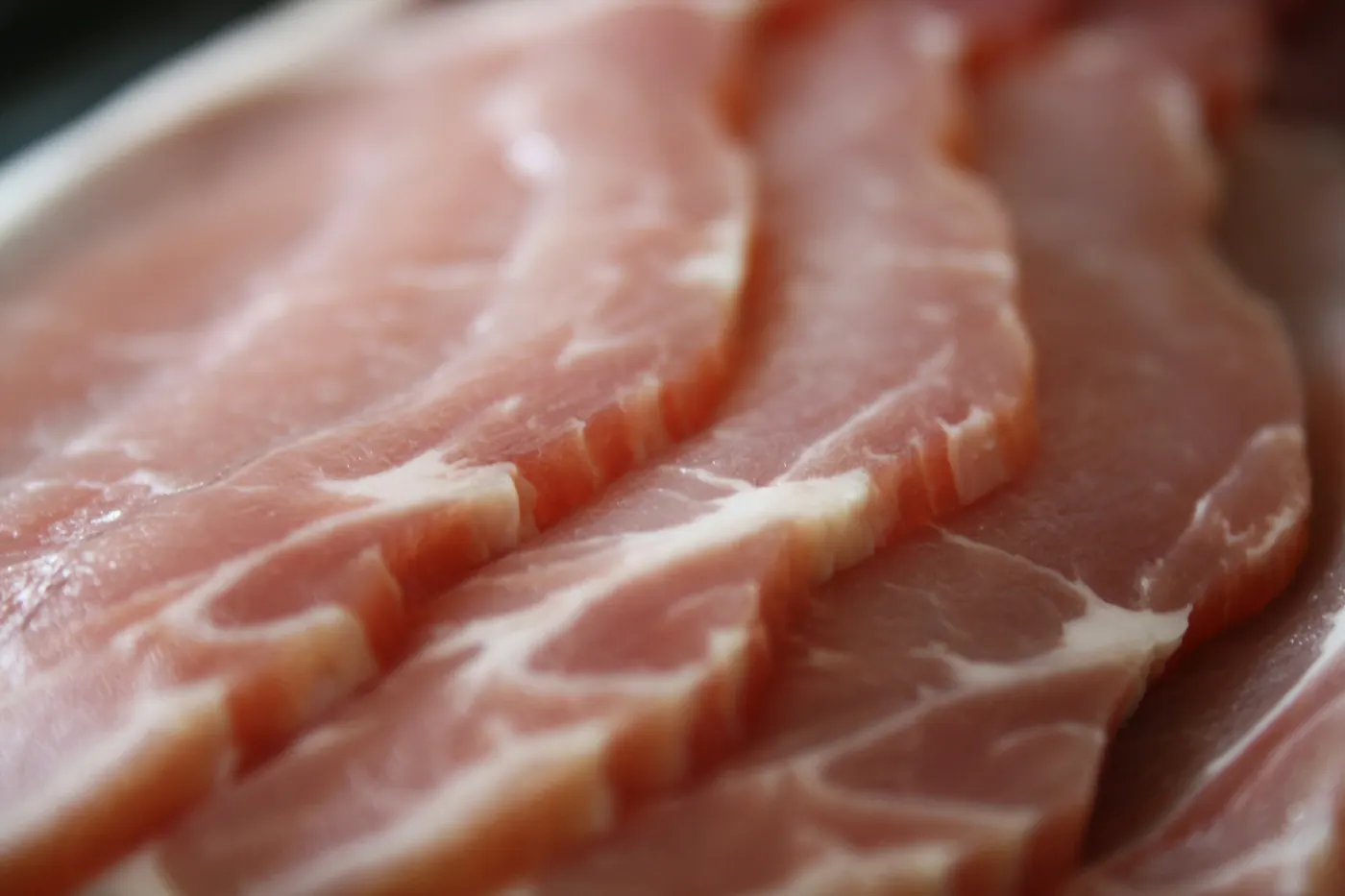
For carne asada from flank or skirt steak, flattening is not the goal: the cut is already thin, and what makes it chewy is long muscle fibers. A blade tenderizer does what the toothed face of a mallet tries to do, but by cutting rather than crushing. Pressed onto the steak, its double-edged stainless steel blades slice through fibers and connective tissue, the method the Beef Checkoff describes as needle or blade tenderization, and the steak keeps its shape and thickness.
This is Jaccard’s smallest model, the 16-blade “Super Mini.” The listing gives the size as 1 by 4 by 5.8 inches with ABS plastic columns and a limited lifetime warranty. It covers less area per press than the 48-blade model in our tenderizer guide, so it takes more passes on a big steak, but it is small enough for a drawer. Jaccard claims shorter cooking times and better marinade absorption; those are the maker’s figures and we could not check them.
A blade tenderizer changes how the steak should be cooked. The Beef Checkoff notes that surface bacteria can be carried into the center of a mechanically tenderized cut, and the FDA Food Code, as cited in USDA’s 2015 rule on tenderized beef, recommends cooking mechanically tenderized and injected meats to at least 145°F for 3 minutes. Clean the blades thoroughly after every use; the listing does not say whether it is dishwasher safe.
Why we like it
- Cuts fibers and keeps the steak thick
- Double-edged stainless steel blades
- Compact enough for a drawer
- Limited lifetime warranty, per the listing
Key specifications
| Model | 200316 |
|---|---|
| Type | Hand-held blade tenderizer |
| What it does | Cuts muscle fibers |
| Material | ABS plastic body, stainless steel blades |
| Size | 1 x 4 x 5.8 inches, 16 blades |
| Weight (stated) | Not stated |
| Cleaning | Not stated on the listing |
| Made in | Not stated |
Why we recommend it
Choose it if tough, thin steaks are the reason you wanted a mallet, and you are happy to cook them through to 145°F.
Skip it if you like steak rare, or need cutlets; it does not flatten anything.
Pros and cons
Pros
- Even tenderizing
- Keeps thickness
- Small
Cons
- Slow on large cuts
- Fiddly blades to clean
- Changes how you cook the steak
5. Arm & Hammer Pure Baking Soda, 8 oz – Tender Sliced Meat From the Pantry
Baking soda is not a mallet substitute for cutlets, but it is a real tenderizer for sliced meat. America’s Test Kitchen explains that a short soak in baking soda dissolved in water raises the pH on the meat’s surface, which makes it harder for the proteins to bond too tightly, so the meat stays tender and moist when cooked. Its tests used 1 teaspoon of baking soda for 12 ounces of sliced chicken or pork, and recipes typically call for a 15- to 20-minute treatment; ATK found 45 minutes gave the same result as 15.
That makes it a fit for meat sliced thin for fajitas, stir-fries or tacos de bistec, where a mallet would be awkward anyway. It will not flatten anything, and it works on the surface, so it suits thin pieces rather than whole steaks. Do not overdo it: Taste of Home warns that too much baking soda can over-tenderize meat.
Any plain baking soda works. This 8-ounce box is a small size that lives in the pantry, and Arm & Hammer lists baking and cooking among its uses.
Why we like it
- Method explained and measured by America’s Test Kitchen
- Works in 15 to 20 minutes
- Already in most pantries
- No tool to clean
Key specifications
| Model | 382039 |
|---|---|
| Type | Baking soda (sodium bicarbonate) |
| What it does | Raises surface pH so meat stays tender |
| Material | Pure baking soda |
| Size | 8 oz box |
| Weight (stated) | 8 oz |
| Cleaning | None needed |
| Made in | Not stated |
Why we recommend it
Choose it if what you really want is tender strips of chicken, pork or beef for a quick sear.
Skip it if you need flat cutlets or are cooking a whole steak; it works only on thin, sliced meat.
Pros and cons
Pros
- Cheap and quick
- Published method
- Nothing to store
Cons
- Sliced meat only
- Easy to use too much
- Does not flatten
6. Adolph’s Original Unseasoned Tenderizer, 3.5 oz – Pineapple Enzyme in a Shaker
Powdered meat tenderizers work on the meat itself. As Food Republic explains, they rely on protease enzymes, chiefly bromelain and papain, which come from pineapple and papaya, and these break down the proteins in collagen. Adolph’s lists its ingredients as sea salt, sugars and pineapple fruit extract, with no MSG, and the unseasoned version leaves your own marinade or spice rub in charge of flavor.
Food Republic suggests poking holes in the meat so the tenderizer reaches past the surface, and that is the main limit: enzymes work where they touch, so the powder suits thin steaks and chops better than a thick roast. The other limit is time. Leaving it on for more than a few minutes, or up to half an hour for an especially thick cut, risks over-tenderizing, Food Republic warns, and the meat turns gelatinous. Follow the directions on the label, and watch the salt in the rest of the seasoning.
For a thin sirloin or chuck steak headed for the grill, it is the quickest substitute here.
Why we like it
- Short ingredient list: sea salt, sugars, pineapple extract
- No MSG, per the listing
- Unseasoned, so it works under any rub
- Small shaker for occasional use
Key specifications
| Model | Original Unseasoned, 3.5 oz |
|---|---|
| Type | Enzyme meat tenderizer powder |
| What it does | Breaks down surface proteins |
| Material | Sea salt, sugars, pineapple fruit extract |
| Size | 3.5 oz |
| Weight (stated) | 3.5 oz |
| Cleaning | None needed |
| Made in | Not stated |
Why we recommend it
Choose it if you grill thin steaks and want them more tender with no tool at all.
Skip it if you plan to marinate for hours; long contact can turn the surface mushy.
Pros and cons
Pros
- Fast
- Simple ingredients
- No equipment
Cons
- Surface action only
- Over-tenderizes if left too long
- Adds salt
7. Ofargo 1-oz Plastic Marinade Injector – Moisture and Flavor Inside a Thick Cut

A marinade injector is the weakest mallet substitute here, and worth including only for one case: a thick cut you do not want to flatten, such as a pork shoulder or a whole chicken. It does not cut fibers or flatten anything. It puts brine or a thin marinade deep inside the meat through a hollow needle, where a surface marinade cannot reach, so the meat cooks up juicier and seasoned throughout. That is a different kind of help from a mallet’s, and you should expect juiciness, not a change in texture.
Ofargo’s 1-ounce injector has a plastic barrel with ml and ounce markings, a 3-inch 304 stainless steel needle and plunger rod, and silicone seals, according to the listing. It weighs about 60 grams, and Ofargo says it is dishwasher safe and comes with a small brush for the needle. Ground herbs must be finer than the needle hole, the listing notes. Ofargo itself recommends its stainless 2-ounce model for heavy, long-term use.
Injected meat, like blade-tenderized meat, falls under the Food Code’s recommendation of at least 145°F for 3 minutes. For bigger jobs, our best meat injector guide covers sturdier models.
Why we like it
- Gets marinade inside thick cuts
- Stainless needle and plunger rod
- Dishwasher safe, per Ofargo
- Light and simple
Key specifications
| Model | OFG-11-005 |
|---|---|
| Type | Marinade injector |
| What it does | Puts brine or marinade inside the meat |
| Material | Plastic barrel; 304 stainless needle and rod; silicone seals |
| Size | 1 oz (30 ml); 3-inch needle |
| Weight (stated) | About 60 g |
| Cleaning | Dishwasher safe; brush included |
| Made in | Not stated |
Why we recommend it
Choose it if thick roasts or whole birds are what you cook, and dry meat is the problem you are trying to solve.
Skip it if you want tender steak or flat cutlets; it does neither.
Pros and cons
Pros
- Seasons all the way through
- Easy to clean
- Small
Cons
- Does not tenderize like a mallet
- Plastic barrel
- Small capacity
How to pound cutlets without a mallet
This works with the pan, the rolling pin or the press above.
- Set up a solid surface. Use a sturdy cutting board on a solid counter. Ree Drummond warns that delicate countertops and boards can split.
- Wrap the meat. Lay the chicken breast or slice of beef between two sheets of plastic wrap or wax paper, or inside a zip-top bag cut open at the sides. It keeps the meat from tearing and the tool clean.
- Start in the middle. Bring the pan base or pin down on the thickest part first, then work outward with firm, even blows rather than hard ones.
- Even it out. With a rolling pin, roll from the center to the edges to smooth out dents. Aim for an even quarter inch or a little less for milanesa.
- Clean up like raw meat. Wash the tool and board in hot soapy water, and dry cast iron at once.
These steps are ordinary kitchen practice rather than one source’s method; the plastic and the solid surface come from Drummond’s advice. Our meat tenderizer mallet guide goes further on getting milanesa thin without tearing it.
What we left out, and why
Several other substitutes come up often. Heavy cans, a wine bottle and the heel of your hand all flatten meat, and Drummond mentions cans and the heel of the hand; they need no buying advice. A fork pressed all over a steak is a crude blade tenderizer, slower and less even than a Jaccard. Fresh pineapple and papaya are the sources of the enzymes in powdered tenderizers, and Food Republic says figs, kiwis and mangoes contain similar ones, but fresh fruit is harder to measure and time than a powder. And a pressure cooker or slow braise is the best answer for truly tough cuts like chuck or shank, but that is a different way of cooking, not a mallet substitute.
When a real mallet or pounder makes more sense
If you make milanesa, schnitzel or chicken for tortas every week, buy a pounder. A heavy pounder with a smooth face and a textured face does both jobs in one tool, with a grip made for wet hands, and it saves your pans and rolling pins from the abuse. Our guide to the best meat tenderizer compares pounders, mallets and blade tenderizers, with America’s Test Kitchen’s findings on which shapes flatten most evenly.
Meat mallet alternative questions, answered
What can I use instead of a meat mallet?
For flattening, a heavy skillet, a rolling pin or a cast iron grill press, used on meat between plastic wrap. For tough steak you want to keep thick, a blade tenderizer. For thin-sliced meat, a short baking soda treatment.
Can I use a rolling pin to pound chicken?
Yes. Tap the breast flat with the barrel through plastic wrap, then roll from the center outward to even it. It takes more blows than a heavy pan.
Is tenderizing without a mallet as good?
For flattening, a heavy pan comes close. For breaking up fibers, a blade tenderizer is more even than a textured mallet face. What you lose is the convenience of one tool that does both.
Does baking soda tenderize steak?
It works best on sliced meat. America’s Test Kitchen explains that it raises the surface pH so the meat stays tender and moist; a whole steak has too little surface for its thickness. Use only a little, since too much can over-tenderize.
Do blade-tenderized steaks need to be cooked differently?
Yes. Blades can carry surface bacteria inside the meat, so the FDA Food Code, as cited by USDA, recommends cooking mechanically tenderized and injected meats to at least 145°F for 3 minutes. Check it with a meat thermometer.
Our final word on tenderizing without a mallet
Reach for a heavy cast iron pan when you need cutlets, and a rolling pin when you want them extra even. Use a Jaccard blade tenderizer for tough flank and skirt steak, baking soda for sliced meat, and an enzyme powder for thin steaks when time is short. If pounding becomes a habit, buy a proper pounder. For the rest of the tools on a Mexican kitchen counter, see our guide to Mexican cooking tools.
And if tonight is not a milanesa-making night, see the menu or call to order.