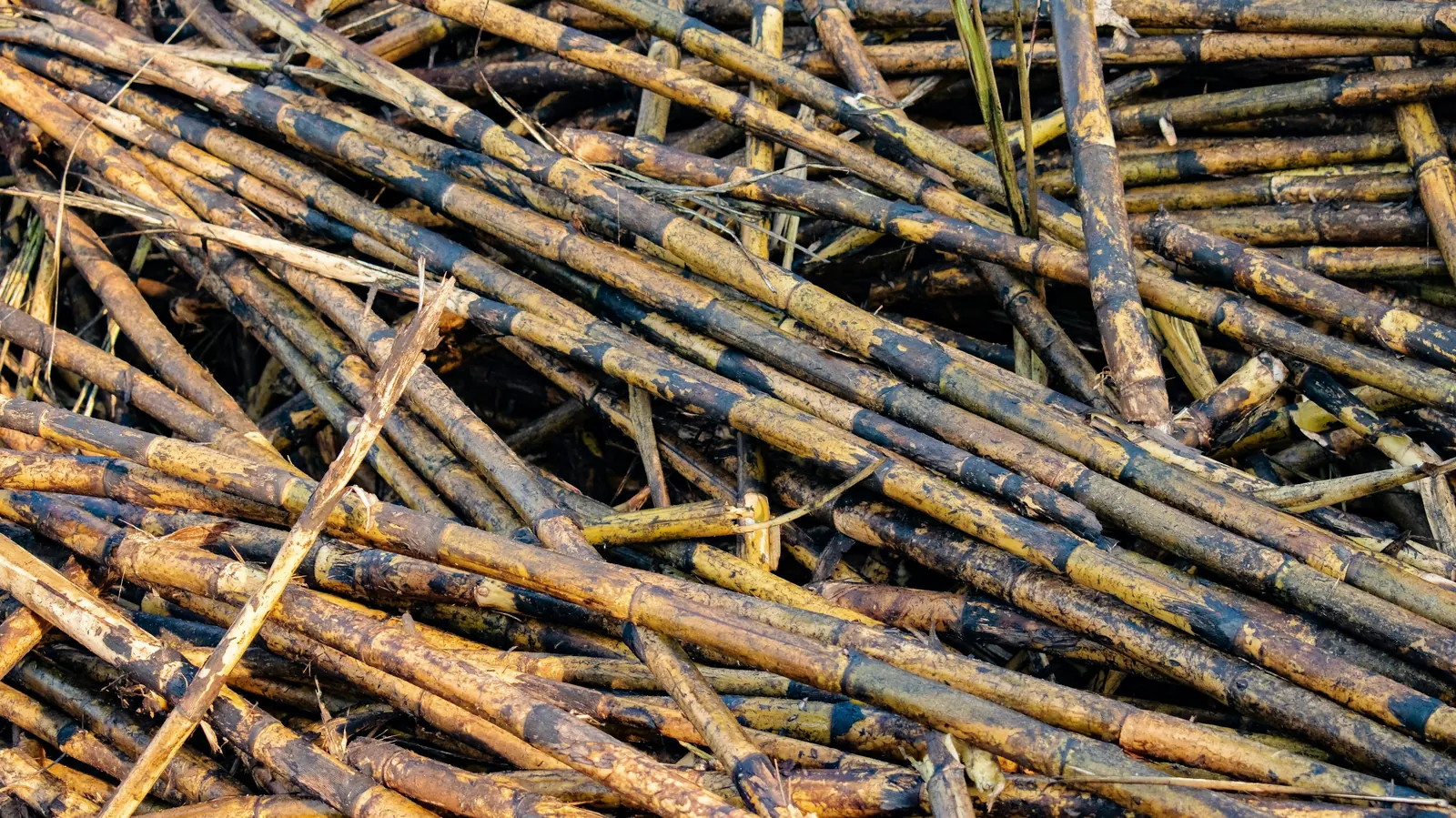
A Mexican recipe for café de olla or capirotada calls for piloncillo, and the nearest supermarket sells brown sugar. Both are brown, both are cane sugar, and both taste of molasses, so it is natural to ask whether one can stand in for the other. Mostly it can, but they are made in opposite ways, and that shows in the flavor, the texture and how you measure them.
Piloncillo is unrefined cane sugar: the juice of the sugar cane boiled down and poured into molds, with its molasses never taken out. American brown sugar is usually refined white sugar with some molasses added back. This guide explains how each is made, how they differ in flavor, moisture and form, how to substitute one for the other using published ratios, where panela fits in, and which to buy for the dish you are making.
Julia’s earns a commission on purchases made through links on this page, at no cost to you. Recommendations are based on what a restaurant kitchen looks for, product specifications and verified buyer reports.
Quick verdict: piloncillo or brown sugar?
Use piloncillo for the Mexican dishes built around it, café de olla, capirotada, ponche and calabaza en tacha, where it melts into a syrup and its deeper flavor carries the dish; our pick is Goya Panela-Piloncillo. Use dark brown sugar for everyday baking and as the stand-in when you have no piloncillo; our pick is Domino Dark Brown Sugar. To swap, one published ratio is 1 cup of dark brown sugar plus 1 tablespoon of molasses for an 8-ounce cone.
The rest of this page explains each difference and the swaps in detail.
Piloncillo vs brown sugar at a glance
The details below come from the makers, their listings and the published sources named in each section.
| Piloncillo (and panela) | Brown sugar | |
|---|---|---|
| What it is | Unrefined cane sugar | Refined white sugar with molasses added |
| How it is made | Cane juice boiled down, poured into molds to harden | Molasses mixed back into refined sugar crystals |
| Molasses | Never removed | About 3.5% (light) or 6.5% (dark) by weight |
| Form | Hard cones or blocks; panela also granulated | Soft, moist, loose granules |
| Flavor (as described) | More intense and layered; dark styles toward burnt caramel | Milder and more straightforward; dark has a stronger molasses taste |
| Measuring | By the cone or by weight; grate or melt first | By the cup, usually packed |
| Best for | Café de olla, capirotada, ponche, syrups | Cookies, cakes, glazes, sauces, marinades |
| Storage | Airtight, cool and dark | Covered container; hardens as it dries |
How each sugar is made
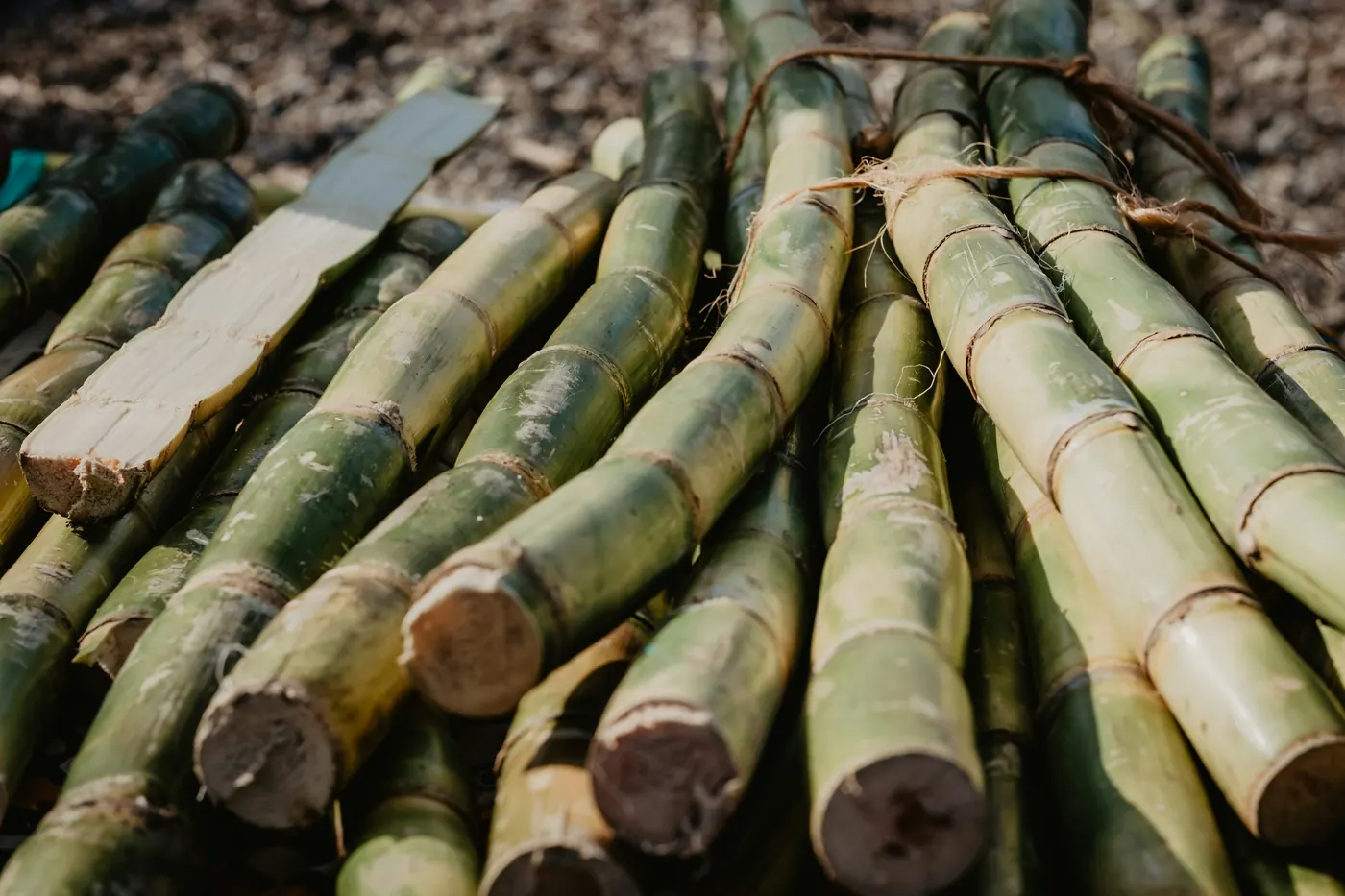
Piloncillo is about as close to sugar cane as sugar gets. The cane is pressed, the juice is boiled until it is thick, and the syrup is poured into cone-shaped molds to set. Mama Maggie’s Kitchen describes it simply as raw, pure sugar cane, made by boiling the juice; Chowhound calls it unrefined cane sugar cooled in molds. Nothing is separated out along the way, so the molasses stays in the sugar. CooksInfo notes that there is a light style, blanco, made from green sugar cane, and a dark style, oscuro, made from purple cane.
Brown sugar goes the other way. Cane juice is boiled, dried and crystallized, as Domino describes the start of its process, and refining separates the white sugar crystals from the molasses. Most brown sugar is then made by adding molasses back. University of Illinois Extension puts it plainly: brown sugar begins as white sugar and then has molasses added back in, about 3.5 percent by weight for light brown sugar and about 6.5 percent for dark.
That is the root of every other difference. Piloncillo keeps whatever the cane juice contained; brown sugar is a controlled mix of pure sugar and a measured amount of molasses, which makes it consistent from bag to bag.
Where panela fits in
Panela is made the same way as piloncillo: unrefined cane sugar, boiled down from the juice. Piloncillo is the Mexican name, usually for cones; panela is the name used across much of Latin America for cones, round blocks, small pieces and loose granules. For cooking, treat them as the same ingredient in a different shape. Granulated panela is the easiest form to measure, and some makers sell it as a one-for-one replacement for brown sugar. Our guide to the best piloncillo brand covers cones, blocks and granulated panela side by side.
Flavor: what the sources say
Because the molasses was never removed, piloncillo tastes deeper than brown sugar. Chowhound describes it as having a much more intense and layered flavor than commercial brown sugar, and brown sugar’s as milder and more straightforward. Mama Maggie’s Kitchen says the light style has a milder molasses taste than the dark, which has almost a burned caramel taste.
Brown sugar’s flavor depends on how much molasses it has. Domino says its dark brown sugar is noticeably darker than its light brown sugar and has a stronger molasses taste. That is why dark brown sugar, rather than light, is the usual stand-in for piloncillo.
We have not tasted these sugars side by side for this guide; the descriptions above are the sources’ own words.
Moisture, texture and form
This is the difference you notice in the kitchen. Piloncillo is hard and dense, and you have to grate it, chop it or dissolve it before it does anything. A cone dropped into a pot of hot water melts slowly into a syrup, which is exactly what café de olla and capirotada need. For measured amounts, grate it on the coarse side of a box grater, or saw it with a serrated knife on a board set on a damp cloth.
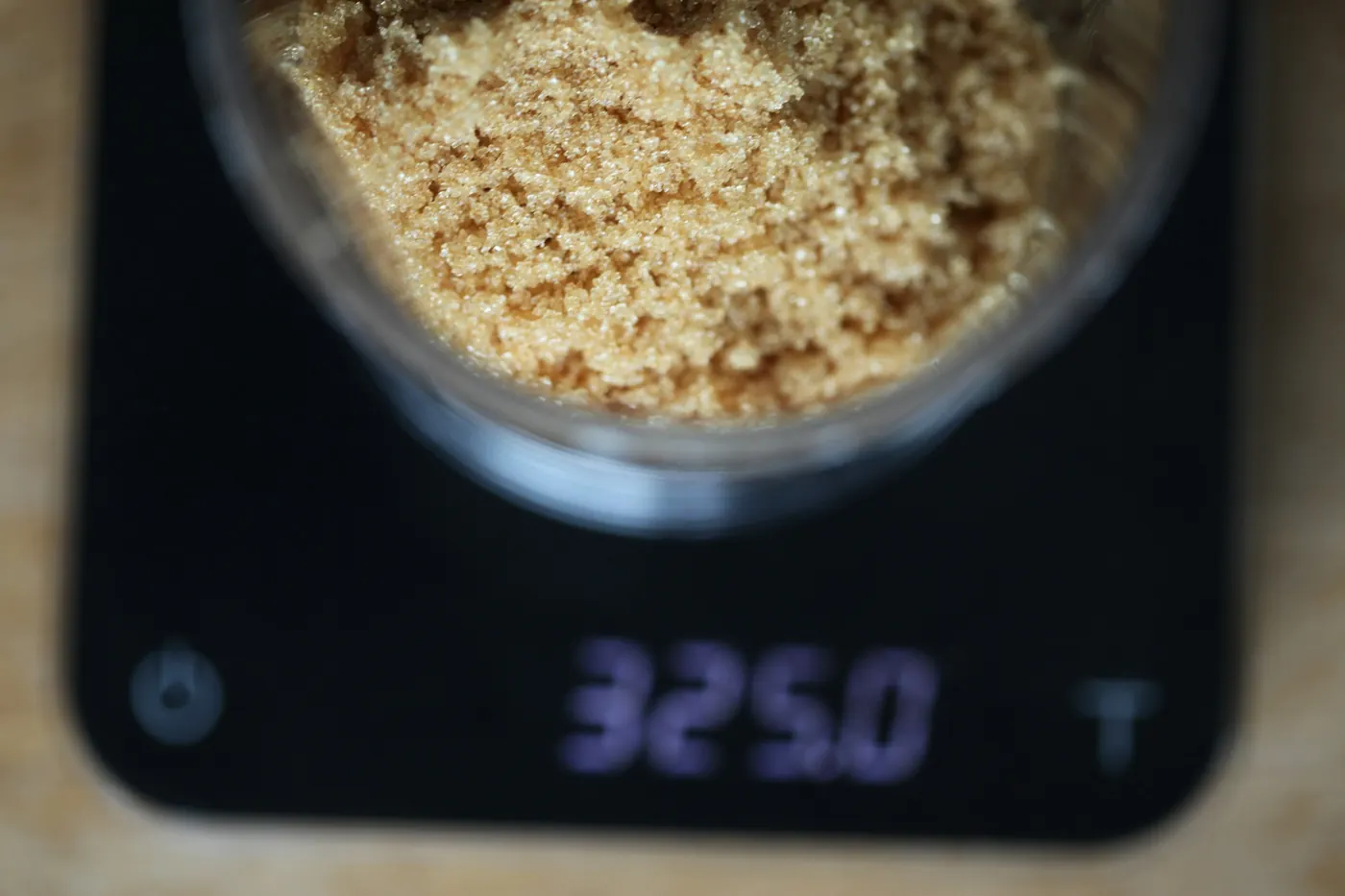
Brown sugar is soft and moist from the start, ready to spoon, cream with butter or sprinkle. The molasses in it absorbs water, which is what keeps cookies chewy, as Illinois Extension notes. The same moisture is its weakness: left open, the moisture evaporates and the sugar turns hard as a brick. Illinois Extension suggests a slice of bread on top for a day to soften it, and Domino says softening methods work by returning moisture to the sugar.
Piloncillo has the opposite problem in damp weather: it can turn sticky. Dry or sticky, it still melts into a recipe.
Substitution ratios, from published sources
The swaps below come from the named sources. Weighing gives the most reliable result, because cones vary in size and brown sugar can be packed tightly or loosely.
- Brown sugar in place of piloncillo: Mama Maggie’s Kitchen gives 1 cup of dark brown sugar plus 1 tablespoon of molasses for one 8-ounce cone. The extra molasses moves brown sugar closer to piloncillo’s depth.
- Piloncillo in place of brown sugar: Chowhound suggests using about 75 percent of the brown sugar’s weight in piloncillo. Grate it first so it mixes evenly.
- Which brown sugar: Chowhound says regular brown sugar works in a pinch, but darker, less refined sugars such as dark brown sugar or muscovado are better substitutes.
- Light or dark brown sugar: Domino says the two can be used interchangeably in most recipes; when a recipe does not specify, it recommends light.
Check the cone size before you convert. CooksInfo puts piloncillo cones at anything from about three-quarters of an ounce to nine ounces, so “one cone” in a recipe can mean very different amounts. The ratios above assume an 8-ounce cone, so weigh what you buy.
Uses: café de olla, capirotada and baking
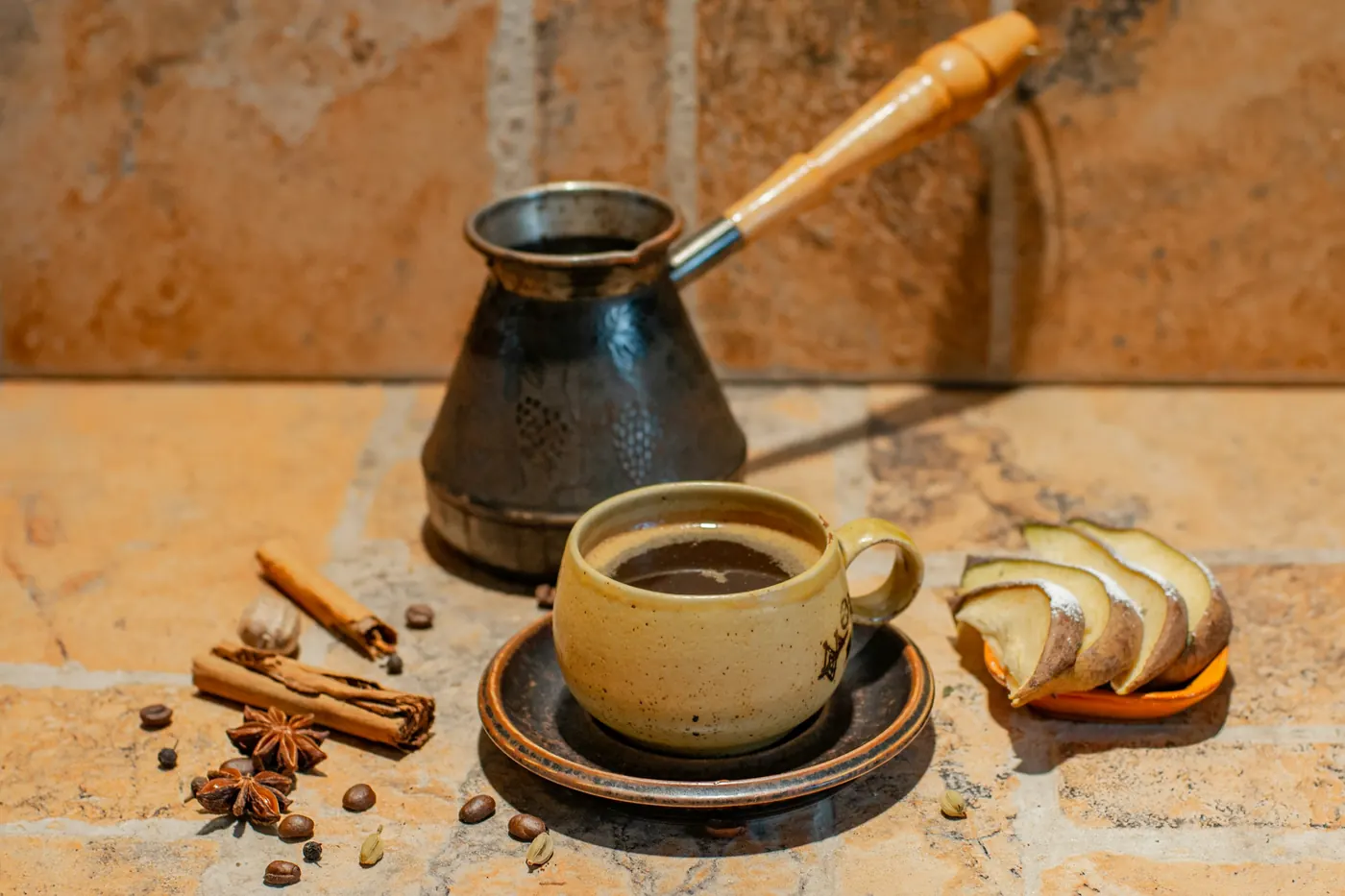
Café de olla. Coffee brewed with cinnamon and piloncillo, traditionally in a clay pot, as our guide to Mexican desserts describes. Piloncillo is the better choice here: the cone dissolves in the simmering water and gives the coffee its molasses depth. Dark brown sugar works if it is all you have.
Capirotada. The Lenten bread pudding of bread soaked in piloncillo syrup with cheese, raisins and nuts. The syrup is made by melting piloncillo with water and cinnamon, so a cone or a round block is the natural fit.
Ponche and calabaza en tacha. The Christmas fruit punch and the pumpkin simmered in syrup both rely on piloncillo melted into liquid.
Baking. Brown sugar is the practical choice for cookies, cakes and anything creamed with butter, because it is soft, measures by the cup and spreads evenly. Domino recommends light brown sugar for cookies, shortbread, spiced cakes, brownies and crumble toppings, and dark brown sugar for gingerbread, chocolate cakes, fudge, glazes, barbecue sauces, marinades and syrups. Granulated panela can go into baking too, but a solid cone has to be grated finely first.
Choose piloncillo if… / Choose brown sugar if…
Choose piloncillo if…
- You are making café de olla, capirotada, ponche or calabaza en tacha.
- The sugar will be melted into water or syrup rather than creamed.
- You want the deeper, more layered flavor the sources describe.
- You want sugar with its molasses never removed.
Choose brown sugar if…
- You are baking cookies, cakes or bars and need sugar that creams with butter.
- You want to measure by the cup without grating.
- You need a stand-in for piloncillo today; choose dark.
- You want the same result from bag to bag.
Our pick on each side
These are the two we would put in the pantry. If you prefer granulated panela, blocks or organic options, our piloncillo brand guide compares seven.
1. Goya Panela-Piloncillo – A Familiar Name on the Sweet Shelf

Goya is a name many cooks already know from the grocery aisle, and this is its panela-piloncillo. Be aware that the Amazon listing says almost nothing: it gives the name, the words brown sugar, and a size field of 16 fluid ounces, which is an odd unit for a solid sugar.
So the shape, the weight and the ingredients are all things to confirm in the photos and on the package when it arrives. Whatever the shape, the kitchen method is the same one described above: grate it, chop it or melt it, then weigh it if a recipe gives an amount.
The brown sugar substitution above assumes an 8-ounce cone, so weigh what you get before you convert. It is sold by a third-party seller, Northline Trading Post, rather than by Amazon.
Why we like it
- A maker most cooks can identify
- Named panela-piloncillo, per the title
- Works for syrups once melted
- A single pack to try
Key specifications
| Size | 16 fl oz in the listing’s size field; weight not stated |
|---|---|
| Count | 1 |
| Form | Not stated |
| Ingredients | Not stated on the listing |
| Texture | Hard; grate or melt |
| Flavor (per maker) | Not stated |
| Origin | Not stated |
| Shelf storage | Wrapped, in a dry cupboard |
Why we recommend it
Choose it if you want to make café de olla, capirotada or ponche the traditional way and prefer a maker you can identify.
Skip it if you want every detail confirmed before you buy, or if you mostly bake cookies and cakes; brown sugar or granulated panela is easier for that.
Pros and cons
Pros
- Identifiable maker
- Traditional sweetener for these dishes
Cons
- Listing states almost nothing
- Form, weight and ingredients not on the listing
- Third-party seller
2. Domino Dark Brown Sugar, 2 lb, 2-Pack – The Closer Stand-In for Piloncillo

Of the two brown sugars, dark is the one to keep if you cook from Mexican recipes. Domino says its dark brown sugar is noticeably darker than the light and has a stronger molasses taste, which brings it closer to piloncillo than light brown sugar.
This Amazon listing is a two-pack of 2-pound resealable zipper bags with a recipe card, sold by a reseller rather than by Domino. US grocery retailers list the 16-ounce package of the same sugar (Domino Premium Pure Cane Dark Brown Sugar) with brown cane sugar as the only ingredient, and describe it as gluten free, kosher certified and Non-GMO Project Verified. Domino’s FAQ confirms that none of its sugars contain gluten.
Domino suggests dark brown sugar for gingerbread, chocolate cakes, fudge, glazes, barbecue sauces, marinades and syrups. For storage, it says to keep brown sugar in a covered container, not in the refrigerator, and to use it within six months of purchase for the best flavor. If it hardens, Domino’s softening methods return moisture to the sugar; soften only what you need, because it can harden again as it cools.
Why we like it
- Stronger molasses taste than light brown sugar (Domino)
- Pure cane sugar, per retailer listings
- Soft and ready to measure by the cup
- Gluten free (Domino FAQ)
Key specifications
| Size | 2 lb resealable zipper bag |
|---|---|
| Count | 2 bags |
| Form | Loose granules |
| Ingredients | Brown cane sugar (retailer listings) |
| Texture | Soft and moist; hardens if left open |
| Flavor (per maker) | Stronger molasses taste than light brown |
| Origin | Not stated |
| Shelf storage | Covered container, not refrigerated (Domino) |
Why we recommend it
Choose it for everyday baking and as your stand-in when a recipe calls for piloncillo and you have none: 1 cup plus a tablespoon of molasses replaces an 8-ounce cone, per Mama Maggie’s Kitchen.
Skip it if you are making café de olla or capirotada for the first time and want the dish as written; buy piloncillo for that.
Pros and cons
Pros
- Darker and more molasses-forward than light
- Measures by the cup
- Storage and softening guidance from Domino
Cons
- Sold by a reseller, with an added recipe card
- Hardens if not kept covered
- Four pounds is a lot for occasional baking
How we compared these two sugars
We compared piloncillo and brown sugar on what a Mexican kitchen needs from a sweetener: how it is made, how it tastes according to published descriptions, how it behaves in the pot or the mixing bowl, and how to swap one for the other. Production details come from University of Illinois Extension, Domino and Chowhound; flavor descriptions and ratios from Chowhound, Mama Maggie’s Kitchen and the makers; cone sizes and styles from CooksInfo. Product details come from the Amazon listings, Domino’s FAQ and US grocery retailer listings, and both products were in stock when we checked. We have not cooked with or tasted these products for this guide, and we make no health claims for either sugar.
Piloncillo and brown sugar questions, answered
Is piloncillo the same as brown sugar?
No. Piloncillo is unrefined cane sugar made by boiling down cane juice and molding it, with the molasses never removed. Brown sugar is usually refined white sugar with molasses added back, about 3.5 percent for light and 6.5 percent for dark, per Illinois Extension.
Can I use brown sugar instead of piloncillo?
Yes. Mama Maggie’s Kitchen gives 1 cup of dark brown sugar plus 1 tablespoon of molasses for one 8-ounce cone. Dark brown sugar is a closer match than light.
How much piloncillo replaces brown sugar?
Chowhound suggests about 75 percent of the brown sugar’s weight in piloncillo, grated first. Weigh it if you can, because cones vary in size.
Is panela the same as piloncillo?
Essentially, yes. Both are unrefined cane sugar boiled down from the juice. Piloncillo is the Mexican name, usually for cones; panela is used across much of Latin America for cones, blocks and granules.
Why is my brown sugar hard?
Its moisture has evaporated. Keep it in a covered container; to soften it, Illinois Extension suggests a slice of bread on top for a day.
Which sugar belongs in your pantry
Keep dark brown sugar for baking and as a backup, and buy piloncillo for the Mexican dishes that are built around it, where it melts into the syrup and gives the dish its depth. If you cook café de olla or capirotada even a few times a year, a pack of cones is worth having. Piloncillo sits on the sweet shelf of a Mexican pantry alongside chocolate, canela and vanilla; our guide to Mexican pantry staples covers that shelf.
And if you would rather someone else made dinner tonight, see the menu or call to order.