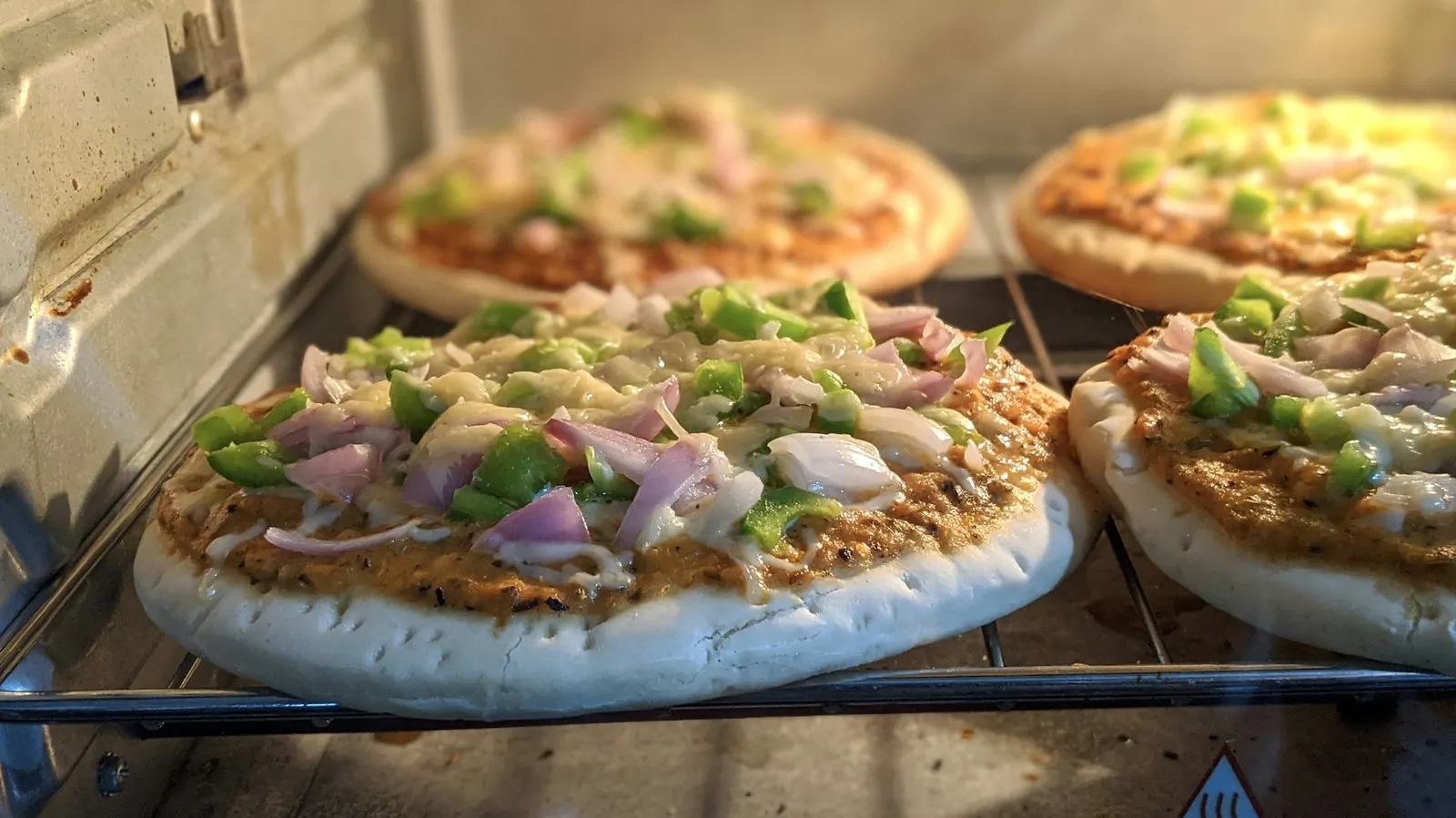
A pizza peel does one tricky job: it carries a soft, topped round of raw dough to a stone or steel that is far too hot to touch, then lets go of it cleanly. Plenty of good home pizzas have been launched without one. Most kitchens already own something flat enough to do the work, and a couple of inexpensive tools make it close to foolproof.
This guide covers the pizza peel alternative that suits each kitchen: a rimless cookie sheet, a rimmed sheet pan turned upside down, parchment, a thin cutting board, a conveyor-style peel, and a perforated pizza pan that skips the launch altogether. For each one we say how well it does the job and where it falls short.
Julia’s earns a commission on purchases made through links on this page, at no cost to you. Recommendations are based on what a restaurant kitchen looks for, product specifications and verified buyer reports.
Why cooks launch pizza without a peel
A wooden peel for launching and a thin metal one for retrieving is the classic setup, and our best pizza peel guide covers the ones worth buying. There are good reasons to use something else, at least for a while:
- You make pizza a few times a year. A big paddle with a long handle is awkward to store for a once-a-month dinner. A cookie sheet already lives in the drawer.
- Sticking is the real problem. King Arthur Baking’s Martin Philip calls sticking dough “the greatest liability” of the launch. A sheet of parchment under the pizza removes that risk entirely, whatever you slide it on.
- Small kitchens and small ovens. A 14-inch peel with a long handle needs room to swing. A sheet pan or board is shorter and fits in a cupboard.
- You want to try pizza before buying more gear. If you have just bought a pizza stone or a pizza steel, launching with what you own first tells you whether a dedicated peel is worth the space.
The trade-off is control. A peel has a thin, tapered front edge and a handle that keeps your hands away from the heat. Most alternatives have neither, so you work closer to the oven and need a firmer, quicker slide. And none of them except the conveyor peel is good at fetching the finished pizza out again.
Quick verdict: the best pizza peel alternative
For most kitchens, the best pizza peel alternative is a Nordic Ware Naturals Large Classic Cookie Sheet: it is flat aluminum with one open front edge that Nordic Ware says baked goods slide right off, which is exactly what a launch needs. If you already own a rimmed half sheet, flip it over and use the back, the method Food Network Kitchen describes; the Fat Daddio’s natural aluminum half sheet is a sturdy one to buy if you need it. Put Reynolds pre-cut parchment sheets under the dough if sticking worries you. If you want peel-like control with almost no sticking, the Super Peel Pro Composite conveyor peel was America’s Test Kitchen’s top-rated baking peel. And if you would rather skip the launch altogether, build and bake on a Chicago Metallic 14-inch pizza crisper pan. Make pizza every week? A real peel is still the better buy.
Five launching tools side by side
Our five standout picks, one per approach, with the details each maker or listing states. All six tools are reviewed in full below.
| Tool | Approach | Best for | Stated heat limit | Buy on Amazon |
|---|---|---|---|---|

Nordic Ware Naturals Large Classic Cookie SheetBest overall
|
Slide off the open front edge | Launching onto a stone or steel | Not stated (stays out of the oven) | View on Amazon |

Fat Daddio’s Natural Aluminum Half Sheet Pan, 18 x 13Best flipped sheet
|
Turn over, launch off the back | Kitchens that want one pan for everything | Oven safe to 550°F | View on Amazon |

Reynolds Kitchens Pre-Cut Parchment Cookie Baking Sheets, 22-CountBest for sticky dough
|
Pizza and paper go in together | Wet dough, nervous first launches | Oven safe to 425°F | View on Amazon |
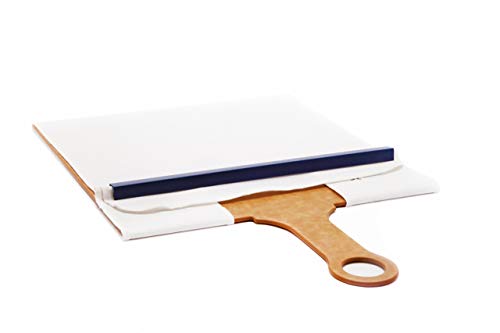
Super Peel Pro Composite Conveyor Peel, 14-InchClosest to a real peel
|
Cotton conveyor belt sets dough down | Soft doughs, breads, no parchment | Not stated | View on Amazon |

Chicago Metallic 14-Inch Nonstick Pizza Crisper PanBest for no launch at all
|
Build and bake on the pan | No stone, frozen pizza, beginners | Oven safe to 450°F | View on Amazon |
Product images from Amazon. Details are as stated by each maker or listing. Check the listing before you buy.
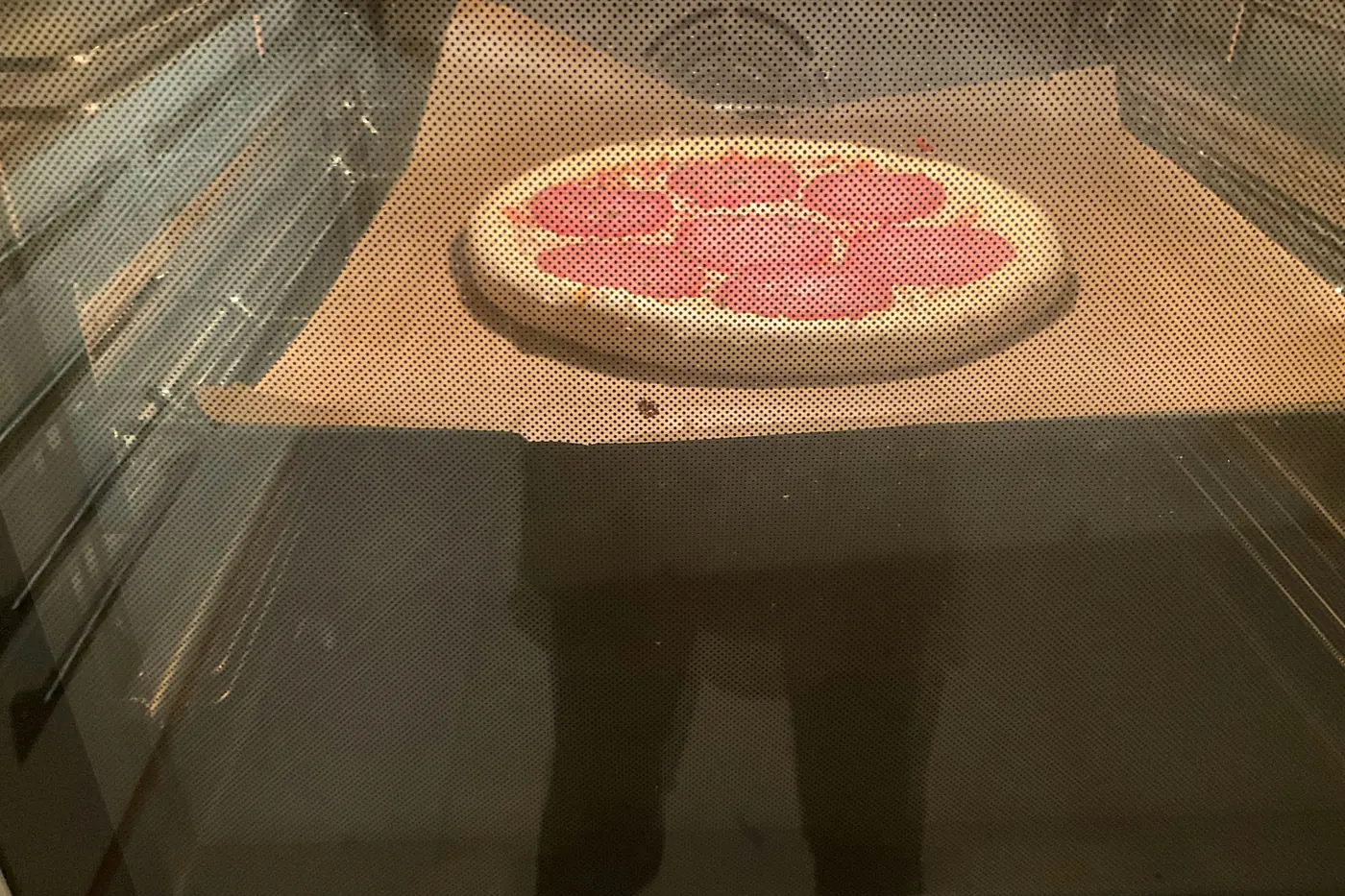
How to launch a pizza without a peel
Whatever you use, the same few rules decide whether the pizza lands round or folds into a calzone.
Keep it moving
King Arthur Baking’s method for a wooden peel applies just as well to a cookie sheet: before you head to the oven, give it a shimmy to check that the pizza is floating free. Martin Philip calls this “the jiggle.” If any part has stuck, lift that edge and add more grit before you open the oven door, not after.
Use semolina or cornmeal, not flour
King Arthur’s advice is that semolina or cornmeal acts like ball bearings under the dough, while flour, being mostly starch, turns sticky once it gets wet. Philip prefers semolina because it is finer and burns less easily. On the back of a sheet pan, which is less slick than a dusted peel, err on the generous side (general kitchen sense).
Or use parchment
Build the pizza on parchment and slide paper and pizza onto the stone together. King Arthur suggests stretching the dough a little wider than the paper so less of it is exposed to burn, and warns that parchment is rated below 500°F and starts to char at the edges between 450°F and 500°F. If your oven runs hotter than that, King Arthur’s advice is to skip the paper. As general kitchen sense, once the crust has set after a few minutes, the paper can be pulled out from under the pizza with tongs.
Tip, then pull
King Arthur’s peel method is to place the tip where the pizza should land, angle it down onto the stone or steel and slide it out while jiggling so the pizza slides off. The same motion works from a sheet or board; as general kitchen sense, a sheet needs a little more commitment because its edge is thicker.
Six tools that replace a pizza peel, reviewed
We chose one tool per approach from makers that state what their products are for: Nordic Ware, Fat Daddio’s, Reynolds, Epicurean, Super Peel (EXO) and Chicago Metallic. Each was in stock on Amazon US, sold new, when we checked. Specifications come from the makers’ listings; technique comes from King Arthur Baking, Food Network Kitchen and America’s Test Kitchen, or is labeled general kitchen sense. We have not launched a pizza with every tool here.
1. Nordic Ware Naturals Large Classic Cookie Sheet – An Open Front Edge for Sliding
A rimless or three-sided cookie sheet is the closest thing in a normal kitchen to a peel. Nordic Ware’s large classic cookie sheet has raised edges on three sides for grip, and a smooth, open front edge that Nordic Ware says baked goods slide right off. That open edge is the part that matters: you dust the sheet, build the pizza near the front, and slide it off onto the stone without a rim in the way.
It is made of pure aluminum, which Nordic Ware says will never rust, and it is made in the USA. The outside measures 15.7 by 13.9 inches and the flat interior 14.1 by 13.1, so it carries a 12-inch pizza with room to spare. On cookie days it is simply a good cookie sheet, which is why we rate it above a dedicated gadget for occasional pizza makers.
The limits are those of any sheet: the front edge is thicker than a tapered peel, there is no handle, and your hands come closer to the oven. Nordic Ware says to wash it by hand.
Why we like it
- Open front edge made for sliding, per Nordic Ware
- Holds a 12-inch pizza with room to spare
- Pure aluminum, made in the USA
- Lifetime warranty listed
Key specifications
| Model | 42100 |
|---|---|
| Type | Three-sided cookie sheet |
| Material | Uncoated aluminum |
| Size | 15.7 x 13.9 in outside; 14.1 x 13.1 in inside |
| Heat limit | Not stated |
| Made in | USA |
| Care | Hand wash |
| Warranty | Lifetime |
Why we recommend it
It suits a cook who makes pizza a few times a month on a stone or steel and wants one tool that earns its drawer space the rest of the time.
Skip it if you also need to turn and retrieve pizzas often; a thin metal peel does that far better.
Pros and cons
Pros
- No rim at the launching edge
- Doubles as a cookie sheet
- Will not rust, per Nordic Ware
Cons
- No handle
- Thicker edge than a peel
- Hand wash only
2. Fat Daddio’s Natural Aluminum Half Sheet Pan, 18 x 13 – Flip It and Launch
If the only sheet you own has rims on all four sides, turn it over. Food Network Kitchen’s instructions are plain: flip over a sheet pan, slide the pizza onto the back, carry it to the oven and slide it off onto the stone. The flat underside of a rimmed pan becomes a broad, rimless launching board.
Any flat-bottomed half sheet works, so use the one you have. If you need one, Fat Daddio’s 18-gauge natural aluminum half sheet is a good choice for this job because its bottom is flat and smooth, not textured or ridged. Fat Daddio’s lists it at 18 by 13 by 1 inch with a wire-reinforced rolled rim, oven safe to 550°F, and says it will not warp or rust. The flat interior bottom is 16 1/2 by 11 1/2 inches, so the back gives you about the same area for building a pizza.
The rolled rim hangs down when the pan is upside down, so you hold it by that lip, and the back of a sheet is a little less slick than a dusted peel. A heavier dusting of semolina helps, and parchment helps more.
Why we like it
- Flat, smooth bottom suits the flip method
- 18-gauge aluminum, per Fat Daddio’s
- Oven safe to 550°F for sheet-pan pizza too
- Lifetime warranty listed
Key specifications
| Model | SP-HALF |
|---|---|
| Type | Rimmed half sheet pan |
| Material | 18-gauge natural aluminum |
| Size | 18 x 13 x 1 in; bottom 16 1/2 x 11 1/2 in |
| Heat limit | 550°F |
| Made in | Not stated |
| Care | Not stated in detail; easy clean-up per listing |
| Warranty | Lifetime |
Why we recommend it
It suits a cook who wants one pan for roasting, cookies, Detroit- or sheet-style pizza and launching round pies off the back.
Skip it if you already own a flat-bottomed half sheet; flip that one instead.
Pros and cons
Pros
- Large, flat launching surface
- Goes in the oven up to 550°F
- Useful for nearly everything else
Cons
- Rim hangs down when flipped
- Back is less slick than a peel
- Sold here by a third-party seller
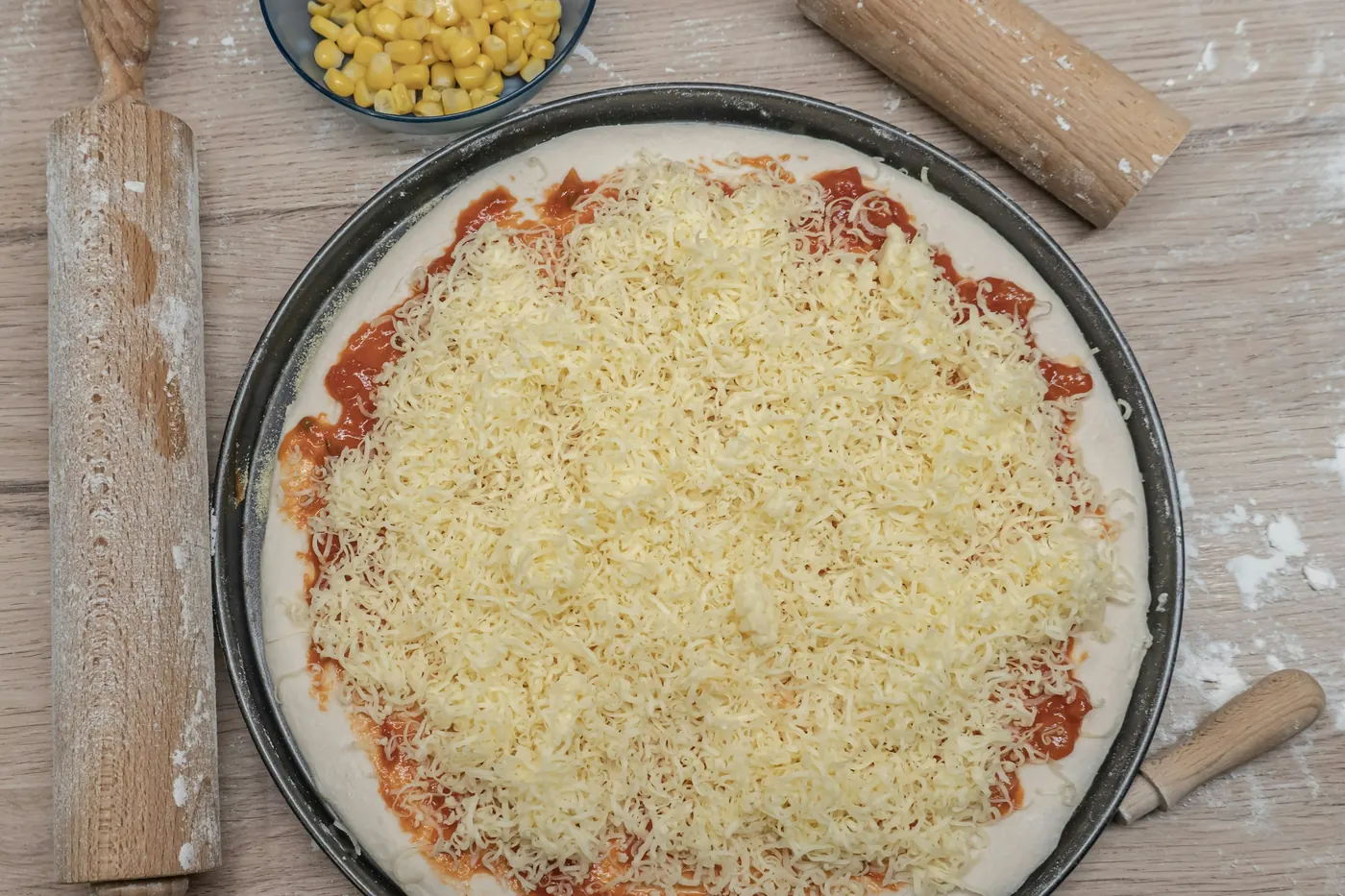
3. Reynolds Kitchens Pre-Cut Parchment Cookie Baking Sheets, 22-Count – Takes Sticking Out of the Launch
Parchment is not a peel on its own, but it makes every other tool on this page work better. Build the pizza on a sheet of parchment, set it on whatever you are using to carry it, and slide paper and pizza onto the stone together. Nothing can stick, which is why King Arthur Baking’s Martin Philip uses parchment circles cut to the size of the pie: they guide the stretching and keep the dough from sticking.
These Reynolds sheets are pre-cut to 12 by 16 inches, sized for a standard cookie sheet, with 22 in a box. Reynolds says they are nonstick, oven safe up to 425°F and can be used up to three times. Flat pre-cut sheets lie still on a sheet pan, which a curling roll does not always do.
The limit is heat. Reynolds rates these to 425°F, and King Arthur says parchment edges char between 450°F and 500°F. Most home ovens bake pizza hotter than 425°F, so trim the paper close to the dough, expect some browning at the edges, and slide the paper out with tongs once the crust has set (general kitchen sense). For very hot ovens and outdoor pizza ovens, King Arthur says to skip parchment entirely. For roll parchment from other makers, see our best parchment paper guide.
Why we like it
- Removes sticking from the launch
- Pre-cut 12 x 16 in sheets lie flat
- Reusable up to 3 times, per Reynolds
- Works with any carrier on this page
Key specifications
| Model | Cookie Baking Sheets, 22 ct |
|---|---|
| Type | Pre-cut parchment sheets |
| Material | Parchment paper |
| Size | 12 x 16 in, 22 sheets |
| Heat limit | 425°F |
| Made in | Not stated |
| Care | Reusable up to 3 times |
| Warranty | Not stated |
Why we recommend it
It suits anyone launching their first few pizzas, or anyone making a wet, slack dough that sticks no matter how much semolina goes down.
Skip it if your oven or pizza oven runs well above 500°F; the paper will scorch.
Pros and cons
Pros
- No sticking, no folded pies
- Pre-cut and flat
- Useful for cookies and roasting
Cons
- Rated only to 425°F
- Edges brown in a hot oven
4. Epicurean Kitchen Series Cutting Board, 14.5 x 11.25 Inch – The Board You Already Reach For

A thin, flat cutting board is the other common stand-in, and it has one advantage over a sheet pan: you can also slice and serve on it. The board needs to be thin, flat and without feet or a raised juice groove at the front edge, or the pizza catches on the way off. That is general kitchen sense rather than a maker’s instruction.
Epicurean’s Kitchen Series board fits that description. It is a thin sheet of wood fiber composite, 14.5 by 11.25 inches, made in the USA, with no feet and no groove. Epicurean says it is heat resistant up to 350°F and can be used as a trivet, so a hot pizza can come back to rest on it. It is dishwasher safe and NSF approved, per the listing, and needs no oiling. The same maker’s material is used for the Super Peel below.
The board is the launching surface only. It must not go into the oven, and 11.25 inches is narrow for anything wider than a 10-inch pizza. Build the pizza on parchment on the board if your dough tends to stick. For bigger boards, see our best cutting board guide.
Why we like it
- Thin and flat, no feet or groove
- Heat resistant to 350°F as a trivet, per Epicurean
- Dishwasher safe, no oiling
- Made in the USA
Key specifications
| Model | 001-151101 |
|---|---|
| Type | Flat cutting board |
| Material | Wood fiber composite |
| Size | 14.5 x 11.25 in |
| Heat limit | 350°F (not for oven use) |
| Made in | USA |
| Care | Dishwasher safe |
| Warranty | 1 year |
Why we recommend it
It suits a cook making 10-inch pizzas or flatbreads who wants one board for launching, slicing and serving.
Skip it if you make 12-inch or larger pizzas; the board is too narrow.
Pros and cons
Pros
- Launch, slice and serve on one board
- Thin edge for a board
- Easy care
Cons
- Narrow for large pizzas
- Never goes in the oven
- No handle

5. Super Peel Pro Composite Conveyor Peel, 14-Inch – A Belt That Sets the Dough Down
The Super Peel is a peel, but not the kind that tempted you to look for alternatives. Instead of sliding dough off a dusted board, it carries the dough on a cotton belt wrapped around a composite blade. You set the front of the blade on the stone and pull back, and the belt rolls out from under the pizza and lays it down. America’s Test Kitchen named this model the winner of its baking peel review (Miye Bromberg and Sarah Sandler, February 2025), saying it excels at the riskiest job a peel does: unloading delicate doughs without deforming them. ATK also notes that its belt is practically nonstick once dusted with flour.
The listing says the blade is Richlite, made in partnership with Epicurean, NSF approved for food contact, 14 inches wide, and dishwasher safe, with a pre-shrunk 10-ounce cotton belt. EXO also says it picks up free-form loaves and pie crusts. ATK’s article on why you need two peels suggests the Super Peel for cooks who do not want to stock both a wood and a metal peel.
ATK is just as clear about its faults: it is pricey, some users find it finicky, setup and cleaning are fussy, the handle was uncomfortable for its testers, rotating pizzas is slow, and there is a learning curve. The listing also asks you to make sure a 14-inch width fits your oven.
Why we like it
- ATK’s top-rated baking peel
- Lays soft dough down without stretching it
- No parchment needed
- Dishwasher-safe composite blade, per the listing
Key specifications
| Model | 2414Comp |
|---|---|
| Type | Conveyor-belt peel |
| Material | Richlite composite blade, cotton belt |
| Size | 14 in wide, 23 in long |
| Heat limit | Not stated |
| Made in | Not stated on this listing |
| Care | Blade dishwasher safe |
| Warranty | 1 year |
Why we recommend it
It suits a cook whose dough always sticks or tears on a standard peel, or who bakes soft free-form bread as well as pizza.
Skip it if you want the cheapest fix; a cookie sheet and parchment cost far less and do the job most nights.
Pros and cons
Pros
- Excellent at setting dough down, per ATK
- Also handles bread and pie crusts
- Can slide under baked pizza, per ATK
Cons
- Learning curve, per ATK
- Fussy setup and cleaning
- Slow for rotating pizzas
6. Chicago Metallic 14-Inch Nonstick Pizza Crisper Pan – Skip the Launch Entirely
The surest way to avoid a bad launch is not to launch. Build the pizza on a perforated pan and put the whole pan in the oven. Chicago Metallic’s 14-inch crisper pan is perforated carbon steel, and the maker says the holes promote heat conduction and airflow for even baking and a crisp crust. It has a silicone-based nonstick coating that Chicago Metallic says is PTFE and PFOA free, a rolled rim against warping, and textured handles for gripping with oven mitts.
It is oven safe to 450°F, per the listing, and Chicago Metallic recommends hand washing. You can also set the pan directly on a preheated stone or steel for a crisper bottom, which is general kitchen sense rather than a maker instruction; watch the 450°F limit if you do.
A pan does not give the same leopard-spotted, blistered crust as dough laid straight on a very hot stone, and a coated pan should not be cut on with a sharp wheel. For a lighter mesh version of the same idea, see our best pizza screen guide.
Why we like it
- No transfer, so no folded pizzas
- Perforated for airflow, per Chicago Metallic
- Coating stated PTFE and PFOA free
- Handles for a safe grip
Key specifications
| Model | 5297126 |
|---|---|
| Type | Perforated pizza crisper pan |
| Material | Carbon steel, silicone-based nonstick |
| Size | 14 in |
| Heat limit | 450°F |
| Made in | Not stated |
| Care | Hand wash recommended |
| Warranty | Not stated |
Why we recommend it
It suits a cook without a stone or steel, families making pizza with children, and anyone who bakes frozen pizza as often as homemade.
Skip it if you want a blistered, stone-baked crust; launch onto a hot stone or steel instead.
Pros and cons
Pros
- Nothing to slide or drop
- Easy release coating
- Good for frozen pizza and reheating
Cons
- 450°F limit
- Less char than a stone
- Hand wash recommended
Getting the pizza back out
Launching is half the job. America’s Test Kitchen’s point in favor of a thin metal peel is that it gets under a baked pizza to rotate it or take it out. Without one, the easiest route is the same sheet you launched with: slide the pizza back onto it with a pair of tongs or a wide spatula, pulling by the crust or the parchment. If you used parchment, grab the paper’s edge and pull the whole pizza onto the sheet. That is general kitchen sense, and it is where a cheap metal peel earns its keep if you make pizza often. Our wood vs metal pizza peel guide explains which one to buy first if you decide a peel is worth it after all.
Pizza peel alternative questions, answered
What can I use instead of a pizza peel?
A rimless cookie sheet or a rimmed sheet pan turned upside down, dusted with semolina or lined with parchment. Food Network Kitchen describes the flipped sheet pan method. A thin, flat cutting board also works for smaller pizzas.
Can I use parchment paper instead of a pizza peel?
Parchment replaces the dusting, not the peel: you still need something flat to carry it on. King Arthur Baking recommends parchment for avoiding sticking but notes that it is rated below 500°F and chars at the edges in a very hot oven.
Can I put pizza on a stone without a peel?
Yes. Slide it off the back of a sheet pan or the open edge of a cookie sheet onto the preheated stone, with a quick tilt and pull. Never try to lift the hot stone out to load it.
Is cornmeal or flour better for sliding pizza?
King Arthur Baking prefers semolina or cornmeal, which act like ball bearings, because flour turns sticky when it gets wet. Semolina is finer and burns less easily than cornmeal.
Is a conveyor peel worth it?
If your dough sticks no matter what, it can be. America’s Test Kitchen ranked the Super Peel Pro Composite first among baking peels for unloading delicate doughs, though it also found it pricey, fussy to set up and slow to learn.
Can I bake pizza without a stone or peel?
Yes. Build it on a perforated pizza pan or a sheet pan and bake it there. You get a softer bottom than on a hot stone, but no launch at all.
Our final word on launching pizza without a peel
Start with what you have: a rimless cookie sheet, or a rimmed one turned over, plus semolina or a sheet of parchment, launches a pizza perfectly well. Nordic Ware’s open-edge cookie sheet is the best single buy if you need one, Reynolds’ pre-cut parchment takes the fear out of the first few launches, and the Super Peel is the upgrade for doughs that always stick. If you find yourself making pizza every week, buy a proper peel from our best pizza peel guide and keep the cookie sheet for cookies.
For more on what goes under the pizza, see our best baking sheets guide. And if you would rather someone else made dinner tonight, see the menu or call to order.