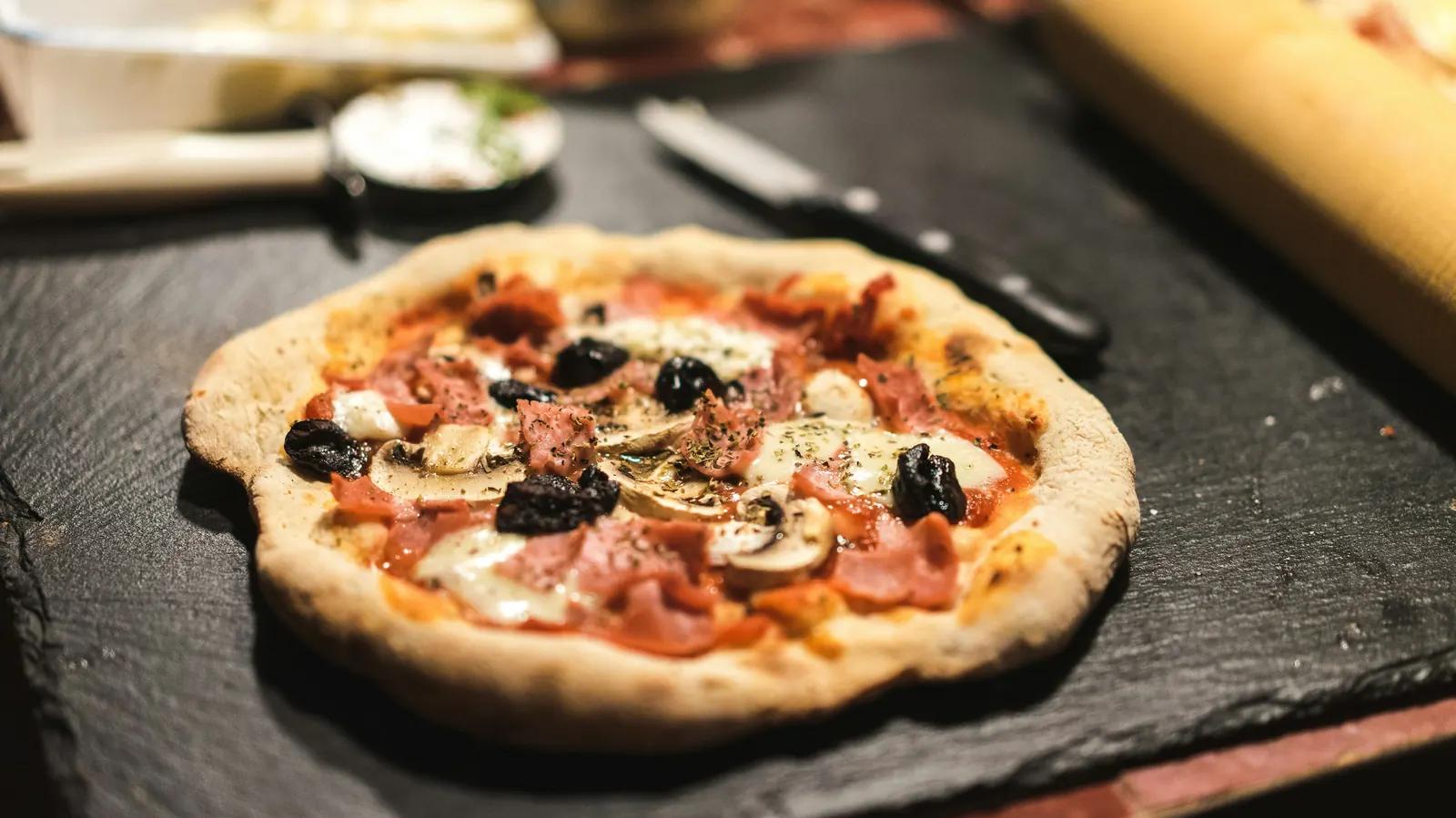
A home oven’s air is hot enough to bake a pizza; what it lacks is heat coming up from below. A preheated stone fixes that. It soaks up heat for the better part of an hour, then pushes it into the dough the moment the pizza lands, which is what sets and browns the crust before the cheese overcooks. The same stone crisps flatbreads, bakes bread with a proper bottom crust and brings a day-old tlayuda or bolillo back to life.
Pizza stones are not all the same stone, though. Cordierite, glazed ceramic, stoneware and cast iron all heat differently, clean differently and, above all, fail differently if you treat them wrong. This guide names the oven stones worth buying, with each maker’s material, temperature rating and care rules, and what they say about thermal shock, the sudden temperature change that cracks stones.
Julia’s earns a commission on purchases made through links on this page, at no cost to you. Recommendations are based on what a restaurant kitchen looks for in bakeware that lives in a hot oven, the makers’ own specifications and the product listings, which we cite.
Quick verdict: which pizza stone to buy
For most home ovens, the best pizza stone is the Old Stone 14 x 16-inch Rectangular: unglazed cordierite rated to 1,450°F, with a generous rectangle that makes launching easy. If you want a stone you can wash with soap, choose the glazed Emile Henry Flame Top. If you have cracked a stone before, the Lodge 14-inch cast iron pizza pan does the same job and is far tougher.
The rest of this page explains the materials, how to keep a stone in one piece, and which shape suits your oven.
Five pizza stones side by side
Our five standout picks, one for each kind of home baker, with the material and the maximum temperature each maker or listing states. All eight are reviewed in full below.
| Product | Best for | Material & size | Max temp (stated) | Buy on Amazon |
|---|---|---|---|---|

Old Stone 14 x 16-inch Rectangular Pizza StoneBest overall
|
Most home ovens | Unglazed cordierite, 14 x 16 in | 1,450°F | View on Amazon |

Emile Henry Flame Top 14.5-inch Pizza StoneBest glazed stone
|
Easy cleaning, oven or grill | Glazed ceramic, 14.5-in round | 900°F | View on Amazon |
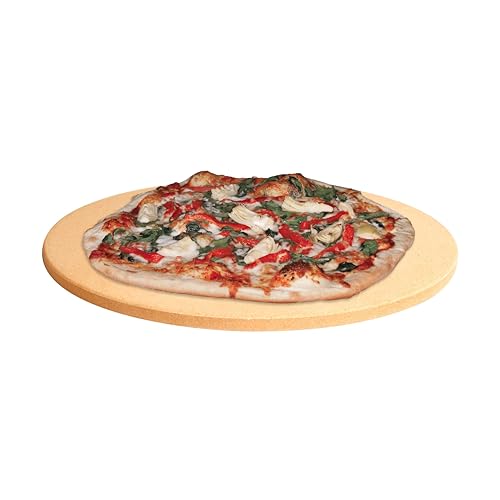
Pizzacraft 16.5-inch Round ThermaBond Pizza StoneBest large round
|
Large round pizzas | ThermaBond stone, 16.5-in round | 900°F | View on Amazon |

Hans Grill 15 x 12-inch Pizza Stone Set with Peel and RockerBest starter set
|
First pizza setup | Cordierite, 15 x 12 in | 1,112°F | View on Amazon |

Lodge 14-inch Cast Iron Pizza PanBest cast iron
|
Durability, oven or grill | Cast iron, 14-in round | Not stated; oven and grill safe | View on Amazon |
Product images from Amazon. Temperatures are as stated by each maker or listing; check the listing before you buy.
Our picks for the best pizza stone
These eight cover every common material for an oven stone: unglazed and glazed cordierite, glazed ceramic, a thick cordierite slab, stoneware for serving, and cast iron for anyone who wants something far harder to break. Each pick lists the maker’s temperature rating, what it says about preheating and cleaning, and one honest reason to skip it. If you bake mostly on a grill, our separate best pizza stone for grill guide covers grill-specific stones and kits.
1. Old Stone 14 x 16-inch Rectangular Pizza Stone – Classic Cordierite, Generous Rectangle
This is the stone most pizza books have in mind: a plain, unglazed slab that lives on the bottom rack. Old Stone makes it from cordierite, the mineral most good baking stones use because it copes with heat well, and the listing rates it to 1,450°F for home ovens, pizza ovens and grills. The 14 by 16-inch rectangle gives more usable room than a round of the same width, which makes launching a pizza less of a target practice.
The listing says the stone absorbs heat and passes it on evenly, with a heat core meant to stop soggy centers, and that it seasons naturally over time. It works for bread, pastries and vegetables as well as pizza, and for crisping flatbreads or reheating a tlayuda.
Old Stone’s distributor, Honey-Can-Do, gives clear instructions in the manual for its Old Stone Oven stones: put the stone in a cold oven on the bottom rack and preheat to 500°F for 20 to 25 minutes, leave it in the oven so it is always ready, rinse it with water only, no detergent, and never use cooking oil or release spray on it. Let it cool completely before you take it out. Those steps are how you avoid the classic crack.
Why we like it
- Cordierite rated to 1,450°F
- Rectangle gives more launch room
- Oven, pizza oven and grill use
- Simple rinse-and-dry care
Key specifications
| Model | 4467 |
|---|---|
| Material | Cordierite, unglazed |
| Shape/size | Rectangle, 14 x 16 inches |
| Thickness | Not stated |
| Max temp (stated) | 1,450°F |
| Handles/rack | None |
| Care | Rinse with water; no soap or oil |
Why we recommend it
It suits most home bakers who want the classic stone-baked crust and are happy to leave the stone in the oven between bakes.
Skip it if you want a surface you can scrub with soap; unglazed cordierite stains and should only see water.
Pros and cons
Pros
- High heat rating
- Generous, easy-to-hit shape
- Stays in the oven ready to use
Cons
- Must start in a cold oven
- Stains with use
- Thickness and weight not stated
2. Emile Henry Flame Top 14.5-inch Pizza Stone – A Stone You Can Wash
Most stones are porous and can never see soap. Emile Henry’s is glazed ceramic, made in France from the maker’s Flame ceramic, and the listing says it is dishwasher safe and can be washed with soap and water. The glaze is scratch resistant enough to cut on, and Emile Henry says its micro-crazed finish contributes to a crisp crust.
It is also rated hotter than most home cooks will ever need: up to 900°F, for all types of ovens, under the broiler, and on gas, charcoal and wood grills. Two molded handles make it easier to carry, which matters with a hot 14.5-inch round.
A glaze changes the cleaning, not the physics. It is still ceramic, so let it heat up with the oven, and do not set a hot stone on a cold, wet counter. The 10-year guarantee covers manufacturing defects in household use. For more on Emile Henry’s larger rectangular stone, see our best pizza stone for grill guide.
Why we like it
- Glazed: dishwasher safe, soap is fine
- Cut directly on the surface
- 900°F rating, oven, broiler and grill
- 10-year guarantee; made in France
Key specifications
| Model | 797514 |
|---|---|
| Material | Glazed Flame ceramic |
| Shape/size | Round, 14.5 inches |
| Thickness | Not stated |
| Max temp (stated) | 900°F |
| Handles/rack | Two molded handles |
| Care | Dishwasher safe; soap and water |
Why we recommend it
Choose it if you want a stone but hate the idea of one that stains for life, or if you plan to bake on the grill too.
Skip it if the most important thing is crispness; steel or an unglazed stone passes heat into dough more directly.
Pros and cons
Pros
- Washable glazed surface
- Handles
- Long guarantee
Cons
- Thickness and weight not stated
- Smaller than a rectangle
- Still ceramic: it can break if dropped
3. Pizzacraft 16.5-inch Round ThermaBond Pizza Stone – Big Round, No Seasoning
If your pizzas are round and big, a big round stone makes sense. Pizzacraft’s 16.5-inch stone is made from its ThermaBond material, which the listing describes as 100 percent natural and FDA-safe, rated to 900°F, and built to resist thermal shock.
There is nothing to do before the first bake. Pizzacraft says the stone needs no conditioning or seasoning, and its care copy, as reproduced by the retailer Atlanta Grill Company, is the standard for porous stone: do not oil it or soak it, scrape off stuck food with a spatula, and once it has cooled, run it under hot water while scrubbing with a brush. No soap, because the stone soaks it up. Air-dry it and store it in the oven.
Pizzacraft also says darkening and spotting are normal with age and should not be scrubbed away. The listing notes it works for frozen pizza, bread, pastries and reheating, on the grill or in the oven.
Why we like it
- 16.5 inches across for large pies
- Rated to 900°F
- Thermal-shock resistant, per Pizzacraft
- No seasoning needed
Key specifications
| Model | PC9898 |
|---|---|
| Material | ThermaBond stone |
| Shape/size | Round, 16.5 inches |
| Thickness | Not stated |
| Max temp (stated) | 900°F |
| Handles/rack | None |
| Care | Water and brush; no soap or oil |
Why we recommend it
It suits families who bake large round pizzas and want a stone that fills a standard oven rack.
Skip it if your oven is narrow or you bake rectangular breads; measure for a 16.5-inch circle first.
Pros and cons
Pros
- Large surface
- No seasoning
- Clear care steps
Cons
- No handles
- Stains (normal, per maker)
- Thickness not stated
4. Hans Grill 15 x 12-inch Pizza Stone Set with Peel and Rocker – Stone, Peel and Cutter in One
For a first pizza setup, Hans Grill’s set covers the three tools you need: a 15 by 12-inch cordierite stone, a wooden peel to launch the pizza, and a 14-inch stainless steel rocker blade to cut it, with a safety cover. The listing describes the stone as toughened porous cordierite, FDA safe and heat resistant to 1,112°F (600°C), for the oven or a barbecue.
The rocker is a single curved blade you press down and rock across the pizza, which keeps toppings in place. Hans Grill describes it as food-grade stainless steel that resists rust and stains, and the listing title calls it dishwasher safe.
Hans Grill is frank that staining is part of using a stone, and says marks do not affect performance. The listing gives no thickness, weight or preheat routine, so follow the cordierite rules: start in a cold oven, heat with it, and clean with water only. A 15 by 12-inch stone suits pizzas of about 12 inches.
Why we like it
- Stone, peel and 14-inch rocker together
- Cordierite rated to 1,112°F
- Rocker has a safety cover
- Oven or grill use
Key specifications
| Model | Not stated |
|---|---|
| Material | Cordierite |
| Shape/size | Rectangle, 15 x 12 inches |
| Thickness | Not stated |
| Max temp (stated) | 1,112°F |
| Handles/rack | Wooden peel included |
| Care | Water only; stains are normal |
Why we recommend it
Choose it if you are starting from nothing and want stone, peel and cutter in one box.
Skip it if you already own a peel or bake pizzas larger than about 12 inches.
Pros and cons
Pros
- Complete starter kit
- High heat rating
- Rocker cutter included
Cons
- Smaller stone
- No preheat or care guide in the listing
- Model and thickness not stated
5. Lodge 14-inch Cast Iron Pizza Pan – Far Tougher Than Ceramic
Cast iron does a stone’s job without the fragility. Lodge’s 14-inch pizza pan is seasoned with vegetable oil, made in the USA and has two loop handles, according to the listing, which describes even heat that helps reduce hot spots. It is far harder to break than a ceramic stone.
Lodge says preheating the pan is the key to a crisp crust, and that cast iron stays hot while you move the dough onto it. It works in the oven or on the grill, and Lodge suggests serving straight from the pan to keep the pizza warm. Lodge does not publish a weight or maximum temperature for it.
The care is cast iron’s, not a stone’s: hand wash, dry it with a cloth or paper towel and rub on a light layer of cooking oil. Outside pizza night it is a large griddle for quesadillas and tortillas. Our best oven pizza pan guide covers this pan alongside steels and crisper pans.
Why we like it
- Far tougher than a ceramic stone
- Two handles
- Arrives seasoned
- Made in the USA
Key specifications
| Model | P14P3 |
|---|---|
| Material | Cast iron, seasoned with vegetable oil |
| Shape/size | Round, 14 inches |
| Thickness | Not stated |
| Max temp (stated) | Not stated; oven and grill safe |
| Handles/rack | Two loop handles |
| Care | Hand wash, dry, oil lightly |
Why we recommend it
It suits cooks who have cracked a stone before, or who want one piece that bakes pizza and doubles as a griddle.
Skip it if weight is a problem; Lodge does not publish it, but a 14-inch cast iron disc is heavy.
Pros and cons
Pros
- Very durable
- Handles
- Doubles as a griddle
Cons
- Heavy, weight not stated
- Needs oiling after washing
- Round only
6. VEVOR 16 x 14-inch Cordierite Pizza Stone, 0.6 inch – Thick Slab, Stated Clearances

Few stone makers state thickness. VEVOR does: this 16 by 14-inch cordierite stone is 0.6 inch (15 mm) thick, which means more mass to store heat than a thin stone of the same size. The listing rates it to 1,450°F and says the porous structure absorbs steam from the base of the dough to avoid sogginess.
The listing is unusually specific about fit and first use. It asks you to leave 0.8 to 2 inches of clearance on all sides in your oven or grill, to clean and dry the stone before the first use, and to heat it gradually. For cleaning, wash it with warm water once cool, wipe it with a damp cloth and dry it. A plastic scraper comes in the box for scraping off baked-on bits.
VEVOR is a large general retailer rather than a specialist stone maker, and the listing gives no weight. A thick 16 by 14-inch slab is heavy, so expect to leave it in the oven.
Why we like it
- 0.6-inch thickness stated
- Cordierite rated to 1,450°F
- Clearance and first-use advice
- Scraper included
Key specifications
| Model | VV35540615 |
|---|---|
| Material | Cordierite |
| Shape/size | Rectangle, 16 x 14 inches |
| Thickness | 0.6 inch (15 mm) |
| Max temp (stated) | 1,450°F |
| Handles/rack | None; scraper included |
| Care | Warm water, wipe, dry; heat gradually |
Why we recommend it
Choose it if you want a thick rectangular stone with stated dimensions, for pizza and bread in a full-size oven.
Skip it if you want a specialist maker’s care guide; the listing is the only source.
Pros and cons
Pros
- Thickness stated
- Large rectangle
- High heat rating
Cons
- Weight not stated
- Needs 0.8–2 in clearance
- Generalist brand
7. Old Stone 16-inch Round Pizza Stone – Unglazed, Lead-Free Clay Blend

Old Stone’s 16-inch round is the plain, unglazed version of the brand’s stone: a large circle for full-size pizzas, bread, pastries and roasted vegetables. The listing says it is crafted from a blend of lead-free clays and describes it as durable and non-cracking, absorbing oven heat and passing it on evenly.
Its rating is the thing to know before you buy. The listing recommends it for up to 500°F in a standard home oven, which covers most home ovens at full heat but is far below the cordierite slabs on this list, so keep it out of pizza ovens, off the grill and away from the broiler.
Care is the usual unglazed-stone routine: the listing says not to clean it with soap. Old Stone’s distributor, Honey-Can-Do, also warrants it against defects in materials and workmanship for household use, with a 60-day window and proof of purchase.
Why we like it
- Large 16-inch round
- Maker says lead-free clay blend
- Unglazed surface for a dry, crisp crust
- Pizza, bread, pastries and vegetables
Key specifications
| Model | KCH-08411 |
|---|---|
| Material | Unglazed blend of lead-free clays |
| Shape/size | Round, 16 inches |
| Thickness | Not stated |
| Max temp (stated) | Up to 500°F in a standard home oven |
| Handles/rack | None |
| Care | No soap |
Why we recommend it
It suits home bakers who want a big round stone for an ordinary kitchen oven, from a long-running stone brand that states what the clay is made of.
Skip it if you bake hotter than 500°F or want to use the stone on a grill; the cordierite stones here are rated far higher.
Pros and cons
Pros
- Big 16-inch surface
- Lead-free clays, per the listing
- Simple water-only care
Cons
- Rated only to 500°F
- Home oven only
- Thickness not stated
8. Le Creuset 15-inch Stoneware Round Pizza Stone – Reversible, and Smart Enough to Serve On

Le Creuset’s stone is the one you might leave on the table. It is 15-inch round stoneware with two different faces: an unglazed side that the listing says gives good heat distribution for crisp crusts, and a glazed side that is virtually nonstick, releases food easily and resists cracking and crazing.
The listing describes the stoneware as nonporous, non-reactive, scratch resistant and resistant to stains and flavor absorption, and says it holds heat well enough to keep food warm from oven to table. It comes in several colors.
What the listing does not give is a maximum temperature or full care instructions, and we could not read Le Creuset’s own product page. Le Creuset says its products comply with all federal safety regulations established by the U.S. Food and Drug Administration; we found no explicit lead-free statement from the maker. Stoneware is a different material from cordierite, so check the instructions that come with the stone before baking at the top of your oven’s range, and keep it off the stovetop and grill unless they say otherwise.
Why we like it
- Unglazed side for baking, glazed side for easy release
- Resists stains and flavor absorption
- Serves at the table
- Several colors
Key specifications
| Model | 79973038717002 |
|---|---|
| Material | Stoneware, glazed one side |
| Shape/size | Round, 15 inches |
| Thickness | Not stated |
| Max temp (stated) | Not stated in the listing |
| Handles/rack | None |
| Care | Not stated in the listing |
Why we recommend it
Choose it if you bake moderate-temperature pizzas, flatbreads or reheated slices and want something that looks good on the table.
Skip it if you bake at the top of your oven’s range; Le Creuset does not state a maximum temperature in the listing.
Pros and cons
Pros
- Two usable sides
- Good-looking for serving
- Resists stains
Cons
- No stated max temperature
- Care not stated in the listing
- Grill use not stated
How to choose a pizza stone for your oven
Five questions sort out which stone suits you. Most come down to how much care you are willing to give it.
1. Material: cordierite, ceramic, stoneware or cast iron
- Cordierite (Old Stone, Hans Grill, VEVOR) is the classic unglazed stone, rated well above any home oven: 1,100 to 1,450°F on these listings. It is porous, so it stains and must never see soap or oil.
- Glazed ceramic (Emile Henry) cleans far more easily, and Emile Henry’s is dishwasher safe.
- Unglazed clay (Old Stone’s 16-inch round) is a lead-free clay blend, per the listing, rated for a home oven up to 500°F.
- Stoneware (Le Creuset) is good-looking and nonporous on its glazed side, but the listing gives no maximum temperature.
- Cast iron (Lodge) is the tough option. It is far harder to break than ceramic, though it still wants a gradual preheat, and it needs oiling like any cast iron pan.
2. Shape and size
A rectangle gives more room to land a pizza than a round of the same width, and holds bread loaves better. Measure your oven first: VEVOR asks for 0.8 to 2 inches of clearance on every side so hot air can move. A 14 by 16-inch rectangle fits most standard ovens; a 16.5-inch round needs a wide rack.
3. Thickness
Thicker stones store more heat and recover faster between pizzas, but take longer to preheat and weigh more. Most makers do not state thickness at all; VEVOR’s 0.6 inch is the exception here.
4. Temperature rating
Any cordierite or glazed ceramic stone on this list is rated far above the 500 to 550°F most home ovens reach, so the rating matters mainly if you also use the stone on a grill or under the broiler. Old Stone’s 16-inch clay round is the exception, recommended for up to 500°F, and Le Creuset is the one stone here without a stated maximum.
5. Care you will actually do
Unglazed stones want water, a brush and nothing else. Glazed stones can be wiped or, in Emile Henry’s case, put in the dishwasher. Cast iron wants drying and oil. Pick the routine you will keep up.
Keeping a stone in one piece: thermal shock
Almost every cracked stone has the same story: a cold stone went into a hot oven, a hot stone met water or a cold counter, or a frozen pizza landed on a very hot surface. Here is what the makers say.
- Old Stone (Honey-Can-Do manual): put the stone on the bottom rack of a cold oven, then preheat to 500°F for 20 to 25 minutes; let it cool completely before removing it; rinse with water only, never oil or spray.
- Pizzacraft: the ThermaBond stone is made to resist thermal shock; scrub it under hot water only once it has cooled, and store it in the oven.
- VEVOR: heat the stone gradually on first use, and clean it only once cool.
- Emile Henry: the listing rates the stone for the oven, broiler and grill to 900°F, but gives no preheat routine; letting it heat with the oven is the cautious choice.
- Lodge: preheat the cast iron pan for a crisp crust, then dry and oil it after washing.
An infrared thermometer tells you when the stone’s surface is actually hot, rather than when the oven’s light goes off. And a good peel makes the launch painless; see our best pizza oven peel guide.
How we chose these eight stones
We started from what a working kitchen expects of anything that lives in a hot oven: a stated temperature rating, a material that suits the job, and care instructions a home cook can follow without cracking it. We then narrowed the field to stones sold on Amazon in the United States that were in stock when we checked, from identifiable makers, and chose eight to cover each material and shape rather than several near-identical slabs. For glazed and stoneware surfaces we looked for the maker’s position on lead, and we left out glazed picks whose makers give no lead-free statement. We could not find a Unicook pizza stone on Amazon when we searched, and Heritage’s ceramic stones showed only limited stock, so neither is included.
Specifications come from the maker’s information where we could read it (Lodge’s pizza-pan advice, Honey-Can-Do’s Old Stone Oven manual) and otherwise from the brand’s Amazon listing; where we used a retailer’s copy, as with Pizzacraft’s care steps, the review says so. We have not baked on these stones, and we do not repeat any reviewer’s verdict we could not read for ourselves.
Pizza stone questions, answered
What is the best type of pizza stone for home use?
Unglazed cordierite is the classic choice: it handles high heat and gives a dry, crisp crust. Glazed ceramic is easier to clean, and cast iron is the most durable. For most people, a 14 by 16-inch cordierite rectangle is the safest place to start.
Why did my pizza stone crack?
Usually a sudden temperature change: a cold stone into a hot oven, water on a hot stone, or a hot stone set on a cold surface. Old Stone’s distributor says to start the stone in a cold oven and let it cool completely before removing it.
Can you wash a pizza stone with soap?
Not an unglazed one. Old Stone and Pizzacraft both say water only, because the porous stone absorbs soap. Emile Henry’s glazed stone is the exception: the listing says it is dishwasher safe and can be washed with soap.
Is a pizza stone or a pizza steel better?
Steel passes heat into dough faster and cannot crack; a stone heats more gently and is lighter for its size. Our separate pizza steel guide covers the steel side of the question.
Should a pizza stone stay in the oven?
Many owners leave it there. Honey-Can-Do recommends keeping the Old Stone Oven stone on the bottom rack so it is always ready, and Pizzacraft suggests storing its stone in the oven.
Our final pick for stone-baked pizza
Buy the Old Stone 14 x 16-inch rectangle if you want the classic cordierite stone and are happy to leave it in the oven. Choose the Emile Henry Flame Top for a stone you can wash, the Pizzacraft round for large pizzas, the Hans Grill set if you are starting from scratch, and the Lodge cast iron pan if you are tired of fragile stones. Whichever you choose, start it cold, heat it with the oven, and keep water off it until it has cooled. For a dedicated outdoor setup, see our best pizza oven guide.
More for home pizza night: the best pizza steel, the best pizza stone and the best pizza cutter.
Buying both at once? See our guide to the best pizza stone and peel sets.
Not sure stone beats steel? See pizza stone vs pizza steel.
Related guide: Best pizza dough box.
And if you would rather someone else did the cooking tonight, see the menu or call to order.