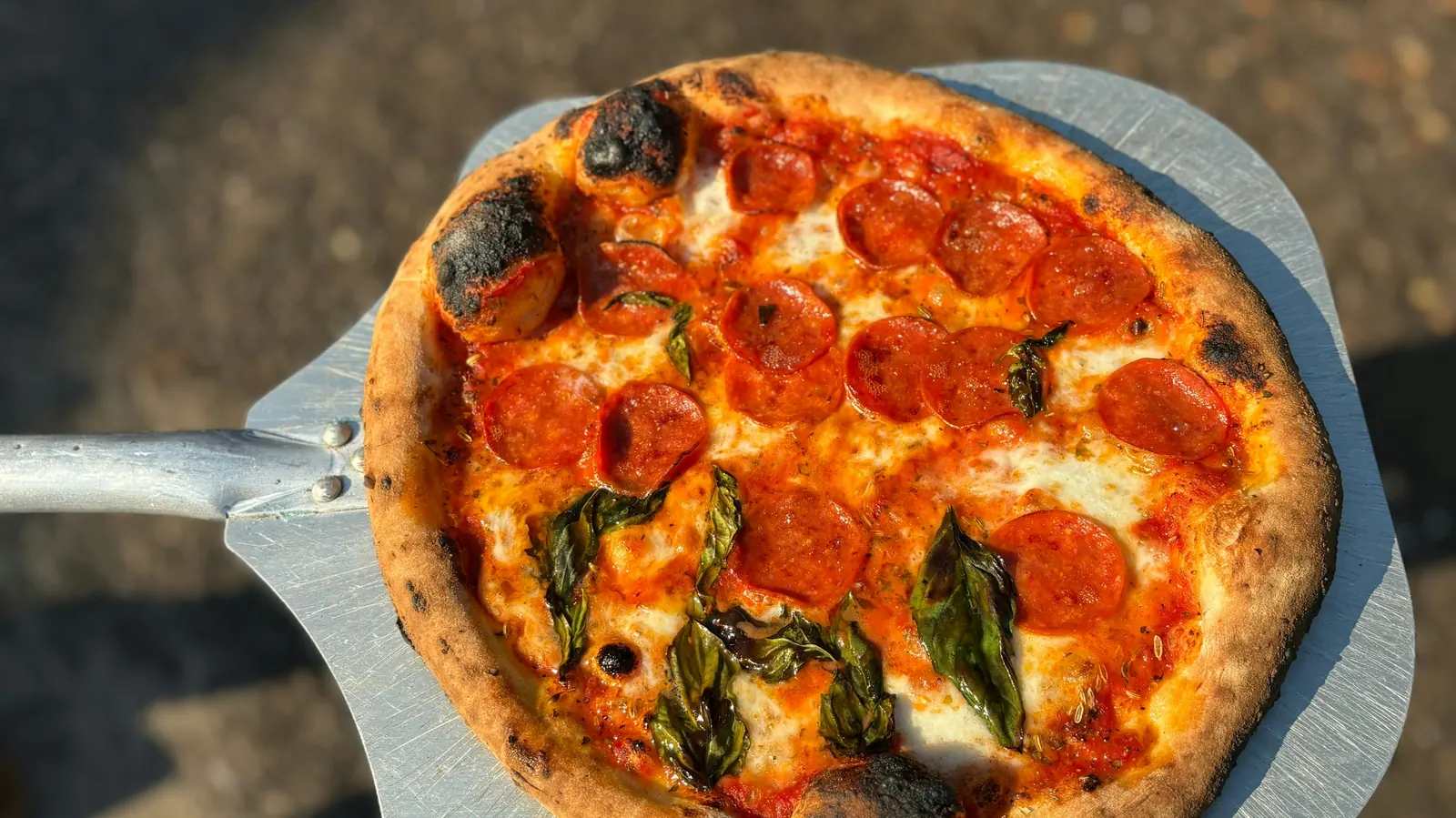
Every pizza peel does two jobs, and they pull in opposite directions. Going into the oven, you want raw dough to let go of the blade. Coming out, you want a thin edge that slips under a baked crust. Wood is good at the first job and metal is good at the second, which is why the wood vs metal question never quite goes away.
This guide compares the two on launching, retrieving, sticking, heat, care and storage, then names one good peel for each side. The same choice applies if you bake flatbreads or a tray of bolillos on a stone at home. If you would rather see a full list of peels, our guide to the best pizza peel covers nine of them.
Julia’s earns a commission on purchases made through links on this page, at no cost to you. Recommendations are based on what a restaurant kitchen looks for, product specifications and verified buyer reports.
Quick verdict: wood or metal first?
Buy wood first if raw dough sticking to the peel is what worries you, which is true of most beginners: its rough surface holds flour and releases dough more easily. Buy metal first if you already launch confidently, want to turn and retrieve pizzas, or need a peel that folds away and wipes clean. If you bake pizza often, America’s Test Kitchen suggests owning both, and that is the setup we would aim for too.
The table sums up the differences; the sections after it explain each one.
Wood vs metal pizza peel, side by side
| Wood peel | Metal peel | |
|---|---|---|
| Launching raw dough | Better: dough releases more easily | Harder: needs more flour or semolina |
| Retrieving baked pizza | Harder: the thick edge catches the crust | Better: the thin blade slides under |
| Turning in the oven | Poor: too thick and too big | Good, though a small turning peel is better |
| Surface | Rough and porous; holds flour | Smooth and nonporous; flour slides off |
| Blade thickness | Thick, with a beveled front edge | Thin and light |
| Heat | Can scorch at the edge in a live-fire oven | Will not burn, but the blade heats up fast |
| Care | Scrape, wipe, dry; never soak | Wash and dry; check the maker’s notes |
| Doubles as | A serving or cutting board | Not a cutting surface; knives mark it |
Launching: why wood lets go of raw dough
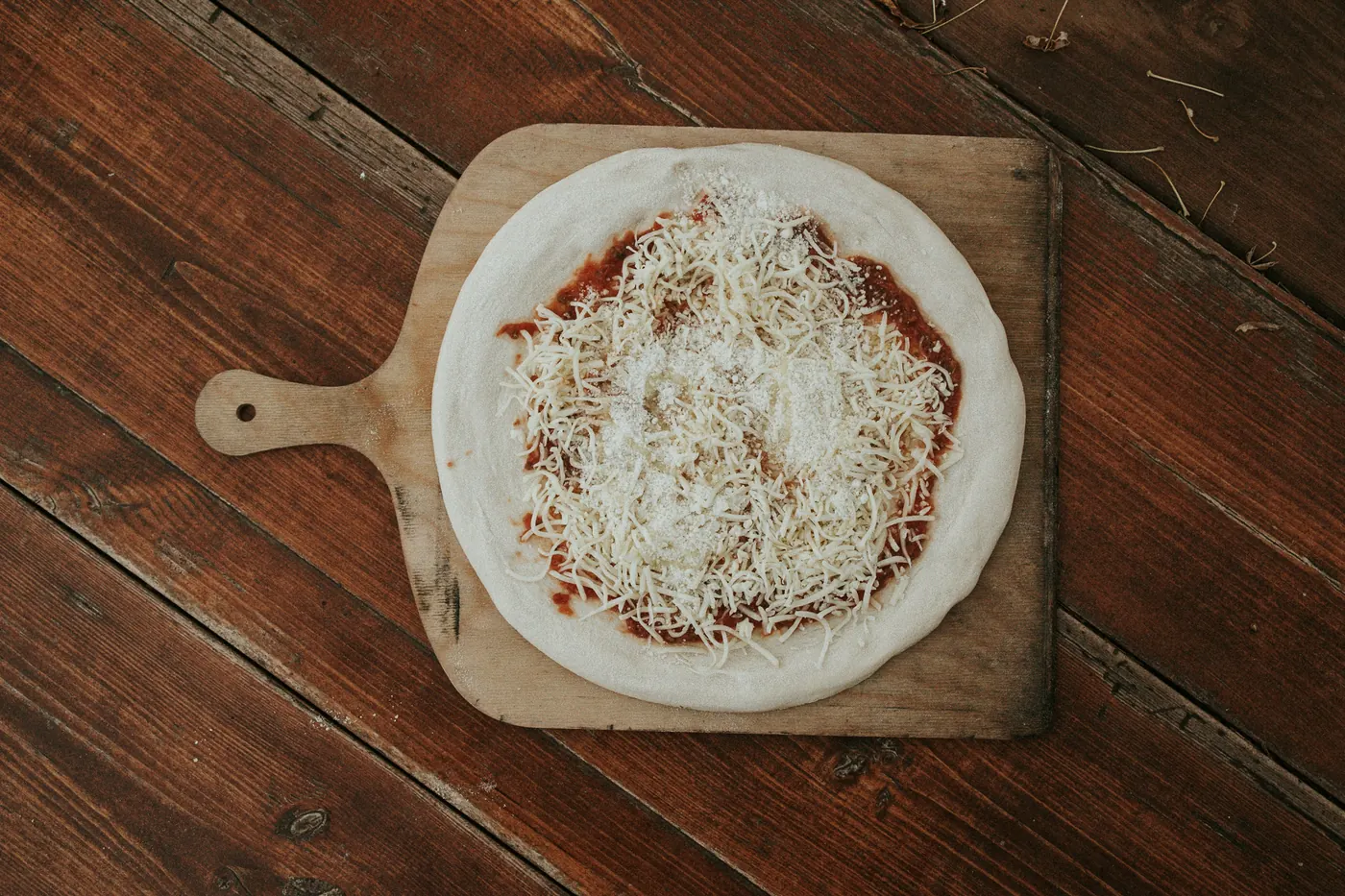
The launch is where most home pizzas go wrong. You build the pizza on the peel, carry it to a hot stone and pull the peel back, and the pizza has to stay behind. If the dough has stuck to the blade, it folds, tears or drops its toppings on the stone.
America’s Test Kitchen explains why wood helps: its rough, porous texture makes it harder for dough to bond to the surface, and flour clings to it. Metal is the reverse. Its smooth, nonporous surface makes it easier for dough to stick, and flour tends to slide around instead of staying put. That does not make a metal launch impossible, and plenty of cooks do it every week. It just leaves less room for a slow build or a slightly wet dough.
Cooks on baking forums also report that a cold metal peel can gather a little condensation under the dough, which makes sticking worse. That is an observation from home bakers rather than a measured result, but it fits the general picture: wood gives you more time.
Retrieving and turning: why metal gets under the crust
Once the pizza has baked, the problem flips. Now you need an edge thin enough to slide under a crust that is sitting flat on a stone. America’s Test Kitchen says a metal peel is thin and flexible, which makes it great for getting under a pizza to rotate it or take it out, and that wood is too thick to slide easily under baked bread and pizza.
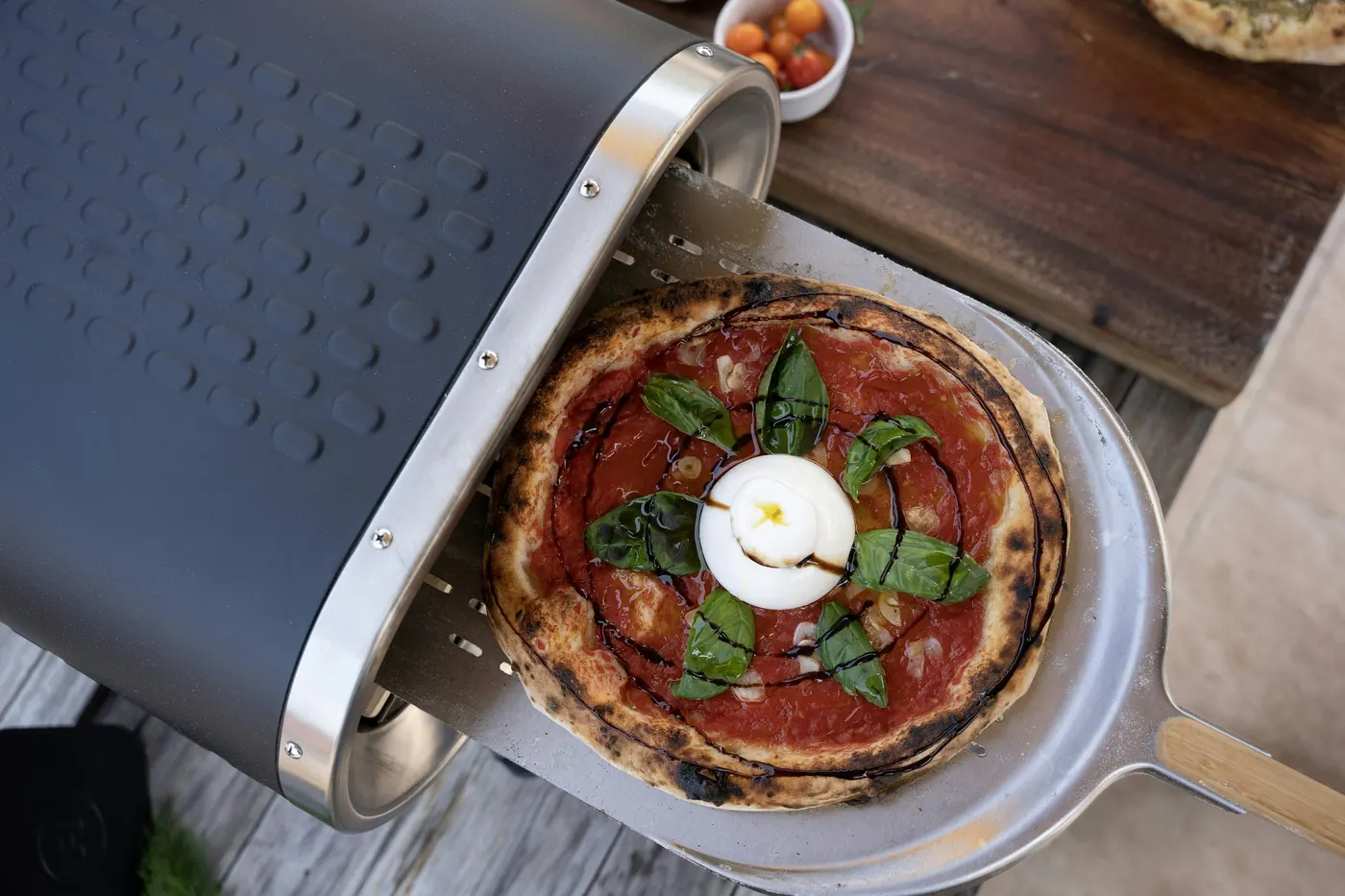
In practice, a wood peel can still retrieve a pizza; you nudge it under with a little shove, and a beveled edge helps. Where it really falls short is turning. A home oven heats unevenly, and most pizzas need a quarter turn partway through. A thin metal blade can do that, while a big wood blade is awkward inside the oven. If you turn pizzas in a hot outdoor oven all the time, a small round peel does the job better than either, and our guide to the best pizza turning peel covers those.
Sticking: how to fix it on either peel
Sticking comes down to moisture, time and how much flour sits between dough and blade, so a few habits matter more than the material. Dust the peel before the dough goes on, not after. Top the pizza quickly so wet sauce does not soak through. Give the peel a small shake before you walk to the oven: if the pizza slides freely, it will launch.
On metal, use a coarser dust than plain flour. Semolina or fine cornmeal acts like small ball bearings under the dough. America’s Test Kitchen found that the American Metalcraft aluminum peel and the perforated Ooni peel it reviewed both needed heavy flouring or semolina to stop dough sticking, so plan on that with any smooth blade. If a pizza does catch, lift the edge and blow a little flour under it before you try again.
Heat: which one handles a very hot oven
In a kitchen oven, heat is not much of a problem for either material, because the peel only goes in for a few seconds. In a wood-fired or gas pizza oven, the difference shows. A wood blade can scorch or char at the front edge if it stays near the flame, and retailer guides warn about this; a metal blade will not burn, but it heats up quickly, so a raw pizza should never go onto a metal peel that has just been in the oven.
Handles matter here too. Both of our picks use a wood handle, which stays cooler in the hand than metal. For deeper outdoor ovens, length matters more than material, and our guide to the best pizza oven peel covers longer options.

Care, weight and storage
Wood asks for a little more attention. Scrape it, wipe it with a damp cloth and let it dry standing up. Do not soak it or put it through the dishwasher, because water can warp or split the blade. Aluminum is simpler: wash it, dry it, and keep it away from harsh scrubbers, but check each maker’s instructions before you put it in a dishwasher.
Metal blades are thinner than wood, and many aluminum peels now have folding or detachable handles, so they fit in a drawer or a cabinet. Wood peels are usually one solid piece and need a hook or a gap beside the fridge. In their favor, they can carry a pizza to the table and act as a board, as long as you don’t mind knife marks.
Choose a wood peel if… / Choose a metal peel if…
Choose a wood peel if…
- You are new to pizza and want the easier launch.
- You like to build the pizza on the peel and take your time.
- You want a peel that doubles as a serving board.
- You have a wall hook or a tall gap for storage.
Choose a metal peel if…
- You already launch well and mostly want to turn and retrieve.
- You build the pizza on the counter and slide it on at the last moment.
- You need something that folds or takes up little space.
- You bake in a very hot outdoor oven often.
Our pick on each side of the wood vs metal pizza peel question
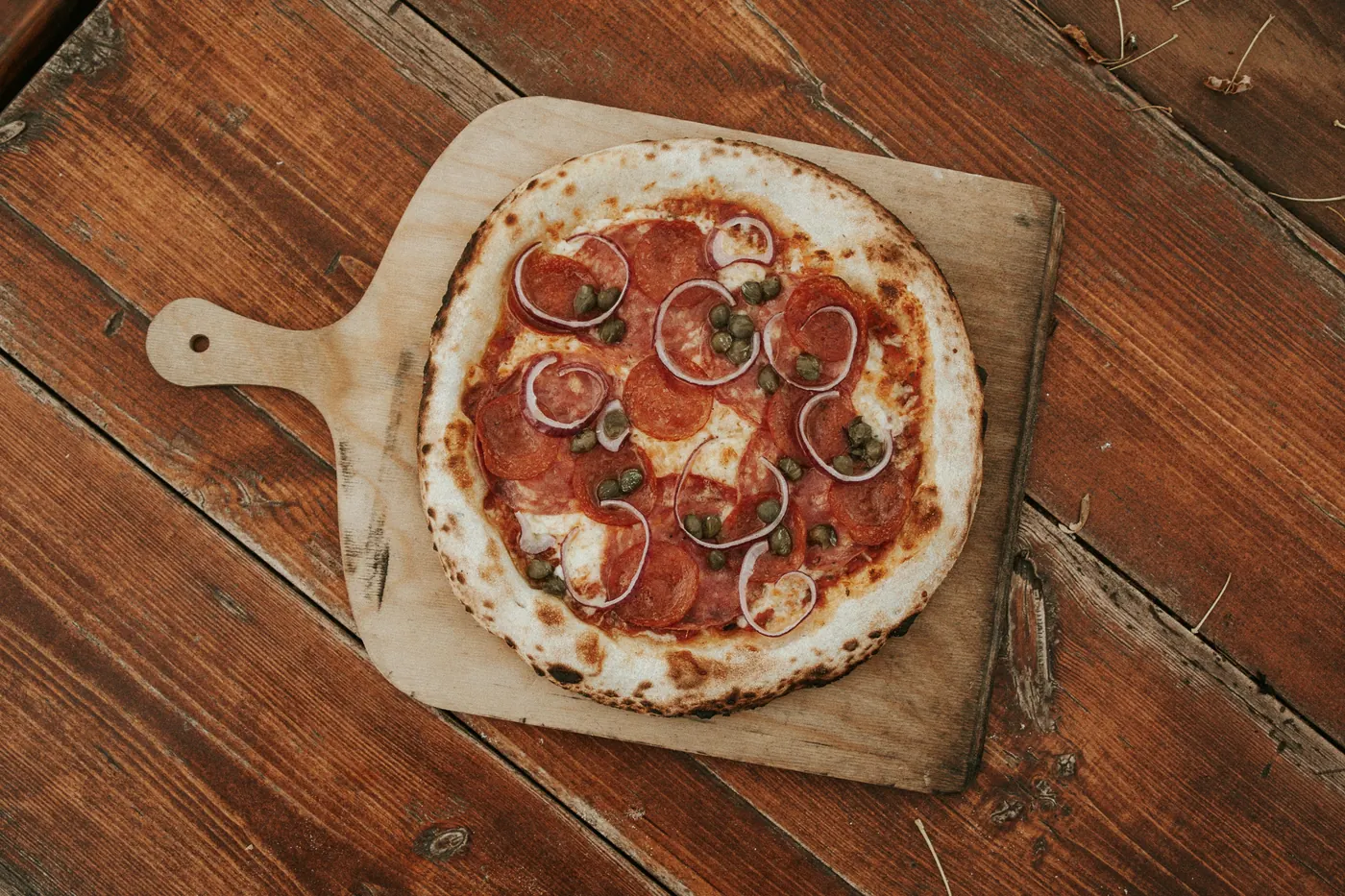
One pick per side, both in stock when we checked, with blades of nearly the same size so the comparison is fair. Each is a different size of a peel covered elsewhere on this site, and we say why in each section. If you want more choice, see our guides to the best pizza peel wood options and the best metal pizza peel options.
1. New Star Foodservice 16 x 14-inch Wooden Pizza Peel, 14-inch Handle – A Forgiving Launch With Extra Reach

New Star Foodservice sells to pizzerias and restaurants, and this is a plain, restaurant-style wood peel. The listing describes a pinewood blade and handle with a thin, beveled, tapered edge, on a 16 x 14-inch blade, and gives 30 inches for the whole peel. A 14-inch-wide blade carries a 12-inch pizza with room to spare.
America’s Test Kitchen recommends a New Star wooden peel with a 14-inch blade in its baking peel review, though the wood it describes (basswood) differs from what this listing states, so the two may not be identical. ATK also noted that the blade was too thick to be great at rotating or removing, which is the usual limit of wood.
This is the same blade as the New Star peels in our main peel guide and our wood peel guide, with the middle handle length. We chose it here because 14 inches gives more reach than the 8-inch handle without the awkward length of the 26-inch one. The listing states no care instructions, so treat it as you would any wood board: scrape, wipe and dry it, and never soak it.
Why we like it
- Tapered, beveled front edge (listing)
- Blade wide enough for a 12-inch pizza
- Restaurant-supply maker
- A New Star wooden peel is recommended by ATK
Key specifications
| Model | Not stated (New Star 14-inch handle version) |
|---|---|
| Blade material | Pinewood (listing) |
| Blade size | 16 x 14 in |
| Overall length | 30 in |
| Handle | 14-inch wood, fixed |
| Front edge | Thin, beveled and tapered (listing) |
| Folds | No |
| Care | Not stated; hand clean as with any wood |
Why we recommend it
It suits a home cook who is still learning to launch, or anyone who wants to build pizzas right on the peel.
Skip it if storage is tight; the handle does not fold and the whole peel is 30 inches long.
Pros and cons
Pros
- Easier launches than smooth metal
- Good reach for a kitchen oven
- Simple one-piece build
Cons
- Thick for turning and retrieving
- No folding handle
- Needs dry storage
2. Chef Pomodoro 14 x 16-inch Aluminum Pizza Peel – A Thin Blade That Folds Away

Chef Pomodoro’s peel pairs a commercial-grade aluminum head with a natural pine handle. The listing gives a 14-inch-wide, 16-inch-long head and a 10-inch handle that folds, for 26 inches overall when extended. It lists pizzas, bread, pastries and cakes as uses, in home ovens, grills and pizza ovens.
The folding handle is the storage answer metal peels are known for. Folded, it fits where a one-piece wood peel will not, and the listing says it suits any kitchen size. The listing also mentions a “safety backstep” at the back of the blade, meant to keep food from sliding toward your hand as you lift it.
This is the larger size of the 12 x 14-inch Chef Pomodoro that is our best overall in our main peel guide. We chose the bigger one so its blade matches the wood pick and the comparison holds: same pizza size, same oven, only the material changes. Like any smooth aluminum blade it will need flour or semolina for a clean launch. The listing does not state care instructions, so hand wash it unless the maker’s insert says otherwise.
Why we like it
- Commercial-grade aluminum head (listing)
- Folding pine handle
- Blade size matches our wood pick
- Larger size of our main guide’s top peel
Key specifications
| Model | CP-AlumPP (part CP-ALUMPP-16) |
|---|---|
| Blade material | Commercial-grade aluminum |
| Blade size | 14 x 16 in |
| Overall length | 26 in, extended |
| Handle | 10-inch pine wood, folding |
| Front edge | Not stated for this size |
| Folds | Yes |
| Care | Not stated; hand wash and dry |
Why we recommend it
It suits a cook who already launches well, or who wants to turn and pull pizzas from the oven, and has little room to store a peel.
Skip it if your oven or stone is under about 16 inches deep; measure first, because a smaller blade will be easier to steer.
Pros and cons
Pros
- Thin metal slides under baked crusts
- Folds for storage
- Works for pastries and cakes too
Cons
- Raw dough sticks more readily
- Large blade for a small oven
- Folding joint is one more thing to keep clean
Pizza peel questions, answered
Is a wood or metal pizza peel better?
Neither is better at everything. Wood is better for launching raw dough, and metal is better for turning and retrieving, according to America’s Test Kitchen. If you can only have one and you are new to pizza, start with wood. If you bake often and launch well, a thin aluminum peel with plenty of flour does both.
Does pizza stick to metal peels?
It sticks more readily than on wood, because the smooth surface does not hold flour. Dust with semolina or cornmeal, top the pizza quickly and shake the peel before you launch.
Can you use a wooden peel to take pizza out of the oven?
Yes, though the thick edge makes it harder to get under the crust. Nudge it in at a low angle, or use a thin metal peel or a turning peel to lift the edge first.
Do you really need two peels?
You do not need two to make good pizza, but America’s Test Kitchen suggests owning both because each suits a different job. A common setup is wood to launch and metal to turn and retrieve.
Will a wood peel burn in a pizza oven?
It can scorch at the edge if it sits in a very hot oven or near a live flame. Launch quickly and pull it straight back out. In a kitchen oven this is rarely a concern, because the peel is only inside for a moment.
Which peel goes on your hook first
For most home cooks, wood comes first, because a clean launch is the step that makes or breaks a pizza night. Add a thin metal peel once you are launching well and want to turn pizzas and pull them out with less fuss. If you only have room for one and it must fold, choose the aluminum peel and keep semolina nearby.
For a full list of peels, see our guide to the best pizza peel, and for what goes under the pizza, our guides to the best pizza stone and the best pizza steel. And when you would rather someone else did the cooking, see the menu or call to order.