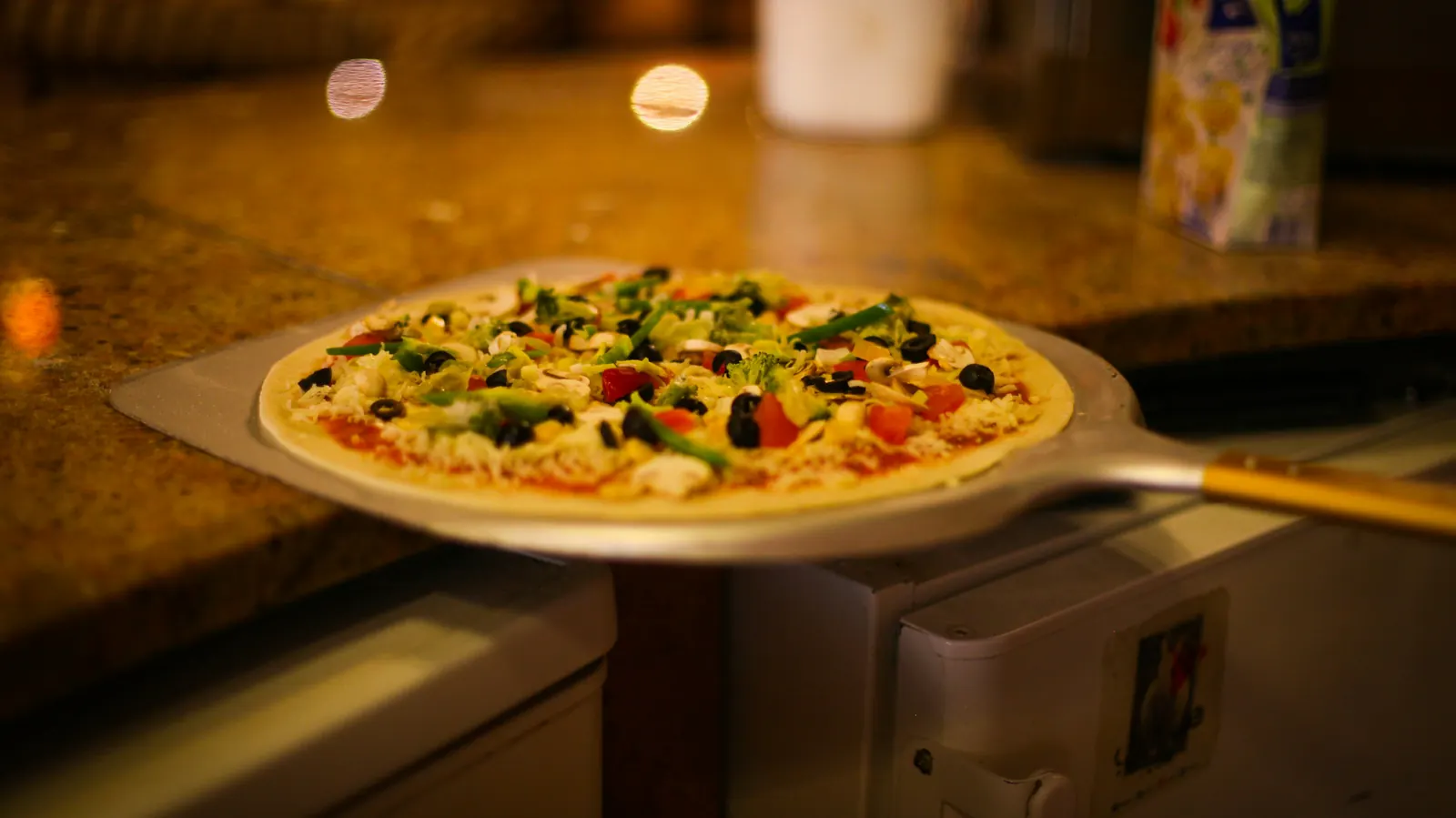
A pizza stone and a pizza steel do the same job in the same place. Each one sits on an oven rack, soaks up heat for the better part of an hour, and hands that heat to the bottom of the dough the moment the pizza lands. What separates them is how quickly that heat moves. Steel gives it up fast; stone gives it up slowly. That one difference decides how your crust turns out, and it also explains most of the trade-offs in weight, care and which oven each one suits.
In a restaurant kitchen the plancha and the comal teach the same lesson every day: heavy metal sears, and a thick mass holds its heat. This guide compares the stone and the steel on crust, preheat, weight, durability, cleaning and oven type, then says which to buy first and names one example of each.
Julia’s earns a commission on purchases made through links on this page, at no cost to you. Recommendations are based on what a restaurant kitchen looks for, product specifications and verified buyer reports.
Quick verdict: stone or steel first?
Buy a steel first if you bake in an ordinary home oven that tops out around 500 to 550°F and you can lift about 15 pounds onto a rack. It browns the bottom faster at those temperatures and it will not crack. Buy a stone first if you want something lighter to handle, plan to bake mostly bread or flatbreads with a gentler bottom heat, or want a lower-cost start. King Arthur Baking’s take matches ours: both work well, and given the choice, take the steel.
The table sums up the differences; the sections after it explain each one.
Pizza stone vs pizza steel, side by side
| Pizza stone | Pizza steel | |
|---|---|---|
| Common material | Unglazed cordierite; also clay and glazed ceramic | Carbon or low-carbon steel plate |
| Heat transfer | Slower and gentler | Much faster |
| Crust in a 500°F oven | Crisp, more evenly golden, slower to brown | Darker, faster browning and more blistering |
| Preheat | At least 20 to 25 minutes (Old Stone’s distributor); King Arthur says an hour | 45 to 60 minutes (ThermiChef); 60 minutes (Baking Steel) |
| Typical rack | Bottom rack (Old Stone’s distributor) | Upper or middle rack (Baking Steel) |
| Weight | Often not stated; lighter than steel of the same size and thickness | About 15 lb for a 14 x 16-inch quarter-inch plate (Baking Steel) |
| Main risk | Cracks from sudden temperature change or a drop | Rust if left wet; possible warping over direct flame (Baking Steel) |
| Cleaning | Scrape and rinse; no soap on unglazed stone | Wipe, dry, light coat of oil |
Crust: the heat gets there at different speeds
Dough on a hot surface is in a race. The bottom has to set and brown before the cheese overcooks and the top dries out. Steel wins that race at home-oven temperatures because metal moves heat far more quickly than ceramic. Baking Steel claims 18 times the conductivity of stone, and ThermiChef and VEVOR both say 20 times. Those are makers’ figures rather than independent measurements, but the direction is not in doubt. King Arthur Baking says steels transfer heat better than stones, and that this means better browning, crispier crusts and faster cooking.
In practice, a thin pizza on a preheated steel takes about five to eight minutes, according to Baking Steel and ThermiChef. The underside comes out dark, freckled and crisp. A stone browns more gradually, so the same pizza needs longer and comes out paler underneath, with a drier, more even crispness. Some cooks prefer that, especially on thicker crusts, where a very fast bottom can run ahead of the middle.
So the honest answer is not that stone is bad. A stone is still a huge step up from a sheet pan. Steel simply makes up for more of what a home oven lacks.
Heat storage: closer than the marketing suggests
Conductivity is how fast heat moves. Heat storage is how much is waiting to move, and that is what keeps the second and third pizzas as good as the first. Inch for inch, steel stores more; VEVOR and NerdChef both claim about twice the heat capacity of ceramic, which is roughly what published material figures suggest.
But stones are usually much thicker than steels. A 0.6-inch cordierite stone is more than twice as thick as a quarter-inch steel, so the total heat stored in the two can be similar. The gap you notice on the crust comes mostly from how fast that heat reaches the dough. If you want more stored heat, go thicker: ThermiChef says its 3/8-inch plate stores more heat and recovers faster between pizzas, and that a quarter inch gives most of that performance at about 10 pounds less.
Preheat: neither one is quick
Both need a long, full preheat, and this is where many disappointing pizzas start. King Arthur recommends at least an hour for either one, with the surface at 500°F or more when you check it with an infrared thermometer. It adds that convection, if your oven has it, speeds things up.
The makers vary. Old Stone’s distributor, Honey-Can-Do, gives 20 to 25 minutes at 500°F for its stones. ThermiChef says 45 to 60 minutes, and Baking Steel says 60 minutes at 500 to 550°F. Treat the short figure as a minimum. The oven’s preheat light tells you the air is hot, not that the mass on the rack has caught up, and a thick stone or plate takes longer. Put either one in a cold oven and let them heat up together.
Weight and handling: where stone earns its place
Steel is heavy. Baking Steel lists its 14 by 16-inch quarter-inch plate at 15 pounds, ThermiChef’s 16-inch square at 17.6 pounds in the same thickness, and its 3/8-inch version at 27.5 pounds. Material data sheets put cordierite at roughly 2 to 2.5 grams per cubic centimeter, against nearly 8 for steel, so size for size and thickness for thickness a stone weighs about a third as much.
That advantage shrinks because stones are thicker, and most makers do not publish a stone’s weight, so compare carefully. Even so, a stone is usually the easier thing to lift in and out. If you can’t comfortably move 15 pounds of metal to chest height, that settles the question, and you should buy a stone. Most owners of either kind leave it in the oven between bakes, so you may only lift it now and then.
Durability: cracks and warping
This is the clearest win for steel. King Arthur calls steels pretty much indestructible and notes that stones can deteriorate and crack. Almost every cracked stone has the same story: a cold stone in a hot oven, water on a hot stone, a hot stone on a cold counter, or a drop. Old Stone’s distributor says to start the stone in a cold oven and let it cool completely before you take it out. Cordierite resists sudden heat better than plain clay, but any stone can still break.
A steel has its own, milder failure modes. Left wet, it can rust, as any bare carbon steel will. Over direct flame the makers disagree: Baking Steel warns that it can warp its plate and that warping is not covered by its warranty, while ThermiChef says its low-carbon steel handles direct flame. On a grill, let any steel heat up with the fire instead of setting it on a hot grate.
Cleaning and seasoning
An unglazed stone is porous, so it takes up whatever you put on it. Old Stone and Pizzacraft both say no soap and no oil: scrape it, rinse or scrub it with water once it has cooled, and let it dry. It will stain, and Pizzacraft says that darkening is normal. Glazed stones are the exception. Emile Henry’s can go in the dishwasher, according to its listing, but a glaze is a different surface from bare stone.
A steel is closer to a cast iron comal. Baking Steel says to wipe it with a damp cloth once cool, with mild soap if needed, dry it thoroughly and rub on a light coat of oil. Some steels arrive seasoned, while ThermiChef ships bare and asks you to season it once. It takes a minute or two more after each bake, but there are no stains to accept, and the surface improves with use.
Your oven decides more than you think
Most home ovens reach 500 to 550°F, and steel is at its best there because it makes up for the missing heat. Baking Steel recommends the upper rack, with the middle also fine, so the top of the pizza gets more heat from the roof of the oven while the steel handles the crust. Old Stone’s distributor puts its stones on the bottom rack.
The logic flips at higher heat. In an outdoor oven far above 700°F, the bottom can brown faster than you want, and a gentler stone floor makes more sense. Cordierite stones are rated well above any kitchen oven: 1,450°F on the Old Stone and VEVOR listings. Our best pizza oven guide covers dedicated ovens, and our best pizza stone for grill guide covers stones for outdoor grills.
Size matters for either one. Measure the rack front to back and side to side, and leave space for air to move. VEVOR asks for 0.8 to 2 inches of clearance on all sides. If your oven is compact, a heavy 16-inch plate may not fit at all.
Stone or steel for flatbreads, bread and tortillas
Beyond pizza, both are useful. A preheated stone or steel crisps a tlayuda, revives day-old bolillos and gives bread a proper bottom crust. For bread, King Arthur notes that rectangular slabs of either material are more versatile than rounds. A slower stone is more forgiving for loaves, which bake far longer than a pizza, and it is less likely to scorch a thick base.
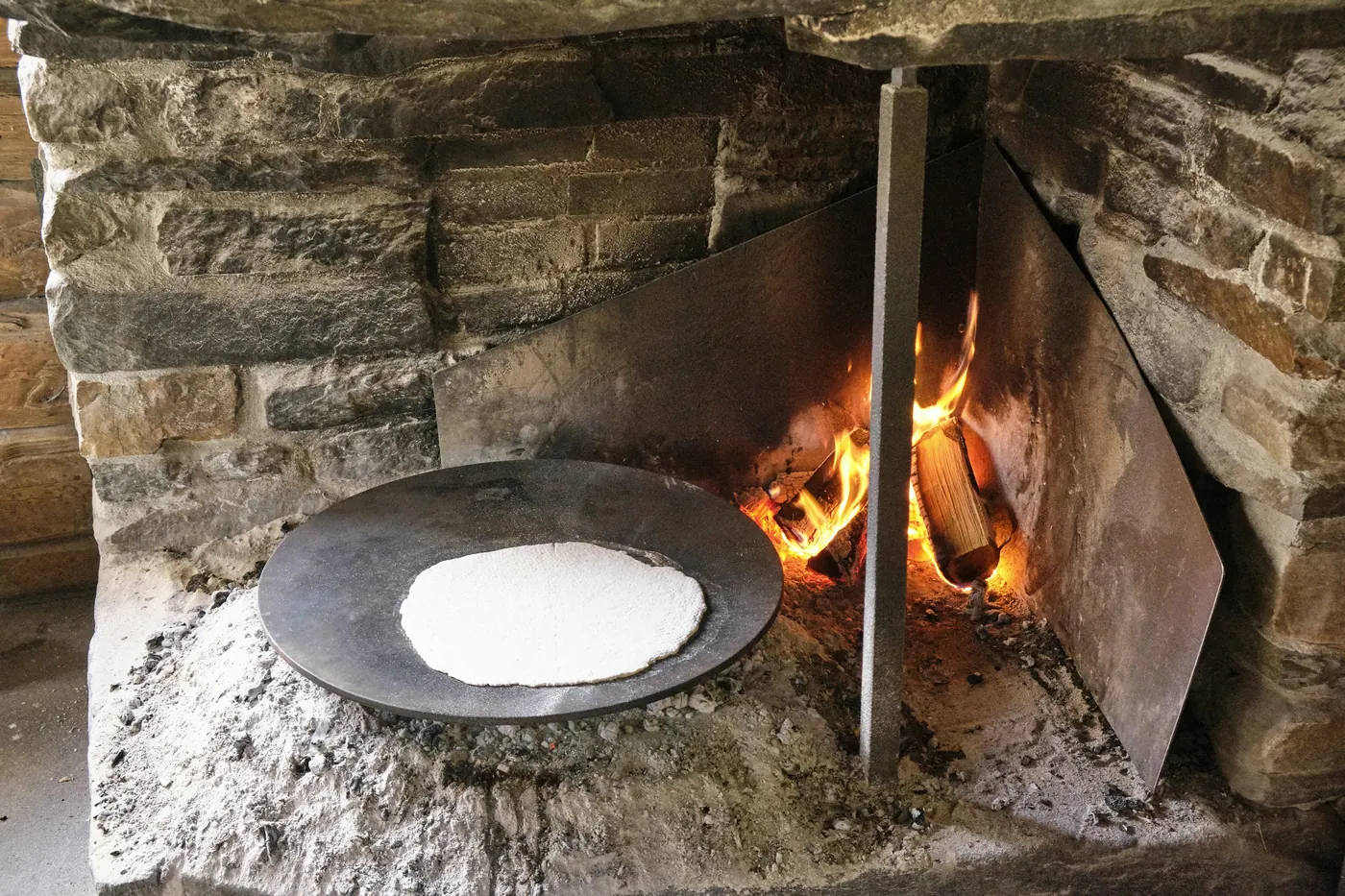
Steel has a stovetop life that a stone doesn’t. ThermiChef says its 16-inch square spans two burners and works as a griddle, which makes it a very large plancha for tortillas, quesadillas and carne asada. Check that any steel you buy allows stovetop use, and don’t expect it to replace a true comal for everyday tortillas; our best comal for tortillas guide explains why.
Choose a pizza stone if… / Choose a pizza steel if…
Choose a pizza stone if…
- Lifting 15 pounds or more onto an oven rack is a problem.
- You bake bread and thicker crusts more often than thin pizzas.
- You want a lower-cost start and are happy to follow the care rules.
- You also bake in a very hot outdoor oven or on a grill.
Choose a pizza steel if…
- You bake in a standard home oven and want the darkest, crispest bottom it can give.
- You make thin pizzas and like them done in minutes.
- You have cracked a stone before, or don’t want to risk it.
- You don’t mind drying and oiling it after use, as you would a comal.
Our pick on each side of the pizza stone vs pizza steel question
One pick per side, both from VEVOR, which keeps the comparison fair: a thick cordierite slab against a quarter-inch steel plate of similar footprint. Both were in stock when we checked. Neither listing appears on our other pages, but each is a different size of a line we cover: the stone is a larger version of the 16 by 14-inch VEVOR in our best pizza stone guide, chosen for its extra length and thickness, and the steel is the thinner, smaller version of the 20 by 14-inch VEVOR in our best cheap pizza steel guide, chosen because a quarter inch is the thickness most home bakers should start with. VEVOR is a large general retailer, not a specialist; if you want a specialist maker, see the note at the end of this page.
1. VEVOR 20 x 14-inch Cordierite Pizza Stone, 0.67 inch – Thick Slab With Room for Loaves

This is the stone in its plainest form: a thick rectangle of porous cordierite. The listing gives the size as 20 by 14 inches and the thickness as 0.67 inch, rates it to 1,450°F, and says the porous structure absorbs steam from the base of the dough to help avoid sogginess. It is listed for ovens, charcoal grills and barbecues as well as stone ovens.
The length is the reason to choose it. A 20-inch rectangle gives you more room to land a pizza than a smaller stone does, and it holds long loaves and flatbreads. At 0.67 inch it is also thick, which means plenty of stored heat, but it also means a long preheat; give it the full hour King Arthur recommends.
The listing asks you to clean and dry the stone before first use, heat it gradually, and clean it only once cool with warm water and a damp cloth. A plastic scraper comes in the box. It also asks for 0.8 to 2 inches of clearance on all sides, so a 20-inch stone needs an oven rack at least 21.6 inches wide. Measure first. VEVOR does not state a weight, and a slab this size is one to leave in the oven.
Why we like it
- Cordierite rated to 1,450°F (listing)
- Thickness stated: 0.67 inch
- 20-inch length for pizza and bread
- Scraper included
Key specifications
| Model | VV34350817 |
|---|---|
| Material | Cordierite |
| Size | 20 x 14 inches |
| Thickness | 0.67 inch |
| Weight | Not stated |
| Max temp (stated) | 1,450°F |
| Seasoning | None needed; heat gradually on first use |
| Care | Warm water once cool, wipe, dry |
Why we recommend it
It suits a home baker with a full-size oven who wants a thick stone for pizza and bread, and who may also use it on a grill.
Skip it if your oven is compact or narrow; for a smaller rectangle from a stone specialist, our best pizza stone guide starts with the Old Stone 14 by 16-inch.
Pros and cons
Pros
- Large baking area
- Thick, with stated dimensions
- High stated temperature rating
Cons
- Needs a wide oven
- Weight not stated
- Generalist brand; the listing is the only source
2. VEVOR 16 x 14.5-inch Pizza Steel, 1/4 inch – Standard Plate, Ready to Bake

This is the size and thickness of steel that suits most home ovens: a quarter-inch carbon steel plate, 16 by 14.5 inches according to the listing title, close to the footprint of the steels that set the standard. ThermiChef calls a quarter inch the most versatile thickness, the right balance of heat retention and weight, and that is the reasoning behind this pick.
The listing says the plate arrives pre-seasoned, after oxidation and sandblasting treatments, so there is no seasoning step before the first bake. It has a thumb hole for hanging and carrying, plus laser-cut and polished edges, and it is listed for indoor ovens and outdoor grills. VEVOR repeats the claim of 20 times the conductivity and twice the heat capacity of ceramic stones; treat those as the maker’s figures.
VEVOR says cleaning takes a soft cloth and water. Like any carbon steel, it should be dried straight away and given a light coat of oil. The listing does not state a weight or maximum temperature. Baking Steel’s quarter-inch plate, similar in size, weighs 15 pounds, so plan on something close to that, and follow the general steel routine: heat it with the oven for about an hour and let it cool in place. On a grill, heed Baking Steel’s warning and bring the plate up to temperature gradually.
Why we like it
- Quarter-inch plate, a good all-round thickness
- Arrives pre-seasoned (listing)
- Thumb hole for hanging and carrying
- Oven and grill use (listing)
Key specifications
| Model | Pizza Steel 16″ x 14.5″ x 1/4″ |
|---|---|
| Material | Carbon steel |
| Size | 16 x 14.5 inches (listing title) |
| Thickness | 1/4 inch |
| Weight | Not stated |
| Max temp (stated) | Not stated |
| Seasoning | Pre-seasoned |
| Care | Soft cloth and water; dry, oil lightly |
Why we recommend it
It suits a home baker buying a first steel who wants a standard size and thickness, ready to use the day it arrives.
Skip it if you want maker preheat and care instructions in detail; the Baking Steel Original in our best pizza steel guide has them.
Pros and cons
Pros
- Standard size for full-size ovens
- Pre-seasoned
- Thumb hole makes it easier to grip
Cons
- Weight not stated
- No maximum temperature stated
- Generalist brand; the listing is the only source
Stone and steel questions, answered
Is a pizza steel better than a stone?
For thin pizza in a home oven, generally yes: it browns the bottom faster and will not crack, and King Arthur Baking recommends one if you have the choice. A stone is lighter for its size, costs less to replace and suits bread and thicker crusts well. It is a real choice, not a clear upgrade for everyone.
Can a pizza steel replace a pizza stone?
Yes, for nearly everything you would bake on a stone, including pizza, flatbreads and bread. Watch loaves with long bake times, because a steel’s fast heat can darken the bottom sooner than a stone would.
Is a pizza steel worth it if you already own a stone?
Only if you want a darker, crisper bottom and faster bakes than your stone gives. If your stone is intact and you like the crust, keep it. If it has cracked, replacing it with a steel is a sensible time to switch.
Do you need to preheat a pizza steel as long as a stone?
Yes. King Arthur recommends at least an hour for either, and steel makers ask for 45 to 60 minutes. A thin stone may reach temperature sooner, but a thick one will not, so check the surface with an infrared thermometer rather than the clock.
Which rack should a stone or steel go on?
Baking Steel recommends the upper rack, with the middle also fine, while Old Stone’s distributor puts its stones on the bottom rack. Follow the instructions that come with yours.
Which one goes in your oven first
For most home kitchens, the steel comes first. A standard oven needs help on the bottom, and steel gives the most of it, with no risk of cracking. The stone is the better first buy if weight or budget is the limit, or if bread matters more to you than a blistered pizza. Whichever you choose, the routine is what makes it work: put it in cold, preheat it fully and launch with a good peel. Our best pizza oven peel guide covers that last step.
If you want a specialist maker, our guide to the best pizza steel compares Baking Steel, ThermiChef, NerdChef, Old Stone and Made In, and our best pizza stone guide covers cordierite, glazed ceramic and cast iron. And when you would rather someone else did the baking, see the menu or call to order.