A rice cooker does one job very well: it heats rice and water until the water is gone, then switches itself to warm. But plenty of kitchens have no room for another appliance, or the cooker broke the week the family came over. The good news is that rice cooked well long before rice cookers existed, and almost every kitchen already owns something that can do the job.
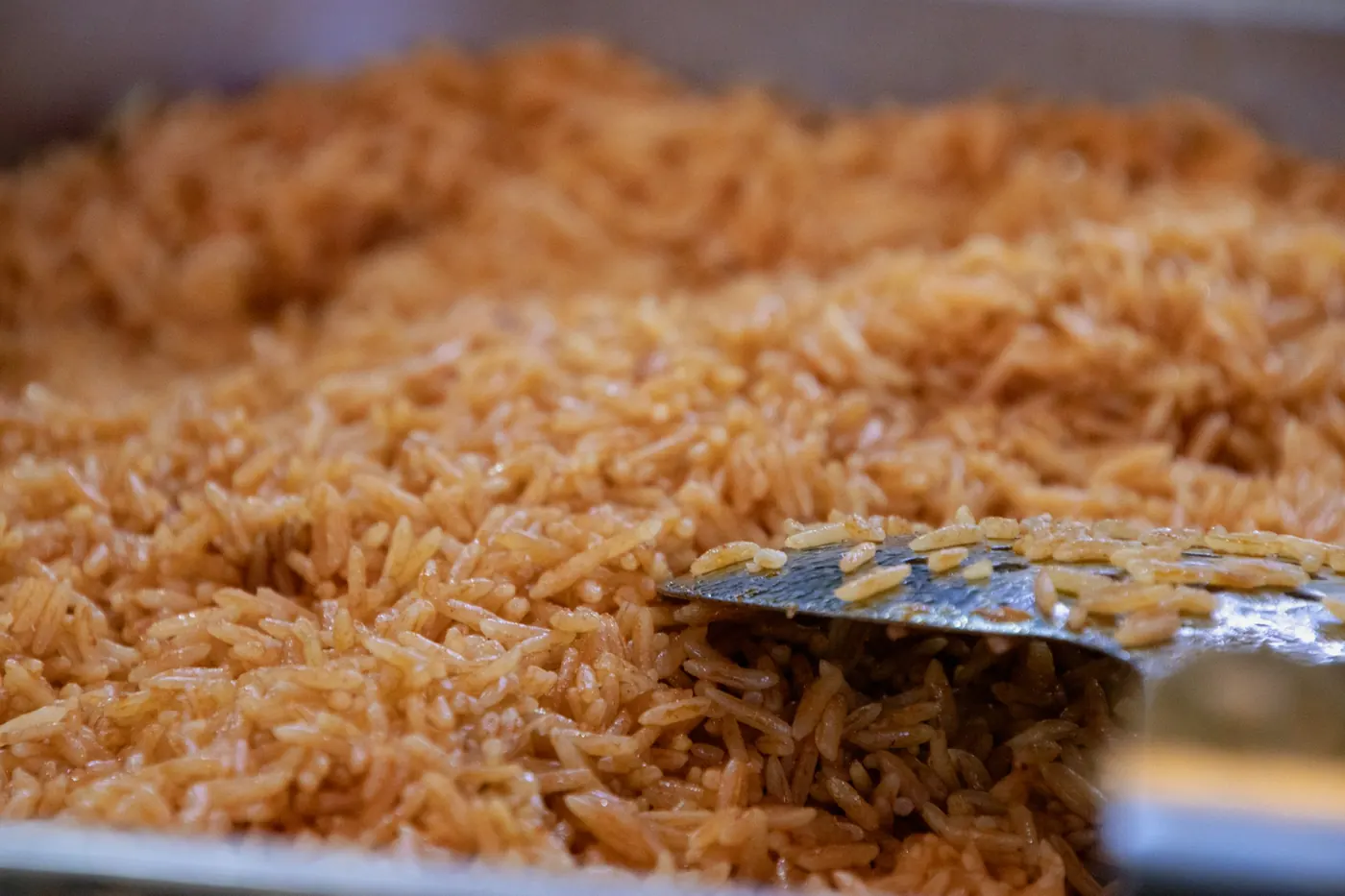
Mexican rice is a good example: in most home kitchens it starts in a heavy pot on the stove, with the rice toasted in oil before the tomato broth goes in, and no cooker is involved. This guide covers five ways of cooking rice without a rice cooker, how close each one gets, and one product for each.
Julia’s earns a commission on purchases made through links on this page, at no cost to you. Recommendations are based on what a restaurant kitchen looks for, product specifications and verified buyer reports.
Why cooks look for a rice cooker alternative
Most people who search for a rice cooker alternative fall into one of three groups. Some don’t want another single-use appliance on a small counter. Some already own a pot or a multicooker and want to know whether it is good enough. And some cook rice only now and then, so a dedicated machine makes little sense. For each group the answer is different, which is why this page gives more than one pick.
It helps to know what you are replacing. USA Rice, the US rice industry’s trade group, describes the cooker simply: add the ingredients, choose white or whole grain, and it turns off by itself when it senses the rice has absorbed the liquid. The other methods do the same cooking; you just do the timing.
Quick verdict: the best rice cooker alternative
For most kitchens, the best rice cooker alternative is a heavy-bottomed 2-quart saucepan with a tight lid. USA Rice’s stovetop method calls for exactly that, and white rice takes about 20 minutes. If you want hands-off cooking with a keep-warm setting, a multicooker such as the Instant Pot Rio Mini is the closest thing to a rice cooker. A Dutch oven in a 350°F oven suits big batches, and a microwave rice cooker suits a dorm or office.
Five ways to cook rice without a rice cooker, side by side
One pick for each method, with what the maker or listing states. Each one is reviewed in full below.
| Alternative | Method | How close to a rice cooker | Stated capacity & heat | Buy on Amazon |
|---|---|---|---|---|

Cuisinart Contour 2-Quart Stainless SaucepanBest overall
|
Stovetop simmer | Very close; you set the timer | 2 quarts; aluminum-encapsulated base | View on Amazon |

Instant Pot Rio Mini 4-Quart MulticookerClosest to a rice cooker
|
Electric rice and pressure programs | Closest; hands-off with keep warm | 4 quarts; 800 W; UL listed | View on Amazon |

Lodge Essential Enamel 6-Quart Dutch OvenBest for big batches
|
Stovetop or 350°F oven | Close; very even heat, slower | 6 quarts; oven safe to 500°F | View on Amazon |

Ninja HyperHeat 6.5-Quart Pressure CookerBest for families
|
Electric pressure cooking | Close; fast, plus searing | 6.5 quarts; 1200 W | View on Amazon |

DOITOOL 2-Quart Microwave Rice CookerBest for dorms and offices
|
Microwave | Fair for small batches | 1.8 liters; locking lid with vent | View on Amazon |
How each method compares with a rice cooker
Saucepan on the stove
This is the method USA Rice gives first. Use a 2- to 3-quart saucepan, bring the rice and liquid to a boil, stir once or twice, then turn the heat to low, cover tightly and simmer: about 20 minutes for white rice and 40 to 45 for brown. If the rice isn’t tender yet, cover it and give it 2 to 4 minutes more, then fluff with a fork. The rules that matter are the ones a cooker enforces for you: keep the lid on so the steam stays in, and don’t stir.
What you give up is the automatic switch-off. Set a timer, and use a pot with a heavy base so the bottom layer doesn’t scorch on low heat.
Dutch oven, on the stove or in the oven
A Dutch oven works like a large saucepan on the stove. Its real strength is the oven method. USA Rice says to start with boiling liquid, combine it with the rice in a dish, cover tightly and bake at 350°F: 25 to 30 minutes for white rice and 50 to 60 for brown. The oven heats from all sides, which makes it a good choice for a big pan of rice for a party, and it frees a burner for the beans.
Multicooker
An electric multicooker is the closest substitute, because it is a rice cooker with extra programs. Instant Pot and Ninja both list a rice function, and both keep food warm afterward. Pressure cooking is also quick: Ninja says white rice cooks in as little as 8 minutes, not counting the time to build and release pressure. The catch is that it is still an appliance on the counter, just one that also does beans, stews and yogurt.
Microwave rice cooker
USA Rice has a microwave method too: a deep, tightly covered 2½- to 3-quart microwave-safe dish. White rice cooks on high for 5 minutes or until boiling, then on medium (50 percent power) for 15 minutes, followed by 5 minutes’ standing time. Those times assume a 1,200-watt oven, so adjust for yours. A purpose-made microwave cooker adds a locking lid and a steam vent to stop boil-overs. It suits small amounts, but it is the least consistent of the five because microwaves vary so much.
Our picks for a rice cooker alternative
Five picks, one per method, all in stock when we checked. Two are different listings of models we cover elsewhere, and we say why: the Lodge is the Lagoon color of a Dutch oven on several of our pages, chosen because Lodge is one of the few enamel makers with a statement on lead, and the Ninja is the dark gray version of a pressure cooker in our pressure cooker guides, chosen because Ninja states a rice time for it.
1. Cuisinart Contour 2-Quart Stainless Saucepan – The Right Size for Stovetop Rice
A plain 2-quart saucepan with a good lid is the most useful rice cooker alternative there is, and this one matches USA Rice’s advice on size: a 2- to 3-quart pan. Cuisinart’s listing describes an aluminum-encapsulated base that heats quickly and spreads heat evenly, which is what keeps the bottom layer of rice from catching during a 20-minute simmer.
The lid is the other half of the job. Cuisinart calls it a Flavor Lock lid, and the pan has a pouring rim and solid stainless riveted handles that the maker says stay cool on the stove. Keep the lid on for the whole simmer; that is what lets the rice finish in its own steam.
Because rice triples in volume, as USA Rice notes, a 2-quart pan is right for roughly 1 to 1½ cups of dry rice. For a family-size pot of arroz rojo, step up to the Dutch oven below. The pan is dishwasher safe and has a limited lifetime warranty, according to the listing.
Why we like it
- 2-quart size matches USA Rice’s stovetop advice
- Aluminum-encapsulated base for even heat (listing)
- Covered, with a pouring rim (listing)
- Limited lifetime warranty (listing)
Key specifications
| Model | 419-18P |
|---|---|
| Type | Stovetop saucepan with lid |
| Capacity | 2 quarts |
| Material | Stainless steel, aluminum-encapsulated base |
| Power | Stovetop |
| Keeps warm | No |
| Cleaning | Dishwasher safe |
| Warranty | Limited lifetime |
Why we recommend it
It suits a cook who makes rice a few times a week for two to four people and would rather own one good pan than another appliance.
Skip it if you want to walk away while the rice cooks; a multicooker switches itself off and a saucepan does not.
Pros and cons
Pros
- Does many jobs besides rice
- Easy to clean
- No counter space needed
Cons
- You time it yourself
- Too small for big batches
- Induction compatibility not stated
2. Instant Pot Rio Mini 4-Quart Multicooker – A Rice Cooker and Then Some
If what you miss is the button you press and walk away from, a small multicooker is the answer. The Rio Mini lists seven functions: pressure cook, slow cook, sauté, steam, cook rice, make yogurt and keep warm. That last one matters for rice; it holds the pot until the rest of dinner is ready, just as a rice cooker does.
Instant Pot gives the capacity as 4 quarts, enough for up to four servings, with the same cooking surface as an 8-inch pan. The inner pot is stainless steel, and the maker says the lid and pot are dishwasher safe. It runs on 800 watts at 120 volts and is UL and ULC listed, according to the listing. A stainless steam rack is included.
Use the maker’s rice program and water lines rather than a stovetop ratio. Pressure cooking loses very little water to steam, so a stovetop amount can leave the rice wet.
Why we like it
- Dedicated rice function and keep warm (listing)
- Stainless steel inner pot (listing)
- UL and ULC listed (listing)
- Compact 4-quart size (listing)
Key specifications
| Model | Rio Mini, 140-8006-01B |
|---|---|
| Type | Electric multicooker |
| Capacity | 4 quarts |
| Material | Stainless steel inner pot |
| Power | 800 W, 120 V |
| Keeps warm | Yes |
| Cleaning | Lid and pot dishwasher safe |
| Warranty | Not stated |
Why we recommend it
It suits a small household that wants hands-off rice and would use the same machine for beans, stews and yogurt.
Skip it if counter space is the reason you don’t own a rice cooker; this takes up about as much room.
Pros and cons
Pros
- Switches off and keeps warm
- Seven functions in one
- Stainless pot, no coating
Cons
- Another appliance to store
- 4 quarts is small for a crowd
- Warranty not stated in the listing
3. Lodge Essential Enamel 6-Quart Dutch Oven – Big-Batch Rice on Stove or in Oven
When rice is for a crowd, a Dutch oven does what a small saucepan can’t. Lodge lists this pot at 6 quarts, stovetop compatible and oven safe to 500°F, with a lid it describes as moisture-sealing. That makes it the natural pot for USA Rice’s oven method: boiling liquid and rice, covered tightly, at 350°F for 25 to 30 minutes for white rice.
Cast iron holds heat, which suits the Mexican way of starting rice: toast the grains in a little oil until golden, add the tomato broth, cover and simmer low. The enamel interior means no seasoning, and Lodge says the pot is dishwasher safe, though it recommends hand washing with warm soapy water and a nylon brush.
Lodge is one of the enamel makers we accept under our lead rule: it says it uses vetted third-party labs to verify that its cookware is free of PFAS and of dangerous levels of lead and cadmium. The pot is heavy, which is normal for enameled cast iron, so lift it into the oven with both handles.
Why we like it
- 6-quart size for party batches (listing)
- Oven safe to 500°F (listing)
- Enamel interior, no seasoning (listing)
- Maker statement on lead (Lodge)
Key specifications
| Model | EC6D38 (Lagoon) |
|---|---|
| Type | Enameled cast iron Dutch oven |
| Capacity | 6 quarts |
| Material | Enameled cast iron |
| Power | Stovetop; oven to 500°F |
| Keeps warm | Holds heat; no setting |
| Cleaning | Dishwasher safe; hand wash recommended |
| Warranty | Not stated in listing |
Why we recommend it
It suits a cook who makes rice for six or more, likes the oven method, or wants one pot for rice, beans and stews.
Skip it if you cook a cup of rice at a time; a 6-quart pot is more pot than that needs.
Pros and cons
Pros
- Large and even-heating
- Works on the stove and in the oven
- Useful for much more than rice
Cons
- Heavy to lift
- Slower to heat than a thin pan
- Enamel can chip if knocked
4. Ninja HyperHeat 6.5-Quart Pressure Cooker – Fast Rice for a Family
This is the bigger, faster multicooker. Ninja lists nine functions, including pressure cooking, slow cooking, rice, steaming, searing, sous vide and yogurt, in a 6.5-quart pot that it says feeds 8 to 10 people. For rice, the maker gives white rice in as little as 8 minutes, not counting the time it takes to build and release pressure.
The 1,200-watt base and a wide 9.5-inch cooking surface, as the listing describes them, mean you can toast rice and onion in the pot before adding the liquid, which suits Mexican rice. The removable SimpliServe pot goes to the table, and Ninja says its ceramic nonstick coating is free of PFAS.
As with any pressure cooker, follow the maker’s water amounts for rice; they are lower than stovetop ratios. The nonstick pot needs wooden or silicone tools, not metal.
Why we like it
- Stated white-rice time of 8 minutes under pressure (listing)
- 6.5 quarts, 8 to 10 servings (listing)
- Sear function for toasting rice first (listing)
- Serving pot goes to the table (listing)
Key specifications
| Model | PC201GY |
|---|---|
| Type | Electric pressure multicooker |
| Capacity | 6.5 quarts |
| Material | Ceramic nonstick pot |
| Power | 1200 W |
| Keeps warm | Not stated |
| Cleaning | Nonstick pot wipes clean |
| Warranty | Not stated |
Why we recommend it
It suits a family that wants fast rice on weeknights and a machine that also handles roasts, beans and stews.
Skip it if you want an uncoated pot; the Instant Pot above has a stainless one.
Pros and cons
Pros
- Fast under pressure
- Large capacity
- Sears in the same pot
Cons
- Coated pot needs gentle tools
- Bulky on the counter
- Keep-warm setting not listed
5. DOITOOL 2-Quart Microwave Rice Cooker – Rice Without a Stove
For a dorm room, an office kitchen or a stove that is busy, a microwave cooker gets rice done with nothing but an outlet. The listing gives a 1.8-liter (about 2-quart) capacity, 8.25 inches across and 5.5 inches tall, small enough for most standard microwaves. It has a dual-locking lid with a built-in steam vent to stop boil-overs, and handles for lifting it out.
Size it honestly. USA Rice recommends a 2½- to 3-quart dish for its microwave method, and notes that rice triples in volume. This is smaller than that, so keep batches to about a cup of dry rice. The listing claims 3 to 4 cups of rice, which we read as cooked rice.
The listing describes food-grade, BPA-free plastic and says the cooker is top-rack dishwasher safe. DOITOOL is a general housewares seller rather than a known cookware maker, and this pick rests on its listing alone.
Why we like it
- Locking lid with steam vent (listing)
- Stated size fits most microwaves (listing)
- Top-rack dishwasher safe (listing)
- Doubles as a vegetable steamer (listing)
Key specifications
| Model | 858T31O0B22T |
|---|---|
| Type | Microwave rice cooker |
| Capacity | 1.8 liters (about 2 quarts) |
| Material | BPA-free food-grade plastic |
| Power | Microwave |
| Keeps warm | No |
| Cleaning | Top-rack dishwasher safe |
| Warranty | Not stated |
Why we recommend it
It suits a student or office worker cooking a cup of rice at a time with only a microwave.
Skip it if you cook rice for a family; it is smaller than the dish USA Rice recommends for the microwave.
Pros and cons
Pros
- Needs no stove
- Small and light
- Easy cleanup
Cons
- Small batches only
- Results vary with microwave power
- Thin brand; the listing is the only source
Cooking rice without a rice cooker: questions, answered
What can I use instead of a rice cooker?
A saucepan with a tight lid is the simplest: about 20 minutes of low simmering for white rice, according to USA Rice. A Dutch oven, a multicooker or a microwave rice cooker also work, and each suits a different kitchen.
Is a multicooker as good as a rice cooker?
For everyday white rice it is close, because it has a rice program and a keep-warm setting. Use the maker’s water lines, since pressure cooking loses less water than the stove.
How do I keep rice from burning in a pot?
Use a heavy-bottomed pan, turn the heat to low once it boils, keep the lid on and don’t stir. USA Rice says to stir only once or twice before covering.
Can I cook rice in the oven?
Yes. USA Rice’s method starts with boiling liquid, covers the dish tightly and bakes at 350°F: 25 to 30 minutes for white rice and 50 to 60 for brown.
How much rice fits in a 2-quart pot?
Rice triples in volume, USA Rice notes, so a 2-quart pot is comfortable for about 1 to 1½ cups of dry rice. Go bigger for more.
Our final word on rice without a rice cooker
Start with the pot you already own. A good saucepan and a timer cover most kitchens, and a Dutch oven handles the big batches. Buy a multicooker if you want the hands-off convenience, and a microwave cooker only if there’s no stove. If you decide a dedicated machine is worth it after all, our best rice cooker guide is the place to start, and our best saucepan for rice and best Dutch oven guides go deeper on the stovetop options. For the dish itself, see Mexican rice vs Spanish rice, or skip the cooking: see the menu and call to order.