A sous vide circulator and a slow cooker both promise the same thing: put the food in, walk away, and come back hours later to something tender. That is where the likeness ends. A slow cooker heats a crock of food well past simmering temperature and turns tough cuts soft. A sous vide circulator holds a pot of water at one exact temperature and cooks sealed food to precisely that point, and no further.
In a restaurant kitchen, the braise and the precisely cooked steak come from different stations, and at home the same split applies. This guide compares sous vide vs slow cooker on temperature, control, the food each does best, time, browning, batch size, cleanup, cost class and food safety, then says which to buy first and names one of each.
Julia’s earns a commission on purchases made through links on this page, at no cost to you. Recommendations are based on what a restaurant kitchen looks for, product specifications and verified buyer reports.
Quick verdict: precise or set-and-forget?
For most home cooks, a slow cooker is the better first buy. It costs less, cooks a family-size batch of chili, beans, stew or shredded meat with no bags or water bath, and is about as simple as an appliance gets. Buy a sous vide circulator if what you want is exact doneness: steak that is the same pink edge to edge, chicken breast that stays juicy, fish and eggs cooked to the degree. Many kitchens end up with both, because they don’t do the same job.
The table sums up the differences. The sections after it explain each one and where the figures come from.
Sous vide vs slow cooker, side by side
| Sous vide circulator | Slow cooker | |
|---|---|---|
| How it heats | Heats and circulates water at one set temperature around sealed food | Heats a crock of food from the base and sides |
| Cooking temperature | Set to the degree; meats usually 131 to 140°F (NC State Extension) | About 170 to 280°F (University of Maine Extension) |
| Control | Exact; food can’t pass the water temperature | Low, High and often Keep Warm |
| Best at | Steak, chops, chicken breast, fish, eggs | Stews, chili, beans, shredded and braised meat |
| Browning | None; sear afterward | None; brown first in a pan if you want it |
| Extra gear | Pot or container, food-safe bags, ideally a sealer | None |
| Batch size | Limited by the pot and bags | Whole crock, often 6 quarts or more |
| Cost class | Higher | Lower |
Temperature: the whole difference in one number
A slow cooker works hot. University of Maine Cooperative Extension, in Kathy Savoie’s slow cooker safety guide, puts the range at generally 170 to 280°F. That steady, high moist heat is why a slow cooker turns a pork shoulder or a chuck roast into something you can shred with a fork. It is also why it overcooks a steak.
Sous vide works at the temperature you want the food to end at. Illinois Extension’s Jenna Smith describes a heated coil that warms water to a precise, constant low temperature, and points out that a steak in water set at 140°F can never go past that temperature. North Carolina State Extension says meats are usually cooked with the water between 131 and 140°F. So the food can’t overshoot, and a steak comes out the same color from edge to center.
Control and convenience
Slow cookers are about as simple as appliances get. Most have Low, High and Keep Warm, and programmable models add a timer. You load the crock, set it and leave it. There is nothing to seal and no water to top up.
A sous vide circulator asks a little more. You clip it to a pot of water, set a temperature to the half degree or so, seal the food in a food-safe bag, and lower it in. In exchange, the result is very consistent: Illinois Extension notes that because the water is constantly circulating, there are no hot or cool spots. You also get a wide window; a steak that is ready at two hours is still ready at three.
What each one cooks best
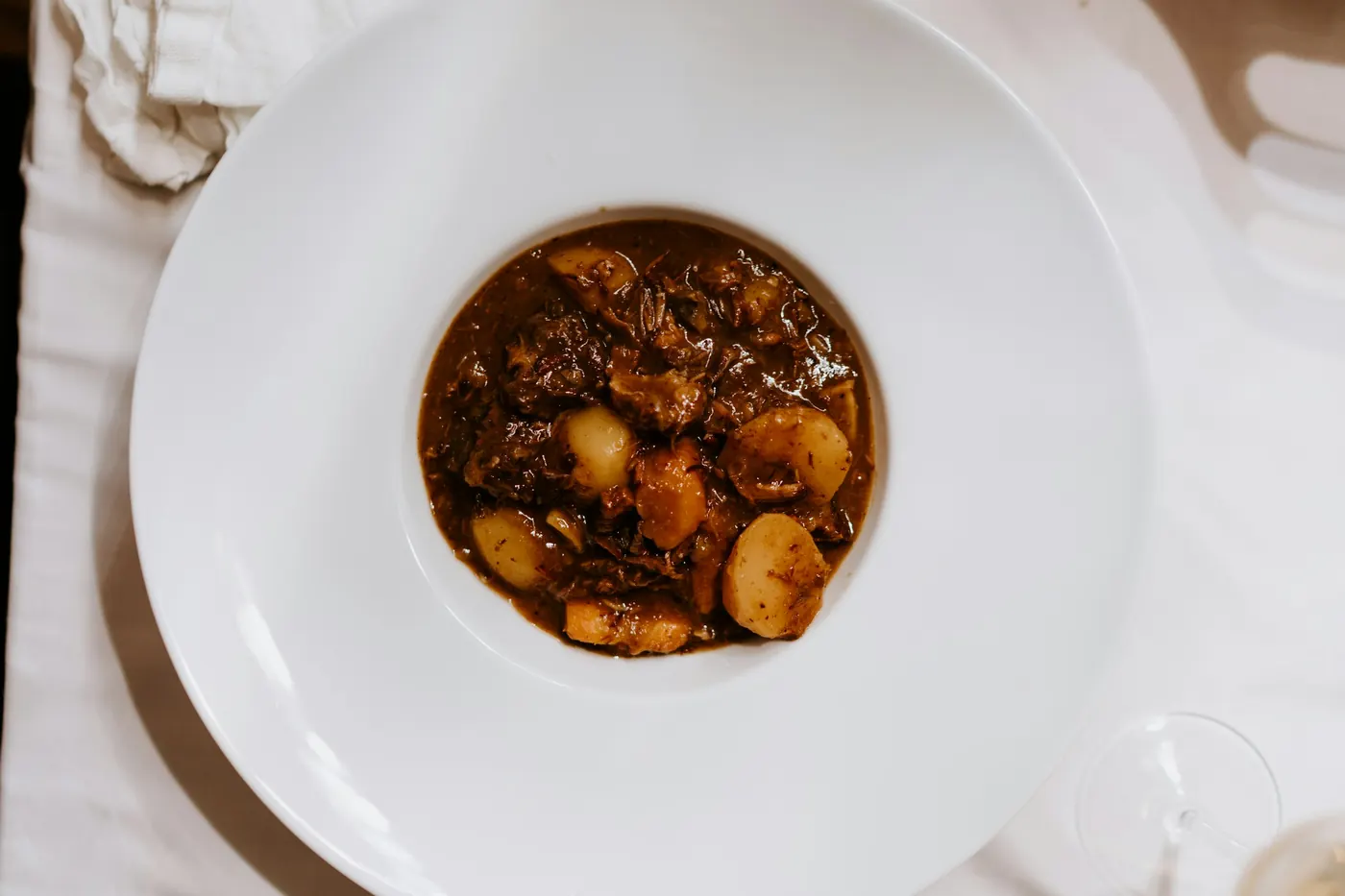
The slow cooker is built for tough, collagen-rich cuts and one-pot dishes: beef for barbacoa-style tacos, pork shoulder, chili, pinto and black beans, pozole, soups and stews. The food sits in its own liquid, the flavors mingle, and the high heat breaks connective tissue down.
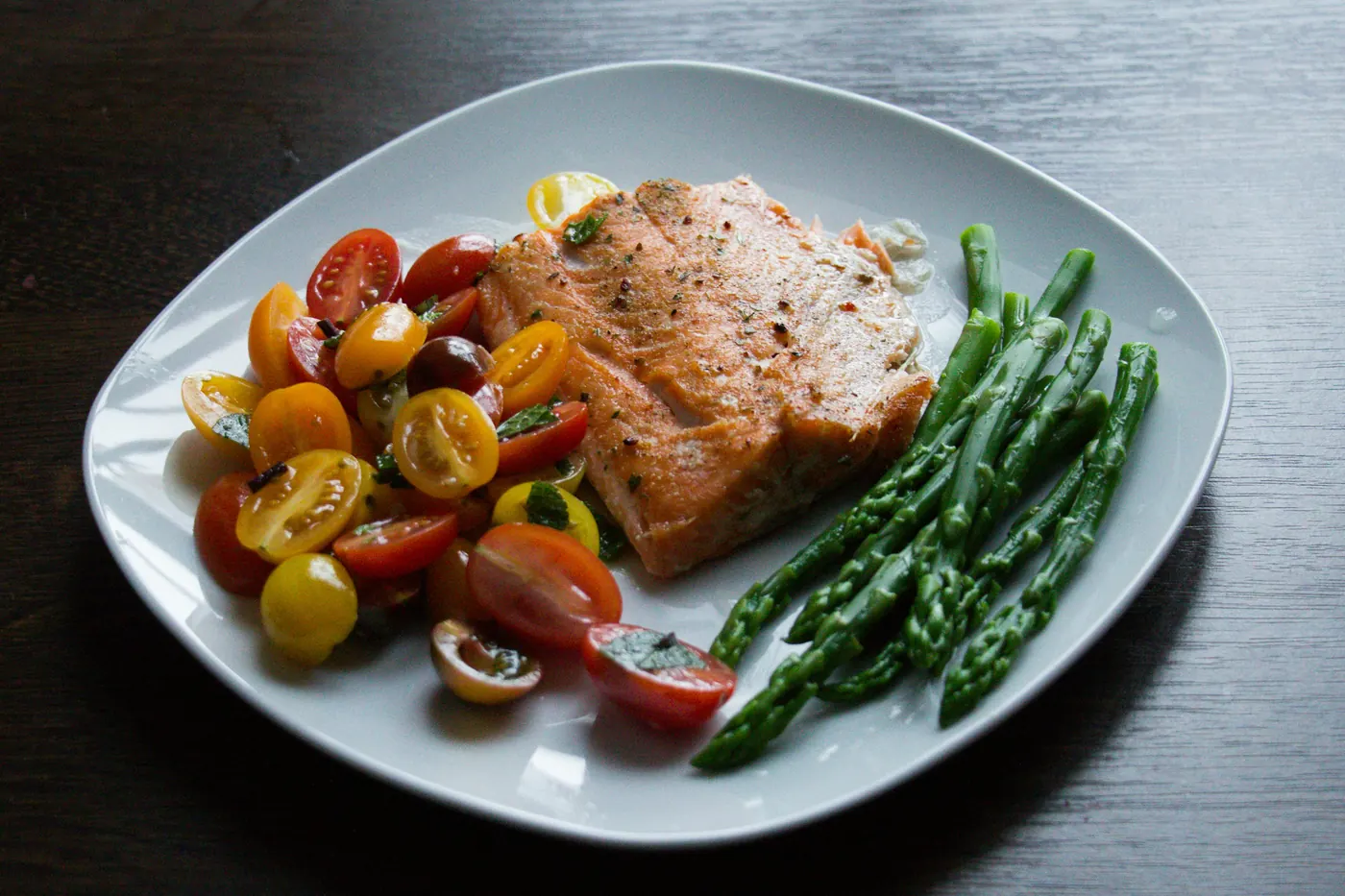
Sous vide is built for tender cuts that are easy to overcook: steaks, pork chops, chicken breasts, salmon, shrimp and eggs. It can do tough cuts too, but slowly. Illinois Extension notes that a medium-rare steak can take up to four hours and pork ribs as long as 36 hours. A slow cooker gets a tough cut tender in an afternoon.
Time
Both are long-cook appliances, and neither one is fast. A slow cooker recipe usually runs several hours on Low or a few on High. Sous vide times depend on the food and the result you want; Illinois Extension’s examples run from up to four hours for a medium-rare steak to as long as 36 hours for pork ribs. NC State Extension says to follow time and temperature instructions tested by a reputable university, chef or company, because the right combination is essential for safe sous vide cooking.
Browning and texture
Neither appliance browns food. A slow cooker braises in moist heat, so meat comes out tender but pale unless you brown it in a pan first. Sous vide food comes out of the bag cooked through but gray on the surface, and NC State Extension says most items, especially meats, are better seared afterward on a grill or in a hot skillet for crispness and color. A heavy cast iron skillet does that job well.
Batch size and cleanup
For feeding a crowd, the slow cooker wins easily. A 6-quart crock holds a whole chicken or a 4-pound roast, according to Hamilton Beach, and you serve straight from it. Sous vide batch size is limited by the pot or container and how many bags fit without crowding.
Cleanup splits the same way. A slow cooker leaves one crock and lid to wash, often in the dishwasher. Sous vide leaves a pot of clean water, the bags and a skillet from searing; the circulator itself usually just needs a wipe.
Food safety for both
Both appliances are safe when used as their makers and food-safety educators direct, but the rules differ.
For slow cookers, University of Maine Extension says to thaw meat and poultry completely before it goes in, fill the cooker between half and two-thirds full, keep the lid on, and use the High setting for the first hour if you can before turning it down. It says to use a food thermometer to check minimum safe temperatures: 145°F with a three-minute rest for whole cuts of beef, pork, veal and lamb, 160°F for ground meats and 165°F for poultry. Don’t reheat leftovers in a slow cooker; heat them to 165°F on the stove, in the oven or in the microwave first. Refrigerate leftovers promptly.
For sous vide, NC State Extension says never to cook below 131°F, because that is not hot enough to kill pathogens that may be in the meat. Illinois Extension says to use only food-safe bags, to cool food quickly in an ice bath before refrigerating it if you aren’t eating it right away, and never to leave food at room temperature for more than two hours, to reduce the risk of botulism. Follow a tested time and temperature chart for each food; low sous vide temperatures depend on time to make food safe.
Cost class
A manual slow cooker is one of the cheaper appliances in the kitchen, and it needs nothing else. A sous vide circulator costs more, and you may want a container, a supply of bags and a vacuum sealer to go with it. Check current prices on Amazon, since they change often.
Choose sous vide if… / Choose a slow cooker if…
Choose sous vide if…
- You cook steaks, chops, chicken breasts or fish and want exact doneness every time.
- You like a wide window: food that stays ready for an extra hour without overcooking.
- You don’t mind sealing food in bags and searing it at the end.
- You already own a good slow cooker or Dutch oven for braises.
Choose a slow cooker if…
- You cook chili, beans, stews, soups and shredded meat for tacos.
- You feed a family or a crowd from one pot.
- You want the simplest possible appliance, with no bags or water bath.
- You want the lower cost class.
Our pick on each side of the sous vide vs slow cooker question
One pick per side, both in stock when we checked. Each is a different color of a model we cover elsewhere. The Greater Goods circulator is the white version of the one in our best sous vide and value sous vide guides, chosen because it is the simplest circulator to compare against a slow cooker: a dial, no app. The Hamilton Beach is the blue version of the folding-handle slow cooker in our affordable slow cooker guide, chosen because Hamilton Beach publishes a lead statement for its crocks. For more slow cookers, see our guide to the best slow cooker.
1. Greater Goods Sous Vide Cooker, 1100W, Birch White – Dial Control, No App Needed

Greater Goods built this circulator for cooks who don’t want another app. According to its listing, you set temperature and time with one twist-and-press dial, read them on a large LED display angled toward you, and need no Wi-Fi, Bluetooth or account. That makes it a fair stand-in for the sous vide side of this comparison: the precision without the extras.
The listing gives a range of 68 to 203°F in half-degree steps, a readout to a tenth of a degree, and built-in calibration so you can match it to a thermometer you trust. The 1,100-watt heater is rated for baths up to 15 liters, and the timer runs from one minute to 99 hours. If the water drops too low, heating stops and the status light turns red.
A brushless motor keeps it quiet, according to Greater Goods, and an adjustable clip fits pots you already own. The stainless steel housing comes off and is dishwasher safe. Greater Goods lists five years of coverage and a St. Louis-based support team.
Why we like it
- Dial control with no app or account, according to the listing.
- 68 to 203°F in 0.5°F steps, with calibration.
- Low-water shutoff, per the listing.
- Five years of coverage, according to Greater Goods.
Key specifications
| Model | 0534 |
|---|---|
| Capacity | Baths up to 15 L |
| Power | 1,100 W |
| Settings | 68–203°F in 0.5°F steps; timer 1 min–99 h |
| Controls | Single dial, LED display; no app |
| Safety | Low-water heating cutoff |
| Cleaning | Removable stainless housing, dishwasher safe |
| Warranty | 5-year coverage |
Why we recommend it
It suits cooks who want exact doneness for steaks, chicken and fish without setting up an app, and who already have a large pot.
Skip it if you want to start and check a cook from your phone; it has no app by design.
Pros and cons
Pros
- Simple dial and angled display.
- Calibration against your own thermometer.
- Quiet brushless motor, according to Greater Goods.
- Sold by Greater Goods when we checked.
Cons
- No remote monitoring.
- Needs a pot or container, bags and a way to sear.
- Higher cost class than a slow cooker.
2. Hamilton Beach 6 Quart Slow Cooker With Folding Handles, Blue – Simple Three-Setting Dial

This is the slow cooker at its simplest: a 6-quart stoneware crock, a glass lid and a dial with Low, High and Keep Warm. Hamilton Beach says the crock holds a 6-pound chicken, a 4-pound roast or enough barbecue for up to 25 sliders, and serves seven or more. That covers a pot of chili, a batch of beans or shredded beef for a taco night.
The handles fold down flat, which saves a little room on the counter and in the cupboard, and fold up for carrying. The crock and the lid both go in the dishwasher, according to the listing, and Hamilton Beach backs it with a one-year limited warranty.
The crock is glazed stoneware, so we checked the maker’s lead statement. Hamilton Beach’s FAQ says its specifications for all slow cookers and their components, including the earthenware crocks, prohibit the product from containing any measurable amounts of lead.
Why we like it
- 6-quart crock holds a 4-pound roast, according to Hamilton Beach.
- Low, High and Keep Warm on one dial.
- Dishwasher-safe crock and glass lid, per the listing.
- Maker states no measurable lead in its slow cookers and crocks.
Key specifications
| Model | 33608 |
|---|---|
| Capacity | 6 qt |
| Power | Not stated |
| Settings | Low, High, Keep Warm |
| Controls | Manual dial |
| Safety | Maker lead statement for crocks |
| Cleaning | Crock and lid dishwasher safe |
| Warranty | 1-year limited |
Why we recommend it
It suits families who cook chili, beans, stews and shredded meat in quantity and want the simplest, most forgiving appliance for it.
Skip it if you want a timer that switches to Keep Warm on its own; this is a manual dial.
Pros and cons
Pros
- Family-size crock.
- Folding handles for storage.
- Lead statement from the maker.
- Sold by Amazon.com when we checked.
Cons
- No programmable timer.
- Wattage not stated in the listing.
- Does not brown or sear.
Sous vide and slow cooker questions, answered
Is sous vide better than a slow cooker?
For tender cuts that need exact doneness, yes. For stews, chili, beans and tough cuts you want to shred, a slow cooker is simpler, holds more and is faster to get tender.
Can a sous vide replace a slow cooker?
Only partly. It can make tough cuts tender, but much more slowly; Illinois Extension notes pork ribs can take as long as 36 hours. It can’t simmer a pot of beans or chili the way a crock does.
Can you sous vide in a slow cooker?
Not reliably. A slow cooker’s settings run at about 170 to 280°F, according to University of Maine Extension, well above most sous vide temperatures, and it does not hold one exact temperature.
What is the lowest safe sous vide temperature?
NC State Extension says never to cook below 131°F, and to follow time and temperature instructions tested by a reputable source.
Which is better for carnitas or barbacoa?
A slow cooker, for most cooks. Both are tough, fatty cuts that need high heat over hours to shred, and a slow cooker does that in a single afternoon. For more on sous vide alternatives, see our guide to sous vide alternatives.
Which one to bring home first
If you cook for a family and want one appliance for chili, beans and shredded meat, start with a slow cooker. If you already braise in a Dutch oven and want restaurant-steady steaks and chicken breasts, a sous vide circulator adds something nothing else in your kitchen does. And on nights when nobody wants to wait hours for dinner, the menu at Julia’s is ready: call (346) 546-8283 to order.