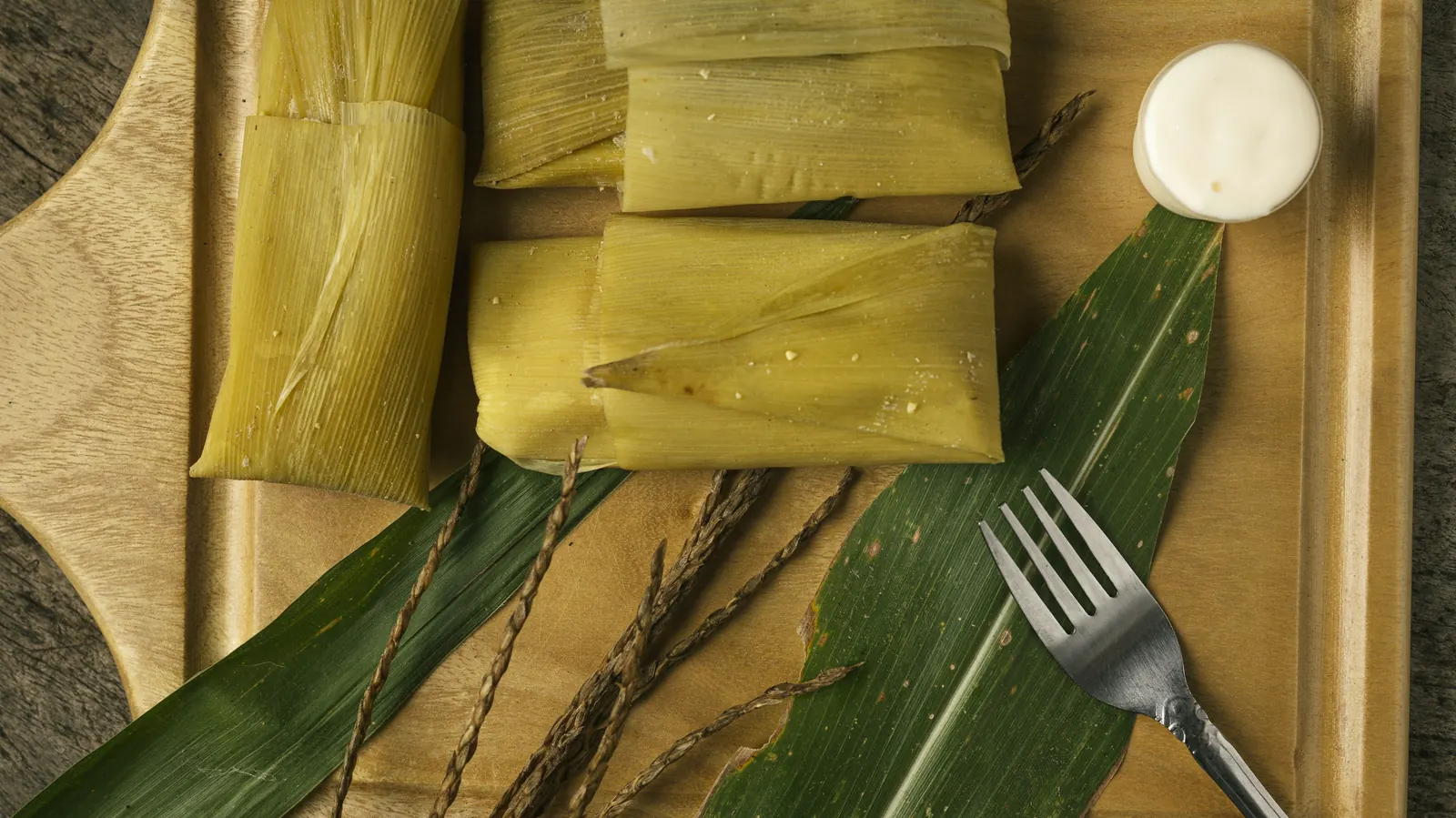
Tamales are a batch food. Nobody spreads masa on husks for an afternoon to make six of them, and the pot you steam them in decides how many you can cook at once, how evenly they cook, and whether you spend the next hour lifting a lid to check the water. A tamalera, or tamale steamer, is simply a tall stockpot with a rack that holds the tamales above boiling water, but the details of that pot matter more than most people expect.
This guide covers the steamers worth buying, sorted by capacity, material and stovetop, plus one insert for cooks who already own a big pot. If you are new to tamales themselves, start with our guide to what tamales are, then come back here for the pot.
Julia’s earns a commission on purchases made through links on this page, at no cost to you. Recommendations are based on what a working Mexican kitchen looks for in a tamale steamer, the makers’ own specifications and published guidance, which we cite.
Quick verdict: which tamale steamer to buy
For most home kitchens, the best tamale steamer is the Concord Mi Abuela 20-quart stainless steel steamer: Concord says it holds 30 to 60 tamales, it has an outside spout for topping up water without lifting the lid, and its tri-ply base works on gas, electric and induction. If you cook on gas or a coil stove and want the classic, inexpensive tamalera, choose the IMUSA 20-quart aluminum steamer. Making tamales for a crowd on an induction range? The same Concord steamer in its 30-quart size, rated for 60 to 120 tamales, is the larger pot to get.
The rest of this page explains why, and which pot fits the size of your tamaladas and the stove you cook on.
Five tamale steamers at a glance
Our five standout picks side by side, one for each kind of kitchen, with the specifications each maker or listing states. All eight products are reviewed in full below.
| Steamer | Best for | Capacity & material | Stovetops (per maker) | Buy on Amazon |
|---|---|---|---|---|
| Most families, any stove | 20 qt stainless, 30 to 60 tamales | Gas, electric, induction | View on Amazon | |
| The classic tamalera on gas | 20 qt aluminum | Not listed; aluminum is not induction-ready | View on Amazon | |

Concord Mi Abuela 30-Quart Stainless Tamale SteamerBest for big batches
|
Holiday tamaladas | 30 qt stainless, 60 to 120 tamales | Gas, electric, induction | View on Amazon |
| A lighter, nonreactive pot | 15.5 qt porcelain enamel on steel | Not stated; check before induction | View on Amazon | |

KitchenAid 10-Inch Universal Steamer BasketBest steamer insert
|
A small batch in a pot you own | 10-inch stainless basket | Whatever your pot works on | View on Amazon |
Product images from Amazon. Capacity and stovetop compatibility are as stated by each maker or listing; tamale counts are given only where the maker states one.
Our picks for the best tamale steamer
These eight cover the ways home cooks steam tamales: stainless steel pots with refill spouts for any stove, the thin aluminum tamaleras found in Mexican and Latin markets, an enamel pot, a two-pot set for big gatherings, and a basket that turns a pot you already own into a small steamer. Each pick explains who it suits, what the maker says it holds and works on, and one honest reason to skip it.
1. Concord Mi Abuela 20-Quart Stainless Tamale Steamer – Refill Without Lifting the Lid

Concord built this steamer around tamales, and it shows in the details. The pot is all stainless steel, including the handles, rack and spout, and the maker gives a capacity in tamales rather than just quarts: 30 to 60 tamales in this 20-quart size, which measures 12.5 inches wide and 11.25 inches tall.
The feature that matters most is the pouring spout on the outside of the pot, marked with a maximum fill line. Tamales need an hour or more of steady steam, and the water underneath them boils away. With a spout you top it up from a kettle without lifting the lid, which keeps the steam in and your tamales cooking at an even pace.
The base is tri-ply clad, which Concord says spreads heat evenly, and the maker rates the pot for gas, electric and induction stovetops. The steamer rack sits in grooves inside the pot rather than on legs, so there are no separate feet to scrub, and a divider is included for cooking two fillings side by side.
If 60 tamales is not enough, the same pot in its 30-quart size (pick 3 below) is rated for 60 to 120.
Why we like it
- Outside refill spout with a maximum fill line
- Maker states 30 to 60 tamales for the 20-quart size
- Tri-ply clad base rated for gas, electric and induction
- Fully stainless, including handles, rack and spout
- Divider included for two kinds of tamales
Key specifications
| Model | Mi Abuela series, 20 quart |
|---|---|
| Capacity | 20 quarts; 12.5 in wide x 11.25 in tall |
| Tamales (per maker) | 30 to 60 |
| Material | Stainless steel, tri-ply clad base |
| Stovetops | Gas, electric, induction |
| Water refill | Exterior spout with max fill line |
| Rack and divider | Seamless rack resting in grooves; divider included |
| Care | Not stated in the listing |
Why we recommend it
It suits a family that makes tamales a few times a year and wants one pot that works on any stove they own now or later. The spout, the stated tamale count and induction compatibility answer the three questions most buyers have.
Skip it if you only make a dozen tamales at a time. A 20-quart pot is tall and takes a while to bring to a boil, and a smaller pot or a steamer basket will do that job with less water and less storage space.
Pros and cons
Pros
- Top up water without opening the pot
- Works on induction
- Clear tamale capacity from the maker
- All-stainless construction
Cons
- Large for small batches
- Care instructions not given in the listing
- Lid not described in the listing
2. IMUSA 20-Quart Aluminum Steamer with Glass Lid – The Classic Tamalera

IMUSA’s Mexicana steamer is the familiar silver tamalera sold in many Latin grocery stores: a tall, light aluminum pot with a removable steamer insert that keeps the tamales up and out of the water.
This version swaps the usual aluminum lid for a tempered glass lid with a steam vent, so you can see whether steam is still rising without lifting it. IMUSA says the handles and knob stay cool to the touch, and the 20-quart size suits a typical family batch. The maker does not give a tamale count, but it markets the pot for tamales first, ahead of lobster, mussels and corn on the cob.
Aluminum heats quickly and the pot is light even when full, which helps when you are carrying it to the sink to drain. Without the insert it also works as a big stockpot for pozole, menudo or a pot of beans.
The catch is the stove. Aluminum is not magnetic, so a plain aluminum pot like this will not heat on an induction cooktop. Chantal, a cookware maker, explains that copper and aluminum “on their own are not magnetic”, which is why induction needs a magnetic base. On gas and electric coil burners it works as intended.
Why we like it
- Removable steamer insert keeps tamales above the water
- Tempered glass lid with a steam vent
- Cool-touch handles and knob, according to IMUSA
- Light aluminum body that heats quickly
- Doubles as a stockpot without the insert
Key specifications
| Model | MEXICANA-420 |
|---|---|
| Capacity | 20 quarts |
| Tamales (per maker) | Not stated |
| Material | Aluminum |
| Stovetops | Not listed; aluminum does not work on induction |
| Water refill | No spout; lift the lid to add water |
| Rack and divider | Removable steamer insert; no divider |
| Care | Not stated; 90-day manufacturer warranty |
Why we recommend it
This is the right pot if you cook on gas, want the traditional tamalera at a low cost, and like being able to watch the steam through the lid. It is the simplest way to get a big, light steamer into the kitchen.
Skip it if you cook on induction, or if you would rather not lift the lid to add water partway through. A stainless pot with a spout, such as the Concord, solves both.
Pros and cons
Pros
- Light and quick to heat
- See-through glass lid
- Useful as a stockpot too
- Budget-friendly classic
Cons
- Will not work on induction
- No refill spout
- No tamale count from the maker
3. Concord Mi Abuela 30-Quart Stainless Tamale Steamer – Big Batches on Induction
When the whole family gathers for a Christmas tamalada, 20 quarts runs out fast. This is the larger size of our top pick, and it is the only big pot here whose maker gives a tamale count: Concord says the 30-quart steamer holds 60 to 120 tamales, twice the 20-quart pot’s rating. It measures 14 inches wide and 12.75 inches tall.
Everything that makes the 20-quart pot easy to live with carries over. The exterior pouring spout has a maximum fill line, so you can top up the water from a kettle without lifting the lid and letting the steam out, and the seamless rack rests in grooves inside the pot, with no separate legs to scrub. A divider is included for keeping two fillings apart.
The base is tri-ply clad, which Concord says spreads heat evenly, and the maker rates the pot for gas, electric and induction stovetops. That makes it the large pot to choose if your kitchen has an induction range, where an aluminum tamalera will not heat at all. The pot is all stainless steel, including the handles, steamer insert and spout.
If you already know you will never steam more than five dozen at once, the 20-quart Concord above is the easier pot to store and to bring to a boil.
Why we like it
- Maker states 60 to 120 tamales
- Outside refill spout with a maximum fill line
- Tri-ply clad base rated for gas, electric and induction
- Fully stainless, including handles, rack and spout
Key specifications
| Model | Mi Abuela series, 30 quart |
|---|---|
| Capacity | 30 quarts; 14 in wide x 12.75 in tall |
| Tamales (per maker) | 60 to 120 |
| Material | Stainless steel, tri-ply clad base |
| Stovetops | Gas, electric, induction |
| Water refill | Exterior spout with max fill line |
| Rack and divider | Seamless rack resting in grooves; divider included |
| Care | Not stated in the listing |
Why we recommend it
Choose it for holiday batches, church and family fundraisers, or anyone who makes several dozen tamales at a time and cooks on induction or wants a pot that will work on any future stove.
Skip it if your stove has small burners or you are short of cupboard space. A full 30-quart pot of water and tamales is heavy, and it needs a large burner to come to a boil in reasonable time.
Pros and cons
Pros
- Large capacity with a stated tamale count
- Refill spout with fill line
- Works on induction
- All-stainless construction
Cons
- Heavy when full
- Needs a large burner
- Lid and care not described in the listing
4. ARC 24-Quart Stainless Tamale Steamer – Spout and Divider for Gas Stoves
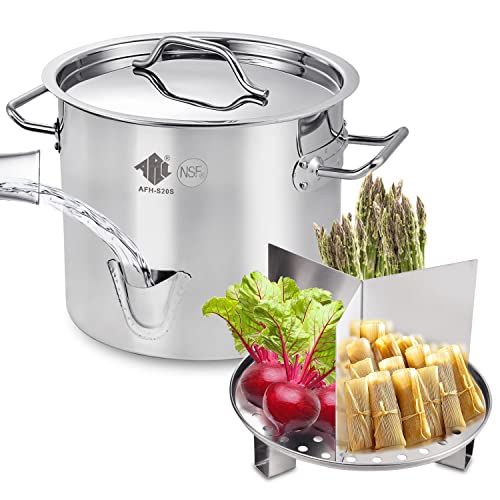
ARC’s steamer sits between the 20- and 30-quart pots on this list, and it brings the same tamale-friendly design: an easy-fill water spout so you add water without opening the lid, a detachable divider and a steamer rack. ARC calls it an olla tamalera in the listing and describes the construction as multi-ply, food-grade stainless steel.
The divider is more useful than it looks. ARC says it lets you cook up to three kinds of food at once, which for tamales means pork in red chile on one side and rajas con queso or sweet tamales on the other, all coming off the heat together.
ARC is unusually direct about one limit, and it is worth repeating: the maker says this stainless pot can be used on gas and electric stovetops but not on induction. Not all stainless steel is magnetic, so a stainless pot is not automatically induction ready. If you have an induction range, choose one of the Concord pots instead.
The steamer comes in five sizes, 20, 24, 32, 40 and 52 quarts, and ARC says the 20- to 32-quart pots suit small to medium families while the 40- and 52-quart pots are for big families and parties.
Why we like it
- Easy-fill water spout
- Detachable divider and steamer rack
- Multi-ply stainless steel, according to ARC
- Five sizes from 20 to 52 quarts
Key specifications
| Model | Not stated (24-quart tamale steamer) |
|---|---|
| Capacity | 24 quarts (6 gallons) |
| Tamales (per maker) | Not stated |
| Material | Multi-ply food-grade stainless steel |
| Stovetops | Gas and electric; not induction (ARC) |
| Water refill | Exterior spout |
| Rack and divider | Detachable divider and steamer rack |
| Care | Described as easy to clean; details not stated |
Why we recommend it
It suits gas and electric cooks who want a stainless pot with a spout and a size a little larger than 20 quarts, without moving up to a 30-quart pot that will not fit on the stove alongside anything else.
Skip it if you cook on induction or think you might switch. The maker says it will not work there.
Pros and cons
Pros
- Refill spout
- Divider for two or three fillings
- Many sizes in the same design
Cons
- Not for induction
- Model number and care details not given
- No tamale count from the maker
5. Granite Ware 15.5-Quart Enamel Steamer Pot with Rack – Nonreactive and Light

Granite Ware’s speckled black enamelware has been around American kitchens for generations, and this 15.5-quart steamer pot brings that porcelain-on-steel construction to tamales. The listing names tamales first among its uses, ahead of seafood, corn, pasta and vegetables, and it comes as a three-piece set with the rack.
Porcelain enamel gives a non-porous, nonreactive surface, which the listing says keeps flavors and colors intact. That matters less for tamales, which sit on a rack above water, than for the other jobs this pot will do: simmering a tomato-based caldo or a pot of beans will not pick up a metallic taste. The listing also says the surface is made without PFOA or PTFE.
At 15.5 quarts it is the mid-size option here, larger than the 10-quart IMUSA and smaller than the 20-quart pots. The steel core is thinner and lighter than tri-ply stainless, so it comes up to a boil quickly.
The listing does not say which stovetops it suits. Granite Ware’s own bean pot listing advises against induction and glass stovetops for that piece, so if you cook on either, check with the maker before buying this one.
Why we like it
- Porcelain enamel on steel, non-porous and nonreactive
- Made without PFOA or PTFE, per the listing
- Mid-size 15.5-quart capacity with a rack
- Light enough to lift when full
Key specifications
| Model | 6257-1 |
|---|---|
| Capacity | 15.5 quarts |
| Tamales (per maker) | Not stated |
| Material | Porcelain enamel on steel |
| Stovetops | Not stated; check before using on induction or glass |
| Water refill | No spout; lift the lid to add water |
| Rack and divider | Rack included (set of 3); no divider |
| Care | Not stated in the listing |
Why we recommend it
Choose it if you want a lighter pot that steams a modest batch of tamales and doubles as a nonreactive stockpot for soups and beans, and you cook on gas or electric coil.
Skip it if you cook on a glass or induction top, since the listing does not confirm either, or if you want a refill spout. Enamel can also chip if the pot is knocked against a hard surface.
Pros and cons
Pros
- Nonreactive enamel surface
- Light and quick to boil
- Useful beyond tamales
Cons
- Stovetop compatibility not stated
- No refill spout
- Enamel can chip
6. IMUSA 10-Quart Aluminum Steamer with Glass Lid – Small Batches, Small Stoves

Not every batch of tamales is a holiday production. If you are making a couple of dozen, reheating tamales bought from a neighbor, or cooking in an apartment kitchen with small burners, a 20-quart pot is more than you need. IMUSA’s 10-quart Mexicana steamer is the same design as our budget pick at half the size.
It has the same features: an aluminum body, a removable steamer insert that keeps food above the water, a tempered glass lid with a steam vent, and handles and a knob that IMUSA says stay cool to the touch. A smaller pot needs less water and comes to a boil faster, which shortens the wait before the tamales go in.
It is also the right size for reheating. Steaming is one of the gentlest ways to bring cold tamales back to soft, as our guide to reheating Mexican leftovers explains, and a 10-quart pot is quicker to set up for a few tamales than a big tamalera. Like all plain aluminum, it will not work on induction.
Why we like it
- Compact 10-quart size for small batches and reheating
- Removable steamer insert
- Tempered glass lid with steam vent
- Cool-touch handles and knob, according to IMUSA
Key specifications
| Model | MEXICANA-410W |
|---|---|
| Capacity | 10 quarts |
| Tamales (per maker) | Not stated |
| Material | Aluminum |
| Stovetops | Not listed; aluminum does not work on induction |
| Water refill | No spout; lift the lid to add water |
| Rack and divider | Removable steamer insert; no divider |
| Care | Not stated in the listing |
Why we recommend it
It suits small households, first-time tamale makers and anyone who mostly reheats tamales, on gas or electric coil burners. It is also a handy second pot during a big tamalada, for a small batch of sweet tamales.
Skip it if you plan to make tamales by the dozens or cook on induction. The capacity is limited and aluminum will not heat on an induction cooktop.
Pros and cons
Pros
- Fits small burners
- Boils quickly
- Good for reheating
Cons
- Small capacity
- Not for induction
- No refill spout
7. IMUSA Aluminum Steamer Set, 28 and 10 Quarts – Two Pots for a Tamalada

Big tamale days often need two pots: one large one for the main batch and a smaller one for the sweet tamales, the vegetarian ones, or the dozen that did not fit. IMUSA’s Mexicana set pairs a 28-quart steamer with a 10-quart steamer, each with an aluminum lid and a removable steamer insert.
IMUSA describes a natural interior finish with a polished exterior and riveted, chromed iron side handles. Both pots work as ordinary stockpots without the insert, so the large one can take a pot of pozole for the same party. IMUSA’s listing discloses the metals in the product (aluminum, with chromium, copper, iron, manganese and zinc compounds) and points to its website for more information on them.
As with the other IMUSA pots, this is plain aluminum, so it suits gas and electric coil burners but not induction. A 28-quart pot is tall, and you may find it easier to set on a large back burner or an outdoor propane burner than on a crowded stovetop.
Why we like it
- Two steamers, 28 and 10 quarts, in one set
- Removable steamer insert in each
- Riveted side handles
- Both double as stockpots
Key specifications
| Model | MEXICANA-28BN |
|---|---|
| Capacity | 28 quarts and 10 quarts |
| Tamales (per maker) | Not stated |
| Material | Aluminum, natural interior, polished exterior |
| Stovetops | Not listed; aluminum does not work on induction |
| Water refill | No spout; lift the lid to add water |
| Rack and divider | Removable steamer insert in each pot; no divider |
| Care | Not stated in the listing |
Why we recommend it
Choose it if you host the family tamalada, make tamales to sell or give away, or simply want a big pot and a small one for less than two separate stainless steamers.
Skip it if you cook on induction or have nowhere to store a 28-quart pot. It is also the opposite of a compact choice: two tall pots need real cupboard space.
Pros and cons
Pros
- Two sizes for two batches
- Large capacity
- Light aluminum
Cons
- Not for induction
- No refill spouts
- Needs storage space
8. KitchenAid 10-Inch Universal Steamer Basket – Turn Your Own Pot Into a Steamer
If you already own a tall stockpot or a Dutch oven, you may not need a tamalera at all for a small batch. KitchenAid’s universal steamer basket is a 10-inch stainless steel basket on soft-touch feet that raise it above the boiling water and protect the pot underneath. KitchenAid says it fits pots, pressure cookers and multi-cookers.
The handle extends and locks for lifting the basket in and out, then retracts so the lid closes over it. For tamales, stand them upright in the basket with the open ends up, as you would in a tamalera, and pack them closely enough that they support each other. A tall pot is essential: the tamales need headroom under the lid.
Because the pot is your own, the stove question is answered by that pot. An enameled cast iron Dutch oven or a magnetic stainless stockpot makes this an induction-friendly steamer for a few tamales. The basket is dishwasher safe, though KitchenAid recommends washing it by hand.
Why we like it
- Fits pots, pressure cookers and multi-cookers
- Soft-touch feet hold it above the water and protect the pot
- Extendable, locking handle that retracts under a lid
- Stainless steel, dishwasher safe
Key specifications
| Model | KQ347OHSSA |
|---|---|
| Capacity | 10-inch basket (pot not included) |
| Tamales (per maker) | Not stated |
| Material | Stainless steel, soft-touch feet |
| Stovetops | Depends on the pot you use it in |
| Water refill | Depends on the pot |
| Rack and divider | Basket on feet; no divider |
| Care | Dishwasher safe; hand washing recommended |
Why we recommend it
It suits anyone who makes a dozen tamales now and then, reheats tamales, or has no room for a dedicated tamalera. It also steams vegetables the rest of the year.
Skip it if you make tamales in quantity. A 10-inch basket holds far fewer tamales than a purpose-built steamer, and only a tall pot gives them enough headroom.
Pros and cons
Pros
- Uses a pot you already own
- Works on induction if your pot does
- Small to store
Cons
- Small batches only
- Needs a tall pot with a lid
- No tamale count from the maker
How to choose a tamale steamer
Five things decide which steamer suits you. The brand matters less than matching the size and material to how many tamales you make and the stove you cook on.
1. Capacity: quarts versus tamales
Most makers give capacity in quarts, which tells you the volume of the pot rather than how many tamales fit on the rack. Concord is the exception on this list: it rates its 20-quart steamer for 30 to 60 tamales and its 30-quart steamer for 60 to 120. The wide range reflects tamale size and how tightly you pack them. As a working rule, a 10-quart pot or a steamer basket suits a dozen or two, 15 to 24 quarts suits a typical family batch, and 30 quarts and up is for holiday tamaladas and parties.
2. Material: aluminum, stainless or enamel
- Aluminum is the traditional tamalera: light, quick to heat and inexpensive. It does not work on induction.
- Stainless steel is heavier and costs more. A good one has a thick or layered base that spreads heat evenly, and the best tamale versions add an outside refill spout.
- Porcelain enamel on steel is light, nonreactive and easy to clean, but enamel can chip, and stovetop compatibility varies by piece.
3. Your stovetop, especially induction
Induction cooktops only heat magnetic cookware. Plain aluminum pots, including the IMUSA tamaleras, will not heat on induction at all. Stainless steel varies: Chantal notes that “some stainless alloys are magnetic, and some are not,” and ARC says its stainless steamer is not for induction. On this list, Concord states that both of its pots work on induction. If you are unsure about a pot you already own, hold a fridge magnet to the base; if it grips firmly, the pot should work. On gas and electric coil burners, every steamer here works.
4. Refill spout and rack height
Tamales steam for an hour or more, and the water underneath boils away. A spout lets you top it up without lifting the lid and losing the steam. Without one, keep a kettle of hot water ready and add it quickly down the side of the pot. Check that the rack sits high enough to hold a few inches of water below it, so the tamales never sit in boiling water.
5. Divider, size and storage
A divider keeps two kinds of tamales apart, which helps when you make savory and sweet tamales in one go. Then measure your cupboard. A 30-quart pot is roughly the size of a small bin, and most kitchens have nowhere obvious to keep it the other eleven months of the year.
How we picked these eight steamers
We started from what a Mexican kitchen asks of a tamale steamer: a rack that holds tamales above the water, enough height for tamales to stand upright, steady steam for an hour or more, and a size that matches the batch. We then looked for steamers sold on Amazon in the United States, from named makers, that were in stock when we checked. Specifications come from each brand’s own Amazon listing (each review says when the maker states something, such as Concord’s tamale count or ARC’s induction warning), because most of these makers publish little else. We chose eight to cover every common size, material and stove, from a 10-quart pot to a 28-and-10-quart set, plus a basket for a pot you already own. We used Chantal’s guidance on induction compatibility and the University of Maryland Extension’s tamale recipe for steaming method. We left out unbranded tamaleras, sets that were down to their last few units, and pots whose listings contradicted their own photos. We have not cooked in every steamer listed here; where we describe how a material behaves, we say whose information that is.
How to steam tamales in any of these pots
The method is the same in a tamalera, a stainless steamer or a stockpot with a basket. The University of Maryland Extension’s tamale recipe gives a good, plain version.
- Add water below the rack. Pour in a couple of cups of hot water, or more for a large pot, keeping the level below the rack so the tamales never touch it. Line the rack with a few corn husks.
- Stand the tamales up. Place them upright, open end up, packed closely enough that they hold each other in place without being crushed.
- Cover them well. The extension recipe covers the tamales with the leftover husks, then a clean dish towel, then the lid, which traps the steam.
- Steam over medium heat. The University of Maryland recipe gives 60 to 75 minutes. Keep the water at a steady simmer rather than a hard boil.
- Top up the water. Check the level during cooking and add hot water as needed, through the spout if your pot has one.
- Test one. A tamal is done when the husk peels away easily from the dough. They firm up a little as they rest, so let them sit for a few minutes before serving.
Many cooks drop a coin into the water before the rack goes in: while it rattles, there is still water underneath, and when it goes quiet, it is time to add more.
Tamale steamer questions, answered
How many tamales fit in a 20-quart steamer?
Concord rates its 20-quart Mi Abuela steamer for 30 to 60 tamales and the 30-quart size for 60 to 120; the other makers here do not give a count. The number depends on the size of your tamales and how tightly you stand them on the rack.
Can you use a tamale steamer on an induction cooktop?
Only if the pot is magnetic. Plain aluminum tamaleras will not work. Concord says its stainless steamers work on induction, while ARC says its stainless steamer does not. A magnet that grips the base firmly is a good quick check.
Can you steam tamales without a tamale steamer?
Yes. Any tall pot with a lid will do if you raise the tamales above the water. A steamer basket like the KitchenAid works, and the University of Maryland Extension suggests loose balls of aluminum foil in the bottom of the pot as a stand-in rack.
How much water goes in a tamale steamer?
Enough to steam for a while without reaching the rack. Fill to just below the rack, or to the maximum fill line if your pot has one, and top it up with hot water during cooking.
How long do tamales take to steam?
The University of Maryland Extension recipe gives 60 to 75 minutes over medium heat. Larger tamales and very full pots take longer. They are ready when the husk pulls away cleanly from the masa.
Our final pick for tamale day
Buy the Concord Mi Abuela 20-quart steamer if you want one pot that works on any stove, holds a family-sized batch and lets you add water without lifting the lid. Choose the IMUSA 20-quart aluminum tamalera if you cook on gas and want the classic at a low cost, and the Concord 30-quart pot if your tamaladas are big and your stove is induction. For a dozen at a time, the KitchenAid basket in a tall pot you already own is enough.
A steamer is one piece of a Mexican kitchen. Our guide to Mexican cooking tools covers the rest of the kit, our look at Mexican Christmas food explains why December is tamale season, and if beans are next on the stove, see the best clay pot for cooking beans.
Related guide: Best bamboo steamer.
Related guide: Tamale steamer alternative.
Related guide: Best gifts for tamale makers.
And if you would rather someone else did the cooking tonight, see the menu or call to order.