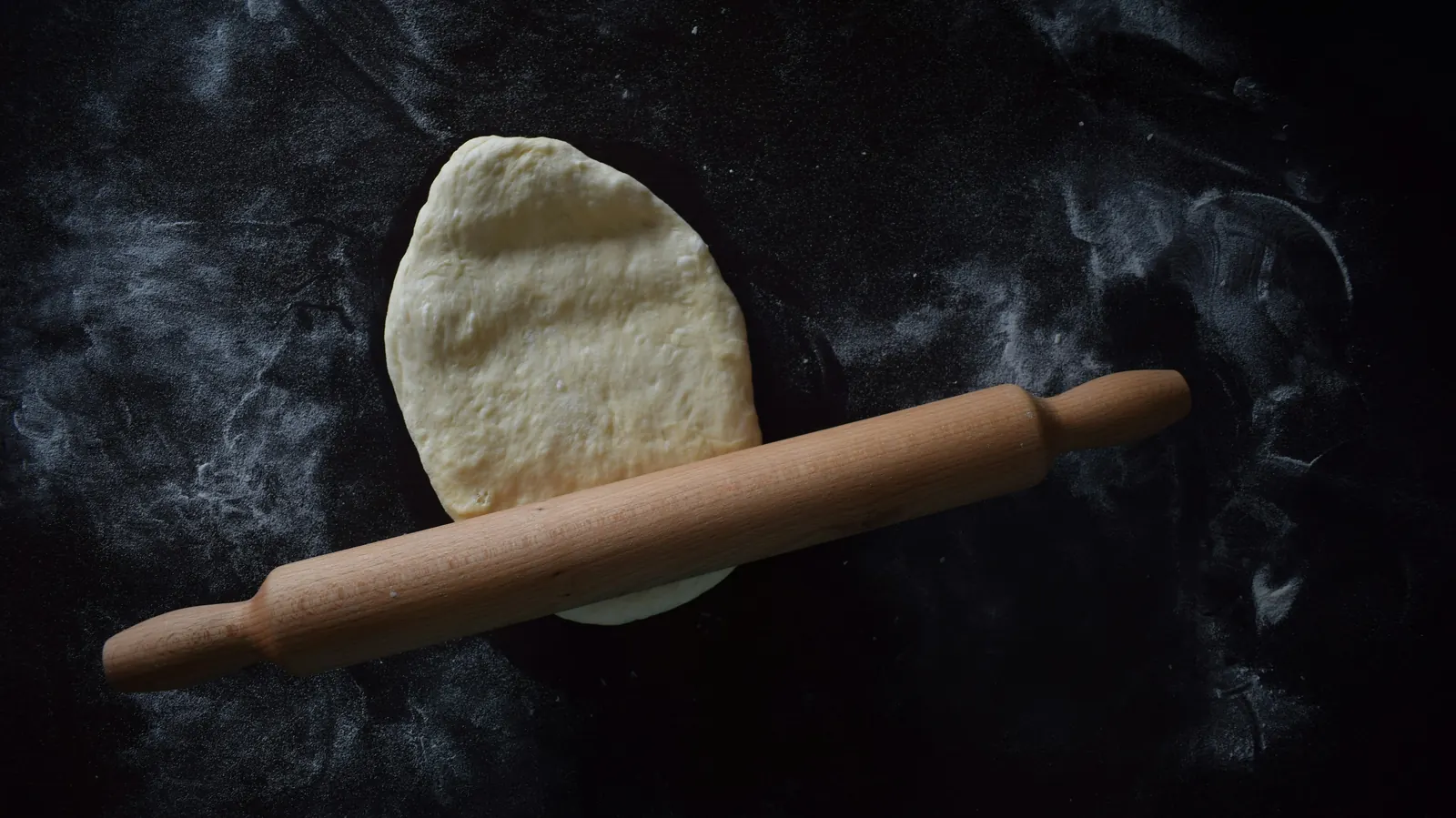
Most tortilla presses are built for corn masa, and they do that job beautifully. Flour dough is a different material. The gluten that makes a flour tortilla soft and stretchy also makes the dough elastic, so when you squeeze a ball of it between two cold plates and open the lid, it tends to spring back into a thick, small round. America’s Test Kitchen puts it plainly in its tortilla press review: flour tortilla dough is too elastic for a press and needs to be flattened with a rolling pin.
That does not mean a press is useless for flour tortillas. It means you need the right kind of press, or the right expectations. This guide covers the tools that genuinely help: heated presses that soften the dough as they flatten it, wide manual presses that give you a fast head start, the humble rolling pin, and the liners that keep dough from sticking. We skip anything that only works on paper.
Julia’s earns a commission on purchases made through links on this page, at no cost to you. Recommendations are based on what a working Mexican kitchen looks for in a flour tortilla tool, the makers’ own specifications and published equipment reviews, which we cite.
Quick verdict: which press to buy for flour tortillas
For flour tortillas, the best tortilla press is a heated one. The Starfrit Electric Roti Maker presses and cooks a ball of flour dough in one step, and the heat from its plates is what lets flour dough spread instead of shrinking back. For burrito-size rounds, choose the 12-inch Orixforce Electric Tortilla Maker. If you would rather not buy an appliance, a heavy manual press such as the Victoria 10-inch cast iron press gives you a quick head start, but plan to finish each tortilla with a rolling pin, which remains the most reliable flour tortilla tool of all.
The rest of this page explains why, and which tool suits the way you make tortillas.
Five flour tortilla tools side by side
Our five standout picks, one for each kind of cook, with the details each maker or listing states. All eight products are reviewed in full below.
| Tool | Best for | Type & size | Handles flour dough by | Buy on Amazon |
|---|---|---|---|---|

Starfrit Electric Roti MakerBest overall
|
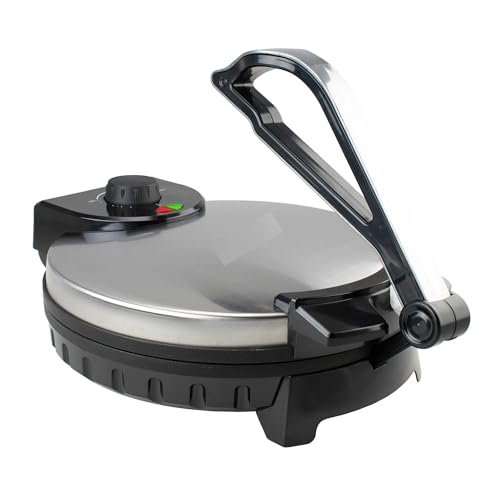
Everyday flour tortillas | Heated press, about 10-inch plates | Heating while it presses | View on Amazon |
Orixforce 12-inch Electric Tortilla MakerBest for burrito size
|
Large flour tortillas | Heated press, 12-inch | Heat, with adjustable settings | View on Amazon |

Victoria 10-inch Cast Iron Tortilla PressBest manual press
|
A fast head start, no power | Cast iron press, 10-inch | Weight; finish with a pin | View on Amazon |

Kundita 12-inch Cast Aluminum Tortilla PressBest large manual press
|
Wide rounds without power | Nonstick cast aluminum press, 12-inch | Rest, press, turn, press again | View on Amazon |
GOBAM Small Wood Rolling PinBest traditional method
|
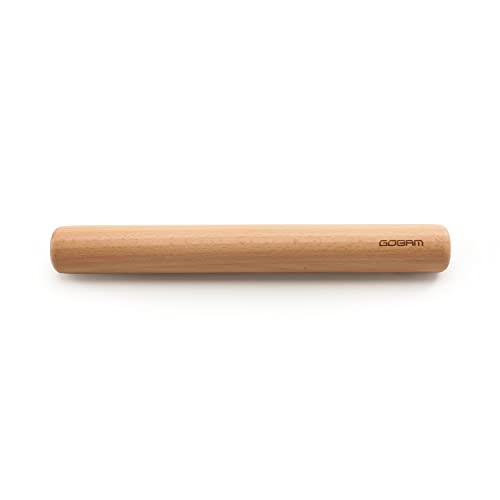
Thin rounds, small budget | Beech dowel, 11 x 1.38 inches | Stretching it gradually | View on Amazon |
Product images from Amazon. Details are as stated by each maker or listing; check the listing before you buy.
Why flour dough fights a tortilla press
Corn masa has no gluten. Press it and it stays where you put it, which is why a simple cold press makes a perfect corn tortilla in one squeeze. Wheat flour dough is a network of gluten that stretches under pressure and then pulls back once the pressure is gone. That is the springback cooks notice: the dough looks thin while the lid is down, then shrinks and thickens as soon as it opens.
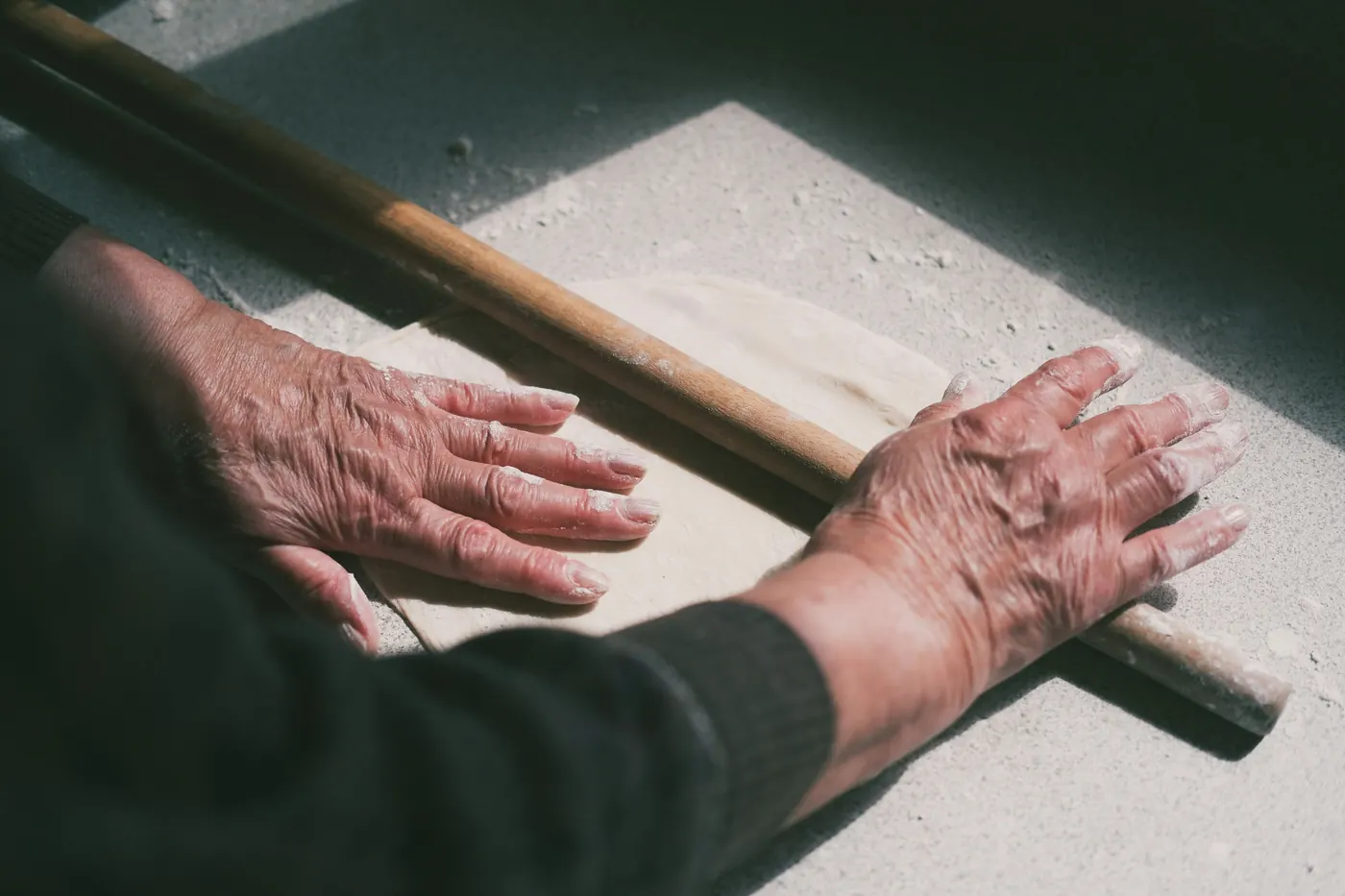
Three things change that. Resting the dough relaxes the gluten; King Arthur Baking’s flour tortilla recipe has you shape the dough into rounds and let them rest, covered, for 30 minutes before rolling. Heat helps too: a patent for a heated tortilla press explains that warmth from the plates makes the dough more fluid and easier to press into a round, and discourages it from sticking. And gradual stretching, the way a rolling pin works, lets the dough relax as it goes rather than all at once. The best tools for flour tortillas use one or more of these.
Our picks for the best tortilla press for flour tortillas
These eight picks fall into four groups: heated presses that do the whole job, wide manual presses that do most of it, a rolling pin for the traditional method, and the liners and parchment that make any press easier to use. Each review says who it suits and one honest reason to skip it.
1. Starfrit Electric Roti Maker – Presses Flour Dough While It Heats
A heated press is the one kind of tortilla press built around flour dough, and this is the one we would start with. Starfrit sells it for roti, chapati, poori and Mexican tortillas, and the design is simple: two round nonstick plates on a hinge, a heating element behind each, and a wide handle that brings the top plate down on a ball of dough. It presses and cooks the flatbread in one step.
The heat is what makes the difference for flour. Warm plates soften the dough as it spreads, so it holds more of its shape when the lid lifts. The listing gives a 1,200-watt heating system with thermostat temperature control, a power light, cool-touch handles and non-slip feet. Starfrit says the wide handle gives better control and helps you press to a consistent thickness with less effort.
For the best results, rest the dough first, wait for the plates to come fully up to heat, then press firmly and hold for a moment before lifting the lid to let the tortilla finish cooking. Turn it once. The nonstick plates release tortillas without oil and wipe clean once cool, and the cord wraps into storage underneath.
One caveat: the listing describes the plates as both 12-inch and 10-inch, and gives the size as 9.8 inches. Plan on tortillas of about ten inches at most.
Why we like it
- Presses and cooks flour dough in one step
- 1,200-watt heating with thermostat control
- Wide handle for even pressure
- Nonstick plates, cool-touch handles, non-slip feet
- From an established kitchen-appliance brand
Key specifications
| Model | 024825-003-0000 |
|---|---|
| Type | Heated flat press (roti maker) |
| Tortilla size | About 10 inches (listing gives 9.8 inches; also mentions 12) |
| Surface | Nonstick plates (coating type not stated) |
| Heat | 1,200 W, thermostat-controlled |
| Weight | Not stated |
| Care | Wipe the plates once cool |
| Warranty | Not stated |
Why we recommend it
Choose it if you make flour tortillas a few times a week and want a press that actually works with wheat dough, without learning to roll. It is the flat press on this list from an established kitchen-appliance brand, with a clear set of safety features. We also rank it first in our guide to the best electric tortilla maker.
Skip it if you mainly make corn tortillas from fresh masa; a cold manual press and a hot comal do that better.
Pros and cons
Pros
- Heat helps flour dough spread
- Thermostat control
- One-step press and cook
- Built-in cord storage
Cons
- Listing is inconsistent on plate size
- Coating type and warranty not stated
- Single-purpose appliance
2. Orixforce 12-inch Electric Tortilla Maker – Room for Burrito-Size Rounds
A press can only make a tortilla as wide as its plates, and in practice a little narrower. If you roll burritos, ten inches is tight. This heated press has 12-inch plates, the widest of the in-stock heated presses we found, and the listing says it makes round tortillas, roti, chapati and other flatbreads.
The listing gives 1,200 watts, adjustable heat settings for a softer or crisper result, nonstick aluminum plates and a stainless steel body. Separate power and preheat lights tell you when the plates are ready, which matters with flour dough: press it on a half-heated plate and it sticks, tears, and springs back the way it would in a cold press.
For a really large tortilla, flatten each dough ball into a thick disc with your palm before it goes in, so the press only has to finish the job. Rested dough spreads further. Lift the lid once the round has set, let it cook through, and turn it once.
The model number on the listing, TS-129, is the same one Brentwood uses for its 12-inch tortilla maker, and the features match closely. We could not confirm how the two are related, so we judge this one on its own listing.
Why we like it
- 12-inch plates for burrito-size tortillas
- Adjustable heat settings
- Power and preheat indicator lights
- Nonstick aluminum plates
Key specifications
| Model | TS-129 |
|---|---|
| Type | Heated flat press |
| Tortilla size | Up to 12 inches |
| Surface | Nonstick aluminum plates |
| Heat | 1,200 W, adjustable; power and preheat lights |
| Weight | Not stated |
| Care | Wipe the plates once cool |
| Warranty | Not stated |
Why we recommend it
Choose it if burritos, large quesadillas or wraps are the reason you make flour tortillas. The preheat light and adjustable heat make a consistent batch easier than with a press that only has an on switch.
Skip it if counter and cupboard space are tight, or you want a known brand behind the warranty; the listing does not say who stands behind it or for how long.
Pros and cons
Pros
- Widest heated plates here
- Adjustable heat
- Preheat light
Cons
- Warranty not stated
- Relationship to Brentwood’s TS-129 unclear
- Bulky to store
3. Always-Quality 10-inch Cast Aluminum Electric Tortilla Maker – A Heated Press Made in Mexico

Long before stainless roti makers reached American shelves, Mexican kitchens had their own heated tortilla press: heavy cast aluminum plates, a long lever and very little else. This one is listed as brand new and made in Mexico, all metal, with a 10-inch pressing surface.
The seller lists it for flour tortillas first, then corn tortillas, gorditas and buñuelos, and it comes with instructions and some recipes. Beyond that, the listing says little. There is no published wattage, temperature control or nonstick claim, so you will be working from the included instructions rather than a dial.
What draws people to this style is the build. An all-metal press has no plastic hinge to crack, and cast aluminum plates are thicker than the stamped plates on many modern presses. Because the plates are not described as nonstick, a light film of oil or a sheet of parchment rated for heat (see pick 8) helps the first few tortillas release.
Why we like it
- Made in Mexico, according to the listing
- All-metal, cast aluminum construction
- Listed for flour tortillas, corn tortillas, gorditas and buñuelos
- Instructions and recipes included
Key specifications
| Model | Not stated |
|---|---|
| Type | Heated flat press |
| Tortilla size | Up to 10 inches |
| Surface | Cast aluminum (nonstick not stated) |
| Heat | Electric; power and controls not stated |
| Weight | Not stated |
| Care | Not stated; follow the included instructions |
| Warranty | Not stated |
Why we recommend it
Choose it if you want the traditional Mexican-made electric press, value an all-metal build, or are buying for someone who grew up with one.
Skip it if you want clear specifications before you buy; the listing gives no wattage, heat control, plate coating or warranty.
Pros and cons
Pros
- Made in Mexico
- All-metal build
- Recipes included
Cons
- Power and heat control not stated
- Plates not described as nonstick
- Very little published detail
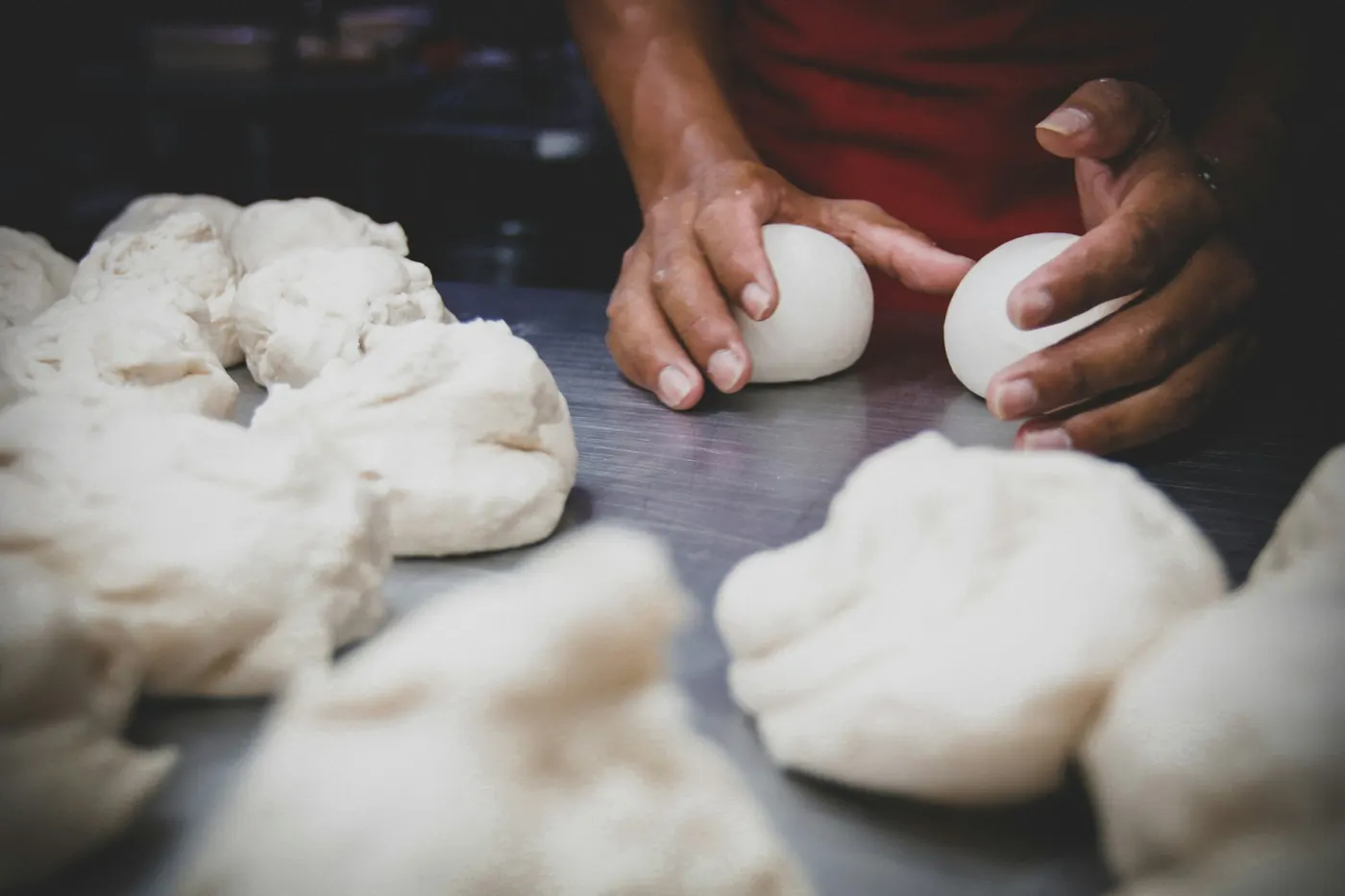
4. Victoria 10-inch Cast Iron Tortilla Press – Weight and Width for a Head Start
If you want a manual press that you can use for flour as well as corn, two things matter: width and weight. America’s Test Kitchen preferred plates at least eight inches wide, “but the wider, the better”, and found that a heavier press needs less force to produce an evenly thin tortilla. Victoria’s 10-inch press gives you both. The maker lists it at 9.3 pounds with a 10-inch diameter, and its own listing calls it a flour tortilla press.
Be realistic about what it will do with wheat dough. It will flatten a rested ball into a round in seconds, but expect that round to pull back a little once the lid opens. The practical approach is to use the press for the first, hardest part of the work, then finish each tortilla with two or three strokes of a rolling pin. That is still much faster than rolling from a ball.
Victoria seasons the press with three layers of non-GMO, kosher-certified flaxseed oil and states it is free of PTFE and PFOA. The plates are engineered to avoid pinching, and the base and handle are reinforced. Victoria has made cast iron in its own factories in Colombia since 1939. Its 8-inch sibling was America’s Test Kitchen’s best buy among tortilla presses; this is the wider version.
Why we like it
- 10-inch plates, wider than most presses
- 9.3 lb of cast iron, so the weight does much of the work
- Seasoned with flaxseed oil; no PTFE or PFOA
- Made in Colombia
Key specifications
| Model | TOR-010 |
|---|---|
| Type | Manual cast iron press |
| Tortilla size | Up to 10 inches |
| Surface | Cast iron seasoned with flaxseed oil |
| Heat | None; cook on a comal |
| Weight | 9.3 lb (Victoria) |
| Care | Wipe dry; rinse if needed, dry fully, thin coat of oil |
| Warranty | Lifetime (Victoria; terms on its warranty page) |
Why we recommend it
Choose it if you make corn tortillas as well as flour and want one press for both, or if you want to speed up rolling without buying an appliance. For corn masa it is excellent on its own.
Skip it if you expect finished flour tortillas straight from the press; for that, choose a heated press.
Pros and cons
Pros
- Wide, heavy plates
- Works for corn and flour
- No power needed
- Lifetime warranty
Cons
- Flour rounds still spring back
- Heavy to lift and store
- Cast iron needs drying and oiling
5. Kundita 12-inch Cast Aluminum Tortilla Press – Widest Manual Plates
This is the widest manual press we could recommend, and the only one whose listing speaks honestly about flour dough. Kundita notes that the gluten strength and resting time of wheat dough affect how well it presses, and gives a method: let the dough rest about ten minutes, press once, turn the tortilla 180 degrees, and press again for a thinner, more even round.
The 12-inch plate gives you room for burrito-size wraps, and the listing describes a three-pronged handle that spreads the force across the plate instead of concentrating it at one point, which helps with thicker dough. The body is cast aluminum, easier to lift and store than cast iron, with a nonstick-coated surface that needs no seasoning. Kundita includes 50 parchment sheets and a dough scraper, and lists a two-year warranty.
The trade-off is weight. Aluminum is lighter than cast iron, so you supply more of the pressing force yourself, and the listing does not say what the nonstick coating is.
Why we like it
- 12-inch plate for burrito-size rounds
- Three-pronged handle spreads the pressure
- Maker gives a flour-specific pressing method
- Parchment and dough scraper included
- Two-year warranty, according to the listing
Key specifications
| Model | KTP-12in-Lvse |
|---|---|
| Type | Manual cast aluminum press |
| Tortilla size | Up to 12 inches |
| Surface | Nonstick coating (type not stated) |
| Heat | None; cook on a comal |
| Weight | Not stated (lighter than cast iron, per the listing) |
| Care | Wipe down after use; no seasoning needed |
| Warranty | 2 years |
Why we recommend it
Choose it if you want large flour tortillas without an electric appliance, and you are happy to rest the dough and press twice.
Skip it if you want a press that does the work by weight alone; a heavy cast iron press like the Victoria needs less force.
Pros and cons
Pros
- Widest manual plates here
- Even-pressure handle
- Accessories included
Cons
- Lighter press, more effort
- Coating type not stated
- Weight not stated
6. GOBAM Small Wood Rolling Pin – The Traditional Flour Method
Rolling by hand is the time-honored way to shape a flour tortilla, and it is what America’s Test Kitchen recommends for flour dough. A thin pin without handles lets you feel the dough under your palms and roll from the center outward, turning the round a quarter turn between strokes so it stays even.
GOBAM’s small pin is that kind of tool: a beech wood dowel measuring 11 by 1.38 inches, with no handles to get in the way. The listing names chapati among its uses, and the size suits tortillas of eight to ten inches. GOBAM says the surface is hand-polished and finished with cooking oils, and it fits in a kitchen drawer.
A rolling pin gives you control a press cannot. You can make a tortilla as thin and wide as the dough allows, and as you roll, you will feel the dough relax and stop pulling back. King Arthur Baking’s recipe rolls each rested piece of dough into an 8-inch round on a lightly floured surface.
Why we like it
- Slim, handle-free dowel in the traditional style
- Solid beech wood, hand-polished
- 11 x 1.38 inches, sized for tortillas and chapati
- Stores in a drawer
Key specifications
| Model | BM1033 |
|---|---|
| Type | Rolling pin, straight dowel |
| Tortilla size | Set by your rolling; pin is 11 x 1.38 inches |
| Surface | Beech wood, finished with cooking oils |
| Heat | None; cook on a comal |
| Weight | Not stated |
| Care | Hand wash and pat dry |
| Warranty | Not stated |
Why we recommend it
Choose it if you want the most reliable way to make flour tortillas, the lowest cost, or a finishing tool to pair with a manual press.
Skip it if you want speed without practice; rolling round, even tortillas takes a few batches to learn.
Pros and cons
Pros
- Works with flour dough as it is
- Any thickness and size
- Small and inexpensive
Cons
- Takes practice
- Slower than a heated press
- Wood needs hand washing
7. Masienda Tortilla Press Liners, 5-pack – Reusable and Trimmed to Fit

A liner sits between the dough and the plates of a manual press, so the dough lifts away cleanly instead of sticking to bare metal. Masienda, the masa supplier, makes these thin plastic liners for its Doña Rosa press, America’s Test Kitchen’s winning tortilla press, and says they can be trimmed to fit any press, including Victoria and other cast iron, steel or wooden presses of any size.
Each liner has a printed tortilla sizing ruler, which helps you judge how far a round has spread, and is meant to be wiped down after every use, dried and tucked inside the press for next time. They are reusable, though Masienda notes they can be thrown away once damaged or dirty.
Plastic suits a cold press. Victoria’s own instructions list plastic bags, parchment paper or plastic wrap as liners, and one Victoria customer reports that plastic worked better than parchment for a tacky dough. Do not put these in a heated press; Masienda does not say they are heat-safe, and parchment rated for heat is the right choice there.
Why we like it
- Thin plastic liners that release dough cleanly
- Printed tortilla sizing ruler
- Trim to fit any manual press
- Wipe, dry and reuse
Key specifications
| Model | Not stated (pack of 5) |
|---|---|
| Type | Reusable press liners |
| Tortilla size | Trim to fit any press |
| Surface | Thin plastic (type not stated) |
| Heat | Heat use not stated; for manual presses |
| Weight | Not stated |
| Care | Wipe after each use, dry, store in the press |
| Warranty | Not stated |
Why we recommend it
Choose them if you use a manual press for flour, corn or both, and want something tidier and more durable than a cut-up freezer bag.
Skip them if you use a heated press; reach for heat-rated parchment instead.
Pros and cons
Pros
- Reusable
- Sizing ruler printed on
- Fits any press once trimmed
Cons
- Not for heated presses
- Only five in a pack
- Plastic type not stated
8. BYKITCHEN 12-inch Parchment Paper Rounds – Sized for Large Presses

Parchment is the other common liner, and it has one advantage over plastic: it is rated for heat. BYKITCHEN states that these precut rounds withstand up to 446°F, and names tortilla presses, roti makers and quesadilla makers among their uses. That makes them a sensible choice for a heated press whose plates are not nonstick, such as the cast aluminum press in pick 3, and for any large manual press.
The 12-inch size matters. Smaller rounds leave the edge of a large tortilla touching bare metal, which is where sticking starts. These match the plates on the Orixforce and Kundita presses, and you can trim them for a 10-inch press. The listing describes paper made from natural wood pulp with a food-grade silicone coating on both sides, greaseproof and waterproof, in a pack of 100.
Why we like it
- Heat resistant to 446°F, according to the listing
- 12-inch rounds for large presses
- Silicone-coated on both sides
- Pack of 100, precut
Key specifications
| Model | Tortilla press paper, 12-inch |
|---|---|
| Type | Precut parchment rounds, 100 count |
| Tortilla size | 12-inch rounds |
| Surface | Wood-pulp paper, food-grade silicone coating |
| Heat | Rated to 446°F |
| Weight | Not stated |
| Care | Disposable; reuse not stated |
| Warranty | Not stated |
Why we recommend it
Choose it if you use a 12-inch press, a heated press without nonstick plates, or simply prefer paper to plastic.
Skip it if you want to cut waste; reusable plastic liners suit a manual press better.
Pros and cons
Pros
- Rated for heat
- Sized for large presses
- No cutting needed
Cons
- Single use
- Needs trimming for a 10-inch press
How to choose a press for flour tortillas
Five questions decide which of these suits you. The first matters most.
1. Heated or manual?
A heated press is the only kind that reliably turns a ball of flour dough into a finished tortilla by itself, because the heat softens the dough as it spreads. A manual press is quicker to clean, needs no outlet, and is the right tool for corn masa, but with flour it gives you a head start rather than a finished round. If you make both corn and flour tortillas, a heavy manual press plus a rolling pin covers both.
2. Plate size
Flour tortillas are usually eight to ten inches across, and twelve for burritos. A press makes a tortilla a little smaller than its plates, so choose 10-inch plates for soft tacos and 12-inch plates for burritos. The 8-inch presses that are perfect for corn tortillas are too small for most flour tortillas.
3. Weight
For a manual press, heavier is better. America’s Test Kitchen found that a heavy press needs less force to produce an evenly thin tortilla. Cast iron presses do much of the work by weight; aluminum presses are easier to lift but ask more of your arm.
4. Liners
Use thin plastic liners in a cold press and heat-rated parchment in a heated press without nonstick plates. Whichever you use, match it to the plate size so the edge of the tortilla is never touching bare metal.
5. How you will cook it
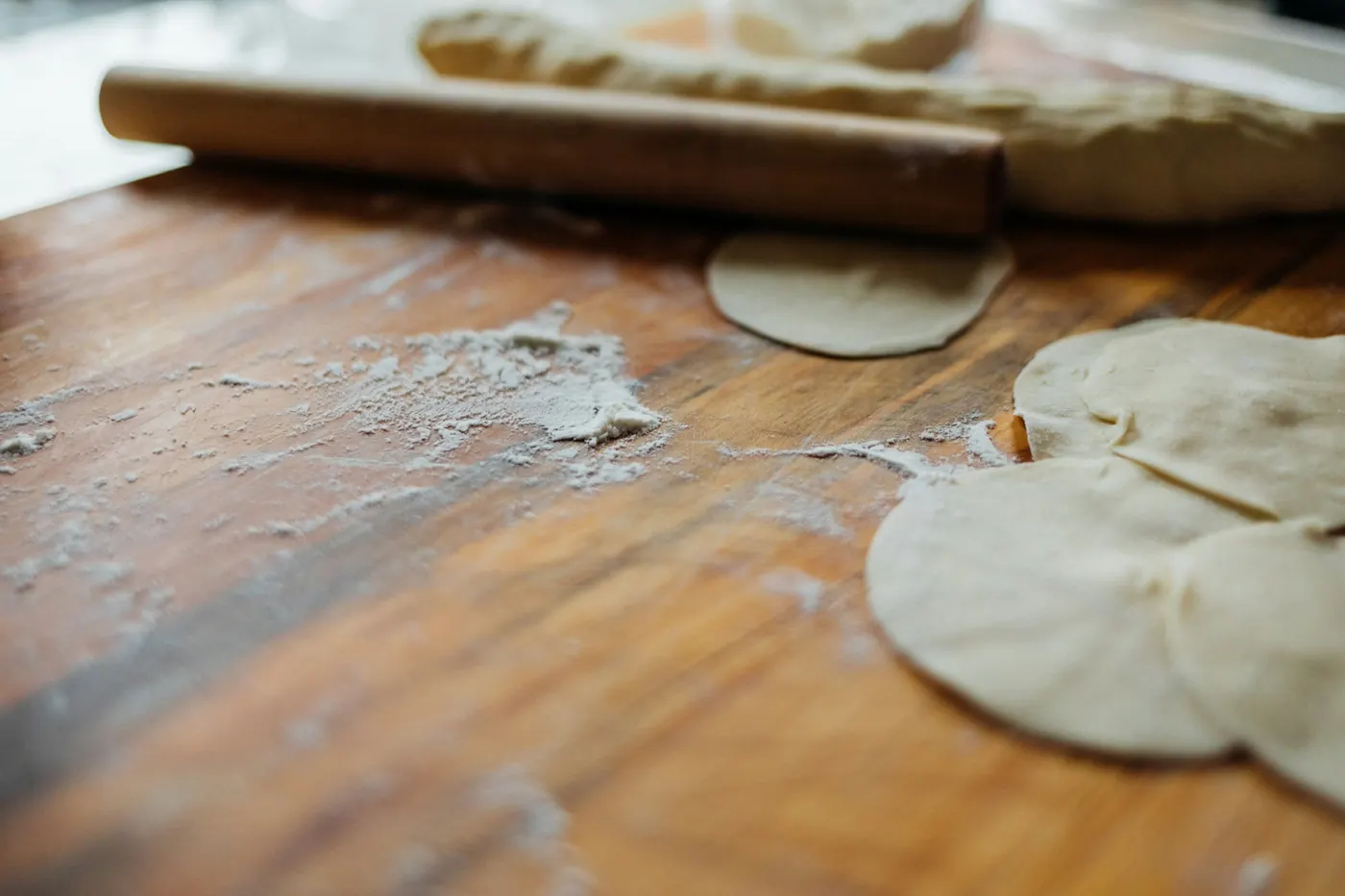
A heated press cooks as it presses. Everything else on this list needs a hot, dry cooking surface. Our guide to the best comal for tortillas covers the stovetop options, and King Arthur Baking’s recipe cooks each tortilla on a preheated cast iron or nonstick skillet over medium heat for about 30 seconds a side, until bubbles form and light brown spots appear.
How we picked these eight flour tortilla tools
We started from what a Mexican kitchen asks of a flour tortilla: thin, round, soft and even, made from dough that has been allowed to relax. We then looked at every in-stock heated press, large manual press, tortilla rolling pin and press liner we could find on Amazon in the United States, and checked stock with Amazon’s product data on the day of writing. We left out products that were out of stock or down to their last few units, near-identical presses from sellers that publish no maker details, and 8-inch presses, which are better suited to corn. Specifications come from each maker’s own website where one publishes them (Victoria) and otherwise from the brand’s Amazon listing, which we name as the source. For how flour dough behaves in a press, we relied on America’s Test Kitchen’s tortilla press review, and for resting and cooking times, on King Arthur Baking’s flour tortilla recipe. We have not cooked with every product listed here; where we describe how a tool behaves, we say whose findings those are.
Flour tortilla press questions, answered
Can you use a tortilla press for flour tortillas?
You can, with limits. A manual press flattens flour dough quickly, but the gluten makes it spring back, so America’s Test Kitchen recommends a rolling pin instead. A heated press works much better with flour, and a manual press followed by a few strokes of a rolling pin is a good compromise.
What is the best tortilla press for flour tortillas on a budget?
A rolling pin. It costs less than any press and handles flour dough better than a cold one. If you want a press as well, a wide manual press such as the Victoria 10-inch serves both corn and flour.
Why does my flour tortilla shrink after pressing?
The gluten is still tight. Let the dough rest, covered, before pressing; King Arthur Baking rests its rounds for 30 minutes. Kundita suggests pressing, turning the round 180 degrees and pressing again. Warm plates help too, which is why heated presses suit flour.
What size tortilla press do I need for flour tortillas?
At least 10 inches for soft tacos and fajitas, and 12 inches for burritos. A press makes a tortilla slightly smaller than its plates.
Parchment or plastic in a tortilla press?
Plastic for a cold manual press, where it is thin, reusable and releases tacky dough well. Heat-rated parchment for a heated press whose plates are not nonstick.
Our final word on flour tortilla presses
If you want a press that turns flour dough into tortillas by itself, buy a heated one: the Starfrit for everyday tortillas, the Orixforce for burritos. If you want one manual press for both corn and flour, the Victoria 10-inch with a rolling pin to finish is the honest answer, and if you only buy one tool for flour tortillas, make it the rolling pin. Rest the dough either way.
For the whole kit, from the comal to the warmer, see our guide to tortilla making tools, and if you are deciding which tortillas to make, corn versus flour tortillas explains the difference in the dough. To keep a stack soft once it is cooked, see the best tortilla warmer.
And if you would rather someone else made the tortillas tonight, see the menu or call to order.