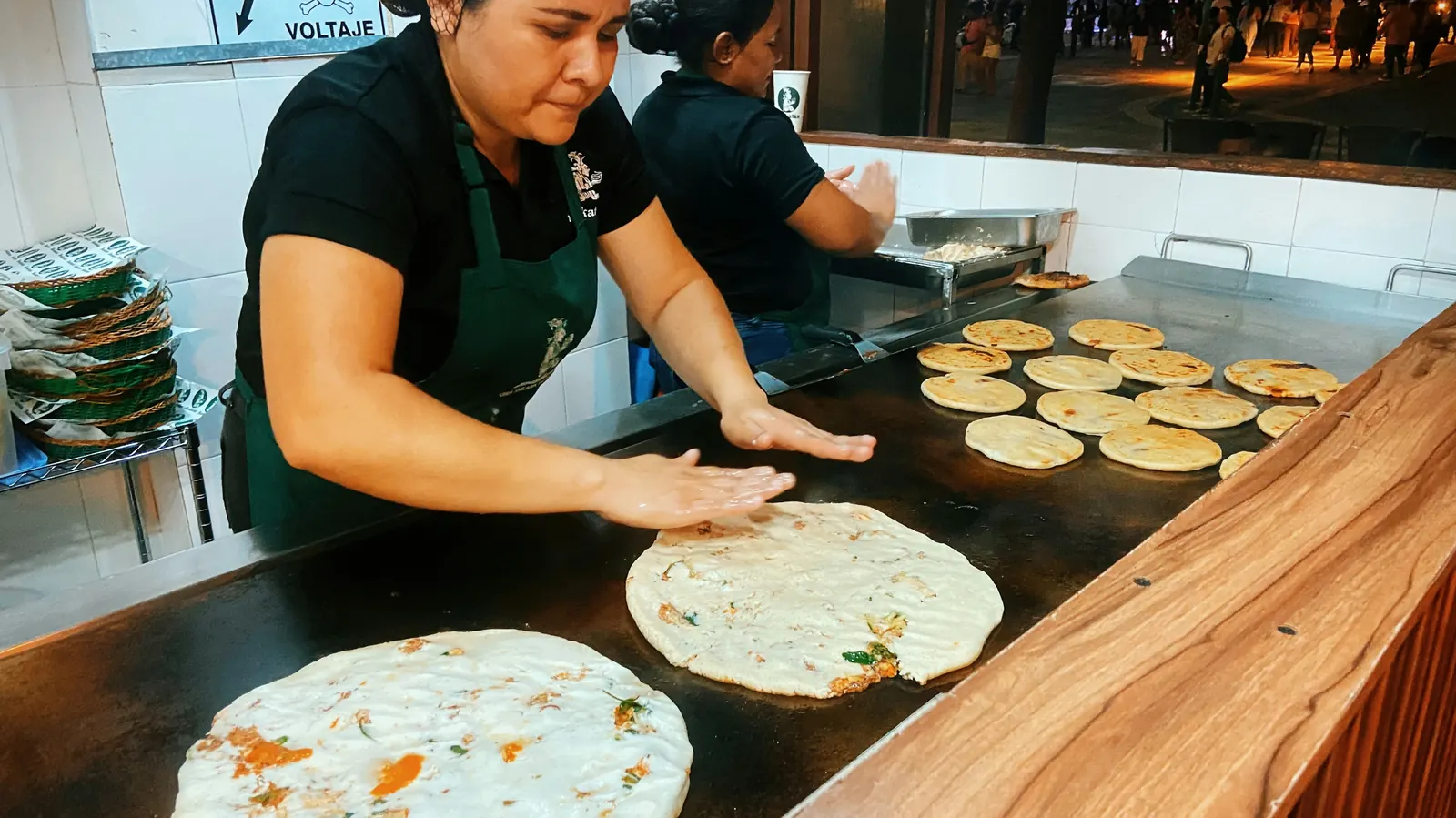
An electric tortilla maker promises fresh tortillas without a rolling pin, a hot comal or much practice. Some deliver on that, some do something rather different from what the box suggests, and a few are really commercial machines sold next to home appliances. The name covers at least three kinds of machine, and the right one depends on whether you cook with flour dough or corn masa.
This guide explains what each type actually does, names the models worth buying, and is honest about where an electric machine falls short of a simple press and a hot comal. If you are building a tortilla setup from scratch, our guide to tortilla making tools covers the whole kit.
Julia’s earns a commission on purchases made through links on this page, at no cost to you. Recommendations are based on what a working Mexican kitchen looks for in a tortilla maker, the makers’ own specifications and published equipment reviews, which we cite.
Quick verdict: the best electric tortilla maker for most kitchens
For flour tortillas, the best electric tortilla maker for most home kitchens is the Starfrit Electric Roti Maker: a heated flat press from an established appliance brand, with thermostat control, nonstick plates and a wide handle that presses and cooks in one step. If you want bigger, burrito-size rounds, the Orixforce 12-inch Electric Tortilla Maker has the widest plates of the flat presses here. For corn tortillas from fresh masa, an electric press is the wrong tool: a Victoria 8-inch cast iron press and a hot comal or electric griddle do the job better.
The rest of this page explains why, and which machine suits the tortillas you actually make.
Five tortilla makers side by side
Our five standout picks side by side, one for each kind of tortilla maker, with the details each maker or listing states. All seven are reviewed in full below.
| Tortilla maker | Best for | Type & size | Dough it suits | Buy on Amazon |
|---|---|---|---|---|

Starfrit Electric Roti MakerBest overall
|
Everyday flour tortillas | Heated flat press, about 10-inch plates | Flour, roti and chapati dough | View on Amazon |
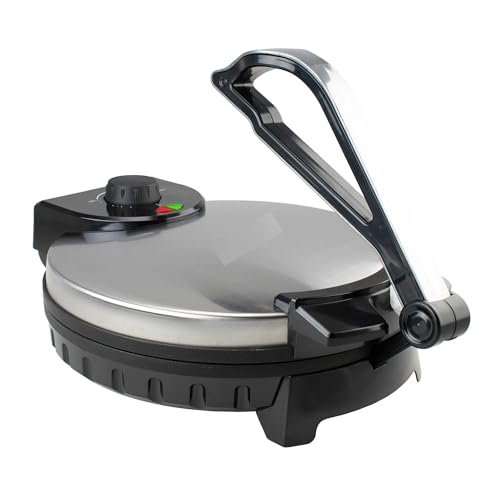
Orixforce 12-inch Electric Tortilla MakerBest for large tortillas
|
Burrito-size flour tortillas | Heated flat press, 12-inch | Flour, roti and chapati dough | View on Amazon |

VEVOR 5.5-inch Automatic Tortilla MachineBest for volume
|
Hundreds of small tortillas | Roller-and-cutter machine, 5.5-inch rounds | Corn masa (sold as a corn tortilla machine) | View on Amazon |

Presto 22-inch Electric Ceramic GriddleBest electric comal
|
Cooking a batch without a stove | Electric griddle, 22-inch | Any tortilla, pressed or rolled first | View on Amazon |

Victoria 8-inch Cast Iron Tortilla PressBest for corn masa
|
Fresh corn tortillas | Manual cast iron press, 8-inch | Corn masa; no power needed | View on Amazon |
Product images from Amazon. Details are as stated by each maker or listing; check the listing before you buy.
Our picks for the best electric tortilla maker
These seven picks cover the three kinds of machine sold as electric tortilla makers. Heated flat presses squash a ball of flour dough between two hot plates and cook it at the same time. Roller machines feed masa through rollers and cut out rounds by the hundred. Electric griddles are plug-in comales that cook tortillas you have pressed or rolled yourself. We also include one manual press, because for corn masa it is the tool that works best, and pairing it with an electric griddle gives you an all-electric kitchen for corn tortillas.
1. Starfrit Electric Roti Maker – Press and Cook in One Step
This is the classic electric tortilla maker: two round nonstick plates on a hinge, a heating element behind each, and a long handle that brings the top plate down on a ball of dough. Starfrit sells it for roti, chapati, poori and Mexican tortillas, and says it presses and bakes the flatbread in one step, which is exactly what most people picture when they search for an electric tortilla maker.
The listing gives a 1,200-watt heating system with thermostat control, a power light, cool-touch handles and non-slip feet. The wide handle is there for leverage, and Starfrit says it helps you press dough to an even thickness with less effort. The housing is brushed stainless steel, and the cord wraps into built-in storage underneath, which matters for an appliance most people keep in a cupboard between uses.
It works best with soft flour dough that has rested. Press a ball, hold the handle down for a moment so the dough spreads, then lift the lid and let the tortilla cook through, turning it once. Heat from the plates makes the dough easier to press flat, which is why a heated press can handle flour dough that springs back in an ordinary press (see how the types differ, below). The nonstick plates release tortillas without oil and wipe clean once cool.
One honest caveat: the listing describes the plates as both “12 inch” and “10 in”, and gives the size as 9.8 inches. Plan on tortillas of about ten inches at most, which still covers a soft taco or a medium burrito.
Why we like it
- Presses and cooks flour tortillas in one step
- 1,200-watt heating with thermostat temperature control
- Wide handle for even pressing with less effort
- Nonstick plates; cool-touch handles and non-slip feet
- Built-in cord storage for a tidy cupboard
Key specifications
| Model | 024825-003-0000 |
|---|---|
| Type | Heated flat press (roti maker) |
| Tortilla size | About 10 inches (listing gives 9.8-inch size; also mentions 12 inches) |
| Power | 1,200 W |
| Heat control | Thermostat-controlled; power indicator light |
| Plate surface | Nonstick (coating type not stated) |
| Cleaning | Wipe the nonstick plates once cool |
| Warranty | Not stated |
Why we recommend it
Choose it if you make flour tortillas a few times a week and want an appliance that turns dough balls into warm tortillas without a rolling pin. Of the flat presses we found in stock, it is the one from an established kitchen-appliance brand, with a clear list of safety features and a design aimed at home kitchens.
Skip it if you mainly make corn tortillas from fresh masa. A heated press is built around flour dough; for corn, a manual press and a hot comal (see pick 7) give a better result.
Pros and cons
Pros
- One-step press and cook
- Thermostat temperature control
- Established appliance brand
- Compact storage with cord wrap
Cons
- Listing is inconsistent on plate size
- Coating type and warranty not stated
- Not the right tool for corn masa
2. Orixforce 12-inch Electric Tortilla Maker – Room for Burrito-Size Rounds
If the tortillas you buy are burrito-size, a ten-inch press will leave you wanting. This model has 12-inch plates, the largest of the flat presses we found in stock, and the listing says it makes perfectly round tortillas, roti, chapati and flatbreads.
The rest of the design follows the familiar pattern. The listing gives 1,200 watts, adjustable heat settings so you can cook a tortilla soft or let it crisp, nonstick aluminum plates and a stainless steel body. Separate power and preheat lights tell you when the plates are hot enough for the first ball of dough, which is the moment most first batches go wrong: dough pressed on a half-heated plate sticks and tears.
The model number on the listing is TS-129, the same number Brentwood uses for its 12-inch electric tortilla maker, and the feature list matches Brentwood’s closely. We could not confirm how the two are related, so we judge this one on its own listing. Brentwood’s own TS-129 was down to its last few units when we checked, which is why it is not on this list.
Use it as you would any flat press: rested flour dough, a fully preheated plate, a firm press, then lift the lid to finish cooking. For a really large tortilla, flatten the dough ball into a thick disc with your palm before it goes in, so the press only has to finish the job.
Why we like it
- 12-inch plates for burrito-size tortillas
- Adjustable heat for soft or crisper results
- Power and preheat indicator lights
- Nonstick aluminum plates
- 1,200 W, stainless steel housing
Key specifications
| Model | TS-129 |
|---|---|
| Type | Heated flat press |
| Tortilla size | Up to 12 inches |
| Power | 1,200 W |
| Heat control | Adjustable heat; power and preheat lights |
| Plate surface | Nonstick aluminum |
| Cleaning | Wipe the nonstick plates once cool |
| Warranty | Not stated |
Why we recommend it
Choose it if you roll burritos, make large quesadillas or simply prefer a wide flour tortilla. The preheat light and adjustable heat make it easier to get a consistent batch than with a press that only has an on switch.
Skip it if counter space is tight or you want a known brand behind the warranty. A 12-inch press is a large appliance, and the listing does not say who stands behind it or for how long.
Pros and cons
Pros
- Largest plates of the flat presses here
- Adjustable heat
- Preheat indicator light
- Nonstick plates
Cons
- Warranty not stated
- Relationship to Brentwood’s TS-129 unclear
- Bulky to store
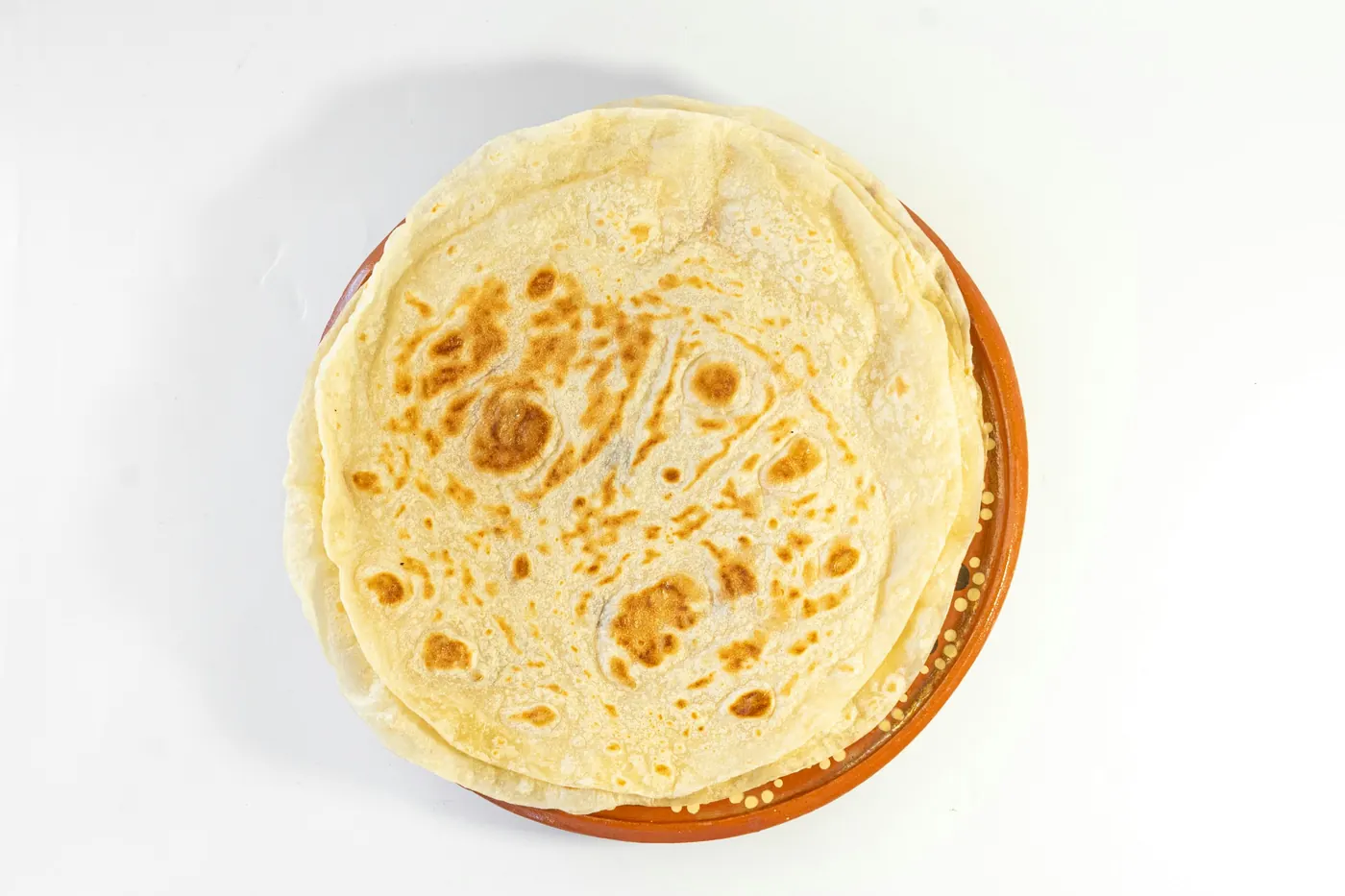
3. Always-Quality 10-inch Cast Aluminum Electric Tortilla Maker – Made in Mexico, All Metal

Before the stainless, nonstick roti makers arrived, the electric tortilla press sold in Mexican markets looked like this: heavy cast aluminum plates, a long lever and very little else. This one is listed as brand new and made in Mexico, all metal, with a 10-inch pressing surface and the listing’s own description of “restaurant quality”.
The seller names four uses: flour tortillas, corn tortillas, gorditas (the thick, sweet griddle cakes) and buñuelos. It comes with instructions and some recipes for making tortillas “the way Mexicans do it”. That is about all the listing says, so there is no published wattage, temperature control or nonstick claim to go on.
What draws people to this style is the build. Cast aluminum plates are thicker than the stamped plates on many modern presses, and an all-metal press has no plastic hinge to crack. The trade-off is that bare aluminum plates are not described as nonstick, so dough may need a light film of oil or a sheet of plastic, and you will be working from the included instructions rather than a dial.
Why we like it
- Made in Mexico, according to the listing
- All-metal construction with cast aluminum plates
- 10-inch pressing surface
- Listed for flour and corn tortillas, gorditas and buñuelos
- Includes instructions and recipes
Key specifications
| Model | Not stated |
|---|---|
| Type | Heated flat press |
| Tortilla size | Up to 10 inches |
| Power | Not stated |
| Heat control | Not stated |
| Plate surface | Cast aluminum (nonstick not stated) |
| Cleaning | Not stated; follow the included instructions |
| Warranty | Not stated |
Why we recommend it
Choose it if you want the traditional Mexican-made electric press, value an all-metal build, or are buying for someone who grew up with one. It is the only machine here whose listing names corn tortillas and gorditas alongside flour.
Skip it if you want clear specifications before you buy. The listing gives no wattage, heat control, plate coating or warranty, so you are trusting the seller’s short description.
Pros and cons
Pros
- Made in Mexico
- All-metal, cast aluminum build
- Listed for flour and corn
- Recipes included
Cons
- Power and heat control not stated
- Plates not described as nonstick
- Very little published detail
4. VEVOR 5.5-inch Automatic Tortilla Machine – Small Tortillas by the Hundred
This is a different kind of machine altogether. Instead of pressing one ball at a time, you feed dough into a roller at the top; the rollers sheet it to the thickness you set, between 1 and 5 mm, and a 5.5-inch roller mold cuts out rounds that travel out on a conveyor. VEVOR rates it at up to 1,400 tortillas an hour.
VEVOR sells it as a corn tortilla machine, and the 5.5-inch size is the classic street-taco tortilla. The rollers and conveyor are stainless steel with a food-grade nonstick coating, and the listing describes the machine as corrosion-proof and resistant to deforming. Beyond tortillas, VEVOR suggests it for sopes, gorditas, roti, pita and small tortilla pizzas, and it names food trucks, fast-food shops and cafeterias alongside home kitchens.
Two things to understand before buying. First, the listing describes pressing and cutting, not cooking, so you still need a comal or griddle, and at this pace a big one. Second, the part number gives 250 watts, and this is a countertop production machine rather than a small appliance; check the listing’s dimensions against your counter before you order.
Why we like it
- Up to 1,400 tortillas an hour, according to VEVOR
- Adjustable thickness from 1 to 5 mm
- 5.5-inch rounds, the usual street-taco size
- Stainless steel rollers and conveyor with nonstick coating
- Also cuts sopes and gorditas
Key specifications
| Model | YF-YM08 (listing) |
|---|---|
| Type | Automatic roller-and-cutter machine |
| Tortilla size | 5.5-inch rounds, 1 to 5 mm thick |
| Power | 250 W (from the part number) |
| Heat control | None described; cook on a separate comal |
| Plate surface | Stainless steel rollers and conveyor, nonstick coated |
| Cleaning | Nonstick rollers for easy cleaning |
| Warranty | Not stated |
Why we recommend it
Choose it if you sell tortillas or tacos, cater, or feed a very large family every week and already mix your own masa. Nothing else here comes close for output, and it turns out evenly sized rounds every time.
Skip it if you make tortillas for one household. It is a production machine that needs counter space, cleaning after every session and a large cooking surface to keep up, and for a few dozen tortillas a hand press is faster from start to finish.
Pros and cons
Pros
- Very high output
- Even size and thickness
- Adjustable thickness
- Identifiable brand
Cons
- Does not cook the tortillas
- Large countertop machine
- Warranty and weight not stated
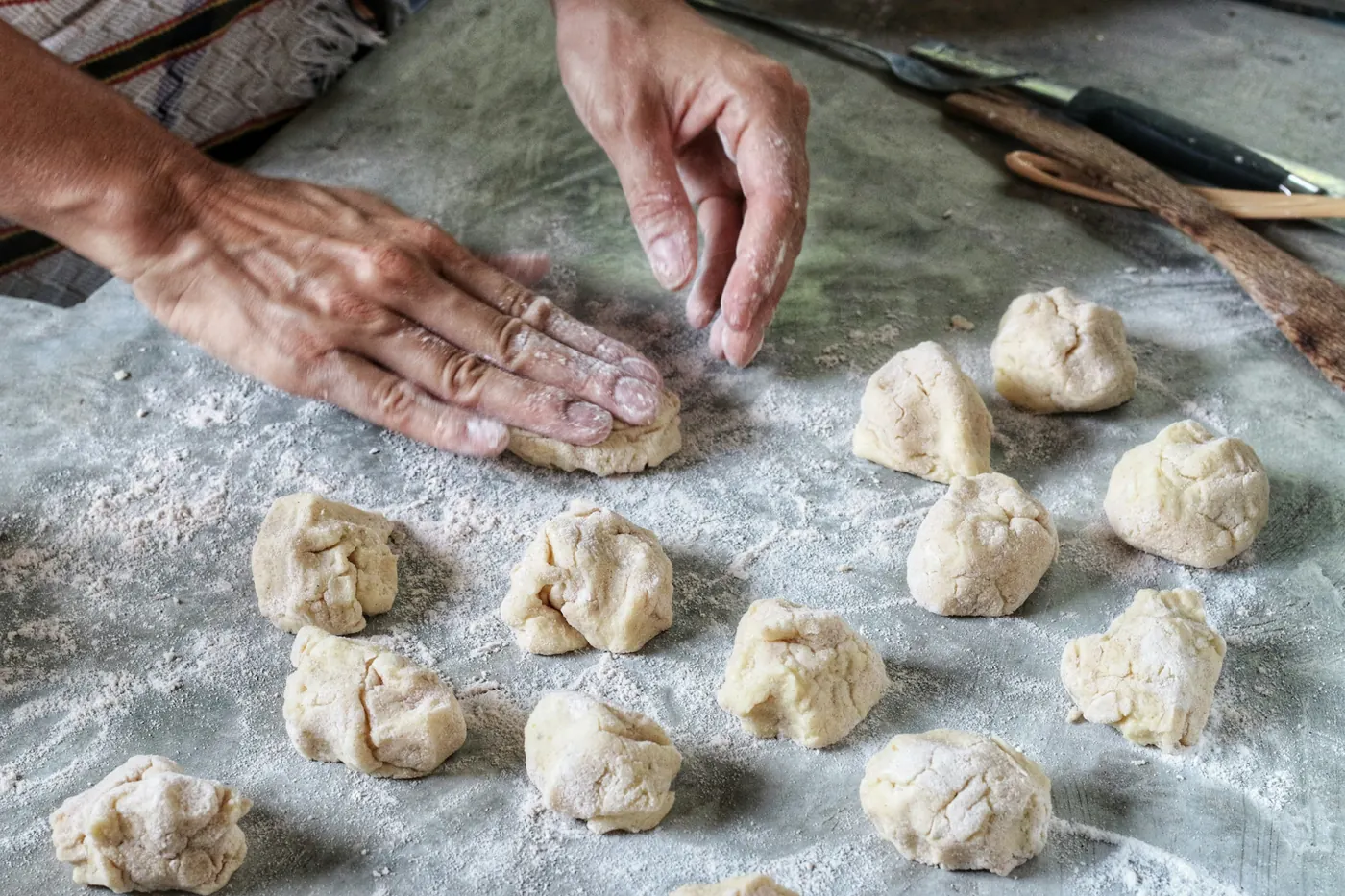
5. SUYIFAN 16-inch Electric Saj Maker – A Dome for Wide, Thin Flour Tortillas

A saj is the domed griddle used across the Middle East for paper-thin flatbread, and this electric version turns out to be a useful tool for anyone who rolls flour tortillas by hand. You roll or stretch the dough yourself, then drape it over a 16-inch convex nonstick dome, where it cooks quickly from below while you turn it with your fingertips.
The listing gives 1,600 watts and a temperature dial from 200 to 460°F, with a red power light and a green ready light. That range covers everything from gently warming tortillas to the high heat a thin flour tortilla needs to blister. The housing is stainless steel, the surface wipes clean after cooling, and the maker lists built-in fuse protection against overheating and a one-year warranty.
Why include a griddle in an electric tortilla maker guide? Because a press can only make a tortilla as wide as its plates. If you want the thin, wide, stretchy flour tortillas of northern Mexico, rolling by hand and cooking on a hot, even surface is the way, and this one plugs in.
Why we like it
- Wide 16-inch convex cooking surface
- Temperature dial from 200 to 460°F
- 1,600 W with power and ready lights
- Nonstick surface, stainless steel housing
- One-year warranty, according to the listing
Key specifications
| Model | YD-ESM400-TP |
|---|---|
| Type | Electric convex griddle (saj); dough is rolled by hand |
| Tortilla size | 16-inch dome; tortilla size set by your rolling |
| Power | 1,600 W |
| Heat control | Dial, 200 to 460°F; power and ready lights |
| Plate surface | Nonstick (coating type not stated) |
| Cleaning | Wipe clean after cooling |
| Warranty | 1 year |
Why we recommend it
Choose it if you already roll flour tortillas, or want to learn, and need a dedicated hot surface that does not tie up the stove. The wide temperature range and ready light make it easy to keep a steady pace through a stack.
Skip it if you want the machine to shape the tortilla for you. It does not press anything, and the domed shape takes a little practice before tortillas come off flat and even.
Pros and cons
Pros
- Room for very wide tortillas
- Wide, clearly marked temperature range
- Ready light
- One-year warranty
Cons
- You roll every tortilla yourself
- Domed surface takes practice
- Single-purpose appliance to store
6. Presto 22-inch Electric Ceramic Griddle – A Plug-In Comal for a Whole Batch
For corn tortillas, the electric part of the job is cooking, not pressing, and a large electric griddle is the most practical plug-in comal we found. Presto’s 22-inch griddle has room for several corn tortillas at a time, so it can keep pace with someone working a hand press beside it.
The surface is a PFAS-free textured ceramic nonstick coating over a heavy cast aluminum base that Presto calls virtually warp-proof. The Control Master heat control holds the temperature you set automatically, which is a real help with corn tortillas: they need steady, fairly high heat to puff, and a griddle that holds its temperature avoids the slow drift of a burner turned too low.
It is practical to live with, too. The handles come off so it fits most 18-inch cabinets, a slide-out drip tray catches any oil from quesadillas, and with the heat control removed the base is fully immersible for washing. Presto backs it with a one-year limited warranty. We also recommend it in our guide to the best comal for tortillas, for kitchens without a spare burner.
Why we like it
- 22-inch surface cooks several tortillas at once
- PFAS-free ceramic nonstick coating
- Automatic temperature control
- Removable handles; fits most 18-inch cabinets
- Immersible with the heat control removed
Key specifications
| Model | 07061 |
|---|---|
| Type | Electric griddle; pair with a press or rolling pin |
| Tortilla size | 22-inch surface; several tortillas at once |
| Power | Not stated in the listing |
| Heat control | Control Master automatic heat control |
| Plate surface | PFAS-free ceramic nonstick over cast aluminum |
| Cleaning | Immersible with the control removed; slide-out drip tray |
| Warranty | 1-year limited |
Why we recommend it
Choose it if you press corn tortillas by hand, cook for a crowd, or simply want to cook tortillas at the table rather than at the stove. Paired with the press below, it is the most capable setup on this page for corn masa.
Skip it if you want the dark char of bare iron over a flame. A nonstick griddle cooks evenly but gently, and at 22 inches it needs counter and cupboard space.
Pros and cons
Pros
- Large, steady cooking surface
- PFAS-free ceramic coating
- Stores in a standard cabinet
- Easy to wash
Cons
- Does not press tortillas
- Will not char like bare iron
- Needs counter space
7. Victoria 8-inch Cast Iron Tortilla Press – The Right Tool for Corn Masa
It is not electric, and that is the point. If you came here wanting fresh corn tortillas, this is the tool that makes them well. A cast iron press flattens a ball of masa between two cool plates in one squeeze; you peel it out of its plastic liner and lay it on a hot comal or an electric griddle like the Presto above.
America’s Test Kitchen named the Victoria 8-inch press its best buy among tortilla presses, praising its wide plates, which keep dough from squeezing out of the sides, and its compact size for storage. ATK found that heavy presses work best because the weight of the top plate does much of the work, and recommends plates at least eight inches wide.
Victoria seasons the press with non-GMO, kosher-certified flaxseed oil and uses no PTFE, PFAS or other synthetic coatings. The plates are engineered flat to avoid pinching, the handle is shaped for leverage, and the footprint is smaller than a traditional wood or steel press. Victoria has made cast iron in its own factories in Colombia since 1939 and lists a limited lifetime warranty. Care is cast iron care: never air-dry it or put it in the dishwasher; wipe, dry and oil it as the instructions say.
Why we like it
- Best buy among tortilla presses, according to America’s Test Kitchen
- 8-inch flat plates engineered to avoid pinching
- Seasoned with flaxseed oil; no PTFE or PFAS
- Made in Colombia; limited lifetime warranty
Key specifications
| Model | TOR-003 |
|---|---|
| Type | Manual cast iron press |
| Tortilla size | Up to 8 inches |
| Power | None (manual) |
| Heat control | None; cook on a comal or griddle |
| Plate surface | Cast iron seasoned with flaxseed oil |
| Cleaning | No dishwasher, never air-dry; dry and oil after use |
| Warranty | Limited lifetime |
Why we recommend it
Choose it for corn tortillas, sopes and other masa dishes. It needs no outlet, has no motor or heating element to fail, and Victoria backs it with a limited lifetime warranty. Our guide to nixtamalization explains why fresh masa behaves so differently from flour dough.
Skip it if you mainly make flour tortillas. America’s Test Kitchen found flour dough too elastic for a press and recommends a rolling pin instead, which is exactly the gap a heated press like the Starfrit fills.
Pros and cons
Pros
- Best tool here for corn masa
- No power needed
- Recommended by America’s Test Kitchen
- Limited lifetime warranty
Cons
- Not electric; cooking is a separate step
- Not suited to flour dough
- Cast iron needs drying and oiling
Flat press, roller machine or griddle: three machines, one name
Search for an electric tortilla maker and you will see very different appliances under the same words. Knowing which is which saves a return.
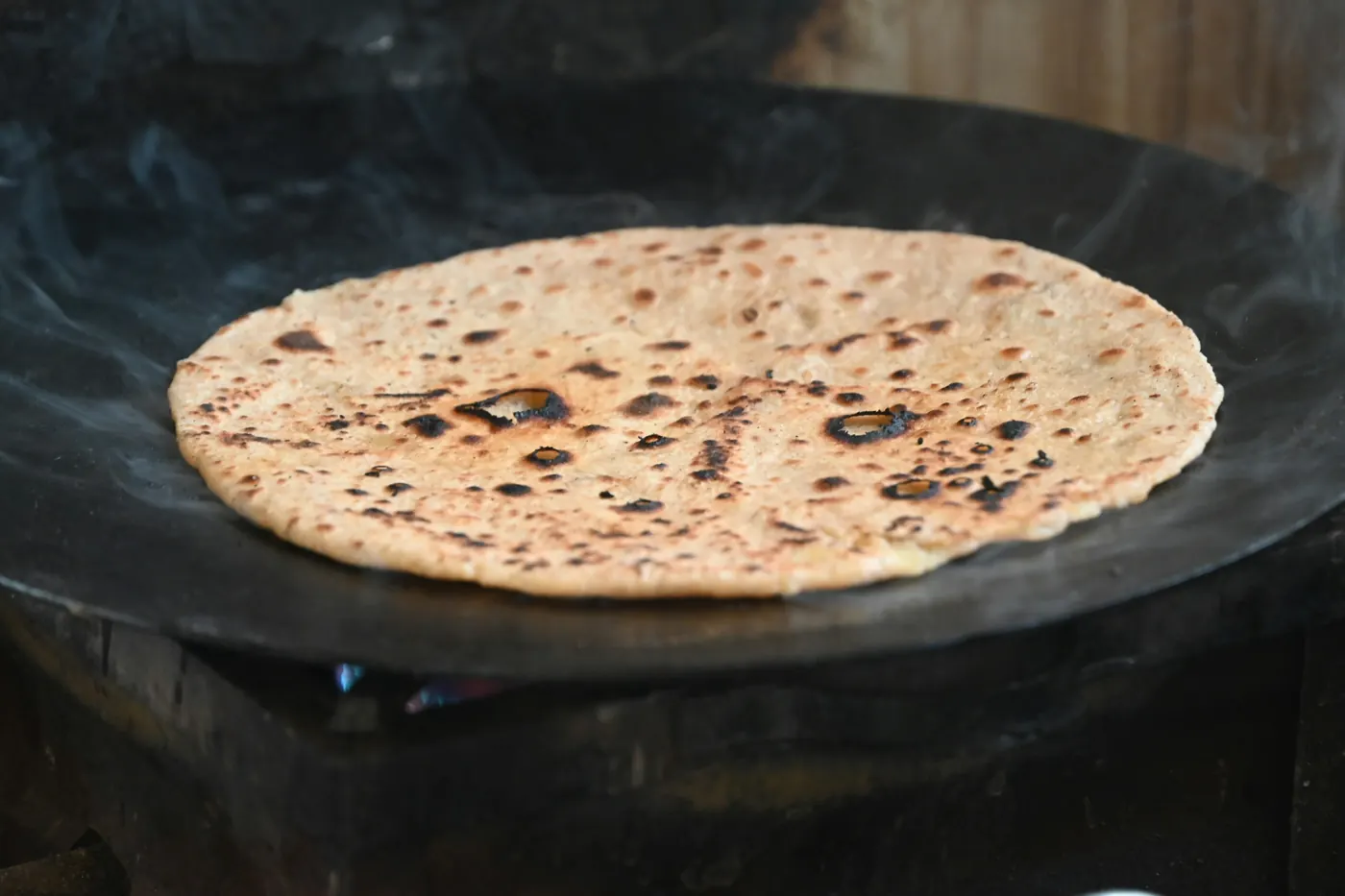
- Heated flat presses (also sold as roti or chapati makers) are the most common. Two hinged, heated plates press a ball of dough flat and cook it. A patent for this kind of press explains why it works: heat from the preheated plates makes the dough more fluid and easier to press into a round, and discourages it from sticking to the plates. They are designed around wheat-flour dough.
- Roller machines sheet dough between rollers and cut rounds, often hundreds an hour. They are sold mostly as corn tortilla machines, they are large, and the ones we looked at describe pressing and cutting, not cooking. Read each listing closely: one roller machine we considered tells buyers not to use 100% corn or 100% wheat flour and recommends a blend instead, which rules it out for traditional corn tortillas.
- Electric griddles are plug-in comales. They do not shape anything, but they cook whatever you press or roll, at a steady temperature, without a stove.
- Automatic “all-in-one” roti machines that measure flour and water, knead, press and cook are also sold as tortilla makers. The ones we found in stock came from sellers that publish little about who makes them, and they are built around wheat chapati dough, so none made this list.
How to choose an electric tortilla maker
Five questions decide which machine suits you. The first one matters more than the rest put together.
1. Corn or flour?
Flour tortillas suit a heated flat press, because heat makes the dough easier to press, while America’s Test Kitchen found flour dough too elastic for an ordinary, unheated press. Corn tortillas from fresh masa are better pressed cold in a manual press and cooked on a hot comal or griddle, the method America’s Test Kitchen and masa supplier Masienda both describe, with a thin plastic liner to keep the masa from sticking. If you make both, the most flexible setup is a manual press plus an electric griddle, with a flat press added only if flour tortillas are a weekly habit. Our guide to corn versus flour tortillas explains the differences in the dough.
2. Tortilla size
A flat press can only make a tortilla as wide as its plates, and in practice a little smaller. Ten-inch plates suit soft tacos and small burritos; for burrito-size flour tortillas, look for 12 inches. Corn tortillas for tacos are usually five to six inches across, which any 8-inch press handles comfortably.
3. Heat control and a ready light
The most common first-batch failure is pressing dough on a plate that is not hot enough, so it sticks and tears. A preheat or ready light removes the guesswork, and an adjustable dial lets you cook a tortilla soft for burritos or let it crisp slightly. Of the flat presses here, the Starfrit lists thermostat control and the Orixforce adjustable heat with a preheat light.
4. Plate surface and cleaning
Nonstick plates release tortillas without oil and wipe clean once cool, but they will not char a tortilla the way bare iron does, and they need wooden or silicone tools. Ask what the coating is: Presto states its griddle coating is PFAS-free ceramic, while several press listings simply say “nonstick”. Bare cast aluminum plates, like those on the Mexican-made press, are not described as nonstick at all.
5. Volume and space
A flat press makes one tortilla at a time, which suits a family dinner. A roller machine turns out hundreds an hour but needs a large counter, a big cooking surface and cleaning after every session; it makes sense for a business or a very large household. Measure your cupboard as well as your counter: electric griddles with removable handles, like the Presto, store more easily than their size suggests.
How we picked these seven tortilla makers
We started from what a Mexican kitchen asks of any tortilla tool: an even, round tortilla of the right size and thickness, steady heat, and a machine that suits the dough you actually use. We then looked at every in-stock electric tortilla maker, roti maker, roller machine and electric griddle we could find on Amazon in the United States, and checked stock with Amazon’s product data on the day of writing. We left out products that were out of stock or down to their last few units, near-identical listings from sellers that publish no maker details, and machines whose own listings advise against traditional corn or flour dough. Specifications come from each brand’s Amazon listing, which we name as the source where a maker publishes nothing more; for the Victoria press and for how presses behave, we used America’s Test Kitchen’s tortilla press review. Independent, published reviews of electric tortilla makers are scarce, and we have not cooked on every machine listed here, so we describe what each maker states and say where the details are thin.
Getting good tortillas from an electric press
A heated press is forgiving once you know its habits. These steps apply to any flat press.
- Make a soft dough and let it rest. Flour dough that has rested for at least half an hour presses wider and springs back less.
- Preheat fully. Wait for the ready light, or give the plates several minutes if there is none.
- Place the ball slightly toward the hinge. The top plate meets the dough there first, so it spreads into a rounder shape.
- Press firmly and briefly, then lift. Holding the plates closed too long cooks the tortilla before it has spread.
- Finish with the lid up. Let the tortilla cook on the lower plate, turn it once, and take it off when light brown spots appear.
- Stack in a cloth or warmer. The steam keeps the stack soft while you press the rest.
Tortillas that come out thick or small usually mean the dough is too stiff or the plates were not hot enough. Ones that crack at the edges were cooked too long. Leftover tortillas reheat well on a dry comal, as our guide to reheating Mexican leftovers explains.
Electric tortilla maker questions, answered
Can you make corn tortillas in an electric tortilla maker?
Some listings say so, including the Mexican-made cast aluminum press, but heated flat presses are designed around flour dough. For corn tortillas from fresh masa, a manual cast iron press and a hot comal or electric griddle give you more control. Roller machines are sold for corn masa, but they are production equipment.
Is a roti maker the same as an electric tortilla maker?
Usually, yes. Most heated flat presses are sold under both names, and the Starfrit lists roti, chapati and Mexican tortillas among its uses. Fully automatic roti machines that mix and knead are a different appliance, built around wheat chapati dough.
Do you still need a comal?
With a flat press, not for cooking, though a comal is still the best way to reheat tortillas. With a manual press or a roller machine, yes: something has to cook the tortillas, either a comal on the stove or an electric griddle.
What size electric tortilla maker should you buy?
Ten-inch plates suit most households. Choose 12 inches if you make burritos or large quesadillas. For corn tortillas, an 8-inch manual press is plenty, since taco tortillas are smaller.
How do you clean an electric tortilla maker?
Unplug it, let the plates cool, and wipe them with a damp cloth; never immerse a press with built-in heating elements. Use wooden or silicone tools on nonstick plates. Griddles with a removable heat control, like the Presto, can be washed in the sink once the control is out.
Are automatic tortilla machines worth it at home?
Only for very large batches. A roller machine is fast once it is running, but setup, cooking and cleaning take time, so for a family’s weekly tortillas a hand press or flat press finishes sooner.
Our final word on tortilla machines
If flour tortillas are your weekly habit, the Starfrit Electric Roti Maker is the simplest way to turn dough balls into warm tortillas, and the Orixforce 12-inch press is the one to choose for burrito-size rounds. If corn tortillas are what you are after, skip the electric press: a Victoria cast iron press and a hot comal or the Presto griddle will give you better tortillas for less. Whichever you choose, preheat fully and keep the finished tortillas covered. For the rest of the kit, from warmers to masa, see our guides to tortilla making tools and Mexican cooking tools.
And if you would rather someone else made the tortillas tonight, see the menu or call to order.