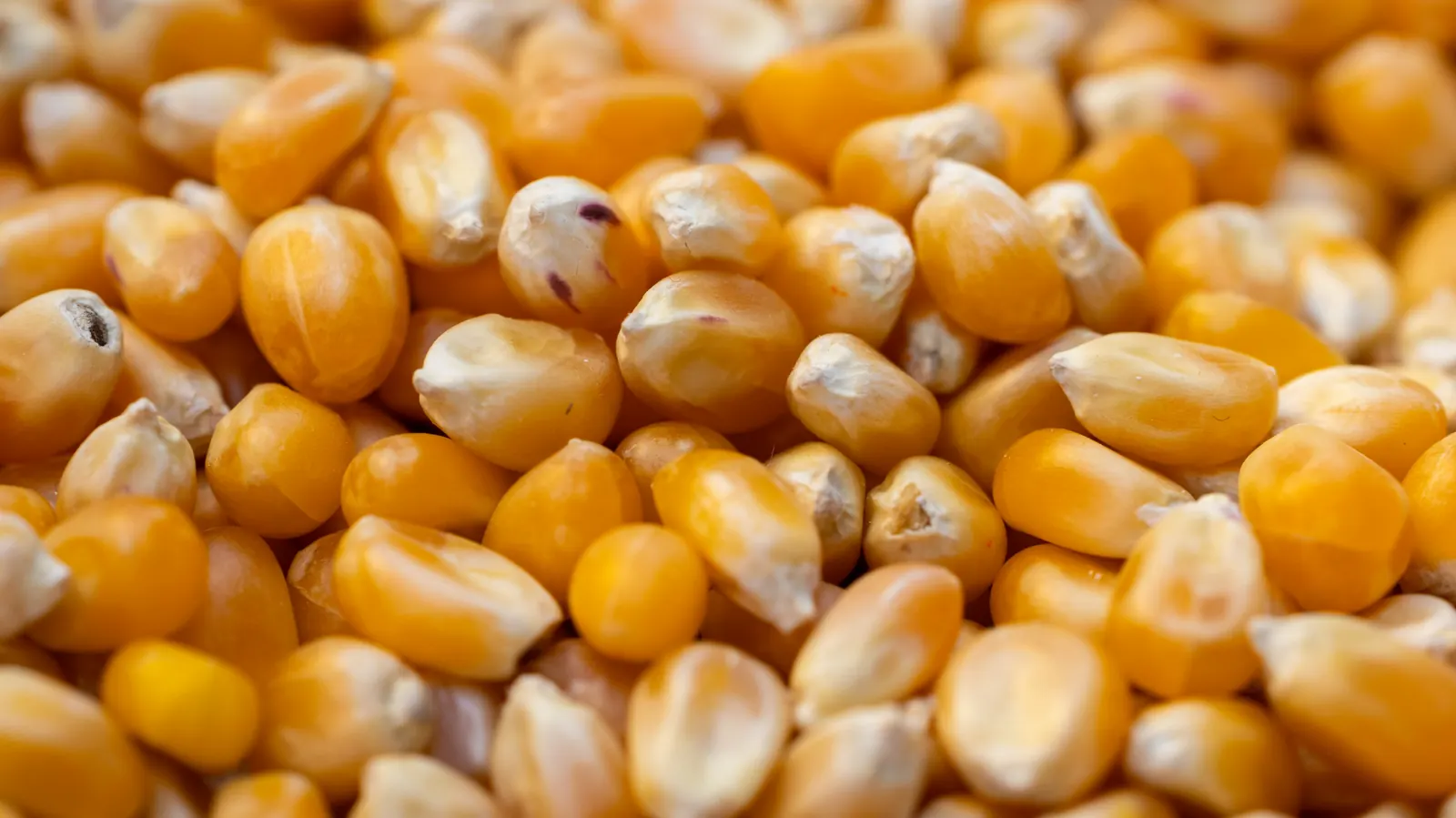
The reason a good corn tortilla smells like something and a bad one smells like nothing is a chemical process about three thousand years old.
It has an awkward name and it explains most of the Mexican menu.
The short answer
Nixtamalization is cooking dried corn in water with lime — calcium hydroxide, not the fruit — then steeping, washing and grinding it. The alkaline solution loosens the hull, changes the flavor, and makes the corn’s niacin available to digest. The result is nixtamal, which is ground into masa. Tortillas, tamales, sopes, chips and the hominy in pozole all start here.
What actually happens
BAKERpedia, defining nixtamalization, describes it as the process of masa preparation: cooking whole corn in water containing lime, steeping and washing, then grinding the resulting nixtamal.
The alkali is the active ingredient. The same reference gives the working range as 0.5 to 1.5 percent calcium hydroxide by weight of corn, and notes calcium oxide can be used instead, since it produces calcium hydroxide on contact with water.
Three things happen in the pot. The tough outer hull — the pericarp — softens and loosens so it can be washed away. The kernel absorbs water and swells. And the alkaline conditions break down compounds in the corn that were previously locked up.
The traditional version is unchanged in principle. BAKERpedia notes maize was lime-cooked in clay pots over a fire, and credits pre-Columbian civilizations including the Aztecs and Maya with finding in this process the key to their development.
Why it mattered so much
That last claim is not decoration. It is a real historical argument.
Corn contains niacin — vitamin B3 — but in a bound form the human gut cannot absorb. Alkaline treatment releases it. A population living mainly on untreated corn develops pellagra; a population living on nixtamalized corn does not.
This is why the process spread with maize across Mesoamerica and why its absence caused problems where corn traveled without it. Corn went to Europe and Africa after 1492; nixtamalization largely did not.
The lime also adds calcium to the finished masa, which is a second nutritional benefit and not a small one for a corn-based diet.
From kernel to tortilla
| Stage | What it is | What it becomes |
|---|---|---|
| Dried maize | Hard field corn, not sweet corn | The raw material |
| Nixtamal | Lime-cooked, steeped, washed corn | Hominy, or ground into masa |
| Masa | Fresh ground nixtamal dough | Tortillas, tamales, sopes |
| Masa harina | Masa dried and milled to flour | Reconstituted with water |
| Totopos | Tortillas cut and fried | Chips, chilaquiles |
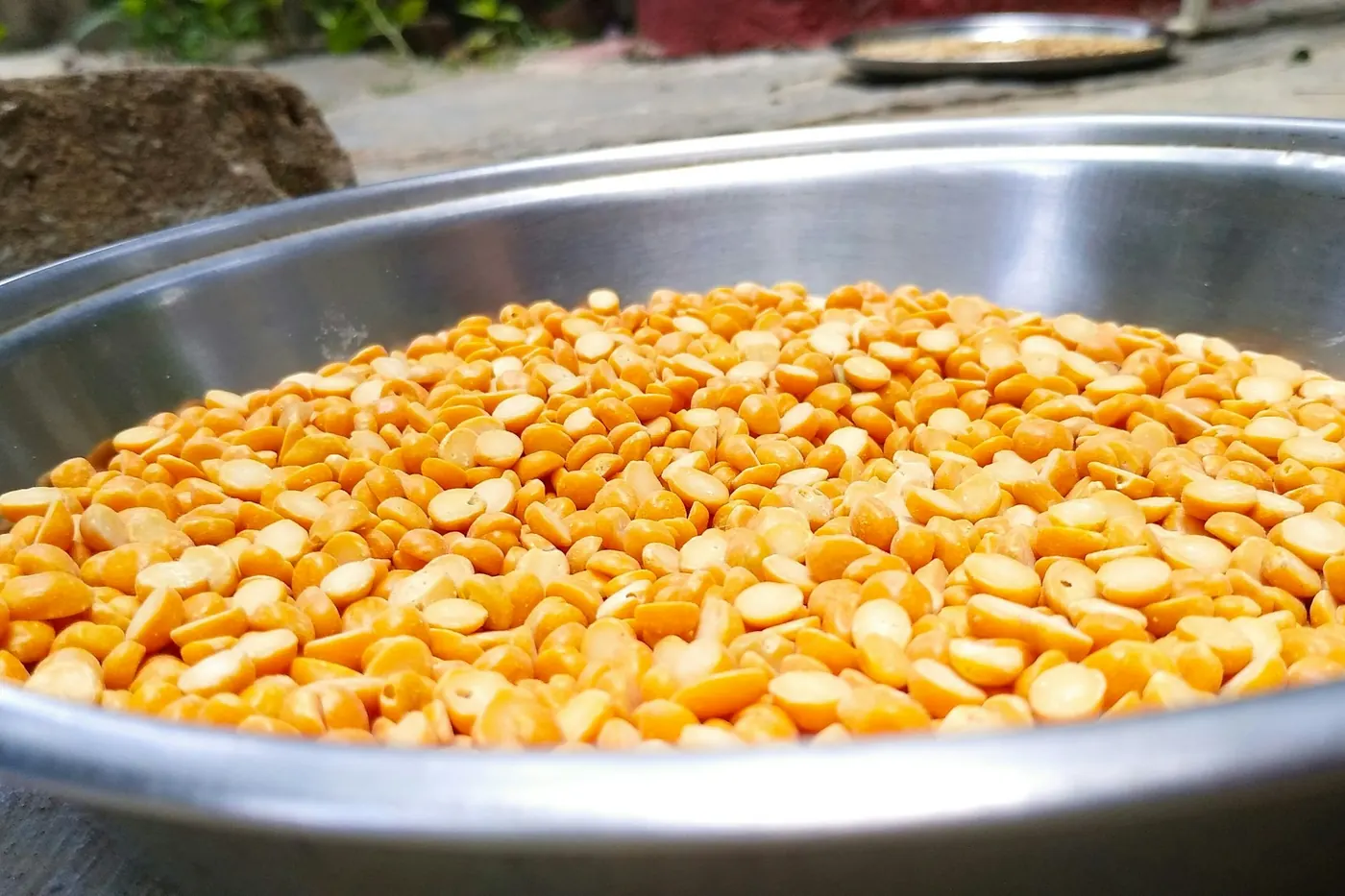
The hominy row is worth pausing on. Whole nixtamal that never gets ground is hominy — the swollen white kernels in pozole. Same process, different stopping point.
Fresh masa versus masa harina
This is the distinction that separates a good tortilla from an ordinary one, and it is entirely about when the corn was ground.
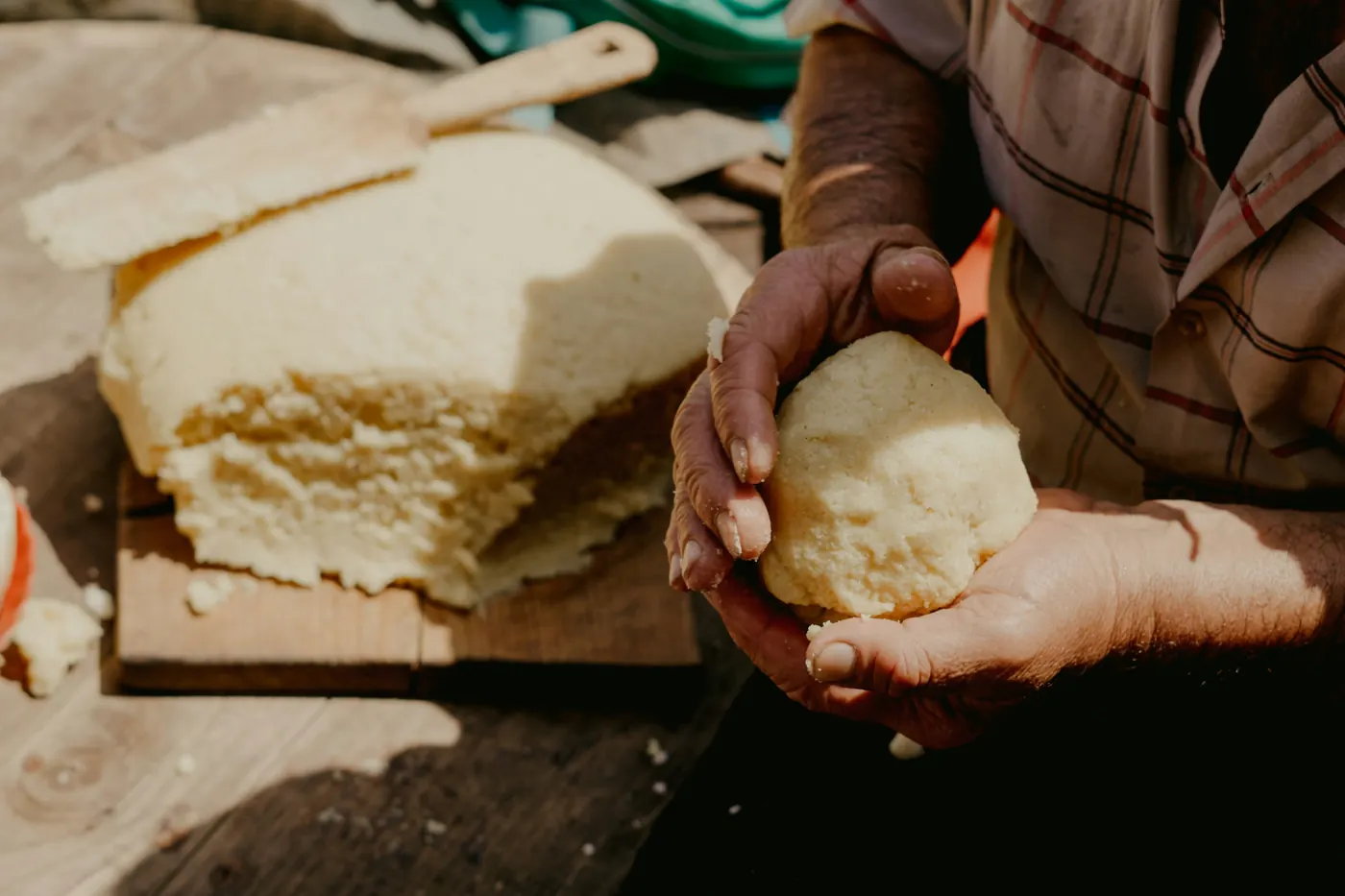
Fresh masa is ground the same day and used wet. It smells strongly of corn, tastes sweet and faintly mineral, and makes a tortilla that is soft, pliable and aromatic.
Masa harina is masa that has been dried and milled into a shelf-stable flour, then rehydrated. It is enormously more practical and it works. It is also flatter in flavor, because drying drives off the volatile aromatic compounds that made the fresh version smell like that.
Neither is a scandal. Most restaurants anywhere use masa harina, and a competent tortilla from it beats a careless one from fresh masa. But the difference is real and you can taste it, which our guide to spotting a good Mexican restaurant treats as a signal.
Why corn tortillas behave the way they do
Nixtamalization also explains the mechanical differences that frustrate people at the table.
Masa has no gluten. What holds a corn tortilla together is gelatinized starch and the calcium bridging released during lime cooking — a weaker structure than the gluten network in a flour tortilla.
Consequences: corn tortillas tear under wet fillings, they crack if they cool, and they have to be heated to become pliable. They also crisp properly when fried, which flour does not, which is why every fried tortilla form — tostada, totopo, taquito — is corn.
Our corn and flour guide works through when to choose which, and the two-tortilla habit is a direct workaround for the tearing problem.
On Julia’s menu
Nixtamalized corn is underneath more of Julia’s menu than any other single ingredient, and it is almost never named.
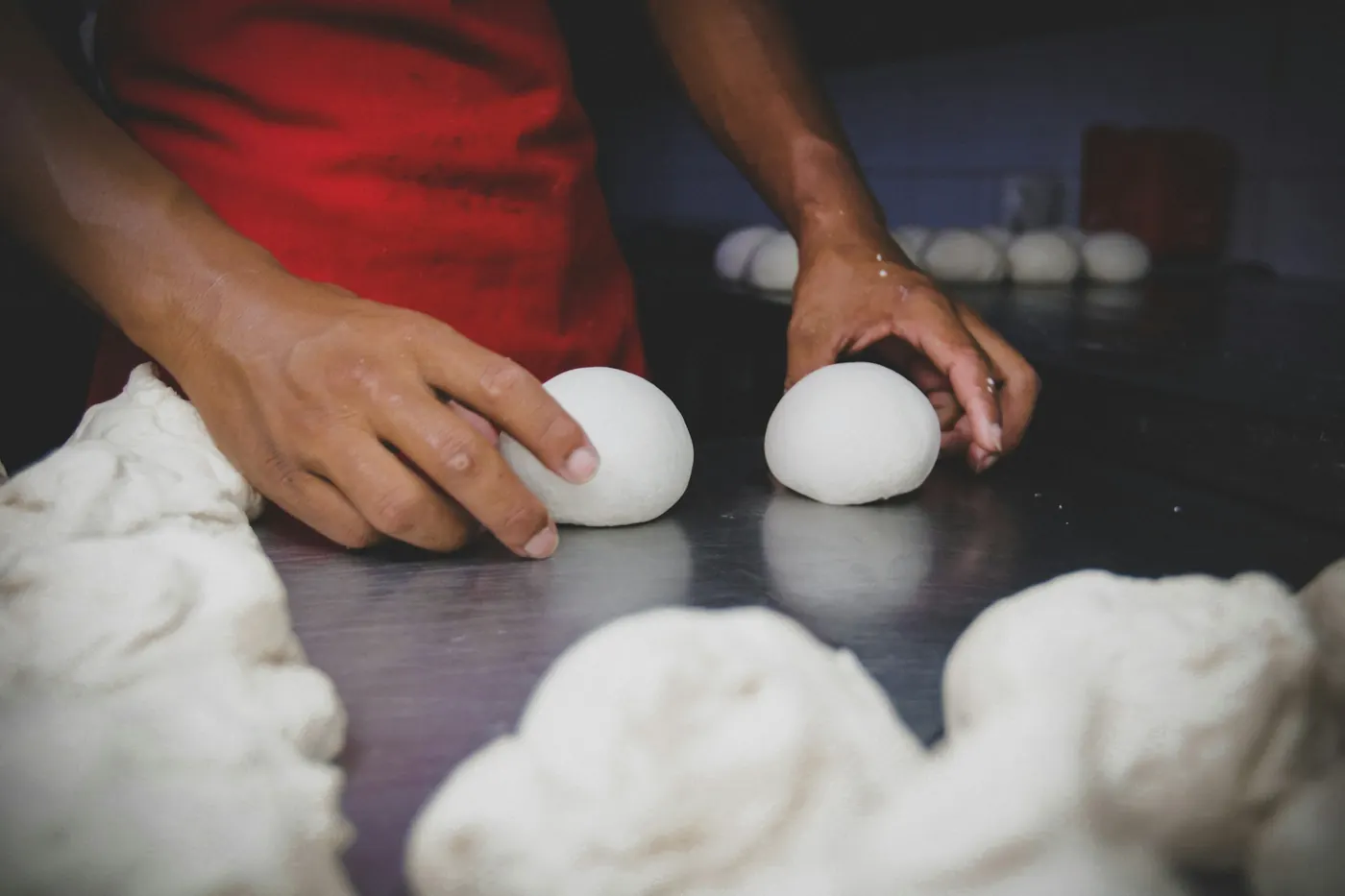
The homemade corn tortillas served with the brisket birria and the cochinita pibil are masa. So are the corn tortillas offered as an alternative on most plates.
The homemade pork tamales, tierra caliente style, are masa steamed in husks. The sopes are thick masa rounds with pinched rims, griddled and topped. The taquitos de pollo are corn tortillas rolled and fried. The chips under the nachos and the nachos Tejanos are fried corn tortillas.
And the pozole is hominy — nixtamal that stopped before the grinder.
Six menu sections, one process. Our masa antojitos guide covers the shapes masa gets made into.
Why it is coming back
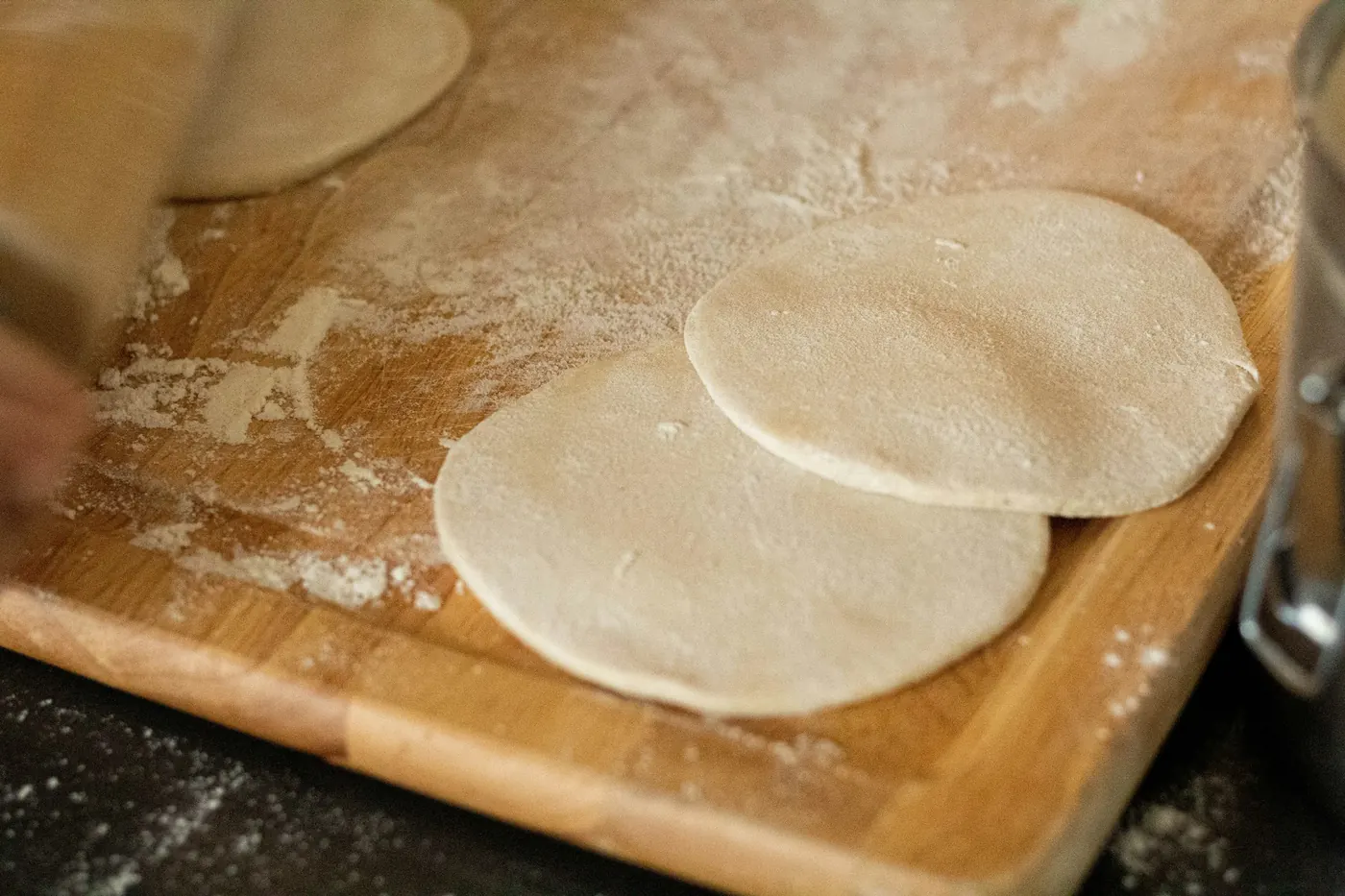
Fresh masa nearly disappeared from restaurant kitchens outside Mexico, and it has been returning for about a decade.
The reason it disappeared is straightforward. Nixtamalizing corn takes an overnight steep, a wash, and a stone mill, and it produces a dough that has to be used the same day. Masa harina removed all of that, and by the second half of the twentieth century it was the default almost everywhere.
What changed is that a handful of mills started sourcing heirloom Mexican maize varieties — blue, red, and the near-black ones — and selling fresh masa to restaurants. Landrace corn tastes markedly different from commodity field corn, and once a kitchen can buy it without running its own mill, the calculation shifts.
It is still a minority practice, and it costs more. But a tortilla made from fresh masa ground from heirloom corn is a noticeably different object, and that is why the word nixtamal has started appearing on menus at all.
Frequently asked questions
What is nixtamalization?
Cooking dried corn in an alkaline solution of water and lime, then steeping, washing and grinding it into masa. It softens the hull and changes the corn’s flavor and nutrition.
What kind of lime is used?
Calcium hydroxide, called cal in Spanish — a mineral, not the citrus fruit. Around 0.5 to 1.5 percent of the corn’s weight.
Why does it matter nutritionally?
It releases the niacin in corn into a form the body can absorb, and adds calcium. Populations relying on untreated corn historically developed pellagra.
What is the difference between masa and masa harina?
Masa is fresh ground nixtamal used wet. Masa harina is masa dried and milled into flour, then rehydrated. Fresh has more aroma; the flour is far more practical.
Is hominy the same thing?
Yes, at an earlier stage. Hominy is whole nixtamalized corn that was never ground. It is what makes pozole pozole.
The short version
Cook corn with lime, steep it, wash it, grind it. That is why tortillas smell like corn, why masa holds together without gluten, and why corn became a food a civilization could live on.
Nearly every corn item on Julia’s menu starts there.