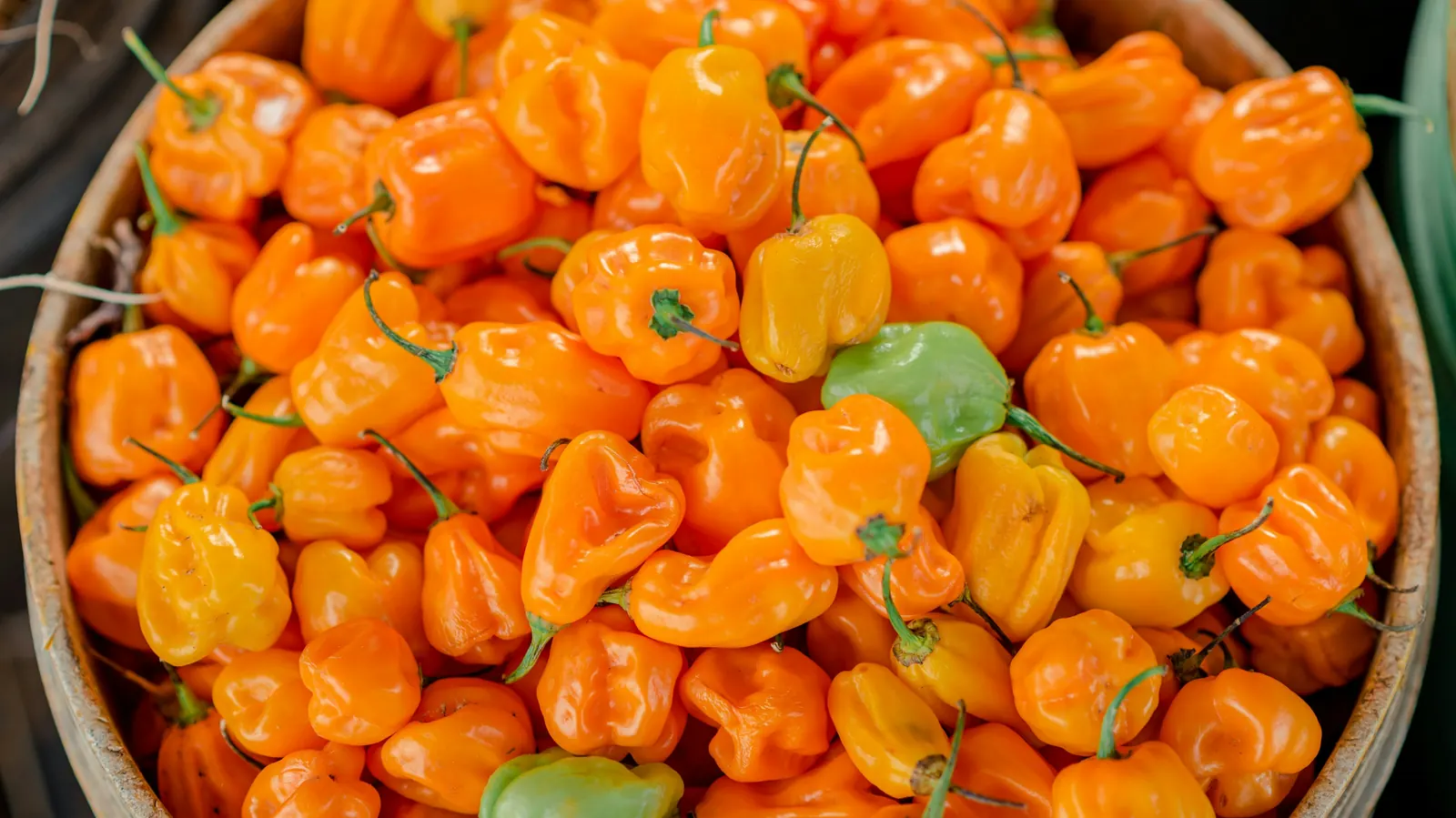
The habanero is the hottest thing you are likely to meet on a Mexican menu, and it is the one chile where the warning on the description should be taken literally.
It is also, and this gets lost, one of the best-tasting chiles there is.
The short answer
A habanero is a small, lantern-shaped chile, usually bright orange, that runs 100,000 to 350,000 on the Scoville scale — roughly forty times a jalapeño. Underneath the heat it is genuinely fruity and floral, which is why it is used for flavor and not just for punishment. It is most closely associated with the Yucatán, which grows most of the world’s supply.
What it is
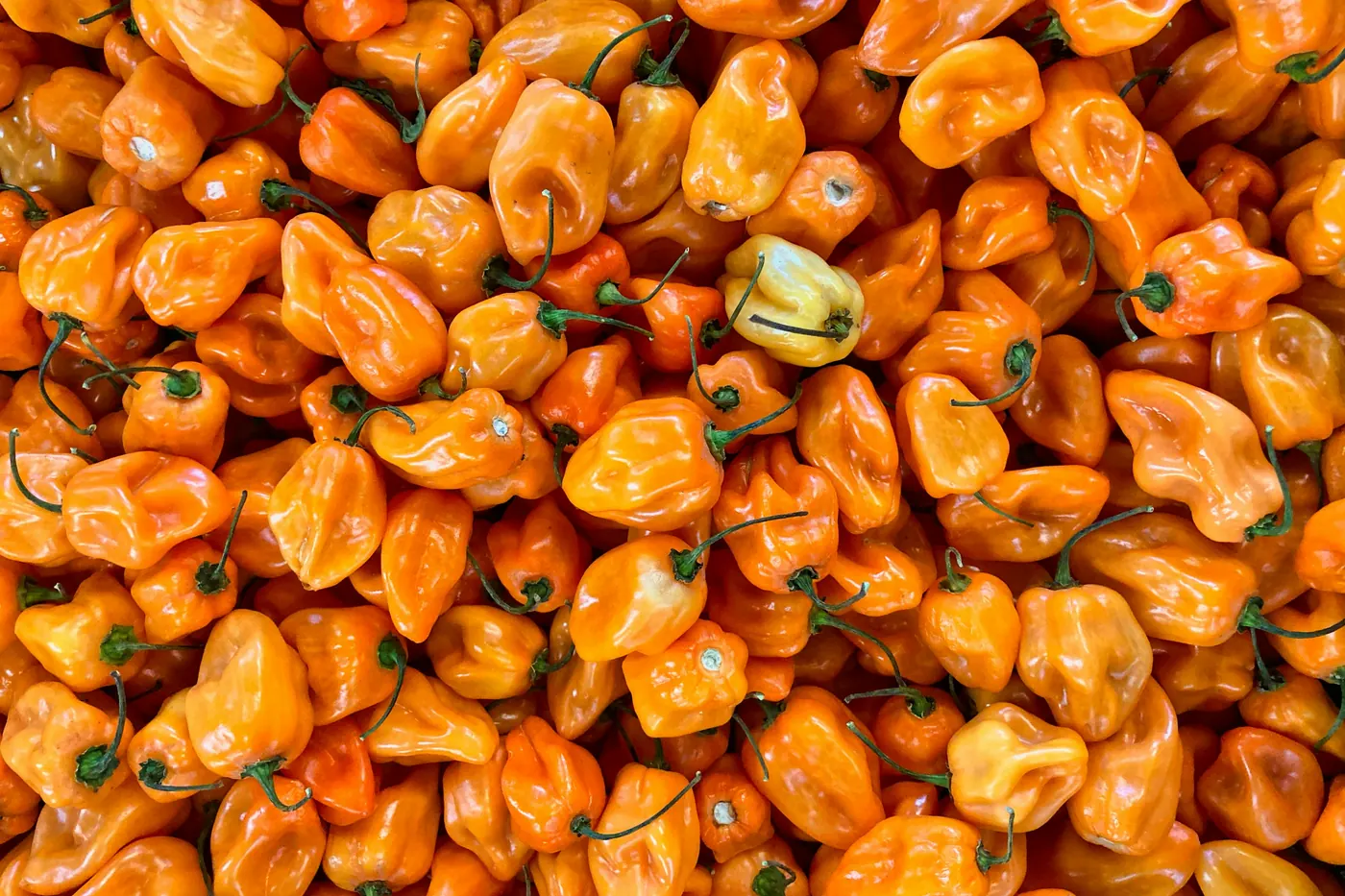
Small — an inch or two — with thin, glossy, crinkled skin and a distinctive puckered lantern shape. Most commonly orange, though red, yellow, white, brown and pink varieties all exist.
Chili Pepper Madness, in its habanero profile, puts the range at 100,000 to 350,000 Scoville heat units, with most falling between 200,000 and 300,000. A jalapeño tops out around 8,000.
It belongs to Capsicum chinense, a different species from the jalapeño and poblano, which is why it tastes so unlike them. The Amazon basin is the likely origin; the Yucatán is where it became a defining ingredient.
The flavor under the heat
Worth insisting on, because the heat obscures it.
A habanero is fruity in a specific tropical way — apricot, mango, something faintly floral. That is not a tasting-note flourish; it is why Yucatecan cooking uses it so freely rather than reaching for a hotter but blander chile.
The heat also arrives late. Bite one and there is a beat of fruit before the burn starts, then it builds for thirty seconds and stays for several minutes. That delay catches people out more than the intensity does.
How it compares
| Chile | Scoville | Relative to habanero |
|---|---|---|
| Poblano | 1,000–1,500 | About 1/200th |
| Jalapeño | 2,500–8,000 | About 1/40th |
| Serrano | 10,000–25,000 | About 1/12th |
| Chile de árbol | 15,000–30,000 | About 1/10th |
| Habanero | 100,000–350,000 | — |
The jalapeño comparison is the useful one, and our guide to Mexican chiles puts the whole range side by side. If a dish would be pleasantly warm with a jalapeño in it, the same quantity of habanero would be inedible for most people. Kitchens use a fraction of a pepper.
The Yucatán connection
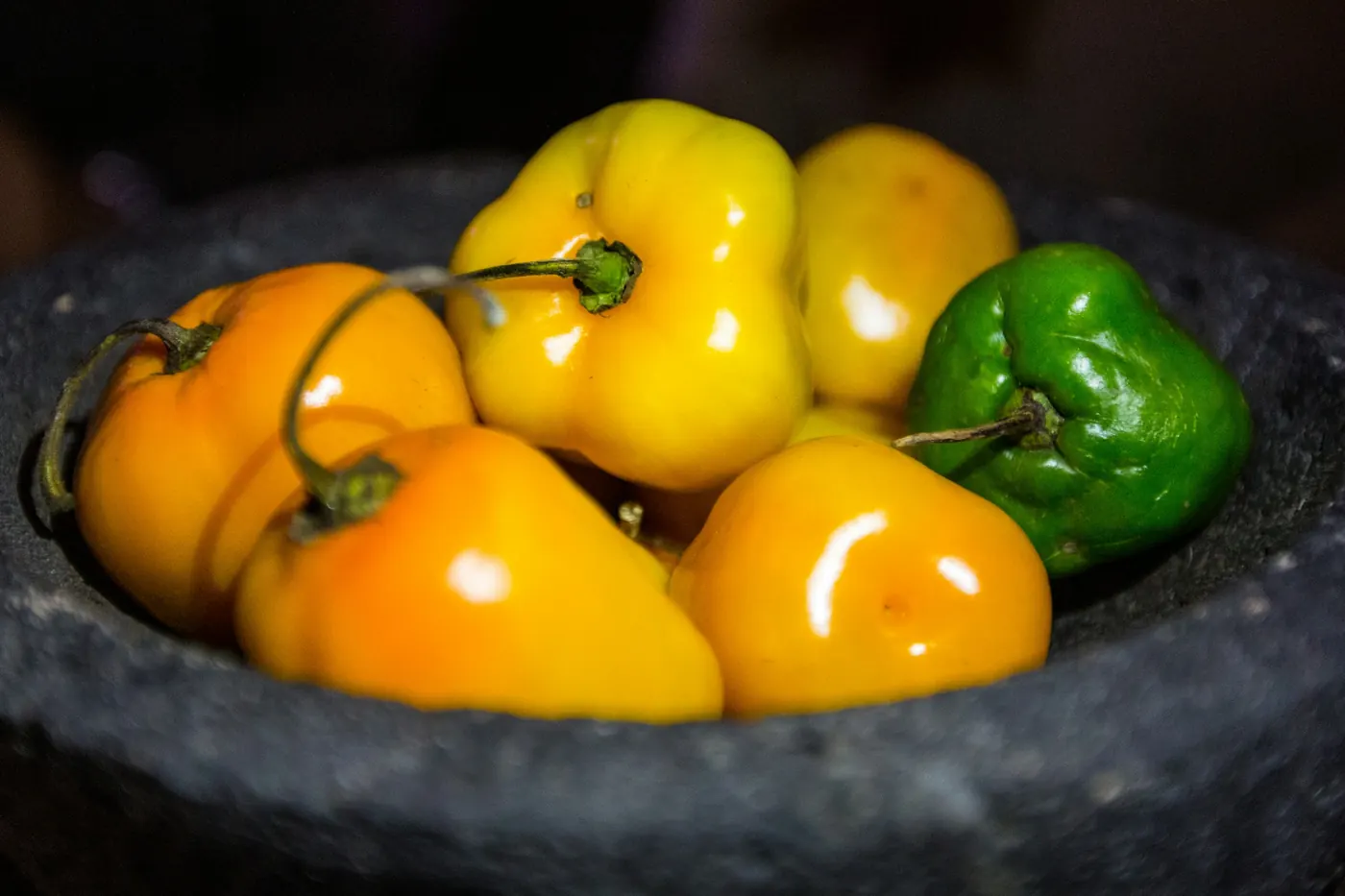
The Yucatán peninsula grows most of the world’s habaneros, and the chile is embedded in its cooking in a way it is not elsewhere in Mexico.
The regional pattern is distinctive: habanero rarely goes into the dish itself. It goes into a salsa on the table — often with sour orange and onion — so each person adds their own. That is a sensible arrangement for a chile this hot, and it is the same logic our regional guide describes for Yucatecan cooking generally.
Where it does go into a cooked sauce, it is usually roasted first, which knocks the edge off and brings out the fruit.
Colors and varieties
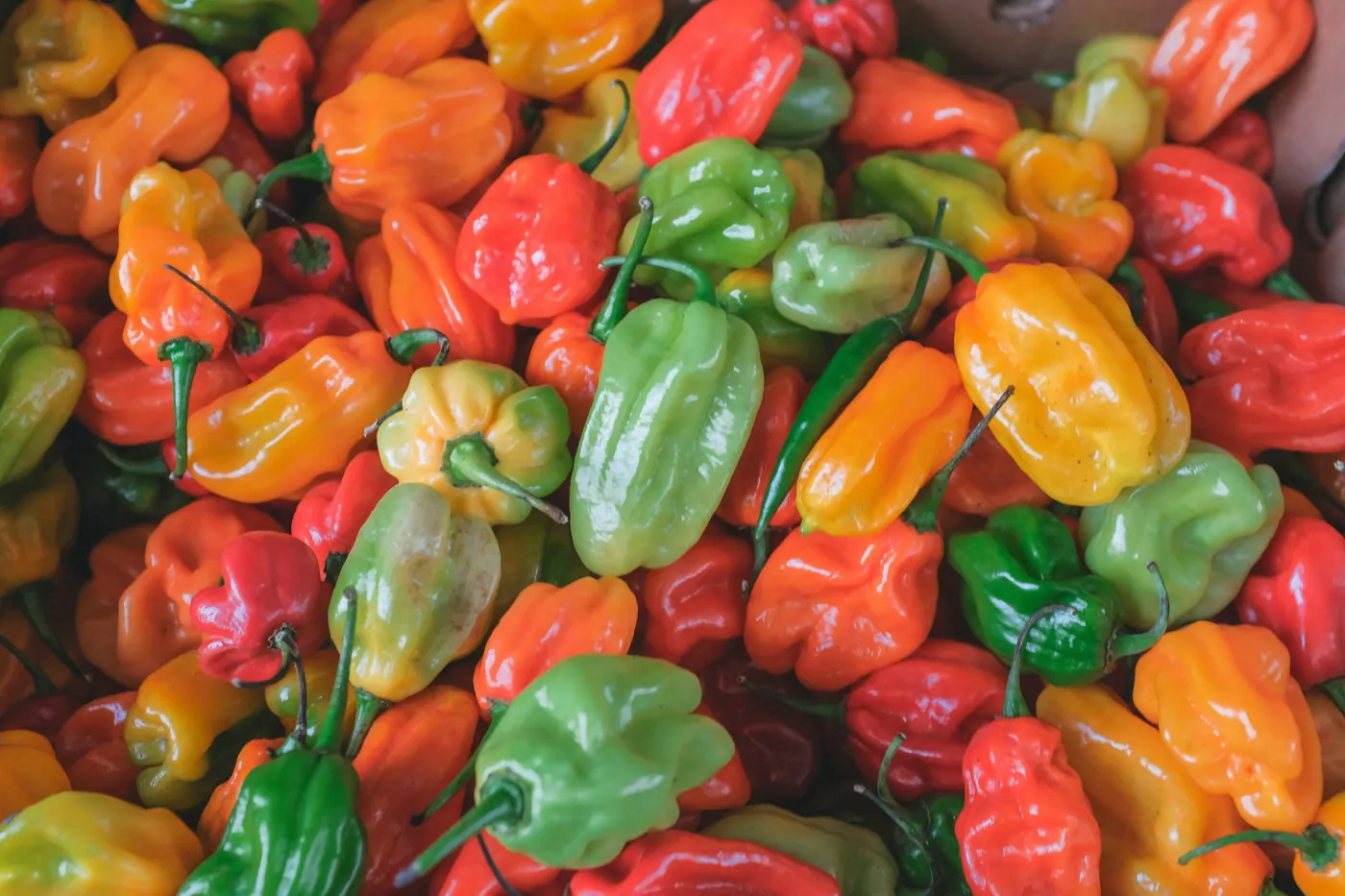
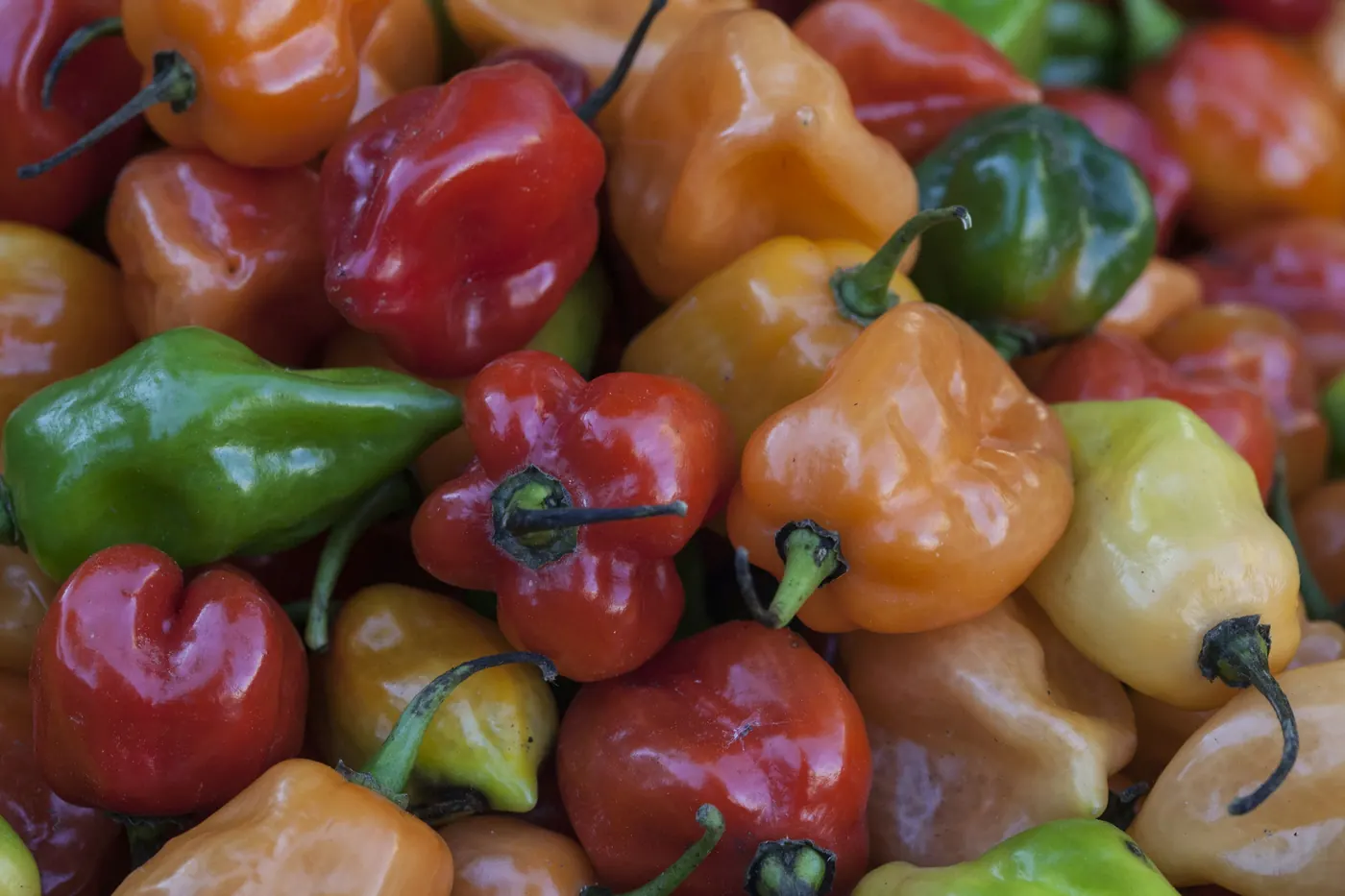
Orange is the default, but it is not the only one, and the color is worth reading.
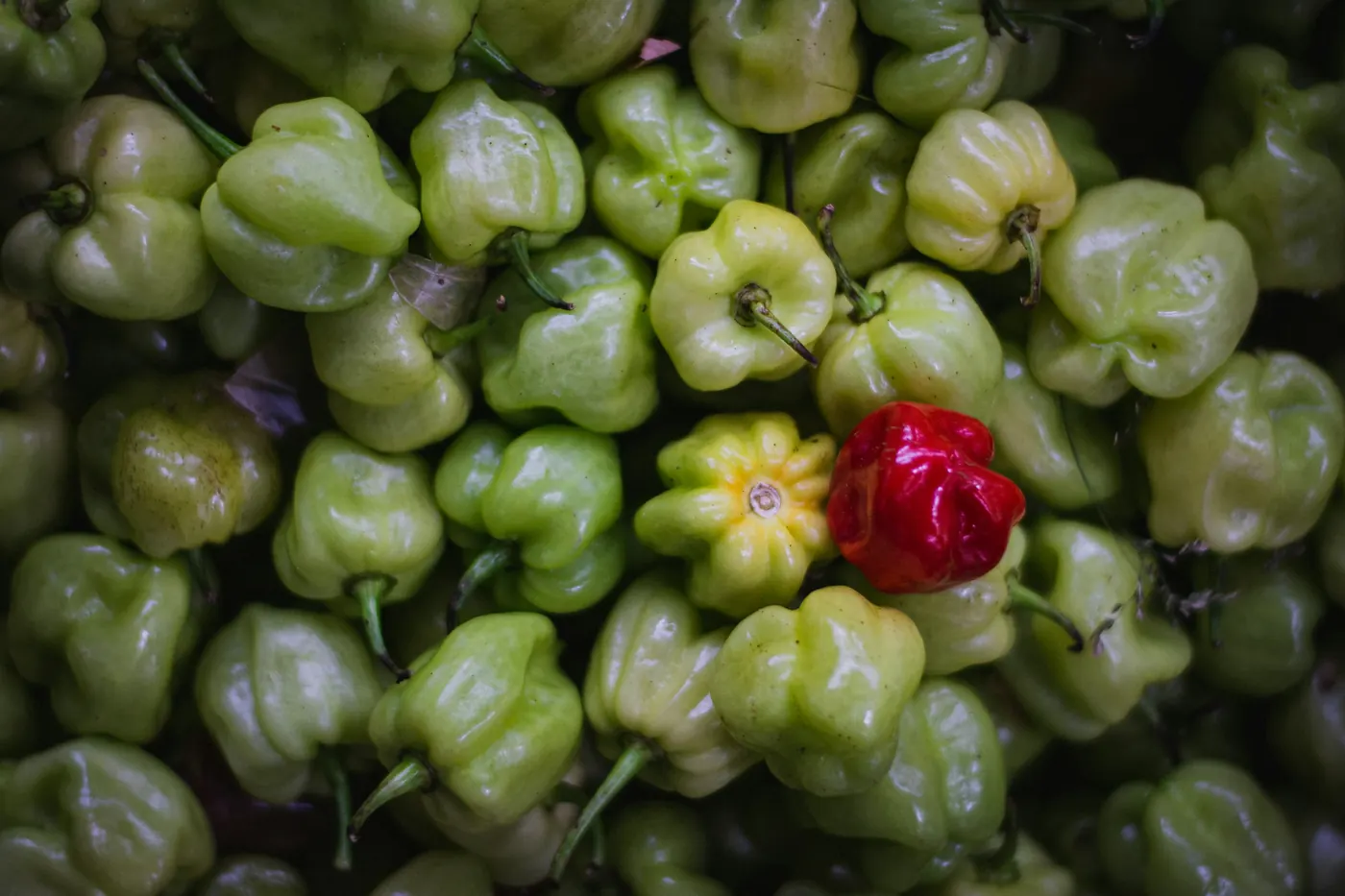
Green habaneros are simply unripe. They are still ferociously hot but noticeably less fruity, because the sugars that give the ripe pepper its apricot note have not developed yet. Left on the plant they turn yellow, then orange, then in some varieties red.
Beyond ripeness, there are named cultivars. Chocolate habanero is a genuine brown-skinned variety, richer and slightly earthier, and no milder despite the friendly name. Caribbean red runs hotter than the standard orange. White habanero is small, pale and floral.
Closely related is the scotch bonnet, the Caribbean cousin: same species, similar heat, squatter shape, generally a shade sweeter. The two are usually interchangeable in a recipe.
Handling them
Worth a paragraph, because this is where people get caught out at home rather than at the table.
Capsaicin is an oil, and it does not wash off with water alone. Cutting a habanero bare-handed leaves it on your fingers for hours, and it transfers to anything you touch afterward — eyes and contact lenses being the usual painful discovery.
Gloves solve it. Failing that, wash with dish soap and warm water rather than rinsing, and keep your hands away from your face until you have.
Reading it on a menu
Habanero is one of the few chile names that functions as a genuine warning, and menus generally use it that way.
If a description names habanero, the dish is hot — not “some people find it warm” hot, but actually hot. That is different from chipotle or poblano appearing in a description, which tell you about flavor rather than heat.
The moderating factors worth looking for are roasted, which softens it, and tomato or cream, which dilute it. A roasted tomato-habanero sauce is a different proposition from raw habanero salsa.
And if it turns out hotter than you wanted, the fix is dairy or starch rather than water, as our guide to mild dishes explains.
On Julia’s menu
Habanero appears in four dishes on Julia’s menu, and every one of them pairs it with tomato rather than serving it raw.
The queso fundido is mushrooms, poblano, onion and garlic in a roasted tomato-habanero sauce under Oaxaca cheese. The veggie enchiladas — zucchini, roasted corn, poblano, carrot and red onion — come under the same sauce.
The pollo Ixtapa is grilled chicken breast smothered in Oaxaca cheese and mushrooms, topped with a tomato-habanero sauce. And among the fajitas, the al chipotle option is marinated, smothered in Oaxaca cheese, and finished with a tomato-habanero salsa.
All four are the moderated form: tomato-based, and in every case sitting under melted cheese, which is the other thing that blunts capsaicin. That is a long way from a raw habanero salsa. It is still the hottest element on any of those plates, and the menu says so by naming it.
Frequently asked questions
How hot is a habanero?
100,000 to 350,000 Scoville units, most commonly 200,000 to 300,000. Roughly forty times hotter than a jalapeño.
What does a habanero taste like?
Fruity and slightly floral — apricot and tropical fruit notes — underneath very intense heat that arrives a beat late and lingers.
Is a habanero the same as a scotch bonnet?
Closely related, same species, similar heat. Scotch bonnet is the Caribbean variety and is generally a little sweeter and squatter in shape.
Why is habanero associated with the Yucatán?
The peninsula is the largest producer, and Yucatecan cooking uses it heavily — usually in a table salsa with sour orange rather than cooked into the dish.
How do I cool the heat if it is too much?
Dairy or starch. Crema, cheese, rice, beans or a plain tortilla. Water spreads the capsaicin around rather than removing it.
The short version
Small, orange, lantern-shaped, and about forty times a jalapeño. Genuinely fruity underneath, which is why it is worth eating rather than just surviving.
Julia’s uses it twice, both times roasted into a tomato sauce, and the menu names it in both.